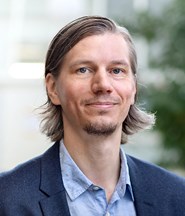
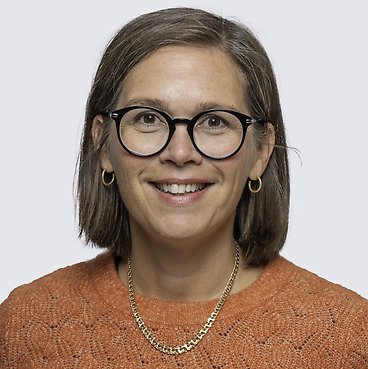
Erik Elgh is a Researcher in linguistics at Uppsala University's Department of Linguistics and Philology, specializing in historical and computational approaches to language evolution and documentation. His work bridges theoretical frameworks with empirical data from diverse language families. His research program integrates three core pillars: Historical Linguistics : Reconstructing language phylogenies through computational modeling, with case studies on Torricelli and Germanic languages. Computational Linguistics : Developing holistic methodologies for analyzing dialect chains and language change dynamics. Descriptive Linguistics : Field-based documentation of endangered languages in Melanesia (Au, Olo) and Indonesia (Elkei). Publication trends (2019-2025) reveal a strategic shift toward unifying computational tools with traditional comparative methods, particularly in phylogenetic analysis and dialectology. His 2025 doctoral thesis establishes a comprehensive framework for modeling language evolution from data collection through classification, emphasizing interdisciplinary integration.
Andreas Stenling serves as Associate Professor in the Department of Psychology at Umeå University, Sweden. His academic profile spans work and organizational psychology, health psychology, and sports psychology. He actively contributes to multiple research ecosystems through affiliations with Umeå University's CoLeadR Research Group, AI and society Group, Sport physical activity and health psychology Group, and Work organisation and society Group. Professor Stenling's research program centers on four interconnected domains: leadership-work environment-health relationships; physical activity-health connections; sport psychology (including injury prevention and mental health); and motivational processes across life contexts. His interdisciplinary approach bridges organizational behavior, public health, and sports science, employing longitudinal designs, randomized controlled trials, and innovative real-time assessment methods to generate actionable insights for improving workplace well-being and athletic performance. Recent publications (2024-2025) reveal strong emphasis on applied research with societal impact, particularly in occupational health interventions, cancer rehabilitation, and youth sports development. His work consistently examines psychological mechanisms underlying health behaviors, using advanced methodologies like ecological momentary assessment and latent profile analysis to capture dynamic processes in natural settings. Professor Stenling maintains robust research funding through multiple active projects spanning 2019-2029, including investigations into remote work dynamics, leadership development, sport injury prevention, and mental health interventions. His collaborative approach involves partnerships across disciplines and institutions, ensuring comprehensive resources for student training and research infrastructure development. Through Umeå University's research groups, he fosters an environment where students explore intersections of technology, human behavior, and health. Current initiatives like the WAYA-2 wilderness program for young cancer patients and youth sports interventions provide practical training grounds for emerging researchers, emphasizing real-world problem solving and societal contribution.
Maria Ranner is a Senior Lecturer and Educational Leader in the Department of Health, Learning and Technology at Luleå University of Technology, specializing in Occupational Therapy within the Health, Medicine and Rehabilitation division. She holds a doctorate in medicine from the Karolinska Institute (2016) and completed postdoctoral work at the Norwegian University of Science and Technology (2017-2019). As Educational Leader, she oversees the entire occupational therapy undergraduate program while maintaining an active research agenda focused on digital rehabilitation solutions. Dr. Ranner's research primarily investigates internet-based interventions for stroke rehabilitation, with particular emphasis on the 'Strategies for Empowering activities in Everyday life' (SEE) program. Her work examines how digital tools can support self-management of daily activities, occupational engagement, and adaptation to changed circumstances following stroke. She explores implementation challenges from multiple perspectives including clients, occupational therapists, and workplace representatives. Analysis of her recent publications (2023-2025) reveals a consistent focus on feasibility, user experiences, and practical implementation of digital rehabilitation tools. Her research demonstrates how structured internet interventions can empower individuals with stroke to drive their own change processes in daily activities, with particular attention to how occupational therapists adapt their roles when delivering digital care. Dr. Ranner supervises doctoral students Monika Lindberg and Ida-Maria Barchéus, in addition to master's thesis students. Her supervisory approach emphasizes the integration of research with clinical practice, preparing students to address contemporary challenges in occupational therapy through innovative solutions. As Educational Leader, Dr. Ranner is responsible for the comprehensive oversight of undergraduate occupational therapy education at Luleå University of Technology. Her leadership extends beyond curriculum development to include quality assurance, teaching innovation, and ensuring alignment between educational content and evolving healthcare needs, particularly in the digital transformation of rehabilitation services.
Johnny Panrike is a Lecturer at KTH Royal Institute of Technology working in the Division of Health Informatics and Logistics. He holds an MSc in Mathematics and Computer Science with extensive teaching experience across both disciplines and currently pursues advanced studies in real analysis. Education: MSc in Mathematics and Computer Science Currently enrolled in Advanced Real Analysis I at KTH/SU Research Focus: His core expertise centers on Discrete Mathematics and Cryptography, evidenced by authoring a specialized textbook. Current mathematical interests include deepening knowledge in Measure Theory, Integration Theory, and Functional Analysis through active coursework. In computer science, he specializes in low-level programming instruction (C/C++ systems programming) and object-oriented paradigms across multiple languages. His pedagogical innovations include virtual machine deployment to streamline software installation for students, while development cooperation work with Sri Lanka's Sarvodaya NGO reflects applied intercultural engagement. Professional Activities: He has supervised numerous thesis projects and course-based student work. Career interludes include professional training as a breathwork therapist in Denmark and alternative pedagogy studies in India. His teaching portfolio spans foundational mathematics courses (analysis, linear algebra, combinatorics) and comprehensive computer science instruction from introductory to advanced levels. Additional Context: Acknowledges statistics and networking as technical weak spots while maintaining active involvement in both teaching and personal academic development.
Ulrika Löfkvist serves as a Senior Lecturer at Uppsala University's Department of Public Health and Care Sciences; Speech Therapy, focusing on speech therapy interventions for children with hearing impairments and cochlear implants. Her research spans Speech Therapy , Hearing Impairment , Cochlear Implants , and Child Language Development , emphasizing longitudinal outcomes in language acquisition, literacy, and cognitive skills. She validates assessment tools like LENA and PEACH+ across cultural contexts and investigates public health initiatives including cytomegalovirus prevention and early hearing loss screening protocols. Analysis of her 2022-2025 publications reveals dominant themes in cochlear implant outcomes, particularly age-at-implantation effects on metaphor comprehension and reading development. Cross-cultural validation studies in Nordic/Brazilian populations and multidisciplinary approaches to hearing loss management form recurring methodological threads. Dr. Löfkvist collaborates with international teams across audiology, speech-language pathology, and public health, notably in Sweden, Norway, and Brazil. No scientific awards, student advising records, or grant details were documented in the source material.
Mattias Lundberg is a Professor at the Department of Musicology, Faculty of Arts, Uppsala University, specializing in historical composition techniques, liturgical music, progressive rock, and North-European music history. He teaches at all academic levels with a focus on music analysis, music theory, and historical topics, while supervising PhD students. Lundberg has broadcast approximately 400 radio programs about music on Swedish Radio P2 and has realized numerous new performances, recordings, and reconstructions of historically significant repertoire. Lundberg's academic journey includes: Born in Tjärstad, Östergötland, in 1976 Completed secondary school at Linköping Cathedral School in 1995 Earned vocational organist certificate (Kantorsexamen) in 1999 Received B.A. with first class honours in Music, Latin and History of Art in 2002 Completed Ph.D. in Musicology at the University of Liverpool in 2007 Achieved associate professor (Docent) status in 2013 Appointed Professor at Uppsala University in 2015 Lundberg's research spans multiple interconnected domains within musicology, with particular emphasis on historical liturgical practices, compositional techniques across different eras, and the intersection of music with cultural and religious history. His work on Swedish liturgical music sources (SweLiMuS) represents a significant contribution to understanding musical practices in Lutheran contexts. Notably, Lundberg bridges historical scholarship with contemporary relevance through projects examining progressive rock's compositional structures and through his extensive media work making music history accessible to broader audiences. His research methodology often combines archival investigation with performance practice, resulting in both scholarly publications and reconstructed performances of historically significant but previously unperformed works. Lundberg's recent publications demonstrate consistent focus on Scandinavian liturgical music history, Reformation-era musical practices, and historical composition techniques. His scholarly output reveals a distinctive approach that connects textual analysis with musical practice, often examining how theological concepts shaped musical expression in historical contexts. The interdisciplinary nature of his work is evident in publications spanning musicology, theology, cultural history, and ritual studies, reflecting his comprehensive understanding of music as embedded in broader social and religious frameworks. Lundberg has received numerous prestigious honors and awards: Honorary member, Östgöta Nation, Uppsala (2024) Awarded H.M. The King's Medal of the 8th size on Seraphim Order Ribbon (2023) Swedish Radio Prize for the music history series "Den svenska musikhistorien" Second prize in Prix Europa (European Radio- and TV Awards) in Potsdam (2019) Elected member of the Swedish Royal Academy of Music (2019) Elected member of Young Academy of Sweden (2015) Elected member of the Royal Society of the Humanities at Uppsala (2020) Elected member of the Royal Society of Arts and Sciences of Uppsala (2020) As a dedicated educator and researcher, Lundberg supervises PhD students and has secured significant research funding for multiple projects. His current research includes "Sonic Continuity as Perceived Tradition in the Liturgical Music of the Swedish Reformation" (funded by The Bank of Sweden Tercentenary Foundation, 2024-2026), building upon his previous work "SweLiMuS" (2019-2021) which focused on analysis, cataloguing, and digitization of Swedish liturgical music sources from 1520-1820. Earlier, he led "Cultural and Social Reverberations of the Music of a Lutheran State Church" (funded by the Swedish Research Council, 2014-2018). Lundberg also serves as a management committee member for the European Cooperation in Science and Technology (COST) Action EarlyMuse. While Lundberg does not appear to lead a specific laboratory, his work involves collaborative research teams focused on liturgical music sources, historical performance practice, and digital humanities approaches to musicology. His leadership of the SweLiMuS project involved coordinating interdisciplinary teams for cataloging, analysis, and digitization of historical music manuscripts. Lundberg's work with the Swedish working group of Répertoire international des sources musicales (2006-2011) also demonstrates his capacity for building and leading scholarly collaborations focused on musicological source research.
Jenniina Kotajoki is an Affiliated Visiting researcher at the Department of Peace and Conflict Research at Uppsala University, where she is also completing her doctoral studies. Her academic work focuses on the complex dynamics between international organizations and non-state actors in conflict zones. Her research interests span critical areas in contemporary peace and conflict studies: International interventions and civil war dynamics Rebel governance structures and political systems United Nations engagement with non-state armed groups Mechanisms of violent extremism and deradicalization Security sector reform in post-conflict environments Prison systems within conflict-affected regions Kotajoki's publication record demonstrates a clear research trajectory examining how UN peacekeeping operations interact with local communities and armed groups. Her work bridges theoretical frameworks with empirical field research, particularly in West Africa (Mali) and the Horn of Africa (Somaliland and Puntland), revealing nuanced understandings of how international interventions either succeed or fail in engaging with local realities. While her academic career is still developing as a doctoral candidate, her research has already gained traction across multiple platforms, with references from Bluesky users, X (Twitter) accounts, Facebook pages, policy documents, and academic readership on Mendeley, indicating growing influence in both academic and policy circles. Her comprehensive doctoral thesis, Global Pariahs or Local Partners?: The United Nations' Engagement with Non-State Armed Groups , represents a significant scholarly contribution to understanding how international organizations navigate complex relationships with armed non-state actors in conflict environments, challenging traditional assumptions about diplomatic engagement in war zones.
Göran Bostedt serves as a Senior Lecturer (academic title: Associate Professor) at Mid Sweden University's Department of Education in Sundsvall, actively contributing to educational research and policy analysis within the Swedish context. His institutional role encompasses teaching, supervisory responsibilities, and leadership in departmental research initiatives. His primary research domains include: Teacher shortage dynamics and policy responses in Sweden Student motivation across primary and secondary education levels Gender disparities in academic achievement (notably the 'boy paradox') Pupil influence as democratic practice in schools Educational leadership and school management Analysis of Bostedt's publication trajectory (2012-2025) reveals methodological consistency with phenomenographic approaches to explore motivation conceptions, while increasingly focusing on teacher workforce challenges. His work bridges empirical classroom observations with national policy analysis, particularly regarding Sweden's educational crisis points. Bostedt maintains active research collaborations with colleagues including Lena Boström and Lisbeth Eriksson, contributing to institutional evaluations of school initiatives across Västernorrland County. His project leadership spans studies on nursing shortages in the Nordic Green Belt, gender-focused academic interventions, and comprehensive motivation analyses across educational stages.
Patrick Magnusson is a Senior Researcher and Associate Professor of Epidemiology at Karolinska Institutet's Department of Medical Epidemiology and Biostatistics. Since 2014, he has served as head of the Swedish Twin Registry (STR), overseeing operations and administration while establishing a comprehensive biobank with DNA samples from participating twins. His educational background includes a Master of Medical Sciences (1996) and Doctor of Medical Sciences (2000) from Uppsala University, followed by postdoctoral studies at Columbia University in New York (2000-2002). His thesis focused on genetic susceptibility to cervical and stomach cancers. Dr. Magnusson's research spans epidemiology, medical genetics, and genomics, with particular emphasis on understanding how genetic predispositions interact with environmental factors to influence health outcomes. His work leverages twin studies to disentangle hereditary and environmental contributions to complex diseases. He regularly teaches in medical, psychology, and doctoral programs at Karolinska Institutet. His extensive publication record demonstrates expertise across multiple domains including cancer epidemiology, psychiatric genetics, cardiovascular research, and environmental health. His most recent work features large-scale meta-analyses and trans-ancestry studies examining genetic factors in depression, heart disease, obesity-related conditions, and autoimmune disorders. Dr. Magnusson actively contributes to major international research consortia, frequently collaborating across disciplines and institutions to advance understanding of complex disease etiology through innovative epidemiological and genetic approaches.