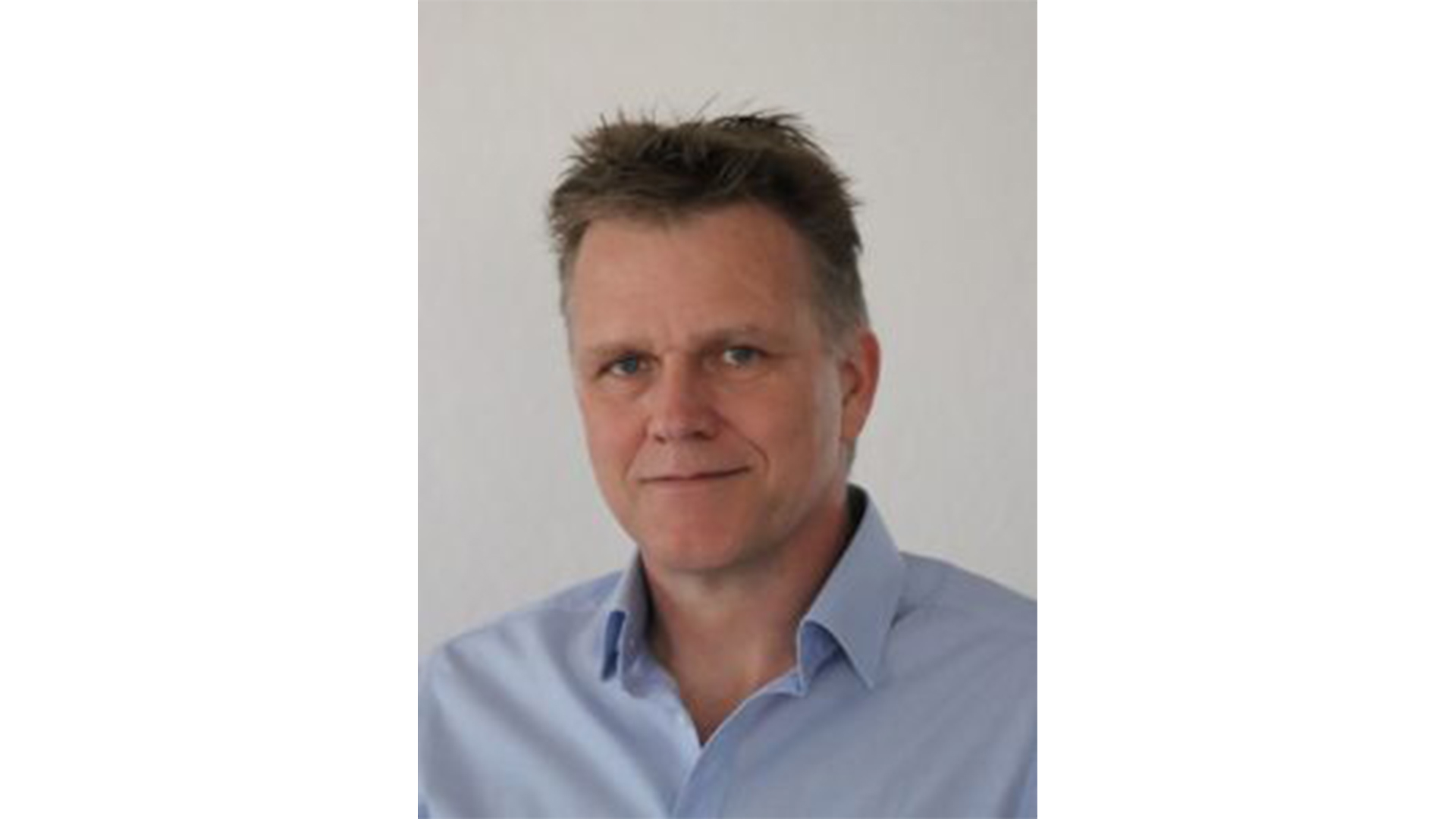
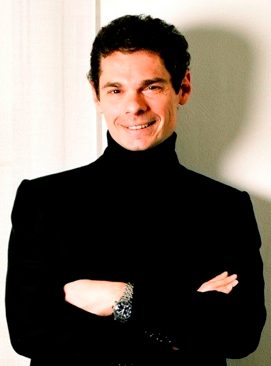
Maria Boulougouri is a Doctoral Assistant at the Signal Processing Laboratory 2 (LTS2) at École Polytechnique Fédérale de Lausanne (EPFL), within the School of Engineering and the Institute of Electrical Engineering. She is concurrently pursuing her doctoral studies in the Doctoral Program in Computational and Quantitative Biology (EDCB) under the EDOC Doctoral School at EPFL. Research Interests: Her work bridges signal processing and computational biology, focusing on the development and application of quantitative methods for biological data analysis. Her research interests include signal processing, computational biology, bioinformatics, machine learning in biological systems, and data-driven approaches in life sciences. This interdisciplinary profile suggests strong expertise in algorithmic modeling and analysis of complex biological signals and datasets. No publications are listed in the provided text, so no trends can be derived at this time. Scientific Awards: Advising and Grants: There is no information available regarding student advising or research grants in the provided text. Labs and Teams: Maria is affiliated with the Signal Processing Laboratory 2 (LTS2) at EPFL, a research group focused on advancing theoretical and applied aspects of signal processing with applications in biology, medicine, and engineering.
Prof. Marcel Drabbels is a Titular Professor at the École Polytechnique Fédérale de Lausanne (EPFL) , affiliated with the School of Basic Sciences and the Institute of Chemical Sciences and Engineering . He leads the Laboratory of Molecular Nanodynamics (LND) , where his research focuses on the spectroscopy and dynamics of nanoscale systems, particularly using ultrafast lasers and time-resolved electron microscopy. Academic Rank: Professor Appointment: Senior Scientist (1998), Promoted to Titular Professor (2021) Previous Positions: Free University of Amsterdam, FOM Institute, University of California Santa Barbara His research interests include ultrafast molecular dynamics, helium nanodroplets, photodissociation, quantum solvation, and cryogenic electron microscopy . He employs advanced laser and electron imaging techniques to study real-time processes in isolated molecular systems and quantum fluids. The recent publications highlight a strong trend in microsecond time-resolved cryo-electron microscopy , where his group develops methods to flash-melt and revitrify cryo-samples to capture dynamic structural changes in biomolecules and materials. Other key themes include ultrafast electron diffraction , nanoplasma dynamics , and quantum fluid effects in doped helium clusters. Scientific Awards: Prix Polysphères for excellence in teaching (2008) Fellowship from the Royal Dutch Academy of Sciences (1997) Advising: Prof. Drabbels has supervised numerous PhD students, including A. D. B. Clark, V. Oliver Álvarez de Lara, X. Zhang, and E. Loginov. His lab fosters interdisciplinary research at the intersection of physics, chemistry, and structural biology. While no specific grant information is listed, his sustained output suggests active funding support for instrumentation and experimental programs in ultrafast science. Laboratory: The Laboratory of Molecular Nanodynamics (LND) operates at the forefront of time-resolved imaging, combining laser spectroscopy with electron microscopy to probe dynamics at the nanoscale.
Virginia Carnevali is a Lecturer at the Laboratory of Computational Chemistry and Biochemistry (LCBC), part of the Institute of Chemical Sciences and Engineering (ISIC) within the School of Basic Sciences (SB) at École Polytechnique Fédérale de Lausanne (EPFL). She works on theoretical and computational investigations of advanced materials for energy and quantum applications. Research Interests: Theoretical condensed matter physics, including structural, electronic, magnetic, and optical properties of materials using tools like Quantum ESPRESSO and CP2K Development of tight-binding Hamiltonians and transport property analysis Investigation of photovoltaic materials, including Pb/Sn-based organic perovskites and HTL-ETL interfaces 2D materials research focusing on graphene on metallic surfaces and mathematical modeling of stacked systems Thermoelectric materials optimization for PbCuBiS₃ (aikinite) and Cu₃SnS₄ (kuramite) families Topological materials discovery via symmetry-breaking mechanisms Quantum computing applications for condensed matter problems on D-Wave annealers Teaching: She contributes to educational programs at EPFL through the EDCH-ENS teaching consortium.
Emma Bell is a Lecturer at École Polytechnique Fédérale de Lausanne (EPFL), affiliated with the EDCE-ENS program under the Vice Presidency for Academic Affairs (VPA-AVP-DLE). She specializes in bioinformatics and teaches hands-on courses focused on microbial meta-omics . Role: Lecturer Status: Invited guest Her research and teaching bridge computational biology and life sciences , emphasizing practical applications in microbial data analysis. No scientific awards or publications are explicitly listed in the provided text.
Yong Dai is a Lecturer at École Polytechnique Fédérale de Lausanne (EPFL) specializing in nuclear materials research and radiation effects on materials. They are affiliated with the VPA-AVP-DLE (Vice Presidency for Academic Affairs - Advanced Virtual Programs - Digital Learning Ecosystems) and AVP-DLE-EDOC (Advanced Virtual Programs - Digital Learning Ecosystems - Education Outreach) departments. Teaches graduate-level courses on radiation effects in nuclear materials Supervises PhD and Master's students through hands-on workshops and seminars Focuses on experimental nuclear materials research and simulation techniques Their work emphasizes defect analysis in irradiated materials and mechanical property evolution. Yong Dai actively engages in collaborative projects on advanced manufacturing and analytics for nuclear systems. Past advisees include: Cui Lijuan Long Bin Vieh Christiane Wang Kun
Rima Mekdaschi Studer is a Senior Research Scientist specializing in sustainable land systems at the Centre for Development and Environment (CDE) , University of Bern. With field experience across Niger, Syria, Ethiopia, Kenya, and Mongolia, her work focuses on dryland restoration, climate adaptation, and knowledge management for land degradation neutrality. Key affiliations: World Overview of Conservation Approaches and Technologies (WOCAT), World Association of Soil and Water Conservation (WASWC) Geographic expertise: Dryland regions in Africa, Middle East, and Asia Research Interests center on: Sustainable land management in arid regions Climate change adaptation/mitigation strategies Agroforestry implementation Plant water relations and nutrition analysis Capacity building for land restoration Networking for global SLM implementation Publication Trends show a consistent focus on dryland conservation, with recent works addressing gender integration (2024), climate adaptation frameworks (2023), and participatory planning (2022). Collaborative outputs emphasize technical guidelines (2019), cross-regional comparisons (2020), and knowledge dissemination (2016). Professional Contributions include leading the WOCAT program and developing decision support tools for land managers. She has authored/coauthored 31 publications, with 10 recent works spanning 2016-2024. Languages & Networks: Fluent in English, German, French, and Arabic. Active in global soil/water conservation networks.
Negar Kiyavash serves as a Full Professor and Chair of Business Analytics at École Polytechnique Fédérale de Lausanne (EPFL), specifically within the College of Management of Technology (CDM), Institute of Management of Technology and Entrepreneurship (MTEI), and Business Analytics department (BAN). She maintains an active presence at EPFL with office location at ODY 1 01.1 (Odyssea), Station 5, 1015 Lausanne, and can be contacted via email at negar.kiyavash@epfl.ch or phone at +41 21 693 02 59. Her research interests span Business Analytics, Causal Inference, Machine Learning applications in econometrics, Network Analysis, and Management of Technology. Professor Kiyavash teaches specialized courses including Causal Inference , where students learn network analysis with emphasis on causal relationships, and Machine Learning Methods in Econometrics , which provides graduate students with grounding in machine learning techniques applied to business analytics. As an active academic leader, she serves on multiple institutional committees including the Open Science Strategic Committee and the CDM Council. She also participates in doctoral education as a PhD program committee member for the Management of Technology doctoral program. Professor Kiyavash currently supervises seven PhD students and has previously mentored two doctoral candidates to completion. Her laboratory, the Business Analytics Lab (BAN), serves as the research hub for her team's work at the intersection of data science and business applications.
Prof. Dr. Damian Borth is a faculty member and Academic Director of the Doctoral Program for Computer Science at the University St.Gallen , affiliated with the School of Computer Science and the Institute of Computer Science (ICS-HSG) . His research spans Machine Learning , Remote Sensing , and Digitalization & Transformation , with a focus on diffusion models, vision transformers, and environmental data analysis. Recent publications highlight advancements in anomaly detection , cross-modal translation , and climate monitoring using AI. Key themes include weight space learning , federated learning , and data-efficient AI for Earth observation. His work bridges theoretical deep learning and practical applications in financial auditing, pollution estimation, and satellite imagery.
Anastasia Khukhro serves as a Lecturer at the Swiss Federal Institute of Technology Lausanne (EPFL) within the Centre des méthodes mathématiques et statistiques (CMS), operating under the Associate Vice Presidency for Education (AVP-E). Her primary role focuses on delivering foundational mathematics instruction for EPFL's preparatory year program across multiple academic tracks. Her teaching portfolio encompasses core mathematical disciplines essential for engineering and science students: Linear Algebra (for CMS): Integrating set theory, elementary logic, and geometric interpretation of fundamental linear algebra concepts in dimension 2 Analysis I (for CMS): Comprehensive introduction to differential calculus principles Analysis II (for CMS-3): Advanced continuation of calculus topics (coursebook pending section approval) Analysis B (for MAN): Establishment of differential and integral calculus fundamentals Her pedagogical expertise centers on foundational mathematics education, with specialized focus on Linear Algebra, Mathematical Analysis, and preparatory curriculum development for diverse student cohorts. Based at EPFL's Lausanne campus in Building BS room 281, she maintains direct accessibility through her professional email anastasia.khukhro@epfl.ch and office phone +41 21 693 12 73.
Elisabeth Gutjahr is an Associate Professor at the Fribourg School of Social Work, part of the University of Applied Sciences and Arts Western Switzerland (HES-SO). She holds a main contract as Associate HES Professor and maintains an active research and teaching profile with expertise in quantitative methods, social inequalities, poverty studies, and accessibility. Her institutional affiliations include serving on the ARTIAS committee as a representative of the social work domain of HES-SO since 2016, membership on the Swiss Household Panel scientific commission, and participation in the Swiss Social Work Society (SSTS) board since 2021. Professor Gutjahr's research interests center on social inequalities, poverty dynamics, precariousness, and socio-professional integration. Her work employs sophisticated quantitative methodologies to examine poverty trajectories, social assistance systems, and the structural factors contributing to social vulnerability. She has developed particular expertise in analyzing how life events, employment status, and family dynamics intersect with poverty experiences. Her research often bridges academic inquiry with practical policy implications, focusing on how social protection systems can be improved to address emerging social risks. Her publication record reveals consistent engagement with longitudinal analysis of poverty and social assistance. Her work demonstrates a methodological sophistication that combines sequence analysis, growth mixture modeling, and mixed methods approaches. A clear thematic progression shows her moving from foundational work on poverty trajectories to more recent investigations of emergency housing systems and the impact of the Covid-19 pandemic on independent workers. Her research consistently highlights how social inequalities are embedded in institutional structures rather than merely reflecting individual circumstances. Professor Gutjahr has secured significant research funding from diverse sources including CDAS, FOPIS, Ville de Fribourg, DGCS Vaud, CSTS, and FNS. Her current projects include analysis of shelters and emergency accommodations on behalf of SODK (as co-applicant) and a study on work quality in social institutions affiliated with INFRI (as principal investigator). She has previously led investigations into social assistance outside LASoc in Fribourg, evaluation of emergency housing in Vaud, dynamics of social assistance in Switzerland, and the impact of patient suicide on professionals. Her leadership extends beyond research to educational innovation, having conceptualized and implemented bilingual education programs since 2018-2019, co-managed the initial training department from 2016-2020, and previously held responsibility for the social service orientation (2006-2014) and social service program (2005-2006). She has also developed specialized training programs for state employees on violence prevention since 2004 and was instrumental in establishing the social work training program at HETS-FR between 2003-2005.
Valentina Rotondi is a Professor at the Department of Business Economics, Health and Social Care (DEASS) at the University of Applied Sciences and Arts of Southern Switzerland (SUPSI). She holds affiliated research positions at the Swiss School of Public Health, Milan Center for Neurosciences (NEUROMI), and the University of Oxford's Department of Sociology and Nuffield College. Her work bridges behavioral economics, demography, and public health, with a focus on gender inequalities, digital technologies, and socioeconomic impacts of crises. PhD in Economics from Catholic University of Milan (2016) MSc in Political Economy and International Institutions from University of Pavia (2011) BA in International Cooperation and Development from University of Pavia (2009) Rotondi's research explores: Digital Transformation: Impact of digital technologies on health, well-being, and gender equality Demographic Dynamics: Parenthood's effects on productivity and social capital Trust Mechanisms: Evolution of interpersonal trust and trust in science during crises Behavioral Insights: Using experimental and computational methods to study cooperation Her recent publications analyze cooperation in post-pandemic contexts, mobile technology's role in development, and maternal brain changes. Methodologically, she combines behavioral experiments, neuro-economics, and big data analytics. Rotondi also teaches 'Unusual Data Analysis' and co-directs the 'Integral Economics' Certificate program at SUPSI.
Giacinta Jean is a Full Professor of History and Techniques of Conservation and Restoration at the Department of Environment Constructions and Design (DACD) at the University of Applied Sciences and Arts of Southern Switzerland (SUPSI). She has been responsible for the Bachelor's and Master's degree programs in Conservation-Restoration since 2005 and holds significant leadership roles in conservation education and research. Her academic background includes an Architecture degree from the Polytechnic of Milan (1991), a Docteur ès sciences from EPFL (1997), and a Ph.D. in History of Architecture and Urban Planning from the Polytechnic of Turin (1999). Prior to joining SUPSI, she worked as an assistant at the University of Geneva (1991-1995) and as an invited lecturer at the Polytechnic of Milan (1998-2004). Dr. Jean's research focuses on the intersection of historical preservation, architectural heritage, and modern conservation techniques. Her work spans several key areas: History and archaeology of the built heritage History of construction techniques Conservation and restoration of historic monuments Stucco decoration techniques and analysis Ethical considerations in conservation practices Preservation of intangible cultural heritage Her publications reveal a strong emphasis on practical conservation challenges at UNESCO World Heritage sites including Sacro Monte di Varallo and Sacro Monte di Ossuccio. She employs interdisciplinary approaches combining art history, scientific analysis (PLM, SEM-EDS, FTIR), and practical conservation techniques to address complex preservation issues. Among her notable recognitions is the Premio Credit Suisse Award for Best Teaching (2013-2014). She leads multiple significant research projects including 'Arches of Light' (focused on Mendrisio's Holy Week Processions, inscribed on UNESCO's Intangible Cultural Heritage List in 2019), 'Ticino Artists in Europe,' and 'Be amazed - Discovering the masters of stucco in Ticino.' Dr. Jean's work bridges theoretical research and practical application, with projects spanning Switzerland, Italy, and Lebanon. She has developed guidelines for conservation practices and contributes significantly to international conservation discourse through conferences, publications, and collaborative research initiatives.
Monika Maurhofer Bringolf serves as a Titular Professor and Lecturer at the Department of Environmental Systems Science at ETH Zürich, where she leads the research group focused on Biological Control. Her academic career at ETH Zürich spans over 25 years, beginning as an assistant researcher (1996-1999) and progressing to her current position as senior researcher and lecturer since 2000. Her educational background includes a Dipl. sc. nat. from ETH Zürich (1988) and a Dr. sc. nat. from the Institute of Phytopathology/Plant Sciences at ETH Zürich (1993). These qualifications established the foundation for her extensive research in plant-microbe interactions and biological control mechanisms. Professor Maurhofer Bringolf's research centers on the ecological properties of biocontrol pseudomonads and the complex interactions between crop plants and microorganisms inhabiting the rhizosphere. Her work spans microbial ecology, plant pathology, and biological pest control, with particular emphasis on how plant-beneficial bacteria can improve soil health and plant resistance against pathogens and pests. She investigates the mechanisms governing interactions among biocontrol bacteria, phytopathogens, pest insects, plants, and non-target microbiota. Her research employs approaches ranging from field studies to comparative genomics and transcriptomics to understand how biocontrol bacteria can switch between different ecological niches. Her recent publications demonstrate a strong focus on entomopathogenic bacteria, microbial consortia for pest control, and the suppressive properties of composts against soilborne pathogens. The research shows an increasing trend toward understanding microbial communities and their collective effects on plant health and pest management, with particular attention to how different biocontrol organisms can work synergistically. Winner of the 'golden owl' teaching award from ETH Zurich students in 2014 Winner of the 'golden owl' teaching award from ETH Zurich students in 2017 She actively contributes to scientific policy as a member of the Swiss Expert Committee for Biosafety (SECB) and the Swiss Society for Phytiatry. Her research has been supported by grants from the Swiss National Science Foundation, including projects on microbial consortia for pest control and molecular determinants of insect-plant associated lifestyles of beneficial pseudomonads. Professor Maurhofer Bringolf teaches Plant Pathology I and Plant Pathology III courses at ETH Zürich, maintaining her commitment to educating future plant pathologists and environmental scientists while continuing her active research program.
Vincenzo Galasso is a full Professor of Economics at the University of Lugano (Università della Svizzera italiana), where he has served since 2011 and currently directs the Centre for Economic and Political Research on Aging (CEPRA). He maintains active research affiliations as a Research Fellow at the Center for Economic Policy Research (CEPR) in London, CES-Ifo in Munich, and IGIER. His academic appointments include Assistant Professor at Universidad Carlos III de Madrid (1996-2000) and Associate Professor at Bocconi University (2002-2011). Galasso earned his BS in Economics from Bocconi University in 1991 and completed his PhD in Economics at the University of California, Los Angeles in 1996. His research program centers on public economics and political economy, with specialized focus on pension systems, structural reforms, aging populations, and welfare state dynamics. Galasso investigates how demographic transitions and political institutions interact to shape economic policy sustainability, particularly examining intergenerational conflict in social security design. His methodological approach combines theoretical modeling with empirical analysis of OECD policy reforms. Analysis of his 15 most recent publications reveals consistent thematic concentration on political economy of aging societies, with recurring examination of pension sustainability, welfare state adaptations to demographic change, and partisan influences on economic policy during crises. His work demonstrates strong interdisciplinary connections between economics, political science, and demography. Galasso's scholarly recognition includes: Research Fellow, Center for Economic Policy Research (CEPR) Research Fellow, CES-Ifo Research Fellow, IGIER The provided text does not specify student advising relationships or research grant details, though his leadership of CEPRA indicates significant project coordination responsibilities. As director of the Centre for Economic and Political Research on Aging (CEPRA), Galasso leads interdisciplinary research examining economic and political challenges posed by aging populations, with particular emphasis on European welfare state adaptations and intergenerational equity issues.
Janine Dahinden is a Full Professor of Transnational Studies at the University of Neuchâtel and a leading scholar in migration, mobility, and transnationalization. Her work critically examines how these processes produce inequalities tied to ethnicity, race, class, religion, and gender. She serves as project leader for the nccr-on the move and co-director of LAPS , while also directing MAPS . Additionally, she holds a Mercator Fellowship at the Collaborative Research Center SFB 1604 (Production of Migration) at the University of Osnabrück and presides over the Swiss Association for Gender Studies. Education: PhD in Social Anthropology (University of Bern, 2003); MA in Social Anthropology, Sociology of Mass Communications, and Criminology (University of Zurich, 1997) Her research spans three domains: reflexivities in migration studies, the social organization of 'difference,' and mobility studies. Recent publications analyze migranticization, bordering practices, and gendered technologies of belonging. She advocates for de-migranticizing research frameworks and integrating intersectional, post-colonial approaches. Dahinden's teaching emphasizes participatory methods in social sciences, focusing on critical theory and ethical research. She co-organizes international conferences and workshops, including keynotes at IMISCOE 2025 and Elgar Encyclopedia contributions. Her leadership roles include directing graduate programs and serving on editorial boards for migration and gender studies.