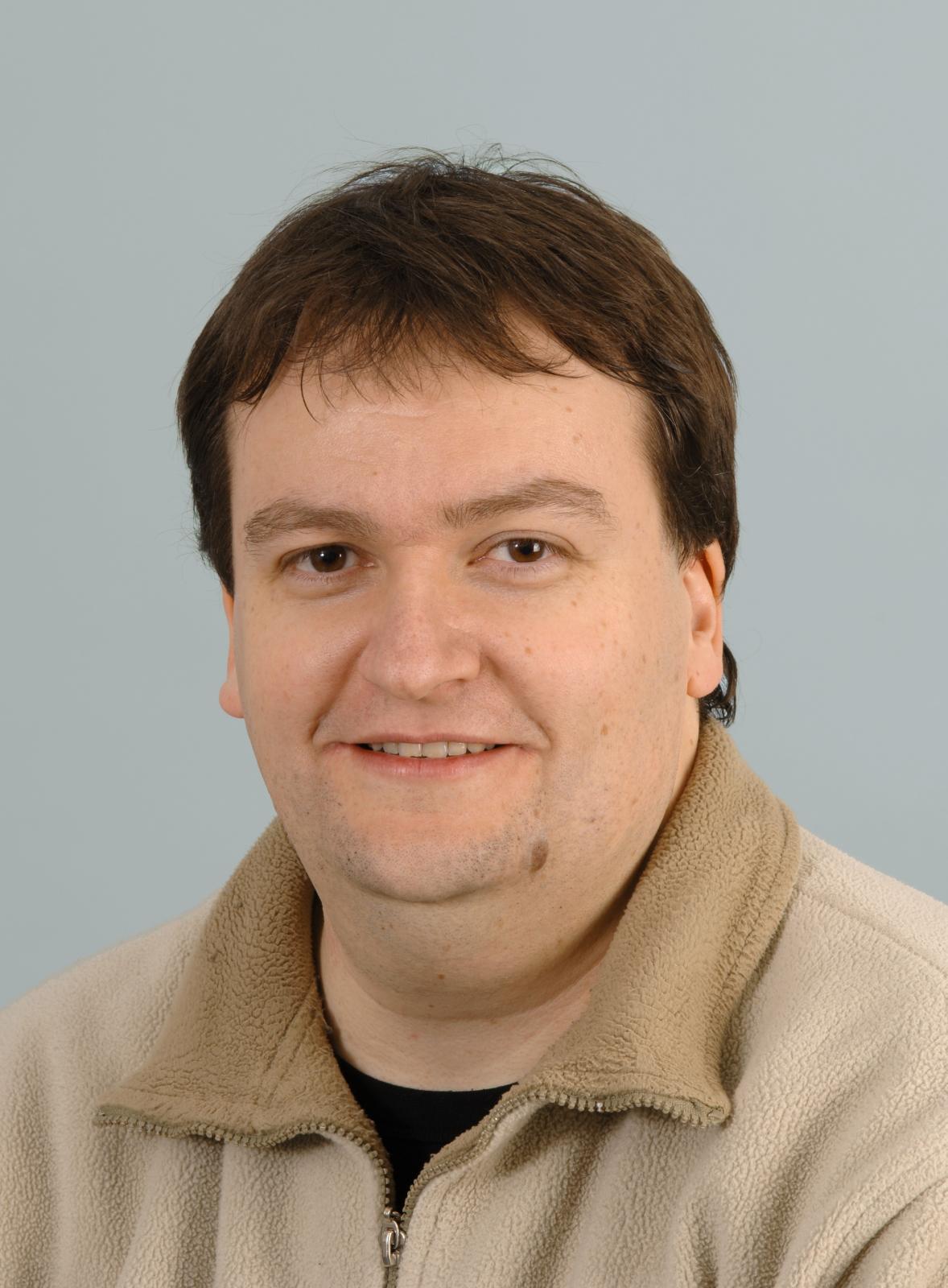
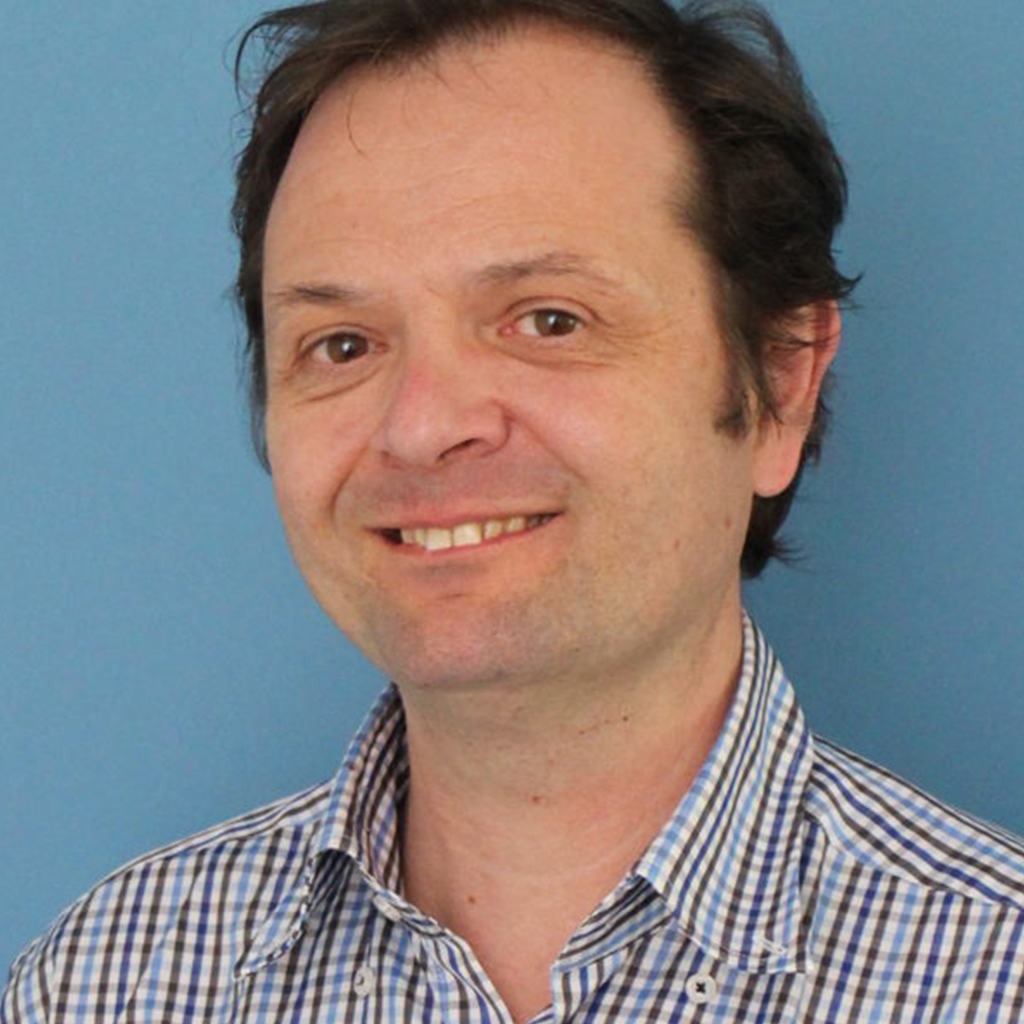
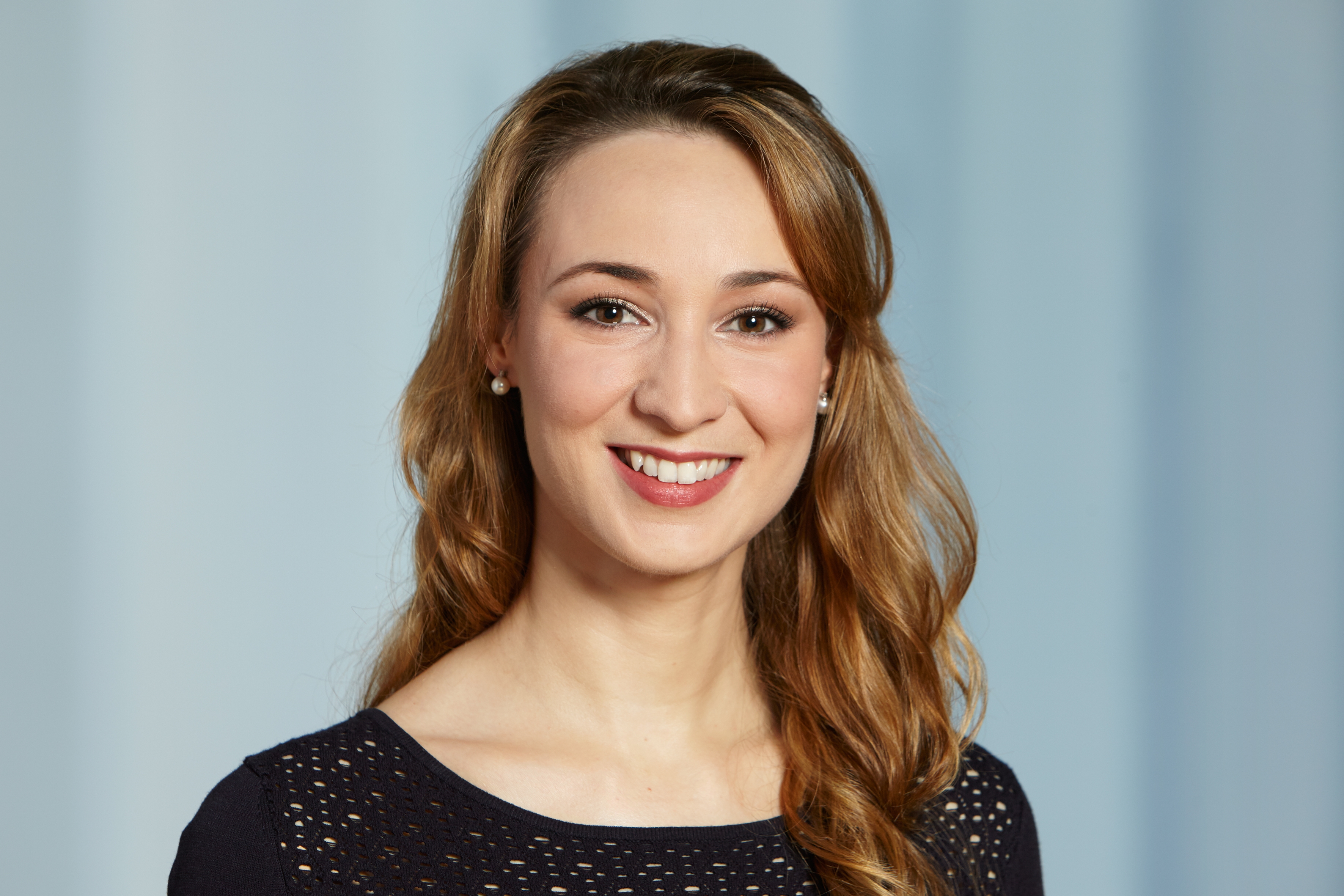
Paolo Ienne is a Professor at the Swiss Federal Institute of Technology in Lausanne (EPFL), where he leads the Processor Architecture Laboratory (LAP) within the School of Computer and Communication Sciences. His research focuses on advancing reconfigurable computing systems through innovative FPGA architectures and high-level synthesis methodologies. His primary research domains include reconfigurable computing, FPGA architecture design, dynamically scheduled dataflow circuits, and hardware acceleration techniques. Recent work emphasizes memory system optimization for FPGAs, formal verification of circuit transformations, and rapid C-to-hardware compilation flows. He has pioneered approaches for handling thousands of outstanding memory misses in FPGA accelerators and developed novel techniques for switch-block exploration without explicit pattern enumeration. Analysis of his 2023-2025 publications reveals a strong trend toward practical FPGA deployment challenges, with increasing focus on HBM integration, virtual memory systems for PCIe-attached devices, and formally verified circuit transformations. His work consistently targets real-world bottlenecks in high-level synthesis toolchains while maintaining theoretical rigor in dataflow architecture design. Professor Ienne's laboratory receives support from the Swiss National Science Foundation and industry partners including Huawei, enabling cutting-edge research in FPGA-based acceleration. His collaborative network spans major semiconductor companies and academic institutions worldwide, with frequent co-authorship on conference proceedings and journal publications in IEEE and ACM venues.
Prof. Dr. André Rubbia is a Full Professor of Experimental Physics at ETH Zurich's Department of Physics, holding this position since December 2003 after serving as Associate Professor from 1998. His research spans neutrino physics, astro-particle physics, and dark matter detection through major international collaborations including CERN, Gran Sasso National Laboratory, and Fermilab. He currently serves as Co-Spokesperson for the billion-dollar DUNE neutrino project at Fermilab, managing over 900 scientists. His educational background includes: Diploma in Physics from the University of Geneva (1990), with thesis work on the L3 experiment at CERN's LEP accelerator Ph.D. in Physics from MIT (1993) under Nobel Laureate S.C.C. Ting, focusing on high-energy electron-positron collisions Rubbia's research centers on fundamental particle interactions, particularly neutrino oscillations and physics beyond the Standard Model. He pioneered liquid Argon Time Projection Chamber (LAr TPC) technology and dual-phase detection systems, enabling breakthroughs in neutrino mass measurements and dark matter searches. His work spans underground laboratories (Gran Sasso, Canfranc), the LHC's CMS detector, and neutrino beam experiments like T2K. Recent explorations include antimatter gravity tests, electron-positron bound states, and dark hidden sector searches. His 2025 publications reveal intense focus on neutrino oscillation parameter precision (T2K, Hyper-Kamiokande), FASER's LHC neutrino program, and DarkSide-20k dark matter detector development. Key themes include cross-section measurements, advanced detector technologies (SiPMs, emulsion tracking), and statistical methods for oscillation analysis, reflecting integration of theoretical modeling with cutting-edge instrumentation. Scientific recognition includes: Breakthrough Prize for Fundamental Physics (2016) awarded to the international team for discovering matter-anti-matter asymmetry in neutrino oscillations APS Viewpoint selection for editing the paper announcing first electron neutrino appearance at accelerators Rubbia has supervised over fifty PhD and Master's theses while securing substantial research funding as Principal Investigator for 20+ Swiss National Science Foundation projects and Coordinator of two EU FP7 Design Studies. His DUNE leadership involves complex international grant management across 30+ countries. He leads ETH Zurich's experimental particle physics group across multiple facilities: the ICARUS neutrino detector at Gran Sasso, CMS at CERN, DUNE at Fermilab, and DarkSide-20k for direct dark matter detection. His team developed the first underground ton-scale liquid argon detector and maintains collaborations with Japanese (Super-Kamiokande) and American (Fermilab) institutions.
Sara Gallini is an Assistant Professor at EPFL, leading the Gallini Lab within the ISREC Department of the School of Engineering (SV). Her research focuses on understanding how healthy and oncogenic cells compete in skin epithelium, aiming to identify therapeutic targets for skin cancer prevention. She holds a Tenure Track position and teaches in the Life Sciences Engineering program. Her lab employs advanced in vivo imaging and single-cell analysis techniques. Education details are not explicitly provided, but her career includes a postdoctoral fellowship with the HFSP. Her research integrates molecular, cellular, and systems-level approaches to study cancer initiation and tissue homeostasis, particularly in injury-driven dynamics. Lab Members: Includes PhD student Mustafa Öztürk and technical staff Mélanie Sipion. Key Research Themes: Oncogenic cell competition, epidermal regeneration, EGFR/ERK signaling, and therapeutic target discovery. Her lab collaborates with clinical teams and uses models like mouse skin to study tumor suppression mechanisms. Future work aims to leverage healthy cell dynamics for cancer treatment strategies. Contact: SV 2527 office, +41216936764, sara.gallini@epfl.ch .
Claudia R. Binder is Full Professor at EPFL's School of Architecture, Civil and Environmental Engineering, leading the Laboratory for Human-Environment Relations in Urban Systems (HERUS) since 2016. Previously, she held professorships at the University of Munich (2011-2016), University of Graz (2009-2011), and University of Zurich (2006-2009). She served as Dean of EPFL's ENAC School from 2020-2023 and holds advisory roles with Swiss federal institutions including the Mercator Foundation since 2024. Her academic foundation includes a Biochemistry degree and PhD in Environmental Sciences from ETH Zurich, followed by postdoctoral research at the University of Maryland. This interdisciplinary background underpins her research approach spanning natural and social sciences. Professor Binder's work centers on urban sustainability transitions, examining urban metabolism dynamics through systems science frameworks. She investigates energy-food-transport interdependencies in cities using transdisciplinary methods that integrate material flow analysis, spatial modeling, and socio-technical assessments. Her research particularly emphasizes regulatory mechanisms and transformation drivers in human-environment systems, with case studies across Swiss and global urban contexts. Recent publications reveal evolving focus from foundational urban metabolism studies toward actionable transition strategies. Her 2024-2025 work increasingly addresses social tipping dynamics, circular decarbonization, and spatially explicit waste management, demonstrating methodological innovation through geo-referenced material flow analysis and participatory backcasting frameworks. Key thematic clusters include energy innovation diffusion, plastic waste governance, and demand-side flexibility in residential systems. She actively mentors 7 current PhD candidates while supervising 11 graduates since 2018, with research spanning urban metabolism modeling, sustainability assessment, and transition governance. Her leadership extends to Swiss National Science Foundation committees and National Research Program 71 on energy consumption management. At EPFL, she directs the HERUS laboratory which develops the Sustainability Solution Space methodology for urban assessment. The lab operates at the intersection of data science, environmental engineering, and social theory, maintaining strong field connections in Switzerland, Indonesia, and Germany for empirical validation of transition models.
Alexis Berne is an Associate Professor at the Environmental Remote Sensing Laboratory (LTE) within the School of Architecture, Civil and Environmental Engineering (ENAC) at École Polytechnique Fédérale de Lausanne (EPFL). He co-directs the SSIE-GE program and serves as a member of the CDS (Commission for Doctoral Studies) . His research spans radar meteorology, precipitation microphysics, polar precipitation, and geostatistics, with a focus on mountainous and polar regions. Current Positions Associate Professor, LTE, EPFL (2013–present) Co-Director, SSIE-GE, EPFL PhD Program Committee Member, EDCE-GE, EPFL Research Interests include the remote sensing of precipitation, particularly snowfall and ice production mechanisms, using radar and geostatistical methods. His work addresses atmospheric processes in extreme environments like Antarctica and the Swiss Alps, leveraging machine learning and numerical modeling for climate analysis. Teaching encompasses courses on remote sensing, atmospheric processes, and climate change, emphasizing interdisciplinary approaches and spatiotemporal variability. He advises current PhD students such as Heather Anne Corden and Gionata Ghiggi, alongside mentoring past students like Jacopo Grazioli and Timothy Hugh Raupach.
Devis Tuia serves as Associate Professor at the Swiss Federal Institute of Technology Lausanne (EPFL), holding appointments in the Institute of Environmental Engineering (IIE) within the School of Architecture, Civil and Environmental Engineering (ENAC). He leads the Environmental Computational Science and Earth Observation Laboratory (ECEO) since 2020 and contributes to EPFL's Doctoral Program in Civil and Environmental Engineering. His academic journey began in Lausanne with studies at UNIL and EPFL, culminating in a PhD in remote sensing from UNIL. Postdoctoral research followed at institutions in Valencia, Boulder, and EPFL, focusing on machine learning model adaptation. He progressed from Research Assistant Professor at University of Zurich to Associate and Full Professor at Wageningen University before joining EPFL. Tuia's research bridges Earth observation with artificial intelligence, specializing in interpretable deep learning for environmental applications. His lab develops algorithms for making remote sensing accessible, with particular emphasis on digital wildlife conservation through automated censuses using drone and satellite imagery. Current projects tackle the 'black box' problem in environmental modeling while advancing spatial intelligence for sustainable urban development. His 2023-2025 publication portfolio reveals three dominant trends: (1) species distribution modeling using incomplete observations, (2) multimodal fusion of satellite/drone data with textual descriptions, and (3) interpretable AI frameworks for environmental decision-making. This work consistently addresses real-world challenges like wildfire forecasting and biodiversity monitoring. As an educator, Tuia supervises 12 current PhD students and has graduated 4 former EPFL doctoral candidates. His teaching portfolio includes Frontiers of Deep Learning for Engineers , Sensing and Spatial Modeling for Earth Observation , and Image Processing for Earth Observation courses. The ECEO laboratory maintains active collaborations with ESA-NASA initiatives and conservation organizations globally.
Dr. Andrea Martinelli is a Lecturer and Postdoctoral Researcher at the Automatic Control Laboratory (IfA), ETH Zurich. He holds a PhD in Automatic Control from ETH Zurich (2024) under Prof. John Lygeros, an MSc in Control Engineering (2017) from Politecnico di Milano, and a BSc in Management Engineering (2015). His research focuses on optimal control, reinforcement learning, and decentralized control strategies for large-scale systems, emphasizing scalability and applicability to renewable energy systems. He received the ETH Medal for his doctoral thesis on data-driven control methods. Education: BSc in Management Engineering, Politecnico di Milano (2015) MSc in Control Engineering with Honours, Politechnico di Milano (2017) PhD in Automatic Control, ETH Zurich (2024) Research Interests: Optimal control and reinforcement learning Data-driven methods for control systems Decentralized control of interconnected systems Dissipativity theory and passivity-based approaches Applications in renewable energy systems (DC microgrids) Teaching & Outreach: Program Manager for the CAS ETH in Automation Teaching a post-graduate course on automation in 2025 Professional Activities: Worked at Laboratoire d'Automatique (EPFL) during MSc thesis (2017) Research Assistant with Prof. R. Scattolini, Politecnico di Milano (2018)
Gerold Schneider is an Associate Professor at the University of Zurich , affiliated with the Department of Computational Linguistics under the Faculty of Arts and Social Sciences and Faculty of Business, Economics and Informatics . He leads the Text Crunching Center (TCC) , focusing on interdisciplinary research at the intersection of NLP, Digital Humanities, and Health Data Science. Research Interests His work spans Text Analytics , Digital Humanities , Corpus Linguistics , and Health Data Science , with applications in: Biomedical NLP (e.g., Alzheimer’s detection, clinical trials) Digital Humanities projects (e.g., analyzing Charles Dickens, UN archives) Migration discourse framing across languages Adversarial data collection for hate speech detection Interdisciplinary methodologies for digital unstructured data Recent Publications 2025–2024 research highlights include annotated corpora for preclinical and neurological studies, AI-driven analysis of historical linguistic variation, and innovative tools for language learners. His NLP applications address health diagnostics, ethical AI, and cross-lingual political discourse. Labs & Teams As TCC leader, he spearheads collaborative projects within the Digital Society Initiative (DSI) communities (AI & Law, Health, Ethics, etc.), integrating computational methods with humanities and health research.
Andras Kis is a Full Professor at the École Polytechnique Fédérale de Lausanne (EPFL), affiliated with the School of Engineering (STI) across multiple institutes including the Institute of Electrical Engineering (IEL), Institute of Materials Science (IMX), and teaching programs in Electrical Engineering (SEL-ENS). He leads the Laboratory of Nanoscale Electronics and Structures (LANES) and serves on the PhD program committee for Microsystems and Microelectronics. PhD, EPFL (2003) MS, Physics, University of Zagreb (1999) Baccalaureate, MIOC High School Research Focus: Pioneering work on 2D materials for electronic and optoelectronic devices, particularly transition metal dichalcogenides like MoS2 and PtSe2. His research spans: Transistor design with atomically thin semiconductors Excitonic devices and valleytronics Nanofluidics and ionic logic Optical properties of 2D heterostructures Scalable fabrication of 2D materials Defect engineering and doping techniques Scientific Impact: Based on analysis of 15 most recent publications, his work focuses on advancing 2D materials for next-generation electronics through innovations in: Van der Waals heterostructures Thermoelectric and optoelectronic applications Nanofabrication techniques Spintronic and quantum transport phenomena Memristive and neuromorphic devices Characterization of electronic and optical properties Awards & Recognition: Fellow of the Institute of Electrical and Electronics Engineers (IEEE) Lotfi A. Zadeh Award for Emerging Technologies (2024) Highly Cited Researcher (Clarivate Analytics) Teaching & Academic Leadership: Currently teaching courses including Lab in Nanoelectronics , Physical Models for Micro and Nanosystems , and Semiconductor Devices II . He has supervised over 20 PhD students in his research group at EPFL. Laboratory & Collaborations: Directs the Laboratory of Nanoscale Electronics and Structures (LANES) which focuses on fundamental and applied research in 2D materials and nanoelectronic devices. His work bridges materials science, condensed matter physics, and microelectronics engineering.
Mikaela Iacobelli is an Associate Professor in the Department of Mathematics at ETH Zürich. During the 2024-25 academic year, she was a von Neumann Fellow at the Institute for Advanced Study in Princeton. Previously, she held faculty positions at Durham University and a research fellowship at the University of Cambridge. Her educational background includes: PhD in Mathematics from Sapienza University of Rome and École Polytechnique in Paris (2015) Master's degree from Sapienza University of Rome (2012) Bachelor's degree from Sapienza University of Rome (2009) Mikaela's research lies at the interface of analysis, kinetic theory, and statistical mechanics. She studies partial differential equations that model the collective behavior of many-particle systems, with a focus on Vlasov-type plasmas and gravitational dynamics. Her current projects range from quasineutral and singular-limit problems for Vlasov-type systems to quantization of measures, ultrafast diffusion, and gradient-flow structures that link microscopic particle models to macroscopic fluid descriptions. She makes extensive use of PDEs techniques, optimal transport, probability, calculus of variations, and Riemannian geometry in her work. Her recent publications demonstrate a strong focus on Vlasov-type equations, particularly examining quasineutral limits, stability properties, and connections to other physical systems like Euler equations and magnetohydrodynamics. She has made significant contributions to understanding Landau damping, quantization problems on manifolds, and the mathematical foundations of plasma physics. Her notable scientific awards include: SNSF Starting Grant (Swiss ERC) Challenges and Breakthroughs in the Mathematics of Plasmas (2025-2030) von Neumann Fellow at the Institute for Advanced Study, Princeton (2024-2025) Invited speaker at the International Congress of Mathematical Physics (2021) CO-PI of the Germaine de Staël Funding Program for French-Swiss cooperation (2021-2023) L'Oréal prize for Women in Science (2015) Mikaela actively mentors postdocs, PhD, Master's, and Bachelor's students. Her current mentees include postdocs Dennis Chemnitz, Rishabh Gvalani, Stefano Rossi, and Simon Becker, as well as PhD students Thérèse Moerschell, Ata Deniz Aydin, and Antoine Gagnebin. She has served as PI for the Starting Research Grant from the University of Rome Sapienza and is currently the PI for the SNSF Starting Grant. She co-organizes several academic seminars including the Zurich Colloquium in Mathematics, the PDE and Mathematical Physics seminar at ETH Zürich and UZH, and the Analysis Seminar. She also serves on various committees including as Chair of the European Mathematical Society Committee for Women in Mathematics.
Prof. April Wang is an Assistant Professor in the Department of Computer Science at ETH Zurich. Her work focuses on Educational Technology, Human-Computer Interaction, and AI-driven tools for programming education. She is affiliated with the Professur Educational Technology group and teaches courses such as Human Computer Interaction and Ethics in Computing. Her research explores interactive learning environments, collaborative data science workflows, and AI-augmented educational systems. Her research interests span computational notebooks, live coding interfaces, and human-AI collaboration in software development. Notable contributions include frameworks like DBox for algorithm learning and EDBooks for interactive programming narratives. She also investigates challenges in real-time collaboration tools and automated documentation systems for data scientists. Recent work emphasizes understanding user needs in automated copilot systems and resolving conflicts in collaborative notebook environments. Her projects often bridge theoretical HCI principles with practical educational tools, aiming to enhance both instructor efficacy and student engagement. Prof. Wang’s teaching portfolio includes courses on user-centered interface design and ethical scientific practices. She actively contributes to advancing interdisciplinary computational literacy through initiatives like datAR, which uses everyday objects to teach data concepts.
Prof. Dr. Matthias A. Tietz is an Assistant Professor and leads the Competence Center for Entrepreneurship at the St.Gallen Institute of Management in Asia (SGI-HSG), part of the University of St.Gallen in Singapore. He holds affiliate positions at IE Business School (Madrid), INDEG ISCTE (Lisbon), and the Mediterranean School of Business (Tunis). His academic journey includes degrees from Ivey Business School (Ph.D. in Entrepreneurship), Universidad del Pacífico (Peru), and Nanyang Business School (MBA, Singapore). Research focuses on entrepreneurial decision making, corporate innovation in SMEs and MNCs, and business model copycats. He regularly presents at global conferences like the Babson College Entrepreneurship Research Conference and Academy of Management Annual Meetings. Prior to academia, he consulted for companies like DHL, Henkel, and Sulzer Engineering, focusing on HR and turnaround management. He teaches courses on business consulting, social entrepreneurship in Southeast Asia, and executive education programs globally. Awarded multiple Best Paper Awards (2012, 2014, 2020) and Best Lecturer Awards across IE University programs (2019-2020). Engaged in startups as an advisor and investor, emphasizing cultural diversity in entrepreneurial contexts. Active in pro bono projects, such as supporting rural entrepreneurs in Peru.
Mirjana Stojilovic is a Researcher at École Polytechnique Fédérale de Lausanne (EPFL) in the School of Computer and Communication Sciences (IC), specifically within the Institute of Computer Engineering (IINFCOM) and the Parallel Systems Architecture Laboratory (PARSA). She also serves as a Lecturer in the SSC - Teaching department at EPFL. Her office is located at INJ 235, Station 14, 1015 Lausanne, Switzerland. Mirjana Stojilović received her Dipl. Ing. and Ph.D. degrees from the School of Electrical Engineering, University of Belgrade, in 2006 and 2013, respectively. Her academic journey includes collaborating with the Processor Architecture Laboratory at EPFL as a Guest Researcher from 2010 to 2013, working at the University of Applied Sciences Western Switzerland as a senior researcher from 2013 to 2016, and joining the Parallel Systems Architecture Lab at EPFL in October 2016. Dr. Stojilovic's research spans field-programmable technology, electronic design automation (EDA), and electrical-level attacks and countermeasures for reconfigurable hardware. Her work bridges the gap between hardware design and security, with a particular focus on vulnerability analysis and protection mechanisms for FPGA-based systems in cloud environments. She has made significant contributions to understanding side-channel attacks, fault injection techniques, and secure multi-tenancy solutions for shared hardware resources. Her extensive publication record reveals a clear research trajectory from traditional FPGA design and EDA topics toward increasingly security-focused investigations. Recent work demonstrates deep expertise in power analysis attacks, hardware trojans, and countermeasures for cloud-based FPGA systems, reflecting the growing importance of hardware security in distributed computing environments. Scientific Awards and Recognitions: Best Paper Award at 2016 International Symposium on Electromagnetic Compatibility (EMC Europe 2016) Young Scientist Award at 33rd International Conference on Lightning Protection (ICLP2016) Young Author Best Paper Award at the 20th Telecommunication Forum in Belgrade (TELFOR 2012) EPFL School of Computer and Communication Sciences (IC) Teaching Award (2015) Nominated for Best Paper Award at the International Conference on Field-Programmable Technology (FPT) (2020) Dr. Stojilovic has advised numerous PhD students including Coulon Louis, Pirayadi Rouzbeh, and Shrivastava Shashwat, along with past EPFL PhD students Glamocanin Ognjen and Mahmoud Dina. She has supervised dozens of semester and diploma projects focusing on hardware security, FPGAs, design automation, side-channel attacks, and cloud computing. Her service to the academic community includes serving on program committees for FPGA, FCCM, FPL, and DATE conferences, reviewing for multiple IEEE and ACM journals, and acting as associate editor for IEEE ESL and ACM TRETS. As a member of the Parallel Systems Architecture Laboratory at EPFL, Dr. Stojilovic leads research projects investigating security aspects of reconfigurable hardware systems. Her team works at the intersection of computer architecture, electronic design automation, and hardware security, with particular emphasis on vulnerabilities and protections for shared FPGA resources in cloud environments.
Dima Damen is a Professor of Computer Vision at the School of Computer Science, University of Bristol, where she leads the Machine Learning and Computer Vision Group. She also serves as a Senior Research Scientist at Google DeepMind. As an EPSRC Early Career Fellow (2020-2025) and a Fellow of ELLIS for Europe, her research focuses on advancing computer vision, particularly in egocentric (first-person) vision, video understanding, and action recognition. Her educational background and professional journey have positioned her as a leader in the field of computer vision, with a particular emphasis on understanding human activities from wearable cameras. She has received numerous awards including Best Paper at ACCV 2024 and Outstanding Paper at ICASSP 2021. Professor Damen's research interests span multiple areas of computer vision and machine learning. She specializes in egocentric vision, where she has made significant contributions to understanding human activities from first-person perspectives. Her work explores video understanding, action recognition, hand-object interactions, and the development of vision-language models that can interpret and generate instructions from visual data. She has pioneered approaches to unique video captioning, long video understanding through active memory representations, and spatial reasoning from egocentric videos. Her research often bridges the gap between theoretical computer vision and practical applications in human-centered AI. Her recent publications demonstrate a strong focus on egocentric vision, with papers like "AMEGO: Active Memory from long EGOcentric videos" (ECCV 2024) and "HOI-Ref: Hand-Object Interaction Referral in Egocentric Vision" (2024) advancing the state of the art in understanding long-form first-person videos. She has also contributed to vision-language models with works like "ShowHowTo: Generating Scene-Conditioned Step-by-Step Visual Instructions" (CVPR 2025) and "It's Just Another Day: Unique Video Captioning by Discriminitave Prompting" (ACCV 2024, Best Paper). Her research shows a consistent trajectory toward building systems that can understand human activities in natural environments with human-like capabilities. Professor Damen has received significant recognition for her work, including: EPSRC Early Career Fellow (2020-2025) ELLIS Fellow for Europe (Nov 2024) Best Paper at ACCV 2024 Outstanding Paper at ICASSP 2021 (awarded to only 3 out of 1700 papers) Outstanding Reviewer for CVPR 2020 and 2021 Program Chair for ICCV 2021 She has successfully advised numerous PhD students and postdoctoral researchers, many of whom have gone on to prestigious positions in academia and industry. Her group has secured significant research funding including the EPSRC Programme Grant Visual AI and the EPSRC UMPIRE grant. She actively collaborates with industry partners including Google DeepMind, Adobe, and Meta, ensuring her research has practical impact. Professor Damen leads the Machine Learning and Computer Vision Group at the University of Bristol, which focuses on egocentric vision, video understanding, and the development of vision-language models. The group has created influential datasets like EPIC-KITCHENS, which has become a standard benchmark in egocentric vision research. Her team regularly participates in and organizes workshops at major computer vision conferences including CVPR, ICCV, and ECCV.
Prof. Dennis Komm is an Associate Professor at ETH Zurich's Department of Computer Science, leading the group for Algorithms and Didactics. He chairs the Center for Computer Science Education (ABZ) and serves on committees such as the Swiss Maturity Board (Schweizerische Maturitätskommission) and the STEM Commission of the Swiss Academies. Previously, he held roles at RWTH Aachen University (Master's, 2008), ETH Zurich (PhD, 2012), University of Zurich (external lecturer, 2014–2020), and PH Graubünden (including department head and professor of 'Fachdidaktik Informatik'). Education: He completed a Master's in Computer Science at RWTH Aachen (2008), a PhD at ETH Zurich (2012), and studies in Information Technology at Queensland University of Technology (2006). His academic journey includes visiting roles at King's College, Stanford, and Comenius University. He has taught extensively across institutions, emphasizing Python and LOGO-based approaches for beginners. Research focuses on algorithm design, approximation algorithms, reoptimization, and advice complexity in theoretical CS. His work in education explores computational thinking, programming pedagogy (especially for K–12), and interdisciplinary approaches (e.g., robotics in math). Recent trends in his articles highlight advancements in online algorithms, optimization under dynamic conditions, and initiatives to integrate CS into Swiss school curricula sustainably. He actively promotes CS education through platforms like WebTigerPython and collaborates on projects such as CyberQuest and MINTerlink. His outreach includes organizing conferences (e.g., STIU 2025) and workshops on programming and cybersecurity for teachers and students. Despite no listed scientific awards, his contributions to education and theoretical CS are recognized through editorial roles in journals like Informatics in Education and contributions to the TigerJython Group. Grant-related advising includes co-supervising doctoral theses on robotics, USOs, and programming didactics. He advocates for equitable educational opportunities via the Passerelle exam and the Swiss Beaver Competition. His team's work spans teacher training, didactic certifications, and bridging university-school collaborations through initiatives like MINTerlink. Labs and teams: Head of ABZ (ETH's CS education center), collaborator with the Computational Robotics Lab, and part of the TigerJython Group. He also co-organizes the Colloquium on Mathematics, Computer Science, and Education with ETH's Mathematics Department.