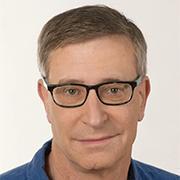
Tristan Klingelhöfer serves as a Lecturer in the Department of Political Science and the European Forum at the Hebrew University of Jerusalem, conducting research at the intersection of party politics, political communication, and political psychology with emphasis on Western European democracies. His academic foundation includes a Ph.D. from Johns Hopkins University (2021) and prior studies in Political Science and German Language and Literature at the University of Mannheim, followed by a Teaching and Research Fellowship at Humboldt-Universität zu Berlin's Chair of German Politics. Research expertise spans: Party Politics: Analysis of electoral strategies and party system evolution in post-industrial Europe Political Communication: Media framing and campaign messaging dynamics Political Psychology: Voter cognition and affective polarization mechanisms Western European Politics: Comparative governance in EU member states Scholarly output appears in premier journals including Journal of Politics , West European Politics , and Party Politics , reflecting rigorous methodological approaches to contemporary European political phenomena. Based in Room 6223 of the Faculty of Humanities Building, he contributes to MA programs in European Studies and Contemporary Germany through the European Forum's interdisciplinary framework.
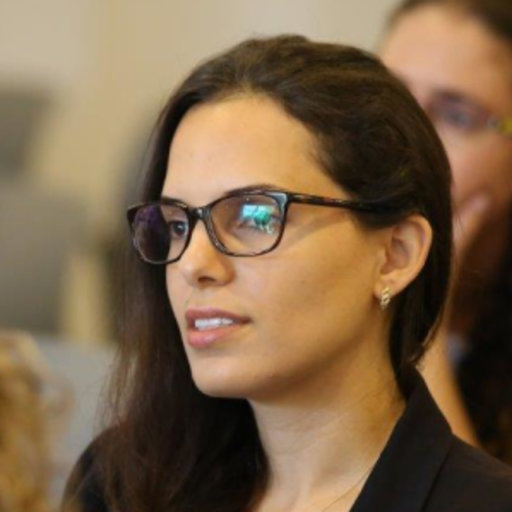
Dr. Maya Sion-Tzidkiyahu is an adjunct faculty member at the European Forum of the Hebrew University of Jerusalem, with additional teaching roles at Tel Aviv University’s European Union Studies Program and the Hebrew University’s School of Public Policy. Her research focuses on the European Union’s historical evolution, institutional frameworks, decision-making processes, and policy fields—particularly foreign policy and differentiated integration—alongside EU-Israel relations. Academic Roles : Adjunct Lecturer (Hebrew University), Tel Aviv University (EU Studies), School of Public Policy (Hebrew University) Leadership Roles : Director of the Israel–Europe Relations Program at Mitvim , Co-President of the Israeli Association for the Study of European Integration (IASEI, 2016–2021) Her publications include analyses of EU-Israel diplomatic challenges, such as the EU’s response to the Gaza war, the impact of U.S. elections on regional policy, and the role of the EU in post-conflict reconstruction. She holds a Ph.D. in European Studies and Political Science from the Hebrew University and was a 2003 junior fellow at the Institute for Human Science (IWM) in Vienna. Scientific Awards : Jean Monnet Module Competitive Grant
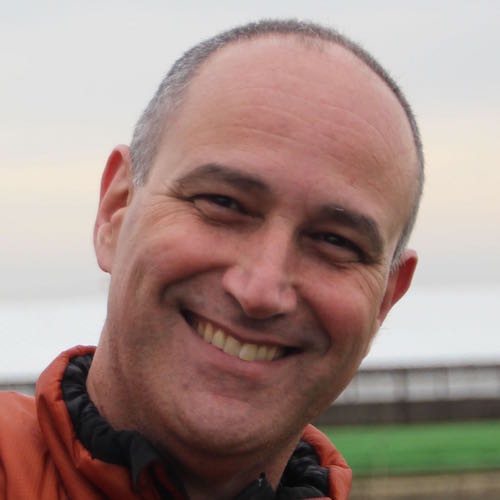
Prof. Avigdor Abelson is a distinguished marine ecologist at Tel Aviv University's School of Zoology within the Faculty of Life Sciences. His office is located in the Sherman Life Sciences building (room 207), and he maintains active research programs focused on marine ecosystem conservation and restoration. With a career spanning multiple decades, he has established himself as a leading expert in coral reef ecology and sustainable marine resource management. Abelson's primary research interests encompass Coral Reef Restoration , Artificial Reefs , Marine Conservation , Sustainable Aquaculture (particularly Integrated Multi-Trophic Aquaculture), and Tropical Seamount Conservation . His work emphasizes holistic approaches that consider the interconnected nature of marine ecosystems, focusing on identifying stressors, developing restoration tools, and creating alternative livelihoods for coastal communities. His research spans from basic ecological principles to applied conservation solutions, with particular attention to the impacts of human activities on marine environments. Analysis of his recent publications reveals a strong focus on structural complexity in coral reefs, innovative restoration techniques, and the integration of social dimensions into marine conservation. His work demonstrates a consistent progression toward more holistic, ecosystem-based approaches that address both ecological and social dimensions of marine conservation. A significant portion of his recent research examines the potential of Integrated Multi-Trophic Aquaculture systems and explores alternative solutions for degraded marine ecosystems. As a dedicated academic and conservationist, Prof. Abelson works extensively as a consultant for governmental and non-governmental organizations worldwide on a pro bono basis. His research projects include turning degraded coral islands into sustainable social-ecological systems, coral reef restoration through holistic approaches, artificial reef development, tropical seamount conservation, and sustainable aquaculture solutions including Spirulina cultivation in seawater for addressing malnutrition in coastal communities.
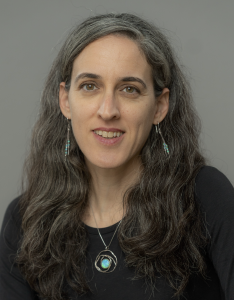
Yoram Margalioth is a Full Professor at Tel Aviv University Faculty of Law, where he teaches Taxation, Tax Policy (Public Finance), International Taxation, and Economic Growth and Distributive Justice. He pioneered Israel's first law MOOC on Coursera and has held visiting positions at NYU, Harvard, Toronto, and NUS. His academic leadership includes co-founding the Law and Philanthropy Institute (2014-2019) and the Microbusiness and Economic Justice Clinical Program. His educational background features a J.S.D. (1997) and LL.M. in Taxation (1995) from NYU School of Law, and an LL.B. (1991) and LL.M. Magna Cum Laude (1994) from Hebrew University School of Law. His doctoral thesis on U.S. tax code inflation adjustment was supervised by Daniel Shaviro. Margalioth's research integrates tax law with socioeconomic justice, focusing on Ultra-Orthodox communities, climate policy, and security studies. His work examines tax asymmetry in financial markets, welfare stigma, and charitable incentives, often bridging legal theory with empirical economics. He critically analyzes policy instruments like carbon taxes and per-capita taxation models while addressing cultural dimensions of economic behavior. His publication trajectory reveals deepening interdisciplinary engagement, shifting from pure tax technicalities toward macroeconomic justice and security policy. Recent works increasingly incorporate behavioral economics and cross-cultural analysis, particularly regarding Haredi society, while maintaining rigorous tax policy foundations. Climate change taxation and airport security profiling now feature prominently alongside traditional tax scholarship. American Law and Economics Association Prize for Best paper (for 'A Case for Pay Secrecy') As Academic Supervisor of the Microbusiness Clinical Program, Margalioth mentored students working with Ultra-Orthodox women in Bnei Brak. His World Bank consultancy (2003) and Harvard International Tax Program deputy directorship (2002-2003) demonstrate policy impact. Current research receives institutional support through TAU's Law and Philanthropy Institute framework. He co-founded and directed the Law and Philanthropy Institute (2014-2019), established the Microbusiness and Economic Justice Clinical Program (2004-2008), and served as Senior Fellow at The Haredi Institute for Public Affairs until 2021. These initiatives operationalize his research on economic inclusion, particularly for marginalized religious communities.
Professor George Weiss is a Professor of Control Engineering at the Department of Electrical Engineering - Systems, Faculty of Engineering, Tel Aviv University. He has been at Tel Aviv University since October 2007, following previous appointments at Imperial College London (1998-2007), Exeter University (1996-1998), Ben-Gurion University (1991-1996), and The Weizmann Institute (1991-1992). His research bridges theoretical foundations of control systems with practical applications in renewable energy integration and power electronics. Professor Weiss earned his PhD in Applied Mathematics from The Weizmann Institute of Science in Israel in 1989 and his MEng in Control and Computer Engineering from the Polytechnic Institute of Bucharest in 1981. His academic journey includes postdoctoral positions at Virginia Tech (1989-1991) and Brown University (1988-1989). His research focuses on distributed parameter systems, repetitive control, internal model based control, passive and conservative systems, control in power electronics, and grid integration of renewable energy. He is renowned for developing the concept of "synchronverters" with Qing-Chang Zhong, enabling grid integration of large renewable energy generators. His work spans theoretical mathematical control and practical industrial applications, with significant contributions to wave energy conversion and wind turbine vibration suppression. Analysis of his recent publications reveals a strong emphasis on renewable energy applications, particularly wind and wave energy systems, alongside fundamental theoretical work on well-posed systems and distributed parameter control. His research integrates mathematical rigor with practical engineering solutions for energy conversion systems. Professor Weiss has received substantial research funding including a 4M Euro "ConFlex" grant from the European Commission (as PI) and multiple grants from the Israel Science Foundation. His work has been supported by EPSRC, the Royal Society, and industry partners including MST, Coriolis, Solar Edge, Bioness, and Synvertec. He has supervised numerous PhD students who have gone on to prominent academic positions worldwide and serves as academic responsible for the Control Teaching Laboratory. His consulting work demonstrates the practical impact of his research across the renewable energy sector.
Shaul Yalovsky is a Full Professor at Tel Aviv University's School of Plant Sciences and Food Security, where he has maintained an active research laboratory since the late 1990s. He currently serves as head of the Peking University Institute of Advanced Agricultural Sciences – Tel Aviv University joint PhD program and has previously served as head of the Department of Plant Sciences (2013-2016). Professor Yalovsky has held visiting positions at ETH Zurich (2007), UC Berkeley (2009), and Institute Jean-Pierre Bourgin, INRAE, Versailles (2017). Yalovsky earned his PhD from the Hebrew University of Jerusalem and conducted postdoctoral research at UC Berkeley from 1993-1999 before establishing his independent laboratory at Tel Aviv University. He was promoted to Full Professor in 2010. Professor Yalovsky's research focuses on the molecular mechanisms of plant cell signaling, particularly the role of Rho of Plants (ROP) GTPases in cell polarity and stress responses. His laboratory has made significant contributions to understanding how ROPs are targeted to specific membrane domains through lipid modifications, how they form self-organizing signaling domains, and how they mediate responses to abiotic stresses. His work has important implications for improving water use efficiency in plants through manipulation of stomatal regulation. The lab also studies the interaction between ROP signaling and plant hormones like abscisic acid (ABA) in root development and stress responses. Analysis of Professor Yalovsky's publication record reveals consistent focus on ROP GTPase signaling mechanisms with increasing emphasis on the interplay between membrane dynamics, protein modifications, and plant development. His work spans fundamental biochemical characterization of protein modifications to physiological studies of plant stress responses, demonstrating both depth and breadth in plant cell signaling research. Professor Yalovsky serves as a monitoring editor for Plant Physiology (since 2005) and as an associate editor for Molecular Plant (since 2015), demonstrating his standing in the plant science community. His laboratory has pioneered techniques such as Bimolecular Fluorescence Complementation (BiFC) for studying protein-protein interactions in plants. The Yalovsky lab, located in room 609 of the Britannia-Porter building, maintains active collaborations with research groups internationally and continues to investigate the molecular mechanisms underlying plant cell signaling and stress responses.
Prof. Ronit Kark is a Full Professor in the Department of Psychology at Bar-Ilan University, specializing in leadership, gender in organizations, and organizational identity. She holds academic appointments since 2002, including roles as Associate Professor and Senior Lecturer. Her research explores leadership dynamics, gender disparities, and positive organizational relationships. Kark has supervised numerous graduate students and serves on editorial boards of top journals like Leadership Quarterly and Academy of Management Review . Education: B.A./B.Sc. in Biology and Psychology (Hebrew University, 1991), M.A. (1995) and Ph.D. (2001) in Social and Organizational Psychology from Hebrew University. Postdoctoral studies at the University of Michigan (2000) and visiting scholar roles at institutions like the University of Queensland and NYU. Research Interests: Leadership styles, organizational identity, gender disparities, women’s leadership, and emotional labor. Her work bridges feminist theory with practical management practices, emphasizing transformative leadership and inclusive organizational practices. Publications & Awards: Over 50 peer-reviewed articles, including influential works on creative leadership and transformational leadership effects. Recognitions include the L’Oreal-Rekanati Prize, Distinguished Teaching Awards, and grants from the Israel Science Foundation and Ford Foundation. Roles & Contributions: Co-founded the Gender in the Field program at Bar-Ilan University, leading courses on feminist theory and social activism. Active in academic leadership roles, including editorial boards and conference organizing committees. Labs & Teams: Collaborates with international networks like the Center for Gender in Organizations (Simmons School of Management) and leads research teams on topics such as leadership distance, creative deviance, and feminist pedagogy.
Michael London is an Associate Professor at The Hebrew University of Jerusalem's Edmond and Lily Safra Center for Brain Sciences. His research focuses on the interface between biophysical properties of neurons and information encoding, particularly nonlinear dendritic processes and neuronal noise effects. Key projects involve studying sensory systems (mouse barrel cortex) and self-generated activity (ultrasonic vocalization circuits). Techniques include patch-clamp, two-photon imaging, optogenetics, and computational modeling. Notable collaborations include work on cortical interneurons with Idan Segev and studies of adrenergic modulation with Inbal Goshen. His lab has published extensively on topics like neural coding dynamics, circuit function, and neuron-network interactions. He advises a team of ~9 PhD students and postdocs, focusing on experimental/theoretical integration. Laboratory location: Goodman Brain Sciences Building, Level 1, Room 2103. Active in neuroscience education through ELSC's PhD program and summer internships. Maintains an open-source lab website at www.mikilon.org with research tools and datasets.
Liron Cohen is an Assistant Professor at the Department of Computer Science , Ben-Gurion University , Israel. He earned his PhD at Tel Aviv University under Arnon Avron and was a Fulbright postdoctoral researcher at Cornell University hosted by Robert Constable. Currently on sabbatical at Cornell during 2024-2025, his research focuses on connections between proofs, computation, and mathematics. Education: PhD (Tel Aviv University), MSc (Tel Aviv University) Research Interests Cohen's work bridges logic, type theory, and computational mathematics. Key areas include: Type systems and computational models Theorem proving and automated reasoning Constructive and intuitionistic logic Effectful computation Cyclic proof systems Formal verification Scientific Awards Pazy Memorial Research Award ETAPS Distinguished Paper Award ETAPS Distinguished Artifact Award
Dr. Tamar Berenblum serves as Research Director of the Federmann Cyber Security Research Center – Cyber Law Program at the Hebrew University of Jerusalem's Faculty of Law. She concurrently holds Post-Doctoral Research Fellow positions at the Netherlands Institute for the Study of Crime and Law Enforcement (NSCR), the Rachel and Selim Benin School of Computer Science and Engineering (Hebrew University), and the Center for Cyber Law & Policy at Haifa University (CCLP). Her research expertise spans victimology , sociology of knowledge , cybercrime , online social control , and digital rights , rooted in her doctoral thesis The Internet as a Sphere of Social Control which examines cyberspace as both a domain and tool for social control over deviant activities. Current projects investigate deterrence mechanisms, online-shaming phenomena, language accessibility in legal proceedings, and juvenile cyber-delinquency. Analysis of her publications reveals consistent focus on human-centered cybersecurity challenges, with recurring themes in ransomware mitigation ( Security Vaccination ), hacking network topology ( Hackers Topology Matter Geography ), and digital justice dynamics ( Viral Justice and E-shaming ). Her methodological approach blends criminological theory with computational analysis of real-world cyber incidents. Beyond research, Berenblum serves as a public representative in Parole Committees of the Court Administration and contributes to policy discussions through the Cyber Law Program's regulatory work on computer crime prevention and IoT security standards.
Michael Elad is a Professor of Computer Science at the Technion - Israel Institute of Technology, where he has held a permanent faculty position since 2003. He also holds a courtesy appointment in the Technion's Electrical & Computer Engineering Department. Elad received his B.Sc. (1986), M.Sc. (1988) and D.Sc. (1997) in Electrical Engineering from the Technion, followed by a research associate position at Stanford University (2001-2003). His educational background includes: B.Sc. in Electrical Engineering from the Technion (1986) M.Sc. in Electrical Engineering from the Technion (1988), focusing on video compression algorithms under Prof. David Malah D.Sc. in Electrical Engineering from the Technion (1997), focusing on super-resolution algorithms for image sequences under Prof. Arie Feuer Michael Elad's research spans signal and image processing and machine learning, with specialization in inverse problems, sparse representations, deep learning, and generative models. He is particularly renowned for his work on sparse representations, having created the influential K-SVD algorithm together with Michal Aharon and Bruckstein. His 2010 book "Sparse and Redundant Representations: From Theory to Applications in Signal and Image Processing" is a leading publication in this field. Elad has also made significant contributions to diffusion models and generative AI, applying these concepts to solve complex problems in signal and image processing. His extensive publication record shows a clear evolution from foundational work on sparse representations to more recent applications in deep learning and generative models. While his early work focused on theoretical aspects of sparse coding and dictionary learning, his more recent publications demonstrate an integration of these concepts with modern deep learning techniques, particularly in the areas of image restoration, super-resolution, and generative modeling. Elad's scientific achievements have been recognized with numerous awards: Rothschild Prize in Engineering (2024) Member of the Israel Academy of Sciences and Humanities (2024) Weizmann Award for contributions in Sparse Modeling (2021) IEEE SPS Sustained Impact Paper Award (2018) IEEE SPS Best Paper Award (2018) IEEE SPS Technical Achievement Award (2018) Fellow of the Society for Industrial and Applied Mathematics (SIAM Fellow) (2018) IEEE Fellow (2012) ERC advanced grant (2013) Throughout his career, Elad has been actively involved in academic service and mentorship. He has served as an Associate Editor for several prestigious journals including IEEE Transactions on Image Processing, IEEE Transactions on Information Theory, and Applied Computational Harmonic Analysis. From 2016 to 2021, he was the Editor-in-Chief for SIAM Imaging Sciences. He has advised numerous students, including Michal Aharon and Yaniv Romano. Elad also headed the Rothschild-Technion Program for Excellence from 2015 to 2018, an undergraduate program for exceptional students. Elad maintains an active research laboratory at the Technion focused on advancing the theory and applications of sparse representations, deep learning, and generative models in signal and image processing. His team continues to push the boundaries of what's possible in image restoration, super-resolution, and other inverse problems in imaging.
Erez Petrank is a Professor at the Department of Computer Science , Technion - Israel Institute of Technology , where he holds the Andrew and Erna Viterbi Chair. His research focuses on concurrent computing , programming languages , and systems with an emphasis on memory management . Additional interests include parallelism , cryptography , data structures , approximation algorithms , and distributed computing . Research Trends Recent publications highlight his work on safe memory reclamation (ERA Theorem, VBR), lock-free data structures (queues, stacks, B+ Trees), and persistent memory algorithms (NVTraverse, Mirror). These works span concurrent computing , distributed systems , and memory efficiency in multi-threaded environments. Scientific Awards Distinguished Paper Award at Euro-Par 2015 Contact Information Email: erez@cs.technion.ac.il Office: Taub 528, Technion Phone: +972-73-378-4942
Keren Censor-Hillel is a Professor in the Department of Computer Science at the Technion, Israel Institute of Technology. Her research focuses on distributed computing and theoretical computer science, with a particular emphasis on simplifying parallel programming and optimizing network bandwidth through algorithmic innovation. Her work has been supported by prestigious grants including the ISF (2014, 2023), NSF-BSF (2016), ERC Starting Grant (2017), and Henry Taub Research Grant (2018). She actively mentors graduate students and postdoctoral researchers, seeking candidates with strong algorithmic and mathematical foundations. Research Highlights: Contributions to lock-free algorithms, maximal independent set problems, and vertex connectivity analysis. Media Recognition: Featured in Communications of the ACM, MIT News, and other outlets for her work on distributed systems. Keren serves as a key organizer for academic events like the Technion Distributed Computing Seminar (TDC) and supports initiatives such as Women in Theory (WIT).
Sara Cohen Shabot is an Associate Professor in the Women’s and Gender Studies program under the Faculty of Humanities. Her research focuses on the intersection of gender, healthcare, and cultural practices, particularly in Israeli contexts. Key research areas include Obstetric Violence , Ecofeminism , and Menstrual Health . Recent publications highlight mistreatment during childbirth, menstrual practices with reusable products, and the sociocultural implications of rectal examinations in obstetric care. Her work spans interdisciplinary domains such as Medical Humanities , Public Health , and Gender-Based Violence . Collaborations with researchers like A. Kubovski, D. Taylor, and the Break the Silence Campaign underscore her engagement with contemporary feminist and healthcare activism.
Nathan (Nati) Linial is a Professor at the School of Computer Science and Engineering at The Hebrew University of Jerusalem, where he has maintained a distinguished academic career spanning several decades. His research bridges multiple mathematical disciplines with theoretical computer science. Linial's primary research interests encompass Combinatorics, Theory of Algorithms, Geometry, Analysis, and Computational Molecular Biology . His work often explores the deep connections between discrete mathematics and computer science, particularly focusing on high-dimensional combinatorial structures, metric embeddings, and their algorithmic applications. His publication record demonstrates consistent contributions across decades, with recent work focusing on high-dimensional permutations, simplicial complexes, graph theory, and coding theory. Linial has developed significant theoretical frameworks for understanding complex combinatorial structures and their geometric representations. Among his notable achievements is being named an AMS Fellow and receiving the 2008 Conant Prize for the influential survey paper "Expander graphs and their applications" co-authored with S. Hoory and A. Wigderson. His research has shaped multiple areas of theoretical computer science and discrete mathematics. Linial has served on the editorial boards of prestigious journals including Israel Journal of Mathematics (where he was Chief Editor 2013-2017), Random Structures and Algorithms , and Combinatorica . He has supervised numerous students throughout his career and maintains active research collaborations worldwide.