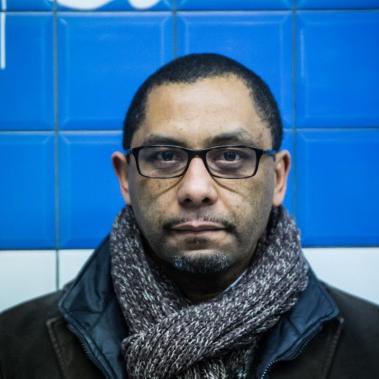
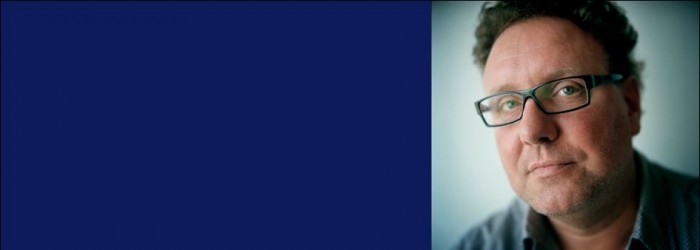
Yuri Bobbert is a Professor of Information System Science at Antwerp Management School (AMS), part of the University of Antwerp. He holds dual PhDs from Radboud University and the University of Antwerp, focusing on IT performance measurement. His career includes roles as Global Group CSO of NN Group and UWV (Government), leading cybersecurity integrations during mergers like NN Group and Delta Lloyds. As CEO of B-ABLE (IT consultancy), he developed cybersecurity frameworks. Currently, he advises on NIS2 compliance and Zero Trust strategies. His research spans cybersecurity ROI, regulatory frameworks (e.g., NIS2), and leadership in digital security. Education PhD in Information Systems (Radboud University) PhD in Cybersecurity (University of Antwerp) Research Interests Cybersecurity governance and compliance ROSI (Return on Security Investment) CISO leadership and board communication Zero Trust architecture Risk quantification in digital ecosystems Publications & Books Authored books: Strategic Approaches to Digital Platform Security Assurance , Cybersecurity in 60 Minutes , and Digital Security Leadership Over 100 peer-reviewed publications on cybersecurity performance and governance Grants & Awards Recipient of NIS2 implementation research grants Contributor to EU cybersecurity policy discussions Labs & Teams Leads AMS cybersecurity education programs and collaborates with ON2IT on global cybersecurity strategies.
Pieter d'Hoine serves as Professor and Vice Dean of Education at KU Leuven's Higher Institute for Philosophy. He is affiliated with the Wulf Mansion Centre for Ancient, Medieval and Renaissance Philosophy and LECTIO – KU Leuven Institute for the Study of Textual Transmission. Additional institutional roles include membership on the Board of the Institute for Living Languages, HIW Faculty Council, and Philosophy Program Oversight Committees. His research centers on Ancient Philosophy with emphasis on Neoplatonism, particularly Proclean metaphysics, logical structures in Platonic/Aristotelian commentaries, and mechanisms of philosophical canon formation. He investigates knowledge transmission from Greek-Roman antiquity through medieval and Renaissance scholarship, integrating digital humanities methodologies to analyze textual evolution and conceptual continuity across historical periods. Recent publications (2024) exhibit concentrated focus on Proclus' metaphysical frameworks, including predication theory, modes of being, and theological elements within Platonic exegesis. His work bridges textual criticism with systematic philosophy, examining how ancient commentators shaped enduring philosophical paradigms through citation practices and logical innovation in works like the Elements of Theology . No major scientific awards are documented in the provided materials. He actively supervises doctoral research, including G.J. Ruz Troncoso's analysis of Proclus' argumentative structures and S-H. Yang's study of Aristotelian metaphysics. Current funding supports eight major projects: "Een nieuw model voor de editie van antieke filosofische fragmenten" (2025-2031) as Co-promotor "De filosofische canon en de citaties van Plato en Aristoteles" (2024-2028) as Promotor "Rechtvaardigheid voor dieren" (Justice for Animals, 2024-2028) as Promotor "De mechanica van Canonvorming" (Canon Formation Mechanics, 2024-2028) as Promotor His research ecosystem operates through the Wulf Mansion Centre and LECTIO institute, which coordinate international collaborations on premodern textual transmission, utilizing digital tools to map philosophical concept evolution across millennia.
Sophie Spirkl is an Associate Professor (with tenure) in the Department of Combinatorics and Optimization at the University of Waterloo. Previously, she held postdoctoral positions at Princeton University (as an NSF postdoc and instructor, supervised by Maria Chudnovsky) and at Rutgers University (under Jeff Kahn). She earned her PhD from Princeton University under the guidance of Maria Chudnovsky and Paul Seymour. Her research focuses on graph theory and combinatorics, with notable contributions to induced subgraphs, tree decompositions, chromatic number properties, and structural graph theory. She is a recipient of the 2023 Sloan Research Fellowship and co-founded the diamond open-access journal Innovations in Graph Theory . Education: PhD in Mathematics, Princeton University (2016–2020) Postdoctoral Fellowships: Princeton (2020–2022), Rutgers (2018–2020) Research Interests: Dr. Spirkl’s work spans multiple areas of combinatorics, including structural graph theory, extremal graph theory, and algorithmic graph theory. She has published extensively on topics such as induced subgraph obstructions, χ-boundedness, tree decompositions, and the Erdős–Hajnal conjecture. Her research often intersects with theoretical computer science, particularly in parameterized complexity and graph colorings. Awards & Recognition: 2023 Sloan Research Fellowship Contributions to the Innovations in Graph Theory journal Academic Contributions: Her articles address foundational problems in graph theory, such as the Erdős–Hajnal conjecture for C₅, logarithmic treewidth in even-hole-free graphs, and induced saturation for cycles. She collaborates with leading researchers like Maria Chudnovsky and Paul Seymour, advancing the field through rigorous combinatorial analysis. Community Engagement: She coordinates the Women in Math Directed Reading Program at Waterloo, supporting underrepresented groups in mathematics. Her spouse, Logan Crew, is a Research Assistant Professor at the same institution.
Matthew B. Blaschko is a Professor in the Department of Electrical Engineering at KU Leuven, Belgium. He serves as director of the KU Leuven ELLIS unit and is a fellow in the ELLIS Health program. He is a Core PI in the Flanders AI Research Program, working as a workpackage lead for Decision Support Systems and Medical Imaging. Blaschko is also a member of the KU Leuven Institute for Artificial Intelligence and one of the leaders of the working group on Machine Learning and Data Science. Professor Blaschko received his B.S. from Columbia University, M.S. from the University of Massachusetts Amherst, and Dr. rer. nat. from Technische Universität Berlin (awarded for work at Max Planck Institutes Tübingen). He was a Newton International Fellow at the University of Oxford and received his Habilitation (HDR) from École Normale Supérieure de Cachan. Prior to joining KU Leuven, he was a Permanent Research Scientist in the INRIA Saclay Research Center and a Faculty Member at Ecole Centrale Paris. His research focuses on machine learning techniques applied to visual data, with particular emphasis on calibration in deep learning, medical image analysis, and federated learning. Blaschko's work bridges theoretical foundations with practical applications, as evidenced by technology developed in his research being incorporated into MONA, software for ophthalmic image analysis. His research group has made significant contributions to the fields of model calibration, uncertainty estimation, and medical imaging analysis, with recent publications showing strong trends toward improving reliability of AI systems in medical contexts and advancing theoretical understanding of calibration metrics. Professor Blaschko has been recognized with several awards including the Université Paris-Saclay STIC Doctoral School Best Scientific Contribution Award, Best Paper Award at CVPR 2008, Main Award at DAGM 2008, and Best Student Paper Award at ECCV 2008. Professor Blaschko has supervised numerous PhD and Master's students, with current and former students including Deniz Soysal, Claire Marchal, Dongli Xu, Sebastian Gruber, Jiameng Li, Marco Mezzina, and many others working on diverse topics from Alzheimer's disease analysis to surgical phase recognition. His research has been supported by various funding sources including the Flanders AI Research Program. He has co-organized several influential workshops including the "Another Brick in the AI Wall: Building Practical Solutions from Theoretical Foundations" at CVPR 2025, Commands 4 Autonomous Vehicles workshop at ECCV 2020, and the Learning from Limited Labeled Data workshop series at NIPS 2017 and ICLR 2019. His laboratory focuses on machine learning for medical image analysis, with applications in ophthalmology, neurology, and surgical robotics. The group maintains active collaborations with medical institutions and participates in international challenges such as the KNee OsteoArthritis Prediction (KNOAP2020) challenge.
Tim Van de Cruys is a Senior Lecturer at the Faculty of Arts, KU Leuven, serving as Head of the Centre for Computational Linguistics (CCL). He maintains significant affiliations with LECTIO (KU Leuven Institute for the Study of the Transmission of Texts, Ideas and Images), Leuven.AI (KU Leuven Institute for Artificial Intelligence), and LILI (KU Leuven Interdisciplinary Language Institute). His work bridges computational linguistics, artificial intelligence, and humanities research with practical applications across multiple disciplines. Dr. Van de Cruys specializes in computational semantics and creative language generation, with particular expertise in applying NLP techniques to historical and classical texts. His research spans multiple domains including: Natural Language Processing for ancient languages (Latin, Ancient Greek) Computational approaches to lexical and compositional semantics Large language models and their applications in humanities research Creative language generation and human-AI collaboration Named entity recognition and disambiguation in historical contexts Non-autoregressive modeling for sequential generation tasks His recent publications demonstrate a strong focus on applying cutting-edge NLP techniques to humanities challenges, particularly in processing ancient languages. He frequently employs transformer models to address named entity recognition, word sense discrimination, and semantic analysis in low-resource language contexts. His work consistently bridges formal linguistic theory with practical computational applications, creating valuable tools for digital humanities scholars. As promotor and co-promotor on numerous research projects extending through 2029, Dr. Van de Cruys supervises PhD students working at the AI-humanities intersection. His current major projects include "Living Corpora" (exploring human-AI collaboration in digital humanities), "Stochastic processes and non-autoregressive models for sequential generation," and "NIKAW" (exploring knowledge networks from classical antiquity). These projects demonstrate his commitment to advancing both theoretical understanding and practical applications of computational linguistics. He teaches various courses including Computational Linguistics, Scripting Languages, Programming for Humanities, Computational Creativity, and AI for Humanities, training students to work at this critical interdisciplinary crossroads. His leadership of the Centre for Computational Linguistics positions him at the forefront of computational linguistics research in Belgium, where he continues to expand the boundaries of what's possible at the intersection of language, computation, and humanistic inquiry.
David Burn is a Professor and Program Director of the POC Archeologie, Kunstwetenschappen en Musicologie (AKM) at the Faculty of Arts, KU Leuven. His research focuses on Heinrich Isaac and Renaissance musicology, with specializations in polyphony, liturgical chant, and source-critical studies. He leads multiple projects on medieval and Renaissance courtly song, Jesuit musical heritage, and multilingualism in early song. Burn supervises doctoral research and teaches courses on music history, analysis, and digital musicology. His editorial work includes co-editing the Journal of the Alamire Foundation . Research Interests: Polyphony, liturgical music, 15th–16th century Imperial lands, source studies, early music analysis. Teaching: Courses include 'Analysis in Context: Music to 1750', 'Music of the Middle Ages and Renaissance', and 'Research Colloquia in Musicology'. Projects: Promoting studies on Trouvère music, Jesuit musical inheritance, and Scottish polyphony. He actively contributes to academic conferences and publishes on topics like Czech National Library manuscripts and Low Countries musical traditions.
Adrien Carbonnet serves as Associate Professor at KU Leuven's Faculty of Arts, where he concurrently holds leadership positions as Head of Japanese Studies and Director of the Centre for Korean Studies. He maintains an external affiliation as Fellow of the Institut Français de Recherche sur l’Asie de l’Est (INALCO/Université de Paris/CNRS). His academic profile centers on East Asian diplomatic history with specialized focus on Belgium's historical engagements with Korea and Japan during the imperial era. Carbonnet's research investigates 19th-20th century international relations in East Asia, particularly Belgian-Korean diplomatic history culminating in the 1901 treaty, Japan-Belgium relations during the Russo-Japanese War, and Korean minority experiences in Japan. His current sabbatical project (2024-2025) at the University of Tokyo's Center for Korean Studies aims to produce a monograph on Belgium-Korean relations during imperialism (1876-1919). He also actively translates works by Korean-Japanese writer Kin Kakuei and examines disease perception in early 20th century Korea through Belgian diplomatic archives. Analysis of his recent publications reveals consistent emphasis on archival-driven diplomatic history, with recurring themes of European imperial influence in Korea, cross-cultural disease perception, and contemporary implications for inter-Korean relations. His work bridges historical scholarship with current diplomatic practices, frequently contextualizing modern Korean affairs through historical precedents while maintaining rigorous archival methodology. Carbonnet's research portfolio includes significant grants: a 2024-2025 sabbatical monograph project on Belgium-Korea imperialism relations, the ongoing 2019-2025 study of Nippon Victor's role in global jazz history (as Co-promotor), and the concluded 2007-2024 Kansai University cooperation agreement. He contributes to academic governance as senior member of the Faculty of Arts Council and the POC Taal- en regiostudies committee. As academic leader, Carbonnet directs the Centre for Korean Studies while heading the Japanese Studies unit, overseeing curriculum development for Korean language programs (reading, writing, grammar, conversation) and modern Japanese courses. His teaching extends to specialized seminars on East Asian international relations history, directly informing his research on Belgian diplomatic engagements in the region.
Stefaan Smis is a Professor at the Faculty of Law and Criminology of the Vrije Universiteit Brussel . He is also a part-time Reader at the University of Westminster , where he teaches International Criminal Law and related courses. His research focuses on International Law , Human Rights , and International Humanitarian Law , with a particular emphasis on the prosecution of grave human rights violations and regional integration in Africa. He has been actively involved in academic cooperation, including founding the Centre régional des droits de l’homme et de droit international humanitaire in the Democratic Republic of Congo. His editorial roles include serving as Editor-in-Chief of the Human Rights & International Legal Discourse journal and a member of the editorial board of the Revue de droit africain . Scientific Awards: Fellow of the International Law Association's Committee on Indigenous Peoples (2008) Fellow of International Legal Materials (1998) Founding member of VORMEN (Vlaamse Organisatie voor Mensenrechteneducatie) (2000) Research Trends: His recent publications address transnational ecological conflicts, climate litigation, and regional African courts tackling global challenges. He often bridges human rights law with environmental and climate justice frameworks. Teaching and Supervision: He has supervised PhD candidates such as Holvoet, M. and taught at institutions including the University of Georgia , University of Ghent , and Université Catholique de Bukavu in the Democratic Republic of Congo.
Filip De Boeck is a full professor in Social and Cultural Anthropology at KU Leuven’s Faculty of Social Sciences. He is a member of the LUSI - KU Leuven Urban Studies Institute and serves on the Council of the Faculty of Social Sciences. His research focuses on urban anthropology, visual anthropology, and the Democratic Republic of Congo, particularly Kinshasa. He leads projects such as ‘Colonial Graverobbing’ and ‘Dakar-Bamako: Waiting for a train ride back to the future.’ De Boeck’s work bridges ethnography and art, collaborating with visual artist Sammy Baloji on projects like Suturing the City . His recent publications include studies on Kinshasa’s urban futures, infrastructure politics, and decolonial knowledge frameworks. He has supervised PhD candidates such as Charlotte Veithen and Niels Van Doninck. His research highlights themes like urban marginality, postcolonial urbanism, and the interplay between art and anthropology. Key projects include the Frontier Files book and exhibition exploring Congo-Angola border dynamics. De Boeck’s work is supported by grants including KU Leuven’s Sabbatical Program and the Bijzonder Onderzoeksfonds. He actively engages with global academic networks, presenting at institutions like the British Academy and University of Lisbon. His teaching includes courses on urban anthropology, power dynamics, and decolonizing anthropology. Current projects address infrastructure politics in Abidjan, Côte d’Ivoire, and the socio-spatial transformations of Kinshasa’s Malebo Pool wetlands.
Charles-Henry Bertrand Van Ouytsel is a Research Assistant and Visiting Lecturer at Université catholique de Louvain , affiliated with the Louvain Polytechnic School (EPL) and the Computer Engineering Center (INGI) . His work focuses on malware analysis , symbolic execution , and machine learning for cybersecurity applications. Research Areas : Packing detection, intrusion detection systems, side-channel security, and adversarial machine learning. Teaching : Involved in courses like Secured systems engineering (LINFO2144) and Software engineering and programming systems seminar (LINFO2359) . His recent publications emphasize malware obfuscation techniques and security evaluation frameworks . Collaborations with Axel Legay and others highlight his contributions to tool development (e.g., Packing-Box , SEMA ). No scientific awards are explicitly mentioned.
Imke Baetens is a Professor at the Vrije Universiteit Brussel (VUB), affiliated with the Faculty of Psychology and Educational Sciences and the Department of Psychology. Her research focuses on self-injurious behavior, mental health in adolescents and older adults, and resilience-building interventions. She leads multiple projects addressing mental health challenges in schools, elderly populations, and marginalized groups like transgender individuals. Key initiatives include the PRISM network for mental health innovations and the SMARTS project enhancing resilience through schools. Baetens collaborates internationally, with studies on cross-national self-injury trends and personality risk factors for self-harm in older adults. She actively engages in public discourse on mental health via media contributions and hosts academic visitors to advance collaborative research. Education: Not explicitly stated in text; inferred doctoral training via research roles. Research interests prioritize bridging clinical practice and population health, with a focus on preventive mental health strategies. Over 97 publications since 2009 reflect her expertise in psychology, gerontology, and public health. Notable datasets include longitudinal studies on self-harm risk and cross-country comparisons of mental health interventions. Media engagements highlight her role as a public mental health expert, addressing topics like pandemic impacts on youth and elderly self-harm trends. She supervises numerous academic works, though specific student names are not listed.
Dick Houtman is a Professor of Sociology at KU Leuven's Faculty of Social Sciences , leading the Centre for Culture, Conflict, and Inequalities (C3I) . He also holds a Faculty Fellow position at Yale University's Center for Cultural Sociology . His work focuses on cultural change and cultural conflict in the West since the 1960s, particularly in politics and religion , with a special interest in the Romantic turn that has transformed Western societies. Research topics: Cultural sociology, secularization, spirituality, cultural-political polarization, anti-institutionalism, and the romantic legacy in modernity. Teaching: Culture and Society specialization in KU Leuven's Master of Sociology program. Key projects include: Non-Religious Discourses and the Secularization of the Secular (2021-2025) Fashioning Ideology, Ideologizing Fashion (2020-2024) Boundaries Across Borders (2022-2023) The Implications of Religious Pluralism (2014-2025) Scientific honors : Yale University Center for Cultural Sociology Faculty Fellow Recent publications (2023-2025) show strong focus on spirituality , secularization , religious pluralism , and cultural polarization , with keywords spanning from political sociology to digital religion . His work often examines authenticity claims, the cultural significance of science, and the transformation of religious and cultural identities in contemporary societies.
Okechukwu Vincent Nwokorie is affiliated with the Department of Social and Cultural Anthropology at KU Leuven. His research focuses on disability studies, empowerment discourses, and cultural practices in Southeast Nigeria. He completed his PhD in 2020 under the supervision of Prof. Patrick Devlieger, examining the intersections of disability support, local elites, and global frameworks. His work critiques how 'empowerment' programs often reinforce social hierarchies while exposing gaps in accountability among NGOs. Key research themes include the socio-cultural implications of disability, neoliberal influences on social welfare, and the transformative potential of ethnographic methodologies. His findings challenge conventional assumptions about empowerment's outcomes and highlight the agency of disabled communities amid structural inequities.
Frédéric Vrins is a Professor at the Louvain School of Management (LSM) , UCLouvain , affiliated with the Louvain Institute of Data Analysis and Modeling in economics and statistics (LIDAM) and Louvain Finance (LFIN). His work bridges theoretical and applied finance, with a focus on risk modeling, portfolio optimization, and machine learning applications. His research interests include: Quantitative Finance: Derivatives pricing, stochastic processes, and model calibration. Risk Management: Credit concentration risk, recovery rates, and wrong-way risk in financial markets. Portfolio Optimization: Mean-variance strategies, diversification metrics, and robustness under parameter uncertainty. Machine Learning in Finance: Applications to recovery rate prediction and option pricing frameworks. Recent publications highlight trends in: Credit risk modeling for Collateralized Loan Obligations (CLOs) and consumer credit. Machine learning integration in derivatives pricing and portfolio construction. Stochastic methods for Brownian bridges, CDS spreads, and recovery rates. Empirical studies on Loan-to-Value policies and business cycle impacts. Affiliations and locations: Louvain School of Management (LSM) - Building B, Chaussée de Binche 151, 7000 Mons Louvain Finance (LFIN) - Traverse d'Esope 1, 1348 Louvain-la-Neuve Louvain School of Management (LSM) - BATA Building, Chaussée de Binche 151, 7000 Mons
Peter Karsmakers serves as Associate Professor at KU Leuven's Department of Computer Science within the Faculty of Engineering Technology, based at the Geel Campus. He coordinates the Declarative Languages and Artificial Intelligence (DTAI) research group and holds leadership roles including coordinator of Research and Education for Computer Science across Geel and Diepenbeek Campuses. Karsmakers earned his PhD in Engineering Science in May 2010, focusing on kernel-based learning algorithms for sparse modeling and efficient predictions from large datasets. His doctoral work established foundations for his current research trajectory in resource-constrained machine learning systems. His research integrates machine learning with signal processing for real-time sensor data interpretation, specializing in anomaly detection from acoustic, radar, and accelerometer signals on embedded devices. Current projects address industrial condition monitoring, elderly care systems, and livestock facility monitoring through three main tracks: acoustic monitoring (e.g., SINS, WATCHDOG), radar-based systems (e.g., FARADAY, NextPerception), and smart electronics for power converters. Recent publications demonstrate strong trends in constraint-guided deep learning architectures for industrial applications, cross-environment robustness in sensor systems, and domain-knowledge integration to reduce data requirements. His work consistently bridges theoretical machine learning with practical implementations in resource-constrained environments. No scientific awards or fellowships were mentioned in the provided materials. Karsmakers supervises over 10 master's theses annually and coordinates a research team of 10 PhD students and a post-doc within DTAI-ADVISE. He has secured approximately 2.3 million euros in funding through VLAIO, EU-ECSEL, and bilateral industry contracts, including 10 active projects such as AutoEdgeML (2024-2028) and Fault Tolerant Neural Networks for Space Applications (2024-2027). He leads the DTAI-ADVISE research group focused on developing software that attaches semantics to sensor data on resource-constrained devices. The team operates across multiple campuses with specialized labs for acoustic monitoring (Geel), radar-based systems (in collaboration with ESAT-TELEMIC), and smart electronics (with Electrical Engineering department), maintaining strong industry partnerships with companies in healthcare, manufacturing, and agriculture sectors.