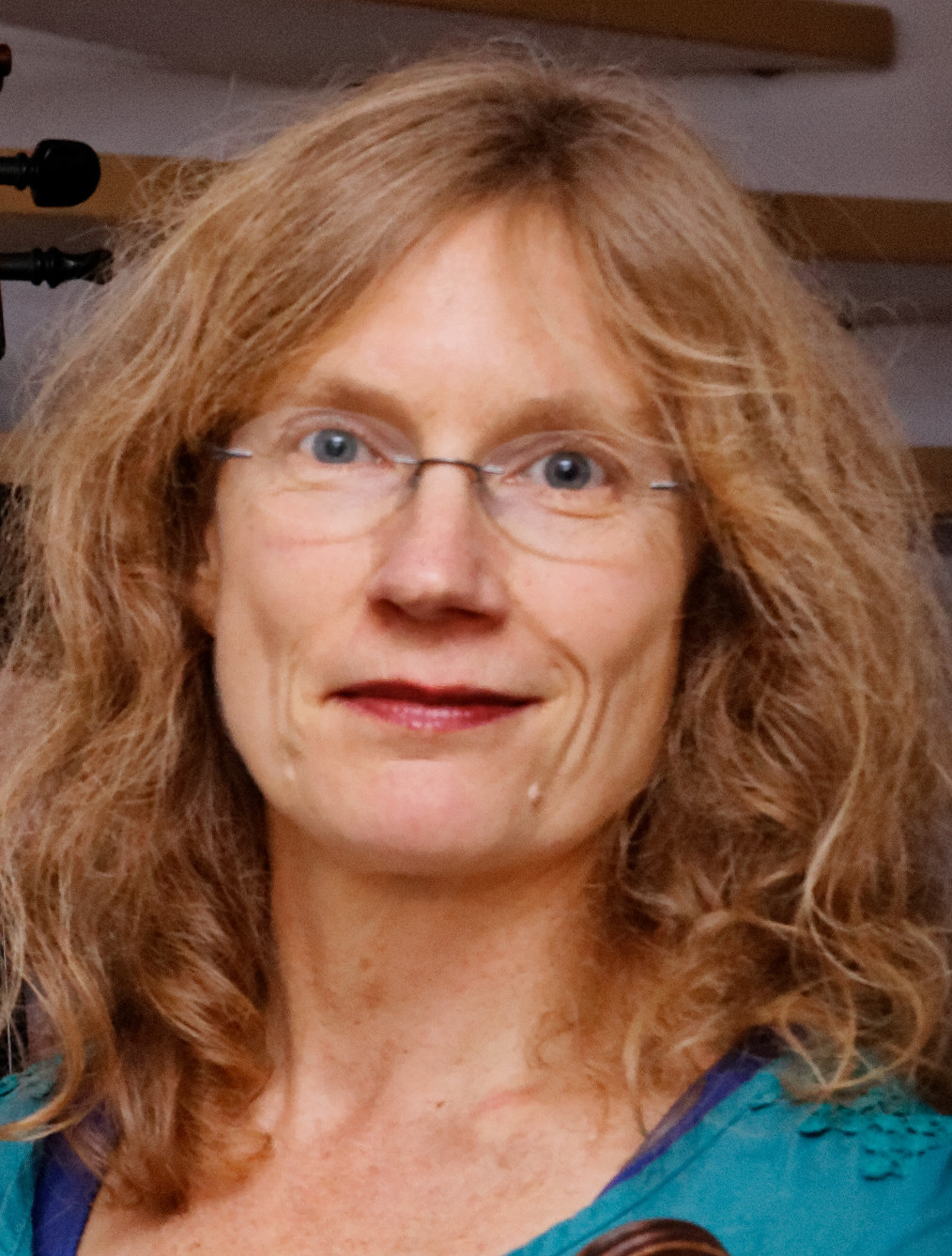
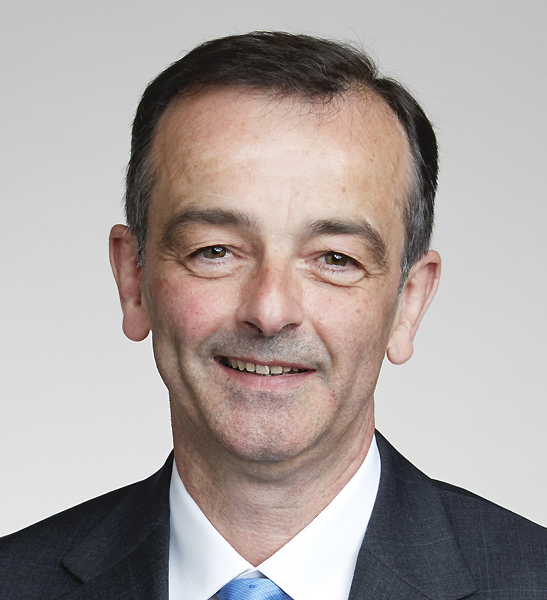
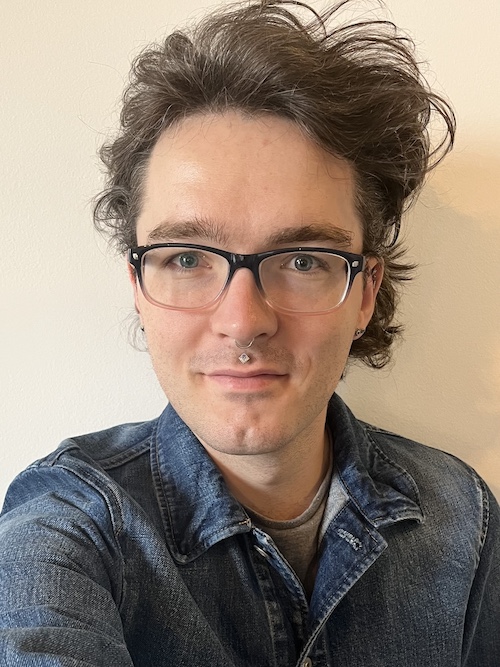
Tasho Kaletha is a Professor in the Department of Mathematics at the University of Michigan. His research focuses on the Langlands program, intersecting number theory, representation theory, algebraic geometry, and analysis. He holds a Ph.D. from the University of Chicago (2010). Key research interests include representation theory of reductive groups, harmonic analysis, Galois cohomology, and automorphic representations. Education: Ph.D., University of Chicago (2010). Research interests revolve around the Langlands conjectures, endoscopy, and the structure of reductive groups. His work addresses representation theory of real/p-adic groups, cohomology of Galois groups, and automorphic spectra. Recent publications explore Bruhat-Tits theory, discrete series L-packets, and global rigid inner forms. He has authored a monograph with Gopal Prasad and contributed to foundational papers in Duke Mathematical Journal and Inventiones Mathematicae . Notable contributions include studies on supercuspidal L-packets, endoscopic classification, and commensurability growth in algebraic groups. His work bridges abstract algebraic structures with analytic techniques, advancing the Langlands program's goals.
Professor Katrin Tent is a distinguished mathematician specializing in mathematical logic at the University of Münster, where she holds a professorship in the Faculty of Mathematics and Computer Science within the Institute for Mathematical Logic and Foundations Research. She is an active researcher in Mathematics Münster, an investigator in CRC 1442 Geometry: Deformations and Rigidity, and contributes to multiple research projects including Topics in Mathematics Münster T3: Models and universes, T4: Groups and actions, and T8: Random discrete structures and their limits. PhD in Linguistics, Christian-Albrechts-Universität zu Kiel (1988) Diplom in Mathematics, Christian-Albrechts-Universität zu Kiel (1989) PhD in Mathematics, University of Notre Dame (1994) Habilitation, "Model theory of groups and BN-pairs" (2000) Professor Tent's research bridges model theory, group theory, and geometry, with particular focus on finite Morley rank structures, BN-pairs, and sharply multiply transitive groups. Her work often combines methods from these areas to prove unexpected results, either constructing groups or incidence geometries with surprising model theoretic properties or using model theory to construct new and interesting geometries or groups. Her recent publications reveal a consistent trajectory connecting model theory with group-theoretic structures. She has made significant contributions to understanding sharply 2- and 3-transitive groups, finite Morley rank geometries, and the model theory of generalized polygons. Her work demonstrates how model-theoretic techniques can solve deep problems in group theory and geometry, particularly through the study of BN-pairs and incidence structures. DFG Research Fellowship (1996-1998) Bayerischer Habilitationsförderpreis (1998-2001) Heisenberg-Stipendium (2001-2004) ERC Consolidator Grants expert panel (2016, 2018) Elected to DFG Senate (2019) Professor Tent leads an active research group with current members including Marco Amelio, Dr. Benjamin Brück, Anna Cascioli, Lukas Jonuska, Silke Meissner, Zahra Mohammadi Khangheshlaghi, and Dr. Sam Shepherd. Her former research group members include Dr. Simon Andre, Dr. Isabel Müller, and Dr. Tim Clausen, among others. Her supervisory work spans both theoretical foundations and specific applications in geometric group theory and model theory. Her research group operates within the Institute for Mathematical Logic and Foundations Research at the University of Münster, collaborating closely with other researchers in the Mathematics Münster cluster. The group participates in various projects including CRC 1442 - C04: Group theoretic aspects of negative curvature, contributing to the vibrant mathematical research environment at one of Germany's leading mathematics institutions.
Simon Wadsley is a Lecturer in the Department of Pure Mathematics and Mathematical Statistics (DPMMS) at the University of Cambridge's Faculty of Mathematics. His research focuses on algebraic structures, particularly in the realm of Iwasawa algebras, p-adic representation theory, and noncommutative geometry. He is affiliated with the Algebra research group and contributes to foundational work in D-modules on rigid analytic spaces and equivariant line bundles over p-adic spaces. Academic Position: Lecturer, DPMMS, University of Cambridge Research Group: Algebra Contact: S.J.Wadsley@dpmms.cam.ac.uk | Room C0.05 His research interests span prime ideals in Iwasawa algebras , p-adic analytic groups , and equivariant geometric structures . He explores connections between algebraic geometry and number theory, with notable contributions to the theory of D-modules in rigid analytic settings and the study of representations of p-adic Lie groups. Recent work includes investigations into global sections of line bundles on p-adic upper half planes and holonomicity properties of D-modules. Publications highlight advancements in p-adic analysis, including work on Kashiwara equivalences and weak holonomicity. His research also extends to categorical frameworks like PROPs for linear systems and foundational studies in noncommutative algebraic structures. Wadsley collaborates widely, with key contributions to Iwasawa theory and invariant ideals in noncommutative rings.
Dr. Olga Varghese is a Lecturer and Academic Advisor at the University of Münster since 2025, with prior research roles at Heinrich-Heine Universität Düsseldorf (2023-2025) and OvGU Magdeburg (2021-2023) under DFG projects. She holds a PhD in Mathematics from the University of Münster (2010-2015) and has been a Postdoc there since 2015. Her research focuses on geometric group theory, particularly Coxeter groups, automorphism groups, and profinite properties, with significant contributions to group actions on CAT(0) spaces and graph products. Her recent work explores profinite rigidity, involutions in Coxeter groups, and automatic continuity in group actions. She has taught foundational and advanced courses in topology, algebra, and mathematics for natural sciences, with a strong emphasis on geometric group theory and algebraic structures. Current affiliations include the University of Münster's Department of Mathematics and Computer Science. Her publications span journals like Algebraic and Geometric Topology , Journal of Group Theory , and Geometriae Dedicata , reflecting her expertise in algebraic and geometric interplay.
Martin Bridson serves as President of the Clay Mathematics Institute since 2018 and holds the Whitehead Professorship of Pure Mathematics at the University of Oxford's Mathematical Institute, where he has been a Fellow of Magdalen College since 2007. Previously, he was Head of Oxford's Mathematical Institute (2015-2018), Professor of Pure Mathematics at Imperial College London (2002-2007), and Professor of Topology at Oxford (1999-2002). His academic journey began with undergraduate studies at Hertford College, Oxford, followed by PhD work at Cornell University. Bridson's research centers on Geometric Group Theory, Topology, and Spaces of Non-Positive Curvature. His work explores the deep connections between algebraic structures and geometric properties, particularly focusing on metric geometry, profinite completions, and the topology of non-positively curved spaces. His influential monograph "Metric Spaces of Non-Positive Curvature" (co-authored with André Haefliger) has become a foundational text in the field. His recent publications (2024-2025) demonstrate continued leadership in geometric group theory, with significant contributions to profinite rigidity, CAT(0) geometry, and automorphism groups. These works reveal evolving research directions toward computational aspects of group theory and deeper connections with low-dimensional topology. Steele Prize for Mathematical Exposition (2020, with Haefliger) Fellow of the Royal Society (2016) Fellow of the American Mathematical Society (2015) Royal Society Wolfson Research Merit Award (2012) London Mathematical Society Whitehead Prize (1999) Bridson has secured major research funding including EPSRC Senior Fellowships (2007-2012, 1997-2002), EPSRC Platform Grants (2010-2015), and multiple NSF grants. His leadership extends to directing the Mathematical Institute at Oxford and presiding over the Clay Mathematics Institute, where he influences global mathematical research directions. His collaborative work spans institutions including Princeton, Geneva, and Lausanne, reflecting his international research network.
Dawid Kielak is a Professor of Pure Mathematics at the University of Oxford and a Tutorial Fellow at Hertford College, Oxford. He holds a DPhil from the University of Oxford and has held academic positions in Warsaw, Bonn, and Bielefeld before returning to Oxford. His research focuses on geometric group theory, particularly the interplay between group rings, algebraic structures, and topological spaces. He is a member of the Algebra and Topology research groups at Oxford. His research interests include geometric group theory, cohomology of arithmetic groups, ℓ²-invariants, and the study of automorphism groups of free groups. His work is funded by prestigious grants such as the ERC Starting Grant 'Fibring' (2019) and the ERC Consolidator Grant 'HigherHyper' (2024). He has also received awards like the Whitehead Prize (2022) and the Frontiers of Science Award (2023). Key research contributions include studies on Kazhdan constants for Chevalley groups, profinite rigidity of fibring, and coherence properties of groups. His work often bridges algebraic and topological methods, with applications to 3-manifold groups and random groups. He supervises multiple DPhil students and has mentored postdoctoral researchers in areas like ℓ²-Betti numbers and group rings. Teaching responsibilities include pure mathematics tutorials at Hertford College and advanced courses on geometric group theory, 3-manifolds, and ℓ²-invariants at the University of Oxford and Bielefeld University. His lab focuses on collaborative projects in algebraic topology and geometric group theory, with a particular emphasis on virtual fibring and higher Kazhdan properties.
Henry Wilton is a Professor of Topology and Group Theory at the University of Cambridge's Department of Pure Mathematics and Mathematical Statistics (DPMMS), and a Fellow of Trinity College. His research focuses on geometric group theory, topology, and low-dimensional topology, with particular emphasis on hyperbolic groups, 3-manifold groups, and residual properties of groups. He has contributed extensively to understanding limit groups, profinite completions, and decision problems in geometric topology. Wilton has taught courses including Part III Geometric Group Theory (2024), Part II Riemann Surfaces (2023), and Part III Mapping Class Groups (2021). He co-organizes the Groups and Geometry in the South East seminar series and actively contributes to academic communities through blogs (e.g., Low-Dimensional Topology) and collaborations with institutions like MSRI. His recent work addresses topics such as the congruence subgroup property for mapping class groups, rational curvature invariants in 2-complexes, and coherence of one-relator groups. He has published in high-impact journals like the Journal of the American Mathematical Society, Inventiones Mathematicae, and Duke Mathematical Journal. Wilton's research also explores profinite rigidity, virtual properties of 3-manifolds, and algorithmic problems in geometric topology. He collaborates with leading mathematicians such as Martin Bridson, Daniel Groves, and Pavel Zalesskii on projects spanning geometric group theory, hyperbolic geometry, and algebraic topology.
Ophelia Adams is a Visiting Assistant Professor at the University of Rochester, specializing in number theory and arithmetic dynamics. She earned her Ph.D. at Brown University in Spring 2023 under Joe Silverman, focusing on dynamical Galois representations and anabelian geometry over local fields. Her research explores connections between: Higher ramification in dynamical extensions Structure of iterated monodromy groups Rigidity of dynamical representations Interactions with chemical reaction networks Étale fundamental group applications Recent publications examine profinite iterated monodromy groups, dynamical analogues of classical criteria, and solvability conditions in reaction networks. Her work reveals deep parallels between arithmetic dynamics and chemical systems. Scientific awards include: Teaching Center's College Course Development Fellowship (Summer '24) Transparent Assignment Design Fellowship (Spring '24) At Rochester, she redesigned MATH 280 to emphasize project-based learning and teaches across calculus and number theory curricula. She also pursues part-time studies in literary translation at the University of Rochester, focusing on the poetry of 朱淑真 (Zhū Shúzhēn).
Kasia Jankiewicz is an Associate Professor in the Department of Mathematics at the University of California Santa Cruz. She is on leave from UCSC during the academic year 2025/26. Her research focuses on geometric group theory, particularly in non-positive curvature, cube complexes, Artin groups, Coxeter groups, and small cancellation theories. NSF DMS-2203307 NSF CAREER DMS-2238198 Her recent work includes studies on profinite properties of graphs of free groups, hyperbolicity in non-metric cubical small-cancellation theory, and residual finiteness of 2-dimensional Artin groups. She has collaborated with researchers such as Daniel T. Wise and Kevin Schreve. Kasia has taught courses ranging from Calculus to advanced topics like Manifolds and 3-manifolds. She is involved in the Women+ in Groups, Geometry, and Dynamics (WiGGD) retreat and the Association for Women in Mathematics (AWM) at UCSC.
Drew Kenneth Heard is an Associate Professor at the Department of Mathematical Sciences, Norwegian University of Science and Technology (NTNU), supported by the Trond Mohn Foundation. His research bridges stable homotopy theory, chromatic homotopy theory, and tensor triangulated geometry, with significant contributions to classification theorems and duality principles. Education: PhD (2014) from the University of Melbourne under Craig Westerland. Postdoctoral positions at Universität Regensburg (SFB Higher Invariants), Haifa University, Universität Hamburg (SPP 1786), and Max Planck Institute for Mathematics in Bonn. Heard's work focuses on the interplay between tensor triangulated categories and equivariant homotopy theory. His recent publications explore stratification theorems, vanishing lines in motivic homotopy, and the structure of Picard groups in chromatic settings. Collaborations with Tobias Barthel, Beren Sanders, and others have advanced understanding of localizing subcategories and descent techniques. Research Trends: Analysis of 15 recent articles reveals a core focus on tensor triangulated geometry (Balmer spectra, support theory), chromatic homotopy (K(n)-local spectra, Morava E-theory), and algebraic models for topological phenomena (comodule categories, local duality). Methodologically, he integrates geometric intuition with category-theoretic frameworks. Affiliations: Current: NTNU, Trondheim, Norway. Former: Universität Regensburg, Haifa University, Universität Hamburg, Max Planck Institute. Teaching: TMA4105 - Mathematics 2: Multivariable calculus and vector analysis. MA3408 - Algebraic Topology 2. Projects: Leads the "tt-geometry in Trondheim" project funded by the Trond Mohn Foundation, advancing tensor triangulated geometry classifications.
Michael Pinsker is a full professor and head of the Research Unit Algebra at the Vienna University of Technology. He is a leading researcher in universal algebra, model theory, and theoretical computer science, with a strong focus on constraint satisfaction problems (CSPs), particularly over infinite domains. He is deeply involved in the Vienna School of Mathematics and serves on the steering committees of the Workshop on General Algebra and the CSP World Congress (CWC), which he regularly co-organizes. Principal Investigator, ERC Synergy Grant POCOCOP (2023–2029) Principal Investigator, FWF-NCN Project on Constraint Satisfaction (2022–2026) Associate Editor, Algebra Universalis (Springer) Member, Executive Board, Vienna School of Mathematics His research lies at the intersection of algebra, logic, and computation, emphasizing the algebraic and model-theoretic analysis of infinite structures to understand the complexity of CSPs. He investigates how symmetry, topology, and polymorphisms govern tractability and hardness. His work often connects Ramsey theory and homogeneous structures with computational problems. His recent publications reveal a sustained focus on infinite-domain CSPs, particularly through algebraic methods like polymorphisms, smooth approximations, and topological clones. Trends include collapsing width hierarchies, establishing hardness criteria for infinite digraphs, and developing new algorithms based on symmetry and consistency. His work bridges finite and infinite model theory, aiming to unify complexity classification frameworks. ERC Synergy Grant POCOCOP (2023) Distinguished Paper Award, LICS 2023 Pinsker actively mentors PhD students and postdoctoral researchers, including current advisees like Johanna Brunar, Moritz Schöbi, Roman Feller, and Christoph Spiess. He has advised former PhD students Clemens Schindler, Tomas Nagy, and Michael Kompatscher. He leads major research projects funded by the European Research Council and national science foundations, indicating significant grant leadership. His collaborative network includes Libor Barto, Manuel Bodirsky, and Marcin Kozik. He leads the Research Unit Algebra at TU Wien, which includes faculty, postdocs, PhD students, and project managers working on universal algebra and CSPs. He co-organizes major annual events like the CSP World Congress and the Early Student Award meetings of the Austrian Mathematical Society, fostering community and collaboration.
Alan Reid is the Edgar Odell Lovett Professor of Mathematics and Chair of the Mathematics Department at Rice University . His work focuses on hyperbolic geometry, Kleinian groups, 3-manifolds, and arithmetic groups, with significant contributions to geometric topology and profinite rigidity. Research Interests: Hyperbolic 3-manifolds and orbifolds Profinite rigidity and group separability Mapping class groups and surface subgroups Arithmetic and geometric properties of Kleinian groups Low-dimensional topology and geometric embeddings Publications span key areas such as commensurability classes , surface subgroup constructions , volume minimality , and profinite properties of 3-manifold groups. Recent work includes studies on thin subgroups and geometric boundaries in higher dimensions. Books: In the Tradition of Ahlfors-Bers (co-editor) Surface Subgroups and Subgroup Separability in 3-Manifold Topology (with Long) The Arithmetic of Hyperbolic 3-Manifolds (with Maclachlan) Recent Lectures include presentations at the Workshop on Geometric Topology (Cortona, 2017), the NZMRI Summer Workshop (2018), and the International Congress of Mathematicians (2018).
Sam Hughes is a Humboldt Research Fellow at the Mathematisches Institut of Rheinische Friedrich-Wilhelms-Universität Bonn, hosted by Professor Giles Gardam. His research focuses on interactions between group theory and topology, with interests in profinite rigidity, Kähler groups, ℓ²-invariants, and geometric group theory. He previously held positions at the University of Oxford (Postdoctoral Research Associate under Dawid Kielak) and the University of Southampton (PhD student under Ian Leary). His academic journey includes a PhD from the University of Southampton (2018–2021) and an MMath from the University of South Wales (2014–2018). He has been recognized with awards such as the Baer Prize (2022) and the BMC–BAMC 2021 poster prize. Hughes is actively involved in organizing conferences, including 'Modern Methods in Infinite Groups' and 'Profinite and Residual Methods Around Geometric Group Theory'. He has received grants from the Humboldt Foundation, Heilbronn Institute, and others. His teaching contributions include developing courses on profinite methods in geometric group theory and tutoring in algebraic topology and homological algebra. He has advised numerous students at the Oxford Master's and Part C levels, including award-winning projects. His research spans topics like lattices in CAT(0) spaces, BNSR invariants, and homological growth, with over 20 published works in top journals and venues.
Sam Corson is a Ramon y Cajal Fellow (Research Fellow) at the Technical University of Madrid, specializing in the construction of unconventional mathematical structures at the intersection of group theory, topology, and set theory. His work resolves longstanding conjectures, such as the Cannon-Conner problem on fundamental groups of the harmonic archipelago and Griffiths double cone, and introduces novel objects like Artinian groups of arbitrary cardinality and Jonsson groups satisfying Babai’s infinitary edge orbit conjecture. His research interests emphasize automatic continuity (proving open kernels for homomorphisms from topological groups to hyperbolic/braid groups), wild topology (analyzing fundamental groups of non-locally simply connected spaces), and set-theoretic group theory (constructing groups under ZF axioms without choice). Key contributions include models of ZF where metric spaces fail paracompactness or torsion-free abelian groups lack bi-orderings, demonstrating deep interactions between logic and algebra. Recent publications (2021–2025) reveal a trend toward profinite rigidity in Coxeter groups, cardinality constraints in infinite groups, and geometric realizations of permutation actions. His work spans journals like Bulletin of the London Mathematical Society and Proceedings of the American Mathematical Society , often coauthored with Saharon Shelah and Olga Varghese. Scientific recognition includes: Ramon y Cajal Fellowship (prestigious Spanish postdoctoral award) With an Erdős number of 2, Corson collaborates extensively but has no documented advisees, teaching roles, or grants. His research operates within pure mathematics frameworks without applied lab structures or institutional teams beyond coauthor networks.
Claudio Llosa Isenrich is an Assistant Professor in the Institute of Algebra and Geometry at Karlsruhe Institute of Technology (KIT), leading a young research group in Complex Geometry and Geometric Group Theory since October 2020. His work bridges algebraic and geometric methods, with a focus on Kähler groups, finiteness properties, and Dehn functions. His research explores the interplay between Geometric Group Theory and Complex Geometry, particularly the study of fundamental groups of compact Kähler manifolds, constructions of Kähler manifolds, large-scale geometry of nilpotent groups, and rigidity properties of mapping class groups. He also investigates Dehn functions, finiteness properties, and subgroups of hyperbolic groups. His recent preprints and publications emphasize Dehn functions of subgroups, profinite rigidity of Kähler groups, and geometric properties of CAT(0) groups. He has received significant funding, including a Lise Meitner Postdoctoral Fellowship and the KIT Faculty Prize for Excellent Teaching, and has organized seminars and workshops like the GCD Seminar and Geometry Days with Heidelberg and Straßburg. His advisees include PhD student Jannis Weis and former PhD student Jeronimo Garcia Mejia, now at the University of Oxford.