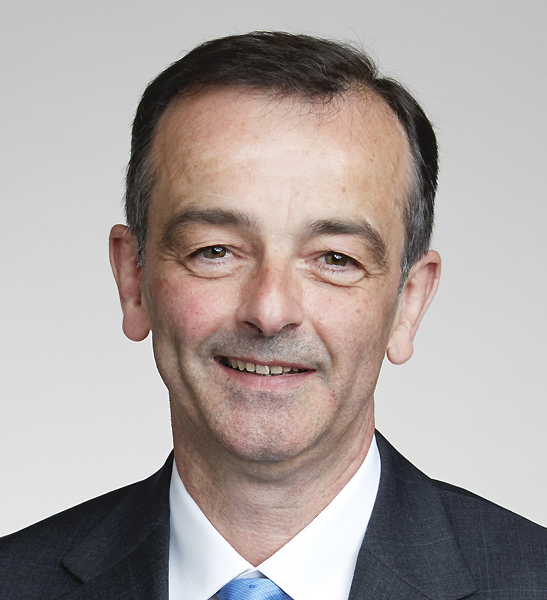
Tasho Kaletha is a Professor in the Department of Mathematics at the University of Michigan. His research focuses on the Langlands program, intersecting number theory, representation theory, algebraic geometry, and analysis. He holds a Ph.D. from the University of Chicago (2010). Key research interests include representation theory of reductive groups, harmonic analysis, Galois cohomology, and automorphic representations. Education: Ph.D., University of Chicago (2010). Research interests revolve around the Langlands conjectures, endoscopy, and the structure of reductive groups. His work addresses representation theory of real/p-adic groups, cohomology of Galois groups, and automorphic spectra. Recent publications explore Bruhat-Tits theory, discrete series L-packets, and global rigid inner forms. He has authored a monograph with Gopal Prasad and contributed to foundational papers in Duke Mathematical Journal and Inventiones Mathematicae . Notable contributions include studies on supercuspidal L-packets, endoscopic classification, and commensurability growth in algebraic groups. His work bridges abstract algebraic structures with analytic techniques, advancing the Langlands program's goals.
Prof. Dr. Ieke Moerdijk is a distinguished Professor of Mathematics at the Mathematical Institute of Utrecht University, part of the Faculty of Science. Previously, he held positions at Radboud University (2011–2016) and has been affiliated with institutions like the University of Chicago, Cambridge, and the University of Amsterdam, where he earned his PhD in Mathematics (1985, Cum Laude). His research focuses on algebraic and differential topology, homotopy theory, and applications of topological structures to mathematical logic. He is renowned for co-authoring influential books such as Sheaves in Geometry and Logic (with S. Mac Lane) and Introduction to Foliations and Lie Groupoids (with J. Mrcun). Moerdijk has received prestigious awards including the Spinoza Prize (2012) and the Descartes-Huygens Prize (2011), and is a member of the KNAW and Academia Europaea. His current research emphasizes the theory of dendroidal sets and homotopy operads. He has held visiting positions at institutions like Cambridge, McGill, and Sydney. His academic contributions span editorships, teaching, and supervising numerous students. Moerdijk’s work bridges foundational mathematics with advanced categorical and topological frameworks, influencing areas from algebraic geometry to logic. Education: Bachelor’s/Master’s in Mathematics, Philosophy, and Linguistics at University of Amsterdam PhD in Mathematics, University of Amsterdam (1985) Awards: Spinoza Prize (2012), Descartes-Huygens Prize (2011) Member of KNAW (2006), Academia Europaea (2014) Huygens Fellowship (1986), PIONIER Grant (1995) Research Interests: Algebraic topology, homotopy theory, operads, category theory, and mathematical logic. Moerdijk’s publications include foundational works on dendroidal sets and simplicial methods, with recent contributions addressing ∞-operads and univalent completion. His research often explores connections between algebraic structures and topological spaces, with applications to higher category theory.
Benjamin Steinberg is a Professor in the Mathematics Department at the City College of New York (CCNY) and the CUNY Graduate Center. He holds a Ph.D. from the University of California, Berkeley (1998) under John Rhodes and has held positions at the University of Porto (Portugal) and Carleton University (Canada). His research focuses on algebra, including semigroups, geometric group theory, algebraic combinatorics, representation theory, and automata theory, with notable work on etale groupoids, inverse semigroups, and ring theory. He is the author of several books, including *The q-theory of Finite Semigroups* and *Representation Theory of Finite Monoids*. Steinberg serves as Managing Editor of the *International Journal of Algebra and Computation* and has organized conferences such as the International Conference on Semigroups and Groups in Honor of John Rhodes. Research interests include the interplay between algebraic structures and their applications, such as in automata theory and Markov chains. His work bridges pure mathematics with combinatorial and geometric approaches, often involving categorical and topological methods. Recent articles explore topics like Nekrashevych algebras, twisted Steinberg algebras, and Lyndon's identity theorem for monoids. He has contributed to the study of profinite groups and their connections to symbolic dynamics. Steinberg’s editorial roles and conference organization reflect his leadership in the mathematical community. Despite his defunct blog, his academic contributions remain prolific, with ongoing editorial work and research in algebraic combinatorics and representation theory.
Professor Katrin Tent is a distinguished mathematician specializing in mathematical logic at the University of Münster, where she holds a professorship in the Faculty of Mathematics and Computer Science within the Institute for Mathematical Logic and Foundations Research. She is an active researcher in Mathematics Münster, an investigator in CRC 1442 Geometry: Deformations and Rigidity, and contributes to multiple research projects including Topics in Mathematics Münster T3: Models and universes, T4: Groups and actions, and T8: Random discrete structures and their limits. PhD in Linguistics, Christian-Albrechts-Universität zu Kiel (1988) Diplom in Mathematics, Christian-Albrechts-Universität zu Kiel (1989) PhD in Mathematics, University of Notre Dame (1994) Habilitation, "Model theory of groups and BN-pairs" (2000) Professor Tent's research bridges model theory, group theory, and geometry, with particular focus on finite Morley rank structures, BN-pairs, and sharply multiply transitive groups. Her work often combines methods from these areas to prove unexpected results, either constructing groups or incidence geometries with surprising model theoretic properties or using model theory to construct new and interesting geometries or groups. Her recent publications reveal a consistent trajectory connecting model theory with group-theoretic structures. She has made significant contributions to understanding sharply 2- and 3-transitive groups, finite Morley rank geometries, and the model theory of generalized polygons. Her work demonstrates how model-theoretic techniques can solve deep problems in group theory and geometry, particularly through the study of BN-pairs and incidence structures. DFG Research Fellowship (1996-1998) Bayerischer Habilitationsförderpreis (1998-2001) Heisenberg-Stipendium (2001-2004) ERC Consolidator Grants expert panel (2016, 2018) Elected to DFG Senate (2019) Professor Tent leads an active research group with current members including Marco Amelio, Dr. Benjamin Brück, Anna Cascioli, Lukas Jonuska, Silke Meissner, Zahra Mohammadi Khangheshlaghi, and Dr. Sam Shepherd. Her former research group members include Dr. Simon Andre, Dr. Isabel Müller, and Dr. Tim Clausen, among others. Her supervisory work spans both theoretical foundations and specific applications in geometric group theory and model theory. Her research group operates within the Institute for Mathematical Logic and Foundations Research at the University of Münster, collaborating closely with other researchers in the Mathematics Münster cluster. The group participates in various projects including CRC 1442 - C04: Group theoretic aspects of negative curvature, contributing to the vibrant mathematical research environment at one of Germany's leading mathematics institutions.
Kirsten Wickelgren is a Professor in the Department of Mathematics at Duke University, affiliated with Trinity College of Arts & Sciences. Her research focuses on homotopy theory and arithmetic geometry, with support from the National Science Foundation through grants DMS-2405191 and DMS-2103838. She has held academic positions at Duke, Georgia Tech, and Harvard, teaching advanced courses in algebraic topology, algebra, and geometry. Her research explores intersections of algebraic topology and number theory, including motivic homotopy theory, quadratic forms, and enumerative geometry. Notable contributions include enriched counts of geometric objects over finite fields and arithmetic counts of curves in projective spaces. Wickelgren has advised numerous PhD students, including Chongyao Chen, Cameron Darwin, and Thomas Brazelton, and has mentored undergraduate and high school research projects. She has organized conferences such as the Abel Symposium 2025 and co-organized the Mathematics Employment Experience for High School Students at Duke.
Melanie Matchett Wood is the William Caspar Graustein Professor of Mathematics at Harvard University. Her research spans number theory, arithmetic statistics, algebraic geometry, and probability theory, with a focus on distributions of class groups, Galois groups of unramified extensions, and random algebraic structures. She has been supported by prestigious awards including the Packard Fellowship, the NSF Waterman Award, and the MacArthur Fellowship. Her work connects number theory to topology through function field analogs, studying moduli spaces of curves and their statistical properties. She has made significant contributions to understanding the universality of random matrix cokernels and their applications to sandpile groups of graphs. Her editorial roles include the Journal of the American Mathematical Society and Algebra and Number Theory . Recent publications emphasize arithmetic topology, proving universality theorems for 3-manifold groups, and developing new heuristics for class group torsion. She organizes seminars on arithmetic statistics and topology-number theory interactions. Her teaching includes advanced courses like Algebraic Number Theory and Class Field Theory, with research supervision spanning PhD and undergraduate projects. Scientific Awards: Packard Fellowship for Science and Engineering National Science Foundation Waterman Award MacArthur Fellowship
Geoffroy Horel is a Lecturer at the University of Paris 13 , affiliated with the Institut Galilée in France. His research spans algebraic topology, operads, and geometric topology, with a focus on homotopy theory and formality theorems. He can be contacted at horel@math.univ-paris13.fr . Research Interests : Algebraic topology, operads, homotopy theory, motivic homology, Galois representations, and knot theory. Projects : Member of the ANR HighAGT project and the Algebraic and Geometric Topology Thematic Network. Advising : Supervises PhD and Master’s students including Nicolas Guès, Coline Emprin, Jinwen Xu, and others. His publications (15 recent works) explore topics like little disks operads, motivic stability, and Galois symmetries.
François Le Maître is a Professor of Mathematics at the Burgundy Institute of Mathematics (IMB) within the GADT team. He teaches at Polytech Dijon (formerly ESIREM) and was previously a Lecturer at IMJ-PRG in the AO team. His research spans ergodic theory, topological dynamics, group theory, and operator algebras. Research Interests : Orbit equivalence, full groups, Polish groups, measure-preserving actions, geometric group theory, and descriptive set theory. His recent publications focus on L1 full groups, high transitivity in tree actions, quantitative measure equivalence, and topological properties of Polish groups. He has supervised M2 internships and co-supervises ongoing PhD theses, including work on orbit equivalence, Boolean actions, and commensurating symmetric groups. Notable Events : Co-organizer of the 2025 CIRM conference on orbit equivalence, IMJ-PRG Summer School on groupoids, and past workshops on operator algebras and Polish groups.
Srivatsa Srinivas is a mathematician affiliated with the University of California, San Diego (UCSD), where he completed his PhD under Professor Alireza Golsefidy. His research focuses on applications of harmonic analysis, group theory, information theory, and number theory to the study of random walks on profinite groups. He also actively explores interdisciplinary projects in formal verification (using tools like Lean and SMT solvers) and computer graphics, with a recent focus on generalizing Dijkstra's algorithm. Education: PhD in Mathematics, UCSD (Advisor: Alireza Golsefidy) Research Interests: His work bridges pure mathematics and computer science, emphasizing: Random walks on algebraic structures Applications of harmonic analysis in group theory Formal verification techniques for number-theoretic problems Algorithmic innovations in computer graphics Recent Talks: Presented on 'Random walks on SL₂(F_p) × SL₂(F_p)' at the UCSD CS Theory Seminar (Dec 2024) and shared thesis defense slides offering an introduction to his foundational research.
Simon Wadsley is a Lecturer in the Department of Pure Mathematics and Mathematical Statistics (DPMMS) at the University of Cambridge's Faculty of Mathematics. His research focuses on algebraic structures, particularly in the realm of Iwasawa algebras, p-adic representation theory, and noncommutative geometry. He is affiliated with the Algebra research group and contributes to foundational work in D-modules on rigid analytic spaces and equivariant line bundles over p-adic spaces. Academic Position: Lecturer, DPMMS, University of Cambridge Research Group: Algebra Contact: S.J.Wadsley@dpmms.cam.ac.uk | Room C0.05 His research interests span prime ideals in Iwasawa algebras , p-adic analytic groups , and equivariant geometric structures . He explores connections between algebraic geometry and number theory, with notable contributions to the theory of D-modules in rigid analytic settings and the study of representations of p-adic Lie groups. Recent work includes investigations into global sections of line bundles on p-adic upper half planes and holonomicity properties of D-modules. Publications highlight advancements in p-adic analysis, including work on Kashiwara equivalences and weak holonomicity. His research also extends to categorical frameworks like PROPs for linear systems and foundational studies in noncommutative algebraic structures. Wadsley collaborates widely, with key contributions to Iwasawa theory and invariant ideals in noncommutative rings.
Dr. Olga Varghese is a Lecturer and Academic Advisor at the University of Münster since 2025, with prior research roles at Heinrich-Heine Universität Düsseldorf (2023-2025) and OvGU Magdeburg (2021-2023) under DFG projects. She holds a PhD in Mathematics from the University of Münster (2010-2015) and has been a Postdoc there since 2015. Her research focuses on geometric group theory, particularly Coxeter groups, automorphism groups, and profinite properties, with significant contributions to group actions on CAT(0) spaces and graph products. Her recent work explores profinite rigidity, involutions in Coxeter groups, and automatic continuity in group actions. She has taught foundational and advanced courses in topology, algebra, and mathematics for natural sciences, with a strong emphasis on geometric group theory and algebraic structures. Current affiliations include the University of Münster's Department of Mathematics and Computer Science. Her publications span journals like Algebraic and Geometric Topology , Journal of Group Theory , and Geometriae Dedicata , reflecting her expertise in algebraic and geometric interplay.
Martin Bridson serves as President of the Clay Mathematics Institute since 2018 and holds the Whitehead Professorship of Pure Mathematics at the University of Oxford's Mathematical Institute, where he has been a Fellow of Magdalen College since 2007. Previously, he was Head of Oxford's Mathematical Institute (2015-2018), Professor of Pure Mathematics at Imperial College London (2002-2007), and Professor of Topology at Oxford (1999-2002). His academic journey began with undergraduate studies at Hertford College, Oxford, followed by PhD work at Cornell University. Bridson's research centers on Geometric Group Theory, Topology, and Spaces of Non-Positive Curvature. His work explores the deep connections between algebraic structures and geometric properties, particularly focusing on metric geometry, profinite completions, and the topology of non-positively curved spaces. His influential monograph "Metric Spaces of Non-Positive Curvature" (co-authored with André Haefliger) has become a foundational text in the field. His recent publications (2024-2025) demonstrate continued leadership in geometric group theory, with significant contributions to profinite rigidity, CAT(0) geometry, and automorphism groups. These works reveal evolving research directions toward computational aspects of group theory and deeper connections with low-dimensional topology. Steele Prize for Mathematical Exposition (2020, with Haefliger) Fellow of the Royal Society (2016) Fellow of the American Mathematical Society (2015) Royal Society Wolfson Research Merit Award (2012) London Mathematical Society Whitehead Prize (1999) Bridson has secured major research funding including EPSRC Senior Fellowships (2007-2012, 1997-2002), EPSRC Platform Grants (2010-2015), and multiple NSF grants. His leadership extends to directing the Mathematical Institute at Oxford and presiding over the Clay Mathematics Institute, where he influences global mathematical research directions. His collaborative work spans institutions including Princeton, Geneva, and Lausanne, reflecting his international research network.
Michael Wibmer is a Lecturer in Pure Mathematics at the University of Leeds since 2023. Previously, he held positions at Graz University of Technology, the University of Notre Dame, the University of Pennsylvania, and RWTH Aachen University. He earned his PhD from the University of Heidelberg under the supervision of B.H. Matzat. His research focuses on algebraic, algorithmic, and arithmetic aspects of differential and difference equations, including Galois theory and algebraic groups. Key areas include algebraic methods in dynamical systems, symbolic computation, and connections to model theory and number theory. He organizes events like the Online Kolchin Seminar in Differential Algebra and co-organized workshops such as DART XI (2023) and the MSRI Summer School on Differential Equations (2022). Education: PhD in Mathematics, University of Heidelberg (2010), Habilitation in Mathematics, RWTH Aachen University (2015) Research Interests: Galois theory of differential equations, proalgebraic groups, difference algebraic groups, number theory, and symbolic computation Recent Activities: Organized the Algebraic Theory of Differential and Difference Equations workshop at Leeds (2024) His publications span topics like torsors under affine group schemes, regular singular differential equations, and étale difference algebraic groups, reflecting his expertise in algebraic structures and their applications to differential systems.
Dawid Kielak is a Professor of Pure Mathematics at the University of Oxford and a Tutorial Fellow at Hertford College, Oxford. He holds a DPhil from the University of Oxford and has held academic positions in Warsaw, Bonn, and Bielefeld before returning to Oxford. His research focuses on geometric group theory, particularly the interplay between group rings, algebraic structures, and topological spaces. He is a member of the Algebra and Topology research groups at Oxford. His research interests include geometric group theory, cohomology of arithmetic groups, ℓ²-invariants, and the study of automorphism groups of free groups. His work is funded by prestigious grants such as the ERC Starting Grant 'Fibring' (2019) and the ERC Consolidator Grant 'HigherHyper' (2024). He has also received awards like the Whitehead Prize (2022) and the Frontiers of Science Award (2023). Key research contributions include studies on Kazhdan constants for Chevalley groups, profinite rigidity of fibring, and coherence properties of groups. His work often bridges algebraic and topological methods, with applications to 3-manifold groups and random groups. He supervises multiple DPhil students and has mentored postdoctoral researchers in areas like ℓ²-Betti numbers and group rings. Teaching responsibilities include pure mathematics tutorials at Hertford College and advanced courses on geometric group theory, 3-manifolds, and ℓ²-invariants at the University of Oxford and Bielefeld University. His lab focuses on collaborative projects in algebraic topology and geometric group theory, with a particular emphasis on virtual fibring and higher Kazhdan properties.
Henry Wilton is a Professor of Topology and Group Theory at the University of Cambridge's Department of Pure Mathematics and Mathematical Statistics (DPMMS), and a Fellow of Trinity College. His research focuses on geometric group theory, topology, and low-dimensional topology, with particular emphasis on hyperbolic groups, 3-manifold groups, and residual properties of groups. He has contributed extensively to understanding limit groups, profinite completions, and decision problems in geometric topology. Wilton has taught courses including Part III Geometric Group Theory (2024), Part II Riemann Surfaces (2023), and Part III Mapping Class Groups (2021). He co-organizes the Groups and Geometry in the South East seminar series and actively contributes to academic communities through blogs (e.g., Low-Dimensional Topology) and collaborations with institutions like MSRI. His recent work addresses topics such as the congruence subgroup property for mapping class groups, rational curvature invariants in 2-complexes, and coherence of one-relator groups. He has published in high-impact journals like the Journal of the American Mathematical Society, Inventiones Mathematicae, and Duke Mathematical Journal. Wilton's research also explores profinite rigidity, virtual properties of 3-manifolds, and algorithmic problems in geometric topology. He collaborates with leading mathematicians such as Martin Bridson, Daniel Groves, and Pavel Zalesskii on projects spanning geometric group theory, hyperbolic geometry, and algebraic topology.