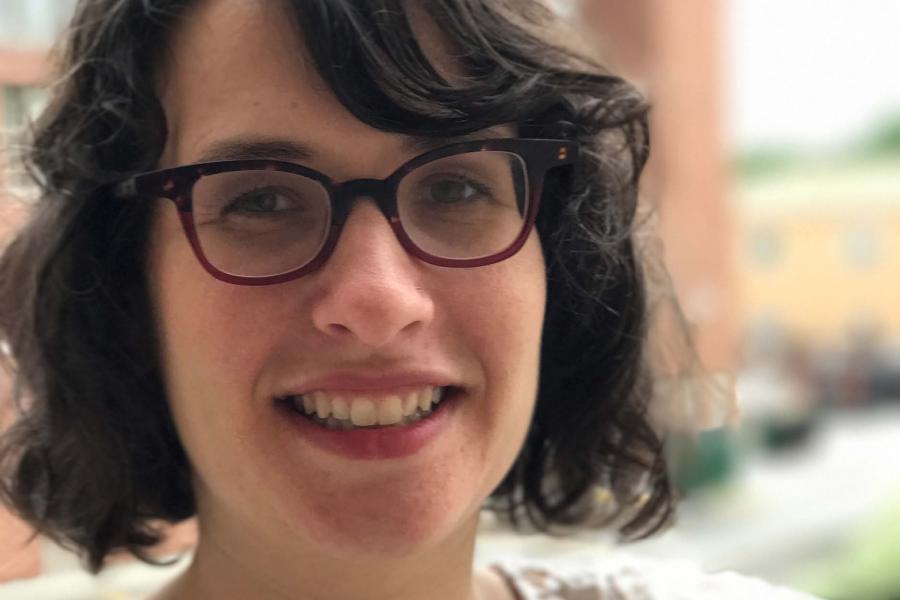
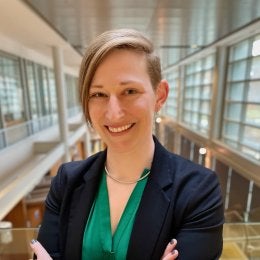
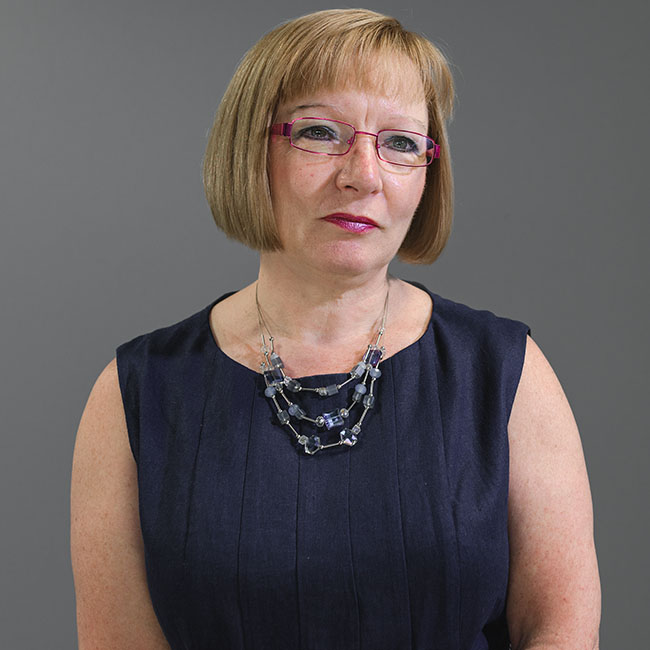
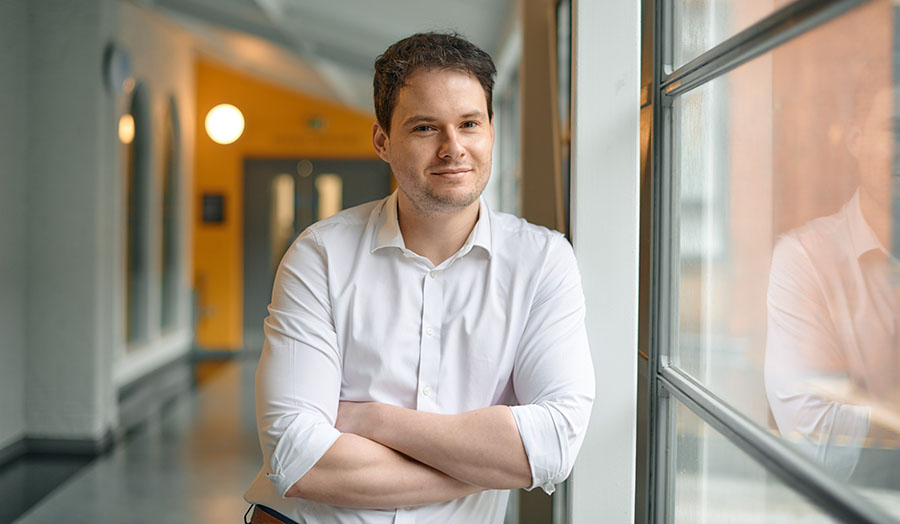
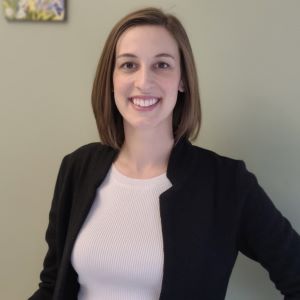
Orly Linovski is an Associate Professor in the Department of City Planning at the University of Manitoba’s Faculty of Architecture. Her work bridges professional planning practice, political processes, and urban space, emphasizing equity and justice. She holds a PhD from UCLA and advanced degrees from the University of Toronto and McGill University. Education: PhD (Urban Planning), University of California, Los Angeles M.Sc. (Urban Planning), University of Toronto B.A. (Geography/Urban Systems), McGill University Research focuses on transportation equity, private sector consulting roles, and municipal governance. Notable themes include equity in transit planning, professional practice dynamics in publicly traded firms, and participatory engagement strategies. Her work has been funded by SSHRC, MITACS, and the Centre for Professional and Applied Ethics. Teaching includes courses like Transportation and Urban Form (ARCG 7080) and Planning Research Methods (CITY 7020). She supervises students exploring transportation equity, professional planning practice, or privatization in planning, particularly with GIS or qualitative methods. Grants and Awards: Her research has been supported by SSHRC, MITACS, and other institutions. Collaborations include projects like the SSHRC-funded study on transit equity for marginalized groups in Canada. Labs/Teams: Active in the Manitoba Professional Planners Institute and as a Registered Professional Planner. Engaged in community-based research through partnerships highlighted in her SSHRC-funded projects.
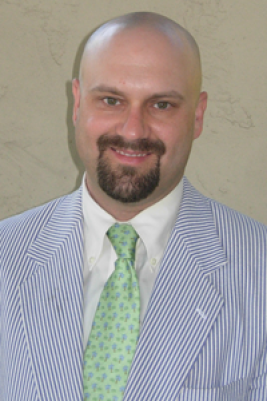
Hillary Herzog is an Associate Professor of German Studies at the University of Kentucky, affiliated with the Modern & Classical Languages Literatures & Cultures department. She holds a Ph.D. from the University of Chicago. Her research focuses on 20th-century German and Austrian literature, Jewish Studies, medicine and literature, and gender/sexuality studies. She co-edits The Journal of Austrian Studies and has authored Vienna is Different (2011) and co-edited Rebirth of a Culture (2008). Herzog teaches across levels, from language courses to graduate seminars, and emphasizes practical applications of German (e.g., German for Professions). Her scholarship bridges literary analysis with cultural history, particularly exploring intersections of medicine, Jewish identity, and gender. Recent work examines Arthur Schnitzler’s medical writings and Viennese Jewish cultural production across centuries. She actively contributes to interdisciplinary dialogues through publications and editorial work.
Naomi Rogers, Ph.D. (She/Her) is Professor of the History of Medicine in the Section of the History of Medicine and the Program in the History of Science and Medicine at Yale University. She holds courtesy appointments in the History Department and the Women's, Gender and Sexuality Studies Program, and serves on Yale's Dean's Advisory Council for LGBTQI Affairs. Professor Rogers teaches undergraduate, graduate, and medical students, regularly lecturing on the history of AIDS, reproduction, health economics, eugenics, nutrition, disability, and health activism. Professor Rogers' educational background includes: PhD in History from University of Pennsylvania (1986) MA from University of Pennsylvania (1986) BA in Music from Melbourne University (1980) BA with Honors from Melbourne University (1979) Her research focuses on 20th and 21st century history of medicine with emphasis on health inequities and social justice. Professor Rogers' historical interests span gender and health, disease and public health, disability studies, feminism, alternative medicine, health policy, and health activism. Her work critically examines the intersection of medical practices with social movements, particularly how marginalized communities have challenged medical orthodoxy throughout American history. She has published extensively in journals such as American Journal of Public Health, Bulletin of the History of Medicine, Journal of Medical Humanities, Radical History Review, Social History of Medicine, and Women and Health. Professor Rogers' recent scholarship demonstrates a consistent focus on the historical dimensions of contemporary health issues, particularly vaccine politics, abortion history, and community health activism. Her publications reveal patterns of resistance to medical authority, the role of race and gender in shaping health outcomes, and the historical roots of current health justice movements. Her work bridges academic history with public engagement, as evidenced by her frequent media commentary on COVID-19 and other health issues in outlets including BBC Radio, CNN, Huffington Post, National Public Radio, New York Times, Wall Street Journal, and Washington Post. Among her notable recognitions: AAHN's Lavinia L. Dock Award for Exemplary Historical Research for 'Polio Wars: Sister Kenny and the Golden Age of American Medicine' (2014) Presenter of the AAHM's Garrison Lecture: 'Radical Visions of American Medicine: Politics and Activism in the History of Medicine' (2017) Professor Rogers has been actively involved in academic leadership and mentoring. She has served as Director of Graduate Studies for the 2022-23 academic year, Chair of the Women's Faculty Forum, and Liaison to the Committee on Status of Women in Medicine. Her service extends to editorial boards including the Journal of the History of Medicine and Allied Sciences since 2018. She has also contributed to public understanding of medicine through consultations for documentaries including 'The Polio Crusade' (PBS), 'On the Basis of Sex' (Focus Features), and 'War on Science' (in process). Currently, Professor Rogers serves on the Medical School's OBGYN 'Dobbs' Sessions Planning Committee, which has organized webinars for the Yale community, and was co-organizer of the history-themed session 'Rooted in History: Abortion, Law and American Health Care.' She is working on her book project 'Health Radicalism and the Humanization of American Medicine' (under contract with Oxford), examining critics of medical orthodoxy since 1945 including civil rights, consumer, and feminist activists. She also conducts ongoing research on antisemitism in American medicine in the decades before and after World War II.
Dr. Donald Osborn is an Assistant Professor and Program Director of the Graduate Addictions Counseling Division at Indiana Wesleyan University. With over three decades of experience, he serves as a licensed clinical addictions counselor, mental health professional, and ordained minister in the Christian Church/Church of Christ. His career spans roles as a Psychiatric Case Manager, Clinical Supervisor, and Medical Administrative Officer in community mental health and government sectors. Education includes a PhD in Guidance and Psychological Services (Indiana State University, 2013), Master of Arts in Theology (Saint Mary-of-the-Woods College, 1987), and a Bachelor of Arts in Christian Ministries (Lincoln Christian University, 1979). He holds certifications as a National Board Certified Counselor and Master Addiction Counselor. Research interests focus on ethics in behavioral sciences, integration of psychology and theology, addictions education, clinical supervision, and licensure standards. He has authored articles on addiction policy, curriculum development, and professional practice. Notable leadership roles include National President of NAADAC and Chair of the Indiana Behavioral Health Licensure Board. Professional Memberships: NAADAC, ACA, AAMFT, ACES Awards: Senior Fulbright Scholar in Addictions Presentations: Over 20 national and international talks on addiction counseling, licensure, and clinical supervision (2006–2016). Dr. Osborn’s work bridges clinical practice, education, and policy, emphasizing ethical standards and professional development in addiction counseling.
Anna Villarroya Planas is a Professor at the Universitat de Barcelona, serving as Director of the Research Center for Information, Communication and Culture. She holds a law degree and economics degree from the Universitat de Barcelona, and a PhD in Public Sector Economics from the same institution. Affiliated with both the Faculty of Information and Audiovisual Media and the Department of Economics, she has been teaching courses related to cultural economics and cultural policies since 1993. Her research focuses on digital culture and content, with special emphasis on open access to science and economic studies on culture, particularly examining gender perspectives in cultural sectors. She serves as President of the European Association of Cultural Researchers and coordinates the Interuniversity Doctoral Program in Gender Studies: Cultures, Societies and Policies. Analysis of her recent publications (2022-2024) reveals a strong focus on gender equality in cultural sectors, particularly examining gender discrimination in the performing arts, LGBTQ perspectives in information studies, and cultural policies with gender perspectives. Her work spans multiple disciplines including cultural economics, gender studies, library science, and policy analysis, demonstrating interdisciplinary approaches to understanding cultural production, consumption, and policy implementation. She has participated in numerous research projects funded by public entities including the World Bank, Council of Europe, ERICarts, Organization of Ibero-American States, Spanish Ministry of Culture, Catalan Department of Culture, and Barcelona Provincial Council, as well as private foundations like "la Caixa" Banking Foundation, Carulla Foundation, and Alternativas Foundation. Since 2006, she has authored the report on cultural policy in Spain included in the Compendium of Cultural Policies and Trends, and since 2017 has been a member of the Council of the Association of the Compendium of Cultural Policies and Trends. Her leadership extends to directing research projects focused on gender perspectives in information and media studies, including the GEMPIMS (Gender Perspective Mentoring Program in Information & Media Studies) initiative at the University of Barcelona.
Rachel R. Romeo is an Assistant Professor at the University of Maryland in the Department of Human Development and Quantitative Methodology. She also holds courtesy appointments in the Department of Hearing and Speech Sciences and the Neuroscience and Cognitive Science program. She is affiliated with the Language Science Center, Field Committee in Developmental Science, Brain Behavior Institute, and Maryland Neuroimaging Center. Education: PhD from the joint Harvard/MIT Program in Speech and Hearing Bioscience and Technology MSc in Language Sciences from University College London BA in Psychology and Linguistics from the University of Pennsylvania Clinical licensure in Speech-Language Pathology from the MGH Institute of Health Professions Translational Postdoctoral Training in Neurodevelopment at Boston Children's Hospital and Harvard Medical School Research Interests: Rachel’s research examines how early experiences, both favorable and adverse, shape children’s neurocognitive and academic development, with a focus on language, literacy, and socioeconomic disparities. She integrates methods from developmental psychology, cognitive neuroscience, and educational interventions to address these questions. Scientific Awards: Young Investigator Award, Flux Society (2024) University of Maryland Research Impact Fellow (2023–2024) Faculty Mentor of the Year Award, UMD Neuroscience and Cognitive Science Program (2023) Early Career Research Contributions Award, American Speech Language Hearing Association (2023) Early Career Research Contributions Award, Society for Research in Child Development (2023) Rising Star, Association for Psychological Science (2021) Flux Congress Science of Learning Award, & Post-Doctorate Award (2019) Society for the Neurobiology of Language Postdoctoral Merit Award (2019) Society for the Neurobiology of Language Graduate Student Award (2017) UCL Language Sciences Dissertation Prize and Overall Achievement Award (2012) The Thouron Award (2011) Fulbright Fellowship (2011) Grants & Projects: Her research is funded by the National Institutes of Health (NIH), Institute of Museum and Library Services (IMLS), and UMD Brain Behavior Institute (BBI). Labs & Teams: Rachel directs the Language, Experience, and Development (LEAD) Lab and collaborates with interdisciplinary teams in developmental science and neuroimaging.
Professor Yvonne Rydin is Chair of Planning Environment and Public Policy at The Bartlett School of Planning, University College London (UCL), where she has been based since 2006. She currently holds a 50 % part-time appointment at UCL and previously spent 16 years at the London School of Economics in the Department of Geography and Environment. Education PhD in Urban and Regional Planning Studies, University College London (1984) BA (Hons) in Land Economy, University of Cambridge (1978) Research Interests Professor Rydin is an internationally recognised scholar in governing for sustainability. Her work spans urban green space management, community energy, retail planning, and post-growth urban futures. Conceptually, she mobilises network metaphors (including social capital) and discourse analysis to unpack governing processes, while also drawing on socio-technical studies to examine large-scale energy infrastructure. A long-standing strand of research interrogates knowledge production within planning, scrutinising classificatory systems such as BREEAM and sustainability indicators and exploring the implications of socio-materiality. Her forthcoming monograph Planning without Growth (Policy Press, 2025) extends her agenda on low-growth planning by investigating how embedded and new knowledges can support alternative local economic models. Research Outputs & Trends Since 2018 she has published extensively on post-growth planning, regulatory theory, digital tools in participation, and diverse economies. Recent articles in Planning Theory, Built Environment and Planning Practice & Research articulate critical perspectives on moving beyond pro-growth orthodoxies and re-tooling the planning profession. Scientific Awards & Recognition While no specific awards are listed, Professor Rydin has held numerous prestigious roles: member of the RAE 2014 panel, invited oral evidence to the House of Commons Environmental Audit Committee, participant in the Raynsford Review of Planning, and repeated evaluator for the Norwegian Research Council, Finnish Academy, ESRC and FORMAS. Advising & Grants She has supervised collaborative Engineering Doctorate (EngD) studentships with industrial partners BRE Global and Buro Happold (2011-2020), and co-taught on the MSc Sustainable Urban Development at Oxford University’s Department for Continuing Education (2014-2018). Labs & Teams Professor Rydin served as Director of the UCL Environment Institute (2010-2013) and leads teaching on the postgraduate module Planning for Sustainability and Inclusion alongside Dr Yasminah Beebeejaun.
Dr. Kandi J. Wiens is a Senior Fellow and Co-Director of the Penn Master’s in Medical Education Program and the Penn Health Professions Education Certificate Program at the University of Pennsylvania’s Graduate School of Education. She also serves as Academic Director of the PennCLO Executive Doctoral Program. Her expertise spans burnout prevention, emotional intelligence, and organizational development, with a focus on helping leaders and professionals build resilience through EI-based strategies. Wiens holds an EdD from the University of Pennsylvania, an MBA from the University of Oregon, and a B.S. in Business Administration from Montana State University. Her research includes longitudinal studies on burnout among police leaders and healthcare professionals, as well as interventions to mitigate stress through emotional intelligence training. Wiens is a nationally recognized speaker and author of the USA Today bestseller Burnout Immunity , which explores how EI skills can protect individuals from burnout. She has designed over 2,000 leadership development programs and contributed to prominent publications like the Harvard Business Review. Education: EdD (University of Pennsylvania), MBA (University of Oregon), B.S. (Montana State University) Awards: Thinkers50 Radar 2024, Triple Distinctions from UPenn Key Projects: Leadership coaching for Police Executive Leadership Institute (since 2017), LA Police Department burnout study Wiens’ work bridges academic research and practical application, aiming to transform organizational cultures and individual resilience through evidence-based strategies.
Markus A. Denzel is a Full Professor and Head of the Chair of Social and Economic History at the University of Leipzig since 2002. He also holds a Contract Professorship in Economic History at the Free University of Bolzano since 2000. He served as Dean (2005-2008) and Dean of Studies (2003-2005) at the Faculty of History, Arts and Oriental Studies in Leipzig. His research focuses on Economic History , Financial Systems , and Medieval/Early Modern Commercial Practices , with a particular emphasis on payment systems, merchant networks, and trade integration across Europe and its colonies. His work spans from the 13th century to the early 20th century , analyzing historical financial instruments like bills of exchange, marine insurance, and cashless transactions. 2009 : The Merchant Family in "Oberdeutsche Hochfinanz" 2008 : Latin America's cashless payments system 2007 : Munich's pre-modern financial systems 2006 : Marine insurance in the Mediterranean 2005 : Italian merchants in late Byzantium He received the Heinz Maier-Leibniz Prize (1998) for outstanding contributions to research in economic history.
Theresa Baxter is a Senior Lecturer at Sheffield Hallam University, where she has been since July 2007. She initially served as Programme Leader for the Practice-based Learning Occupational Therapy programme and later combined this role with that of Professional Lead for Occupational Therapy and Vocational Rehabilitation until stepping down in June 2018 to focus on supporting practice education within the Allied Health Professions (AHP) department. Prior to this, she taught at the University of Derby from 1993 to 2003 and held clinical roles in various hospitals, including the Royal London Hospital, Bethnal Green Hospital, Watford General Hospital, and Queen’s Medical Centre in Nottingham. Her educational background includes qualifying as an Occupational Therapist in 1980 from Derby School of Occupational Therapy (now the University of Derby). She has since contributed to academic and clinical advancements through her work in older adult psychiatry, general medicine and surgery, rehabilitation, and vocational healthcare. Research interests span practice learning methodologies, group work dynamics, and experiential learning in occupational therapy education. She emphasizes the integration of clinical expertise with academic programs, particularly in older adults' mental health and vocational rehabilitation. Her collaborations include studies on fracture bracing techniques and solutions to practice placement shortages in healthcare education. Theresa has presented at national conferences such as the College of Occupational Therapists National Conferences (2008–2015) and ENOTHE (2013), addressing topics like student placement experiences and strategies to enhance workforce development. Her work highlights the importance of occupationally focused practice and improving staff wellbeing through occupational functioning interventions. She currently serves as an External Examiner at the University of Brighton and a Registrant Assessor for the HCPC. Her career bridges clinical management roles and academia, with a focus on fostering practical learning environments for students and advancing educational standards in occupational therapy.
Dr. Mark Thompson is a Senior Lecturer in Psychology and Researcher of Sport Psychology at London Metropolitan University's School of Social Sciences and Professions. He holds a PhD from the University of Hull and is a Fellow of the Higher Education Academy (FHEA). His academic work bridges sport psychology, healthcare rehabilitation, and youth athlete development. Dr. Thompson's education includes a PhD in Psychology from the University of Hull. His research focuses on emotional processes in elite athletes, doping propensity in youth sports, and post-COVID-19 patient rehabilitation. Notable projects include NHS-funded studies on telerehabilitation and collaborations with the International Olympic Committee and World Anti-Doping Agency. Research Interests: Psychophysiological responses to stress in sports Emotional regulation strategies among athletes Anti-doping education and youth athlete behavior Telehealth applications in post-hospitalization recovery His publications emphasize qualitative methodologies, exploring topics like athlete performance under stress, doping prevention programs, and healthcare professional perspectives on self-management approaches. Awards: Fellow of the Higher Education Academy (FHEA). Dr. Thompson has delivered presentations at major conferences such as the American College of Sports Medicine and contributed to media discussions on doping in elite sport via LoveSport Radio. His teaching spans foundational psychology to advanced modules like cognition and behavior, often serving as module leader.
Amanda Berry is a Professor of STEM Education and Deputy Dean (Research & Innovation) in the School of Education at RMIT University, Australia. Her research focuses on science education, teacher education, and methodologies for capturing classroom practices. She leads initiatives to develop tools for representing teachers' pedagogical expertise and has contributed to frameworks like the refined consensus model of pedagogical content knowledge (PCK). Her work emphasizes teacher professional development, particularly for highly accomplished educators, and explores adaptive expertise in interdisciplinary teaching. She actively supervises postgraduate research students and collaborates internationally on projects like the Sharing Knowledge Project in inquiry-based teaching. Key research themes include STEM integration, teacher educator professionalism, and the role of student voice in assessment reform. Her interdisciplinary approaches bridge theory and practice, influencing both policy and classroom strategies in science and mathematics education.
Stephanie Nanto is a Lecturer and Clinical Supervisor at the Department of Communication Disorders and Sciences, Southern Illinois University Carbondale. She earned her M.S. in Communication Disorders and Sciences from the same institution and holds a Certificate of Clinical Competence (CCC) from the American Speech-Language-Hearing Association. Her clinical expertise spans speech-language pathology in acute care, public schools, and autism clinics. Education: M.S. in Communication Disorders and Sciences, Southern Illinois University Carbondale Research & Clinical Focus: Stephanie specializes in Augmentative and Alternative Communication (AAC), autism spectrum disorders, and language development. She emphasizes clinical supervision and mentoring, integrating telehealth strategies for speech/language therapy delivery. Professional Background: Prior to joining SIUC, she worked in acute care medical settings managing dysphagia, public schools supporting children with developmental disorders (preK–22 years), and an autism clinic providing in-person and virtual therapy. Contact: Office: Rehn 317A Email: bishop.stephanie3@siu.edu
Dan Nguyen, Ph.D., is a faculty member in the Department of Radiation Oncology at UT Southwestern Medical Center, where he is part of the Division of Medical Physics and Engineering. He is a founding member of the Medical Artificial Intelligence and Automation (MAIA) Laboratory, collaborating closely with Dr. Steve Jiang to advance AI applications in radiotherapy. His work focuses on deep learning for treatment planning, dose prediction, auto-segmentation, and adaptive radiotherapy. Ph.D. in Biomedical Physics, University of California, Los Angeles (UCLA), 2017 Mentor: Dr. Ke Sheng Faculty appointment at UT Southwestern since 2017 Dr. Nguyen’s research is centered on applying artificial intelligence to solve critical challenges in radiation oncology. His primary interests include deep learning-based dose prediction, auto-segmentation of anatomical structures, optimization of treatment plans, and real-time adaptive radiotherapy. He has pioneered work in direct aperture optimization, 4π radiotherapy, and uncertainty quantification in AI models. His research bridges the gap between AI innovation and clinical implementation, with a focus on improving plan quality, reducing planning time, and enhancing accessibility for less experienced clinicians. The most recent publications (2023–2025) demonstrate a consistent trend in developing fast, accurate, and robust deep learning models for radiotherapy. Key themes include dose prediction with transfer and meta-learning, adaptive segmentation using test-time optimization, uncertainty assessment in AI predictions, and mathematical modeling of radiotherapy-immunotherapy synergy. These works span high-impact journals in medical physics, AI, and oncology, reflecting interdisciplinary innovation. While no specific scientific awards are listed, Dr. Nguyen’s leadership in the MAIA Lab and extensive publication record in top-tier journals indicate significant recognition in the field of medical physics and AI in medicine. Dr. Nguyen has co-authored numerous studies involving mentoring and collaborative research, particularly with trainees and junior faculty in the MAIA Lab. His work is supported by institutional and likely federal funding, given the scale and scope of AI deployment studies. He has contributed to large-scale collaborative efforts such as OpenKBP-Opt, involving international teams evaluating knowledge-based planning pipelines. The MAIA Laboratory is a multi-investigator research group focused on innovating, developing, and applying artificial intelligence technologies to empower clinicians—especially those with less experience or limited resources—for improved patient care. The lab’s work spans machine learning, deep learning, reinforcement learning, and mathematical modeling in radiation oncology.
Hoyt Bleakley is an Associate Professor of Economics at the University of Michigan, where he conducts research at the intersection of economic development, human capital, economic history, and health economics. He also holds positions as a Research Associate Professor at the Institute for Survey Research and a Research Associate at the National Bureau of Economic Research. For the 2024-2025 academic year, he is an Emma and Carroll Roush National Fellow at The Hoover Institution. Bleakley earned his B.A. in Economics from the Massachusetts Institute of Technology in 1995, followed by a Ph.D. in Economics from MIT in 2002. His academic journey has included teaching positions at the University of Chicago Booth School of Business and the University of California, San Diego before joining the University of Michigan faculty. His research focuses on economic development , human capital formation , and economic history , with particular attention to how health interventions, education, and language skills impact long-term economic outcomes. His work often employs historical natural experiments to identify causal relationships in development economics. A significant portion of his research examines the economic effects of disease eradication programs, particularly for hookworm and malaria in the Americas, and how these health interventions affected human capital accumulation and economic development. He has also made important contributions to understanding the economic impacts of slavery, portage and path dependence in economic geography, and the assimilation patterns of immigrants based on language acquisition. Bleakley's publications reveal a consistent focus on using historical data to address contemporary development questions. His recent work has increasingly examined American economic history, with studies on slavery, institutional development, and geographic determinants of economic activity. His research methodology often combines rigorous econometric analysis with deep historical context, resulting in publications in top economics journals including the Quarterly Journal of Economics, Review of Economics and Statistics, and American Economic Journal: Applied Economics. Bleakley serves as a referee for numerous economics journals and has contributed to the profession through his scholarly publications and research. His work on malaria eradication received significant attention in both academic and policy circles. At the University of Michigan, Bleakley teaches courses on Economic Development (ECON 461 for undergraduates and ECON 665 for PhD students) and Human Capital in Historical Perspective (ECON 664). His teaching reflects his research interests, connecting historical economic patterns to contemporary development challenges.