Professor Andrew Murray is a leading academic in Law with expertise in New Media and Technology Law. He holds the position of Professor of Law at the LSE Law School and directs the LSE Law, Society and Technology Group. His research focuses on digital rights, AI ethics, and regulatory frameworks for emerging technologies. Murray has held roles including Fellow of the Royal Society for the Arts and advisor to the Saudi Arabian government on e-commerce law. He has advised parliamentary committees, including the House of Lords Communications Committee on digital regulation, and delivered the prestigious TMC Asser Lecture on AI and human agency. Education: LL.B. Hons from Edinburgh University (1994), followed by academic roles at Stirling University and LSE since 2000. Professional memberships include the Society of Computers and Law (SCL) and the Higher Education Academy (HEA). He has been a visiting professor at Amsterdam Law and Technology Institute and Sciences Po Paris. Research interests span cyberspace regulation, AI governance, and the intersection of technology with human rights. Key publications include Human Rights in the Digital Age (2004) and The Regulation of Cyberspace (2007). Awards include recognition as an Independent Expert in Nominet UK dispute resolution (2001–2008) and a 2024 Leibniz Prize reviewer. Advocacy includes contributions to EU e-commerce directives and UK surveillance law debates. His work emphasizes balancing innovation with legal accountability in digital spaces.
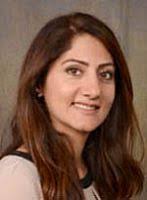
Dr. Shahrzad Fouladvand is an Associate Professor in International Criminal Law at the University of Sussex's School of Law, Politics and Sociology. Her research focuses on transnational criminal law, human trafficking, and corruption, particularly their interplay in contexts like Albania. She previously worked at the International Criminal Court (ICC) and the International Labour Organisation (ILO), contributing to human rights conventions. A member of RUSI's Strategic Hub for Organised Crime (SHOC), she advocates holistic approaches to combating human trafficking beyond prosecution-centric methods. Dr. Fouladvand holds a PhD from the University of Sussex and is a Fellow of the UK Higher Education Academy. Education: PhD in Law, University of Sussex (2008–2012) Common Professional Examination (CPE)/Graduate Diploma in Law (GDL), University of Huddersfield (2012–2014) Certifications in Machine Learning for Social Scientists (2023) and Social Network Analysis (2020) Research Interests: Dr. Fouladvand explores the nexus between human trafficking and corruption, emphasizing evidentiary challenges and institutional complicity. Her work integrates network analysis and responsibilisation frameworks, critiquing prosecution-centric approaches. Recent projects include a monograph on 'Human Trafficking, Corruption and Corporate Complicity' for Routledge, examining public-sector complicity in trafficking. Key Contributions: Authored over 30 publications, including journal articles and book chapters on ICC jurisprudence, anti-corruption law, and trafficking dynamics. Advised UK parliamentary committees on human trafficking and migration policies. Edited volumes on transnational organized crime and economic criminology. Awards and Fellowships: Fellow of the UK Higher Education Academy (2016) Visiting Scholarship at Max-Planck Institute (2021–2022) Elected Special Rapporteur on Contemporary Slavery for BACL Labs/Teams: Active member of RUSI's SHOC, focusing on policy-relevant research to combat organized crime.
Margarita Boenig-Liptsin is a tenure-track Assistant Professor of Ethics, Technology and Society at ETH Zurich's Department of Humanities, Social and Political Sciences, a position she has held since September 2022. Trained in Science, Technology and Society with dual PhDs from Harvard University (History of Science) and Université Paris-Sorbonne (Philosophy), she brings interdisciplinary expertise to examining the relationship between technology, power, democracy, and ethics. Her research spans several interconnected areas focusing on transformations to human identity and citizenship in relation to information technologies across time and cultures. She investigates the social and political aspects of digital technologies, identity and selfhood in technological societies, ethics of technology, and comparative cultures of innovation. Her work uniquely bridges historical analysis with contemporary ethical concerns, examining how concepts like human dignity evolve alongside technological developments from punch cards to AI governance frameworks. Her recent publications (2023-2025) reveal a strong focus on AI ethics, data justice, and the philosophical implications of algorithmic systems. These works demonstrate her consistent interest in how technology shapes democratic processes, citizenship, and ethical frameworks. Her research shows progression from historical studies of computer literacy programs to contemporary analyses of generative AI's impact on knowledge production and everyday ethics. Her scientific recognition includes: NSF funding for her collaborative project on Silicon Valley's innovation imaginary Mozilla Foundation Responsible Computer Science Challenge grant (2018-2021) Academic Data Science Alliance support (2020-2022) Sorbonne Université's Paris IAS Chair on 'Major Changes' (2021-2022) At ETH Zurich, she leads research and teaching initiatives that build connections between engineering and social sciences. Previously at UC Berkeley, she directed the Human Contexts and Ethics Program, developing the Human Contexts and Ethics component for data science education. Her work consistently emphasizes translating social science theory for diverse audiences and connecting scholarly work to community needs in Zurich, Switzerland, and Europe. She teaches courses including 'Artificial Intelligence and Human Values' and 'Research in Ethics, Technology and Society' for the Fall 2025 semester.
Bryan H. Choi is an Associate Professor of Law at the University of Colorado Law School , where he bridges law and computer science to address software and AI safety. His work on software liability has influenced national cybersecurity strategy discussions. As an Adviser for the ALI Principles Project on Civil Liability for Artificial Intelligence , he shapes legal frameworks for emerging technologies. Education : JD and AB in Computer Science from Harvard University; clerkships with U.S. Court of Appeals judges Leonard I. Garth and William C. Bryson. Roles : Former joint appointment at Ohio State University Law School and Computer Science Department; Faculty Fellow at UPenn's CTIC; Director of Law and Media at Yale's ISP. Research Focus : Choi's scholarship examines software liability , AI accountability , and privacy law through interdisciplinary lenses. He critiques institutional approaches to software safety and advocates for empirical legal frameworks over participation-based models. Recent Articles address AI malpractice , NIST software standards , and forensic tool validation , reflecting trends in AI regulation and cyber-physical system liability . His 2021 NSF grant funded technical-legal methods for safety-critical systems. Awards & Grants : National Science Foundation (NSF) Grant (2021) Adviser, ALI Principles Project on Civil Liability for Artificial Intelligence Community Engagement : Active in Law and Computer Science communities , serving on committees for the ACM Symposium , Cybersecurity Law and Policy Scholars Conference , and co-organizing the AAAI Bridge Program on AI and Law .
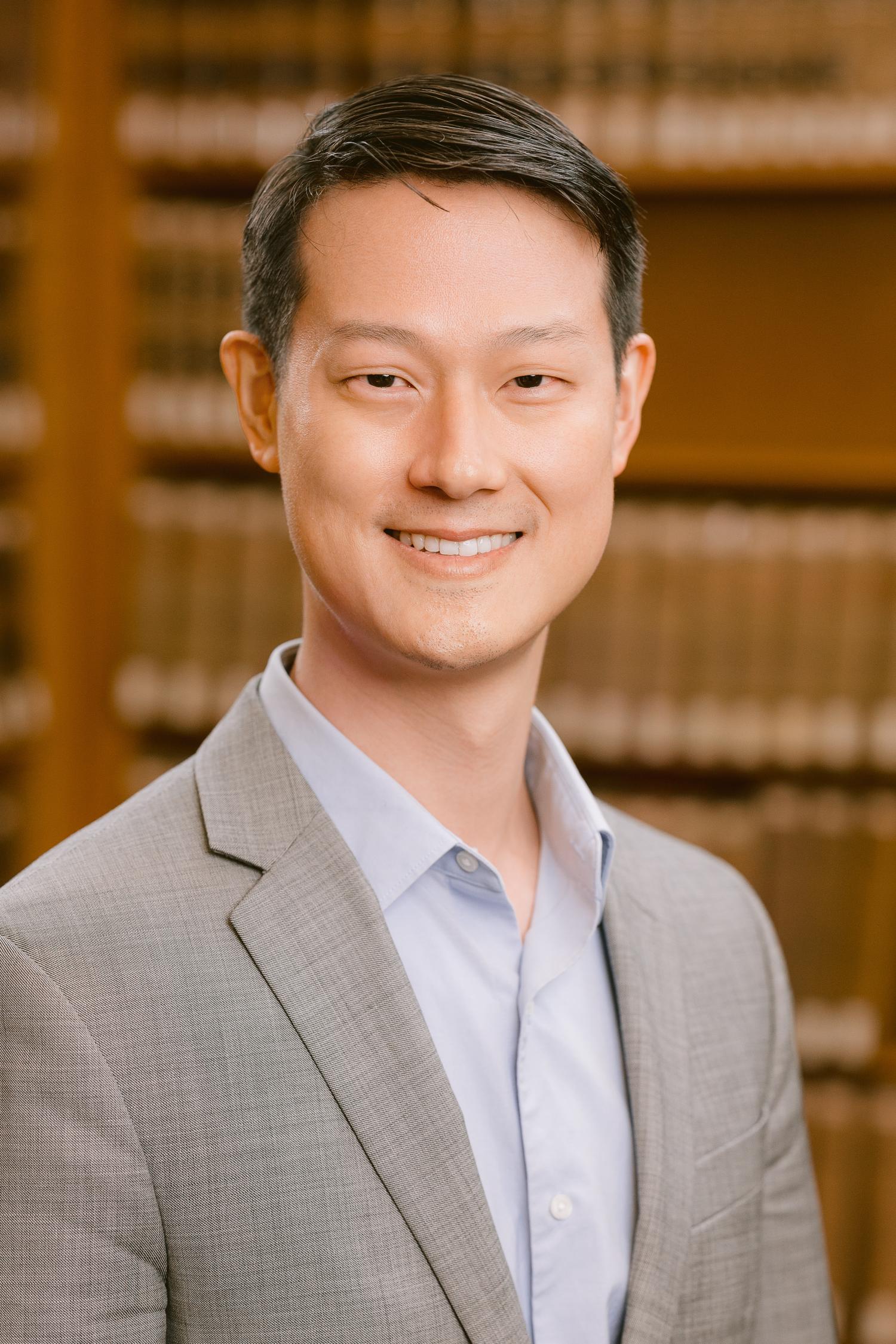
Timothy Webster serves as Professor of Law and Associate Dean for Faculty Research and Development at Western New England University's School of Law, with prior academic appointments at Yale Law School, Case Western Reserve University, and international institutions including University of Paris—Dauphine and National Taiwan University. His educational qualifications include: B.A., Yale University M.A., Yale University J.D., Cornell Law School LL.M., Cornell Law School Webster's research focuses on intersections between international law and East Asian domestic legal systems (China, Japan, Korea, Taiwan), examining human rights frameworks, international trade mechanisms, foreign investment regulations, and transnational litigation strategies. His scholarship demonstrates deep engagement with historical justice issues and contemporary legal challenges in the region, delivered through presentations at over 175 international conferences conducted in English, French, Japanese, and Mandarin. Analysis of his recent publications reveals consistent thematic concentration on war reparations, state immunity doctrines, corporate liability frameworks, and civil society's role in transnational redress movements, with empirical studies of litigation patterns across East Asia forming a distinctive methodological thread. His professional recognition includes: Catherine Jones Professor of the Year award (2023 and 2024) Asia Scholars Network fellowship (Luce Foundation) U.S.-Japan Network for the Future membership (Mansfield Foundation) Public Intellectuals Program selection (National Committee on U.S.-China Relations) As Associate Dean, Webster mentors law students in international legal studies while directing faculty development initiatives. His research is substantially supported by elite fellowships from the Luce Foundation, Mansfield Foundation, and National Committee on U.S.-China Relations, enabling extensive international collaboration. Webster has testified before Congress regarding China's WTO compliance and contributes legal analysis to major media outlets including The Conversation, South China Morning Post, and Los Angeles Times.
Catherine Anne Brown is a Professor at the Faculty of Law, University of Calgary with extensive international experience, having held visiting professorships at Stanford University (as a Fulbright Fellow), University of Toronto, UCLA, McGeorge School of Law, and Whittier Law School. Her expertise spans taxation, international trade law, and estate planning across multiple jurisdictions. Her research focuses on the critical intersection of tax and trade agreements, particularly how non-discrimination principles operate within services trade frameworks. Current work examines tax treaty mechanisms for addressing discriminatory practices in cross-border commerce, building on her 2017 monograph "Tax Discrimination and Trade in Services". She actively explores evolving regulatory challenges in digital services taxation and international compliance. Professor Brown's scholarship demonstrates consistent engagement with practical legal applications, bridging academic theory and professional practice through textbooks, treatises, and policy-oriented analyses. Her publications reveal progressive specialization in tax-trade interfaces while maintaining foundational contributions to estate planning education. Her distinguished career has been recognized through: Lifetime Achievement Award (Canadian Tax Foundation, 2017) Doug Sherbaniuk Award for Distinguished Writing (Canadian Tax Foundation, 2014) Award for Distinguished Service in Legal Scholarship (Law Society of Alberta/Canadian Bar Association, 2011) Widdifield Award for estate planning scholarship (2006, 2012) Induction into the International Academy of Estate and Trust Law (2012) As an educator, she directed the Business Clinical program until 2014, providing practical training in business law applications. She maintains active professional engagement through appointments to the NAFTA Chapter 19 roster (2018), STEP Canada's Public Policy Committee (2016), and the Canada Revenue Agency's Offshore Compliance Advisory Committee (2016), while serving on the Legal Education Society of Alberta's Board of Directors.
Mark J. Loewenstein is the Monfort Professor of Commercial Law at the University of Colorado Law School, where he has been a faculty member since 1979. He teaches courses in Business Associations, Securities Law, and Contracts, and has established himself as a leading scholar in business law. Professor Loewenstein previously practiced business law at a Chicago law firm before joining academia and has maintained strong connections with the legal profession throughout his career. Professor Loewenstein's educational background includes: JD from the University of Illinois, Champaign-Urbana BA from the University of Illinois, Champaign-Urbana Professor Loewenstein's research focuses on business associations, agency law, and securities law, with particular expertise in corporate governance. His scholarly work examines the legal structures of business organizations, fiduciary duties in unincorporated entities, and the evolving landscape of corporate law. He has made significant contributions to understanding LLC governance, veil piercing doctrines, and the application of good faith principles in business contexts. His comparative work on stakeholder protection in Germany and Japan demonstrates his international perspective on corporate governance issues. Analysis of Professor Loewenstein's publications reveals a consistent focus on the intersection of business organization law and corporate governance. His work spans theoretical examinations of agency principles, practical analyses of LLC structures, and historical perspectives on corporate law developments. A notable trend in his scholarship is the examination of how traditional corporate law concepts apply to newer business forms, particularly limited liability companies. His publications also demonstrate a strong interest in the balance between state and federal regulation of business entities. Professor Loewenstein has received significant professional recognition: Monfort Professor of Commercial Law (endowed chair) Fulbright Scholar at Hokkaido University, Japan (1990-91) Visiting Professor at University of Michigan Law School (1999) Throughout his career, Professor Loewenstein has demonstrated exceptional service to both the University of Colorado Law School and the broader legal community. He served as associate dean for academic affairs for nine years and associate dean for research for four years. He was a member of Colorado's Securities Board from 1995 to 2000 and contributed to the drafting of the 1994 Colorado Business Corporation Act. As a delegate to the ABA House of Delegates (1999-2005) and active member of the ABA's business law committee, he has influenced business law development at the national level. His service extends to editorial roles for legal publications and frequent presentations at professional conferences. Professor Loewenstein maintains strong connections with the legal practice community through his ongoing service on the Colorado Bar Association's Corporate Law Revision Committee and his contributions to continuing legal education programs. His work bridges academic scholarship and practical legal application, making him a valued resource for both students and practitioners.
Dr. Tolulope J. Falokun is an Assistant Professor of Law at the University of Detroit Mercy School of Law . Her expertise spans Technology Law, International Law, and AI Ethics. She holds an LL.M. from Harvard Law School and top-tier degrees from Nigerian institutions, including a First Class Honors from the Nigerian Law School (top 1%). Education: LL.B., Obafemi Awolowo University (2017); B.L., Nigerian Law School (2018); LL.M., Harvard Law School (2020). Certifications: Introductory Certificate in Arbitration (Chartered Institute of Arbitrators). Her research focuses on blockchain, AI regulation, cross-border legal frameworks, and privacy law. She teaches courses like Blockchain & AI in Legal Systems and Private International Law in the Digital Era . Recent professional roles include presentations at Arizona State University and the University of Oklahoma, and judging the Canadian & American Transnational Law Moot.
Caroline Andre is an Associate Professor of Law at NEOMA Business School, specializing in private law with a focus on labor law, marketing law, and cooperative law. She teaches undergraduate and graduate students in both initial and continuing education programs, and has practiced law professionally. Her research bridges legal and management disciplines, addressing topics like social and solidarity economy (SSE), circular economy intersections, CSR policies, and entrepreneurial values. Her academic contributions span legal journals and management science publications, including monographs like Creating the Circular Economy (2024). She actively participates in national/international communities like EURAM and ACfas. Recent work examines SSE's role in ecological transition, pandemic crisis adaptation, and labor law compliance in SMEs. Key research outputs include analyses of social audits in SME acquisitions (2022), employer pooling models (2019-2020), and legal frameworks for SSE organizations. Her work frequently explores regulatory pressures and ethical governance in business environments. Caroline has no listed scientific awards but has contributed to numerous regionally funded research projects. Her teaching extends to professionals via continuing education, emphasizing practical legal applications in business contexts.
Professor Dr. Prof. h.c. Thomas M.J. Möllers holds the Chair for Civil Law, Commercial Law, European Law, International Private Law and Comparative Law at the Faculty of Law, University of Augsburg. As a full professor, he leads research and teaching in multiple legal disciplines with a particular focus on German and European financial regulation, corporate law, and legal methodology. His work bridges traditional legal scholarship with contemporary challenges posed by digitalization and globalization. Professor Möllers' research interests span German and European Capital Markets law, German and European Company Law, Legal methods, Comparative Law, European Union Law, and Competition Law. His scholarly work demonstrates exceptional breadth, connecting doctrinal legal analysis with practical applications in evolving regulatory environments. He has made significant contributions to understanding the interface between national legal systems and EU regulation, particularly in financial markets. His recent publications reveal a strong focus on capital markets regulation, particularly regarding the Wirecard scandal and auditor liability, consumer protection in e-commerce, data protection across different legal systems, and the impact of AI on legal methodology. The trajectory of his work shows increasing engagement with comparative legal analysis between European, American, and Chinese legal systems, reflecting his growing international influence. TOP 1% Most Cited Books (2019-2023) - Legal Translations in China for his 'Legal Methodology' Honorary Professor at Central South University, Changsha, Hunan (2024) Professor Möllers has mentored numerous successful legal scholars who have gone on to academic and professional careers, including Dr. Liuhua Shen (now a professor at Jiangsu University), Dr. Maximilian Merwald, and Dr. Lisa Wolf. His research is supported by various grants, including DAAD funding for US exchange programs and participation in the Jean Monnet Centre of Excellence - INspiRE on consumer protection, capital markets, and competition law enforcement. He leads the Research Center of Innovation and Legal Studies between China and Europe (RICE) and is actively involved in the Caplaw initiative, which provides resources on European and national business law. His work connects legal scholarship with practical applications through podcasts, student research showcases, and collaborative projects across multiple legal systems.
Timo Minssen is Professor of Law at the University of Copenhagen (UCPH) and the Founding Director of UCPH's Center for Advanced Studies in Bioscience Innovation Law (CeBIL). He also holds affiliations as an LML Research Affiliate at the University of Cambridge and an Inter-CeBIL Research Affiliate at Harvard Law School's Petrie-Flom Centre. With extensive expertise in Intellectual Property, Competition, and Regulatory Law, Minssen focuses on the legal aspects of emerging health and life science technologies, including genome editing, big data, artificial intelligence, and quantum technology. His educational background includes a German law degree (Staatsexamen) from Georg-August-University in Göttingen, and Swedish biotech & IPR related LL.M., LL.Lic., and LL.D. degrees from Lund University and Uppsala University. His PhD thesis on the patentability of biopharmaceutical technology in the US & Europe received the prestigious Swedish King Oscar award. 2024: TUM Global Visiting Professor, Technical University of Munich (Germany) 2016: Visiting Research Fellow, University of Cambridge (UK) 2014: Visiting Research Fellow, University of Oxford (UK) 2013-14: Visiting Scholar, Harvard Law School (US) 2012: LL.D. - Doctor of Laws (Swedish "juris doktor"), EU/US patent law, Lund University, Sweden Minssen's research spans AI & Big Data in Health & Life Sciences, Sustainable and responsible innovation & tech transfer, Pharmaceutical-, Life Science- & Biotech Law, Comparative European & US Patent Law, Intellectual Property Law & Open Innovation, and EU Competition- & US Antitrust Law. His work addresses legal issues throughout the lifecycle of health and life science products and processes, from R&D regulation to technology transfer and commercialization. His extensive publication record includes 7 books and over 200 articles and book chapters published in leading journals such as Science, Nature Biotechnology, JAMA, and Harvard Business Review. His research has been featured in The Economist, Financial Times, and other major media outlets. Minssen's recent work shows a strong focus on AI regulation, quantum technology law, and data governance in health contexts, reflecting the evolving landscape of technology and law. Scientific Awards and Recognition King Oscar award for best Jur. Dr. thesis (2014) Jorcks Fonds Forsknings Pris (Jorck's Foundation Research Prize) (2017) Awapatent Research Prize (2009) Max Planck Research Scholarship (2005) Visiting Scholar appointments at Harvard Law School, University of Oxford, and University of Cambridge Recipient of a Novo Nordisk Foundation Grant for a "Collaborative Research Program in Biomedical Innovation Law" (2018) As an advisor, Minssen serves international organizations including the WHO, WIPO, and EU Commission. He has supervised numerous PhD students in areas including pharmaceutical law, biotechnology patents, and antimicrobial resistance. His current research projects include the Novo Nordisk Foundation's International Collaborative Bioscience Innovation & Law (Inter-CeBIL) Programme (50 million DKK), CLASSICA: EU Horizon Project on AI-assisted surgery, and AI@Care: Law and Ethics and Algorithmic Bias in Healthcare. Minssen leads the Center for Advanced Studies in Bioscience Innovation Law (CeBIL), which serves as a hub for interdisciplinary research on the intersection of law, technology, and innovation in the health and life sciences. The center collaborates with institutions worldwide to address pressing legal challenges in emerging technologies.
Prof. Dr. Mareike Kühne is a full-time Professor of Business Administration at the Department of Business and Management, Brandenburg University of Technology. With a unique interdisciplinary background spanning economics, business administration, philosophy, and neuroscience, she bridges affective dimensions with economic rationality to develop holistic decision-making frameworks. Doctorate in Economics, Otto von Guericke University Magdeburg (1992-1997) Fulbright Scholar, San Diego State University (1997-1998) Studies in Philosophy, Humboldt University (2007-2011) Doctoral and Master’s in Neuroscience, Berlin School of Mind and Brain (2011-2013) Her research integrates insights from psychology and neuroscience into capital market-oriented corporate reporting, corporate governance, and normative rationality frameworks. She critiques current economic models for neglecting the embodied nature of cognition, advocating for a more nuanced understanding of rationality that incorporates lived experience. Her 15 most recent works span sustainability reporting (2025), neuroeconomics (2021), M&A disputes (2017), and IFRS standard evolution (2005-2012). These publications highlight her focus on reconciling traditional accounting principles with interdisciplinary approaches to decision-making. Fulbright Scholar (1997-1998) Prof. Kühne has taught at Humboldt University, HHL Leipzig, and the Berlin School of Mind and Brain. She actively participates in professional organizations including the German Society for Philosophy, European Accounting Association, and European Financial Reporting Advisory Group. Her work emphasizes the practical impact of neuroscientific findings on economic policy and standard-setting.
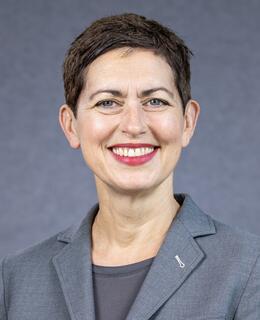
Laura Spitz is Dean and Professor at the University of Calgary Faculty of Law, with a concurrent Visiting Professorship at Université Paris 1 Panthéon-Sorbonne Law School. Her academic and professional journey spans multiple institutions, including Seattle University, University of New Mexico, Cornell University, and Thompson Rivers University. Educational Background: JSD, Cornell University JD, University of British Columbia BA, University of Toronto Spitz's research interrogates the legal construction of borders and identities, blending contracts, commercial law, and critical analyses of personhood in corporate and environmental contexts. Her work explores the limits of subject-object dichotomies in law and society. Notable awards include multiple Graduation Hooding Professor distinctions at the University of New Mexico and Colorado Law School, alongside teaching accolades. She contributes to constitutional pluralism debates and has co-authored influential works on legal personhood. A nonpracticing member of the Law Society of British Columbia, Spitz serves as a legal expert in contracts and business law, with experience in First Nations economic development and nonprofit law. She has advised on Supreme Court cases and held leadership roles in global engagement and international affairs.
Professor Anne Wallace is an Adjunct Professor at La Trobe Law School and holds concurrent roles at the University of Denver's Sturm College of Law and Victoria University's Sir Zelman Cowan Centre. She has extensive experience in judicial administration, having served as Head of School at Edith Cowan University and Associate Dean at the University of Canberra. Her research focuses on technology in justice systems, court administration, and Indigenous justice issues. Wallace holds a PhD from the University of Sydney and has authored over 37 scholarly works. Education: LLB (Tasmania), LLM (Melbourne University), Grad Cert Higher Ed (Canberra), PhD (Sydney). Her research explores the integration of ICT in courts, remote witness testimony, and judicial workload management. Notable projects include ARC-funded studies on visual evidence and remote testimony guidelines, and a decade-long Indigenous cultural awareness initiative for judiciary. Recent work addresses post-pandemic court digitalization and Indigenous justice disparities. She has contributed to international collaborations, serving as a visiting expert for CEELI Institute and editorial board member for the International Journal for Court Administration. Her funded research includes the 'Compliance by Design' project under Data to Decisions CRC (2018-2019). Professional activities include judicial training programs, curriculum development for Indigenous justice issues, and advisory roles in court technology policy.
Bertram Müller-Myhsok is a Research Professor and Research Group Leader at the Max Planck Institute of Psychiatry in Munich, Germany. His research focuses on statistical genetics and transcriptomic data analysis in psychiatric disorders, particularly major depression, PTSD, schizophrenia, and their treatment responses. He integrates machine learning with genetic and clinical data to develop predictive models and stratified treatment approaches. Professional activities include leadership roles in the International Max Planck Research School for Translational Psychiatry and collaborations with institutions like the Institut du Cerveau (Paris) and Bernhard Nocht Institute (Hamburg). His work spans genetic epidemiology, psychiatric genomics, and precision medicine, with over 400 publications in high-impact journals. Key research areas include identifying genetic risk factors for mental disorders, developing polygenic scores, and leveraging omics data to uncover disease mechanisms. He leads projects like Psych-STRATA, a Horizon Europe-funded initiative advancing personalized psychiatry through pharmacogenomics.