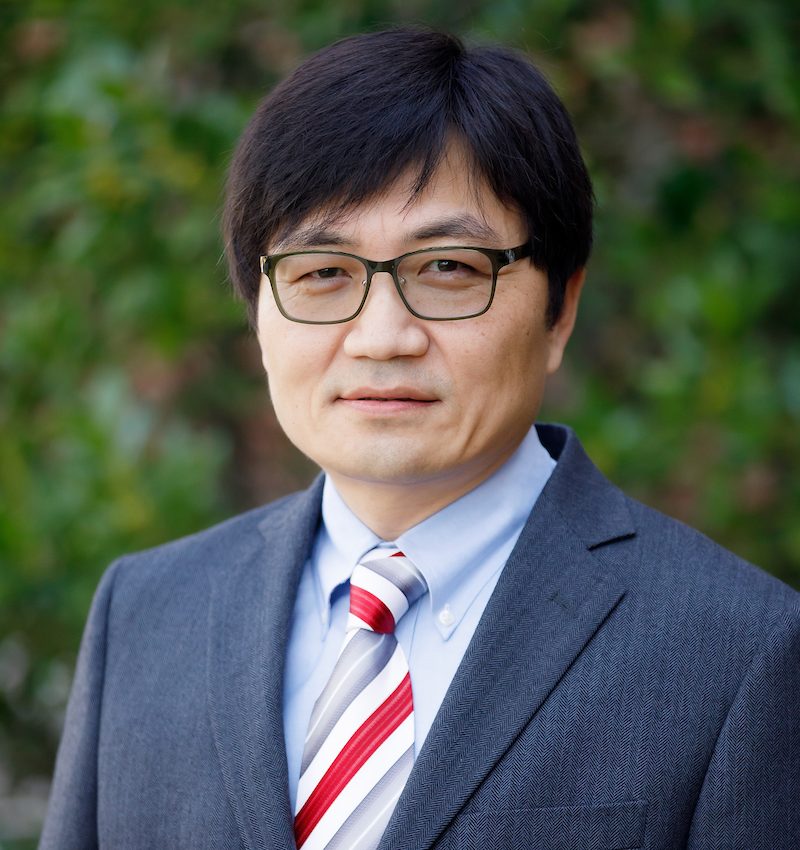
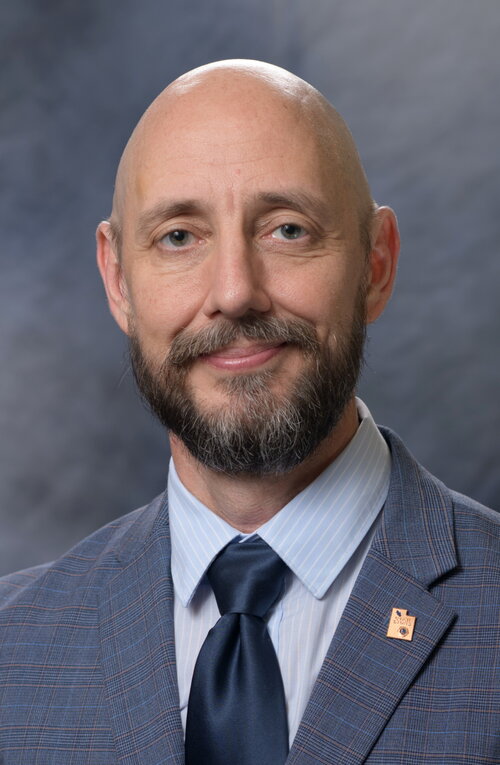
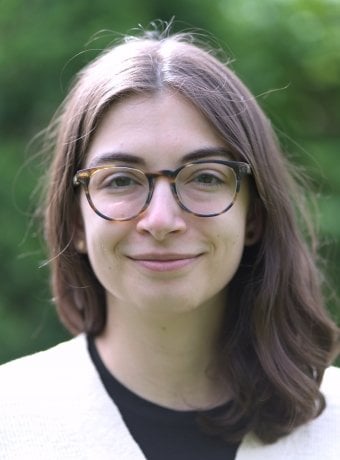
Dr. Xiaopeng Li is the Harvey D. Spangler Professor in the Department of Civil and Environmental Engineering at the University of Wisconsin-Madison, with an affiliation in the Department of Electrical and Computer Engineering. He leads the USDOT Rural Autonomous Vehicle Program and previously directed the National Institute for Congestion Reduction. He earned his B.S. in Civil Engineering from Tsinghua University (2006), M.S. in Civil Engineering (2007), M.S. in Applied Mathematics (2010), and Ph.D. in Civil Engineering (2011) from the University of Illinois at Urbana-Champaign. His research focuses on modeling and field experiments for connected, electric, and automated vehicles (CAVs), infrastructure systems analysis, and interdependent network modeling. He has pioneered physics-enhanced machine learning frameworks for vehicle control and developed simulation tools for CAV deployment. His 2025-2024 publications highlight advancements in Connected vehicle trajectory modeling Energy consumption optimization Edge computing for autonomous operations Residual learning control systems Equity analysis in AV deployment Communication technologies for V2X Awards include: TRB Best Paper Award (2025) NSF CAREER (2015) ASCE Fellow (2024) IEEE Senior Member (2022) Multiple institution-specific fellowships He has advised 15+ graduate students, secured $35M+ in grants from NSF, USDOT, and industry partners, and chairs the IEEE ITSS Emerging Transportation Technology Testing committee. His work addresses real-world AV implementation, safety validation, and sustainable transportation systems.
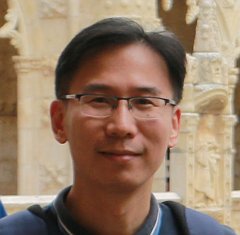
Dr. Hwan-Sik Yoon is an Associate Professor in the Department of Mechanical Engineering at The University of Alabama, where he focuses on applying Artificial Intelligence (AI) and Machine Learning (ML) to automotive, transportation, and manufacturing systems. His research spans modeling, simulation, and control of dynamic systems, with a strong emphasis on connected and automated vehicles (CAVs), energy-efficient routing, and sensor fusion technologies. Ph.D., Mechanical Engineering, Ohio State University, 2002 M.S., Mechanical Engineering, Ohio State University, 1998 B.S., Physics Education, Seoul National University, Korea, 1994 Dr. Yoon’s research integrates AI/ML into applications such as traffic signal control , excavator manipulator pose estimation , hybrid electric vehicle powertrain control , and factory floor safety monitoring . He is also involved in additive manufacturing , vision-based control systems , and reinforcement learning -driven automotive innovations. Recent publications highlight trends in deep reinforcement learning for vehicle energy efficiency, sensor fusion for traffic surveillance, and neural networks for dynamic system control. His work addresses challenges in multi-component failure analysis and real-time edge computing platforms . NSF Outstanding Faculty Advisor Award (2019) College of Engineering Faculty Productivity Award, Tennessee Tech University (2012) Dr. Yoon leads the Intelligent Structures and Systems Laboratory and serves as the lead CAVs faculty advisor for the University of Alabama’s EcoCAR student team, which has achieved national recognition in advanced vehicle technology competitions.
Meire Ellen Gorete Ribeiro Domingos is a Lecturer and Postdoctoral Researcher at École Polytechnique Fédérale de Lausanne (EPFL), affiliated with the School of Engineering (STI) and Industrial Process and Energy Systems Engineering (IPESE) department. She works on process modeling, techno-economic and environmental analyses, and optimization of energy conversion systems, particularly in biorefineries, hydrogen production, and industrial decarbonization. Education PhD in Chemical Engineering, Polytechnic School of the University of Sao Paulo (2022) BSc in Chemical Engineering, University of Brasilia (2017) Research Interests Exergy and energy integration of chemical/industrial processes Modeling and optimization of energy systems Decarbonization via renewable energy integration Techno-economic and environmental analysis of industrial processes High-temperature heat pumps and carbon capture Multi-time scale optimization for industrial-urban systems Publication Trends Focus on decarbonization pathways (2023-2025) Black liquor gasification for integrated chemical/fuel production (2019-2022) Renewable energy and solid oxide cells for industrial-urban symbiosis (2024-2025) Development of decision-support tools like ROSMose (2023-2024) Life cycle assessment and CO2 management strategies Thermal integration and process simulation for sustainability Laboratory & Teams Industrial Process and Energy Systems Engineering (IPESE), EPFL Valais Wallis SCI-STI-FM and SCI-STI-JVH research groups EPFL School of Engineering (STI)
Prof. Xing Yang is a Professor at KU Leuven's Institute for Sustainable Metals and Minerals (ISM2), leading the Process Engineering for Sustainable Systems (ProcESS) research group. His work focuses on developing membrane-based technologies for sustainable resource recovery and environmental protection, with strong emphasis on metallurgical and wastewater applications. His research centers on advanced membrane engineering for separation processes, particularly membrane distillation, electrodialysis, and solvent extraction-based systems. Key interests include designing stimuli-responsive membranes, optimizing ion-selective transport, and developing energy-efficient processes for metal recovery from end-of-life batteries and industrial waste streams. His work bridges materials science, chemical engineering, and environmental sustainability to address critical resource scarcity challenges. Analysis of his 15 most recent publications (2024-2025) reveals a dominant focus on lithium and transition metal recovery through electro-driven membrane processes. He pioneers innovations in membrane architecture – including macrocycle-based channels, zwitterionic coatings, and PVDF modifications – to achieve unprecedented selectivity in complex matrices. His research consistently targets industrial applicability, with demonstrated applications in battery recycling, wastewater valorization, and CO 2 capture systems. The ProcESS research group operates within KU Leuven's Institute for Sustainable Metals and Minerals, collaborating across metallurgy, environmental engineering, and materials science disciplines. Their work integrates experimental membrane fabrication with process modeling to develop scalable solutions for circular economy implementation in resource-intensive industries.
Prof. Ryan Keith Shosted is a full-time tenured Professor at the University of Illinois at Urbana-Champaign , affiliated with the Department of Linguistics , Spanish and Portuguese , American Indian Studies Program , Beckman Institute , Lemann Center for Brazilian Studies , Center for Latin American and Caribbean Studies , and Center for African Studies . He serves as Director of the Program in Translation and Interpreting Studies and leads the Chin-Woo Kim Phonetics Laboratory . Education: Ph.D. , Linguistics, University of California, Berkeley (2006) M.A. , Linguistics, University of California, Berkeley (2003) B.A. , Linguistics, Brigham Young University (2000) Shosted's research focuses on the intersection of phonetics , phonology , and historical linguistics . He pioneered the application of ultrafast dynamic MRI to study the vocal tract's physiological-acoustic mapping in diverse languages, including Hittite cuneiform , Deseret Alphabet , and endangered languages like Q'anjob'al. His work spans speech production modeling , nasalization mechanisms , and cross-linguistic articulatory analysis . The 15 most recent publications demonstrate his leadership in dynamic speech imaging , phonetic-aerodynamic modeling , and historical sound change analysis . Key trends include advanced MRI techniques for speech study, phonetic universals , and historical writing systems as tools for linguistic reconstruction. Scientific Awards: Campus Award for Excellence in Undergraduate Teaching (2021) Dean's Award for Excellence in Undergraduate Teaching (2021) Arnold O. Beckman Award (2009, 2010) Jacob K. Javits Fellowship (2001-2005) Shosted's grant portfolio includes NSF funding for nasalization research (BCS-1651197, BCS-1121780) and NIH collaboration (1R01DE027989-01A1) on cleft palate speech. He has directed 12 graduate students and taught courses ranging from Hittite language to quantitative phonetic methods . The Chin-Woo Kim Phonetics Laboratory , under his directorship since 2007, expanded in 2010 to include articulatory phonetics facilities with EPG, ultrasound, and MRI analysis capabilities. He continues to lead Beckman Institute collaborations in speech imaging technology.
Tomasz Majka serves as a Lecturer at the Department of Polymer Chemistry and Technology within the Faculty of Chemical Engineering and Technology at Tadeusz Kościuszko Cracow University of Technology. His academic career spans over a decade with continuous research and teaching activities focused on polymer engineering and materials science. His educational background includes a Licentiate in Applied Chemistry (2008) and Pedagogical Preparation (2008) from State Higher Vocational School in Tarnów, followed by MSc in Plastics Technology (2010) and Dr. Eng. in Technical Sciences (2015) from Tadeusz Kościuszko Cracow University of Technology. Majka's research primarily centers on polymer processing technologies , with special emphasis on thermal analysis and flammability of polymer materials , nanocomposite development , and terminal ballistics . His work bridges fundamental polymer science with practical industrial applications, particularly in developing sustainable flame retardant systems using biobased materials like lignosulfonamides. Recent publications reveal a strong focus on circular economy approaches through polymer recycling and biodegradable material development. His scientific contributions demonstrate consistent output in high-impact journals, with a notable shift toward sustainable polymer solutions since 2020, particularly in biodegradable composites and recycling technologies. The 15 most recent publications show expertise spanning flame retardancy mechanisms, nanocomposite engineering, and sustainable polymer processing. III place at International Session of WIiTCh Krakow University of Technology Science Clubs (2010) Award in 'Sustainable Development - Scientific Debut 2010' competition (2010) Award in 'Poster about famous scientist - Norio Taniguchi' competition (2011) II Prize in B-Innovative 'Be Entrepreneurial' business plan competition (2013) Majka actively supervises the Ballistic and Flammability Research Section within WIiTCH PK Chemistry Research Club and maintains strong industry connections through numerous industrial research projects. His professional engagements include international research stays at University of Bolton (UK) and Academy of Sciences of the Czech Republic, focusing on fire testing and polymer materials innovation. He serves as a scientific advisor for several industrial projects related to polymer processing and material safety. His laboratory work spans multiple specialized facilities including thermal analysis equipment, scanning electron microscopy, and polymer processing machinery. Current research directions include developing halogen-free flame retardants from lignin derivatives, optimizing biodegradable polymer composites, and advancing recycling technologies for post-consumer plastics.
Professor Masashi Okubo at Waseda University's School of Advanced Science and Engineering specializes in electrochemistry and energy materials development. With cross-appointments at Kyoto University and the Advanced Collaborative Research Organization for SmartSociety, his work focuses on sustainable battery systems including aqueous proton batteries, MXene-based electrodes, and oxygen-redox chemistry. His research bridges fundamental materials science with practical energy storage applications through combined experimental-theoretical approaches. Education : Ph.D. in Basic Science (2005) and M.Sc./B.Sc. in Basic Science from The University of Tokyo Research Strengths : Solid-state ionics and intercalation chemistry MXene electrode engineering Oxygen-redox reaction mechanisms High-rate energy storage systems Hydrate-melt electrolyte optimization Scientific Contributions include: Discovering near-zero-volume-phase battery materials Developing distortion-relieving voids in host structures Elucidating multiorbital bond formation in oxygen-redox reactions Advancing aqueous redox-flow battery catholyte design Prominent Awards : Waseda Research Award (2021) ACS Reviewer Excellence Award (2018) Ministry of Education Young Scientist Award (2017) Multiple Young Investigator Awards (2016)
Olivier Tougait is a Professor at the Chemistry, materials and processes for sustainable nuclear power (CIMEND) department within the Unité de Catalyse et Chimie du Solide (UCCS) at Université Lille . He specializes in solid-state chemistry, nuclear materials, and actinide-based compounds, with a focus on understanding fuel cycle processes for nuclear energy. Academic Background: PhD in Chemistry (1998, Université de Rennes1), Postdoctoral Fellow at Northwestern University (1998-2000). Career: Lecturer at Rennes1 (2000-2014), now Professor at UCCS since 2014. Collaborations include the French Alternative Energies and Atomic Energy Commission (CEA) , Orano , and Framatome . Research Interests: Actinide-based intermetallic compounds Phase diagrams of nuclear materials Magnetocaloric properties Fuel cycle process optimization Synthesis and thermodynamic behavior of uranium alloys Collaborative industrial nuclear R&D Publications since 2012 focus on: Uranium-molybdenum fuel characterization Germanium/Aluminum substitution in actinide systems Thermal stability of uranyl peroxide nanoclusters Crystallographic analysis of heavy-fermion materials Labs: Directs the joint research laboratories LR4CU and LRC PUMA, which collaborate with Orano and Framatome on nuclear fuel cycle innovations.
Dr. Yu Huang is an Assistant Professor in the Department of Computer Science at Vanderbilt University's School of Engineering, with a secondary appointment in the Department of Teaching and Learning at the Peabody School of Education. She is affiliated with the Institute for Software Integrated Systems, the Frist Center for Autism and Innovation, the Vanderbilt Lab for Immersive AI Translation (VALIANT), and the Vanderbilt LIVE Learning Innovation Incubator. Her academic journey began with a BS in Aerospace Engineering from Harbin Institute of Technology in China (2011), followed by an MS in Computer Engineering from the University of Virginia (2015), and culminated with a PhD in Computer Science and Engineering from the University of Michigan in 2021 under Professor Westley Weimer. Dr. Huang's research bridges human cognition and machine intelligence to enhance software development. Her work spans software, hardware, AI, medical imaging (fMRI/fNIRS), eye tracking, and mobile sensing through collaborations with Security, Education, Psychology, and Neuroscience researchers. She leads the MIND Lab (Mixed INtelligence Development for programming lab), investigating programming expertise formation, code comprehension processes, cognitive error patterns, and diversity in programming communities. Her innovative approach combines empirical human studies with AI model development to create more effective programming tools. Her recent publications reveal a growing emphasis on leveraging human attention data to improve code language models, analyzing cognitive biases in security contexts, and examining social factors in technical communication. The research shows strong interdisciplinary connections between neuroscience, psychology, and software engineering, with increasing applications of LLMs in developer tooling. Dr. Huang's work consistently demonstrates how understanding human cognition can inform better AI systems for programming tasks. Dr. Huang has received numerous prestigious recognitions including the 2025 ICPC Vaclav Rajlich Early Career Achievement Award and three ACM SIGSOFT Distinguished Paper Awards (ICSE 2019, FSE 2023, ICSE 2024). Her lab has earned the Best Presentation Award at GI2024, while her students have received the Richard Bennett/Dorothy Danforth Compton Prize scholarship and the C. F. Chen Best Paper award. She actively mentors a diverse team of graduate students (Yifan Zhang, Zach Karas, Zihan Fang, Yueke Zhang, Jiahao Zhang) and undergraduate researchers, with many former students advancing to top institutions (Stanford, Harvard, Duke, UC Berkeley) and organizations (NASA JPL). Her research is supported by a 4-year NSF grant, GitHub Tech for Social Good funding, and the Provost's Faculty Immersion Vanderbilt Grant, enabling comprehensive studies of human-AI collaboration in software engineering. The MIND Lab maintains a strong collaborative culture, frequently working with Professor Kevin Leach's research group and organizing retreats to locations like Radnor State Park and the Great Smoky Mountains. This environment fosters innovation at the intersection of human cognition and software engineering while supporting the professional development of emerging researchers in the field.
Henrik Haller is an Associate Professor at Mid Sweden University, affiliated with the Department of Natural Sciences, Design and Sustainable Development (NDH). His work integrates environmental science with practical applications in tropical regions, particularly focusing on land use, soil remediation, and sustainable food systems. Academic Title: Doctor of Philosophy Location: Östersund, Sweden Key Research Areas: Multifunctional land use, bioremediation, agroforestry, and sustainable development in the Global South Haller's research emphasizes transforming environmental challenges into opportunities. His work includes: Bioremediation of heavy-metal-contaminated soils using amaranth plants Urban agriculture potential in Swedish cities Life cycle assessments of cold-weather aquaponic systems Waste valorization strategies for contaminated lignocellulose sediments Universal design approaches to zero-waste communities Industrial symbiosis for local food systems He has ongoing projects in urban farming, wastewater resource recovery, and sustainable behavior transformation. His publications span topics from fungal metal tolerance to policy challenges in environmental governance.
Anna Stuhlmacher is an Assistant Professor in the Department of Electrical and Computer Engineering at Michigan Technological University. Her research focuses on the optimization of uncertain distributed energy resources (DERs) and the coordination of the power grid with other critical infrastructure systems including water and agricultural networks. Dr. Stuhlmacher received her academic credentials from prestigious institutions: PhD in Electrical Engineering, University of Michigan MS in Electrical Engineering, University of Michigan BS in Electrical Engineering, Boston University Her research program addresses a critical challenge in modern energy infrastructure: how distributed generation, storage, and flexible loads can be optimized to provide grid flexibility while coordinating with other essential infrastructure systems. Dr. Stuhlmacher specializes in modeling and optimizing the inherent flexibility and uncertainty propagation between power systems and other infrastructure systems such as drinking water, wastewater treatment, and agricultural systems. This interdisciplinary approach is vital for improving grid reliability, particularly during periods of network stress, by increasing demand flexibility through coordinated management of multiple infrastructure systems. Dr. Stuhlmacher's publication record reveals a consistent progression from fundamental optimization techniques for water distribution networks to more complex systems involving wastewater treatment biogas and agrivoltaics. Her research demonstrates sophisticated application of advanced optimization methods including chance-constrained programming, robust optimization, and machine learning techniques like input convex neural networks to address uncertainty in coupled infrastructure systems. The majority of her work focuses on the water-power nexus, with recent expansion into agrivoltaics as renewable energy and food production compete for land resources. Her notable achievements include: Best paper award for the Electric Energy Systems Track, HICSS 2025 Dr. Stuhlmacher actively secures research funding as Principal Investigator on multiple significant grants including an NSF award focused on biogas from wastewater treatment, a PSERC award on flexible load dispatch (as Co-PI with Georgia Tech researchers), and a Michigan Tech Research Excellence Fund grant on agrivoltaics. While she indicates she is not actively seeking graduate students for the 2025-26 academic year, she remains open to working with exceptional students with strong foundations in power systems and mathematics. Her undergraduate teaching includes courses on Distributed Energy Resources, Electrical Energy Systems, and Power System Optimization, building on her previous teaching experience at the University of Michigan. Her research leverages Michigan Tech's DOE-designated Regional Test Center for Emerging Solar Technologies, particularly for her agrivoltaics research. She has established connections with national laboratories including NREL, where she interned during her PhD studies, and maintains active collaborations with researchers at institutions like Georgia Tech. Her work bridges theoretical optimization techniques with practical applications that have immediate relevance to utility companies and infrastructure operators.
Charbel Jose Chiappetta Jabbour is a Professeur Eminent and Head of the Systèmes d’Information, Supply Chain Management & aide à la Décision department at NEOMA Business School in France. He holds a Habilitation à diriger un doctorat from the University of São Paulo, Brazil. His research focuses on green and circular supply chains , Industry 4.0 , and sustainability integration in operations management. He has been included in Clarivate/Web of Science Highly Cited Researchers and received the British Academy of Management’s Best Paper Award (2019). Education & Career: Completed Habilitation at University of São Paulo (Brazil) International experience across Brazil, Japan, Scotland, England, and France Former Associate Editor of Journal of Cleaner Production Research Interests: His work bridges theory and practice in sustainable supply chain design, circular economy frameworks, and the human dimension of operations. He emphasizes integrating Industry 4.0 technologies with sustainability goals, and has pioneered studies on blockchain in supply chain digitalization. Grants & Projects: Principal Investigator/Co-Investigator on projects funded by Innovate UK, Midlands Engine UK, FAPESP Focus areas: Sustainable supply chain resilience, circular economy adoption Labs/Teams: Leads the Systèmes d’Information department and collaborates with global networks on sustainability initiatives.
Christian Messier is a Professor at the University of Quebec in Outaouais (UQO) in the Department of Natural Sciences and at the University of Quebec in Montreal (UQAM) in the Department of Biological Sciences. He serves as Scientific Director of the Institute of Temperate Forest Sciences (ISFORT) and holds two prestigious research chairs: the Canada Research Chair on Tree Resilience to Global Changes and the NSERC/Hydro-Québec Chair on Tree Growth Control. His academic career spans over three decades since completing his Ph.D. in forest sciences from the University of British Columbia in 1991. Dr. Messier's research focuses on two primary areas: the complex functioning of managed natural forest systems to develop management approaches that promote resilience in the face of global changes, and the study of trees and urban forests to reconcile the needs of minimizing negative impacts of trees on human infrastructure while maximizing ecosystem services. His work integrates field studies, simulation modeling, and network theory to address pressing challenges in forest ecology and management. His recent publications demonstrate a strong emphasis on urban forest resilience, functional diversity in forest ecosystems, and nature-based solutions for climate adaptation. The research shows a clear trajectory toward more applied, solution-oriented approaches that bridge fundamental ecological understanding with practical forest management applications across diverse spatial scales from individual trees to entire landscapes. Francqui Foundation Chair (Belgium) - 2020 Member of The Royal Society of Canada - 2019 Personality of the Year 'Radio-Canada/Le Droit' - 2017 Humboldt Research Award - 2016 Prix Acfas – Michel-Jurdant - 2010 Canadian Forestry Scientific Achievement Award - 2006 Dr. Messier has supervised over 40 graduate students throughout his career and currently leads multiple major research projects including the Canada Research Chair on Forest Resilience, the NSERC/Hydro-Québec Chair on Tree Growth Control, and the SylvCIT project for urban forest immunization against global change. His research has been supported by significant grants from NSERC, Canada Research Chairs program, Hydro-Québec, and other major funding agencies. He directs the Messier lab with research assistants Kim Bannon and Fanny Maure, and collaborates with numerous researchers across Canada and internationally. His team studies diverse aspects of forest ecology including soil dynamics, functional composition of tree communities, nature-based solutions for climate adaptation, and ecophysiology of maple water flow. The lab maintains strong connections with the International Diversity Experiment Network with Trees (IDENT) and other major forest research initiatives.
Chang Xu is a Professor and Ph.D. supervisor at Nanjing University, affiliated with the State Key Laboratory for Novel Software Technology, School of Computer Science, and Institute of Computer Software (ICS). He has been a full-time faculty member since 2010, when he joined as an associate professor and was later promoted to full professor in 2015. Education: Ph.D. from The Hong Kong University of Science and Technology (HKUST) in 2008 (advisor: Prof. S.C. Cheung) M.Eng. from Institute of Software, Chinese Academy of Sciences (ISCAS) in 2003 B.Eng. from University of Science and Technology of China (USTC) in 2000 Research Interests: Professor Xu's research focuses on big data software engineering, intelligent software testing and analysis, and adaptive and autonomous software systems. His recent work centers on constructing and providing runtime support for intelligent software in open environments, with emphasis on inconsistency detection and resolution for environments, and quality assurance for adaptive, concurrent, learning-based, smartphone-based, and spreadsheet-based applications. His work bridges theoretical foundations with practical applications in software engineering, particularly in program analysis, software testing, and self-adaptive systems. Scientific Awards: ACM SIGSOFT Distinguished Paper Award from ICSE 2025 Best Student Paper Award from EUROSYS 2025 ACM Distinguished Member in 2024 Best Paper Award from SOSP 2023 Best Paper Candidate from ISSRE 2022 Yangtze River Scholar by the Ministry of Education in 2021 Multiple ACM SIGSOFT Distinguished Paper Awards from conferences including ASE, ICSE National Science and Technology Progress Award (Second Class) in 2011 Academic Service and Advising: Professor Xu has served on numerous program committees for top software engineering conferences including ICSE, ASE, ESEC/FSE, and ISSTA. He is an editorial board member for several journals including Journal of Computer Science and Technology and Frontiers of Computer Science. He has supervised numerous Ph.D. and MSc students, with research topics spanning program analysis, software testing, self-adaptive systems, and more. His students have gone on to successful careers in both academia and industry. Research Groups: Professor Xu is associated with the SPAR research group at Nanjing University and the CASTLE research group at HKUST, focusing on software analysis, reliability, and testing.
Dr. Nabil Nasr serves as Associate Provost for Academic Affairs and Director of the Golisano Institute for Sustainability (GIS) at Rochester Institute of Technology (RIT). He also holds leadership positions as CEO of the REMADE Institute and Member of the United Nations Environment Programme (UNEP) International Resource Panel (IRP). His academic journey includes a BS from Helwan University (Egypt), M.Eng. from Pennsylvania State University, and MS and PhD from Rutgers University. Dr. Nasr is an internationally-recognized leader in sustainability research with expertise spanning sustainable manufacturing, remanufacturing, circular economy, and sustainable product development. His work emphasizes systems thinking and technological innovation to build regenerative industrial systems. He has pioneered research in value-retention processes, establishing frameworks for remanufacturing, refurbishment, repair, and direct reuse as strategic approaches to resource efficiency. His publication record demonstrates significant contributions to circular economy implementation across multiple sectors. Analysis of his recent work reveals strong focus on practical applications of circular strategies in industrial systems, automotive production, and urban mobility solutions, with emphasis on developing decision support tools and business cases for sustainable practices. Remanufacturing Industries Council 2017 ACE Award Rochester Engineering Society 2017 Engineer of Distinction APRA Asia-Pacific Most Influential Expert on Remanufacturing Award (2016) Institute of Industrial and Systems Engineers (IISE) Fellow Dr. Nasr has established numerous research centers and initiatives including the world's first university-based remanufacturing research hub (1997), the Center for Integrated Manufacturing Studies (2002), and the REMADE Institute - the largest recycling and remanufacturing consortium in the United States. His leadership extends to international forums including the UN Environment Programme, World Trade Organization, and OECD, where he influences global sustainability policy.