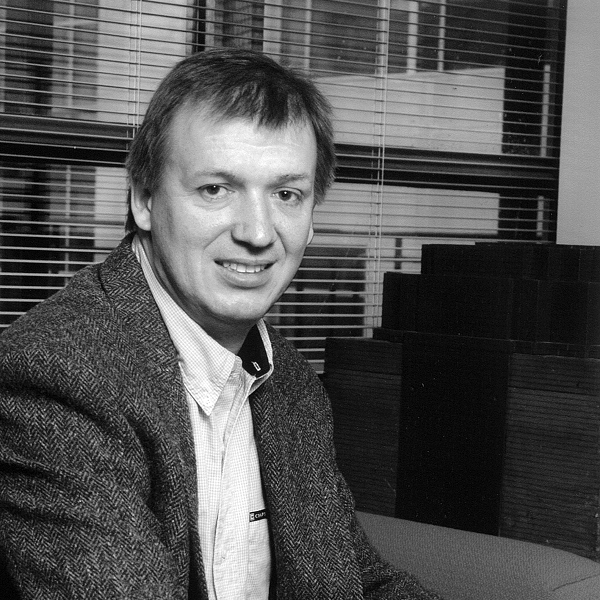
Joshua J. Coon is a Professor at the University of Wisconsin-Madison with appointments in the Department of Biomolecular Chemistry and the Department of Chemistry. He leads the Coon Group, focusing on advancing mass spectrometry technologies for proteomics, metabolomics, and lipidomics. His research addresses fundamental questions in cell biology, including stem cell differentiation, epigenetic regulation, and cancer biomarker discovery. Affiliations : Director of the NIGMS National Center for Quantitative Biology of Complex Systems. Research Emphasis : Instrumentation development, data analysis software, ion chemistry, and biological applications of proteomics. Laboratory : Located in the Genome Center of Wisconsin with a dozen hybrid mass spectrometers, including Orbitrap systems. Collaborations : Long-term partnership with Thermo Fisher Scientific and the Wisconsin Alumni Research Foundation (WARF) for technology commercialization. Training : Mentored 27 Ph.D. students since 2009, emphasizing interdisciplinary research and professional development.
Vernita Gordon is an Associate Professor in the Department of Physics at the University of Texas at Austin (since 2018), previously serving as an Assistant Professor there from 2010 to 2018. She holds a Ph.D. in Physics from Harvard University (2003) and a B.Sc. in Physics and Mathematics from Vanderbilt University (1997). Her research focuses on understanding how physical characteristics like mechanics and spatial structure influence bacterial biofilms, particularly their interactions with the immune system and resistance to antibiotics. She has pioneered techniques such as laser trapping to manipulate biofilm structures and studies radiation effects on bacteria like Deinococcus radiodurans . Education: Ph.D. in Physics, Harvard University (2003) B.Sc. in Physics and Mathematics, Vanderbilt University (1997) Research Interests: Dr. Gordon’s work integrates biophysics, microbiology, and materials science to explore biofilm mechanics, bacterial mechanosensing, and radiation biology. Key areas include: How biofilm mechanics resist immune clearance and antibiotic treatment Role of surface stiffness and shear stress in biofilm initiation Radiation resistance mechanisms in Deinococcus radiodurans Development of tools like laser trapping to study biofilm structure Key Achievements: Recipient of the Elizabeth B. Gleeson Professorship (2023) and Texas Mindset Initiative Fellowship (2023) Provost’s Teaching Fellow (2020–2024) and multiple teaching awards Funded by NSF, NIH, and Cystic Fibrosis Foundation Published over 60 peer-reviewed articles, including in Nature , PNAS , and Biophysical Journal Advising & Outreach: She mentors graduate students in Physics, Microbiology, and Biomedical Engineering, emphasizing interdisciplinary training. Her group actively recruits undergraduates and collaborates with industry partners like Solvay and the College of Pharmacy. Outreach includes lesson plans for high school STEM education and community science initiatives. Labs & Collaborations: Her lab uses advanced microscopy, microrheology, and computational modeling. Key collaborations include work with the Contreras Lab (UT Austin Chemical Engineering) on radiation-resistant bacteria and the Raizen Lab (UT Austin Physics) on self-sterilizing surfaces.
Örs Legeza is a physicist and scientific advisor at the Wigner Research Centre for Physics of the Hungarian Academy of Sciences in Budapest, leading the Strongly Correlated Systems Research Group. He holds a visiting professorship at Philipps University Marburg, Germany, and has held fellowships at institutions like ETH Zurich and LMU Munich. His research focuses on developing tensor network state (TNS) methods for strongly correlated quantum systems, with applications in condensed matter physics, quantum chemistry, and nuclear structure calculations. Education: PhD from Budapest University of Technology and Economics (1997). He has collaborated with European institutions such as FAU Erlangen-Nuremberg and has been an Alexander von Humboldt awardee. His work bridges quantum information theory and computational mathematics to advance simulations of complex quantum systems. Research interests include quantum phase transitions, magnetic properties in solids, and ultracold atomic systems. His methods push computational boundaries for larger systems, integrating techniques like density matrix renormalization group (DMRG) and matrix product states (MPS). Notable awards include the 2021 Academy Prize and 2018 Humboldt Research Award. Recent articles explore quantum crystal imaging, tensor network algorithms, and nuclear structure calculations. His work emphasizes interdisciplinary approaches to quantum many-body problems.
Christopher Ramsey is an Associate Professor and Interim Chair of the Department of Mathematics and Statistics within the Faculty of Arts and Science at MacEwan University in Edmonton, Alberta. He holds a PhD in Pure Mathematics from the University of Waterloo (2013), an MMath from Waterloo, and a BSc Honours from the University of Regina. Dr. Ramsey's research centers on operator algebras and functional analysis, with particular emphasis on non-selfadjoint operator algebras and multivariable operator theory. His work explores connections between analysis and algebra, studying algebras of infinite matrices and their applications to group theory, dynamical systems, free probability, and quantum information theory. He also investigates aperiodic order and its mathematical structures. His recent publications (2020-2025) demonstrate a consistent focus on operator algebras, with significant contributions to C*-algebras, tensor algebras, and their applications. The research spans theoretical foundations in functional analysis while connecting to diverse fields including symbolic dynamics, aperiodic structures, and quantum information. His work often bridges abstract algebraic structures with concrete analytical problems. Dr. Ramsey has received notable recognition including an NSERC Discovery Grant (2019), a MacEwan University Project Grant (2019), and an NSERC Postdoctoral Fellowship (2013). He serves as Editor-in-Chief of the MacEwan University Student eJournal (MUSe) and Associate Editor of the Canadian Transactions of Operator Theory. As an educator, Dr. Ramsey teaches various mathematics courses and supervises senior students' independent studies. His academic service includes editorial work and active participation in the Canadian Mathematical Society. His research program continues to develop connections between operator algebras and their diverse applications across mathematical disciplines.
Neil Shah is a Lead Research Scientist at Snap Inc., leading initiatives in user modeling, personalization, and trust and safety across Snapchat. His research focuses on advancing machine learning algorithms for large-scale structured data, including graph and sequential representations, with applications to recommendation systems and social platform security. PhD in Computer Science, Carnegie Mellon University (2017), advised by Christos Faloutsos B.S. in Computer Science, North Carolina State University Current research interests span: Graph Neural Networks (GNNs) for real-time inference and scalable training Cross-domain recommendation systems and generative modeling Test-time augmentation and hyperbolic geometry in representation learning Explainability methods for GNNs and fairness-aware outlier detection Recent publications highlight productionized GNN frameworks (GiGL), multimodal graph benchmarks, and novel approaches to link prediction and collaborative filtering. His work has appeared at top venues like KDD, ICLR, NeurIPS, and WWW. Scientific recognition includes: Outstanding Service Award at WSDM 2022 Best Paper Honorable Mention at CHI 2019
Erwin Schoof is an Associate Professor at the Department of Biotechnology and Biomedicine , Technical University of Denmark. He leads the Cell Diversity Lab and focuses on advancing proteomics and mass spectrometry technologies. Expertise in single-cell proteomics , stem cell niches , and bioinformatics . Active in myelofibrosis and leukemia research , with applications in UN Sustainable Development Goals . Research Trends from 2025–2024 include: Machine learning-driven peptide sequencing (InstaNovo, InstaNexus). Single-cell resolution tools for mapping hematopoietic stem cells and tumor microenvironments . Biomarker discovery in chronic diseases and respiratory conditions . Supervision : Mentors multiple PhD students on single-cell proteomics , omics data analysis , and biotherapeutic production . Labs & Collaborations : Collaborates with international teams on plasma proteomics , 3D bioengineering , and advanced mass spectrometry workflows .
Associate Professor Elaine Jing Zhao is based at the School of the Arts and Media , University of New South Wales , with expertise in digital media economies, cultural production, and platform governance in transitional China and the Asia-Pacific region. She authored the monograph Digital China's Informal Circuits: Platforms, Labour and Governance and publishes in journals like New Media and Society and Global Media and Communication . Research Focus: Cultural implications of digital platforms, media globalization, and creative labor dynamics Editorial Roles: Board member, Communication Research and Practice ; reviewer for ARC grants and international journals Her research portfolio emphasizes platform governance , digital media policy , and cultural innovation in China's digital economy. Recent projects examine China's platform internationalization and informal media economies. She supervises PhD candidates in these areas and has secured funding from both Australian Research Council and National Social Science Foundation of China . Scientific Awards: 2020 Faculty of Arts & Social Sciences Dean's Research Award for Best Monograph 2018 ARC Kathleen Fitzpatrick Laureate Fellowship Mentoring Scheme Award 2012 Australia-China Youth Dialogue Delegate 2010 Oxford Internet Institute Summer Doctoral Programme Participant She contributes to digital China scholarship through the Anthem book series and previously worked in the telecom and mobile internet industry before her academic career. Her work bridges sociocultural analysis and platform economy research.
Rafał Latała is a distinguished Professor at the Institute of Mathematics, Faculty of Mathematics, Informatics and Mechanics, University of Warsaw, where he has held a full professorship since 2013. He is also a Corresponding Member of the Polish Academy of Sciences since 2016 and an AMS Fellow since 2013. His academic career spans over 25 years at the University of Warsaw, progressing from Instructor (1994-1997) to Assistant Professor (1997-2003), Associate Professor (2003-2012), and finally to his current position as Professor. Additionally, he held a part-time professorship at the Institute of Mathematics of the Polish Academy of Sciences from 2009-2012. His educational background includes a PhD in Mathematics from the University of Warsaw (1997) with a dissertation on estimation of moments of sums of independent random variables under the supervision of Professor Stanisław Kwapien, a Habilitation degree in Mathematics (2002), and the title of Professor awarded by the President of Poland (2009). He completed his MSc in Mathematics at the University of Warsaw in 1994. Latała's research focuses on the intersection of probability theory and geometric analysis, with particular expertise in convex geometry, functional analysis, asymptotic geometric analysis, and the theory of log-concave measures. His work bridges theoretical mathematics with applications in high-dimensional statistics and random matrix theory. He has made significant contributions to understanding moment inequalities, concentration phenomena, and the geometric structure of high-dimensional random objects. His recent work demonstrates increasing sophistication in handling complex relationships between different norms of random vectors and matrices. His publication record shows a consistent focus on probabilistic methods in geometric settings, with recent articles demonstrating advanced techniques for analyzing random matrices, log-concave measures, and canonical processes. The research trajectory reveals increasingly sophisticated methods for bounding norms and moments in high-dimensional spaces, with applications spanning theoretical mathematics to statistical learning theory. Kolmogorov Lecture 2024 Prize of the Foundation for Polish Science in mathematics, physics, and engineering sciences 2023 Orlicz Lecture 2023 Institute of Mathematics of the Polish Academy of Sciences Prize 2014 AMS Fellow since 2013 Foundation for Polish Science Grant Mistrz 2007-2011 Prime Minister Award for Habilitation Thesis 2003 Invited Speaker at International Congress of Mathematicians 2002 Latała has supervised five PhD students to completion (Rafal Meller, Marta Strzelecka, Jakub Wojtaszczyk, Radoslaw Adamczak, and Rafal Lochowski) and four MSc students (Maciej Bartczak, Dariusz Matlak, Tomasz Tkocz, and Marcin Lis). His editorial service includes positions at Probability Surveys (2024-26), The Annals of Probability (2015-20), and Studia Mathematica (2006-present). He has organized numerous international conferences including the High Dimensional Probability X conference in 2023 and served on various professional committees including the Central Commission for Academic Degrees and Titles.
Sean O'Rourke is an Associate Professor in the Department of Mathematics at the University of Colorado Boulder. His research focuses on probability, random matrix theory, and random polynomials. He has organized multiple workshops and minisymposia, including events at the Canadian Discrete and Algorithmic Mathematics Conference (CanaDAM) and ICERM, demonstrating his active role in academic community engagement. His research spans spectral properties of random matrices (e.g., singular values, elliptic matrices, Laplacian matrices), probabilistic behavior of polynomial roots under operations like differentiation and summation, and applications of free probability theory. Recent work includes universal behavior in eigenvalue gaps, non-Hermitian matrix controllability, and asymptotic refinements of classical theorems for random polynomials. Publications highlight collaborations with researchers such as Andrew Campbell, Kyle Luh, David Renfrew, and Van Vu. His work appears in leading journals like Annals of Probability , Electronic Journal of Probability , and Transactions of the American Mathematical Society , covering topics from Gaussian fluctuations to low-rank perturbations and noncommutative harmonic analysis.
Guy Savard is a Part-time Professor in the Department of Physics at the University of Chicago and Senior Scientist at Argonne National Laboratory. His research conducts low-energy tests of the Standard Model using radioactive ions trapped for precision experiments. He develops novel ion trapping techniques to study weak interaction physics, including CKM matrix unitarity and searches for scalar currents beyond V-A electroweak theory. Publications focus on precision nuclear measurements using ion traps and radioactive beam facilities. Savard contributes to R&D for next-generation radioactive ion beam facilities like RIA.
Nicola Nicolici is a Professor in the Department of Electrical and Computer Engineering at McMaster University. His research focuses on methods and algorithms for the design of digital integrated circuits and systems, with significant contributions in manufacturing test, post-silicon validation and debug. His work has expanded to include embedded systems, low-energy computing, and custom hardware-accelerated computing systems. Professor Nicolici's research interests span multiple areas of digital system design and validation. His early work focused on manufacturing test methodologies and power-aware testing strategies for integrated circuits. More recently, he has made significant contributions to post-silicon validation techniques, including constrained-random stimuli generation, trace signal selection, and bit-flip detection. His research has evolved to address emerging challenges in embedded computing systems, low-energy design, and specialized hardware acceleration for various applications including deep neural networks and signal processing. His recent publications reveal a strong trend toward hardware acceleration for specialized computing tasks. The research spans matrix multiplication algorithms (Strassen and Karatsuba), memory system optimization (DDR5 calibration), FPGA-based radar processing, and neural network acceleration. His work consistently bridges theoretical algorithm development with practical hardware implementation considerations, particularly focusing on precision analysis, fault tolerance, and energy efficiency. The research demonstrates a clear progression from traditional digital circuit testing to more complex system-level validation and acceleration techniques. Professor Nicolici has been actively involved in teaching courses related to system-on-chip design and test, digital systems, and embedded systems. His teaching portfolio includes advanced courses such as System-on-Chip (SOC) Design and Test and Digital Systems Design , reflecting his expertise in the field. While specific grant information isn't detailed in the provided text, his extensive publication record suggests ongoing research funding support. His research has contributed significantly to the fields of digital circuit testing, post-silicon validation, and hardware acceleration. The work has practical applications in semiconductor manufacturing, embedded systems design, and specialized computing architectures. His recent focus on neural network acceleration and memory system optimization reflects the evolving landscape of computer architecture research.
Professor Soo-Yeun Lee is a leading Sensory Scientist and academic leader at Washington State University (WSU), serving as Director of the School of Food Science since 2023. She holds a Ph.D. in Food Science from the University of California, Davis, and a B.S. in Food Engineering from Yonsei University, Seoul. Previously, she served as a Professor at the University of Illinois, Urbana-Champaign (UIUC) from 2001-2022, with administrative roles including Assistant Dean and Associate Head. Her research focuses on sensory science and healthful eating, addressing challenges in sodium and sugar reduction, functional food development, and understanding consumer behavior. Notable projects include strategies to enhance taste retention in low-sodium foods and analyzing picky eating behaviors in children. She has published over 100 papers, with recent works exploring remote consumer testing methodologies and sodium reduction perceptions in the food industry. Lee has received numerous awards, including the Fred W. Tanner Lectureship (2021), Paul A. Funk Award (2018), and Samuel Cate Prescott Award (2011). She actively contributes to professional service roles, such as chairing USDA review panels and serving on the IFT Board of Directors. As a mentor, she has shaped food science education through teaching awards and leadership in curriculum development.
Alois Jungbauer is a full Professor and Head of the Institute of Biochemical Engineering at the University of Natural Resources and Life Sciences Vienna (BOKU), within the Department für Biotechnologie und Lebensmittelwissenschaften. He is a leading expert in bioprocess engineering, with a focus on downstream processing, continuous manufacturing, and sustainable biopharmaceutical production. Doctorate, University of Natural Resources and Life Sciences Vienna Habilitation, 1991 His research interests center on advanced purification technologies for biologics, including monoclonal antibodies, viral vectors, virus-like particles (VLPs), and gene therapy products. He is a pioneer in continuous integrated biomanufacturing, real-time process monitoring, and the development of platform processes for non-mAb proteins. His work integrates computational modeling, digital twins, and process intensification to improve efficiency and reduce environmental impact. He has made significant contributions to affinity chromatography, membrane adsorbers, and non-chromatographic separation methods. Recent publications highlight trends in continuous downstream processing, water conservation, in-situ buffer preparation, and the purification of complex biomolecules like secretory IgA and VLPs. His work spans both fundamental biophysical studies and industrial applications, reflecting a strong industry-academia interface. His scientific awards include: ISMR Thermo Fischer Award for Affinity Technologies (2011) Bia Separations Award (2000) Fulbright Award, Austrian-American Fulbright Commission (1996) Award of Japanese Society for Promotion of Science (1994) Golden Award 93 Professor Jungbauer actively supervises university theses and leads a dynamic research group. He has delivered numerous lectures and keynotes worldwide, indicating active engagement in knowledge transfer. His research is supported by ongoing projects and collaborations, with a strong emphasis on environmental and economic modeling of bioprocesses. He is affiliated with the Institute of Biochemical Engineering at BOKU, a hub for innovation in bioprocessing and industrial biotechnology.
Hirosi Ooguri is the Fred Kavli Professor of Theoretical Physics and Mathematics at Caltech and Director of the Walter Burke Institute for Theoretical Physics. He holds dual roles as University Professor at the University of Tokyo and former Director of the Kavli Institute for the Physics and Mathematics of the Universe (Kavli IPMU). His research focuses on quantum field theory, quantum gravity, and string theory with emphasis on interplay between physics and mathematics. Ooguri has pioneered work on topological string theory, black hole microstates, and swampland conjectures. Education: B.A. & M.A. from Kyoto University (1984-1986), Ph.D. in Physics from University of Tokyo (1989) Affiliations: Caltech faculty since 2000, Kavli IPMU Director (2018-2023) His research explores mathematical structures in quantum gravity and string theory, particularly in areas like AdS/CFT correspondence, conformal field theory, and holography. Notable contributions include foundational work on topological string invariants, black hole entropy calculations, and constraints on quantum gravity via swampland conjectures. Awards: Medal of Honor with Purple Ribbon (Japan), Guggenheim Fellowship, Hamburg Prize, Eisenbud Prize for Mathematics and Physics, and Kodansha Prize for Science Books. Ooguri has supervised over 30 Ph.D. students and advised impactful science outreach projects. He led establishment of the Walter Burke Institute for Theoretical Physics (2014) and served on global scientific leadership roles including Aspen Center for Physics President (2016-2019).
Jeff MacSwan is a Professor of Applied Linguistics and Language Education at the University of Maryland's College of Education, with affiliations in the Department of Linguistics and the Maryland Language Science Center. He also holds a joint appointment in Neuroscience and Cognitive Science. His research focuses on bilingualism, codeswitching, and their implications for educational policy, particularly for multilingual students. MacSwan has authored and edited seminal works, including Grammatical Theory and Bilingual Codeswitching and Codeswitching in the Classroom . He serves as editor of the International Multilingual Research Journal and has contributed to national committees such as the National Academies' study on Dual Language Learners. MacSwan received the 2021 AERA Lifetime Achievement Award and Leadership through Scholarship Award for his transformative work in bilingual education theory and practice. His advocacy challenges language-deficit perspectives, emphasizing translanguaging as a pedagogical asset. MacSwan's interdisciplinary approach bridges linguistics, education, and cognitive science. His lab addresses policy-relevant research on language assessment validity and equitable educational practices for linguistic minorities. He collaborates with institutions like the National Education Policy Center, advancing evidence-based policies for multilingual learners.