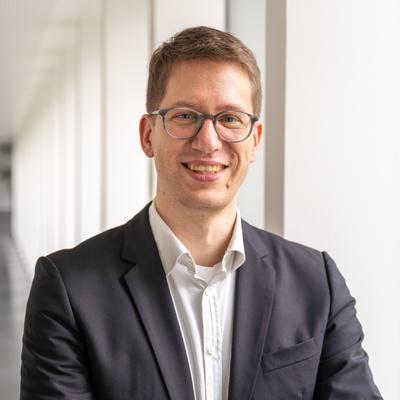
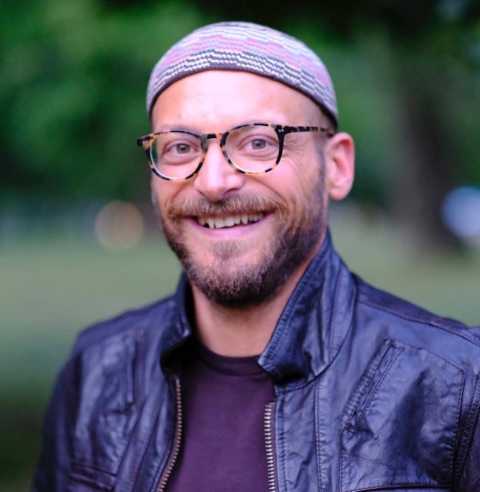
Dr. Sönke Knoch is a researcher affiliated with the Ubiquitous Media Technology Lab (UMTL) at the Saarland Informatics Campus and the German Research Center for Artificial Intelligence (DFKI) GmbH . His work focuses on Human-Computer Interaction , Activity Recognition , Process Mining , and Industry 4.0 technologies. Current Affiliation: DFKI GmbH (Saarland Informatics Campus) Academic Role: Researcher Research Interests span digital twins, augmented reality in manufacturing, and safety-critical systems. He leads projects like RZzKI (AI and Digital Transformation) and BaSySafe (risk assessment via management shells). His work addresses zero-defect manufacturing and cognitive support for impaired workers . Recent Publications focus on digital twins for industrial safety, AR-based task adaptation , and AI quality management in smart factories. Key themes include human-centric AI , real-time process conformance , and context-aware systems . Leadership includes contributing to the WALL-ET project for autonomous logistics and co-developing the PARTAS system for cognitively impaired workers.
Michele Gattullo serves as an Assistant Professor within the Department of Mechanics, Mathematics & Management at the Polytechnic University of Bari, Italy, specializing in design methods for industrial engineering (ING-IND/15). His research bridges cutting-edge extended reality technologies with practical industrial applications, focusing on human-centered solutions for manufacturing, maintenance, and workplace design. Dr. Gattullo's research portfolio centers on Augmented Reality, Virtual Reality, and Biophilic Design, with significant contributions to Human-Computer Interaction in industrial contexts. He investigates how nature-inspired elements in virtual workspaces enhance employee well-being and productivity, while simultaneously developing practical AR tools for assembly guidance, technical documentation, and maintenance support. His work uniquely integrates ergonomics, cognitive psychology, and industrial engineering to optimize human-technology interaction in complex production environments. Analysis of his 15 most recent publications reveals two dominant research trajectories: biophilic design frameworks for virtual/metaverse workspaces (2023-2025) and industrial AR authoring methodologies. The biophilic stream establishes evidence-based guidelines for digital nature integration, while the AR stream delivers validated tools like ADAM and minimal AR approaches that streamline technical documentation creation. Both trajectories emphasize user experience validation through rigorous industrial studies, demonstrating strong interdisciplinary impact across computer science, industrial engineering, and environmental psychology. Scientific Awards: No awards or honors were documented in the available sources. Advising and Grants: The provided materials contain no information regarding graduate student supervision, research grants, or funding sources. His academic profile emphasizes publication output over mentoring activities or project financing details. Laboratories and Teams: While Dr. Gattullo's research involves advanced XR technologies, the source text does not specify laboratory facilities, research groups, or collaborative teams associated with his work at Politecnico di Bari.
Prof. Michele Germani is a Full Professor at the Polytechnic University of Marche, Department of Industrial Engineering and Mathematical Sciences. His research focuses on ergonomics, sustainability, and human-centered design, with particular emphasis on industrial automation, wearable technologies, and circular economy principles. He leads projects on ergonomic risk assessment, environmental impact modeling, and smart manufacturing systems. Academic Background: Holds a position in the Faculty of Engineering, contributing to both teaching and research. His work integrates machine learning, sensor-based systems, and virtual reality to address challenges in manufacturing, healthcare, and sustainable design. Research Interests: Prof. Germani explores topics such as design for disassembly, eco-design tools, and the application of advanced technologies (e.g., exoskeletons, cobots) to enhance workplace safety and efficiency. His studies often bridge engineering and environmental science, aiming to reduce carbon footprints through innovative design methodologies. Key Projects: Development of decision support systems for fall risk detection, sensor-based ergonomic evaluation tools, and frameworks for circular economy implementation. He also investigates the impact of Industry 4.0 technologies on workforce dynamics and operator training via mixed reality simulations. Grants & Collaborations: Engaged in interdisciplinary collaborations focusing on sustainable manufacturing, healthcare technology, and smart systems. His research has led to tools like Durabot for durability analysis and Greenbuild for green building design. Labs & Teams: Oversees labs developing eco-design strategies, human-robot collaboration systems, and ergonomic assessment protocols, with a focus on real-world industrial applications.
Jeppe Rich is a Professor at the Department of Technology, Management and Economics at the Technical University of Denmark (DTU). His primary research focuses on statistical and mathematical modeling applied to transport-related challenges, including transport demand modeling, discrete choice models, freight transport, cost-benefit assessments, and strategic long-term demand models. Rich holds a Mathematical Planning qualification from the University of Aarhus (1989–1995). He has held external positions as a Senior Consultant at Atkins A/S (2001–2002) and as a Researcher at the National Environmental Research Institute (1995–1998). His work aligns with UN Sustainable Development Goals related to sustainable cities and communities (SDG 11) and climate action (SDG 13). His research interests span transport policy, transportation science, and the application of advanced modeling techniques to address urban mobility challenges. Notable areas include EV infrastructure planning, bicycle network optimization, and cost-benefit analysis of transport projects. He supervises several PhD students in topics like electric freight transport, micromobility safety, and urban charging infrastructure. Rich has published extensively on transport policy, demand modeling, and sustainable mobility solutions. His work emphasizes interdisciplinary approaches to solving complex transport challenges, combining engineering, economics, and data science methodologies.
Vernet Lasrado is a Lecturer at the University of Central Florida (UCF), affiliated with the Department of Industrial Engineering and Management Systems (IEMS) within the College of Engineering and Computer Science. His primary research focuses on manufacturing systems optimization, technology transfer, and economic policy analysis related to building codes. He holds a Ph.D. in Industrial Engineering and Management Systems from UCF. Education: PhD in Industrial Engineering and Management Systems, University of Central Florida (2000s). Research interests include operations research applications in facility layout design, conveyor system optimization, semiconductor manufacturing automation, and policy impacts of building regulations. His work bridges theoretical models (e.g., queueing theory, genetic algorithms) with real-world industrial challenges. Recent studies examine university incubator effectiveness and economic consequences of delayed building code implementations. His publications span topics from material handling system design to phase transition simulation methods. Notable contributions address closed-loop conveyor optimization using genetic algorithms and crossover placement strategies in semiconductor fabs. No awards or grants are listed in the provided materials.
Mohamad Soltani is an Assistant Professor of Operations Management at the University of Alberta's Alberta School of Business, Department of Accounting and Business Analytics. He holds an Honorary Fellow appointment at the University of Wisconsin-Madison's Department of Emergency Medicine. His research focuses on data-driven analysis of healthcare and service operations, emphasizing interactions between policymakers, providers, and patients to enhance care quality and system efficiency. He teaches graduate and undergraduate courses in Predictive Business Analytics and Operations Management. Education: PhD in Operations Management (University of Wisconsin-Madison, 2020), MS and BS in Industrial Engineering (Amirkabir University of Technology and Isfahan University of Technology, Iran). Research Interests: Healthcare operations, service operations optimization, empirical operations analysis, and data analytics applications. His work has been featured in Management Science, M&SOM, and media outlets like CBC and Global News. Research Contributions: Award-winning studies on healthcare policy spillovers, ED physician workload impacts, and appointment scheduling algorithms. His work bridges empirical analysis with practical healthcare delivery challenges. Teaching: OM 502 (Operations Management) and OM 620 (Predictive Business Analytics) in Winter Term 2026, emphasizing analytical tools for business decision-making.
Dr. Patrick Filippi is a Lecturer in Precision Crop Management at the School of Life and Environmental Sciences, University of Sydney. He is affiliated with the Precision Agriculture Laboratory and the Sydney Institute of Agriculture. His work focuses on integrating remote sensing, machine learning, and geostatistics to address challenges in precision agriculture, particularly in crop yield modeling, soil mapping, and environmental monitoring. Research interests include precision agriculture technologies, soil science applications, data-driven crop management, and the use of satellite and proximal sensing for agricultural decision-making. He has contributed to projects funded by the Grains Research and Development Corporation (GRDC) and the University of Sydney, focusing on spatial variability in crop production, soil constraints, and machine learning interpretability. Key achievements include developing the LimeSoDa dataset for soil mapping and winning the 2016 CSIRO AgData Challenge Hackathon. His grants span topics like nitrogen fixation mapping in legumes and frost/heat management analytics. Filippi collaborates closely with industry to translate research into practical tools for farmers. Awards: 2nd Place CSIRO AgData Challenge Hackathon (2016) Labs: Precision Agriculture Laboratory (https://precision-agriculture.sydney.edu.au/) Grants: Includes Strategic Partnership Seeding Grants (2024), GRDC-funded projects (2022–2024), and Start-Up Research Funding (2024).
Melissa Clark is a Professor at Coastal Carolina University's E. Craig Wall Sr. College of Business Administration, specializing in the Department of Marketing and Hospitality, Resort and Tourism Management. Her career spans roles as Professor, Associate Professor, and Assistant Professor at Coastal Carolina University and the University of North Alabama, alongside her Graduate Teaching Assistantship at the University of Mississippi. Education: Ph.D. in Business Administration (Marketing) from the University of Mississippi MBA from the University of North Alabama Bachelor of Business Administration in Finance from the University of North Alabama Dr. Clark's research focuses on Business Sustainability, Marketing, and Hospitality/Tourism Management , with a strong emphasis on integrating Environmental Sustainability and Relationship Marketing into sector-specific practices. Her work bridges Consumer Behavior and Social Media Marketing , analyzing trends in sustainable tourism, green energy adoption, and digital engagement. The 15 most recent articles highlight her exploration of topics such as Green Energy Purchase Intentions , Social Media's Role in Tourism Promotion , and Pharmaceutical Market Segmentation , reflecting a multidisciplinary approach to sustainable business practices. Teaching Interests: Business Sustainability, Principles of Marketing, and Sustainability and Social Responsibility.
Prof. Mike Barth is a Professor for Networked Secure Automation Technology at the Karlsruhe Institute of Technology (KIT), affiliated with the Department of Electrical Engineering and Information Technology (ETIT) and the Institute for Control Systems (IRS). His academic background includes a doctorate from Helmut Schmidt University (2011) and a master's degree from Pforzheim University (2008). He previously held roles as a researcher at ABB and as a professor at Pforzheim University, focusing on blended learning and Industry 4.0 integration. Education: PhD in Automation Technology, Helmut Schmidt University (2011) M.Sc. in Product Development, Pforzheim University (2008) Diploma in Mechanical Engineering, Pforzheim University (2006) Research Interests: Automation technology, control systems, Industry 4.0, cyber-physical systems, digital twin engineering, cybersecurity, and IoT protocols. Teaching: Courses include System Modeling, Cyber Physical Production Systems, and Digital Twin Engineering. His research emphasizes secure automation architectures, decentralized systems, and model-based engineering. He chairs multiple committees including IFAC TC3.1 and the VDI/VDE Society for Measurement and Automation. Over 50+ publications span topics like simulation models, industrial security, and robotic integration. Labs/Teams: Leads the IRS Automation Technology team, focusing on innovation in control systems and digital twin applications.
Anders Björn is a Professor at the Department of Mathematics (MAI) at Linköping University (LIU), affiliated with the Analysis and Mathematics Education (ANDI) division. His research focuses on Nonlinear Potential Theory , particularly p-harmonic functions , quasiminimizers , and Newtonian Sobolev spaces in metric spaces. He co-leads the research group in this area and contributes to Analysis on Metric Spaces . He teaches undergraduate and graduate courses, including Real Analysis and Functional Analysis . Organizational Roles: Organizer of the Mathematical Colloquium, Local Representative for Svenska Matematikersamfundet (Swedish Mathematical Society). Editorial Work: Former Technical Editor for Acta Mathematica (2004–2015) and Arkiv för Matematik (1993–2015), both published by Institut Mittag-Leffler. His research explores foundational questions in mathematical analysis, blending pure mathematics with interdisciplinary applications. He emphasizes understanding properties of solutions to differential equations in general settings, akin to constructing an 'identikit' of mathematical phenomena. His work is published in collaboration with the ANDI group, and he actively engages in promoting mathematics through outreach and academic service.
Professor Roger Flanagan is a distinguished academic specializing in construction management with over two decades of research contributions. His work primarily focuses on international construction business, risk management, sustainable building practices, and whole life cost appraisal. Affiliated with the Chartered Institute of Building, London, he has authored numerous technical guides and publications that shape construction industry practices globally. Specializes in international construction business dynamics Expert in risk management and sustainable building practices Author of influential technical guides for the construction industry Research spans construction economics and supply chain management Flanagan's research interests center on the complexities of international construction projects, with particular emphasis on risk management, sustainable building practices, and whole life cost considerations. His work examines how contractors navigate international markets, manage project complexity, and implement sustainable practices. Recent publications address materials procurement in MSMEs, pre-construction planning complexity, and the integration of renewable energy in building projects, reflecting evolving industry challenges. Analysis of his 15 most recent publications reveals a consistent focus on construction management challenges with increasing emphasis on sustainability and international business dynamics. His work spans construction economics, risk management, sustainable building practices, and supply chain management, with particular attention to Korean and Middle Eastern construction markets. The research demonstrates methodological diversity, employing panel threshold regression, system dynamics, and empirical case studies to address complex construction industry problems. Professor Flanagan has made significant contributions through his authored guides for the Chartered Institute of Building, including the Guide to Quality Management in Construction (2021), Site Management and Production Guide (2020), and Code of Quality Management (2019). These practical resources translate academic research into industry applications, demonstrating his commitment to bridging theory and practice in construction management. His collaborative research extends across international boundaries, working with academics from institutions in Asia, Europe, and the Middle East. This global perspective enriches his understanding of diverse construction markets and practices, informing his research on international competitiveness, cross-cultural project management, and global supply chain dynamics. Professor Flanagan's work on construction sector futures, particularly his contributions to Vision 2020 initiatives, demonstrates leadership in anticipating industry trends and challenges. His research on information complexity, system dynamics applications, and decision support systems positions him at the forefront of addressing emerging challenges in digital construction and project management.
Professor Kannan Govindan serves as Director of the Center for Sustainable Operations and Supply Chain Resilience at the University of Adelaide, Australia, and holds a Chair Professor position at the University of Southern Denmark. Recognized as a Highly Cited Researcher in 'Engineering' for seven consecutive years (2018-2024) by Clarivate Analytics, he stands among the top scholars globally in his field with over 475 international journal publications. His research focuses on sustainable supply chain management, reverse logistics, and circular economy models, integrating environmental, social, and economic dimensions of sustainability within supply chain operations. Professor Govindan has pioneered approaches for measuring sustainability performance using multi-criteria decision-making methods and extensively studied barriers to implementing green supply chain practices across diverse industries. His recent work emphasizes digital transformation of supply chains through Industry 4.0 technologies to enhance sustainability and resilience, particularly in response to global disruptions like the COVID-19 pandemic. His influential publications span topics including healthcare supply chain resilience, circular economy implementation, and sustainable supplier selection. Analysis of his recent work (2019-2023) reveals a strong focus on integrating digital technologies with sustainable practices, addressing supply chain disruptions, and developing frameworks for circular economy implementation in various industry contexts. Professor Govindan's scholarly contributions have been recognized with numerous prestigious awards: Highly Cited Researcher in 'Engineering' (2018-2024) Research.com Business and Management in Australia Leader Award (2025) Research.com Engineering and Technology in Australia Leader Award (2025) Multiple Research.com Leader Awards for Denmark (2022-2024) in both Business Management and Engineering Technology As an academic leader, Professor Govindan serves as Executive Editor of the Journal of Cleaner Production and holds editorial positions with several other leading journals. His research has attracted significant grant funding, supporting large-scale studies on sustainable supply chain practices across multiple industries. He actively mentors PhD and Master's students, focusing on developing the next generation of supply chain sustainability researchers. At the University of Adelaide, Professor Govindan leads the Center for Sustainable Operations and Supply Chain Resilience, which brings together interdisciplinary researchers to address critical challenges in sustainable supply chain management. The center maintains strong industry partnerships globally, facilitating the translation of research findings into practical applications that enhance supply chain sustainability and resilience in real-world contexts.
Dr. Ludo Ausiello is a Senior Lecturer in Electronics at the University of Portsmouth, affiliated with the School of Electrical and Mechanical Engineering and the Faculty of Technology. His roles include membership in the Portsmouth AI and Data Science Centre and the Portsmouth Centre for Advanced Materials and Manufacturing. He holds a Fellowship of the Higher Education Academy and is a member of the Institute of Acoustics. Education: Integrated Master’s in Electronic Engineering (University of Bologna), European PhD in Audio Engineering, and PGCert in Higher Education (2019). Professional training includes Fonoprint Studios (Bologna) and industry experience at Maserati, Magneti Marelli, and Harman. Research interests focus on audio engineering, signal processing, electro-acoustics, and innovative manufacturing. Recent work includes developing affordable measurement ecosystems for musical acoustics, optimizing soundboard designs via least-squares analysis, and applying AI to room acoustics prediction. His studies span topics like wood elasticity, loudspeaker design, and vocal fatigue in educational spaces. Awards: Fellowship of the Higher Education Academy (2019). Teaching and advising: Taught analog and digital oscillator design at the University of Bologna and contributed to curriculum development at Solent University. Active in mentoring students through collaborative industry projects. Labs/Teams: Engaged with interdisciplinary teams at Portsmouth, focusing on advanced materials and AI-driven acoustic solutions.
Dr. Erika Marsillac is Dean and Professor of Supply Chain Management at Old Dominion University's Strome College of Business. She has led research and taught internationally since 2004, specializing in sustainable supply chains, renewable energy systems, and international partnerships. Her leadership includes overseeing academic programs and research initiatives focused on logistics, sustainability, and business innovation. Education: Ph.D. in Manufacturing Management, University of Toledo (2010) M.B.A. in Information Technology, Goldey-Beacom College (2002) M.B.A. in Comprehensive General MBA, Goldey-Beacom College (2000) B.A. in Psychology, Pennsylvania State University (1992) Research Focus: Dr. Marsillac's work centers on integrating sustainability into global supply chains, with emphasis on photovoltaic systems, circular economy models, and automotive industry transformations. She investigates variability in production systems, renewable energy infrastructure, and strategies for mass customization. Publication Trends: Her recent articles emphasize renewable energy supply chains (particularly photovoltaics), queueing theory applications in manufacturing, and sustainable operations. Methodologies include case studies, simulation modeling, and bibliometric analysis. Awards & Fellowships: EV Williams Fellowships for Service & Teaching (2022) Outstanding Faculty Service Award (2021) Provost Fellowship (2021) Distinguished Alumni Award (2015) Grants & Projects: Secured $368,600+ in funding for renewable energy and educational initiatives, including solar tracking systems, photovoltaic facilities, and business pedagogy enhancements.
Elinor Scott serves as an Assistant Professor in Biobased Chemistry and Technology at Wageningen University and acts as study advisor for the Biotechnology program (OT Biotechnologie). Her work bridges academic research with industrial applications through the VLAG graduate school, focusing on converting biomass waste into high-value bioproducts. Her research spans sustainable chemical valorization of waste streams, particularly keratin from poultry feathers and polyhydroxyalkanoates from wastewater. Key methodologies include enzymatic hydrolysis, ultrasound processing, and biocatalysis to develop antimicrobial peptides, drug delivery nanocarriers, and platform chemicals like methyl crotonate. She emphasizes circular economy principles by transforming low-value residues into biomedical and chemical feedstocks. Recent publications reveal a strategic shift toward biomedical applications of keratin-derived materials, with 64% of her fingerprint dedicated to enzymatic hydrolysis and 100% keratin utilization. Concurrently, she advances waste-to-chemical routes for polyhydroxyalkanoates, demonstrating scalable processes for methyl crotonate production from wastewater streams. Dr. Scott actively supervises five PhD candidates across critical projects: straw conversion for antimicrobial lipopeptides (Li, Q.), keratin nanocarriers (Qin, X.), haloperoxidase applications (But, A.), PHA chemical synthesis (Spekreijse, J.), and electrodialysis for protein valorization (Teng, Y.). Her NWO-funded research includes eight projects, one currently active, with notable industry collaborations highlighted in media coverage of student competition wins like the 2019 Holland Chemistry Student Competition. She leads the Biobased Chemistry and Technology group within Wageningen's research ecosystem, integrating fundamental science with process engineering. Current efforts focus on optimizing ultrasound-assisted keratin extraction and developing antimicrobial keratin peptides, with future work targeting scalable biorefinery concepts for heterogeneous biomass feedstocks.