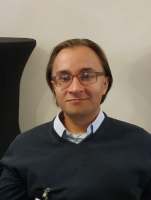
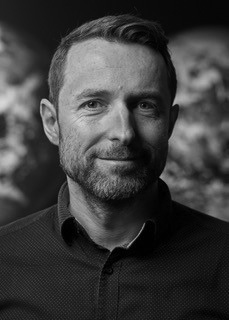
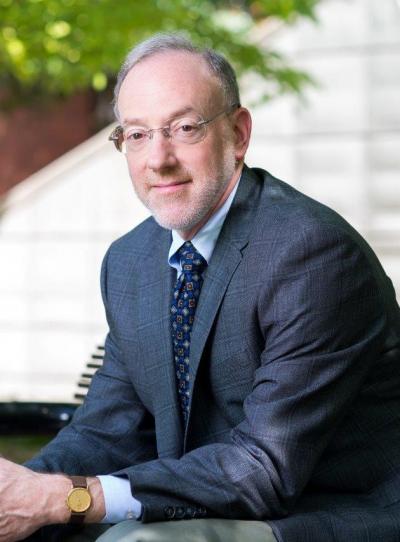
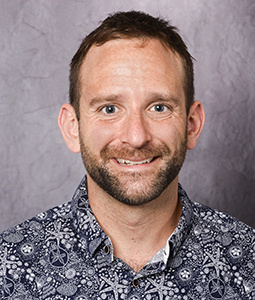
Jean-Marc Jezequel is a Professor of Software Engineering at University of Rennes , affiliated with CNRS , Inria , IRISA , and Institut Universitaire de France (IUF) . His research focuses on Model-Driven Engineering , Software Product Lines , Dynamic Adaptation , and Executable Meta-languages . Key Contributions : Pioneering work in aspect-oriented and model-driven approaches for software evolution Foundational research on model transformations (e.g., UMLAUT framework) Advances in testing and validation of distributed systems Research Trends from his recent publications include: Intelligent modeling assistance integrating machine learning Contextual variability modeling for complex systems Runtime model execution for self-adaptive systems Formal methods and constraint resolution for UML validation Collaborations include researchers from Luxembourg, Montreal, Colorado State University, and INRIA.
Łukasz Remisiewicz is a Lecturer at the Department of Sociological Theory and Social Research Methodology , Institute of Sociology , Faculty of Social Sciences , University of Gdańsk . He serves as the Editorial Secretary of the journal Miscellanea Anthropologica et Sociologica . His research spans multiple interdisciplinary domains , including sociology of science, philosophy of science, sociology of education, neurosociology, and sociology of examination. He explores the social contexts of academic assessment, cognitive development, and biological dimensions in sociological theory. His 15 most recent publications (2025-2017) focus on evaluative cultures, academic metrics, habilitation processes, family rituals, climate change discourse, disability marginalization, and biology-sociology interfaces. These works reflect his commitment to merging sociological theory with empirical and interdisciplinary analysis. Scientific Awards & Grants : Florian Znaniecki Award, 1st degree (2014) Honorable Mention, Polish Academy of Sciences (2016) Rector's Awards (1st, 2nd, 4th degrees, 2016/17–2024/25) Ministry of Science and Higher Education Scholarship (2017/18) Fulbright Junior Research Award (2018–2019) Mayor of Gdańsk & Gdańsk Scientific Society Award (2024) Florian Awards for 'Discovery of the Year' (2023) and 'Captain of Sociology' (2024) He is an active participant in international conferences, including ESA , Neurodidactics Symposium , and CHER Annual Conferences , presenting on topics ranging from emotional stratification to neurosociological models.
Anders Rønn-Nielsen is an Associate Professor at the Department of Finance and Center Coordinator at the Center for Statistics at Copenhagen Business School (CBS). He holds a M.Sc. in Statistics from University of Copenhagen and a PhD in Statistics and Probability Theory from Aarhus University. His research focuses on applied probability theory, particularly Lévy-based spatial models, and statistical efficiency analysis. His academic credentials include: M.Sc. in Statistics, University of Copenhagen PhD in Statistics and Probability Theory, Aarhus University Research interests span: Lévy processes and spatial stochastic modeling Extreme value theory applications in finance and natural sciences Nonparametric production frontier analysis Efficiency measurement methodologies His publications (18+ articles) emphasize theoretical probability and statistical applications in efficiency analysis. He has served as external examiner at Aarhus University and Copenhagen University for master’s and PhD examinations (2017–2019). His teaching responsibilities include advanced probability theory courses and statistical methods training for economics students.
Awi Federgruen is the Charles E. Exley Professor of Management and Chair of the Decision, Risk, and Operations (DRO) Division at Columbia University’s Graduate School of Business. He joined Columbia’s faculty in 1979 after earning his DSc in Operations Research from the University of Amsterdam and holding roles as a Research Fellow at the Mathematical Centre in Amsterdam and faculty member at the University of Rochester. He also holds a courtesy appointment in Columbia’s School of Engineering and Applied Sciences. Education: BA, University of Amsterdam, 1972 MS, University of Amsterdam, 1975 DSc (Operations Research), University of Amsterdam, 1978 Research Interests: Federgruen’s work focuses on optimizing supply chain and service systems through advanced operations research methodologies. Key areas include supply chain coordination, inventory management under uncertainty, service system design, and dynamic pricing. His theoretical contributions span applied probability, queuing models, and dynamic programming. Recent applications include pharmaceutical supply chains, healthcare operations, and vaccine distribution strategies. Awards & Recognition: 2004 Distinguished Fellowship Award (MSOM Society) INFORMS Presidential Fellow (highest honor) National Science Foundation & ARPA grants Consulting & Industry Impact: Federgruen advises companies in pharmaceuticals, consumer electronics, and logistics. Notably, he developed marketing mix models for the pharmaceutical industry and advised the Israeli Air Force on logistics policies. His work bridges academic theory with real-world applications in industries like retail, healthcare, and transportation. Editorial Roles: Editor-in-Chief of Naval Research Logistics ; former Departmental Editor for Manufacturing & Service Operations Management and Associate Editor of Operations Research .
Srinivas (Sri) Talluri is the John Hoagland - Richard Metzler Professor in Purchasing and Supply Management at the Department of Supply Chain Management, Michigan State University (Broad College of Business). He holds the title of DSI Fellow and served as the faculty director of the Axia Institute, focusing on advancing supply chain research and education. His work emphasizes supply chain resilience, risk management, and sustainability through innovative applications of blockchain, generative AI, and quantum computing. Dr. Talluri's research spans demand-supply uncertainty modeling, sustainable supply chain design, and strategic sourcing. Notable contributions include frameworks for blockchain integration in logistics, eco-efficient vaccine distribution during pandemics, and data-driven optimization for remanufacturing systems. His work frequently addresses macroeconomic disruptions, geopolitical risks, and environmental compliance under carbon tax schemes. His scholarly recognition includes the Fulbright-Hanken Distinguished Chair (2016-2017) and top 100 Operations Management scholar rankings. His research has been published in leading journals such as International Journal of Production Research and IEEE Transactions on Engineering Management . Key Professional Contributions: Over 140 peer-reviewed articles, leadership in supply chain education, and industry collaborations addressing global supply chain challenges. Labs/Initiatives: Active in the Axia Institute, focusing on supply chain innovation and policy.
Professor James S. Cotton is a faculty member in the Department of Mechanical Engineering at McMaster University , specializing in Thermo-Fluid Sciences with a focus on energy sustainability and thermal management. Current research explores thermal energy harvesting , non-thermal plasma flue gas cleaning , and smart electrohydrodynamic heat exchangers . Active in community energy planning as a member of the Burlington Climate Action Plan (2019-2021) and Green Venture board (2016-2021). Research spans both fundamental and applied domains, including two-phase flow , electrohydrodynamic heat transfer modulation , and flow accelerated corrosion analysis. His work integrates modeling and experimental validation for real-world thermal systems. Scientific Contributions: Developed two novel patents for advanced thermal management and soot removal systems during his industrial career at Dana Corp. (until 2007). Current projects involve community energy corridors and next-generation sustainable energy solutions , including the 2025 Hamilton Energy Harvesting Study . Active mentor in graduate education, teaching courses like MECH ENG 4O04: Sustainable Energy Systems and MECH ENG 708: Two Phase Flow and Heat Transfer .
Alexander Damm is a Professor and head of the Remote Sensing of Water Systems (RSWS) group, holding a joint appointment between the Department of Geography at the University of Zurich (UZH) and the Swiss Federal Institute of Aquatic Science and Technology (Eawag). His research integrates advanced Earth observation technologies with environmental science to study water systems under changing climatic and anthropogenic pressures. University: University of Zurich Institutional Affiliation: Swiss Federal Institute of Aquatic Science and Technology (Eawag) Department: Department of Geography Alexander Damm obtained his MSc and PhD in remote sensing from Humboldt-University Berlin. Since 2008, he has been contributing to UZH’s leadership in imaging spectroscopy and Earth observation science. MSc, Remote Sensing, Humboldt-University Berlin PhD, Remote Sensing, Humboldt-University Berlin His research focuses on the fundamentals of remote sensing as applied to terrestrial and aquatic ecosystems, particularly in studying water dynamics and environmental change impacts. He specializes in sun-induced chlorophyll fluorescence (SIF), imaging spectroscopy, and the development of methods to monitor ecosystem productivity, drought responses, and biogeochemical cycles. His work bridges physics, ecology, and environmental engineering to improve understanding of plant-water relations and ecosystem resilience. The recent publications highlight a strong trend in using airborne and satellite-based spectroscopy to assess vegetation health, water stress, forest dynamics, and atmospheric constituents. Key themes include SIF retrieval, drought monitoring, canopy structure modeling, and air quality estimation. These works span applications from croplands and forests to tundra and inland waters, reflecting a broad interdisciplinary approach grounded in quantitative remote sensing. Alexander Damm is involved in several high-profile research initiatives, including: ESA’s FLuorescence EXplorer (FLEX) mission SNSF projects: FLUO4ECO, Spatial-sustainable-finance, DeltAs MeteoSwiss: UrbanNature EU Horizon: NextGenCarbon He leads the RSWS group, which develops and applies cutting-edge remote sensing methodologies for water system monitoring. The team collaborates across disciplines and institutions, focusing on integrating field measurements, airborne campaigns, and satellite data for environmental assessment. Damm’s leadership in projects like FLEX and HyPlant underscores his role in advancing spectroscopic remote sensing for global ecosystem monitoring.
Joel Waldfogel is a Professor and Frederick R. Kappel Chair in Applied Economics at the University of Minnesota's Carlson School of Management . He previously held positions at the Wharton School (University of Pennsylvania) and Yale University, and served as Associate Dean for MBA and MS programs at the Carlson School from 2017–2023. His academic journey began with a BA in Economics from Brandeis University (1984) and a PhD in Economics from Stanford University (1990). Education : PhD in Economics, Stanford University (1990) BA in Economics, Brandeis University (1984) Research Interests span industrial organization, law and economics, digital markets, intellectual property, and media economics. He focuses on platform economics, market efficiency in digital environments, and welfare implications of technological change, particularly in creative industries. Recent research trends include: Platform bias and regulatory frameworks (e.g., Digital Markets Act) Welfare impacts of gender-inclusive intellectual property creation Legal challenges from AI-generated content and copyright adaptation Consumer welfare in digital product markets Market structure in media and cultural industries Scientific Awards : Kaminstein Scholar at U.S. Copyright Office (2021–2022) Publications include over 80 articles in top journals like the American Economic Review and Journal of Political Economy , as well as books such as Digital Renaissance and The Tyranny of the Market . His work addresses platform power, digital regulation, and the economics of cultural goods.
Andrew J Whelton is a Professor of Civil and Construction Engineering at Purdue University's College of Engineering, with concurrent appointments in Sustainability Engineering and Environmental Engineering. He serves as Director of the Healthy Plumbing Consortium and Lead for the Center for Plumbing Safety, focusing on water quality, chemical contamination, and public health in building plumbing systems. Professor, Civil and Construction Engineering Professor, Sustainability Engineering Professor, Environmental Engineering Director, Healthy Plumbing Consortium Lead, Center for Plumbing Safety His research spans environmental engineering and public health, with key themes including chemical contamination from plastic pipe degradation, post-disaster water system recovery, wildfire-related water quality impacts, and microbial risks in premise plumbing. Recent work addresses crises like the East Palestine chemical spill and Maui wildfires, while also developing predictive models for water quality and evaluating sustainable infrastructure materials. Scientific awards and recognitions include: Rapid Response Research (RAPID) Grants from NSF for disaster-related studies Environmental Protection Agency (EPA) support for building water quality programs Leadership in interdisciplinary consortia focused on plumbing safety Development of novel tools for water quality monitoring and remediation His publications reveal trends in: Chemical leaching from plastic piping materials Environmental justice in water contamination crises Integration of machine learning for water quality prediction Microbial ecology in stagnant plumbing systems Policy recommendations for disaster response Sustainable material innovation for infrastructure
Professor Lingxiao Jiang is a full-time faculty member at the School of Computing and Information Systems (SCIS), Singapore Management University (SMU) , where he serves as Director of the Centre for Research on Intelligent Software Engineering (RISE) . His research and teaching focus on software engineering , program analysis , code search & reuse , and deep learning of code to enhance software quality, development productivity, and security. PhD, University of California, Davis (2009) Professor Jiang's research explores context-aware software deep learning , code clone detection , and security & privacy through tools like DECKARD (code clone detection), EqMiner (functionally equivalent code), and SmartEmbed (smart contract security). His work leverages distributed computing , symbolic execution , and neural program models for large-scale code analysis. Recent publications highlight trends in deep learning-based code analysis , smart contract vulnerabilities , and automated program transformation . Key themes include code clone detection , semantic patches , and cross-language API mappings . Scientific Awards ACM SIGSOFT Impact Paper Award (2018) for scalable code clone detection As advisor, Professor Jiang has mentored 14 graduate students, including Lucia (Ph.D. 2014) , Shaowei Wang (Ph.D. 2015) , and current advisees in intelligent software engineering. He leads multiple grants on code mining , security of digital platforms , and AI systems governance . RISE Lab at SMU develops tools like MANDO (smart contract analysis), iTiger (issue title generation), and TreeCaps (code processing with capsule networks). The lab actively recruits researchers in software engineering and AI.
Hanna Breunig is a Research Scientist at Lawrence Berkeley National Laboratory and Deputy of the Sustainable Energy & Environmental Systems Department. She holds a secondary appointment in the Earth Systems and Society Domain within the Climate and Ecosystem Science Division. Her work focuses on validating emerging energy technologies through process design, techno-economic modeling, and market analysis. Education: PhD in Civil and Environmental Engineering from UC Berkeley (2015), MSc (2011), and BSc from Cornell University (2010). Her research spans hydrogen storage , CO2 capture/utilization , brine management , and technoeconomic modeling for systems in data centers, hospitals, mines, aviation, and ports. She co-leads the DOE HyMARC consortium and the systems analysis team for the ARCHES California Hydrogen Hub. Recent publications highlight advancements in metal-organic frameworks (MOFs) for hydrogen storage, solar hydrogen production , and high-temperature thermal energy storage . She has received accolades like the 2023 Energy & Environmental Science Lectureship and 2014 Schmidt MacArthur Fellowship. Scientific Awards: 2023 Energy & Environmental Science Lectureship 2021 Early Scientific Career Award 2019 CEC Bioenergy Project Leadership 2017 LDRD Early Career Award 2014 Schmidt MacArthur Fellowship Hanna mentors graduate and undergraduate students and contributes to tools like the BioSiting v2 software for U.S. bioeconomy resource analysis.
Dr. Daniel Speiser is an Associate Professor in the Department of Biological Sciences at the McCausland College of Arts and Sciences, University of South Carolina. His research focuses on the evolutionary physiology of marine invertebrates, particularly their visual systems and sensory adaptations. Visual Ecology: Studies spatial resolutions, spectral responses, and temporal dynamics of vision in molluscs and crustaceans for predator/prey detection and navigation. Distributed Visual Systems: Investigates neurobiology of multi-eyed molluscs like scallops and chitons with decentralized processing. Complex Trait Co-evolution: Analyzes functional relationships between sensory and locomotory systems in marine invertebrates. Biology of Color: Examines pigment-nanostructure interactions in color production, focusing on butterfly Speyeria . Natural Armor Systems: Explores trade-offs between protection and sensory function in structures like snapping shrimp orbital hoods and chiton shells.
Dr. Erika Marsillac is Dean and Professor of Supply Chain Management at Old Dominion University's Strome College of Business. She has led research and taught internationally since 2004, specializing in sustainable supply chains, renewable energy systems, and international partnerships. Her leadership includes overseeing academic programs and research initiatives focused on logistics, sustainability, and business innovation. Education: Ph.D. in Manufacturing Management, University of Toledo (2010) M.B.A. in Information Technology, Goldey-Beacom College (2002) M.B.A. in Comprehensive General MBA, Goldey-Beacom College (2000) B.A. in Psychology, Pennsylvania State University (1992) Research Focus: Dr. Marsillac's work centers on integrating sustainability into global supply chains, with emphasis on photovoltaic systems, circular economy models, and automotive industry transformations. She investigates variability in production systems, renewable energy infrastructure, and strategies for mass customization. Publication Trends: Her recent articles emphasize renewable energy supply chains (particularly photovoltaics), queueing theory applications in manufacturing, and sustainable operations. Methodologies include case studies, simulation modeling, and bibliometric analysis. Awards & Fellowships: EV Williams Fellowships for Service & Teaching (2022) Outstanding Faculty Service Award (2021) Provost Fellowship (2021) Distinguished Alumni Award (2015) Grants & Projects: Secured $368,600+ in funding for renewable energy and educational initiatives, including solar tracking systems, photovoltaic facilities, and business pedagogy enhancements.
Kartik Nair is an Assistant Professor of Film Studies in the Department of Film and Media Arts at Temple University, affiliated with the School of Theater, Film and Media Arts. His research focuses on cinematic infrastructures, genre cinemas, and visual space in film, with a particular emphasis on Indian horror cinema and digital production technologies. Prior to Temple, he was a Visiting Assistant Professor of Cinema Studies at Purchase College, SUNY (2016-2018). Education includes a PhD in Cinema Studies from New York University (2018), an MPhil from Jawaharlal Nehru University's School of Arts and Aesthetics (2010), and an MA in English from Delhi University (2008). His current book project, Seeing Things , examines material traces of film production in 1980s Indian horror films, to be published by UC Press in 2024. He co-edits Bioscope: South Asian Screen Studies and has published widely in journals like Journal of Cinema and Media Studies and Discourse . Research interests bridge film materiality, digital aesthetics, and labor histories, analyzing how production infrastructures shape expressive forms. Recent work explores VFX software's impact on global genre cinema and the perceptual intersections of algorithmic and human creativity in digital spaces. Teaching includes graduate seminars, writing-intensive courses, and introductory lectures, with a focus on methodological innovation in cinema studies. Public-facing writing appears in Los Angeles Review of Books , Film Quarterly , and India Today . Collaborative projects include a co-edited volume with Karen Redrobe on pedagogical approaches in Cinema and Media Studies.
Adam M. Brandenburger is the J.P. Valles Professor at the Leonard N. Stern School of Business, New York University, with additional appointments as Distinguished Professor at the Tandon School of Engineering, Faculty Director of the NYU Shanghai Program on Creativity + Innovation, and Global Network Professor. He previously served as a professor at Harvard Business School from 1987 to 2002. His academic foundation includes a B.A., M.Phil., and Ph.D. from the University of Cambridge. His research focuses on game theory , epistemic game theory , quantum game theory , and business strategy . He has made foundational contributions to the understanding of rationality, belief hierarchies, and the intersection of quantum mechanics with decision theory. His work spans economics, philosophy, computer science, and cognitive neuroscience, reflecting a deeply interdisciplinary approach. The recent publications show a strong trend toward integrating quantum foundations , information theory , and behavioral economics . Themes include epistemic reasoning in non-classical systems, the role of symmetry in strategic interactions, and the neural basis of decision-making. His work increasingly explores the limits of classical probability and cognition, using tools from quantum information and sheaf theory. While no formal scientific awards are listed, his publications in Nature Communications , Econometrica , and Philosophical Transactions of the Royal Society indicate high scholarly impact. His collaborations with leading researchers across disciplines suggest a central role in advancing interdisciplinary science. He advises and collaborates extensively, though specific students are not listed. His leadership in the NYU Shanghai Program on Creativity + Innovation highlights his commitment to global education and innovation. He has not received any grants explicitly mentioned, but his sustained publication output suggests active funding support. He is associated with research initiatives bridging game theory, quantum information, and cognitive science. His recent unpublished work on quantum-assisted observatories and large language models points to forward-looking research at the intersection of AI, quantum technology, and strategic reasoning.