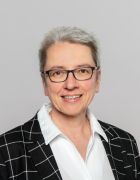
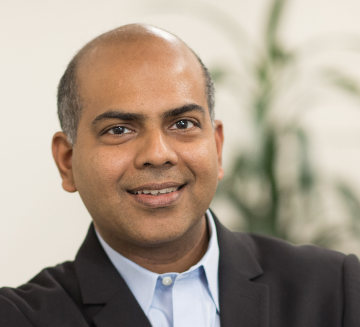
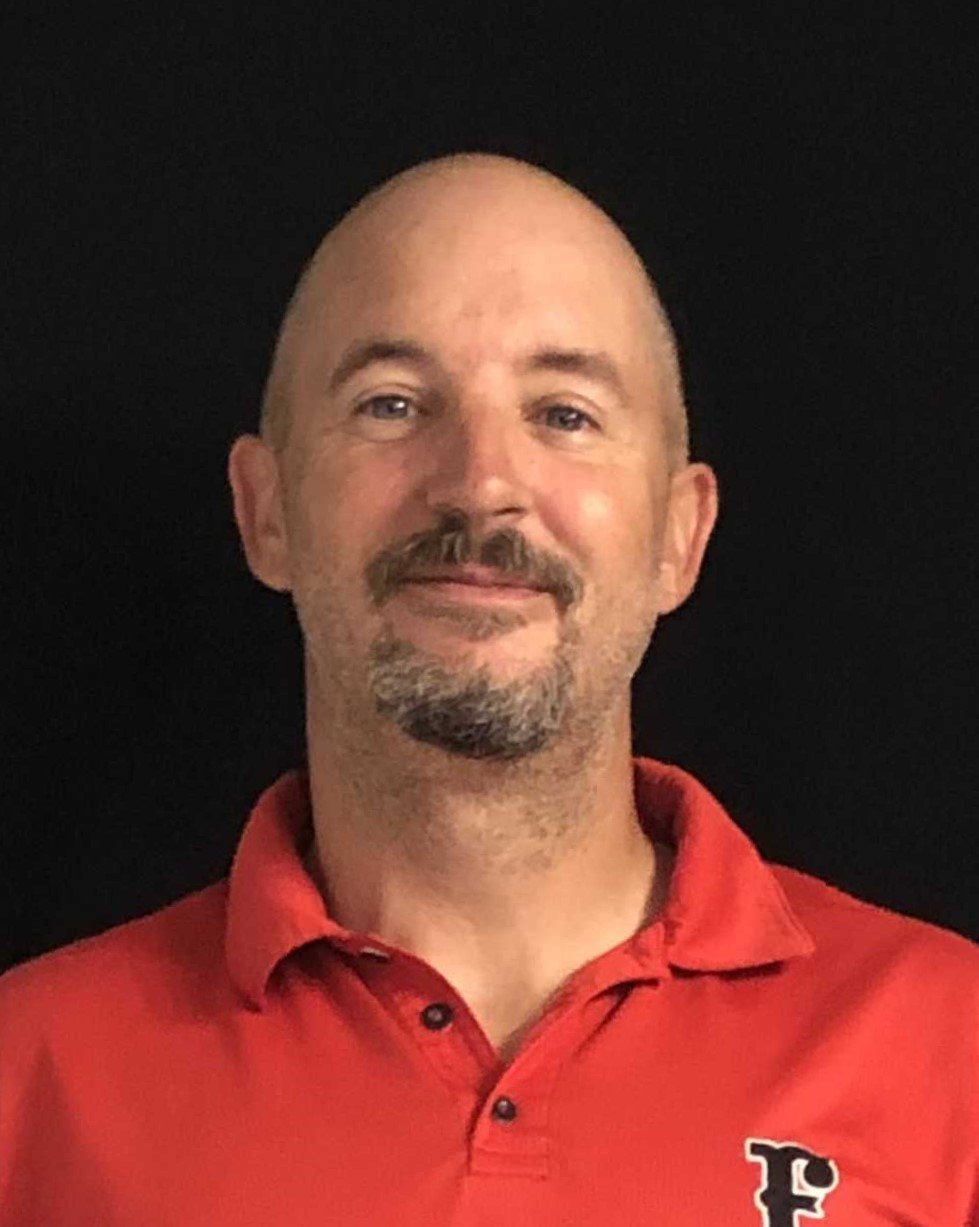
Dr. Farshid Rahmani is a Lecturer at the School of Property, Construction and Project Management (PCPM), RMIT University, Australia. His research and teaching focus on Construction Procurement , Relational Contracting , and Agile Project Management . He supervises Masters and PhD students in areas including Early Contractor Involvement (ECI) Alliances Public-Private Partnerships (PPP) Collaborative Delivery Systems . His recent publications explore agile frameworks for building adaptation, sustainable materials like recycled concrete, and team dynamics in large infrastructure projects. Key themes include modular construction , project lifecycle management , and innovative material usage . He actively applies Grounded Theory and Abductive Reasoning in construction management research.
Dr. Tamás Koltai is a Professor and Dean at the Faculty of Economics and Social Sciences of Budapest University of Technology and Economics (BME). He leads the doctoral school's Specialization Group in Production Management. His roles include overseeing academic programs and research in production management, operations research, and efficiency analysis. Education: Doctor of the Hungarian Academy of Sciences (2016) Dr. habil. (2000), Budapest University of Technology and Economics Candidate of Technical Sciences (1987), Hungarian Academy of Sciences M.Sc. in Mechanical Engineering (1983), BME Faculty of Mechanical Engineering Research Interests: Dr. Koltai focuses on production management optimization, including the application of Data Envelopment Analysis (DEA), sensitivity analysis in mathematical models, and the integration of robotics in assembly lines. His work bridges theoretical models (e.g., MILP/CP optimization) with practical industrial challenges, particularly in healthcare efficiency and educational management. Notable Awards: IEOM Society Teaching Excellence Award (2021) BME GTK Faculty Memorial Medal (2016) János Susánszki Award (2013) Széchenyi Professorship Scholarship (1999–) Teaching & Leadership: He has held visiting roles at the University of Seville (1990–1992) and the University of Michigan (1988/89). His teaching excellence is recognized through awards and his contributions to business simulation education. His research often collaborates with industry partners to address real-world operational challenges. Labs/Teams: Leads the Production Management Specialization Group and contributes to interdisciplinary teams focusing on manufacturing efficiency and healthcare operations within BME.
Dr. Nabil Nasr serves as Associate Provost for Academic Affairs and Director of the Golisano Institute for Sustainability (GIS) at Rochester Institute of Technology (RIT). He also holds leadership positions as CEO of the REMADE Institute and Member of the United Nations Environment Programme (UNEP) International Resource Panel (IRP). His academic journey includes a BS from Helwan University (Egypt), M.Eng. from Pennsylvania State University, and MS and PhD from Rutgers University. Dr. Nasr is an internationally-recognized leader in sustainability research with expertise spanning sustainable manufacturing, remanufacturing, circular economy, and sustainable product development. His work emphasizes systems thinking and technological innovation to build regenerative industrial systems. He has pioneered research in value-retention processes, establishing frameworks for remanufacturing, refurbishment, repair, and direct reuse as strategic approaches to resource efficiency. His publication record demonstrates significant contributions to circular economy implementation across multiple sectors. Analysis of his recent work reveals strong focus on practical applications of circular strategies in industrial systems, automotive production, and urban mobility solutions, with emphasis on developing decision support tools and business cases for sustainable practices. Remanufacturing Industries Council 2017 ACE Award Rochester Engineering Society 2017 Engineer of Distinction APRA Asia-Pacific Most Influential Expert on Remanufacturing Award (2016) Institute of Industrial and Systems Engineers (IISE) Fellow Dr. Nasr has established numerous research centers and initiatives including the world's first university-based remanufacturing research hub (1997), the Center for Integrated Manufacturing Studies (2002), and the REMADE Institute - the largest recycling and remanufacturing consortium in the United States. His leadership extends to international forums including the UN Environment Programme, World Trade Organization, and OECD, where he influences global sustainability policy.
Yiorgos Makris is a Professor in the Department of Electrical and Computer Engineering at the Erik Jonsson School of Engineering & Computer Science, The University of Texas at Dallas, since July 2011. Previously, he was a faculty member at Yale University for over a decade. He holds a Ph.D. in Computer Engineering from the University of California, San Diego, and a Diploma in Computer Engineering from the University of Patras, Greece. Education: Ph.D. in Computer Engineering, University of California, San Diego (2001) M.S. in Computer Engineering, University of California, San Diego (1997) Diploma in Computer Engineering and Informatics, University of Patras, Greece (1995) Research Interests: Hardware Security and Trustworthiness Statistical Side-Channel Fingerprinting Machine Learning in Semiconductor Manufacturing Trusted and Reliable Integrated Circuits Hardware Trojans in Wireless Cryptographic ICs On-Die Learning and Emergent Technologies His work focuses on enhancing hardware security through statistical methods, machine learning, and formal verification, with applications in analog/RF ICs, post-production calibration, and secure IC design. Key Contributions: Co-Founder and Site-PI of NSF CHEST I/UCRC (Hardware and Embedded System Security and Trust) Leader of the Safety, Security, and Healthcare Thrust at TxACE (Texas Analog Center of Excellence) Director of the Trusted and RELiable Architectures (TRELA) Lab Grants and Funding: NSF, NIH, SRC, ARO, AFRL, AFWERX, DARPA, DOE, and industry partnerships with Boeing, Northrop Grumman, IBM, Intel, Qualcomm, etc. Recent grants include projects on DNA storage security, analog neural networks, and malicious hardware detection. Awards and Recognition: IEEE Fellow (2025) Best Paper Awards at DATE'13, VTS'15, DCAS'22 Best Hardware Demonstration Awards at HOST'16 and HOST'18 Erik Jonsson School Faculty Research Award (2020) Labs and Teams: TRELA Lab (Focus: Secure Hardware Design, Trusted Architectures) CHEST I/UCRC (Industry-University Collaboration)
Heikki Handroos is a Full Professor of Mechanical Engineering at LUT University, leading the Laboratory of Intelligent Machines since 1993. He holds a DSc (Technology) from Tampere University of Technology and has served as Vice-Dean of the Faculty of Technology (2007-2009) and currently chairs the Collegiate Body of LUT University. His research focuses on mechatronics, robotics, control systems, and fluid power, with over 300 publications and 2,400+ citations. He has supervised 34 doctoral theses and 150+ MSc projects, managed R&D projects exceeding €20M, and co-founded four tech startups. His work spans industrial collaborations, digital twin applications, and innovative robotics for nuclear energy (e.g., DEMO reactor maintenance systems). He has held visiting professorships in the U.S., Japan, and Russia, and actively contributes to academic editorial roles and professional societies like ASME and IEEE.
Lars Hanson is a Professor of Product Design Engineering at the University of Skövde's School of Engineering Science. His research focuses on ergonomics, digital human modeling, and optimizing manufacturing systems with a strong emphasis on human well-being and sustainable production. He leads projects like LITMUS (Industry 4.0 to 5.0 transition) and has contributed to developing tools such as IPS IMMA for ergonomic simulations. Active in virtual verification of human-robot collaboration and smart textile systems for workplace safety Published extensively in journals like International Journal of Human Factors Modelling and Simulation and IEEE Access Editor of conference proceedings and contributor to industry standards in automotive and healthcare sectors Research interests include multi-objective optimization of factory layouts, musculoskeletal risk assessment, and integrating ergonomic evaluations into product design processes. Current projects address Industry 5.0 sustainability challenges through digital twin technologies and smart manufacturing solutions.
Pradeep Lall is the MacFarlane Endowed Distinguished Professor and Alumni Professor in the Department of Mechanical Engineering at Auburn University’s Samuel Ginn College of Engineering. He serves as Director of the Auburn University Electronics Packaging Research Institute (EPRI) and holds a joint courtesy appointment in the Department of Electrical and Computer Engineering. A leader in flexible hybrid electronics and harsh environment systems, Dr. Lall has built a world-renowned research program focused on additive manufacturing, electronics reliability, and sustainable materials. Ph.D. in Mechanical Engineering, University of Maryland M.B.A. in Finance and Strategy, Northwestern University M.S. in Mechanical Engineering, University of Maryland B.E. in Mechanical Engineering, Delhi College of Engineering Dr. Lall’s research centers on Flexible Hybrid Electronics (FHE) , Harsh Environment Electronics , Semiconductor Packaging , and Prognostics Health Management . His work leverages additive manufacturing techniques such as Aerosol-Jet, InkJet, and screen printing to develop conformal, robust, and sustainable electronic systems. His innovations include the Flexible Biometric Band for monitoring workers in hazardous environments and additively printed antennas for aerospace applications. His recent focus includes eliminating PFAS from electronics and developing water-based inks for eco-friendly manufacturing. The 15 most recent publications reflect a strong trend toward sustainability , additive manufacturing , and real-world applications in defense, aerospace, automotive, and healthcare. His work bridges fundamental research with industrial realization, particularly through partnerships with NextFlex and federal agencies. Themes include reliability under shock and vibration, sensor development for extreme environments, and workforce training in advanced manufacturing. Dr. Lall has received numerous scientific honors, including: SMTA Founder’s Award (2024) SEMI FlexTech R&D Achievements Award (2023) ASME Avram Bar-Cohen Memorial Medal (2022) IEEE Biedenbach Outstanding Engineering Educator Award (2020) IEEE Sustained Technical Contributions Award (2018) NSF Alex Schwarzkopf Prize (2016) Fellow of ASME, IEEE, NextFlex, and Alabama Academy of Science Dr. Lall has secured over $2 million in annual research funding from SRC, NSF, and NextFlex, leading large-scale projects on sustainable electronics and workforce development. He mentors numerous graduate and undergraduate students and leads the NSF-CAVE3 Center. As founding faculty advisor of the SMTA student chapter, he promotes student engagement in electronics manufacturing. His lab, EPRI, features a full prototyping line for additive electronics and collaborates with industry and government to advance domestic manufacturing capabilities. EPRI, under Dr. Lall’s leadership, partners with the Auburn University Research and Technology Park, the Office of Economic Development, and multiple colleges to drive technology commercialization and workforce education in electronic packaging. The institute is at the forefront of the national effort to reestablish U.S. leadership in semiconductor packaging and advanced electronics manufacturing.
Istvan David is an Assistant Professor in the Department of Computing and Software at McMaster University , with research expertise spanning Digital Twins , Model-Driven Engineering , and Sustainability . His work bridges theoretical and applied domains, focusing on smart ecosystems , collaborative modeling , and AI-driven simulation . Key contributions include frameworks for digital twin evolution and interoperability in sustainable systems. Education : BSc, MSc, and PhD in Computer Engineering and Computer Science from Budapest University of Technology and Economics, and University of Antwerp. Research Areas : Digital Twins, Model-Driven Engineering, Reinforcement Learning, Smart Ecosystems, Sustainability, Collaborative Modeling, Cyber-Biophysical Systems, and Software Architecture. Recent Article Trends emphasize AI integration with digital twins, collaborative modeling in industrial contexts, and sustainable systems engineering . His work often combines machine learning with formal modeling to address challenges in technical sustainability and smart agriculture .
Navid Bayati is an Associate Professor at the University of Southern Denmark, affiliated with the Institute of Mechanical and Electrical Engineering and the Centre for Industrial Electronics. He leads the Control and Protection of Smart Grids (CAP-SG) group and focuses on renewable/hybrid power systems, microgrid protection, and grid code compliance. Education: Ph.D. in Power Systems & Microgrid Protection (2020, Aalborg University); M.Sc. in Power Systems (2017, Amirkabir University of Technology) His research spans renewable energy integration , transient analysis , grid interconnection , and digital twin applications . Recent work includes machine learning for carbon emission prediction, fault localization in DC microgrids, and supercapacitor resilience in hybrid systems. Collaborations include projects like IEA Wind Task 50 and RePoSys , addressing grid renovation, life cycle assessment, and digital twin resilience. His teaching portfolio covers power electronics , energy management , and microgrid control .
David W. Christianson is the Roy and Diana Vagelos Professor in Chemistry and Chemical Biology at the University of Pennsylvania's School of Arts & Sciences. His research focuses on structural and chemical biology of metalloenzymes, particularly histone deacetylases (HDACs) and terpene biosynthesis enzymes. He holds a B.A. from Harvard College (1983), A.M. and Ph.D. from Harvard University (1985, 1987). Education: A.B. in Chemistry, Harvard College (1983) A.M. in Chemistry, Harvard University (1985) Ph.D. in Chemistry, Harvard University (1987) Research interests include HDAC structure-function relationships, terpene cyclase catalysis, and enzyme architecture. Key findings include HDAC6's role in cancer therapy, HDAC10’s identification as a polyamine deacetylase, and cryo-EM studies of assembly-line terpene synthases. Articles Trends: Recent work emphasizes selective HDAC inhibitors (e.g., difluoromethyl-oxadiazoles for HDAC6), structural insights into terpene synthase dynamics, and engineering substrate channeling in bifunctional enzymes. Awards: Over 20 honors, including the Searle Scholar Award, Guggenheim Fellowship, and Lindback Teaching Award. He also serves as a Visiting Professor at Harvard and holds fellowships at institutions like the Royal Society of Chemistry. Advising & Grants: Advised numerous students (not listed explicitly). Active in NIH-funded projects on HDAC inhibitors and terpene biosynthesis. Lab fosters interdisciplinary approaches, combining crystallography, cryo-EM, and synthetic chemistry. Labs/Teams: Leads the Christianson Lab at Penn Chemistry, focusing on metalloenzyme mechanisms and drug discovery. Collaborates with groups at NIH, industry partners, and international institutions like the University of Cambridge.
Prof. Dr. Gudrun P. Kiesmüller is a full professor of Operations Management at TUM Campus Heilbronn since 2019. Previously, she held full professorships at Kiel University (Supply Chain Management) and Otto von Guericke University Magdeburg (Operations Management). She studied mathematics at Julius-Maximilians-University of Würzburg and later worked as a postdoc and assistant professor at Eindhoven University of Technology. Her research focuses on supply chain management, inventory management (particularly spare parts), maintenance process planning, and manufacturing system design. She develops optimization approaches for decision support, with publications in journals like IISE Transactions and Production and Operations Management . Key awards include an Honorary Doctorate (2023), ISIR Service Award (2022), and multiple teaching and reviewer awards. She has contributed to advancing stochastic inventory models and operational efficiency in complex systems. Her work integrates theoretical rigor with practical applications, addressing challenges in inventory routing, buffer allocation, and component reliability optimization. Current research emphasizes dynamic maintenance planning and capital goods design.
Ram Bala is an Associate Professor of AI & Analytics at Santa Clara University’s Leavey School of Business. He holds a Ph.D. in Operations Research from UCLA Anderson School of Management and a Mechanical Engineering degree from IIT Bombay. His research focuses on pricing strategies, marketplace design, supply chain dynamics, and the integration of AI into business operations. He leads the Prometheus Lab on AI and Business and is Co-founder/Chief AI Scientist of Samvid, a generative AI startup for logistics. Additionally, he co-founded the MS-SCMA program and holds leadership roles in academic governance committees. Education: Ph.D. in Operations Research, UCLA Anderson School of Management Bachelor's in Mechanical Engineering, Indian Institute of Technology Bombay Research Interests: Ram’s work bridges optimization, game theory, and machine learning to address dynamic market challenges. He explores the transformative adoption of AI-driven autonomous systems in organizations, particularly in supply chains and healthcare logistics. His recent projects include pandemic response platforms for PPE distribution and AI tools for humanitarian aid via Project Stanley. Leadership & Ventures: Founder & President of Project Stanley (non-profit applying data science to humanitarian issues) Co-founder and Director of MS-SCMA program Past roles: Chief Data Scientist at GrandCanals (acquired by C.H. Robinson) and leadership at Andela Labs & Teams: Co-leads Prometheus Lab on AI and Business at Leavey School, focusing on enterprise AI adoption and generative AI applications in supply chain management.
Michel Gendreau is a Full Professor in the Department of Mathematics and Industrial Engineering at Polytechnique Montréal . His research focuses on the application of Operations Research to Transportation , Telecommunications , and Energy Systems , with an emphasis on Stochastic Optimization and Real-time Planning . He co-directs the Intelligent Transportation Systems Laboratory and is affiliated with the CIRRELT , IVADO , and Trottier Energy Institute . Education : Ph.D. in Computer Science (1984), Université de Montréal His work includes developing metaheuristics for complex optimization problems and dynamic transportation systems . Recent projects address smart supply chains and real-time logistics . He has supervised over 40 doctoral and master's students, including notable graduates like Sanchez-Martinez, Guillen Reyes, and Parada Pradenas. Dr. Gendreau has been recognized with prestigious fellowships from IFORS (2022) and INFORMS (2010). His academic contributions span 420 publications, with recent studies appearing in Reliability Engineering and System Safety and Networks , focusing on stochastic programming , multiperiod routing , and UAV network design . He collaborates extensively with industry partners and has secured grants from organizations like FRQNT and CIRRELT . His research integrates machine learning with operations research to solve real-world challenges in transportation , energy , and logistics .
Zachary Aman is a Professor in the School of Engineering , Chemical Engineering department at the University of Western Australia . His research focuses on gas hydrates , flow assurance , and subsea pipeline management , with applications in petroleum engineering and hydrocarbon processing . Research Output: 127 publications Grants: 53 funded projects H-index: 39 Research interests include: Hydrate formation kinetics and rheology Subsea flowline stability and inhibition Hydrocarbon separation under high-pressure Novel composite materials and ionic liquids for hydrate management Article Trends highlight his work on hydrate probability models , flowloop experiments , and environmental applications like oil spill modeling and CO 2 capture. His recent work explores nanostructured additives and transient simulation tools for energy and environmental systems. Grants and Supervision reflect 53 funded projects and 19 supervised works, indicating active mentorship and industry collaboration.
Chris Monico is an Associate Professor in the Department of Mathematics & Statistics at Texas Tech University . He has been a faculty member there since 2003, following post-doctoral research at the University of Notre Dame. Education B.S. in Mathematics – Monmouth University M.S. in Mathematics – University of Notre Dame Ph.D. in Mathematics – University of Notre Dame Research Focus Monico’s scholarship centers on the intersection of cryptology , computational algebra , and number theory . A significant recent thrust has been the application of machine-learning techniques to mathematical finance , evidenced by work on random-forest models for option pricing and high-frequency trading risk metrics. Parallel lines of inquiry include post-quantum cryptographic schemes built on tropical algebra and semigroup actions, as well as classical problems in Ramsey theory and combinatorial semigroups . Publication Trends Between 2015 and 2025 Monico has published prolifically, with a clear shift around 2020 toward mathematical finance and machine-learning applications , alongside continued output in algebraic cryptanalysis and combinatorics . His 2024–2025 articles emphasize data-driven models in trading, whereas 2020–2021 works concentrate on cryptanalyses of tropical and group-based key-exchange systems. Earlier contributions focus on computational number theory and semigroup-based cryptography. Contact Information Email: c.monico@ttu.edu Phone: 806-834-4144 Office: Department of Mathematics & Statistics, Texas Tech University, 1108 Memorial Circle, Lubbock, TX 79409-1042 Advising & Grants No specific doctoral or master’s students, funded grants, or named awards are detailed in the provided text. Laboratory or Research Group The text does not mention any dedicated laboratory or research group.