Amitav Acharya is UNESCO Chair in Transnational Challenges and Governance and Distinguished Professor at American University's School of International Service. He holds honorary positions at Rhodes University, University of Pretoria, and Nankai University, with previous appointments at Harvard, Oxford, and Tsinghua University. Research focuses on: Global international relations and world order transitions US-China relations and Asian regionalism Non-Western international relations theory United Nations and global governance Publications demonstrate extensive contributions to IR theory with works translated into multiple languages. Honors include: Three-time ISA Distinguished Scholar Award recipient American University Scholar-Teacher of the Year (2020) First non-Western President of International Studies Association (2014-2015)
Marion Schulze is an Assistant Professor of Gender Studies and Cultural Anthropology at the University of Basel, serving as Co-Chair of the Center for Gender Studies. Her academic journey includes a joint professorship with Prof. Alain Müller and prior roles as Senior Lecturer at the University of Neuchâtel and doctoral researcher at the University of Basel. She holds a PhD in Sociology from Basel and a degree in Arts and English from the University of Osnabrück, Germany. Her research intersects feminist epistemology, sociology of social worlds, and knowledge materialities. Key projects include studying verbs-as-concepts in feminist theory (earning an SNSF Spark Grant), analyzing hardcore-punk's gender knowledge systems, and investigating digital infrastructures through K-Drama viewer studies. She also explores analog design practices and non-human entities in social world ecologies. Notable achievements include founding a EU-COFUND graduate school at the Swiss School of Public Health, authoring the monograph Hardcore & Gender , and curating an 1980s hardcore graphic design blog series. Her work bridges theory and practice through participatory ethnography and innovative archival methods. Key Research Themes: Feminist material theory, social world ecologies, hyphenation in feminist texts, multi-reality frameworks Methodological Innovations: Figure-ground archiving, organo-graphic approaches, translocal ethnography Prior professional milestones include building interdisciplinary academic programs and advancing queer methodologies in subcultural studies. Her current projects explore the intersection of plants and social worlds through material feminist frameworks.
Dr. Pamela D. Roberts is a Professor of Plant Pathology and State Extension Specialist for Vegetable Pathology at the University of Florida's Southwest Florida Research and Education Center (SWFREC) in Immokalee, FL. She holds a B.Sc. in Horticultural Sciences from Kansas State University, an M.S. in Plant Pathology from the University of Hawaii, and a Ph.D. in Plant Pathology from the University of Florida. Her research focuses on sustainable disease management in vegetables and specialty crops, emphasizing integrated management strategies for bacterial and fungal-like pathogens. She leads the Florida Extension Plant Disease Diagnostic Laboratory at SWFREC, offering diagnostic services and disease management recommendations. Her extension programs include educational outreach on plant diseases and field demonstrations of integrated management techniques. Dr. Roberts has received prestigious awards such as the UF/IFAS Jim App Team Award and the Dallas Townsend Distinguished Extension Award. She serves as Editor-in-Chief of the American Phytopathological Society journal Plant Health Progress . Her work spans disease diagnosis, epidemiology, and pathogen evolution, with a strong emphasis on crops like tomato, pepper, and citrus. Her research publications address topics such as Xanthomonas pathogen diversity, remote sensing for disease detection, and sustainable agricultural practices. She collaborates on projects involving molecular diagnostics, pest management strategies, and crop resilience. Ongoing efforts include combating bacterial spot diseases, whitefly-transmitted viruses, and citrus black spot.
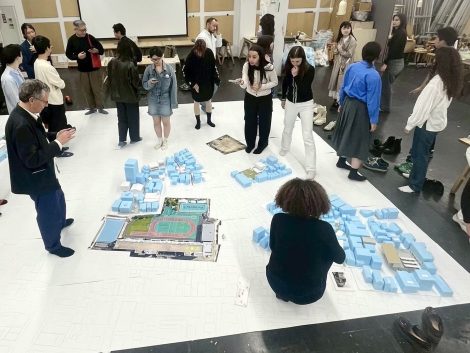
Keigo Kobayashi is an Associate Professor at Waseda University's Faculty of Science and Engineering, School of Creative Science and Engineering, Department of Architecture. He has served in this position since 2016, previously holding the rank of Assistant Professor from 2012 to 2016. His professional journey includes significant experience at the Office for Metropolitan Architecture (OMA) in Rotterdam, where he worked as a Senior Architect and Project Architect from 2007 to 2012. His educational background includes a Master of Architecture II from Harvard University's Graduate School of Design (2005), a Master of Architecture from Waseda University's Graduate School of Science and Engineering (2003), and a Bachelor's degree in Architecture from Waseda University's School of Science and Engineering (2002). Kobayashi's research focuses on architectural planning and city planning, with particular interests in food-related architecture, spatial behavior, and sustainable design. His work explores the intersection of architecture with everyday life, examining how spatial configurations influence human behavior and community formation. Recent research has investigated food systems in urban contexts, playful approaches to spatial design, and the relationship between architectural form and environmental performance. His publications demonstrate a strong focus on practical applications of architectural theory, with projects spanning from food truck design in Shodoshima to zero-energy housing solutions and innovative approaches to architectural education. His work shows a consistent interest in how architecture can respond to contemporary social challenges while maintaining theoretical rigor. Excellence in Concrete Construction Award 2019, American Concrete Institute (ACI), Qatar National Library / OMA Kobayashi actively contributes to architectural education through various committee memberships, including serving as Chief of the Subcommittee on Strategies for International Compatibility in Architectural Education at the Architectural Institute of Japan and leading the Caberra Accord Correspondence Subcommittee at the Japan Accreditation Board for Engineering Education. His teaching portfolio at Waseda University is extensive, covering architectural design studios from undergraduate to doctoral levels. He leads several research initiatives, including the Wakusei Project in Tosa, Kochi, NPO PLAT (Platform for Architectural Thinking), and the European Thinkbelt/McDonald's Radio University project which represents an innovative approach to architectural education and community engagement, particularly in contexts of migration and cultural exchange.
Professor Terry Rudolph is a Professor of Quantum Physics at the Department of Physics within the Faculty of Natural Sciences at Imperial College London. His affiliations include the Quantum Engineering, Science and Technology group, Quantum Optics and Laser Science Group, and The Light Community. His research focuses on quantum-anything, encompassing optical physics, quantum computing, photonics, and related interdisciplinary fields such as nanotechnology and communications technologies. Rudolph’s work emphasizes photonic quantum computing architectures, entanglement generation, and fault-tolerant quantum systems. His recent publications highlight advancements in cluster state generation, photonic multiplexing, and reconfigurable entangling systems. He has contributed to scalable quantum hardware design, including silicon photonic platforms and error-correction protocols. His academic contributions span theoretical and experimental quantum mechanics, with a focus on bridging quantum theory and practical implementation. Notable themes in his research include deterministic teleportation, photonic integrated circuits, and fusion-based quantum computing. He has also engaged in educational initiatives to introduce quantum information science to high-school students. Affiliations: Quantum Optics and Laser Science Group, Quantum Engineering Centre, and The Light Community at Imperial College London.
Sunder Kekre is the Vasantrao Dempo Professor of Operations Management at Carnegie Mellon University’s Tepper School of Business , where he has held academic appointments since 1984. His research focuses on manufacturing systems, global supply chains, and healthcare operations management. Research Expertise : New product development structures, strategic costing, lean innovation, knowledge sharing in enterprise networks, and business analytics for coordinated supply chains. Key Publications : Contributions to journals like Management Science , Operations Research , and Production and Operations Management , with work on LNG storage valuation, RFID logistics, and healthcare disparities. Scientific Recognition : Dempo Chair Professorship Bosch Chair Professorship Best Paper Award (1995) Teaching : Courses in Operations Management, Strategic Management of the Enterprise, and Information Systems Project. Non-Academic Experience : Prior engineering roles at Tata Steel (1974-1980) and consulting engagements with Fortune 500 firms like Bosch, Caterpillar, and IBM.
Prof. Sebastian Rudolph is a Professor of Computational Logic at the Institute for Artificial Intelligence , Faculty of Computer Science , TU Dresden. Since 2021, he has been an Affiliate Member of the Faculty of Mathematics. His research spans theoretical and applied artificial intelligence, focusing on Knowledge Representation and Reasoning through formalisms like Description Logics, Existential Rules, and Formal Concept Analysis, with applications in Semantic Technologies. 2017 : ERC Consolidator Grant for decidability principles in logic-based knowledge representation 2006-2013 : Postdoctoral researcher, project leader, and Privatdozent at KIT's Institute AIFB 2011 : Habilitation at KIT Earlier : PhD in Algebra and teaching qualification in mathematics, physics, and computer science at TU Dresden His recent publications address decidability of logical reasoning, non-monotonic extensions in formal concept analysis, standpoint logics, and multiagent systems. He supervises the DeciGUT and KIMEDS projects, and is involved in the SECAI and ScaDS.AI centers. Teaching activities include courses on Theoretical Computer Science, Existential Rules, and Formal Concept Analysis.
Kyle Doudrick serves as an Associate Professor in the Department of Civil and Environmental Engineering and Earth Sciences at the University of Notre Dame, with his office located in 166 Fitzpatrick Hall of Engineering. His research program bridges environmental engineering and materials science to address critical water quality challenges. Education Ph.D. in Environmental Engineering, Arizona State University (2013) M.S. in Civil Engineering, University of Memphis (2008) B.S. in Civil Engineering, University of Memphis (2006) Research Focus : The Doudrick Lab pioneers physical-chemical treatment technologies targeting emerging contaminants including PFAS, micro/nanoplastics, and oxyanions. His group develops solar-activated photocatalytic systems for water purification and wastewater-to-hydrogen conversion, while investigating fundamental processes in catalytic, adsorptive, thermal, photochemical, and electrochemical treatment. Current work emphasizes understanding contaminant fate in natural and engineered systems through advanced analytical methods. Publication Trends : Recent works (2019-2020) demonstrate a cohesive research trajectory centered on electrochemical and photocatalytic water treatment. Key themes include nanomaterial stability for contaminant degradation, hybrid processes for persistent pollutants like PFOS, and innovative reactor designs such as hydrogel membranes. These publications span environmental engineering, materials chemistry, and sustainable energy conversion, reflecting interdisciplinary approaches to water security challenges. Laboratory Operations : The Doudrick Lab maintains a mission-driven focus on developing cost-effective, scalable solutions that integrate seamlessly with existing water infrastructure. Research activities combine fundamental material science with practical engineering applications, targeting real-world implementation of contaminant removal technologies while advancing scientific understanding of emerging pollutant behavior.
Brian S Woodard serves as a Teaching Associate in the Department of Aerospace Engineering at the University of Illinois Urbana-Champaign, teaching undergraduate courses including AE 100 (Intro to Aerospace Engineering), AE 140 (CAD), and ENG 100/101 (Engineering Orientation). Education Doctor of Philosophy, Aerospace Engineering, University of Illinois Urbana-Champaign, 2012 Master of Science, Aerospace Engineering, University of Illinois Urbana-Champaign, 2004 Bachelor of Science, Aerospace Engineering, University of Illinois Urbana-Champaign, 2001 Research Interests His research focuses on High-Energy Lasers , Aerodynamics , and Aircraft Icing , with specialized work in electric discharge-pumped atomic iodine and oxygen-iodine laser systems. He investigates plasma discharge geometries for oxygen singlet delta production and their application in high-power laser development, while also studying aerodynamic effects of aircraft icing for flight safety. Publication Trends Publications from 2008-2011 reveal concentrated expertise in laser physics and plasma engineering, particularly in electric discharge pumping mechanisms for iodine-based laser systems. His work demonstrates consistent innovation in resonator design and discharge configuration to enhance laser efficiency, bridging aerospace engineering principles with advanced optical technologies for potential defense and propulsion applications. Scientific Awards No scientific awards were mentioned in the provided text. Advising and Grants Dr. Woodard mentors students through AE 298 RES (Research Seminar Mentoring and Introduction to Research courses), guiding undergraduate research projects. He has instructed over 20 distinct undergraduate courses spanning aerospace fundamentals, computational design, global engineering experiences, and leadership training, though no research grants are documented in the source material. Labs and Teams His research is conducted within Talbot Laboratory (Room 319K) at the University of Illinois, collaborating with prominent researchers including J.W. Zimmerman, G.F. Benavides, and W.C. Solomon on electric oxygen-iodine laser projects.
Chanchal K. Roy is Professor of Software Engineering/Computer Science at the University of Saskatchewan and Co-Director of the Software Research Lab. He leads an NSERC CREATE graduate program on Software Analytics Research and co-leads the Data Management group for an NSERC CFREF project on Food Security, with over 170 publications cited 6,000+ times. His research centers on software clone detection using the widely adopted NICAD system, software evolution, empirical studies, and AI-driven software analytics. Recent work integrates large language models for code generation, clone detection in the AI era, and developer interactions with tools like ChatGPT, emphasizing practical applications in maintenance and analytics. Analysis of his 15 most recent publications reveals a strong trend toward AI/ML integration in software engineering: 12 of 15 articles (2025) explore LLMs, quantum computing, or deep learning for tasks like bug localization, code snippet generation, and feature-toggle analysis. Key themes include empirical validation of AI tools, Stack Overflow data mining, and cross-domain frameworks for Society 5.0. His scientific awards include: Most Influential Paper Awards (SANER 2018, ICPC 2018) Outstanding Young Computer Science Researcher Award (CS-Can/Info-Can, 2018) New Researcher Award (University of Saskatchewan, 2019) New Scientist Research Award (College of Arts and Science, 2019) As lead of the NSERC CREATE program and CFREF data group, he mentors graduate students in software analytics while securing major grants. He actively serves on program committees for ASE, ICSE, and FSE, reviewing journals and organizing workshops on clone detection and empirical methods. His lab focuses on real-world applications in food security data management and software evolution. The Software Research Lab, co-directed by Roy, drives projects like NICAD and the NSERC CREATE initiative, emphasizing open-source contributions and industry collaboration. Current efforts include quantum-SE integration and AI-augmented maintenance tools under the CFREF food security mandate.
Morgan G. Ames is an Assistant Adjunct Professor at the UC Berkeley School of Information and serves as Associate Director of Research for the Center for Science, Technology, Medicine & Society. She chairs the Designated Emphasis in Science and Technology Studies and is affiliated with multiple research centers including the Algorithmic Fairness and Opacity Working Group, the Center for Science, Technology, Society and Policy, and the Berkeley Institute of Data Science. Her educational background includes a Ph.D. in Communication with a minor in Anthropology from Stanford University (2013), an M.S. in Information Management and Systems from UC Berkeley (2006), and a B.A. in Computer Science from UC Berkeley (2004). Prior to her academic career, she worked as a researcher at Google, Yahoo!, Nokia, and Intel. Ames researches the ideological origins of inequality in the technology world, with a focus on utopianism, childhood, and learning. Her work critically examines how technology design practices shape identities and social structures. Current projects include 'Seeing Like a Valley: the Moral Visions of Silicon Valley,' 'Algorithms in Culture,' and 'Countercultures of Technology Use.' She has published extensively on One Laptop per Child, Minecraft, and the social implications of algorithmic systems. Her publication record shows a consistent focus on the cultural dimensions of technology, particularly examining how utopian visions shape technology design and implementation. Recent work increasingly addresses algorithmic systems and their cultural impacts, while maintaining her longstanding interest in educational technology and youth technology practices. Ames has received significant recognition for her scholarship, including: 2020 Best Information Science Book Award 2020 Sally Hacker Prize 2021 Computer History Museum Prize She advises students on interpretive research methods, particularly ethnography, and serves on doctoral committees though cannot be a primary advisor for PhD students. Her research has been supported by multiple interdisciplinary collaborations, including the 'Algorithms in Culture' conference series she co-organized through the Center for Science, Technology, Medicine & Society. Ames leads the 'Seeing Like a Valley' research collective that brings together scholars from across UC Berkeley and Silicon Valley to examine how the region's industrial practices shape moral visions that influence global technological development and social values.
Toshiaki Adachi serves as Professor in the Department of Computer Science at Nagoya University's Graduate School of Engineering, with research centered on differential geometry and dynamical systems on complex manifolds. His work bridges theoretical mathematics with geometric structures relevant to computer science applications. Education: Doctor of Science, Nagoya University (1987) Master of Science, Nagoya University (1981) Research Focus: Adachi specializes in trajectories, magnetic flows, and circular motions within complex geometries including projective and hyperbolic spaces. His investigations span characteristic magnetic focal values on Kaehler manifolds, extrinsic circular trajectories on real hypersurfaces, and structural properties of Kaehler graphs. This research reveals fundamental connections between geometric configurations and dynamical behaviors in high-dimensional spaces. Publication Trends: Recent works (2022-2024) demonstrate consistent advancement in geometric trajectory analysis, with emphasis on type (A) real hypersurfaces in complex space forms. His publications increasingly integrate tensor/Cartesian product structures in graph theory with classical differential geometry, showing evolving methodological sophistication while maintaining core focus on magnetic flow dynamics. Awards: No specific scientific awards are documented in the provided materials. Professional Activities: Adachi actively contributes to academic discourse through international conference presentations across Europe and Asia, and serves in leadership capacity within the Mathematical Society of Japan. His editorial work on World Scientific publications since 2011 has significantly shaped contemporary differential geometry literature. Research Infrastructure: While no dedicated laboratory is specified, Adachi leads the Center for Research and Development in Higher Engineering-Education, directing institutional initiatives in engineering pedagogy and curriculum development.
Laurie Williams serves as a Goodnight Distinguished University Professor in the Computer Science Department within the College of Engineering at North Carolina State University. She co-directs both the NCSU Secure Computing Institute and the NC State Science of Security Lablet, demonstrating deep institutional leadership in cybersecurity research. With over 260 refereed publications, her work establishes her as a prominent figure in software security academia. Her research spans critical areas including software security, agile development practices (particularly continuous deployment), software reliability, and software supply chain security. Williams focuses on practical security solutions addressing modern challenges like malicious dependencies in open-source ecosystems, AI-generated code vulnerabilities, and runtime protection mechanisms. Her work bridges theoretical security principles with industry-relevant applications. Recent publications reveal strong trends toward software supply chain security, with multiple 2024-2025 papers addressing vulnerability exploitability, malicious commit detection, and metrics-driven security control selection. Her research increasingly incorporates machine learning for threat detection while maintaining focus on human factors in secure development practices. IEEE Fellow (2018) National Science Foundation CAREER Award (2004) ACM SIGSOFT Influential Educator Award (2009) Multiple IBM Faculty Awards (2002-2012) NCSU Alumni Association Outstanding Research Award (2015-2016) Williams leads multiple major NSF-funded projects including the $5.7M SaTC Frontiers grant on secure software supply chains and the Science of Security Lablet with $3.6M in DoD funding. Her research emphasizes practical industry impact through collaborations with Cisco and Laboratory for Analytic Sciences. She actively mentors through the NCSU Research Leadership Academy and maintains significant educational outreach in software security. Her laboratory work centers on the Secure Computing Institute and Science of Security Lablet, where her team develops frameworks for vulnerability prediction, supply chain risk assessment, and secure development methodologies. Current projects focus on machine learning integrity, cognitive modeling for security decisions, and empirical analysis of build/deployment logs for anomaly detection.
Oliver Schlotterer holds the position of Associate Professor at Uppsala University, affiliated with both the Department of Mathematics (Centre for Geometry and Physics) and the Department of Physics and Astronomy (Theoretical Physics). His research focuses on theoretical physics and mathematical structures in string theory, particularly exploring string amplitudes, modular forms, and algebraic geometry. He has contributed to understanding one-loop string amplitudes, modular graph forms, and supersymmetric field theories. Education: Not explicitly detailed in the provided text. Departments: Joint appointment in Mathematics and Theoretical Physics. His research interests include the interplay between string theory and mathematical frameworks like modular forms, algebraic geometry, and polylogarithmic functions. Recent work emphasizes chiral-splitting techniques, cyclic products of kernels, and the coaction principle in scattering amplitudes. Collaborations span topics from supersymmetric Yang-Mills theories to Einstein-Yang-Mills systems. Publications highlight advancements in string perturbation theory, including studies on non-holomorphic modular forms, genus-one integrals, and the single-valued map in string theory. His work often bridges high-energy physics with number-theoretic structures, such as zeta functions and Poincaré series. No awards or grants are listed in the provided data. He advises no students explicitly mentioned, though his collaborative research suggests involvement in training through projects. Active in the Centre for Geometry and Physics and theoretical physics groups, his research explores foundational aspects of string theory and their mathematical implications.
Francis Y. Yan is an Assistant Professor of Computer Science at the University of Illinois Urbana-Champaign (UIUC), holding an affiliate appointment in Electrical & Computer Engineering within the Grainger College of Engineering. He leads the Illinois Networked Systems and AI (NSAI) research group, focusing on building intelligent networked systems that are safe, robust, and performance-optimized through practical machine learning integration. Prior to joining UIUC in January 2025, he served as a Senior Researcher at Microsoft Research Redmond under Victor Bahl. His educational background includes: Ph.D. in Computer Science from Stanford University (2020), advised by Keith Winstein and Philip Levis B.S. in Computer Science (Yao Class) and B.A. in Economics from Tsinghua University (2015) Additional undergraduate studies at MIT Yan's research adopts a holistic approach to practical machine learning for networked systems, emphasizing judicious application rather than indiscriminate use. He builds real-world systems and research platforms to lay ML foundations, devises deployable algorithms using domain insights, and validates performance through extensive empirical evidence. His work consistently addresses operator concerns regarding ML deployment—focusing on safety, robustness, generalization, and efficiency—while strategically combining ML with classical networking and systems techniques. Analysis of his 15 most recent publications (2023-2025) reveals dominant themes in resource allocation for microservices (DeDe, Autothrottle), real-time video optimization (Mowgli, GRACE), and LLM-driven network algorithm design. His work bridges theoretical advances with industrial deployment, evidenced by platforms like Puffer (400,000+ users) and OpenNetLab that have become community standards for validating congestion control algorithms. His research has been recognized with top honors: USENIX NSDI Outstanding Paper Award (2024) for Autothrottle APNet Best Paper Award (2022) IRTF Applied Networking Research Prize (2021) USENIX NSDI Community Award (2020) USENIX ATC Best Paper Award (2018) for Pantheon Yan actively recruits master's and undergraduate researchers for his NSAI group, prioritizing self-motivated students for projects in networked systems and AI. His research is supported by industry collaborations (notably Microsoft) and manifests in deployable platforms like Puffer—which has enabled award-winning research at NSDI and SIGCOMM—and OpenNetLab for real-time communications. His work directly impacts production systems including Microsoft Teams and Bing. He founded and directs the Illinois Networked Systems and AI (NSAI) research group, which operates critical infrastructure including Puffer (a live TV service and research platform) and OpenNetLab. These platforms facilitate community-wide validation of novel algorithms, with Puffer alone supporting multiple best-paper awards at top conferences. Current workstreams span cloud resource management (Teal, Autothrottle, DeDe), low-latency video (Puffer, Tambur, Mowgli), and LLM-augmented systems (Nada, Designing Network Algorithms via LLMs).