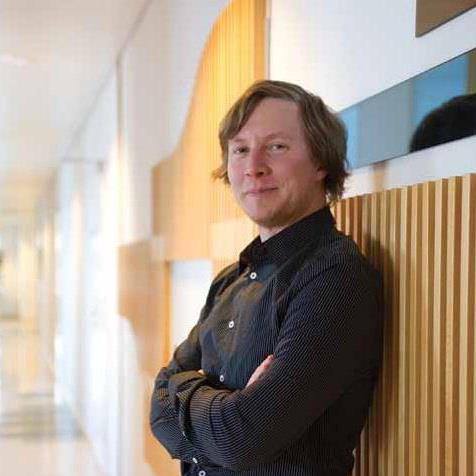
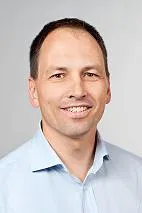
Ann-Kathrin Radig is a Researcher at the Institute of Social Sciences , University of Stuttgart, affiliated with the Department of Organizational and Innovation Sociology . She previously served as a Research Associate in the Department of Logistics and Procurement Management at the same university from 2014 to 2019. Her work bridges economic sociology with the sociology of technology, focusing on digitalization and internet-driven transformation processes across industries. Doctorate in Economics and Social Sciences (Dr.rer.pol.), University of Stuttgart (2021) Master’s in Empirical Political and Social Research, University of Stuttgart (2013) Her research explores how digitalization reshapes economic sectors and organizational structures, with specific attention to internet-based disruptions. Publications include analyses of logistics models and the digitization of media markets, highlighting sociological frameworks for understanding market evolution. Her recent articles emphasize digital transformation trends, such as the adaptation of logistics systems to technological changes and the sociological implications of internet-driven economic shifts. Though not explicitly detailed, her work likely intersects with organizational change, consumer behavior, and innovation studies. Ann-Kathrin Radig is currently based at the University of Stuttgart’s Institute of Social Sciences, Silk Road 36, Room 2.21, with consultation hours via appointment by email.
Nadine KAFA is an Assistant Professor in Operations Management and Information Systems at KEDGE Business School , affiliated with the Supply Chain Center of Excellence . Her expertise spans supply chain sustainability, decision support systems, and business analytics. Education: PhD in Industrial Engineering, University of Paris 8 Her research focuses on multi-criteria decision-making in supply chains, with emphasis on food waste reduction , gender diversity in logistics , and carbon emission-compliance models . Recent work analyzes healthcare inventory pooling strategies and hierarchical forecasting for postal services. Key trends in her publications include integrating fuzzy logic with AHP/PROMETHEE for sustainable sourcing, and exploring how mobile technologies impact food waste behaviors. Her 2025 study on mail flow forecasting highlights interdisciplinary applications of operations research for societal benefit. She contributes to journals such as International Journal of Forecasting and International Journal of Logistics Management , often collaborating with A. JAEGLER and W. KLIBI. Current projects appear to bridge urban logistics and environmental policy compliance .
Thomas Heinrich is a Professor and Chair of the Department of History at Baruch College, City University of New York, where he has served since at least 2001. He is affiliated with the Weissman School of Arts and Sciences and specializes in business and naval history. Heinrich teaches courses on World War II, naval battles, American business history, and modern American history, with recent offerings including HIS 3430 World War II: A Global History and HIS 3390 Naval Battles and Society. Education: Ph.D., History, University of Pennsylvania M.A., History, SUNY Buffalo B.A., History, University of Bielefeld, Germany Professor Heinrich's research focuses on the intersection of industrial development, technological innovation, and military history, with particular emphasis on naval shipbuilding and business history. His work explores how industrial practices evolved during critical periods like World War II and the Cold War, examining the relationship between government, military needs, and private industry. He investigates how naval technology development influenced broader economic patterns and how business practices adapted to meet military demands during times of conflict. His research also delves into the social dimensions of industrial history, including labor relations, company towns, and racial dynamics in shipyard communities. Heinrich's recent publications demonstrate a consistent focus on naval history and industrial development, particularly examining American naval shipbuilding across different historical periods. His work shows a progression from studies of 19th century shipbuilding to comprehensive analyses of World War II production and Cold War naval development. The research reveals patterns of government-industry collaboration, technological innovation under pressure, and the evolving political economy of defense production. His scholarship bridges business history, technological history, and military history, creating a multidisciplinary approach to understanding America's industrial and naval development. Scientific Awards: John Lyman Book Award (2021) from North American Society for Oceanic History Andrew W. Mellon Dissertation Fellowship (1993) Roy F. Nichols Dissertation Fellowship (1992) Philadelphia Center for Early American Studies Research Grant (1988) SUNY Buffalo Graduate Research Fellowship Professor Heinrich has received multiple research grants from PSC-CUNY to support his work on naval history and industrial development. His recent funded projects include "Cold war naval procurement in the United States and Britain, 19450-1967" (2020-2022), "West German Naval Rearmament, 1950-1960" (2022-2023), and multiple Department Chair Research Accounts. As department chair, he oversees faculty development and curriculum planning while maintaining an active research agenda. His current research includes collaborative work on American and British armor production between the wars and a planned book-length study of cold-war naval shipbuilding and missile production. While the text doesn't explicitly mention specific research labs or teams, Professor Heinrich collaborates with scholars internationally, including Professor Chris Miller of Glasgow University. His work connects with maritime history institutions like the National Museum of the Royal Navy and the International Maritime Economic History Association, suggesting participation in broader scholarly networks focused on naval and maritime history.
Andrea Urbinati is an Associate Professor at Università Carlo Cattaneo - LIUC, specializing in Industrial Engineering and Information Engineering. His research centers on the practical implementation of circular economy principles, with emphases on circular business models, digital circular economy, and innovation processes. He actively investigates how open innovation, Industry 4.0 technologies, and lean production synergize to enable sustainable transitions in manufacturing and construction sectors. Urbinati's work explores: Collaborative frameworks for circular product design in resource-intensive industries like construction Policy intermediation in green public procurement Stakeholder engagement strategies for circular ecosystems Theoretical advancements in circular economy modeling and implementation roadmaps His recent publications (2024-2025) predominantly analyze the intersection of circular economy with digital transformation, open innovation, and operational methodologies. Themes include Industry 4.0 integration, metaverse leadership capabilities, bioeconomy applications, and performance management systems for circular businesses. No awards, student advisements, or lab affiliations are documented in the provided materials.
Petri Antero Uusitalo is a Postdoctoral Researcher at Aalto University's Department of Civil Engineering. His work focuses on construction management, lean construction, and digital transformation in infrastructure projects. Research Interests Uusitalo explores Situational awareness systems in construction Digital visual management challenges Contractor involvement in design quality Complex adaptive systems in the construction industry Efficiency in takt production Publications His recent research emphasizes the integration of digital tools, systemic transformations, and collaborative workflows. Notably, he investigates situational awareness systems and their impact on design reliability, alongside empirical studies on contractor involvement and functional resonance analysis.
Rocio De Las Mercedes Navarro González is a Professor in the Department of Public Law at Universidad Pablo de Olavide, specializing in Administrative Law and Administrative Procedure . Her research focuses on transparency, gender equality, and technical discretion in public administration, with a particular interest in inclusive governance and regulatory compliance. Education: PhD in Legal and Political Sciences (2016), Universidad Pablo de Olavide Current research explores intersections between Administrative Discretion , Gender Studies , and Public Employment , emphasizing accountability mechanisms in public contracts and institutional reform. Key trends include Judicial Scrutiny , Regulatory Innovation , and Comparative Legal Analysis . Notable publications address inclusive public employment policies , gender mainstreaming in governance , and administrative procedural reforms . Her work spans Spanish, Italian, and international legal frameworks. Active in the ADMINISTRATIVE PROCEDURE research group, she contributes to doctoral programs in Legal Sciences. No formal scientific awards are listed in available data.
Dr. Arya Assadi Langroudi serves as Associate Professor in Geotechnical Engineering at the University of East London (UEL), where he leads the Engineering Cluster and directs the Emerging Geohazards Lab. He oversees Civil Engineering BEng/MEng programs and Civil Engineering with Environmental Management MSc courses. Additionally, he holds a Visiting Professorship in Geomechanics at South Africa's Central University of Technology and chairs the international Nature-inspired Solutions for the Built Environment initiative. His educational foundation includes a PhD from the University of Birmingham (2014) focused on micromechanics of collapse in loess, followed by research roles at Atkins and Newcastle University. This background informs his expertise in soil behavior and ground engineering. Langroudi's research centers on emerging geohazards through micromechanical analysis, investigating soil ageing, fatigue, liquefaction, and sinkholes in urban environments. His biomimetic approach develops decision-support systems and sustainable ground improvement techniques using advanced testing, 3D scanning, and nanomaterials. Current work emphasizes circular economy principles and nature-inspired solutions for resilient infrastructure. Recent publications reveal strong interdisciplinary trends: 60% focus on sustainable material innovation (nanosilica, biomimetics), 30% on geohazard mechanics (liquefaction, collapsible soils), and 10% on construction supply chain optimization. His work bridges geotechnical engineering, environmental science, and sustainable construction practices. Key recognitions include: Social Entrepreneurship Award from HEFCE (2012) DST-NRF Fellowship from Royal Society-DST-NRF (2018) He has secured £6.5M+ in research funding since 2011, including £5.8M as Co-I for UKPNR infrastructure projects and multiple Royal Academy of Engineering grants. His Geohazards Lab supervises PhD students through internal studentships and develops nature-inspired solutions for urban ground risks. The Emerging Geohazards Lab pioneers biomimetic ground improvement techniques and decision-support systems for urban infrastructure resilience, focusing on micro-mechanical understanding of soil behavior under extreme conditions.
Stephen Ceccoli serves as the P.K. Seidman Professor of Political Economy in the Department of International Studies at Rhodes College, where he has taught since 1998. His instructional portfolio includes international relations theory, comparative politics, international political economy, and senior seminars, complemented by leadership of summer study programs in Tianjin and Nanjing, China. He previously taught English at Tianjin Normal University during summer sessions. Professor Ceccoli's educational background features a Ph.D. (1998) and M.A. (1994) from Washington University, and a B.A. (1990) from Heidelberg College. His research centers on comparative public opinion and regulatory politics , with specialized expertise in health policy, pharmaceutical regulation, and public attitudes toward contentious issues including genetically modified foods, prescription drug advertising, and organ procurement. Significant scholarship examines welfare policy attitudes, economic inequality perceptions, privatization support, and trade liberalization across diverse political contexts. His 2004 monograph Pill Politics: Drugs and the FDA established foundational insights into U.S. regulatory processes. Recent publications (2017-2023) reveal evolving research trajectories toward international security dynamics—particularly armed drone proliferation and policy transfer mechanisms—alongside analyses of pandemic governance and energy policy attitudes. These works demonstrate methodological sophistication through cross-national comparisons and narrative policy analysis. His academic service includes recognition through: Clarence Day Award for Outstanding Teaching (2005) Jameson Jones Award for Outstanding Faculty Service (2010) Professor Ceccoli actively mentors students through study abroad preparation, internship coordination, and research supervision. His campus leadership spans multiple committees including Faculty Governance, Information Technology, and the Board of Trustees. Professional service includes APSA Congressional Fellowship experience (staffing Senator Blanche Lincoln), journal reviewing, and international program development as Faculty Fellow for International Programs. Collaborative research networks connect him with scholars across China, Europe, and the United States, particularly evident in co-authored works on Chinese governance and cross-national attitude studies.
Megha Chand Inglis is an Associate Professor at The Bartlett School of Architecture, University College London. Her research explores the intersections of global modernity with hereditary temple-building practices in western India, focusing on colonial, post-colonial, and transnational contexts. She is committed to decolonizing architectural research and teaching, co-organizing initiatives like the 2022 History and Theory Forum on teaching race in architectural humanities. PhD, Welsh School of Architecture, Cardiff University (2016) Professional qualification in architecture, London Metropolitan University B. Arch, TVB School of Habitat Studies, New Delhi B. Arch, University of East London Her research bridges postcolonial studies and production studies, examining how traditional artisans navigate modernity, global capitalism, and digital technologies. Projects include a Leverhulme Trust-funded study (2015-2019) on the Nagara temple tradition and a current sabbatical-funded monograph on design, technology, and society. Recent publications address topics like CNC factories in Ahmedabad, archival practices among temple builders, and the negotiation of tradition in modernity. These works span journals such as ARQ: Architectural Research Quarterly , Dearq , and South Asia: Journal of South Asian Studies . RIBA President's Medal (1999) Leverhulme Trust Postdoctoral Funding (2020) Paul Mellon Trust monograph support (2024-25) Megha engages in advisory roles, collaborative projects, external examining, and EDI initiatives at UCL. She has taught architectural history and theory across undergraduate and postgraduate programs at The Bartlett School of Architecture and Cardiff University.
María Amparo Grau Ruiz is a Professor at the Department of Financial and Tax Law, Complutense University of Madrid. Her work bridges tax law with emerging technologies, focusing on AI applications in public expenditure auditing and sustainability-driven fiscal policies. Complutense University of Madrid – Department of Financial and Tax Law Author in Deusto Journal of Human Rights , Spanish Journal of External Control , and Tax Technical Magazine Researcher on EU tax harmonization and digital economy taxation Her research explores AI integration in tax administration , sustainability-focused fiscal instruments , and robotics governance . Articles address technical challenges like DAC6 transposition, carbon taxation frameworks, and digital economy taxation. Collaborations with Rita de la Feria and Yolanda Sánchez-Urán Azaña highlight interdisciplinary approaches to tax policy and labor dynamics. Key themes include: AI in Public Finance: Ethical implications of algorithmic budgeting and auditing Sustainability Taxation: Carbon credits, energy-efficient housing incentives Digital Economy: Taxation of digital services, platform economy regulations Robotics: Social security implications, fair taxation of automation
Prof. Dr. Martin Grunow is a Professor in Production and Supply Chain Management at the TUM School of Management, Technical University of Munich , where he leads the Production and Supply Chain Management Group. With previous roles as Professor in Operations Management at the Technical University of Denmark and Assistant Professor at Technical University of Berlin, his career spans academia and industry research at Evonik AG. Education: Habilitation (2005), PhD (1999, summa cum laude), Master of Industrial Engineering (1993), and Management (1988) from Technical University of Berlin and Dublin City University Research Interests include smart manufacturing , perishable supply chains , and sustainability optimization . His work addresses dynamic assembly layouts , climate risk inventory systems , and RFID applications across industries. Recent publications focus on automotive production transitions to electric vehicles, deep reinforcement learning for ameliorating inventory , and stochastic lot sizing in food supply chains. He has secured grants from DFG, EU, and NSF, among others. Scientific Leadership Editor-in-Chief of OR Spectrum (2008–2021) Area Editor, Flexible Services and Manufacturing Journal Head of GOR Working Group on Supply Chain Management He oversees 10 doctoral candidates and 7 external doctoral researchers , with significant contributions to pharmaceutical market launch planning , semiconductor scheduling , and milk concentrate lifecycle assessments .
Soumyadeb Chowdhury is an Associate Professor at TBS Education , affiliated with the Department of Information, Operations and Decision Sciences . His research spans interdisciplinary themes at the intersection of technology, sustainability, and organizational behavior.
Assoc. Prof. Dr. Bülent YILDIZ is a faculty member at Kastamonu University's Faculty of Economics and Administrative Sciences, Department of Business, where he has served as an Associate Professor since 2022. Previously, he held academic positions at Gaziantep University from 2014 to 2018. His professional roles include serving as Department Head, Deputy Dean, and Chair of Quality Committees, reflecting his leadership in academic administration. He earned his Ph.D. in Business Administration from Hasan Kalyoncu University in 2018, with a dissertation titled 'The Regulatory Role of Environmental Dynamism in the Impact of Total Quality Management Practices on Innovation and Firm Performance.' His Master's degree in Business Administration (Thesis) was obtained from Gaziantep University in 2015, focusing on 'The Effect of Trust, Innovation, and Knowledge Sharing in Supply Chain Management on Business Performance.' He completed his B.Sc. in Econometrics at Dokuz Eylul University in 2000. Dr. YILDIZ's research spans Logistics Management, Production Technologies and Digital Transformation, Innovation Management in Production, and Supply Chain Management. His work explores the intersection of digital technologies like IoT, blockchain, and AI with sustainable practices in manufacturing, aviation, and supply chains. Recent studies investigate green innovation, smart city applications, and the role of big data analytics in enhancing product innovation and environmental performance. His recent publications (2023-2025) demonstrate a strong focus on digital transformation's impact across industries, particularly in manufacturing and logistics. Key themes include the mediating roles of green manufacturing and knowledge sharing, blockchain applications in supply chains, and consumer adoption of sustainable technologies like electric vehicles and IoT services. His interdisciplinary approach bridges operations management with environmental sustainability and technological innovation. En İyi İkinci Bildiri Ödülü (2019) - Best Second Paper Award Dr. YILDIZ has supervised over 20 graduate students (12 doctoral and 8 master's theses) on topics ranging from green supply chain management to digital transformation in logistics. He has led TÜBİTAK-funded projects including 'Digitalization in Supply Chain Operations for Sustainability' (2023) and 'Development of R&D Culture for Techno-Entrepreneurship Among Young Researchers' (2022-2023), demonstrating his commitment to bridging academic research with industry applications. As a key member of Kastamonu University's Production Management and Marketing research group, he collaborates with international scholars from Lithuania (Ieva Meidute-Kavaliauskiene) and Azerbaijan, focusing on sustainable supply chains and digital transformation. His work with the Logistics Association of Turkey enhances industry-academia partnerships in logistics innovation.
Stephanie Francis Grimbert serves as an Assistant Professor at the University of Deusto in San Sebastian, Spain, while concurrently completing her Ph.D. dissertation at the same institution. She maintains an active research affiliation with CIRCLE (Centre for Innovation, Research and Competence in the Learning Economy) at Lund University, Sweden, focusing on interdisciplinary innovation policy applications. Education MBA from Ecole Supérieure des Sciences Economiques et Commerciales (ESSEC) Ph.D. candidate at University of Deusto (Thesis: Innovation policy from a value creation perspective with end-user inclusion focus) Research Focus Her scholarship critically examines innovation policy through value creation frameworks, specializing in public procurement mechanisms that drive circular economy transitions and sustainable urban development. She investigates how cluster management organizations foster shared value among stakeholders while integrating end-users into innovation constellations, with particular emphasis on place branding, capability development, and transformative policy instruments in European contexts. Publication Trends Recent works (2023-2024) demonstrate concentrated research on public procurement as a catalyst for systemic innovation, featuring case studies like Malmö's urban rehabilitation. Her articles consistently bridge theoretical constructs (dynamic capabilities, emergent strategies) with practical implementations in circular economy and cluster management, revealing a methodological preference for institutional analysis and transformative policy assessment within European governance frameworks. Scientific Awards No awards documented in provided materials Advising and Grants Current documentation indicates no formal student advisement relationships or grant funding details. Her active Ph.D. candidacy suggests potential involvement in research projects pending doctoral completion, though specific supervision roles remain unconfirmed. Labs and Teams She contributes to CIRCLE at Lund University, a research center examining innovation dynamics in economic learning processes, while operating primarily within University of Deusto's academic structure as evidenced by her teaching responsibilities and institutional email.
Dr. Logan Miller is an anthropological archaeologist at Illinois State University , specializing in the social dynamics of ancient Midwestern societies. His research focuses on lithic microwear analysis to determine stone tool functions across Paleoindian through Late Precontact periods, particularly in the Langford Tradition , Hopewell , and Clovis cultures. At Illinois State, he teaches courses such as Lost Continents and Alien Pyramids , Archaeological Methods , and Midwestern Archaeology . His laboratory ( 388 Schroeder Hall ) and fieldwork integrate geometric morphometrics , AMS radiocarbon dating , and artifact typology . He actively collaborates with institutions like the Cleveland Museum of Natural History and emphasizes replicable research through historical society collections. Scientific trends in Dr. Miller's publications reveal interdisciplinary approaches combining ritual economy frameworks with Bayesian radiocarbon modeling to explore Middle Woodland ceremonialism and Clovis colonization patterns . His work bridges lithic technology with broader questions about settlement permanence , hunter-gatherer social organization , and cultural materiality .