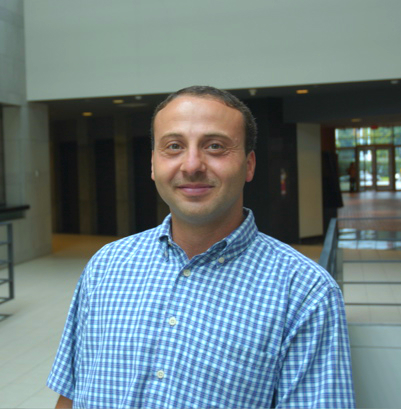
Suresh Keshavamurthy is a Professor of Cardiothoracic Surgery at the University of Texas Southwestern Medical Center's School of Medicine, specializing in complex heart and lung transplantation, ECMO support, and management of pulmonary embolisms. His clinical expertise spans ventricular assist devices, cardiac trauma, and donor organ procurement optimization. His research focuses on transplantation innovation , particularly ambulatory ECMO bridging, donor lung management, and post-transplant complications. Key contributions include establishing protocols for Kartagener's syndrome transplants, debunking coronary size myths in South Asians, and advancing surgical training standards through his 2023 "call to action" publication. His work bridges cardiothoracic surgery with oncology, geriatrics, and rare disease management. His 65+ publications (2023-2011) demonstrate consistent leadership in ECMO applications for chemotherapy support Ventricular assist device complications Situs inversus transplantation techniques Age-specific valvular disease management with recurring collaborations at Cleveland Clinic and UTSW. Notable awards and honors are not explicitly mentioned in available sources. His surgical training includes residencies at All India Institute of Medical Sciences and fellowships at Cleveland Clinic, with extensive experience in donor assessment checklists and process improvement initiatives.
Rachel Kuijlenburg is a Lecturer-researcher at The Hague University of Applied Sciences , affiliated with the Research Centre for Built Environment – NoorderRuimte . Her work bridges facility management, sustainability, and urban development. Focus on sustainable materials management Expertise in big data applications for facilities Advocate for circular economy in operations Her research explores how facility design impacts behavior, particularly in waste reduction and urban livability. Recent articles address agile methodologies, prison environment hygiene, and the role of global citizenship in facility management. Notable awards include the H/Olive Award 2014 and the Pim Breebaart Award (2021) . She actively participates in conferences and media engagements, emphasizing practical research outcomes.
José António Crispim is a Professor at the School of Engineering, University of Minho, specializing in Industrial Engineering. Holding a Ph.D. in Engineering and Industrial Management from the University of Porto, he maintains an active research profile with significant contributions across operations research, healthcare systems, and sustainable development. His research spans critical domains including: Risk management frameworks for military shipbuilding and clinical laboratories Performance measurement systems in public sector and healthcare Sustainable supply chain networks aligned with UN SDGs Telemedicine equity and patient-centered care models Virtual enterprise formation and dynamic manufacturing networks His work demonstrates strong interdisciplinary focus, bridging engineering methodologies with real-world healthcare and sustainability challenges. Recent publications (2020-2024) show increasing emphasis on healthcare applications and SDG implementation through collaborative networks. Crispim leads and participates in significant research projects including vehicle routing optimization funded from 2010-2013. His teaching portfolio covers advanced data analysis, production management, and operational research across doctoral, master's, and undergraduate programs at University of Minho.
Joseph Sarkis is a Professor of Management within Worcester Polytechnic Institute's Business School, with extensive expertise in environmental sustainability, operations and supply chain management. He has previously served as a faculty member at Clark University and the University of Texas at Arlington, establishing a distinguished academic career spanning multiple institutions. Worcester Polytechnic Institute, Business School (Current) Clark University, School of Business (Previous) University of Texas at Arlington, School of Business (Previous) Hanken School of Economics' HUMLOG Institute (Visiting International Scholar) Université Polytechnique Hauts-de-France - UPHF (Chaire d'excellence TEC-LOG holder) Professor Sarkis's research focuses on environmental sustainability, operations and supply chain management, with particular emphasis on sustainable supply chains and the circular economy. His work bridges theoretical frameworks with practical applications, examining how digital technologies like blockchain can transform traditional business practices toward greater sustainability. He has pioneered research connecting environmental management with operational excellence, exploring how organizations can simultaneously improve financial performance while reducing environmental impacts. His extensive publication record demonstrates a clear evolution from traditional supply chain management toward increasingly sophisticated integration of sustainability principles, circular economy models, and digital transformation. Recent work shows a strong emphasis on blockchain applications for supply chain transparency, circular lithium-ion battery management, and sustainable finance structures. His research consistently addresses the intersection of technology, sustainability, and business performance, with growing attention to climate adaptation and resilience. Highly Cited Researcher designation from Thomson-Reuters/Clarivate Analytics (Web-of-Science) for nine consecutive years (2016-2025) Recognized as the most productive researcher in supply chain management (1995-2015) Industrial Ecology Fellow, AT&T (2008) Sea-Sky Scholar, Dalian University of Technology (2014) Professor Sarkis has held significant editorial responsibilities, serving as former Editor-in-Chief of IEEE's Engineering Management Review (2017-2023) and Associate Editor of Sustainable Supply Chains for Resources, Conservation and Recycling. He is Co-Editor of the Greening of Industry Networks Studies Springer-Nature Book Series and has served on numerous editorial boards across sustainability, operations, and supply chain journals. His international collaborations include coordination of the Greening of Industry Networks and co-chairing the Circular Economy Working Group of Future Earth Systems. These roles demonstrate his leadership in connecting academic research with practical sustainability implementation across global business contexts. He maintains active international partnerships, including his current position as holder of the Chaire d'excellence TEC-LOG at Université Polytechnique Hauts-de-France, focusing on Transport, Technology, Circular Economy and Sustainable Supply Chains. His work with the Greening of Industry Networks and Future Earth Systems reflects his commitment to translating research into actionable sustainability frameworks through multi-stakeholder collaboration.
Dr. Frank Ghansah is a Lecturer in Quantity Surveying at the Division of Construction, Property and Surveying, affiliated with the Digital x Data Research Centre since October 2023. He holds a PhD in Real Estate and Construction from the University of Hong Kong and advanced degrees from Kwame Nkrumah University of Science and Technology, actively supervising PhD students in sustainable construction research. His educational background includes: PhD in Real Estate and Construction, University of Hong Kong (2020-2023) MPhil in Project Management, Kwame Nkrumah University of Science and Technology BSc in Quantity Surveying and Construction Economics (First Class Honours), Kwame Nkrumah University of Science and Technology Dr. Ghansah's research centers on digital transformation for sustainable construction, with emphasis on BIM, digital twins, and AI applications to advance quality assurance, circular economy principles, and modular building methods. His work addresses critical challenges in low-carbon construction, smart building technologies, and supply chain resilience, particularly in developing contexts like Ghana. Analysis of his 43 publications (2020-2025) reveals dominant trends in pandemic-impacted construction logistics, digital twin implementations for carbon management, and circular procurement frameworks. His research bridges digital innovation with practical sustainability outcomes, showing increasing focus on AI-driven solutions and developing-world applications since 2023. Dr. Ghansah actively mentors PhD candidates and has secured major research funding including a HKD 5.31 million Collaborative Research Fund project on modular construction optimization and a RMB 5 million Theme-based Research Fund for digitalization initiatives. His peer-review activities span top journals like Engineering, Construction and Architectural Management and Smart and Sustainable Built Environment. As a core member of the Digital x Data Research Centre, he leads international collaborations on human-robot construction teams, circular economy frameworks, and offsite manufacturing. His current projects integrate Ghanaian case studies with global supply chain innovations to develop context-specific digital construction solutions for emerging economies.
Nick Capon is an Academic Director (part-time) in the Faculty of Business & Law at the University of Portsmouth, specializing in academic enterprise and university-industry partnerships. He holds an MBA and has over two decades of experience in academia and manufacturing. Affiliations: Centre for Enterprise Research and Innovation (2005-2012), Director of Business Services (2012-2016) Research focuses on performance improvement, customer service optimization, and leveraging university resources for industry growth. His work addresses organizational efficiency in sectors like healthcare, defense, and government. Teaching contributions include co-designing leadership/management courses for organizations such as the NHS, RAF, and Nigerian government. External roles include trustee of Brendoncare Group (2000-2019) and director of Droxford Community Hub CIC since 2019. Key projects include a medical leadership curriculum development initiative (2022) and studies on eProcurement benefits measurement (2009). His publications span organizational performance frameworks and third-sector engagement strategies.
Salam Al-Bizri is a Senior Lecturer at the University of Portsmouth’s School of Civil Engineering and Surveying, part of the Faculty of Technology. With over 30 years of combined academia and construction industry experience, she specializes in integrating design and construction processes through innovative frameworks and technologies. Her work focuses on sustainable construction, building information modeling (BIM), and improving project management practices through education. Her research emphasizes the development of integrated project management frameworks, knowledge capture systems, and decision support tools like Quality Function Deployment (QFD). She has pioneered interactive knowledge bases for construction practices and explored BIM’s role in facilities management and curriculum development. Her contributions bridge academic theory with practical industry applications, particularly in fostering collaboration among multi-organization project teams. Al-Bizri’s publications highlight trends in BIM adoption, sustainability in construction, and technology clusters. She advocates for modernizing project organization cultures and has influenced pedagogical approaches in construction management education. While no formal awards are noted, her extensive body of work reflects significant industry and academic impact.
Matti Turtiainen is a Professor and Head of Department at the Law School, Faculty of Social Sciences and Business Studies of the University of Eastern Finland. His research focuses on securities regulation, sustainable finance, mutual funds, alternative investments, and private equity. He has contributed extensively to legal and financial literature, particularly in market abuse regulation and investor protection. Securities Regulation Sustainable Finance Investment Services Compliance Private Equity Law His recent publications analyze ESG ratings in mutual funds, liquidity management in investment funds, and regulatory frameworks for small business lending. He also explores EU Market Abuse Regulation (MAR) and its implications for inside information definitions. As a professor, he leads academic initiatives in financial law and contributes to policy development in corporate governance and public procurement.
Paul Schweinzer is a Professor and Head of the Institute of Economics at the Alpen-Adria-Universität Klagenfurt. He actively participates in the Faculty Conference of the Faculty of Economics and Law , where he contributes to academic governance and decision-making processes. His research focuses on Microeconomics , Game Theory , and Mechanism Design , with a particular interest in strategic behavior, information sharing, and incentive structures. His recent work includes studies on fake news contestation, risk auctioning, and urban development models. Paul Schweinzer can be contacted via email at Paul.Schweinzer@aau.at or through his office at Alpen-Adria-Universität Klagenfurt, located in B02.2.63a, Lakesidepark House B02, Level 2 . His consultation hours are on Thursdays from 10 to 12 during the semester break from 10 to 11, or via BBB . He supervises various ongoing work focuses , including projects such as "Numbers in your head - Promote mental arithmetic" and "Banking on zoos for conservation? Towards a multispecies perspective on conservation research in the EAZA Biobank." These projects highlight his engagement in diverse research areas, from mathematics education to conservation biology.
Moizzah Asif is a Senior Lecturer in the Department of Logistics, Procurement and Supply Chain Management at the University of South Wales, within the Faculty of Business and Creative Industries. Their expertise lies in supply chain optimization, procurement strategies, and logistics systems. Contact details include the email moizzah.asif@southwales.ac.uk and office location TR B025. Research interests focus on enhancing supply chain resilience, sustainable procurement practices, and operational efficiency in logistics networks. Specific projects or publications are not detailed here, but past work includes contributions to logistics management frameworks and strategic sourcing methodologies. No awards or grants are explicitly listed in the provided information. Advising responsibilities or lab affiliations are not mentioned, though their role as a Senior Lecturer suggests involvement in teaching and academic supervision.
Charlotte Davies is a Senior Research Fellow at the Norwich Medical School, University of East Anglia. She holds additional memberships in Population Health, the Centre for Competition Policy, and Epidemiology and Public Health. Her roles include Programme Manager/Project Manager at Norfolk and Norwich University Hospitals NHS Foundation Trust and Senior Analyst at RAND Europe. She earned a PhD in Health Economics from the University of East Anglia and has extensive experience in health economics, including a prestigious Arthritis Research UK Foundation Fellowship (2011–2019). Her research focuses on health policy, inflammation, healthcare decision-making, and large-scale data management. Key interests include NHS operational efficiency, medical device competition, and cost-effectiveness of healthcare interventions. She has led projects on hip prostheses economics and contributed to studies on atopic eczema treatment and healthcare integration. Recent work includes analyzing vertical integration impacts on hospital service use and developing clinical practice tools through co-design frameworks. Her funding includes grants from the National Institute for Health and Care Research and DEBRA UK. Davies has also advised on MSc Health Economics programs and taught microeconomics and quantitative methods. Key Awards: Arthritis Research UK Foundation Fellowship (2011–2014) Current Projects: BEACON Trial (atopic eczema treatments) InflAIM Project (AI-driven health data analysis) Epidermolysis Bullosa epidemiology study Grants & Collaborations: NIHCR, British Skin Foundation, NHS Integrated Care Boards Her lab and team collaborations span epidemiology, health economics, and clinical innovation, with a focus on translating research into policy and practice improvements.
Dr. Sehl Mellouli is a Full Professor of Information Systems at Laval University, specializing in smart cities, electronic government, and intelligent information systems. His research is funded by Canadian and Quebec research councils, the private sector, the National Science Foundation (USA), and the European Union (FP7 program). Education: Ph.D. in Computer Science, Laval University Research Interests: Smart Cities : Urban resilience, multi-agent systems, and emergency management. Electronic Government : Policy implementation, digital service design, and cross-border data sharing. Intelligent Information Systems : Healthcare architecture, transportation logistics, and interoperability. His publications emphasize applied research in public-sector technology, with recurring themes in smart city frameworks, open government data, and e-governance challenges in underserved regions. Collaborative works frequently address system interoperability and policy-driven technology adoption. Professional Service: Longstanding organizer of the International Conference on Digital Government Research (dg.o). Program Co-Chair for dg.o (2012–2013). Co-editor of special issues in Government Information Quarterly and Information Polity .
Scott Parfitt is a Senior Lecturer in International Supply Chain Management at the University of South Wales, based in the Faculty of Business and Creative Industries. His research focuses on public sector procurement, strategic supply chain dynamics, and the challenges faced by Small and Medium Enterprises (SMEs) in competitive markets. He has contributed extensively to understanding procurement practices across public and private sectors, emphasizing innovation and policy implementation. Parfitt’s work bridges theoretical frameworks with practical applications, particularly in analyzing how SMEs navigate procurement challenges and leverage reflective practices to enhance competitiveness. His studies on topics such as Pre-Commercial Procurement (SBRI) in Wales, asymmetric procurement dynamics, and entrepreneurial learning strategies highlight his interdisciplinary approach to business management challenges. In publications, he explores themes like the impact of low-value contract advertising on SMEs, the role of Lean Six Sigma in operational efficiency, and cultural preferences in the entertainment industry. These contributions underscore his commitment to addressing real-world business problems through rigorous academic inquiry.
Haralampos Karanikas serves as Assistant Professor in the Department of Computer Science and Biomedical Informatics at the University of Thessaly and holds a Senior Researcher position at the National and Kapodistrian University of Athens Medical School. He actively contributes to Greek national health infrastructure through multiple high-impact roles. His educational qualifications include a BSc in Physics from Aristotle University of Thessaloniki (1996), MSc in Computer Science from UMIST Manchester, UK (1998), and PhD in Computer Science from the University of Manchester (2009) focusing on Temporal Text Mining for health data management. Research centers on Health Information Management with expertise in Electronic Health Records, Patient Registries, and Medical Prescription Protocols. His work integrates Ontology Construction, Data Mining, and Health Big Data analytics to optimize national health systems through eHealth solutions and interoperable health information frameworks. As General Secretary of the Greek Society of eHealth Services and Education (EEMEPY), he leads national eHealth strategy while serving on the European EUnetHTA initiative. His technical leadership spans the national electronic prescription system development, pharmaceutical expenditure monitoring under the Ministry of Health, and ICT supervision for Primary Health Care remote monitoring. Key project involvement includes scientific responsibility for ESY.net (National Health BI system), Greek DRGs implementation, and Central Committee oversight of NHS IT systems. He previously served on the Greek Health Procurement Committee (E.P.Y.) board (2012-2013) and the PARENT Cross Border Patient Registries Executive Committee.
Qian ZHAO is a Researcher at the Department of Engineering Sciences and Methods, University of Modena and Reggio Emilia. Their research focuses on industrial systems optimization, decision-making under uncertainty, logistics management, and educational technology. They teach courses such as 'Advanced Design and Management of Automated Plants' and 'Logistics and Production Management', emphasizing simulation-based learning and industrial case studies. Research interests include consensus reaching models, failure mode analysis, robust multicriteria decision methods, and ergonomic risk assessment through machine learning. Teaching methodologies involve AutoMod simulation software, Python, and collaborative learning platforms like Microsoft Teams. Publications span applications in supply chain procurement, risk analysis, and educational frameworks, reflecting expertise in operations research and systems engineering.