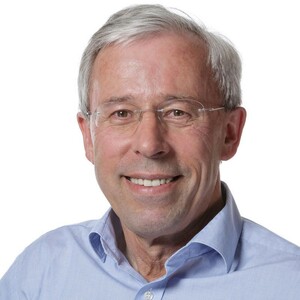
Hossein Valavi is a Lecturer and Assistant Director of Undergraduate Studies at Princeton University, contributing to advancements in computer architecture and hardware acceleration. His research focuses on in-memory computing, neural networks, and energy-efficient systems, with notable work in reconfigurable architectures and mixed-signal processing. He has received multiple teaching awards, including recognition for innovative pandemic-era Car Lab courses and collaborative work honored by the Edison Patent Award. His academic contributions span academic positions since 2018, emphasizing both research and pedagogical excellence. Key technical areas include scalable in-memory computing systems, analog neural network accelerators, and low-power matrix factorization algorithms. His work addresses critical challenges in data movement reduction and hardware-software co-design for modern computing systems. Awards: Teaching Excellence Awards (2021, 2023), Edison Patent Award (2023) Grants & Projects: Leading developments in in-memory computing accelerators and embedded microprocessor designs Research teams under his guidance have produced impactful IP in semiconductor layouts, CNN accelerators, and programmable architectures, aiming to bridge theoretical computer science with practical hardware implementations.
Peter Zoller is a Professor of theoretical physics at the University of Innsbruck and Scientific Director at IQOQI Innsbruck (Austrian Academy of Sciences). His research focuses on quantum optics, many-body quantum physics, and quantum information science, with a strong emphasis on quantum simulation of gauge theories and atomic systems. He has trained 34 PhD students and hosted 57 postdoctoral researchers, fostering collaborations between theory and experiment. His group, the Zoller Group, explores quantum phenomena such as lattice gauge theories, entanglement dynamics, and topological order using advanced quantum simulation techniques. Key research interests include atomic physics, quantum gases, and applications of quantum technologies to high-energy physics problems. Recent work addresses string breaking in quantum simulators, entanglement Hamiltonians, and scalable architectures for fermionic quantum processors. Collaborations span institutions like Harvard, MIT, and the University of Innsbruck’s experimental teams. His contributions bridge foundational physics with cutting-edge quantum technologies, aiming to solve problems inaccessible to classical methods.
Stephen Brown is a Professor at the University of Toronto within the Department of Electrical and Computer Engineering under the Faculty of Applied Science and Engineering. He earned his B.A.Sc and M.A.Sc in Electrical Engineering from the University of Toronto and New Brunswick, respectively, and a Ph.D. in Electrical Engineering from the University of Toronto (1992). His career spans over two decades in academia and industry collaboration. Education : B.A.Sc, University of New Brunswick M.A.Sc, University of Toronto Ph.D, University of Toronto Professor Brown’s research focuses on field-programmable gate arrays (FPGAs) , CAD algorithms , and computer architecture , with applications in machine learning and high-level synthesis . He is a principal investigator in the LegUp project , an open-source high-level synthesis framework that bridges software and hardware design. His work also extends to optimizing FPGA interconnect delays, physical synthesis, and logic block architectures. Key trends in his publications include advancements in high-level synthesis tools, FPGA architecture evaluation, and timing-driven design methodologies. His contributions often intersect with design automation , resource sharing , and embedded systems . Scientific Awards : NSERC 1992 Doctoral Prize Hart Professorship for Innovation in Teaching (2017) Multiple teaching excellence awards Best Paper Award at ICCAD 1990 Best Paper Award nomination at Canadian Conference on VLSI (1989) As Director of the FPGA University Program at Intel Corporation, he leads industry-academia initiatives. His teaching portfolio includes courses like ECE253 (Digital Logic) and ECE1733F (Switching Theory).
Paul R. Genssler is a Dr.-Ing. researcher at the Chair of AI Processor Design (AI-Pro) within the Technical University of Munich (TUM), actively advancing hardware solutions for artificial intelligence under Prof. Hussam Amrouch. His work bridges computer engineering and emerging technologies, focusing on overcoming fundamental limitations in conventional computing architectures through brain-inspired paradigms. His research spans critical domains in next-generation computing: Hyperdimensional Computing for robust pattern recognition and bioinformatics applications Neuromorphic and In-Memory Computing architectures for energy efficiency Reliability engineering for emerging memory technologies (FeFET, etc.) Quantum computing support systems including cryogenic embedded electronics Machine learning-driven transistor aging prediction and mitigation Analysis of his 15 most recent publications (2023-2024) reveals a dominant trend toward hyperdimensional computing as a unifying framework for addressing reliability challenges in emerging technologies. His work consistently integrates in-memory computing techniques to bypass von Neumann bottlenecks while targeting real-world applications like genome matching and unsupervised learning. A significant portion focuses on error-resilient implementations for unreliable nanoscale devices, demonstrating exceptional cross-stack expertise from transistor physics to algorithm design. As a core member of TUM's AI Processor Design group affiliated with the Munich Institute of Robotics and Machine Intelligence (MIRMI), Genssler collaborates extensively on projects spanning cryogenic quantum control systems, FPGA-based AI resilience, and monolithic 3D integration. The team operates at the intersection of semiconductor physics, computer architecture, and machine learning, with strong industry connections evident through publications at DATE, ASP-DAC, and ICCAD.
Irem Boybat is a Researcher in the In-Memory Computing Group at IBM Research - Zurich, Switzerland, focusing on advanced AI hardware solutions. She holds a Ph.D. in Electrical Engineering from EPFL (2020) and prior degrees from EPFL and Sabanci University. Ph.D., Electrical Engineering, EPFL (2020) M.Sc., Electrical Engineering, EPFL (2015) B.Sc., Electronics Engineering, Sabanci University (2013) Her research bridges in-memory computing and AI, targeting energy-efficient hardware for deep learning and neuromorphic systems. Recent work explores analog AI accelerators, heterogeneous architectures, and scalable models for edge computing. Publications highlight cross-disciplinary innovation in materials, circuits, and system design. She has received the IBM Pat Goldberg Memorial Best Paper Award and EPFL PhD Thesis Distinction. Her invited talks span prestigious venues including the European Phase-Change Symposium, IEEE CICC, and HiPEAC. Collaborations include EU H2020 projects like MANIC and WiPLASH.
Dr. Kenneth Zick is a Research Professor at the University of Southern California's Information Sciences Institute (USC ISI), where he serves as Research Director of Transformational Computing. His work focuses on game-changing computer architectures, hardware, and systems for solving critical government problems, with expertise in unconventional computing, quantum computing, and bio-inspired systems. Ph.D. in Computer Science & Engineering, University of Michigan-Ann Arbor M.S. in Electrical Engineering, University of Texas at Dallas Bachelor's in Electrical Engineering, University of Michigan-Ann Arbor Dr. Zick's research interests span unconventional computing , bio-inspired systems , Ising machines , quantum annealing , FPGA-based solutions , and neuromorphic computing . His group develops hardware-centric algorithm discovery and Cosm, a heuristic algorithm for sparse Ising optimization. Current projects include superconducting digital architectures, analog-digital hybrid computing, and human-AI co-design for breakthrough hardware. His team leverages advanced facilities such as USC ISI's MOSIS 2.0 and the California DREAMS hub in the DoD Microelectronics Commons, with expertise in high-speed I/O, FPGA prototyping, and radiation-hardened systems. He has received a NASA Fellowship for his Ph.D. work and mentored students like Aditi, who won the USC ECE Outstanding Academic Achievement Award.
Peng Li is a Professor in the Department of Electrical and Computer Engineering at the University of California, Santa Barbara. His research focuses on integrated circuits, brain-inspired computing, electronic design automation, and hardware machine learning systems. He holds Fellow status in the Institute of Electrical and Electronics Engineers (IEEE). His work emphasizes neuromorphic engineering, spiking neural networks, and the intersection of machine learning with analog circuit design. Education includes a PhD in Electrical and Computer Engineering from Carnegie Mellon University, an MS in Systems Engineering from Xi'an Jiaotang University, and a BS in Information Science and Engineering from the same institution. His research has been recognized with prestigious awards including the ICCAD Ten-Year Retrospective Most Influential Paper Award and multiple Design Automation Conference Best Paper Awards. Key research trends in his articles include advancements in spiking neural networks (SNNs), hardware accelerators for neuromorphic computing, Bayesian optimization for analog circuit design, and robustness in machine learning systems. He explores topics like adversarial robustness, energy-efficient architectures, and data-efficient prediction techniques. His work bridges theoretical machine learning models with practical hardware implementations, particularly in 3D integration and systolic array acceleration. Notable contributions include pioneering hybrid approaches combining formal verification with machine learning for analog circuits (HFMV framework), and innovations in neuromorphic processors such as the 3D Liquid State Machine architecture. His research also addresses challenges in semiconductor manufacturing, including wafer map pattern recognition and failure detection through semi-supervised learning and contrastive methods. Awards highlight his impactful contributions to both design automation and neural computing. His grants and collaborations likely span industry partnerships in semiconductor technology and neuromorphic computing. He leads a lab focused on next-generation hardware-software co-design for intelligent systems, emphasizing energy efficiency and scalability.
Dirk Koch is an Associate Professor in the Department of Computer Science at the University of Manchester. He specializes in reconfigurable computing, FPGA architecture, and hardware acceleration. His research addresses challenges in field-programmable gate arrays (FPGAs), high-level synthesis, and stream processing. He leads the Advanced Processor Technology group and contributes to the Digital Futures Institute for Data Science and AI. Education: Doctorate in Computer Engineering Affiliations: Centre for Digital Trust and Society, EPSRC Functional Oxide Reconfigurable Technologies Programme His work focuses on optimizing FPGA performance, reducing power consumption, and advancing reconfigurable hardware systems. Recent projects include bitstream manipulation frameworks, runtime stream processing pipelines, and FPGA fabric optimization techniques. He has collaborated extensively with industry partners like AMD-Xilinx. Dirk Koch has supervised 11 research projects, including work on clock region process variation analysis and FPGA virus scanning. He holds grants from EPSRC and has published 62 peer-reviewed works.
Giulia Semeghini is an Assistant Professor of Applied Physics at Harvard University's School of Engineering and Applied Sciences (SEAS) . Her research focuses on experimental investigations of highly-entangled phases of matter and quantum information processing using programmable atom arrays. The Semeghini Lab, part of the Harvard Quantum Initiative (HQI) and the Center for Ultracold Atoms (CUA), explores intersections between condensed matter physics, high-energy physics, and quantum chemistry. Key achievements include assembling an ultra-high vacuum chamber for atom arrays in 2024 and relocating to the Goel building (HQI's new home) in April 2024. The lab actively recruits students and researchers for open positions at all levels. Research themes span quantum simulation, topological qubits, entanglement engineering, and scalable quantum architectures. Publications emphasize quantum gate implementations, hybrid atom systems, and variational Monte Carlo enhancements. No scientific awards are explicitly listed, but contributions to quantum hardware and algorithms are notable. The lab collaborates widely, aiming to bridge theory and experiment in quantum technologies.
Professor Wasiu O Popoola is a Professor of Communications Engineering and Director of Electronics and Electrical Engineering at the School of Engineering, University of Edinburgh . With over 150 publications and a RAEng/Leverhulme Trust Research Fellowship (2022), his work focuses on optical wireless communication systems including VLC/LiFi, FSO, and underwater optical communications. BSc (First Class Hons), MSc (Distinction), PhD in optical communications (Northumbria University) Professional memberships: Fellow of Higher Education Academy (FHEA), Fellow of IET (FIET), Senior Member IEEE Research Interests span Indoor/Outdoor/Underwater Optical Wireless Communication , Modulation Techniques , and LiFi Applications . His 2025 articles explore underwater turbulence mitigation and hybrid RF-water communication systems . Earlier works include Best Poster Award at IEEE ICSAE 2016 and top-downloaded IEEE Xplore article (2008). Scientific Awards include: 2022 RAEng/Leverhulme Trust Research Fellowship 2016 IEEE ICSAE Best Poster Award 2009 'Xcel Best Engineering and Technology Student' (PhD) He contributes to editorial work as Associate Editor (IEEE Access) , Guest Editor (Optik Journal) , and peer reviewer for Physics World . Recent projects involve BOLD (Defence Science and Technology Laboratory) and TITAN Extension (University of Strathclyde) focusing on diffuse optical wireless systems and UAV swarm networks .
Roles & Affiliations: Prof. Piotr Dudek is a Professor of Circuits and Systems in the School of Electrical and Electronic Engineering at The University of Manchester. He has held visiting roles at Hong Kong University of Science and Technology, Gdansk University of Technology, and Sorbonne University. He is a Senior Member of the IEEE and chairs/co-chairs technical committees in circuits and systems. Education: Mgr inz (Technical University of Gdańsk, Poland), MSc and PhD (UMIST, UK). Research Interests: Focuses on VLSI design, vision sensors (SCAMP chip family), cellular processor arrays, neuromorphic engineering, and brain-inspired systems. Develops low-power, high-performance embedded vision systems for robotics, biomedical applications, and autonomous systems. Projects & Contributions: Leads projects like SCAMP vision chips, FORTE (memristor-based systems), and Agile robotic vision. Involved in EPSRC-funded initiatives and collaborates internationally. Active in reviewing for journals/conferences and holds editorial roles. Awards: Recipient of Best Paper/Demo awards at ISCAS, CNNA, IJCNN, and ICDSC. Holds the Royal Academy of Engineering/Leverhulme Trust Senior Research Fellowship. Lab & Teams: Directs the Microelectronics Design Lab, fostering interdisciplinary work between VLSI design, robotics, and neuroscience. Supervises 11 PhD students and collaborates with global researchers in bioelectronics and computational systems.
Prof. Tim Güneysu is a full Professor and Head of the Security Engineering department at the Faculty of Computer Science, Ruhr-Universität Bochum. He serves as Vice Dean for Strategy and Finances (since 2023) and previously as Speaker of the Horst-Görtz Institute for IT-Security (2020-2023). His academic journey includes roles as Associate Professor at the University of Bremen (2015-2017) and Assistant Professor at Ruhr-Universität Bochum (2011-2015). He also holds positions at the German Research Center for Artificial Intelligence (DFKI) and has conducted postdoctoral research at UMass Amherst. His research focuses on Security-by-Design principles, CAD for Security, and countermeasures against physical attacks. He emphasizes efficient cryptographic implementations and system-level hardware security. Key areas include post-quantum cryptography, side-channel resistant designs, and secure embedded systems. He has contributed over 200 publications in top venues, with recent work on FPGA-based cryptographic accelerators, secure hardware extensions (e.g., KeyVisor), and post-quantum algorithms for IoT. His research themes include agile signature acceleration, fault attack mitigation, and hardware-software co-design for security. Notable projects include CONVOLVE (edge-AI security) and QuantumRISC (quantum-safe systems). His work bridges theoretical cryptography with practical hardware implementations, emphasizing real-world security applications.
Pablo Parra Espada is an Associate Professor at the Department of Automática, University of Alcalá (Spain), affiliated with the Space Research Group (SRG-UAH). He holds a PhD from the University of Alcalá (2012) titled Integración de tecnologías de desarrollo y análisis basadas en componentes bajo un enfoque multi-plataforma , supervised by Dr. Sebastián Sánchez Prieto and Dr. Óscar Rodríguez Polo. His research focuses on space systems engineering , particularly in RISC-V processor design , embedded systems , and model-driven engineering . Key areas include hardware-software co-design for satellite systems, real-time computing, and fault-tolerant architectures. He has contributed to the Solar Orbiter mission through work on the Energetic Particle Detector (EPD) and its on-board software validation. His recent work emphasizes virtualization techniques for LEON processors, FPGA-based digital beamforming , and spaceborne phased array systems . He also explores model-driven approaches for automated configuration of ground support equipment. His interdisciplinary contributions bridge computer architecture with aerospace applications. Prof. Parra Espada has published extensively on topics such as hardware performance monitoring, memory management units for satellites, and system-level verification of space software. His work combines rigorous engineering methodologies with cutting-edge technologies to address challenges in space instrumentation and embedded systems.
Guido Masera is a Full Professor at the Department of Electronics and Telecommunications (DET) at the Polytechnic University of Turin, where he has been actively involved in teaching and research for over two decades. He serves as a Member of the Board of Directors, Member of the GEDI Observatory for Gender Equality, Diversity and Inclusion, and Member of the Permanent University Observatory for monitoring the academic supply chain. His research interests span across channel decoders, circuits for communications, cryptography, deep learning, digital integrated circuits, field programmable gate arrays (FPGA), and hardware design. His work focuses on VLSI architectures for image and video coding, digital architectures for error correcting codes, application specific approximate computing, VLSI architectures for machine learning, digital architectures for bio-inspired processing, digital architectures for post-quantum cryptography, bio-inspired electronics for robotics and biomedical applications, RISC-V extensions and hardware accelerators, and circuit architectures for efficient machine learning and artificial intelligence. His recent publications (2025) demonstrate a strong focus on RISC-V architecture, particularly in the context of cryptographic implementations, hardware security, and post-quantum cryptography. His research group VLSILAB is actively engaged in cutting-edge research in hardware security, efficient processor design, and specialized computing architectures. Among his notable recognitions are the Premio Francesco Carassa awarded by the Telecommunications and Information Technologies Group Association (gtti) in 2010, and his recognition as a Fellow of the Institute of Electrical and Electronics Engineers (IEEE) since 2007. He also serves as an Associate Editor for several prestigious journals including ELECTRONICS (2019-present), IEEE TRANSACTIONS ON CIRCUITS AND SYSTEMS (2015-2019), and IET CIRCUITS, DEVICES & SYSTEMS (2013-2016). Professor Masera has advised numerous PhD students working on advanced topics in VLSI design, post-quantum cryptography, hardware accelerators, and machine learning implementations. His current research projects include ISOLDE (2023-2026) and TRISTAN (2022-2025), both EU-funded projects focused on RISC-V technology and domain-specific ecosystems. He leads the VLSILAB research group at the Department of Electronics and Telecommunications, which focuses on cutting-edge research in VLSI architectures, hardware security, and specialized computing systems. The group collaborates with industry partners and participates in major European research initiatives.
Prof. Dr.-Ing. Marc Reichenbach serves as the Chair of Integrated Systems at the Institute for Applied Microelectronics and Data Technology at the University of Rostock. His office is located at Albert-Einstein-Straße 26, 18059 Rostock, Room 102 (1st floor), with contact information including telephone (0381) 498 7270 and email marc.reichenbach@uni-rostock.de. Professor Reichenbach's research focuses on the intersection of hardware design and artificial intelligence, with particular expertise in memory technologies and computing architectures. His work spans several key areas: Development of specialized computer architectures for deep learning applications Advanced VLSI design and CPU architecture Emerging memory technologies, particularly RRAM (Resistive Random-Access Memory) FPGA-based acceleration systems Hardware implementations for neural networks and AI applications Analysis of Professor Reichenbach's recent publications (2023-2025) reveals a strong focus on memory computing technologies, particularly RRAM-based systems. His work demonstrates expertise across multiple dimensions of computer architecture including ASIC design, FPGA acceleration, and novel memory systems. The publications show a clear trajectory toward implementing AI and machine learning capabilities directly in hardware, with applications ranging from edge computing to satellite systems. A significant portion of his recent work addresses the challenges of implementing neural networks using emerging memory technologies, focusing on efficiency, reliability, and performance optimization. Professor Reichenbach teaches several advanced courses including: Computer architectures for deep learning applications Project seminar Embedded Systems Advanced VLSI Design (Advanced CPU Design) His research group appears to be actively engaged in several cutting-edge projects related to hardware acceleration for AI applications, memory computing, and embedded systems design. The group collaborates on projects involving digital twins for hardware systems, real-time operating systems for heterogeneous architectures, and specialized computing systems for various applications from medical devices to drone technology.