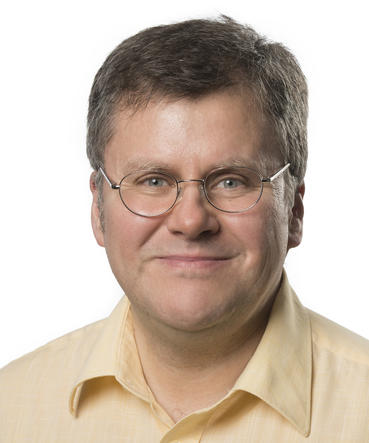
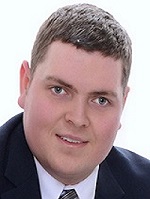
Professor Guy Williams is a leading academic at the University of Cambridge with a focus on imaging science and clinical neurosciences, affiliated with Downing College and the Wolfson Brain Imaging Centre . Holding a PhD in Physics from his initial Natural Sciences degree, he specializes in nuclear magnetic resonance (NMR) and MRI techniques for brain imaging. Education: BA, PhD in Physics His research centers on non-invasive imaging of brain structure and function, particularly in traumatic brain injury (TBI) and dementia. His work involves developing novel MRI pulse sequences and advanced data analysis algorithms, including AI-based diagnostic tools. He leads studies on white matter integrity post-trauma, longitudinal dementia assessment, and applications of MRI in disorders of consciousness and addiction. Recent publications highlight collaborations in traumatic brain injury outcomes, AI-guided dementia prediction, and neuroimaging of post-COVID cognitive deficits. His team's work on ultra-high field laminar fMRI and distortion correction methods has advanced clinical neuroscience applications. Key techniques include diffusion tensor imaging (DTI), 7 Tesla MRI, and positron emission tomography (PET/MR). His research spans from basic NMR physics to clinical translation, with a strong emphasis on multi-site studies and real-world diagnostic implementation.
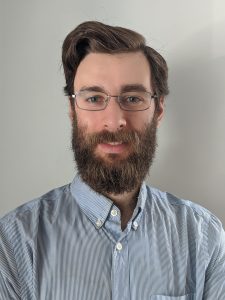
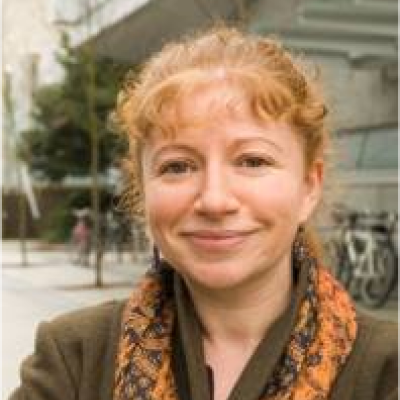
Daan Christiaens is a tenure track lecturer at KU Leuven's Faculty of Medicine and Faculty of Engineering Sciences. He is affiliated with the Department of Electrical Engineering (ESAT) and Department of Imaging & Pathology, serving as a member of the Medical Imaging Division and the KU Leuven Brain Institute (LBI). His academic responsibilities include membership in the Faculty Councils of Engineering Sciences and Medicine. His research focuses on: Inverse problems in medical imaging reconstruction Neuroimaging techniques for brain analysis Advanced quantitative MRI methodologies Diffusion-weighted imaging for microstructural assessment Dr. Christiaens' recent publications (2023-2025) demonstrate a consistent focus on diffusion MRI innovations, including novel reconstruction algorithms, neonatal brain development mapping, and clinical applications for neurodegenerative disorders. Key technical themes include motion correction, multi-shell modeling, and AI-enhanced image processing, while clinical applications span Alzheimer's disease, cerebral palsy, and autism research. He leads significant research projects including: MRI reconstruction with dynamic field monitoring (2024-2028) Compressed sensing for microstructure imaging (2022-2026) Neonatal diffusion MRI network connectivity analysis (2024-2028) As a core developer of the MRtrix3 software framework for medical image processing, he contributes to essential tools in neuroimaging research.
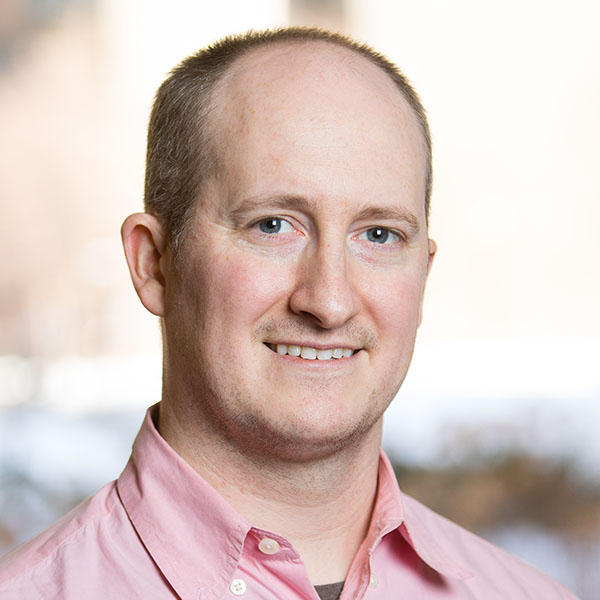
Joachim Weickert is a Professor of Mathematics and Computer Science at Saarland University where he heads the Mathematical Image Analysis Group since 2001. He received his diploma and Ph.D. in mathematics from the University of Kaiserslautern (1991, 1996), and a habilitation degree in computer science from the University of Mannheim (2001). Prior to his current position, he worked as a research assistant at the University of Kaiserslautern, as a post-doctoral researcher at the universities of Utrecht and Copenhagen, and as an assistant professor at the University of Mannheim. His research focuses on image processing, computer vision, and scientific computing, with special emphasis on techniques based on partial differential equations, variational principles, wavelets, morphological and nonlocal methods, as well as neuroexplicit approaches. He has developed mathematical models and efficient numerical algorithms for image restoration, enhancement, segmentation, compression, optic flow computation, stereo reconstruction, shape from shading, and signal processing methods for tensor fields. These ideas have been successfully applied in industry, biomedical image analysis, and other fields. Analysis of his recent publications reveals a strong trend toward combining traditional PDE-based methods with modern deep learning approaches, particularly in the areas of image inpainting and compression. His work increasingly explores the connections between numerical algorithms for partial differential equations and neural network architectures, demonstrating how mathematical foundations can inform cutting-edge AI techniques while maintaining strong theoretical guarantees. Gottfried Wilhelm Leibniz Prize (2010), considered the most important research award in Germany ERC Advanced Grant (2017) for "Inpainting-based Compression of Visual Data" Elected member of Academia Europaea - The Academy of Europe Jan Koenderink Prize for Fundamental Contributions in Computer Vision (2014) Multiple DAGM Prizes and Best Paper Awards throughout his career AAIA Fellow (2021) and Highly Ranked Scholar (2024) distinctions Professor Weickert has supervised over 250 bachelor's and master's theses and initiated the Master Programme in Visual Computing at Saarland University, the first of its kind in Germany taught in English. He has established numerous interdisciplinary collaborations with colleagues from medicine, bioinformatics, pharmacy, physics, mechatronics, and mechanical engineering. As Principal Investigator for Visual Computing within the Multimodal Computing and Interaction Cluster of Excellence, and former dean of the Faculty of Mathematics and Computer Science (2008-2010), he has played a significant leadership role in advancing visual computing research and education. He heads the Mathematical Image Analysis Group, which has been at the forefront of developing mathematical methods for image analysis. The group maintains strong connections with both theoretical mathematics and practical applications, bridging the gap between fundamental research and real-world implementation across various domains including medical imaging, industrial inspection, and multimedia processing.
Brad Sutton is a Professor of Bioengineering at the University of Illinois Urbana-Champaign and Technical Director of the Biomedical Imaging Center at Beckman Institute. He holds affiliate roles in the Neuroscience Program, Department of Electrical and Computer Engineering, and is a Health Innovation Professor at the Carle Illinois College of Medicine. His roles also include fellowship positions with the National Center for Supercomputing Applications and the CZ Biohub Chicago. Education: Ph.D. in Biomedical Engineering from the University of Michigan (2003). Research Interests: Focus on advanced MRI techniques for structural and functional brain imaging, including diffusion-weighted imaging, dynamic imaging, and neuromuscular coupling studies. His work emphasizes multi-scale bioimaging to understand brain function across interventions, aging, and disease. Publications: Over 180 peer-reviewed articles in 2025-2024 highlight innovations in MRI technology and applications in neuroscience, including breakthroughs in laminar fMRI specificity, myelin development modeling, and Alzheimer’s biomarker studies. Recent work extends to clinical applications like aortic imaging automation and mixed reality training tools. Awards: AIMBE and ISMRM Fellowships (2017/2024), Abel Bliss Scholar (2014-), and over 9 patents in imaging techniques. Labs & Teams: Leads the Magnetic Resonance Functional Imaging Lab. Collaborates with interdisciplinary teams across engineering, medicine, and computational science to advance imaging technologies and their clinical translation.
Gabriel Koch Ocker is an Assistant Professor in the Department of Mathematics & Statistics at Boston University, specializing in theoretical and computational neuroscience. His research investigates how neural activity encodes sensory information, shapes behavior, and evolves through learning mechanisms. Research Focus: Structure-function relationships in neuronal networks Methodology: Dynamical systems, stochastic processes, statistical physics Collaborations: Experimental validation of computational models Recent publications analyze integrate-and-fire networks, dendritic calcium spiking, inhibition-stabilized circuits, and metastability in stochastic neuronal systems. His group combines mathematical rigor with biological relevance to explore neural coding, plasticity, and functional hierarchy in cortical structures. Key contributions include tensor decomposition approaches to correlation analysis, reconciling recording technique discrepancies, and developing field-theoretic frameworks for compartmental modeling. Work spans from molecular-level channel dynamics (Kv7 channels) to brain-area-level functional organization.
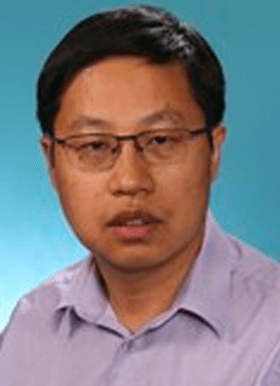
Xiaobo Li is a Professor in the Department of Bio-Medical Engineering at New Jersey Institute of Technology. Holding a Ph.D. in Computer Aided Geometric Design from the University of Birmingham and a B.S. in Automation from Nanjing University of Aeronautics, their research bridges computational methods with neuroimaging and psychiatric disorder analysis. Ph.D., University of Birmingham (Computer Aided Geometric Design, 2004) B.S., Nanjing University of Aeronautics (Automation, 1999) Dr. Li’s work focuses on applying machine learning and graph theory to understand brain network abnormalities in conditions like ADHD , schizophrenia , and traumatic brain injury . Their studies analyze structural-functional connectivity , reward processing , and gut-brain axis interactions using fMRI , fNIRS , and diffusion tensor imaging . Recent publications highlight their development of tools like the GAT-FD MATLAB toolbox for brain network analysis and their exploration of multimodal MRI in schizophrenia diagnosis. They also investigate the neurobiological effects of photobiomodulation and vision therapy interventions.
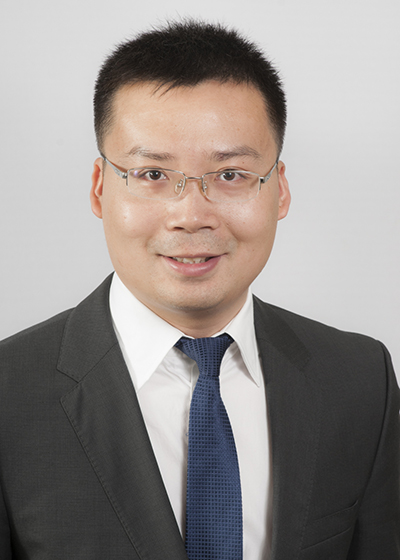
Lei Liu, PhD, is a Professor of Biostatistics, Medicine, and Statistics and Data Science at Washington University in St. Louis. He holds positions in the Roy and Diana Vagelos Division of Biology & Biomedical Sciences (DBBS), the Institute for Informatics, Data Science and Biostatistics (I2DB), and the Center for Biostatistics and Data Science (CBDS). His research focuses on biostatistical and data science methods, including survival analysis, longitudinal data modeling, and machine learning applications in healthcare. He collaborates with clinicians across disciplines like cardiology, ophthalmology, and addiction medicine. Dr. Liu’s work emphasizes high-dimensional omics data analysis, medical cost modeling, and joint multi-outcome models. He is an Associate Editor of Biometrics and a former member of the NIH Biostatistical Methods and Research Design Study Section. He mentors underrepresented minority researchers through the NHLBI PRIDE program.
Robert S. Laramee is a Professor at the University of Nottingham (previously at Swansea University), specializing in visualization research. His work focuses on data visualization, scientific visualization, and computational fluid dynamics. He has authored over 170 publications in top journals like IEEE Transactions on Visualization and Computer Graphics, Computer Graphics Forum, and IEEE Computer Graphics and Applications. Research Interests: His research spans information visualization, flow visualization, visual literacy, and educational aspects of visualization. He emphasizes practical applications in fields like healthcare, digital humanities, and computational science. Recent Trends: Recent work includes studies on treemap literacy, educational frameworks for visualization, and interactive systems for clinical data. He has also contributed to visualization resources and surveys, aiming to bridge academic and industry needs. Grants & Collaborations: Collaborations include projects on visualization for smart cities, protein-lipid interactions, and quantum chromodynamics data analysis. No specific grant details are provided in the text. Labs & Teams: Affiliated with visualization research groups at Nottingham and Swansea, though specific lab names are not mentioned.
Anna Vilanova is a Full Professor in Visual Analytics at the Department of Mathematics and Computer Science, Eindhoven University of Technology (TU/e), and is associated with the Electrical Engineering department's Signal Processing Systems. Previously, she served as Associate Professor at TU Delft (2013-2019) and Assistant Professor at TU/e (2002-2013). Her research focuses on Visual Analytics for high-dimensional data , explainable AI , and biomedical applications including Diffusion Weighted Imaging, 4D Flow, and Pangenomics. Education: Doctorate in Computer Graphics & Visualization (2001) Master in Computer Science (1997), Universitat Politècnica de Catalunya Research Highlights: Vilanova leads work on Visual Analytics systems for biomedical data, with recent publications in Diffusion MRI modeling , Tractography visualization , Explainable AI frameworks , and Pangenomic variant analysis . Her work bridges dimensionality reduction , uncertainty visualization , and medical imaging applications. Scientific Contributions: NWO-Veni grant (2005): "Visualization of global tensor information for diffusion tensor imaging" NWO-Aspasia grant (2013) Best Poster Award EuroVis (2025) Best Demo/Poster Awards (2022) Leadership & Service: Vilanova serves on the IEEE VIS Steering Committee , was EUROGRAPHICS President (2019-2022), and contributes to conferences like IEEE Visualization and EG-EuroVis . She co-founded the EAISI Health research initiative at TU/e.
Dr. Zichun Zhong is an Associate Professor and Graduate Program Director in the Department of Computer Science at Wayne State University's James and Patricia Anderson College of Engineering. He earned his Ph.D. from the University of Texas at Dallas and completed postdoctoral training at UT Southwestern Medical Center. His research focuses on geometric modeling, computer graphics, medical image processing, and visualization technologies. Research encompasses: Geometric modeling of surfaces and volumes 3D computer vision and reconstruction Medical image segmentation and visualization Virtual/augmented reality applications GPU-accelerated algorithms Awards and honors include NSF CAREER and CRII awards, Faculty Research Excellence Award, and Excellence in Teaching recognition. He serves as Technical Paper Chair for Shape Modeling International conferences and associate editor for multiple journals. Current doctoral advisees: Shiman Zhou, Hongbo Li, Haikuan Zhu, and Sikai Zhong. Notable alumni include researchers at Samsung NEON, Skoltech, and General Motors.
Dr. Michael Gallaugher is an Assistant Professor of Statistical Science at Baylor University. He holds a Ph.D., M.S., and B.S. in Statistics from McMaster University. His research focuses on clustering and classification methodologies, particularly in matrix/tensor variate data, mixed-type data, clickstream analysis, and outlier detection. He has been recognized with prestigious awards including the Vanier Canada Graduate Scholarship and the Banting Postdoctoral Fellowship. Education: Ph.D., Statistics, McMaster University (2020) M.S., Statistics, McMaster University (2017) B.S., Statistics, McMaster University (2015) Research Interests: Dr. Gallaugher's work emphasizes advanced clustering techniques for complex data structures, including high-dimensional datasets, clickstream behavior analysis, and skewed distribution modeling. His contributions span statistical methodology development and applications in fields like bioinformatics and sports science. His recent work explores hidden Markov models for time series and robust co-clustering algorithms. Publications Trends: His publications reflect a strong focus on matrix-variate distributions, skewed data modeling, and algorithmic innovation in clustering. Recent work (2022-2025) highlights advancements in contaminated normal mixtures, co-clustering for high-dimensional data, and spatial regression models. Awards: Vanier Canada Graduate Scholarship Banting Postdoctoral Fellowship Advising & Grants: While no advisees are listed, his research has been supported by grants from the Natural Sciences and Engineering Research Council of Canada. He contributes to statistical consulting services at Baylor and collaborates internationally on methodological projects. Labs & Teams: He is affiliated with Baylor's Department of Statistical Science and collaborates with research groups focused on machine learning and statistical computing.
Alla Sheffer is a Professor and Associate Head of Faculty Affairs in the Department of Computer Science at the University of British Columbia, Faculty of Science. She is affiliated with multiple research centers including CAIDA (Centre for Artificial Intelligence Decision-making and Action), the Institute of Applied Mathematics, and ICICS (Institute for Computing, Information and Cognitive Systems). B.Sc., Hebrew University, Jerusalem (1991) M.Sc., Hebrew University, Jerusalem (1995) Ph.D., Hebrew University, Jerusalem (1999) Postdoctoral Research Associate, University of Illinois, Urbana-Champaign (1999-2001) Assistant Professor, Technion, Israel (2001-2003) Assistant Professor, University of British Columbia (2003-2008) Associate Professor, University of British Columbia (2008-present) Professor Sheffer's research focuses on geometry processing, addressing algorithmic challenges in digital shape modeling and manipulation. Her work primarily deals with discrete geometry representations, specifically meshes (polygonal model representations), with applications in computer graphics and computer-aided engineering. She utilizes tools from computational and differential geometry, discrete mathematics, and graph theory to generate, manipulate, and edit discrete geometric models. Her research spans virtual and augmented reality, visual computing, and 3D modeling, with significant contributions to sketch-based modeling, mesh processing, and cloth simulation. The 15 most recent publications reveal a consistent research trajectory in geometry processing, with recent work focusing on vector sketch processing, VR drawing tools, and advanced mesh manipulation techniques. Her work demonstrates a strong connection between human perception and computational methods, particularly in the interpretation of freehand sketches and the generation of perceptually-accurate geometric representations. The recurring themes across her publications include flowlines, curve networks, mesh parameterization, and the application of perceptual studies to improve algorithmic outputs. Eurographics Fellow ACM Fellow IEEE Fellow Royal Society of Canada Fellow SIGGRAPH Academy Member UBC Killam Research Prize NSERC Discovery Accelerator Supplement IBM Faculty Award Professor Sheffer has supervised numerous doctoral and master's students, with recent theses focusing on geometric mesh processing, vector sketch interpretation, VR drawing tools, and garment modeling. Her research group maintains strong connections with industry through various partnerships and has received substantial grant funding to support their innovative work in geometry processing and computer graphics. She teaches courses in computer graphics, geometric modeling, and video game programming, contributing significantly to both undergraduate and graduate education in computer science.
Eric F. Lock is an Associate Professor in the Division of Biostatistics & Health Data Science at the University of Minnesota's School of Public Health. He is also a Member of the Masonic Cancer Center (MCC) and has been at the University of Minnesota since 2014, after completing his PhD in Statistics from the University of North Carolina in 2012 and a postdoctoral fellowship in Statistical Genomics at Duke University in 2014. Lock's research focuses on developing methods for the analysis of multi-faceted high-dimensional data, particularly in "omics" fields such as genomics, metabolomics, and proteomics. His work emphasizes the integrated analysis of data from multiple sources (e.g., gene expression, metabolomics, imaging) or measured in multiple dimensions (e.g., multiple tissue types or body regions). He also specializes in exploratory factorization and clustering methods, and Bayesian nonparametric inference. His recent publications demonstrate significant contributions to tensor data imputation (BAMITA), matrix decomposition (EV-BIDIFAC), and methods for handling complex genomic data. His work bridges statistical theory with practical applications in molecular biology, addressing challenges in data integration across multiple biological measurement platforms. Delta Omega, Honorary Society in Public Health (2019) As an active researcher and educator, Lock serves on dissertation committees, including for Mykhaylo M. Malakhov who recently defended his PhD at the University of Minnesota School of Public Health. He is involved in organizing and participating in major conferences such as STATGEN 2025, demonstrating his leadership in the biostatistics community.
Mojtaba Zarei is a researcher at the Department of Clinical Research, Faculty of Health Sciences, University of Southern Denmark, with additional affiliations at Odense University Hospital (OUH) and Karolinska Institutet (KI). His primary research unit is the Neurology Research Unit in Odense, focusing on advanced neuroimaging techniques and their applications in neurological and sleep disorders. Dr. Zarei's research spans multiple domains within neuroscience, with particular expertise in Positron Emission Tomography (PET), Diffusion Tensor Imaging (DTI), and cognitive function assessment. His work frequently addresses Alzheimer's Disease, Parkinson's Disease, and insomnia disorders, utilizing both clinical and computational approaches. His fingerprint analysis shows strong activity in neuroscience (100% for PET), diffusion tensor imaging (66%), cognitive function (45%), and Alzheimer's Disease (40%). His recent publications reveal a clear trajectory toward integrating multimodal imaging techniques with machine learning approaches for improved diagnosis and understanding of neurological conditions. The work on OPETIA (Odense-Oxford PET Image Analysis) demonstrates his contribution to developing standardized tools for neuroimaging analysis. His research increasingly bridges computational methods with clinical neuroscience, as evidenced by his work on image stitching algorithms and machine learning applications for insomnia classification. Dr. Zarei actively collaborates with researchers across multiple institutions, with notable external collaborations visible on the international network map. His work has been mentioned by peer review sites, picked up by news outlets, and shared across social media platforms, indicating growing impact in his field. Within his research unit of Neurology in Odense, Dr. Zarei appears to be part of a multidisciplinary team working at the intersection of clinical neurology, advanced imaging, and computational analysis, contributing to both methodological development and clinical applications of neuroimaging techniques.
Stefano Markidis is a leading researcher in High-Performance Computing (HPC) and quantum computing. His work focuses on developing advanced simulation frameworks, such as the Neko framework for computational fluid dynamics, and optimizing algorithms for heterogeneous architectures. He collaborates extensively with institutions and researchers globally, contributing to fields like plasma physics, quantum systems, and machine learning applications. His research emphasizes scalability, performance optimization, and the integration of cutting-edge technologies like GPU acceleration and quantum computing. Key research interests include extreme-scale simulations, quantum algorithms, and in-situ data analysis techniques. He has published over 200 articles, with recent work addressing challenges in NISQ systems, tensor network simulations, and CUDA-based performance enhancements. His contributions span theoretical and applied domains, bridging computational methods with real-world applications in fusion energy, materials science, and space exploration. Notable collaborations include projects with Philipp Schlatter, Niclas Jansson, and the NISQ application development community. Markidis also explores hybrid frameworks combining classical and quantum computing, aiming to leverage emerging hardware for scientific breakthroughs.