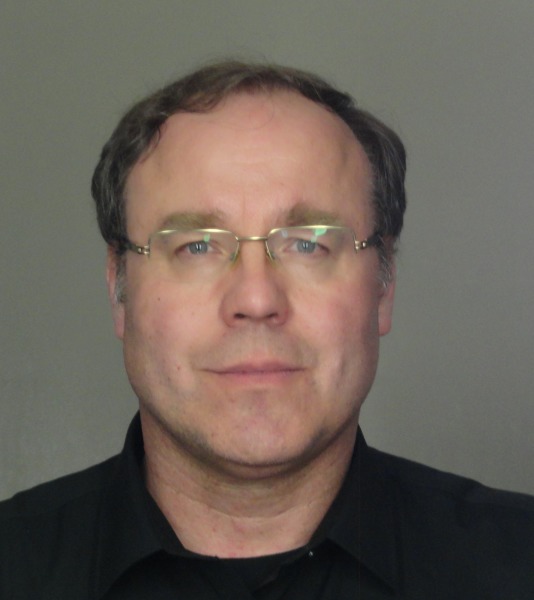
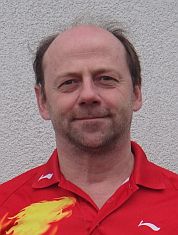
Marcel Padilla is Lecturer at ETH Zurich's Department of Computer Science, researching geometric algorithms for physical simulation and visualization. As Feodor-Lynen Fellow, he develops computational methods for fluid dynamics and astrophysical phenomena. Research integrates discrete exterior calculus with computer graphics to model complex systems like solar coronae and vortex dynamics. Recent publications present novel frameworks for rigid body motion estimation and magnetic filament simulation. Teaches geometry processing and mathematical visualization.
Xiao Wu is a researcher affiliated with multiple academic institutions, including Southwest Jiaotong University (School of Information Science and Technology), University of Michigan (Department of Electrical Engineering and Computer Science), and Chinese Academy of Sciences (Institute of Computing Technology). His work spans diverse areas such as machine learning, computer vision, remote sensing, and medical image analysis. Research interests include transformer architectures , deep learning for time series and image processing , multi-agent control systems , and industrial optimization . Recent publications focus on novel neural network designs for applications in drilling process optimization, brain-computer interfaces, and multispectral/hyperspectral image fusion. His work integrates advanced algorithms like tensor decomposition , multiscale temporal convolution , and adaptive recalibration modules to address challenges in engineering and biomedical domains. Collaborations involve institutions like Harvard University, Jiangnan University, and Hong Kong Polytechnic University.
Rui Ni is an Associate Professor in the Human Factors Psychology Program within the Fairmount College of Liberal Arts and Sciences. They specialize in visual perception, cognitive psychology, and human factors, with a focus on aging populations and driving safety. Their research explores perceptual learning, attention, and the neural mechanisms underlying cognitive decline. Education includes a B.S. from Beijing Normal University (1996) and a Ph.D. from the Chinese Academy of Sciences (2001). Their lab, the Visual Perception and Cognition Lab, investigates topics such as depth perception, hazard detection in driving environments, and the effects of lifestyle interventions on aging cognition. Key research trends include studies on divided attention’s impact on visual tasks, neuroplasticity in older adults, and the design of safer driving environments. Their work bridges cognitive science, human factors, and clinical applications in gerontology. No scientific awards are explicitly listed, but their contributions to aging and visual perception research are notable. Advising and grants information is not provided in available texts, but their lab’s focus suggests involvement in interdisciplinary collaborations. The Visual Perception and Cognition Lab actively explores applications of perceptual learning and cognitive assessment tools in real-world scenarios.
Tomas Masak is an Assistant Professor at the Department of Statistics and Mathematics, Vienna University of Economics and Business (WU). He holds a PhD in Mathematics from EPFL Lausanne (2018–2022) and an MSc in Mathematical Statistics from Charles University. His academic roles include Bernoulli Instructor at EPFL (2022–2024) and Research and Teaching Assistant at Technical University of Munich (2017–2018). Education Mathematics PhD, EPFL Lausanne (2018–2022) Mathematical Statistics MSc, Charles University (completed 2017) His research focuses on functional data analysis, covariance estimation, and statistical computing. Recent work includes the Functional Graphical Lasso and methods for sparsely observed random surfaces. Publications span journals like the Annals of Statistics , Journal of the American Statistical Association , and Biometrika , emphasizing open-access venues. Keywords across his work include functional analysis, covariance modeling, and high-dimensional statistics. He actively participates in scientific lectures and peer review, serving as a reviewer for the Annals of Statistics and Journal of Machine Learning Research in 2024. His collaborations span Europe and focus on data science applications.
Prof. Dr. Ullrich Köthe is an Associate Professor and group leader in the Visual Learning Lab Heidelberg at the University of Heidelberg . He focuses on Explainable Machine Learning , leveraging Invertible Neural Networks to enhance transparency and utility in image analysis and medical applications . He also maintains the widely used VIGRA image analysis library. Education: PhD in Informatics, University of Hamburg, 2000 Habilitation in Informatics, University of Hamburg, 2008 His research interests center around machine learning , image analysis , and scientific computing , particularly the development of robust algorithms for medical imaging , computer vision , and life sciences . His work on invertible neural networks and parameter-free segmentation has led to significant advancements in the field. Recent publications highlight his contributions to Bayesian inference , neural network interpretability , and stochastic modeling , with applications ranging from disease outbreak dynamics to connectomics . Key trends include generative models , parameter-free segmentation , and likelihood-free inference . Scientific Awards: DAGM 2003 Main Prize DAGM Best Paper Award 2008 He has supervised numerous Master and Bachelor theses in machine learning and image analysis , with teaching roles in Advanced Machine Learning and Explainable AI . His collaborative research grants include funding from HARMAN International (2024). He leads the Explainable Machine Learning subgroup and has contributed to open-source software projects like ilastik and VIGRA , which are critical tools in bioimage analysis .
Dr. Andrew Wynn is an Associate Professor in the Department of Aeronautics at Imperial College London, Faculty of Engineering. His research focuses on developing computational optimization methods to improve fluid mechanical systems, including active flow control, data-driven modelling, aeroservoelasticity, and semi-algebraic optimization techniques. He leads a research group addressing challenges in fluid-structure interactions, turbulence, and control systems. Wynn's affiliations include the Flow Control Research Group and the Aeroelastics Group. His work intersects interdisciplinary fields such as mechanical engineering, applied mathematics, and aerospace engineering. Key research topics include bluff body drag reduction, scaling laws for fluid flows, and estimator design for high-dimensional systems. Publications highlight contributions to fluid mechanics, optimization algorithms, and control theory. His group employs methods like semidefinite programming and dynamic mode decomposition to analyze and control complex flows. Ongoing projects involve wind farm optimization, global stability of viscoelastic fluids, and Bayesian optimization for experimental fluid dynamics. Education: Not explicitly stated in the provided text. Grants & Awards: Affiliated with Imperial College Research Fellowships (ICRF) and President's PhD Scholarships programs. Labs/Teams: Leads the Wynn Research Group, collaborating with the Flow Control and Aeroelastics Groups.
Dr. Michelle Salmon is a Researcher at the Australian National University (ANU), affiliated with the Research School of Earth Sciences. She specializes in observational geophysics, focusing on seismological and electromagnetic imaging techniques. With a background in civil engineering, she maintains a strong interest in seismic hazard assessment and infrastructure resilience. She leads the Australian Seismometers in Schools network, which combines education, outreach, and research while providing real-time seismic monitoring capabilities. Dr. Salmon holds a PhD in Geophysics from Victoria University of Wellington and a Bachelor of Engineering (Civil) from the University of Canterbury. Her research explores crustal and upper mantle structures using advanced tomographic methods, contributing to understanding continental dynamics and tectonic evolution in Australia and New Zealand. Her recent work emphasizes Australian seismic network development, including the AusArray and SWAN projects, to refine lithospheric velocity models and monitor seismic activity. She has published extensively on topics such as fault plane identification, mantle dynamics, and the application of seismic data to address environmental and geological challenges. Key achievements include advancing FAIR data principles in seismic stewardship and leveraging broadband seismometers for urban noise studies. Her outreach initiatives bridge academia and public engagement, fostering interest in geoscience among students and communities.
Selene Schintu is a Researcher (RTD-A) at the Interdepartmental Center for Mind/Brain Sciences (CIMEC) , University of Trento, Italy. She holds a Ph.D. in Cognitive Neuroscience (2014, Lyon) and has held academic roles including Part-time Faculty at George Washington University (2019–2022) and postdoctoral positions at NIH and CIMEC. Her research focuses on visuospatial attention , brain asymmetry , and neurorehabilitation , employing techniques such as TMS, EEG, and fMRI. Ph.D. in Cognitive Neuroscience (2011–2014), Lyon Neuroscience Research Center, France MS in Science of Mind (2006–2008), University of Turin BS in Neuropsychological Sciences and Techniques (2003–2006), University of Turin Her work explores how interhemispheric balance influences cognitive processes, particularly through prism adaptation and neuromodulation . Recent studies (2020–2022) examine functional connectivity changes via TMS and behavioral outcomes in attentional networks. She has secured significant grants, including a €102,000 PRIN grant as Local PI (2023–2025) and a $250,000 NRSA award (2018–2020). Her publications and conferences (2014–2022) highlight the role of parietal cortex in spatial cognition and learning. She has mentored numerous graduate and master’s students at institutions including NIH, George Washington University, and University of Trento. Outstanding Poster Awards (2017–2021, NIH) SIPF Award for Best Scientific Contribution (2012) Travel Awards (2016, 2009) Schintu serves on editorial boards (Frontiers in Human Neuroscience, Frontiers in Psychology) and scientific committees (University of Messina, University of Lyon). Her outreach includes promoting cognitive science to high school students and public workshops in Trento, Italy.
Dr. Yue Zhang is an Associate Professor in the School of Electrical Engineering and Computer Science at Oregon State University. She holds appointments in both academic research and teaching roles, with a focus on computer graphics and data visualization. Her work bridges theoretical mathematics and practical applications in material science and ecological modeling. Ph.D. in Applied Mathematics, North Carolina State University B.S. in Mathematics and Physics, University of Tennessee at Knoxville Research interests span scientific visualization , tensor field analysis , and topology-driven modeling of physical and biological systems. She has pioneered techniques for hypergraph simplification, non-Euclidean geometry visualization, and coupled acoustic-structural simulations. Recent publications demonstrate trends in hypergraph visualization (2024), 3D tensor topology (2024-2022), and environmental stressor modeling (2022). Collaborative works with Eugene Zhang and Peter Oliver dominate her publication record. Students under her advisement include: PhD candidates: Shih-Hsuan Kevin Hung MS/MEng students: Kyle Hiebel, Josiah Blaisdell, Avery Stauber Co-advised projects: Peter Oliver, Xiaofei Gao
Bernhard Burgeth is an Associate Professor of Mathematics at Saarland University since 2009. He joined the Department of Mathematics in 2002 and has held positions at the University of Erlangen-Nürnberg, McGill University, the Karlsruhe Institute of Technology (KIT), and the Technical University Eindhoven. His research spans mathematical image processing, tensor field analysis, and numerical methods for PDEs. Education : BSc, MSc (Diplom), and PhD in Mathematics from the University of Erlangen-Nürnberg; Habilitation at Saarland University. Research Interests : Focus on model-theoretic aspects of image processing, visualization of multivalued images (e.g., tensor fields), mathematical morphology, matrix analysis, and numerical simulations for hydrogen combustion. His work bridges theoretical mathematics with computational applications. Grants : Includes a Ph.D. grant from the Bavarian State Government (1990-1992), a DFG research grant at McGill University (1997/98), and a research grant from the Saarland Ministry of Economy and Science (2012/13) for the TensorVis project. Scientific Awards : Recipient of the Landespreis Hochschullehre (2010) and the Department Teaching Award (WiSe 2016/17). Teaching Responsibilities : Courses on mathematical morphology, image processing, probabilistic methods, integral equations, calculus, linear algebra, geometry, and probability/statistics. Recent lectures include Lineare Algebra: Theorie und Anwendungen (4+2), Geometrie(n) (4+2), and Wahrscheinlichkeit und Statistik (4+2).
Dr. Mukesh Prasad is an Associate Professor at the School of Computer Science , University of Technology Sydney (UTS). With expertise in Machine Learning , Artificial Intelligence , and Computer Vision , his research addresses applications in healthcare, biomedical science, and smart infrastructure. He holds a Ph.D. in Computer Science from National Chiao Tung University, Taiwan, and an M.S. in Computer and Systems Sciences from Jawaharlal Nehru University, India. Key research areas: Machine Learning, AI, Brain-Computer Interfaces, IoT, and Evolutionary Computation Industry experience: Principal Engineer at TSMC (2016-2017), Postdoctoral Researcher at National Chiao Tung University Dr. Prasad has secured competitive grants for AI applications in disaster response, conversational agents, and medical diagnostics. His work has been published in high-impact venues like IEEE , ACM Transactions , and Springer Nature , with over 200 peer-reviewed papers. He serves on editorial boards for journals including Frontiers in Neurorobotics and ACM Computing Surveys . Scientific Awards: Vice Chancellor Teaching and Learning Citation Award (2019) Alumni Fellowship for Ph.D. (2014) Golden Bamboo NCTU Fellowship (2010) Professional Members: IEEE (2011), ACM (2019)
Dieter Baurecht is an Associate Professor at the Institute of Physical Chemistry , University of Vienna. His research focuses on Advanced FTIR Spectroscopy , with expertise in Time-Resolved FTIR , Modulation Spectroscopy , and Raman Microscopy . He investigates thin layers, multilayer assemblies, and biological interfaces using specialized Nanostructure Research Equipment . Academic Roles : Associate Professor (since 2005), Deputy Head of Nanostructure Research, IT Officer at Physical Chemistry Institute Teaching : Courses in Physical Chemistry , Quantum Theory , Mathematics for Chemists , and Spectroscopic Lab Work Research Focus Dr. Baurecht’s work bridges Spectroscopy , Biophysics , and Biosensor Development . He leads projects like Mathematical Models for BioFETs (FWF P20871-N13) and ASEA Uninet (2009-2023). His methods include: Quantitative FTIR-ATR for surface layers Raman microscopy for polymer and bacterial analysis Step-Scan and Rapid-Scan FTIR instrumentation Collaborations His research spans institutions such as: University of Vienna Nano Research Austrian Institute of Technology BOKU Vienna (Biologically Inspired Materials) University of Vienna Drug Delivery Platform International partners in Thailand (Ubon Ratchathani, Chiang Mai) Instrumentation BRUKER IFS-66 FTIR with Step-Scan BRUKER Tensor-37 FTIR Shared equipment at Vienna Nano Research Center