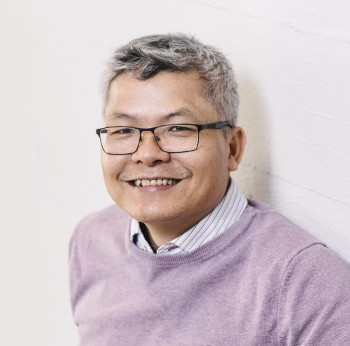
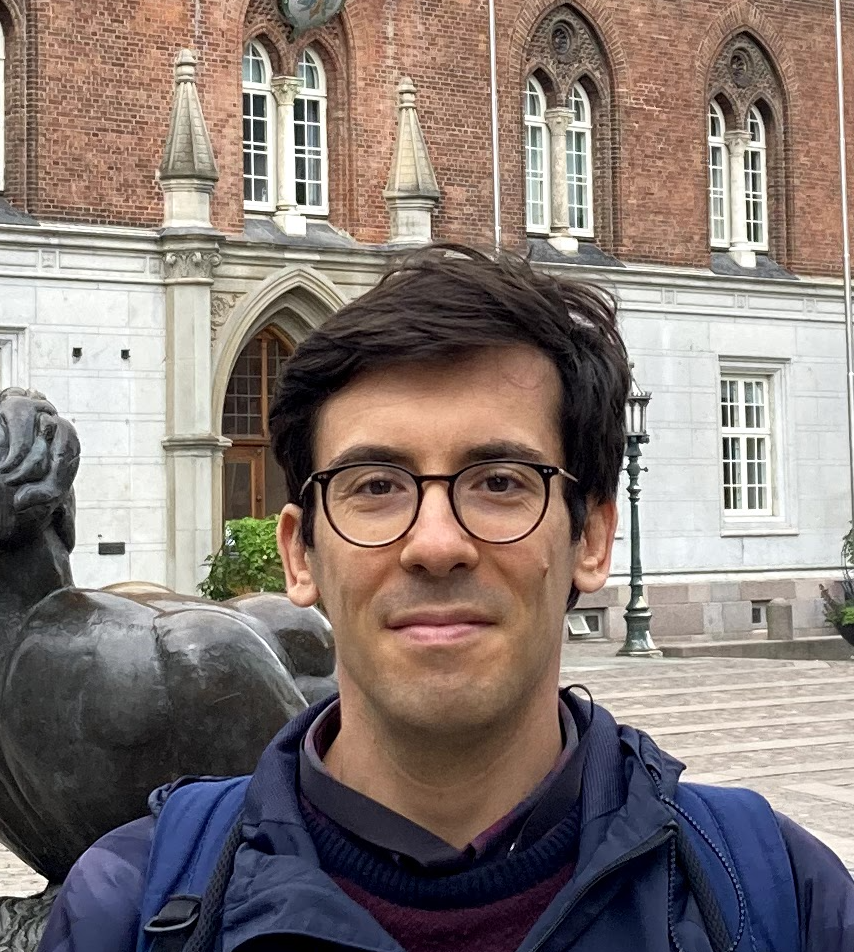
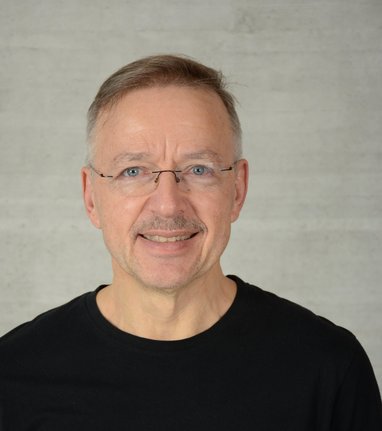
Dominik Fuchsgruber is a PhD Student at the Technical University of Munich (TUM) , affiliated with the TUM School of Computation, Information and Technology and the Department of Computer Science . His research focuses on uncertainty estimation in machine learning models and spatio-temporal deep learning applications. Educational background: M.Sc. and B.Sc. in Informatics from TUM, with an exchange semester at ETH Zürich Research experience: PhD work at TUM, internships at University of Alberta and Fraunhofer ESK Research Highlights : Developed energy-based uncertainty estimation frameworks for graph neural networks Created orientation-equivariant graph neural networks for edge signal analysis Contributions to efficient inference methods in large-scale machine learning Laboratory Affiliation : Part of the Data Analytics and Machine Learning group led by Prof. Dr. Stephan Günnemann at TUM.
Xiaoyan Li serves as a Senior Lecturer in the Department of Computer Science at Princeton University, where she focuses on teaching and mentoring undergraduate students through junior independent work supervision each semester. Her academic credentials include: Ph.D. in Computer Science, University of Massachusetts Amherst (2006) M.S. in Computer Science, University of Massachusetts Amherst (2006) M.S. in Management Information Systems, Tsinghua University (1996) B.S. in Management Information Systems, Tsinghua University (1992) Dr. Li's research centers on Question Answering systems and Information Retrieval , with pioneering work in novelty detection using sentence-level patterns and cross-lingual applications. Her expertise spans Machine Learning techniques for data mining, relevance modeling, and query expansion, particularly in multilingual contexts. She has made significant contributions to syntactic feature analysis in Chinese question answering and time-based language models for dynamic information needs. Her publication history (2001-2008) reveals a concentrated focus on novelty detection and robust relevance models, with prominent outputs in ACM SIGIR, CIKM, and TREC proceedings. The research trajectory shows evolution from syntactic analysis (early 2000s) to adaptive passage retrieval techniques (late 2000s), consistently addressing core challenges in information access through pattern-based and machine learning approaches. At Princeton, Dr. Li teaches foundational and advanced courses including Machine Learning and Data Science (COS IW02&03), Introduction to Computer Systems (COS217), and Artificial Intelligence (COS402). Previously at Mount Holyoke College, she developed curriculum for Object-Oriented Programming, Data Structures, and Intelligent Information Retrieval courses, demonstrating extensive pedagogical range across computer science disciplines.
Hong-Linh Truong is an Associate Professor (tenured) at the School of Science , Aalto University in Finland. She leads the AaltoSEA Group focused on Systems and Services Engineering Analytics. Additionally, she holds an Adjunct Associate Professor position at the Faculty of Informatics, TU Wien, Austria. Her research spans Cloud Computing Internet of Things (IoT) Big Data Analytics Distributed Systems Elastic Computing Context-aware Systems with particular emphasis on engineering analytics for hybrid cloud-IoT systems and service elasticity management. Analysis of her 15 most recent publications reveals focus areas including Edge Computing (5 papers) Blockchain Applications (3 papers) Machine Learning Systems (2 papers) Cyber-Physical Systems (2 papers) Collaborative Computing (2 papers) Resource Orchestration (1 paper) Scientific achievements include Best Poster Award at European Grid Conference 2005 Best Paper Award at CAiSE'12 She actively collaborates with institutions across Europe and Asia, with research applications in both industrial contexts (air traffic management, manufacturing) and public sectors (disaster response, sustainability governance). Her work integrates theoretical foundations with practical implementations, as evidenced by numerous toolset developments like SCALEA-G and IoTCloudSamples.
Radoslava Danailova Hristova serves as an Associate Professor at the Faculty of Mathematics and Informatics, Sofia University St. Kliment Ohridski, specializing in advanced computational systems. Her work focuses on integrating grid and cloud technologies with business processes and scientific applications. Her research spans Grid Computing , Cloud Infrastructure , and Service-Oriented Architectures , with significant contributions to distributed systems management. Key areas include: Business Process Management in heterogeneous grid environments Performance monitoring frameworks for HPC applications Middleware development for virtual organizations Resource allocation strategies for scientific modeling Analysis of her 15 most recent publications reveals a consistent focus on practical grid/cloud implementations, particularly in evolving middleware infrastructure (2012-2014) and business process integration. Her work bridges theoretical physics applications with enterprise-level distributed systems. No formal scientific awards are documented in available sources. While no current advisees or major grants are explicitly listed, her publications indicate active collaboration with international research teams including EGI (European Grid Infrastructure) and g-Lite middleware developers. Hristova contributes to Sofia University's Grid Farm operations, supporting physics experiments and environmental modeling. Her technical leadership includes developing ROOT services, accounting systems, and security frameworks for distributed scientific computing environments.
Jesper Lund is a Senior Lecturer at Halmstad University's School of Information Technology, where his academic work focuses on user-centered and collaborative digital design and innovation. His research spans multiple domains including information systems, human-computer interaction, and open and user-driven innovation, with particular emphasis on practical applications within industry contexts. Lund's research interests center around user studies, design, and evaluation of digital products and services, with significant focus on open and user-centered digital innovation processes. His work has examined these processes within the newspaper and health technology industries, and he is currently engaged in research concerning digital innovation connected to smart cities and communities, with specific focus on future mobility. His methodological approach often involves Living Labs as research environments for co-creation and user involvement. His publication record demonstrates a consistent trajectory from early work on e-newspapers and digital media services to contemporary research on urban mobility, autonomous vehicles, and socially resilient planning. Lund's research shows strong interdisciplinary connections between design, technology, and social sciences, with particular emphasis on how users interact with and shape digital innovations in real-world contexts. Lund maintains active engagement with practical applications of his research, as evidenced by his work with Urban Living Labs and community-based innovation approaches. His work bridges theoretical insights with practical design implications, particularly in the domains of smart city development and future mobility solutions.
Dr. Julia Penning de Vries is an Assistant Professor at the Faculty of Law, Economics and Governance of Utrecht University, specializing in Strategic Human Resource Management and Public Service Performance with a focus on the education sector. She obtained her PhD in 2021 with the dissertation "Are we on the same page? Understanding shared perceptions of people management: a multilevel multimethod study in schools" . Her work bridges academic research with practice-oriented studies in collaboration with field partners. Academic roles: PhD Dean, coordinator for Bachelor's courses "Organizations in Transitions" and "Leadership in the Political and Public Domain" Upcoming role (2025): Co-coordinator of Master's program in Strategic HRM Her research explores shared perceptions of people management , supervisor credibility , and professional behavior in public service . Key themes include Future of Work , Professional Performance , and Educational Leadership . Recent publications examine nonlinear relationships in HRM effects and how manager backgrounds influence leadership credibility. Scientific contributions include: Lecturer of the Year award (2023) Over 20 peer-reviewed publications Co-leader of multiple practice-oriented research projects
Prof. Dr. Philipp E. Zaeh serves as Professor of Corporate Accounting and Taxation and Head of the Department of Finance & Accounting at the Hamburg School of Business Administration (HSBA). He concurrently directs the Hamburg Institute of Management & Finance (HIMF), providing consulting services in accounting and finance to diverse companies since 2007. He earned his business administration degree from the University of Erlangen-Nuremberg in 1993, followed by doctoral studies at the University of Hamburg where he served as research assistant for four years, completing his PhD in 1997. His research centers on International Accounting Standards (IFRS/US-GAAP), Corporate Valuation (particularly intangible assets), Auditing Standards, Internal Audit methodologies, Risk Management (focusing on interest/currency risks), and Cost Management techniques like Target Costing. His work bridges theoretical frameworks with practical corporate applications, emphasizing risk-oriented approaches in financial reporting and auditing. Publication trends reveal an evolution from technical auditing models (early 2000s) toward contemporary finance topics including blockchain applications, European FinTech developments, venture capital strategies, and alternative funding mechanisms like crowdfunding. This progression demonstrates sustained engagement with emerging challenges in financial markets and regulatory environments. No scientific awards are documented in the available materials. With over 25 years of industry experience including KPMG, private equity leadership, and CFO roles in shipping, he integrates practical insights into academia. He actively mentors entrepreneurs as HTGF coach since 2010 and serves on the Innovationsstarter Fonds Hamburg investment committee since 2011. He leads HSBA's Department of Finance & Accounting while directing HIMF's consulting operations, and organizes the annual HSBA Finance Conference that connects academic research with industry practice through expert discussions on current financial topics.
Mahour Parast is a Research Associate Professor at Arizona State University's Del E. Webb School of Construction within the School of Sustainable Engineering and the Built Environment. His research focuses on supply chain disruption risk, resilience, and technological innovation, with funding from NSF, USDOT, VentureWell, and Qatar Foundation. He maintains active industry collaborations and serves on editorial boards for IEEE Transactions on Engineering Management and Operations Management Research. Education: Ph.D. in Engineering, University of Nebraska-Lincoln M.S., University of Science and Technology B.S., Sharif University of Technology Research Focus: Dr. Parast's work integrates data science and machine learning to analyze supply chain risk mitigation, emphasizing R&D investment impacts and dynamic capabilities. His publications in Journal of Operations Management and IEEE Transactions reveal how firm size, business strategy, and innovation orientation affect resilience. Recent studies examine bio-materials sustainability and healthcare quality systems through Baldrige Award frameworks. Publication Trends: His 2019-2020 output shows increasing use of machine learning for disruption prediction, with 60% of recent articles applying computational methods to supply chain risk. Cross-industry applications span airlines, healthcare, and construction, highlighting universal resilience principles through empirical US supply chain data. Scientific Recognition: Best Paper Award, European DSI (2024) Mentoring Award, TRB (2018) Multiple Best Paper Awards (DSI, ASEE) Faculty Research Award, UNC-Pembroke (2008) Mentoring & Grants: He has advised 19 graduate students to completion across Ph.D. and Master's programs. Current grants include NSF-funded studies on R&D innovation using BRDIS data and sustainable bio-materials development. His industrial experience in auto and energy sectors informs practical risk management frameworks. Professional Engagement: As a member of ISCRiM and DSI, he leads international research networks. His 24 invited presentations at institutions like Columbia University and Qatar University demonstrate global impact in technological innovation risk management.
Tianxing He is an Assistant Professor at Tsinghua University's Institute for Interdisciplinary Information Sciences (IIIS), also known as the Yao Class, which he joined in September 2024. He also works part-time at Shanghai Qi Zhi Institute where he recruits for research-oriented positions and video game development roles. His academic journey includes a postdoc at the University of Washington under Yulia Tsvetkov, a PhD at MIT supervised by James Glass, and bachelor's and master's degrees at Shanghai Jiao Tong University in the ACM honored class under Prof. Kai Yu. Dr. He's research spans AI safety and AI-driven simulation with particular focus on large language models. His work examines LLM capabilities in cryptography (AICrypto benchmark), security vulnerabilities (jailbreaking techniques), multi-agent system integrity, and socially impactful applications like vaccine hesitancy simulation (VACSIM framework). He has developed visualization tools like MiniAgents-Pro using Unity for generative agent simulation and created watermarking techniques such as SemStamp and k-SemStamp for detecting machine-generated text. His publication record shows consistent contributions to top-tier conferences including ACL, EMNLP, NeurIPS, and ICLR, with recent work focusing on evaluating LLM capabilities across diverse domains. The research demonstrates sophisticated understanding of both the technical aspects of language models and their broader societal implications, particularly in security and ethical considerations. Scientific Awards: The Best Paper Award at the Efficient Natural Language and Speech Processing Workshop (NeurIPS ENLSP 2022) for "PCFG-based Natural Language Interface Improves Generalization for Controlled Text Generation" Dr. He actively mentors students and recruits research interns, PhD candidates, and post-bachelor researchers. He plans to teach an undergraduate NLP course in Fall 2025 and organizes the IIIS AI Safety Lunch, a monthly gathering in Beijing for those working on AI safety. His recruitment efforts target students interested in LLM social simulation, AI+game development, and AI safety research, emphasizing the need for strong self-motivation and research passion. He leads research initiatives including the IIIS AI Safety Lunch series and has developed multiple visualization and simulation frameworks. His work sits at the intersection of AI safety, language modeling, and practical applications, with team collaborations spanning multiple institutions including MIT, University of Washington, and Shanghai Jiao Tong University.
Professor Sharron Hinchliff is a Professor of Psychology and Health at the University of Sheffield's School of Allied Health Professions, Nursing and Midwifery, where she leads the ageing, gender, and sexual health/sexual well-being research programme. With over 20 years of experience in this field, she serves as Director of Equality, Diversity, and Inclusion and is a committee member of the Sheffield Sexual Health Network. Her interdisciplinary work bridges psychology, healthcare, and social policy to address inequalities and discrimination in healthcare settings. Dr. Hinchliff holds a PhD and BSc (Hons) in Psychology. Her research focuses on ageing, gender, sexual/reproductive health, and the psychology of health and healthcare, with methodological expertise in qualitative research involving vulnerable groups and sensitive topics. She has developed innovative resources including the Age of Love project with artist Pete McKee, which uses art to raise awareness about older adults' intimate relationships, and the co-edited book Addressing the Sexual Rights of Older People: Theory, Policy and Practice . She also designed the UK's first public health website agesexandyou.com , providing reliable sexual health information for people aged 50+. Her extensive publication record shows consistent focus on sexual health in later life, with recent work examining barriers to sexual healthcare for older LGBTQIA+ adults, dementia services for LGBT caregivers, and the impact of societal stigmas on older adults' sexual wellbeing. Her research employs qualitative methodologies to explore sensitive topics in ageing populations across multiple countries, demonstrating strong international collaboration. Nominated in the Sexual Health Awards 2021 as micro-influencer Developed the Sexual Rights Charter for Older Adults in partnership with Age-friendly Sheffield Created the Age, Sex and You website, the UK's first public health resource for older adults' sexual health Professor Hinchliff leads a large portfolio of Public Engagement and Knowledge Exchange projects on the sexual rights of older adults. She serves as a peer reviewer for multiple funding bodies and international journals and holds professional recognition as an Associate Fellow of the British Psychological Society and Fellow of the Higher Education Academy. Her work has significant policy implications for improving healthcare provision and addressing discrimination against older adults in sexual health contexts.
Melih Kandemir is an Associate Professor of Machine Learning at the University of Southern Denmark, Department of Mathematics and Computer Science. He earned his PhD in 2013 from Aalto University under Prof. Samuel Kaski, followed by postdoctoral work at Heidelberg University (with Prof. Fred Hamprecht) and an assistant professorship at Ozyegin University, Turkey. Prior to joining SDU, he led research at Bosch Center for Artificial Intelligence. Education: PhD (Aalto University, 2013), Postdoc (Heidelberg University). Previous Roles: Assistant Professor (Ozyegin University), Research Group Leader (Bosch CAI). His research focuses on Bayesian inference, stochastic process modeling with deep neural networks, and applications to reinforcement learning and continual learning. He leads the SDU Adaptive Intelligence (ADIN) Lab and is an ELLIS Member, reflecting his standing as a top European AI researcher. His work addresses critical challenges in uncertainty quantification, exploration strategies, and theoretically grounded algorithms for decision-making systems. Recent publications highlight expertise in model-based reinforcement learning (e.g., MOMBO for offline RL), PAC-Bayesian bandits, evidential learning for robust classification, and neural stochastic differential equations. His scientific awards include a Best Paper Award (2017) and ELLIS Membership. He also explores interdisciplinary applications of natural sciences to sustainable technology development.
Jan Stentoft is a Professor in the Department of Business and Sustainability at the University of Southern Denmark (SDU), specializing in Supply Chain Management with a focus on practical applications for Danish businesses. His work bridges academic research and industry implementation, particularly with small and medium-sized enterprises across Denmark. Based at the Kolding campus, he maintains an active research profile with over 380 publications and extensive collaboration with Danish manufacturing firms. Stentoft's research concentrates on critical contemporary supply chain challenges including Supply Chain Resilience, Industry 4.0 integration, Cybersecurity applications, and Sales & Operations Planning. His fingerprint analysis reveals strong expertise in Supply Chain Management (100%), Danish business contexts (73%), Industry dynamics (61%), and SME-focused supply chain solutions (26%). He examines how technological innovations impact manufacturing relocation decisions, supply chain risk management, and business continuity in volatile geopolitical environments. His recent publication trends demonstrate a clear shift toward practical applications of supply chain theory, with increasing focus on pandemic-related disruptions, cybersecurity threats, and the implementation challenges of Industry 4.0 technologies. The research shows strong emphasis on behavioral aspects of supply chain management, recognizing that successful implementation depends as much on human factors as technological capabilities. Danish manufacturing SMEs form the primary empirical basis for his work, creating regionally relevant but globally applicable insights. Stentoft actively engages with industry through numerous consulting projects and media appearances, with nearly 500 press mentions. He has led multiple significant research projects including the active Cybersikkerhed og Forretningskontinuitet project running through February 2026, examining cybersecurity and business continuity in Danish manufacturing SMEs. His teaching portfolio includes courses on Supply Chain Resilience, Operations Management, and System Implementation in SMEs. With 47 teaching activities documented, he maintains strong connections between his research and educational offerings, ensuring students receive current, practice-oriented knowledge directly applicable to contemporary business challenges.
Prof. Dr.-Ing. Franz-Josef Behr serves as Senior Professor of Geospatial Information at Stuttgart University of Applied Sciences, specializing in Spatial Data Infrastructure (SDI), Standards, Open Source solutions, data modelling, and disaster mapping. His academic leadership includes serving as Study Dean for the Master Programme Photogrammetry and Geoinformatics (2009-2022) and founding the internationally recognized AGSE conference series focused on geoinformatics for societal and environmental challenges. Behr's research centers on geospatial interoperability, with expertise spanning SDI implementation, OGC standards evolution, and open source geospatial technologies. His work bridges theoretical frameworks with practical applications in disaster management, urban planning, and international development, particularly through capacity-building initiatives in Indonesia and India. Current investigations examine OpenStreetMap integration for official cadastres and modern API-based service architectures replacing traditional OGC web services. Recent publications reveal strong trends toward practical implementations of open standards in governmental systems, UAV data processing for developing nations, and disaster response applications. His work consistently emphasizes interoperability, open data principles, and technology transfer to address real-world challenges in geospatial information management. Scientific recognition includes: Best Poster Award at ISPRS Conference, Prague (2016) Academic leadership extends globally through roles as Co-chair of the ICA Commission on SDI and Standards (2017-2023), membership in ISO/TC 211 standards committees, and service on Kerala's Digital University Board of Studies. He has significantly advanced geospatial education through the AGSE conference network spanning 12 countries and numerous international workshops. As founder and chair of the AGSE conference series since 2009, Behr has cultivated a global network connecting academia, government, and industry across India, Peru, Kenya, Malaysia, Germany, Iran, Namibia, and Nepal. This initiative specifically focuses on applying geoinformatics to societal challenges including disaster management, sustainable development, and environmental monitoring through practical open-source implementations.
Lars Bernard is Full Professor for Geoinformatics at the Faculty of Environmental Sciences, Technische Universität Dresden since 2015. He also holds the position of Chief Digitalization and Information Management Officer (CDIO) at TU Dresden since 2020 and serves as member of the TUD Rectorate. PhD in Geoinformatics (University of Münster, 2001) Diploma in Physical Geography (University of Münster, 1995) His research focuses on (Geo-)Information Infrastructures , Distributed Geoprocessing , and Smart Environmental Monitoring . He has extensive experience in developing geospatial standards through roles in AGILE, EuroSDR, and INSPIRE initiatives. His publications demonstrate a consistent emphasis on: Metadata provision and data quality frameworks Interoperability solutions for geospatial systems Climate information service architectures User-driven provenance mechanisms As co-chair of RFII (2020-) and spokesperson for NFDI4Earth (2019-), he leads major German research data initiatives. He has advised numerous students and coordinated TU Dresden's Master Geoinformation Technologies program until 2018. Current leadership roles include serving on scientific editorial boards for Environmental Modelling & Software and International Journal of Spatial Data Infrastructures Research .
Petter Grytten Almklov is a Professor in the Department of Sociology and Political Science at the Norwegian University of Science and Technology (NTNU), conducting interdisciplinary research at the intersection of sociology, anthropology, and safety science with focus on organizational and work-related phenomena in contemporary society. He holds a civil engineering degree in geosciences and a doctorate in social anthropology, providing dual technical and social science foundations for his work. Research Focus: His scholarship centers on six interconnected domains presented through structured exploration: Safety, community security, and risk management systems Technology-mediated work in high-reliability contexts Societal digitalization and big data governance Epistemological processes of measurement and standardization Public sector governance and cross-organizational collaboration Healthcare systems and child welfare practices Analysis of his 2021-2025 publications reveals consistent methodological commitment to qualitative, practice-oriented approaches examining how representation and standardization processes manifest in concrete organizational settings. His work demonstrates particular attention to safety science applications across maritime, security, and public sector contexts while addressing fragmentation challenges in modern work structures. No scientific awards were documented in the provided source material. While extensive collaborative research is evident, specific details regarding student advising, grant funding mechanisms, laboratory facilities, or dedicated research teams were not included in the available information.