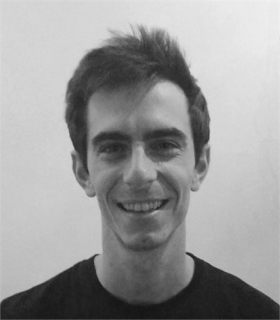
Simone Lenti is an Assistant Professor (Ricercatore RTDa) at the Department of Computer, Control, and Management Engineering of Sapienza University of Rome. He is an active member of the A.WA.RE research group , which specializes in visual analytics. Lenti obtained his Ph.D. in 2021 with a dissertation on visual analytics techniques for cybersecurity. His research bridges cybersecurity , visual analytics , and human-computer interaction , focusing on: Developing computational methods for vulnerability analysis (e.g., NLP for CVE relevance, smart contract taxonomies) Designing visual tools for threat detection (e.g., attack graphs, firmware fuzzing) Enhancing interpretability in data-driven systems (e.g., partial dependence analysis, process mining) Lenti's publications (2019–2025) demonstrate a consistent focus on applying visual analytics to cybersecurity challenges , with recent expansions into bioinformatics and education. Key trends include automated vulnerability management, human-centered explainability, and scalable threat modeling. Awards: IEEE VizSec 2018 Best Paper for contributions to cybersecurity visualization. He contributes to academic infrastructure through tools like easyDeclare (declarative process modeling) and BUCEPHALUS (business-centric cybersecurity analysis), emphasizing practical applications of his research.
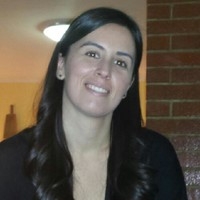
Jlenia Toppi is an Associate Professor at the Department of Computer, Control and Management Engineering, Sapienza University of Rome. With a background in Biomedical Engineering (B.Sc. and M.Sc. summa cum laude from University of Rome, Ph.D. from University of Bologna), she leads research at the Neuroelectrical Imaging and BCI Laboratory, IRCCS Fondazione Santa Lucia, focusing on EEG signal processing, brain connectivity modeling, and graph theory applications in cognitive and clinical neuroscience. Education: B.Sc. Clinical Engineering (2006), M.Sc. Biomedical Engineering (2009), Ph.D. Biomedical Engineering (2013) Awards: IEEE EMBC Student Paper Finalist (2012), Young Bioingegneria Award (2012), IEEE EMBS Best Poster (2011) Her research develops advanced EEG methodologies for brain mapping and dynamic connectivity estimation , applied to disorders of consciousness, stroke rehabilitation, and social neuroscience. She pioneered hyperscanning EEG for interpersonal brain-to-brain analysis and contributed to BCI systems like RECOM and The Promotoer. Recent publications highlight her work on hybrid BCI rehabilitation , muscle synergy extraction , and multi-modal assessment of therapeutic interventions . She serves as editor for Computation and Mathematical Methods in Medicine and collaborates with international projects including Horizon 2020.
Prof. Wil van der Aalst is a full professor at RWTH Aachen University leading the Process and Data Science (PADS) group. He holds part-time affiliations with multiple institutions, including the Fraunhofer-Institut für Angewandte Informationstechnik (FIT) , Technische Universiteit Eindhoven (TU/e) , and Queensland University of Technology (QUT) . Additionally, he is a distinguished fellow of Fondazione Bruno Kessler (FBK) and serves on the Board of Governors of Tilburg University . His research focuses on process mining , leveraging business process management , Petri nets , and process modeling to analyze and optimize workflows. His work intersects with software engineering , big data , and data engineering , emphasizing the application of data science to process-aware systems. Wil van der Aalst has been recognized with numerous scientific awards, including the prestigious Alexander-von-Humboldt Professorship (2018), doctor honoris causa from Hasselt University (2012), and Distinguished University Professor title at TU/e (2013). He is an IFIP Fellow and elected member of several European academies. He has co-chaired major academic conferences such as Business Process Management , IEEE International Conference on Services Computing , and Petri Nets . His editorial contributions span journals like Business & Information Systems Engineering and IEEE Transactions on Services Computing . He advises organizations including Celonis and Fluxicon and has been cited over 100,000 times (h-index 148).
Jan Mendling is the Einstein-Professor of Process Science at the Department of Computer Science, Humboldt-Universität zu Berlin, Germany. He is a leading academic in business process management and information systems, with over 450 research publications in top-tier journals such as Management Information Systems Quarterly and IEEE Transactions on Software Engineering . His research spans business process management , information systems , and interdisciplinary areas like software engineering and human-computer interaction . He has organized major academic events and contributed to the IEEE Task Force on Process Mining. Mendling is a co-author of influential textbooks including Fundamentals of Business Process Management, Second Edition and Wirtschaftsinformatik, 12th Edition , which are widely used in information systems education. He serves as a department editor for Business and Information Systems Engineering and is a board member of the Austrian Society for Process Management.
Donato Cascio is an Associate Professor in the Department of Physics and Chemistry - Emilio Segrè at the University of Palermo. His research focuses on biomedical engineering, machine learning applications in healthcare, and medical imaging analysis. He teaches physics to students in Dentistry, Veterinary Medicine, and Medicine, with office hours available via Teams. Current position: Associate Professor at University of Palermo (PHYS-06/A) Teaching: Physics for Dentistry, Veterinary Medicine, and Medicine students Research: Machine learning in diagnostics, medical imaging, AI-driven healthcare solutions Dr. Cascio's work spans biomedical applications of artificial intelligence, including AI-assisted cancer diagnosis, neonatal health prediction models, and automated immunofluorescence image analysis. His recent publications demonstrate a strong focus on machine learning for medical decision support and clinical imaging enhancement. His machine learning research trends include applications for breast cancer classification, stem cell donation awareness, and neonatal outcomes prediction. While no specific scientific awards are mentioned, his work has contributed to projects like AIDA (Auto Immunity: Diagnosis Assisted by Computer) and MAGIC-5 mammographic database initiatives.
Simone Incardona serves as a Research Fellow in the Department of Physics and Chemistry 'Emilio Segrè' at the University of Palermo, where he contributes to advanced instrumentation for gamma-ray astronomy and interdisciplinary machine learning applications. His institutional affiliation centers on the Cherenkov Telescope Array (CTA) project, specifically the development of the Schwarzschild-Couder Telescope (SCT) prototype. His research spans astroparticle physics instrumentation with emphasis on silicon photomultiplier (SiPM) technology and front-end electronics for Cherenkov light detection. Key focus areas include ASIC design for telescope cameras, optical system commissioning, and neural network architectures for time series analysis. This dual expertise in hardware development and computational methods supports cutting-edge observations in high-energy astrophysics. Analysis of his 2021-2023 publications reveals concentrated work on the pSCT prototype, addressing SiPM array assembly, SMART ASIC characterization, and Crab Nebula detection. The research trajectory demonstrates progression from component-level testing (2021) to integrated system validation (2023), with consistent contributions to CTA's medium-sized telescope instrumentation. No scientific awards were documented in available sources. Student advising activities and research grant details remain unspecified in current records, though his role involves supervising technical aspects of telescope instrumentation projects. He operates within the University of Palermo's CTA collaboration team, focusing on the pSCT's camera development and optical subsystems. This group interfaces with international partners in the global Cherenkov Telescope Array Observatory, contributing to hardware validation and observational campaigns.
Prof. Rosario Nunzio Mantegna is a Full Professor in the Department of Physics and Chemistry - Emilio Segrè at the University of Palermo (Unipa), Italy. He has held office hours in Building 18, Viale delle Scienze, focusing on appointments via email at rosario.mantegna@unipa.it. Research Interests: Econophysics, Complex Networks, Financial Market Dynamics, Air Traffic Systems, and Statistical Physics Applications. Methodological Expertise: Network Validation, Correlation Filtering, Hierarchical Clustering, and Stochastic Modeling. His work bridges physics, finance, and data science through network-based approaches to complex systems. Key contributions include analyzing financial indices, market lead-lag relationships, and air traffic networks. Publications span interdisciplinary topics from autism spectrum disorders to volcanic impact on ATM systems.
Salvatore Miccichè is a Full Professor at the University of Palermo (UNIPA) in the Department of Physics and Chemistry , affiliated with the School of Basic and Applied Sciences . He teaches courses like Complex Networks , Programming Methods for Physics , and Introduction to Complexity . His research interests span Physics , Complex Systems , and Network Science , with applications in economics, biology, and legal text analysis. Theses he supervised include topics such as: Agent-Based Models in Economics Hierarchical Clustering for Senescent Cell Detection NLP Tools for Legal Text Analysis Stochastic Computational Models for Complex Systems His work often intersects physics , informatics , and applied science , particularly in modeling complex systems across disciplines. No scientific awards or formal student lists were explicitly mentioned in the scraped data.
Roberto Basili is an Associate Professor in the Department of Computer Science at the University of Roma, Tor Vergata, where he has been a member of the Artificial Intelligence group (ART) since 1991. His academic appointments span both the Faculty of Engineering and the Department of Linguistics, reflecting his interdisciplinary approach to natural language processing and computational linguistics. Professor Basili's research focuses on Natural Language Processing, Machine Learning, Knowledge Representation, and their applications in Information Retrieval and the Semantic Web. His work particularly emphasizes semantic tagging, word sense disambiguation, ontology engineering, and music genre categorization. He leads the ART (Artificial Agent @ Roma Tor Vergata) research group, which develops frameworks for language-driven ontology learning and question answering systems. His publication record shows consistent contributions from the early 1990s through 2006, with recent work emphasizing kernel methods for semantic role labeling, ontology-driven information retrieval, and hierarchical semantic analysis. The research trends indicate a progression from foundational work in lexical acquisition and parsing toward more sophisticated semantic analysis and ontology integration, reflecting the evolution of the NLP field itself. Professor Basili has secured significant research funding through multiple EU Framework Program projects including PrestoSpace (FP6), FF-Poirot (FP5), and MOSES (FP5), as well as NSF grants and Italian national research initiatives (PRIN). These projects demonstrate his ability to lead large-scale collaborative research efforts addressing both theoretical challenges and practical applications in language technology. His teaching responsibilities include courses on Distributed Databases and Information Retrieval, Database Systems, Fundamentals of Programming in the Faculty of Engineering, and Trattamento Automatico delle Lingue (Natural Language Processing) in the Department of Linguistics. This dual appointment underscores his bridging of computer science and linguistic approaches to language processing.
Professor Ji-Dong Gu is a Full Professor in the Environmental Science and Engineering department at Guangdong Technion-Israel Institute of Technology in Shantou, China. With an extensive academic background including a PhD in Soil Sciences - Microbial Ecology from Virginia Tech, he has established himself as a leading researcher in environmental microbiology with a particular focus on cultural heritage protection. His educational background includes: PhD in Soil Sciences - Microbial Ecology from Virginia Tech (1988-1991) MSc in Soil Microbiology and Biochemistry from University of Alberta (1985-1988) BSc in Agronomy from Heilongjiang August First Land Reclamation University (1979-1983) Professor Gu's research spans multiple critical areas in environmental microbiology. His work on microbial ecology related to cultural heritage protection has been particularly influential, examining how microorganisms contribute to the biodeterioration of stone monuments and wall paintings at sites like the Maijishan and Mogao Grottoes. He has made significant contributions to understanding nitrogen cycling processes, particularly anaerobic ammonium oxidation (anammox) bacteria, and their applications in wastewater treatment. His research also extends to microbial communities in oil reservoirs and bioremediation of environmental pollutants. With 878 publications that have garnered 28,846 citations, Professor Gu has established himself as a prolific researcher whose work spans fundamental microbial ecology and practical applications. His recent publications show a continued focus on cultural heritage protection, nitrogen cycling, and microbial community analysis in diverse environments with numerous papers published through 2025. His scientific achievements include: Charles Rich Fellowship (1991) Extensive publication record with significant impact in environmental microbiology Organization of international symposia on cultural heritage biodeterioration and protection Leadership in establishing research collaborations across multiple institutions Professor Gu maintains an active research program with numerous ongoing projects related to environmental microbiology and cultural heritage protection. His laboratory investigates microbial communities on stone monuments, develops strategies for cultural heritage conservation, and studies fundamental microbial processes in environmental systems. He has supervised numerous students and researchers throughout his career, contributing to the training of the next generation of environmental microbiologists.
Andrea Molinari is a Contract Professor at the University of Trento since 1990 and at the Free University of Bozen since 2002. He also serves as a Visiting Professor at Lappeenranta University of Technology (2021-2025) and holds a Docent position in Decision Making at the same institution (2024-2029). Previously, he was an Adjunct Professor at Turku University/Abo Akademi in Finland (2007-2019). Education: 2022: Doctoral Degree - Doctor of Science (Technology), Engineering Science, Software Engineering research field from LUT - Lappeenranta University of Technology. Dissertation: "Integration Between eLearning platforms and Information Systems: a New Generation of Tools for Virtual Communities" 1988: Master Degree in Economics from Università degli Studi di Trento with grade 110/110. Thesis: "P.I.R.S. Personal Information Retrieval Systems" Professor Molinari's research focuses on the intersection of education technology and information systems. His primary areas include e-learning/m-learning systems, virtual communities and social media, semantic technologies and ontologies, data management with AI applications, and Enterprise Project Management. His work bridges theoretical computer science with practical applications in educational and organizational contexts, particularly examining how technology can enhance learning experiences and organizational efficiency. His recent publications reveal a strong emphasis on the evolution of Learning Management Systems in the AI era, integration of semantic technologies with educational platforms, and applications of serious games for professional training. There's a clear trajectory toward more sophisticated, AI-enhanced educational technologies that incorporate data analytics, personalized learning, and advanced user modeling. Scientific Awards: Winner of the "S. Ciancio" scholarship (1980, 1982, 1983) Outstanding Paper Award at the Ed-Media World Conference on Educational Technology (1995) Since 1994, Professor Molinari has supervised approximately 10 thesis projects annually across multiple institutions including the University of Trento (Economics, Engineering), University of Bolzano (Computer Science, Education), and Abo Akademy in Finland. His teaching spans numerous courses related to information systems, project management, and technology applications across various academic disciplines. He has coordinated numerous research projects, particularly in the areas of e-learning platforms, virtual communities, and semantic technologies for educational applications. Professor Molinari is actively involved with several research communities and has served on program committees for numerous international conferences including IEEE-STAR, SMARTGREENS, and the International Conference on Web-based Education. His work often involves interdisciplinary collaboration between computer scientists, educators, and domain specialists to develop innovative technology-enhanced learning solutions.
Marco Taussi is a Fixed-term Researcher under Law 240/10 at the Department of Pure and Applied Sciences (DiSPeA) at the University of Urbino Carlo Bo, where he has been actively engaged in research and teaching since at least 2019. His work focuses on geochemical processes in geothermal systems and environmental applications. Dr. Taussi's research interests span geochemistry and mineralogy of geothermal/hydrothermal systems, with particular emphasis on fluids geochemistry, diffuse gas emanations from soils, and alteration mineralogical assemblages. His environmental geochemistry work addresses ground- and surface water pollution, aquifer vulnerability, seawater intrusion, biogas emissions monitoring from landfills, and potentially hazardous minerals. He also investigates the exploration, potential, and environmental impact assessment of shallow low-temperature geothermal resources. His publication record demonstrates consistent research output with numerous articles in high-impact journals across hydrogeology, geochemistry, and geothermal energy fields. Recent publications (2023-2026) show a strong focus on water-rock interactions, seismic monitoring through geochemical methods, environmental applications of geothermal systems, and innovative water quality assessment techniques. His work frequently involves multi-isotopic approaches and field studies in Central Italy, with some international collaborations in Chile and Ecuador. As an educator, Dr. Taussi has taught Environmental Geochemistry in the Geology and Land-Use Planning Bachelor degree program since 2019/2020. Since 2023/2024, he has also taught Geothermal Resources in the Green Industrial Engineering Master degree program (a joint program between University of Urbino and Marche Polytechnic University). Additionally, he has contributed to PhD programs since 2022/2023, teaching courses on geothermal energy, research methods in endogenous planetary processes, and land management technologies. His teaching portfolio demonstrates a strong commitment to educating the next generation of geoscientists and environmental engineers, with a focus on practical applications of geochemistry to real-world environmental challenges and sustainable resource management.