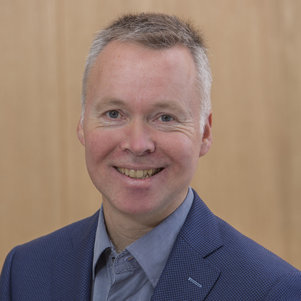
Dr. María Carmen Rosselló Matas is a University Professor in the Department of Chemical Engineering at the University of the Balearic Islands (UIB), where she has held a position since 1983. Her research focuses on intensification of mass transfer processes within chemical and agri-food engineering contexts. Member of the Agri-Food Engineering (GEA) research group Participated in 59 competitive research projects and 5 teaching innovation projects Research Interests: Specialized in chemical engineering and mass transfer processes, with emphasis on agri-food applications. Her work bridges technological innovation in chemical processes and industrial transfer efficiency. Notable Contributions: Supervised 12 master's theses and 17 doctoral theses. Recognized with multiple institutional awards, including six research and teaching periods of excellence.
Ricardo de Almeida Oliveira is a Researcher in the Bio Process Engineering department at Wageningen University, affiliated with the VLAG Graduate School. His research focuses on the microbiome of pig tonsils, aiming to identify new bacterial species and potential antimicrobial agents. Research Interests: Microbiome Research Animal Health Bio Process Engineering Antimicrobial Discovery Recent Research Trends: His work explores the intersection of microbial ecology, animal health, and bioprocessing, with a focus on leveraging microbiome data for novel antimicrobial development. Project Involvement: He is actively engaged in the Process Development & Intensification for Cultivated Fish Fat project, which aligns with advancements in cultivated meat technology.
Vianna Jafari is a Research Fellow at Monash University's School of Chemistry, specializing in advanced polymer synthesis and biomaterials development. Her work bridges chemical engineering and biomedical applications with a focus on antimicrobial solutions and sustainable polymerization techniques. Research Interests: Pioneering RAFT polymerization methods using ionic liquids for oxygen-tolerant reactions Designing star-polymer architectures (SNAPP-Stars) for rapid bacterial eradication Robot-assisted hydrogel synthesis with precisely controlled mechanophysical properties Ultrasonic emulsion processes for high-molecular-weight polymer production Her publication record demonstrates consistent high-impact output in Macromolecules , Biomacromolecules , and ACS Applied Materials & Interfaces , with significant Scopus citations reflecting field influence. Current research trends emphasize translating polymer chemistry innovations into biomedical solutions, particularly for antimicrobial resistance and tissue engineering applications. Professional Activities: Active contributor to Monash University's polymer research ecosystem Collaborates internationally with teams in Australia, Europe, and Asia Maintains strong industry engagement through applied materials research
Elena Albu is a postdoctoral researcher at the University of Tübingen, working within the Faculty of Science, Department of Psychology. She is affiliated with the Diagnostics and Cognitive Neuropsychology Research Group and contributes to the DFG Research Unit FOR 2718: Modal and Amodal Cognition: Functions and Interactions, focusing on the interplay between modal and amodal encodings underlying space-metric associations. Her research centers on the nature of SNARC (Spatial-Numerical Association of Response Codes) and SNARC-like effects, investigating whether these phenomena stem from continuous magnitude processing or require discrete serial ordering. With a strong background in linguistics, she equally explores language comprehension and negation processing through rigorous behavioral studies. Her work bridges cognitive psychology and linguistic theory to understand fundamental cognitive mechanisms. Analysis of her publication trajectory reveals a clear evolution from early work analyzing negation in political discourse and social media (particularly during the 2014 European Elections) to more recent investigations of the cognitive architecture supporting negation processing. Her research consistently integrates experimental techniques with corpus analysis, providing both controlled laboratory findings and real-world usage patterns across cognitive psychology, linguistics, and political communication. Her notable recognition includes: Humboldt Research Fellowship for postdoctoral researchers Dr. Albu actively supervises student research projects investigating fundamental questions about negation processing, including whether negative sentences can express events and what mental representations people form when reading negative information. Her current work within the DFG Research Unit examines how different cognitive systems interact in processing spatial and numerical information. As a member of the Diagnostics and Cognitive Neuropsychology Research Group, she collaborates with colleagues including Maristella Lunardon, Katharina Sautter, Mine Avcil, Christina Artemenko, and others on projects related to cognitive processing, neuropsychological assessment, and the cognitive underpinnings of language comprehension.
Dr. Tohid N. Borhani is a Senior Lecturer in Chemical Engineering at the University of Wolverhampton's Faculty of Science and Engineering, appointed in December 2020 and promoted to his current position in September 2022. He holds a PhD in Chemical Engineering from University Technology Malaysia (2014) and an MSc from University of Tehran (2009). Prior to Wolverhampton, he held positions at Heriot-Watt University (Assistant Professor), Cranfield University (Research Fellow), University of Sheffield (Research Associate), and Imperial College London (Research Associate). His research focuses on: Process modeling and simulation Machine learning applications in energy systems CO2 capture technologies (absorption/adsorption) Energy conversion and storage solutions Chemometrics and separation processes Dr. Borhani's 60+ publications demonstrate strong focus on sustainable technologies, with recent works concentrated on carbon capture innovation (novel contactors, solvent systems), renewable energy integration, photocatalytic applications, and computational modeling of chemical processes. His articles frequently appear in high-impact energy and environmental journals. Awards & Recognition: Fellow of the Higher Education Academy (FHEA) Research Leadership: Actively supervises PhD students in projects related to CO2 absorption process modification, amine/ionic liquid development for carbon capture, energy systems optimization, and battery performance monitoring. Secured 11 research grants including: IDRIC Ammonia Hydrogen Network (2023-2024) UKCCSRC Flexible Funding for CO2 Capture Modeling (2022-2023) Mercia Clean Tech Project (2023-2025) Carbon capture system design for diesel generators (2024-2026)
Nixon Sunny, Ph.D., is a Visiting Researcher at the Faculty of Engineering, Imperial College London, with over 8 years of expertise in low-carbon energy systems. His research spans energy efficiency, hydrogen recovery, carbon capture and storage (CCS), negative emissions technologies, and industrial decarbonization. Education: Ph.D. in Centre for Environmental Policy (2022), Imperial College London M.Eng. in Department of Chemical Engineering (2017), Imperial College London His work focuses on addressing industrial decarbonization challenges, particularly in the Middle East and Global South, through collaborations with industrial partners and projects funded by Ofgem, Innovate UK, and the UK Government. Recent projects include hydrogen recovery from steel wastes, green hydrogen supply systems, and biochar process intensification. Nixon lectures and supervises Masters students via Imperial’s Sustainable Energy Futures and Environmental Technology programs. He is a technical reviewer and guest editor for journals like Nature Energy and Energy & Environmental Science .
Professor Harvinder Sidhu serves as Deputy Rector at UNSW Canberra and is a member of the Applied and Industrial Mathematics (AIM) Research Group in the School of Science. He holds a BSc (First Class Honours and University Medal) and PhD in Mathematics from the University of Queensland, along with a Dip.Ed. from the National Institute of Education (Singapore). With over 190 research publications and extensive experience supervising Higher Degree Research students, he leads research in mathematical modeling across combustion, agriculture, and environmental systems. His research focuses on mathematical combustion modeling (including combustion waves and spontaneous ignition), reactor engineering (chemical and bio-reactors), industrial mathematics, and mathematical biology/ecology. His work bridges theoretical mathematics with practical applications in bushfire behavior, sustainable agriculture, and environmental processes. Research publications demonstrate strong emphasis on environmental and agricultural modeling, including: Advanced irrigation techniques (HYDRUS-2D modeling) Waste management thermodynamics (compost self-heating) Sustainable farming systems (conservation agriculture) Disease transmission dynamics Industrial process optimization Awards: Rector's Award for Teaching Excellence (2013) Rector's Commendation for Teaching (2005 & 2009) J.H. Michell Medal for Outstanding New Researcher (1999) He leads the AIM Research Group and has secured numerous competitive grants. Current projects include Ph.D. scholarships ($35,000/year) for research in combustion waves, bushfire behavior, and bioreactor engineering.
Fikile Brushett is a tenured Professor and the Chevron Chair of Chemical Engineering at the Massachusetts Institute of Technology (MIT), where he has been a faculty member since 2012. He leads a research group focused on advancing electrochemical technologies for a sustainable global economy. His academic journey began at the University of Pennsylvania, where he earned his B.S.E. in Chemical and Biomolecular Engineering in 2006, followed by M.S. and Ph.D. degrees in Chemical Engineering from the University of Illinois Urbana-Champaign in 2009 and 2010, respectively. After completing a Director's Postdoctoral Fellowship at Argonne National Laboratory (2010-2012), he joined MIT as an assistant professor, receiving promotions to associate professor without tenure in 2018, associate professor with tenure in 2020, and full professor in 2024. Brushett's research focuses on understanding and controlling fundamental processes that govern the performance, cost, and lifetime of electrochemical systems for energy storage and conversion. His work integrates synthesis and characterization of redox-active materials, design and engineering of electrochemical reactors, and techno-economic modeling of electrochemical systems. He emphasizes connecting system-level performance and cost goals to materials-level property requirements, with particular interest in sustainable power delivery, environmental stewardship, and process intensification. His extensive publication record, including over 130 peer-reviewed articles, demonstrates a strong focus on redox flow batteries, carbon capture technologies, and sustainable energy storage solutions. Recent work shows increasing emphasis on physics-informed modeling frameworks, experimental reproducibility in flow battery testing, and novel applications of electrochemical principles to environmental challenges like ammonia recovery from wastewater. Scientific Awards Appointed as the Chevron Chair of Chemical Engineering (2024) Young Alumni Achievement Award, University of Illinois Urbana-Champaign (2024) Allan P. Colburn Award for Excellence in Publications, AIChE (2022) Charles W. Tobias Young Investigator Award, Electrochemical Society (2022) Lloyd N. Ferguson Young Investigator Award, NOBCChE (2020) Energy Technology Division Supramaniam Srinivasan Young Investigator Award, ECS (2018) Chemical and Engineering News Talented 12 Chemist (2017) Brushett has delivered over 130 invited national and international lectures and has served in multiple leadership roles within the Joint Center for Energy Storage Research (JCESR) from 2013-2023. His research group continues to push boundaries in electrochemical energy storage and conversion technologies, with recent work expanding into carbon capture applications and sustainable resource recovery systems.
Robert Griffiths is a Professor of Environmental Microbiology at the School of Environmental and Natural Sciences, Bangor University. His research focuses on understanding the natural and human-driven factors influencing microbial biodiversity and the role of microbiomes in environmental health. He utilizes molecular, biogeochemical, and data-driven approaches to study microbial community dynamics and their impact on ecosystem functions, particularly in soil systems. He is actively involved in supervising PhD students and leading significant research projects. His research interests lie at the intersection of environmental microbiology, soil science, and ecosystem ecology. He investigates how microbial communities respond to land use change, climate change, and other environmental stressors, with a particular emphasis on carbon and nutrient cycling in diverse ecosystems such as grasslands, alpine regions, peatlands, and tropical forests. His work aims to uncover the fundamental ecological processes that govern microbial community structure and function. The trends in his recent publications reveal a strong focus on the impacts of global change on soil microbiomes. His work frequently examines carbon cycling, nutrient dynamics, microbial resilience to extreme events, and the functional consequences of microbial community shifts. He employs advanced molecular techniques and large-scale collaborative data to understand ecological patterns across different biomes and land management practices. Professor Griffiths has made significant contributions to the scientific community through his extensive publication record in top-tier journals. His research is supported by active projects such as 'Advanced biodiversity monitoring for results-based and effective agricultural policy and transformation (BioMonitor4CAP)' and 'Shrub-driven transformation of the alpine soil carbon cycle,' which demonstrate his engagement with pressing environmental issues and policy-relevant science. He is a highly collaborative researcher, working with a wide network of scientists across Europe and beyond. His work is integral to understanding soil biodiversity and its role in maintaining ecosystem services, contributing directly to global efforts in sustainability and environmental protection.
Prof. Dr.-Ing. Axel Gottschalk is a Professor of Thermal Process Engineering and Energy Conversion at Bremerhaven University of Applied Sciences. He teaches in the NEU and PEET degree programs and leads the Laboratory of Thermal Process Engineering. His roles include membership in the Academic Senate, deputy member of Department Council 1, chair of the Examination Board, and chair of the NEU/PEET Study Commission. He manages third-party funded research projects. Education Background: Not explicitly detailed in text, but indicates doctoral (Dr.-Ing) qualification. His research focuses on heuristic-numerical process synthesis, computer-aided process engineering (CAPE), and sustainable process development. Key areas include energy audits, process integration (mass/energy), cost estimation, and technology benchmarking. Recent projects involve FLEXI-GREEN FUELS (biofuel production from biomass residues) and AQUACOMBINE (aquaponics/samphire/biorefinery integration for sustainable biomass production). Consultation is available via email appointment scheduling. Office located at An der Karlstadt 8, Room K191, Bremerhaven.
Tommaso Cogliano is an active researcher in the field of chemical engineering, focusing on sustainable technologies such as the epoxidation of bio-based feedstocks like vegetable oils and tall oil. His work emphasizes continuous processing, reactor modeling, and catalysis, contributing to greener chemical production methods. His research interests lie at the intersection of reaction engineering , green chemistry , and catalysis , with a strong emphasis on process intensification and sustainability. He employs advanced analytical techniques such as 1H NMR spectroscopy and develops kinetic models for complex multiphase systems. Analysis of his recent publications reveals a consistent trend toward transitioning traditional batch chemical processes to more efficient continuous flow systems , particularly in the functionalization of renewable oils. His work integrates experimental kinetics with reactor modeling to optimize productivity and sustainability. While no formal scientific awards are listed, his research has been published in reputable journals such as Chemical Engineering Science and Industrial & Engineering Chemistry Research , indicating peer recognition. Tommaso Cogliano has collaborated with established researchers including Tapio Salmi, Martino Di Serio, and Roberto Tesser, suggesting integration within a well-connected research group. Although no formal advising role is mentioned, his recent doctoral thesis indicates he has recently completed PhD-level research. He appears to be part of a larger network focused on sustainable chemical technologies, likely based in Europe, though the exact institution is not specified in the provided text.
Zeltia Blanco Suarez is a Professor of English Philology at the University of Santiago de Compostela, affiliated with the Faculty of Philology and the Department of English and German Philology. She is a member of the VLCG research group (Variation, linguistic change and grammaticalization). Her doctoral thesis (2017), supervised by Dra. María José López Couso, focused on Death-related intensifiers in the history of the English language: grammaticalisation and other processes of language change . Her research interests center on historical linguistics, grammaticalization processes, diachronic analysis of intensifiers (especially 'dead', 'deadly', and 'mortal'), and corpus-based studies of Early Modern English. She has conducted groundbreaking work on the evolution of grammatical structures in Irish English through analysis of the 1641 Depositions corpus and pioneered studies on CLIL (Content and Language Integrated Learning) in primary education. Her publications span over 15 years, consistently exploring lexical semantic change, syntactic evolution, and the interplay between context and language structure. Notable contributions include analyses of the Irish English habitual 'do V' construction and the cognitive mechanisms behind intensifier development. She has also reviewed major works in intensification studies, contributing to theoretical debates in historical linguistics. Blanco Suarez holds no explicitly listed awards but maintains an active research agenda through participation in international conferences and collaborative projects. Her work bridges historical linguistics with contemporary corpus methodologies, offering new perspectives on language change dynamics.
Diego Gomez Diaz is a Professor in the Department of Chemical Engineering at the University of Santiago de Compostela (Higher Technical School of Engineering). His research focuses on separation processes, particularly gas-liquid contactors, carbon dioxide capture, and solvent development. He has pioneered work on two-phase solvents to reduce energy consumption in CO2 absorption and regeneration. His recent studies include zeolitic membranes for VOC/acid gas separation and adsorption technologies using biomass-derived carbons. Education details are not explicitly provided, but his academic career includes 10 funded projects (5 national, 5 regional) and 4 industry contracts. He has authored 130+ peer-reviewed papers (75% Q1 journals) and 75+ conference presentations. A 2009 patent for a non-corrosive CO2 solvent and three 'sexenios' (Spanish research merit awards) highlight his impact. Supervision includes 3 PhDs (all top marks) and 14 completed MSc theses, with ongoing work on pollutant gas remediation materials. Research collaborations span across disciplines, including biological engineering with the University of Minho (Portugal) and multidepartmental porous material synthesis. He reviews for 35+ journals and evaluates grants for agencies in France, Belgium, Chile, Czech Republic, and UAE. Key contributions include: Innovative solvent systems for CO2 absorption Adsorption studies using renewable biomass-derived carbons Zeolite membrane applications for mixed gas separations Process intensification methodologies
EVA RODIL RODRIGUEZ is a Professor at the Department of Chemical Engineering, Higher Technical School of Engineering, University of Santiago de Compostela. She earned her doctorate in 1999 with a thesis on thermodynamics of alcohol-ether mixtures and extractive distillation using 1-butanol. Her research focuses on sustainable separation processes, ionic liquids, nanomaterial synthesis, and environmental sustainability. She leads the EQUIFASE research group, specializing in innovative separation technologies and green chemistry applications. Her educational background includes advanced studies in chemical engineering and over two decades of academic and research experience. Key research areas include chemical engineering fundamentals, bioresource utilization (e.g., gelatin from tuna skin), nanotechnology for enhanced oil recovery (EOR), and photocatalytic degradation of pollutants using ionic liquid-based systems. Publications emphasize ionic liquid applications in separation processes, lignin depolymerization, and nanoparticle synthesis for environmental and energy solutions. While no awards are explicitly listed, her work aligns with major trends in sustainable chemistry and green engineering. She collaborates on projects involving material science, biorefineries, and process optimization. Her lab, EQUIFASE , explores interdisciplinary approaches to chemical engineering challenges, with a focus on industrial sustainability and novel material development.
Prof. Dr. Ir. Marcel Ottens is a Full Professor in the Department of Biotechnology at the Faculty of Applied Sciences, Delft University of Technology (TU Delft). He leads the Ottens Lab, which is focused on advancing bioprocess engineering through innovations in miniaturization, continuous processing, and high-throughput development. His research interests span Micro Bio Systems Technology , Microfluidics , Protein Separation and Purification , Continuous Bioprocessing (including Simulated Moving Bed technology), Process Chromatography , and Fast Conceptual Bio(pharma) Process Design . His work integrates engineering principles with biotechnological applications to improve efficiency and sustainability in downstream processing. The recent publications and ongoing projects reflect a strong trend toward model-based and high-throughput methodologies for biopharmaceutical and food-related processes, particularly in cultivated meat, vaccine development, and nutraceutical purification. The lab emphasizes integration of sensing , in-silico process development , and miniaturized screening platforms to accelerate innovation. Prof. Ottens actively supervises a large cohort of PhD researchers working on diverse but interconnected topics in bioprocessing. Notable projects include cultivated meat process design, machine perfusion analytics, molecular modeling for chromatography, and sustainable protein isolation. The lab offers state-of-the-art services in high-throughput screening and purification process development. He has contributed to key reference works in biotechnology and holds patents related to protein aggregation and bioparticle separation. His lab's work has been featured in interviews on national programs such as the Cellular Agriculture Growth Fund and at international conferences like BioProcess International.