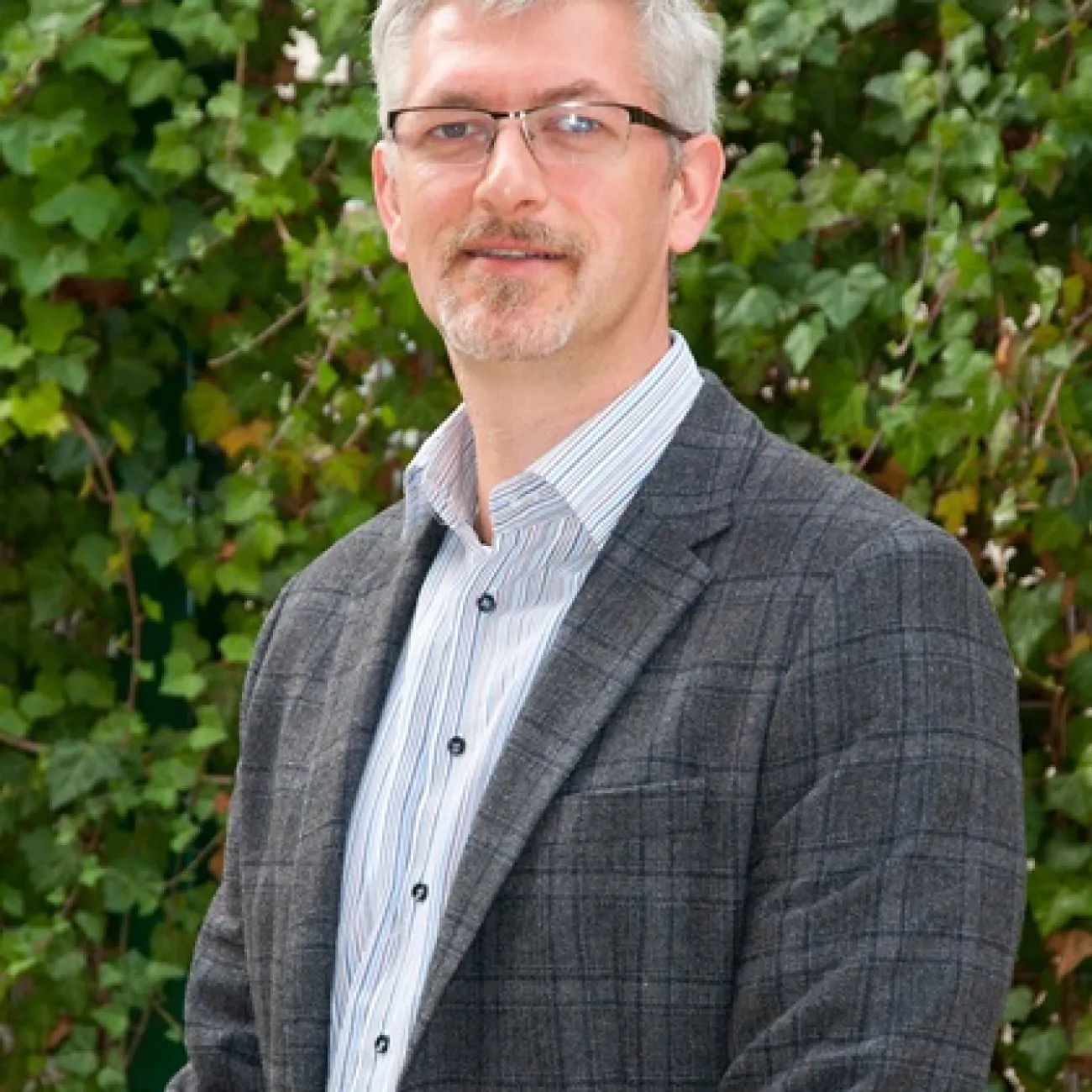
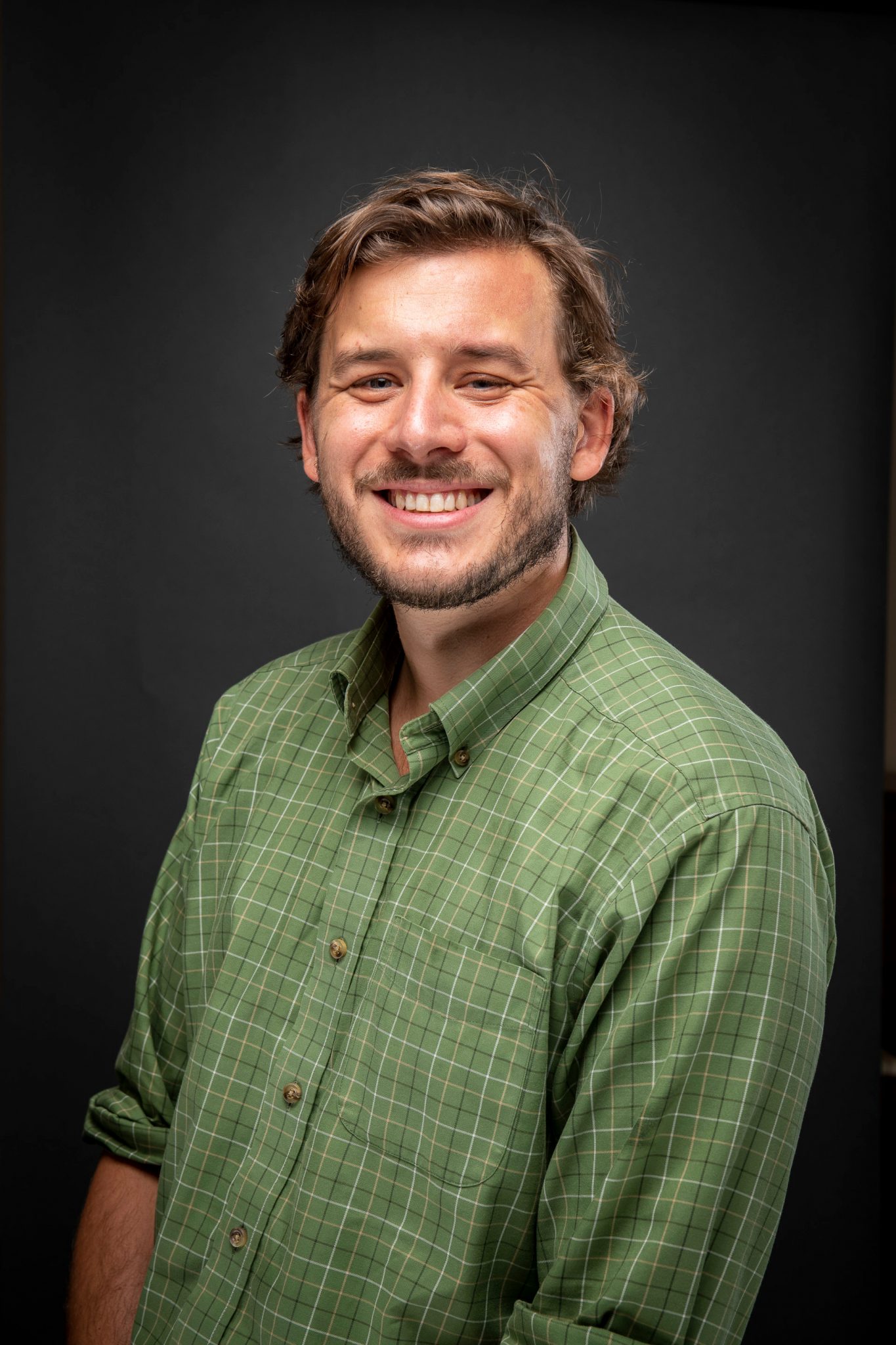
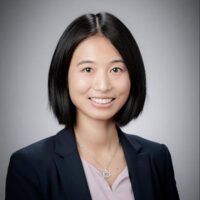
Fiona Sloothaak is an Assistant Professor at Eindhoven University of Technology (TU/e), affiliated with the Department of Mathematics and Computer Science, specializing in Stochastic Operations Research. She holds the Eurandom Assistant Professor title and contributes to the Stochastic Operations Research group. Her research focuses on cascading failures in complex systems, power grids, battery swapping networks, and stochastic processes. Education: Fiona earned a PhD in Stochastic Operations Research from TU/e in 2020 and completed a Master's in Mathematics (2015). Her doctoral thesis, Criticality in power networks: a probabilistic approach , explores cascading failures in power systems. Research Interests: Fiona’s work addresses systemic risk in infrastructure systems, including power grids and transportation networks. She investigates cascading failure dynamics, load balancing in battery swapping stations, and resource pooling strategies. Her studies often employ probabilistic modeling and queueing theory. Key Projects: She co-authored the MARCONI project (2019–2022), focusing on integrated planning for maritime logistics and service systems. This involved optimizing supply chain resilience and remote control tower operations. Scientific Award: Applied Probability Trust Prize (2020) Teaching: Courses include Stochastic Networks, Insurance and Credit Risk, and Probability and Stochastics 1. Grants: MARCONI project funding for maritime logistics optimization. Labs/Teams: Active in TU/e’s Stochastic Operations Research group and Eurandom institute. Collaborations span network topology analysis and interdisciplinary systems research.
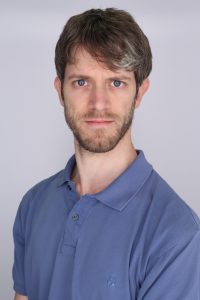
Pooya Davari is a Professor and Head of the Section for Applied Power Electronic Systems at Aalborg University , Denmark. He leads the EMI/EMC in Power Electronics Research Group and serves as Vice Chair of the Energy Efficiency Mission. His research focuses on electromagnetic interference (EMI) and harmonic mitigation in power electronic systems, with over 200 publications and significant contributions to renewable energy integration. Education: B.Sc. and M.Sc. in Electronic Engineering (2004, 2008), Ph.D. in Power Electronics from Queensland University of Technology (2013) Prior Roles: Lecturer at QUT (2013–2014), Postdoc at AAU (2014) Research Interests: Harmonic and EMI analysis in grid-tied converters High power density converter design Signal processing for converter modeling Reliability of power electronic systems Article Trends: Recent work emphasizes EMI/EMC in renewable energy systems, wide bandgap semiconductors (SiC/GaN), and reliability modeling for EVs and hydrogen production via electrolysis. Sub-fields include converter topologies, grid integration challenges, and AI-driven diagnostics. Scientific Awards: Equinor 2022 Prize (Denmark’s oldest engineering award) IEEE EMC Society Young Professional Award (2020) World’s Top 2% Highly Cited Scientist (Stanford, 2021–2025) Multiple best paper awards (IEEE, Applied Sciences, etc.) Grants & Editorial Roles: Recipient of grants from Innovation Fund Denmark (Supra-EMC project), Horizon Europe (SOLARIS), and industry partnerships. Serves as Area Editor for IEEE Transactions on Transportation Electrification , Associate Editor for IEEE Transactions on Power Electronics , and Editor-in-Chief of Circuit World Journal (2020–2025). Labs & Standards: Coordinator of the EMC Laboratory at Aalborg University. Member of IEC standardization Working Groups 6 and 8 (TC77A), focusing on EMC strategies for power grids.
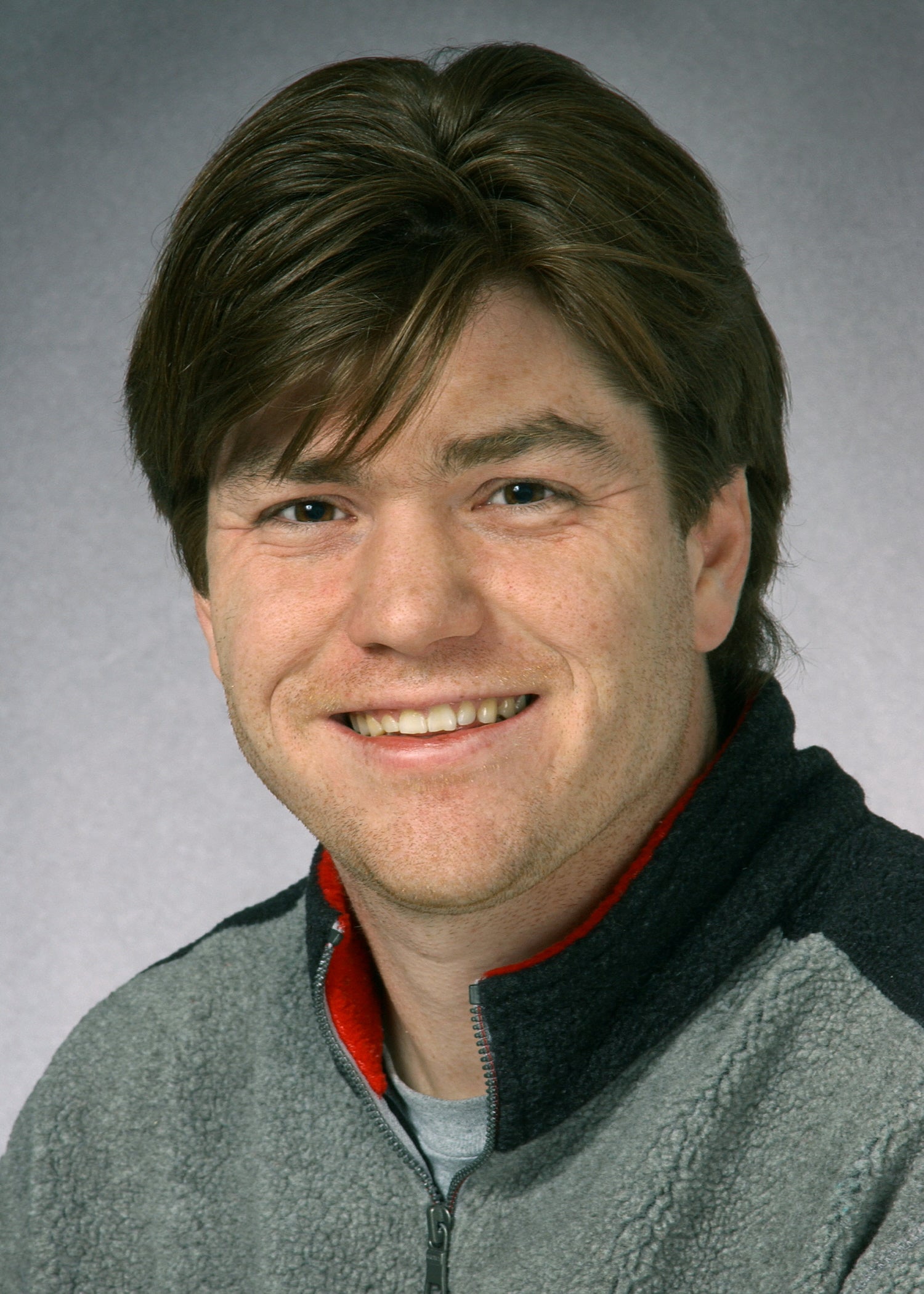
Gaël Thomas is a Senior Researcher at Inria Saclay and a part-time Professor at École Polytechnique. He leads the Benagil team, a joint initiative between Inria and Telecom SudParis/IP Paris. His research focuses on virtualization, operating systems, concurrency, and runtime systems, with an emphasis on improving system performance and safety. He holds a PhD and Habilitation from Sorbonne Université and has extensive academic experience, including roles as a Professor at Telecom SudParis (2014–2023) and an Associate Professor at UPMC (2006–2014). Education: PhD in Computer Science, 2005, UPMC Sorbonne Université Habilitation à Diriger les Recherches (HDR), 2012, UPMC Sorbonne Université MSc in Computer Science, 2001, MIAIF Program Research Interests: Gaël’s work spans virtualization techniques, NUMA architecture optimization, garbage collection scalability, lock-free algorithms, and persistent memory systems. He has pioneered solutions like J-NVM for Java NVMM and NumaGiC for big data systems. Grants & Awards: Principal Investigator of DiVA (PEPR Cloud, 868k€) and Maplurinum (ANR PRC, 184k€) Contributions to VMKit and infra-web-cours development Labs/Teams: Benagil Team (Inria/Telecom SudParis) focuses on systems and runtime optimization.
Dr. Patrick Beullens is an Associate Professor in Operational Research and Management Science at the University of Southampton's Southampton Business School. He specializes in applied research across ocean shipping, retail supply chains, logistics, and inventory control. His work integrates mathematical techniques such as stochastic processes, optimization algorithms, and game theory to address real-world challenges like environmental performance in shipping and food waste reduction. Key roles include Principal Investigator on EC-funded projects (e.g., SEABILLA, LOGMAN) and supervision of PhD students like Fangsheng Ge. Current projects focus on maritime emission abatement and economic ship speed models. He teaches Supply Chain Management, Risk Management, and Optimization courses. Research Groups: CORMSIS, Southampton Marine and Maritime Institute, Supply Chain Excellence Centre. Grants: Over £200k from Shell and SMMI for PhD scholarships, MoD-funded inventory projects, and EU initiatives. His research spans maritime economics, reverse logistics, and decision-making under risk. Collaborations include BAE Systems, EDF Energy, and international institutions like the Joint Research Centre.
Lokukaluge Prasad Perera is a Professor in Maritime Technology at UiT The Arctic University of Norway and a Senior Research Scientist in Smart Data at SINTEF Digital . He holds a BSc in Mechanical Engineering from Oklahoma State University (1999), MSc in Systems & Controls from the same institution (2001), and a PhD in Naval Architecture and Marine Engineering from Technical University of Lisbon (2012). His research focuses on Maritime and Offshore Systems , Advanced Data Analytics , Autonomous Navigation , Energy Efficiency , and Digital Twin Applications . He has published over 100 peer-reviewed papers and was recognized in the World's Top 2% Scientists (2021-2022) by Stanford University. Key professional experiences include roles at SINTEF Ocean (2014–2017), Center for Marine Technology and Engineering in Portugal (2008–2012), and Wärtsilä Finland (2012–2014). He has also held academic positions at Naval & Maritime Academy and Ocean University of Sri Lanka . His work addresses challenges in emission reduction , renewable energy integration , and safety-critical systems for maritime operations. Current projects emphasize trustworthiness of autonomous ships and data-driven decision frameworks for energy efficiency.
Virginia Page Fortna is the Harold Brown Professor of U.S. Foreign and Security Policy and Chair of the Department of Political Science at Columbia University. She is a leading scholar in international relations with expertise in conflict resolution, peacekeeping operations, and civil war dynamics. Professor Fortna earned her BA from Wesleyan University and completed her Ph.D. at Harvard University in 1998. Her academic career has been centered at Columbia where she has established herself as a prominent figure in international security studies through rigorous research and scholarly leadership. Fortna's research focuses on terrorism in civil conflicts, international climate politics, peace durability after wars, and war termination processes. Her work integrates quantitative and qualitative methodologies while addressing policy-relevant questions. She is particularly renowned for her groundbreaking studies on peacekeeping effectiveness that have reshaped academic understanding of post-conflict stabilization. Her scholarship consistently challenges conventional wisdom, as evidenced by recent work questioning whether terrorism is truly 'a weapon of the weak.' Her publication record shows an evolution from foundational work on peace agreements and ceasefire durability to more recent investigations of terrorist tactics in civil wars. Throughout her career, Fortna has maintained methodological innovation, often developing new datasets to address critical questions in international security. Her research combines theoretical diversity with empirical rigor, making significant contributions to both academic debates and policy discussions. Elected to the American Academy of Arts and Sciences (2021) Lenfest Distinguished Columbia Faculty Award (2014) Karl Deutsch Award from International Studies Association (2010) Fellowships at multiple prestigious research institutions Professor Fortna mentors graduate students through Columbia's Ph.D. program and teaches courses on international politics, climate change, war termination, terrorism, cooperation and security, and research methods. Her research has received substantial support through fellowships from leading academic institutions, reflecting the significance and policy relevance of her work in international relations. Based in New York with connections to Portland, Oregon, Fortna continues active research on terrorism in civil wars and international power dynamics in the anthropocene. Her scholarship remains highly influential in both academic and policy circles, particularly regarding effective conflict resolution strategies and international security frameworks.
David Wanik is an Assistant Professor in the Department of Operations and Information Management and Associated Faculty in the Department of Civil and Environmental Engineering at the University of Connecticut. He serves as Academic Director for Business Data Analytics at the Stamford campus and conducts research in the Eversource Energy Center, focusing on data science, natural hazards, remote sensing, and IoT applications in utility systems. PhD, MS, and BS in Environmental Engineering from University of Connecticut His research bridges natural hazard prediction, power grid resilience, and environmental data science. Key themes include: Machine learning for power outage prediction Climate change impact on energy demand Remote sensing for population and environmental monitoring IoT-enabled infrastructure hardening Recent publications emphasize deep learning for nighttime light imagery analysis, hybrid physics-data-driven models for grid resilience, and climate-integrated demand forecasting. His work integrates satellite data, LiDAR, and utility infrastructure records for predictive analytics. Teaching includes courses in business analytics, Python-based data science, and deep learning for the MS Business Analytics and Project Management program.
Dr. Zoe Li is an Associate Professor in the Department of Civil Engineering at McMaster University, with an additional role as an Associate Member in the Department of Computing and Software. She specializes in developing modeling and decision-support tools to address challenges in water resources management, environmental systems analysis, and climate change impacts. Her research focuses on hydrological modeling, probabilistic forecasting, risk analysis, and environmental systems optimization. She holds a B.Eng. from China and M.A.Sc./Ph.D. degrees from the University of Regina. Her work spans interdisciplinary collaborations, including studies on dam safety under climate change, wastewater treatment plant optimization, and AI-driven environmental monitoring. She has been actively involved in projects such as CityDNA, a digital tool to model urban environments for decision-making during crises like the pandemic. Dr. Li teaches courses in environmental systems engineering and principles of environmental engineering, emphasizing uncertainty quantification and sustainable practices. Her research publications (15+ recent articles) address topics like machine learning applications in environmental systems, climate change impacts on water resources, and infrastructure resilience. She advises graduate students in environmental engineering and systems optimization. Notable grants include funding from Roche Canada for pandemic-related urban modeling. Her work is frequently published in high-impact journals like Journal of Environmental Management and Water Resources Research .
Professor Stuart Phinn is a distinguished academic at the University of Queensland, serving as Professor in the School of the Environment and Centre Director of the Remote Sensing Research Centre (Earth Observation Research Centre). He also maintains affiliations with the Centre for Marine Science. With a career spanning over two decades, Professor Phinn has established himself as a leading expert in earth observation and environmental monitoring, with over 559 publications including 295 journal articles. His educational background includes a Bachelor (Honours) of Science (Advanced) from The University of Queensland and a Doctor of Philosophy from San Diego State University. Professor Phinn's leadership extends to founding directorships of Australia's national earth observation coordination body (www.eoa.org.au) and collaborative research infrastructure (www.tern.org.au), as well as a world-leading research-to-operational program supporting government environmental monitoring (www.jrsrp.org.au). He also leads the Earth Observation for Government Network. Professor Phinn's research focuses on monitoring environmental change using earth observation and field data. His work primarily involves using images collected from satellites and aircraft, combined with field measurements, to map and monitor Earth's environments and how they change over time. This research is conducted in collaboration with environmental scientists, government agencies, NGOs, and private companies. A growing aspect of his work focuses on national coordination of earth observation activities and the collection, publishing, and sharing of ecosystem data. His work provides solutions to support sustainable development and resource use for governments, industries, and communities. His recent publications demonstrate a consistent focus on applying earth observation technologies to solve environmental challenges across multiple domains. The 15 most recent articles reveal strong themes in coral reef mapping and monitoring, land cover change detection, fire resilience analysis, and advanced remote sensing techniques including multi-sensor fusion and machine learning applications. His work spans terrestrial, coastal, and marine environments, with significant contributions to understanding environmental change in Australia and internationally, particularly in Indonesia. Professor Phinn has secured substantial research funding from diverse sources including government agencies (Queensland Government, Great Barrier Reef Marine Park Authority), industry partners (SmartSat CRC, Blue Economy CRC), and international organizations (Google Inc, Vulcan Inc). Current projects include evaluating impacts of threats to endangered reptiles, automating tree-scale vegetation structure monitoring, and continuing the Joint Remote Sensing Research Program. As an academic supervisor, Professor Phinn has mentored numerous PhD and Master's students, with current supervision spanning topics from forest disturbance analysis to kelp forest mapping and fire resilience of mine site rehabilitation. His extensive supervision history demonstrates his commitment to training the next generation of earth observation scientists. The Earth Observation Research Centre he directs fosters a collaborative research environment focused on transforming satellite and airborne images with field survey data into meaningful environmental information for decision-making.
Nicola Peserico is a Research Professor in the Department of Electrical & Computer Engineering at the University of Florida, affiliated with the College of Engineering. His primary research focus is on Integrated Optical Circuits and Silicon Photonics, with an emphasis on heterogeneous integration, hardware for Machine Learning/Neural Networks, and biosensing applications using integrated photonics. Education: Ph.D. (2018), M.S. (2014), and B.S. (2011) in Telecommunication Engineering from Politecnico di Milano. His research explores cutting-edge photonic technologies for accelerating neural networks, including Fourier-based convolution operations, reconfigurable circuits for solving PDEs, and energy-efficient optical interconnects. Recent work highlights advancements in photonic-electronic ICs, thermal management in photonic systems, and overcoming bottlenecks in memory and compute architectures. His publications emphasize photonic tensor cores, joint transform correlators, and silicon photonics integration for AI acceleration. Notable contributions include roadmap analyses for neuromorphic photonics and innovative packaging strategies for photonic neural network accelerators. No scientific awards or grants are explicitly listed in the provided texts. His advising record is not documented here. Labs/Teams: His work is part of broader efforts in photonic computing and AI hardware acceleration at the University of Florida, leveraging silicon photonics for next-generation computing systems.
prof. dr. Irene Stengs is an Endowed Professor at Vrije Universiteit Amsterdam's Faculty of Social Sciences, specializing in Social and Cultural Anthropology. She holds a joint appointment with the Mobilities, Beliefs and Belonging (MOBB) research unit and is a senior researcher at the Meertens Instituut (KNAW). Her work focuses on popular religiosity, heritage formation, Dutch cultural identity, and Thai society. Key research topics include the cultural politics of 'Dutchness,' the heritagization of religion (HERILIGION project), and high-density events' role in shaping national identity. She has contributed to projects like ‘The Dutch Passion for the Passion,’ examining the popularity of religious performances in the Netherlands. Education: PhD in Cultural Anthropology from Universiteit van Amsterdam (thesis on Thai monarchy veneration) Research Interests: Irene explores how cultural heritage is commodified and politicized, particularly in the Netherlands and Thailand. Her work analyzes the interplay between secularization, colonial history, and contemporary rituals. She investigates how events like passion performances or cultural festivals act as 'high-density events,' intensifying national identity discourses and heritage formation. Research Projects: HERILIGION (HERA-funded): Examines religion's transformation into heritage in Europe. ‘Dutchness’: Studies cultural heritage's resurgence in the Netherlands, including its colonial legacy. Labs/Teams: Collaborates with the Meertens Instituut's Ethnology Department and leads the MOBB research unit at VU.
David Saunders is an Associate Professor in the Department of Statistics and Actuarial Science at the University of Waterloo, affiliated with the David R. Cheriton School of Computer Science. His research focuses on quantitative risk management, mathematical finance, and stochastic optimization with applications to credit risk, portfolio optimization, and derivatives pricing. Professor Saunders has held academic positions at the University of Pittsburgh and Cyprus International Institute of Management, and has consulted for institutions like RiskMetrics, TD Bank, and Central Bank of Cyprus. Education: PhD studies at the University of Toronto with industry collaboration at Algorithmics Inc., followed by roles at Cyprus International Institute of Management and University of Cyprus's HERMES Center. His work bridges theoretical stochastic analysis and practical financial risk management challenges. Research interests prominently feature credit risk management, optimal stopping problems, and analytical techniques in finance. Recent work addresses inverse default boundary problems, wrong-way risk in derivatives, and efficient algorithms for portfolio optimization under complex return distributions. Collaborations with financial institutions drive applied research in capital allocation, operational risk modeling, and regulatory compliance. Advising and grants include directing the Professional Science Master's in Mathematical Finance at Pitt, supervising student-industry projects on credit risk and CDO pricing, and securing funding for computational finance initiatives. Active in RiskLab Cyprus and HERMES European Center, his research extends to equity risk management and market risk frameworks.
Yu Jianxing is the Party Secretary of Zhejiang Gongshang University, overseeing the university's overall Party Committee operations and administrative leadership since 2023. He previously held roles as President and Deputy President of the university (2020–2023), and served as Dean of Zhejiang University's School of Public Administration (2015–2020). A distinguished academic, he holds a PhD in Philosophy from Fudan University (1999) and has been a visiting scholar at institutions such as the University of Edinburgh, Arizona State University, and several German universities. His academic leadership roles include directorships of key research institutes like Zhejiang Provincial Key Laboratory of Computational Science for Common Prosperity and editorships of influential journals like the Journal of Chinese Governance . Education: PhD in Philosophy (Fudan University, 1999); visiting appointments at University of Edinburgh (2004), Arizona State University (2006–2008), and multiple visits to German institutions (2011–2018). Earlier roles included distinguished professorships at Sun Yat-sen University and Zhejiang University. Research focuses on government reform, social governance, and public policy, with emphases on digital governance, civil society dynamics, and health care policies. He has led over 15 major research projects, including National Natural Science Foundation key projects and Ministry of Education initiatives. Key publications include Government Reform in the Digital Age (2023) and One-Stop Service Reform (2019), recognized with multiple national and provincial awards. Award highlights include the Yangtze River Scholars Distinguished Professorship (2012), State Council Special Allowance (2002), and three first prizes for outstanding research achievements from the Ministry of Education. His work bridges academia and policy, contributing to national initiatives like Zhejiang's Common Prosperity Demonstration Zone. He chairs or participates in over 20 national and provincial committees, including the State Council's Public Administration Discipline Evaluation Group and Zhejiang's Rule of Law Advisory Committee. His academic leadership extends to roles in China Social Governance Research Association and Zhejiang Public Administration Society.
Marco Toffolon is a Full Professor at the University of Trento's Department of Civil, Environmental and Mechanical Engineering, where he leads the Physical Limnology Laboratory. He serves as Deputy Director for International Relations and previously directed the Environmental Engineering programs. His research spans ecohydraulics, sediment transport, lake hydrodynamics, and environmental modeling. He investigates physical limnology, tidal morphodynamics, and stratified flows using analytical and numerical approaches. His work integrates field measurements with machine learning for water quality prediction and climate impact assessment. His publications focus on lake dynamics, river morphodynamics, and sustainable water management, with recent emphasis on climate-driven changes in alpine systems. Research demonstrates strong interdisciplinary linkages between hydraulics, ecology, and climate science. Awards: 2016 Coastal Engineering Journal Award 2013 Enrico Marchi Lecture invitation He leads international collaborations with institutions like EPFL and Sun Yat-sen University, and organizes conferences including the Physical Processes in Natural Waters workshop series.
Yulia Gel is a Professor in the Department of Statistics at Virginia Tech and serves as a Part-Time Program Director-Expert at the National Science Foundation (NSF). She holds a MSc (summa cum laude) and PhD in Mathematics from Saint Petersburg State University (Russia) and completed a postdoc in Statistics at the University of Washington. Her research focuses on uncertainty quantification in AI, statistical foundations of data science, spatio-temporal processes, and applications in climate science, healthcare, and blockchain analytics. She has received prestigious awards including the NSF Director’s Award (2023), ASA Distinguished Achievement Medal (2018), and TIES Abdel El-Shaarawi Award (2014). Gel has led grants on wildfire prediction, climate informatics, and blockchain data science. She serves on editorial boards of Statistica Sinica, Electronic Journal of Statistics, and Technometrics, and organizes workshops on AI for climate sustainability and fragile Earth systems. Her research group develops topological and geometric methods for graph neural networks, with applications to digital twins, environmental justice, and public health. Education: MSc (1997), PhD (2000) in Mathematics from Saint Petersburg State University; Postdoc in Statistics at University of Washington (2001–2003). Past roles include Professor at University of Texas at Dallas (2015–2024) and Associate Professor at University of Waterloo (2004–2014). Selected visiting positions include NASA Jet Propulsion Lab (2016–2017) and Isaac Newton Institute (2016–2017). She has pioneered statistical software packages like snowboot and funtimes for network inference and time-series analysis. Awards highlight her contributions to environmetrics and statistical methodologies. Current projects include NSF-funded research on AI-driven wildfire prediction and blockchain analytics for climate resilience. Her lab’s recent work emphasizes topological methods (e.g., zigzag persistence) for graph-based forecasting and adversarial robustness.