Mattias Villani is Professor of Statistics at Stockholm University, specializing in Bayesian statistics and machine learning. He obtained his PhD in Statistics from Stockholm University in 2000 and has held positions at Sveriges Riksbank and Linköping University. Villani develops computationally efficient Bayesian methods for inference, prediction and decision-making with flexible probabilistic models. Research Interests: His work spans Bayesian computation (MCMC, HMC, variational inference), machine learning (Gaussian processes, mixture models), and applications in neuroimaging, transportation, and econometrics. Research focuses on scalable Bayesian methods for large datasets and complex models. Publication Focus: Recent articles concentrate on Bayesian neuroimaging analysis, transportation network modeling, and efficient MCMC algorithms. Methodological innovations in subsampling techniques for large-scale Bayesian computation represent a significant research trend. Student Advising: Supervises PhD students in statistical methodology development and applications. Current research groups focus on spatiotemporal modeling, locally stationary processes, and neuroimaging statistics.
Massimo Poesio is a Professor of Computational Linguistics at Queen Mary University of London and a full Professor of Natural Language Understanding at Utrecht University. He leads the ARCIDUCA project (EPSRC-funded) on conversational agents and the Dealing with Meaning Variation project (NWO-funded) exploring NLP applications. His research focuses on anaphora resolution, games-with-a-purpose, and applying NLP to combat deception and misinformation. He is a Fellow of the Alan Turing Institute and supervises students in PhD programs like IGGI and Health Data in Practice. Education: Previous affiliations include University of Essex and University of Trento (founded CLIC Lab). Research Projects: DALI (ERC), SENSEI (EU), AnaWiki (EPSRC), and LiveMemories (Provincia di Trento). His work combines formal semantics with empirical methods, including brain data and corpus analysis. He has developed tools like Phrase Detectives and BART for anaphora resolution, and co-founded the Lingotowns platform for language learning.
Martin Reaney is a Professor and Ministry of Agriculture Strategic Research Program (SRP) Chair in Lipid Quality and Utilization at the University of Saskatchewan's Department of Food and Bioproduct Sciences, within the College of Agriculture and Bioresources. His research focuses on lipid chemistry, sustainable agriculture, and food technology, particularly in biodiesel production, flaxseed bioactives, and novel food products. Key research interests include optimizing lipid quality through refining techniques (e.g., electrostatic field processing, enzymatic degumming), developing functional food ingredients (e.g., aquafaba-based emulsifiers, flaxseed-derived peptides), and enhancing biofuel production. His work bridges agricultural innovation with industrial applications, emphasizing sustainability and nutritional value. Key Projects: Biodiesel optimization, flaxseed lignan extraction, cyanogenic glycoside removal in flaxseed through fermentation, and electrostatic refining of crude oils. Lab/Affiliations: SRP Chair in Lipid Quality & Utilization, affiliated with the University of Saskatchewan's Ministry of Agriculture initiatives. Contact: martin.reaney@usask.ca | 6E02 Agriculture Building. Publications span lipid processing, food safety, and nutraceutical development, with a focus on interdisciplinary approaches to address global food and energy challenges.
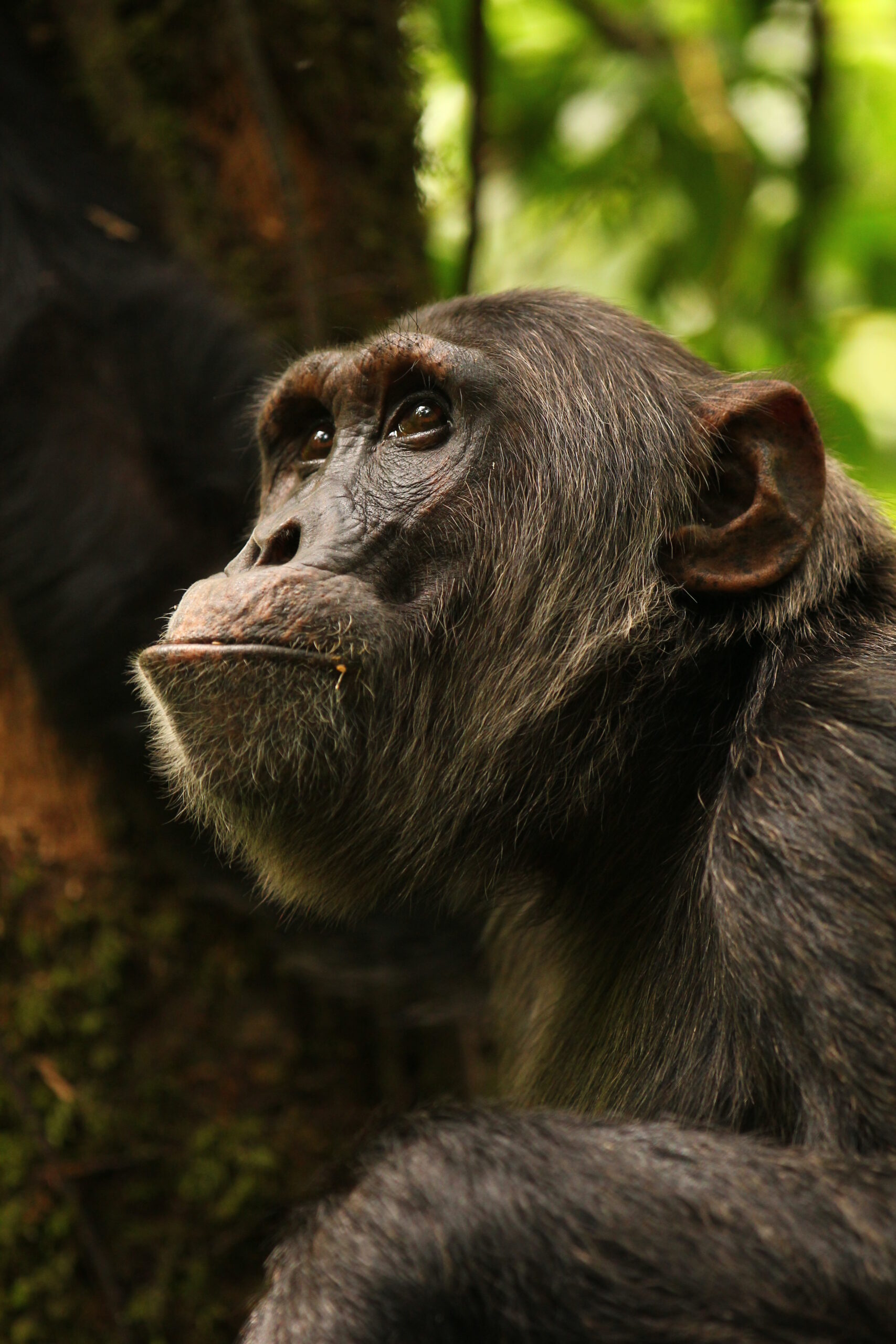
Dr. Kevin Langergraber is an Associate Professor at Arizona State University's School of Human Evolution and Social Change. His research focuses on primate behavior, conservation biology, and evolutionary anthropology, particularly through his leadership in the Ngogo Chimpanzee Project in Uganda's Kibale National Park. This long-term study examines chimpanzee social structures, health dynamics, and ecological interactions, with a strong emphasis on conservation strategies against poaching and disease transmission. Key research interests include genetic adaptation in primates, the impact of human activities on wildlife communities, and behavioral ecology across varying environmental conditions. He has pioneered methods combining genomic analysis, field observations, and machine learning to study ape behavior and biodiversity monitoring. His work integrates socioecological data with physiological measurements to understand aging patterns, reproductive strategies, and disease epidemiology in wild populations. Recent publications highlight advancements in wildlife conservation protocols, primate menopause studies, and innovative datasets for behavior recognition. Collaborations span global institutions to address challenges in primate conservation and evolutionary biology. Dr. Langergraber also engages in public outreach through documentaries and crowdfunding initiatives to fund anti-poaching patrols and support chimpanzee research.
Victor Tsai is a Professor of Earth, Environmental, and Planetary Sciences at Brown University. He specializes in seismology, geomechanics, and theoretical glaciology, with a focus on earthquake mechanics, glacial dynamics, and wave propagation. His research bridges geophysical theory and observation, addressing topics like fault network complexity, subglacial hydrology, and seismic tomography. Tsai holds a PhD from Harvard University (2009) and has been recognized with awards including the NSF CAREER Award (2015) and the Charles F. Richter Award (2014). Education: PhD (Harvard, 2009), AM (Harvard, 2006), BS (Caltech, 2004) Affiliations: Brown University (since 2019), previously at Caltech (2011–2019) Research highlights include modeling earthquake source complexity, understanding high-frequency ground motion, and developing new seismic imaging techniques. His work on glacial earthquakes and meltwater pulses has advanced climate-ice interaction studies. Collaborations span seismology, glaciology, and planetary science.
Sally Stares is a social psychologist and faculty member in the Department of Methodology at the London School of Economics (LSE). She specializes in survey methods, public opinion analysis, and public perceptions of new technologies. After nine years as a lecturer/senior lecturer at City, University of London, she returned to LSE, where she previously earned her MSc in Social Research Methods and PhD in Social Psychology. Her research focuses on science-technology-society interactions, particularly public attitudes toward self-driving vehicles, automated journalism, and criminal justice standards. Methodologically, Dr. Stares is an expert in survey design, latent variable models, and cross-national analysis. She has contributed to EU-funded projects on diversity-aware technology, global civil society metrics, and poverty typologies in Scotland. As an editorial board member of Public Understanding of Science , she emphasizes bridging gaps between scientific communities and the public. Her recent work explores audience reactions to automated media content and cross-national variations in automated vehicle acceptance. Publications span transportation policy, biotechnology ethics, and criminology, with a focus on empirical social science methodologies. She has advised organizations including the Social Mobility Commission and Mo Ibrahim Foundation on research design and implementation. Labs/Teams: Active in LSE's methodological research groups and collaborates with interdisciplinary teams on technology ethics and public engagement initiatives.
Bjorn Birgisson is the Chair of the School of Environmental, Civil, Agricultural and Mechanical Engineering and holds the Georgia Power E-Mobility Distinguished Professorship at the University of Georgia. His research focuses on infrastructure resilience, pavement engineering, materials science, and novel construction technologies. He has pioneered work on asphalt mixture performance, autonomous vehicle impacts on roadways, and extraterrestrial construction materials using lunar regolith. His interdisciplinary approach integrates computational modeling, experimental testing, and environmental sustainability. Educational Background: Ph.D., P.E. credentials are highlighted but formal education details are not provided in the text. His professional appointments emphasize practical application of research to real-world infrastructure challenges. Research Interests include: Transportation infrastructure resilience to climate change Advanced material characterization for pavements Additive manufacturing for space exploration Non-destructive evaluation techniques His recent publications (2020-2025) address: Moisture variation in clayey soils Pavement crack initiation modeling Autonomous truck infrastructure impacts Lunar regolith utilization Scientific Awards: Georgia Power E-Mobility Distinguished Professorship recognizes his contributions to sustainable transportation infrastructure. Advising/Grants: While student names are not listed, his research teams focus on doctoral-level projects in geotechnical engineering and materials science. Grant activities likely include federal/state transportation initiatives and space exploration partnerships. Labs/Teams: Active in the Boyd Research and Education Center, collaborating with industry partners on pavement testing and additive manufacturing technologies.
Marco Giacalone is a Research Professor at the Private and Economic Law Department (PREC) of the Vrije Universiteit Brussel (VUB), where he also serves as Co-Director of the Research Group on Digitalisation and Access to Justice (DIKE). He holds adjunct professorships at VUB (2018-2019) and has been a postdoctoral researcher at the Brussels Research Institute on Development, Governance, and Empowerment. His work focuses on the intersection of digital technologies and legal processes, particularly in Private International Law, ODR, and ADR. **Education**: PhD in Law (Doctor Europaeus, 2016) from VUB and University of Naples Federico II, specializing in Dispute Resolution and emerging IT realities. **Research Interests**: Digital transformation of legal systems, blockchain applications in justice, AI-driven conflict resolution, cross-border dispute mechanisms, and equitable algorithmic systems. His projects include EU-funded initiatives like CREA3 (Equitative Algorithms) and IDEA (Access to Justice tools). **Grants & Projects**: Over 10 projects funded by the EU, including EU683 (Equitative Algorithms), EU681 (IDEA), and EU676 (Digitalising Small Claims). Active in consortiums like IPSU 2022 (Digital Ius Knowledge Empowerment) and OZR4193 (VUB-UNIPARTHENOPE PhD collaboration). **Awards**: 2019 Best Paper Award and Marie Skłodowska-Curie Fellowship (2020). Extensive speaking engagements on topics like AI in judiciary, blockchain legal frameworks, and digital justice. **Labs/Teams**: Leads the DIKE Research Group and collaborates with the Brussels Research Institute. Involved in developing tools like Prodigit (digital tax justice) and CREA’s cloud-based decision support systems.
Frank Van Overwalle is a Professor of Psychology at Brussels University, affiliated with the Consultation Center Brain, Body and Cognition. His research focuses on Social Connectionism and Social Neuroscience, particularly the neural mechanisms underlying social cognition, mentalizing, and cerebellar contributions to social and cognitive processes. He has led over 40 research projects and published 214 peer-reviewed articles, including works on cerebellar sequencing, mentalizing, and neuroimaging techniques. His research highlights the cerebellum's role in social action prediction, implicit learning, and emotional processing. Notable projects include investigations into cerebellar tDCS effects on social cognition and collaborations on the neural basis of group stereotypes and Theory of Mind. Van Overwalle received the Tobie Jonckheere Award in 1989 for his doctoral work on educational psychology. He has participated in numerous conferences and serves on the boards of the Cognitive Neuroscience Society and Organization for Human Brain Mapping. His work bridges cognitive models with empirical neuroimaging data, emphasizing cerebellar contributions to higher-order social functions.
Anirban Chakraborti is a Professor at the School of Computational and Integrative Sciences, Jawaharlal Nehru University (JNU), New Delhi, India, where he has been a faculty member since 2014. He previously held academic positions at École Centrale Paris (France) as Chercheur Senior (Associate Professor) and Chargé de Recherche (Assistant Professor), and earlier roles at Banaras Hindu University, Brookhaven National Laboratory (USA), and Helsinki University of Technology (Finland). He is a leading figure in the interdisciplinary field of econophysics and complex systems. Education: Diplôme d’Habilitation à Diriger des Recherches (2013), Université Pierre et Marie Curie – Paris VI, France (Physics) Ph.D. in Physics (2003), Saha Institute of Nuclear Physics, Jadavpur University, India Post-M.Sc. in Physics (1999), Saha Institute of Nuclear Physics, Jadavpur University, India (Ranked First) M.Sc. in Physics (1998), University of Calcutta, India (Ranked First) B.Sc. in Physics (1996), Scottish Church College, University of Calcutta, India His research interests lie at the intersection of physics, economics, and data science. He is particularly known for pioneering work in econophysics , including the statistical mechanics of money, wealth distribution, agent-based market models, and network-based analysis of financial and social systems. He also works on complex systems , computational finance , statistical physics , and nanosciences , with applications in sensing and imaging. His work often involves modeling socio-economic phenomena using tools from statistical physics. His recent publications span topics such as financial fluctuations, wealth inequality, network analysis of conflicts, order book dynamics, and nanomaterial characterization. These works reflect a strong trend toward interdisciplinary research combining physics, economics, and data analytics, with a focus on real-world applications in finance, inequality, and social systems. Scientific Awards: Indian National Science Academy Young Scientist Medal (2009) He has advised Ph.D. students such as Kiran Sharma and leads the ETC (Experimental-Theoretical-Computational) Lab at JNU, which brings together physicists, computer scientists, and mathematicians. The lab has been involved in international collaborations, including projects funded by the Estonian Ministry of Education and Research and consultancies with TCS Innovation Labs and DONO Consulting. His research has been supported through grants and collaborative projects, reflecting strong industry and global academic engagement.
Professor Massimiliano Gubinelli is the Wallis Professor of Mathematics at the University of Oxford and a Professorial Fellow at St. Anne's College. He leads the Stochastic Analysis Group within the Mathematical Institute, where his research focuses on stochastic analysis, constructive quantum field theory, and the intersection of probability theory with partial differential equations (PDEs) and renormalization group methods. His work spans statistical mechanics of multiscale systems, analysis of PDEs with random terms, homogenisation theory, mathematical quantum mechanics, path-integral formalisms, and non-commutative probability/geometry. He has pioneered paracontrolled distribution techniques to study singular stochastic PDEs and explored rough paths in ramification and transport equations. Recent publications highlight advancements in the sine-Gordon model via stochastic quantization, nonlinear PDEs with modulated dispersion, and ρ-irregularity in stochastic systems. His research bridges stochastic analysis, quantum field theory, and PDEs, emphasizing pathwise behavior and renormalization. Scientific Awards Junior member of the Institut Universitaire de France (2013–2018) Invited session speaker at the 2018 International Congress of Mathematicians (ICM) in Rio He contributes to scientific software development as a lead developer of TeXmacs , an open-source platform for technical documents, and teaches courses such as C8.1 Stochastic Differential Equations (MT22). No formal student advisement or grant details are provided.
Konstantinos Gryllias is a Professor in the Department of Mechanical Engineering at KU Leuven's Faculty of Engineering Sciences. He leads research in the Mechatronic System Dynamics (LMSD) unit at the Arenberg campus. His academic affiliations extend across multiple KU Leuven institutes including Leuven.AI, Leuven.AM (Additive Manufacturing), and the Gravitation Institute. He serves on important governance bodies as a member of the Faculty Council of Engineering Sciences, Faculty Doctoral Committee of Engineering Sciences, and Departmental Council of Mechanical Engineering. Dr. Gryllias specializes in signal processing, fault detection and diagnosis of rotating machinery, condition monitoring, and machine learning applications in structural health monitoring. His research spans linear and nonlinear vibrations, anomaly detection, rotordynamics, and pattern recognition. His work bridges theoretical signal processing with practical engineering applications in wind turbines, marine propulsion systems, and industrial machinery. His recent publications demonstrate strong focus on deep learning approaches for wind turbine anomaly detection, bearing diagnostics, stern bearing lubrication optimization, and structural health monitoring using advanced signal processing techniques. The research shows increasing integration of explainable AI methods with traditional vibration analysis. Dr. Gryllias teaches advanced courses including Monitoring & Prognostics, Structural Dynamics, Smart Sensing Technologies, and Applied AI perspectives. His teaching portfolio reflects the interdisciplinary nature of his research, connecting mechanical engineering fundamentals with cutting-edge AI methodologies. He currently leads multiple research projects through 2025-2029, primarily as Promotor, focusing on fault detection in gears using fiber optic sensors, multi-sensor monitoring of drivelines, physics-inspired machine learning for condition monitoring, and digital twin applications for wind turbine efficiency improvement.
Sebastian Sobek is a Professor in the Department of Ecology and Genetics at Uppsala University, Sweden, where he specializes in limnology and biogeochemical cycling in inland waters. His research investigates carbon dynamics, greenhouse gas emissions, and sediment processes in lakes, rivers, and reservoirs under environmental change. Research Interests: His work focuses on carbon sequestration, methane and CO₂ emissions from aquatic systems, organic matter degradation in sediments, and the role of inland waters in the global carbon cycle. He integrates field observations, laboratory experiments, and modeling to understand ecosystem-scale processes. The recent publications highlight a strong trend in tropical and boreal aquatic systems, with emphasis on reservoir emissions, methane dynamics, and global-scale carbon flux predictions. Key themes include drawdown zone emissions, sediment methane production, and the impacts of climate warming on lake biogeochemistry. Scientific Awards: No awards listed in the provided text. Advising and Grants: He supervises several PhD students and postdoctoral researchers. He leads multiple funded projects including CLIMIPHY (FORMAS, 1.6 M€) and PredPeat (FORMAS, 1.6 M€), as well as projects funded by the Swedish Research Council (VR), Lamm Foundation, and Swedish Energy Agency, focusing on ecosystem restoration and climate impacts. Labs and Teams: His research group includes PhD students Simone Moras, Anna Bottone, Esra Reichert, Sahra Gibson, and Khadija Aziz, and postdoc Ana Ayala. The team conducts interdisciplinary research on carbon cycling, dam removal, peatland rewetting, and nature-based climate solutions.
Jean Philippe Gibert is the Joanne W. Markman and A. Morris Williams, Jr. Associate Professor of Biology at Duke University's Trinity College of Arts & Sciences. His research bridges ecological and evolutionary dynamics, focusing on microbial food webs and climate change impacts. Education: Ph.D. from University of Nebraska, Lincoln (2016) Research Interests: He investigates how phenotypic traits and their evolution determine predator-prey interactions and food web structure, particularly in microbial systems. Key areas include thermal performance curves, eco-phenotypic feedbacks, and spatially mediated ecological processes. Grants: Recipient of NSF CAREER funding (2024-2029), NSF Collaborative Research (2022-2026), Simons Foundation, and Department of Energy grants. His work spans climate change effects on microbial communities, organic matter decomposition, and nutrient cycling. Teaching: Offers courses in ecology, food web theory, and independent research. Maintains the Gibert Lab, emphasizing quantitative microbial food-web ecology in a changing world.
Dr. Samuel A. Moore is a Scholarly Communication Specialist at Cambridge University Library and Principal Investigator for the Materialising Open Research Practices in the Humanities and Social Sciences project, funded by Wellcome Trust, AHRC, and Research England Development Fund. He serves as an Affiliated Lecturer at Cambridge Digital Humanities and a College Research Associate at King’s College Cambridge. PhD in Digital Humanities from King’s College London His research bridges scholarly communication, metaresearch, and open science, with a focus on digital publishing , community-led open access , and academic governance . Recent work explores care ethics in publishing, the politics of author rights, and alternatives to corporate-controlled scholarly infrastructure. Key trends in his publications include open access policy critique, scholar-led publishing models, and interdisciplinary studies linking bioethics and academic labor. He co-founded the Radical Open Access Collective and advocates for progressive publishing ecosystems. Wellcome Trust grant AHRC grant Research England Development Fund grant Dr. Moore’s collaborations span libraries, research institutions, and global open science initiatives. His work emphasizes democratizing knowledge production and challenging commercial monopolies in academia.