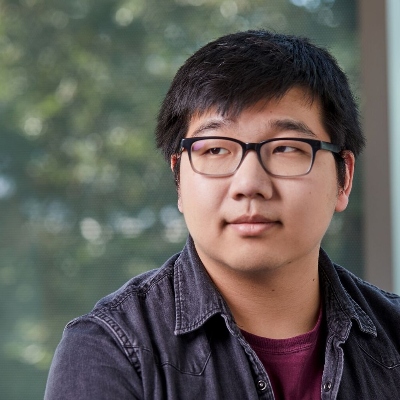
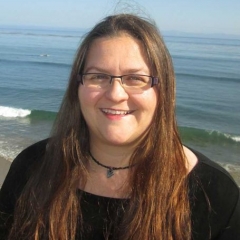
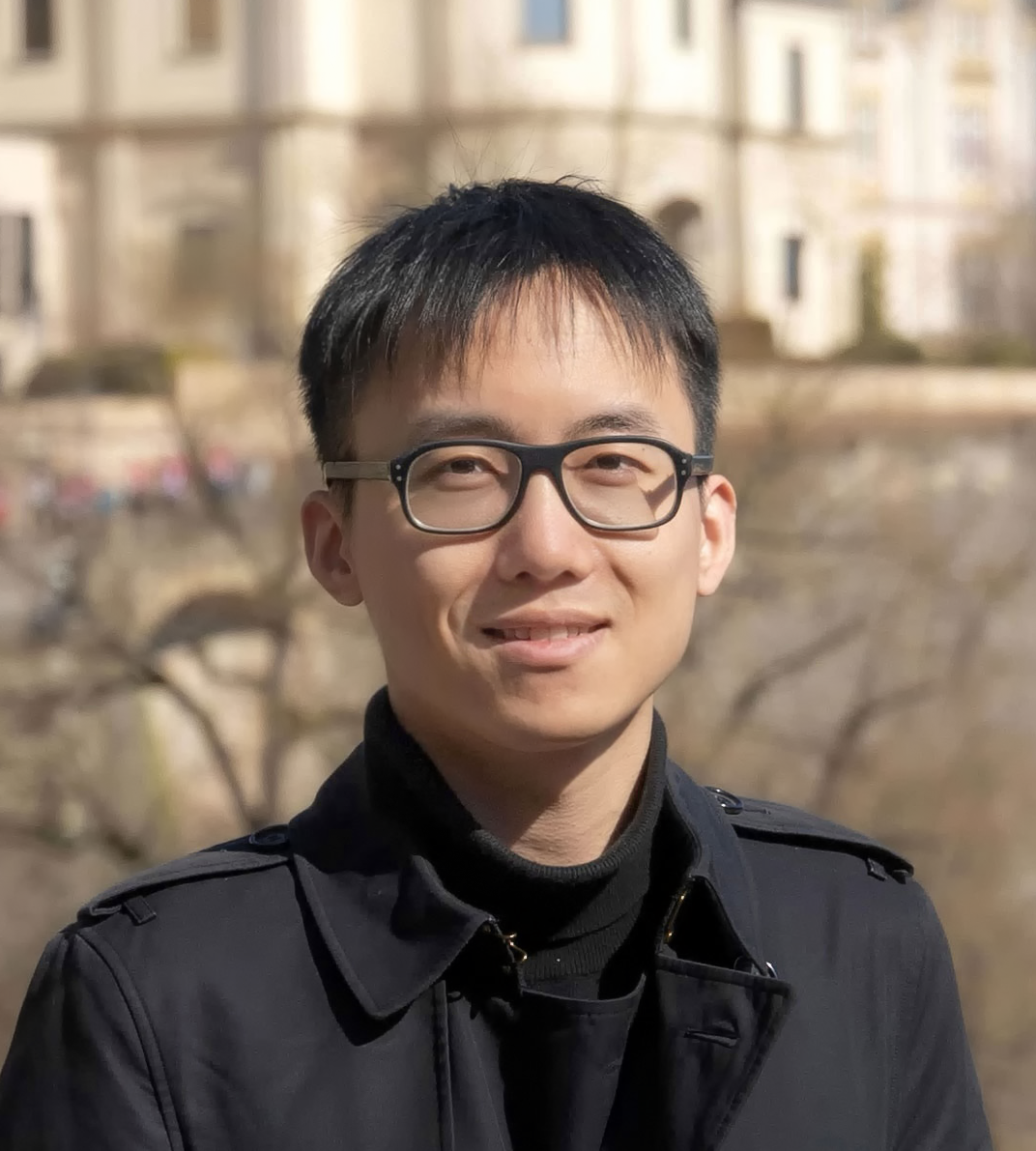
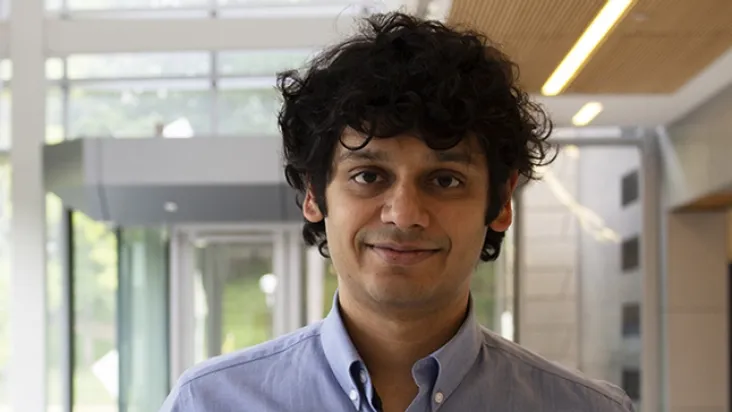
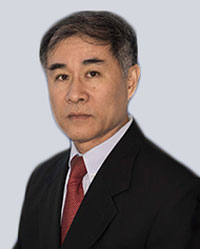
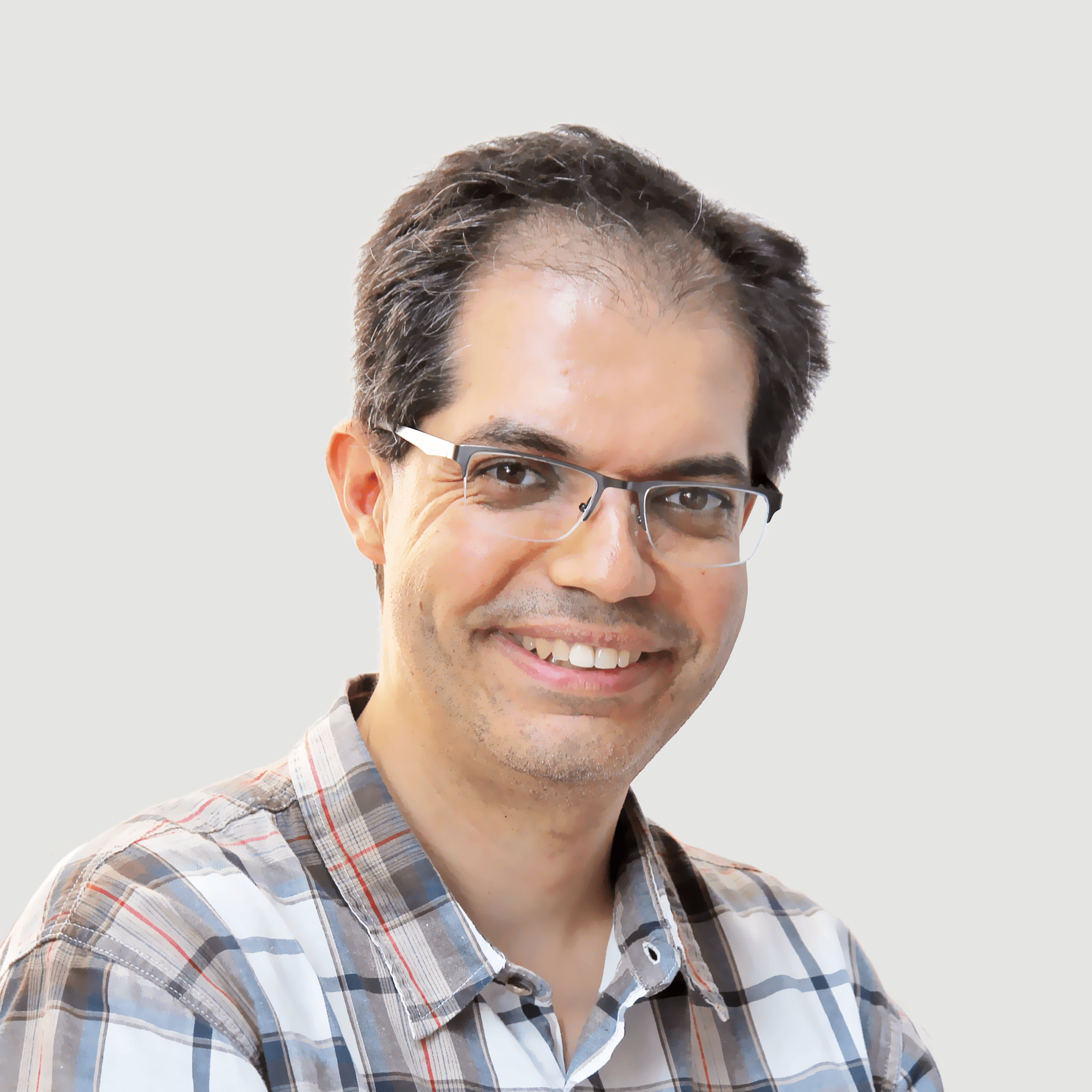
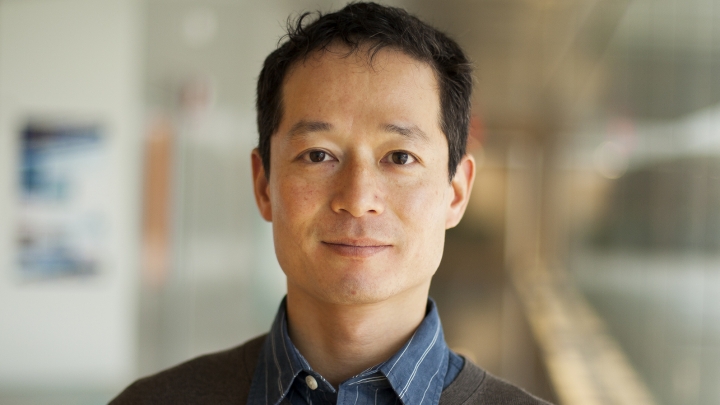
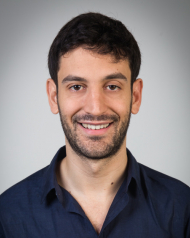
Simon King is a Professor of Speech Processing at the University of Edinburgh , affiliated with the School of Philosophy, Psychology and Language Sciences . He serves as Director of the Centre for Speech Technology Research (CSTR) and teaches courses like Speech Processing and Speech Synthesis , while directing the MSc in Speech and Language Processing . Research Interests His research focuses on: Developing new acoustic models (e.g., Linear Dynamical Models, factorial-HMMs) for speech recognition Advancing unit selection and HMM-based speech synthesis Integrating articulatory measurement data for enhanced modeling Exploring perceptual measures in synthesis criteria Building multilingual speech systems to identify universal speech building blocks Publication Trends Simon's recent work emphasizes deep learning (DNNs, LSTMs) in speech synthesis, multilingual frameworks , and articulatory-acoustic feature integration . His studies often bridge grapheme-based modeling , perceptual error reduction , and noise-robust synthesis . Scientific Awards EPSRC Advanced Research Fellowship (2005-2009) Students & Collaborations He has supervised numerous PhD students including Rasmus Dall, Tom Merritt, and Srikanth Ronanki. Current research fellows like Mirjam Wester and Zhizheng Wu contribute to projects such as Natural Speech Technology (NST) and Simple4All .
Jiatao Gu is an Assistant Professor in the Department of Computer and Information Science (CIS) at the University of Pennsylvania, with a part-time role as Staff Research Scientist at Apple (MLR). He holds a Ph.D. in Electrical and Electronic Engineering from the University of Hong Kong (2018) and a B.Eng. in Electronic Engineering from Tsinghua University (2014). His research focuses on generative machine learning and AI agent interaction with the physical world, emphasizing multi-modal systems spanning language, images, videos, and 3D. Key themes include efficient modeling , flexible architecture design , and scalable decision-making frameworks . 2025: ICLR paper on DART framework 2024: TMLR work on GFlowNet alignment 2023: NeurIPS research on diffusion stability 2022: ACL papers on speech translation Recent publications explore diffusion models for text-to-image synthesis, 3D reconstruction, and efficient sampling techniques. His work addresses fundamental challenges in attention mechanisms, entropy collapse, and multi-stage distillation while advancing non-autoregressive translation and vision-language reasoning . Prospective students can apply through his recruitment process at UPenn. Prior affiliations include Meta AI (FAIR Labs) and academic collaborations with institutions like New York University's CILVR Lab.
Megan Valentine is a Professor of Mechanical Engineering at the University of California, Santa Barbara (UCSB), affiliated with the College of Engineering. She leads an interdisciplinary research group focused on biological and bioinspired materials, investigating how forces are generated and transmitted in living systems to design responsive synthetic materials. Her work bridges engineering, physics, chemistry, and biology. Education: PhD in Physics from Harvard University, MS in Physics from the University of Pennsylvania, and BS in Physics from Lehigh University. Affiliations include the California NanoSystems Institute (CNSI), Materials Research Laboratory (MRL), Neuroscience Research Institute, and the Center for Stem Cell Biology and Engineering. Research interests span soft material mechanics, bioengineering, and systems biology, with applications in marine-inspired materials, mechanobiology, and soft robotics. Her lab employs advanced experimental techniques to study biophysical and biochemical mechanisms in living systems and translate them into engineered materials capable of self-healing, movement, and environmental responsiveness. Notable awards include the NSF Early CAREER Award, Fulbright Scholarship, and election as Fellow of the American Physical Society and American Institute for Medical and Biological Engineering. Her contributions emphasize creativity, collaboration, and diversity, with a focus on addressing societal challenges through interdisciplinary innovation.
Xingang Pan is an Assistant Professor in the College of Computing and Data Science at Nanyang Technological University (NTU), leading the MMLab@NTU. His research focuses on generative AI and visual content creation, particularly in generative models, 3D vision, computer graphics, and computer vision. Prior to NTU, he was a postdoc at the Max Planck Institute for Informatics and earned his Ph.D. from the Chinese University of Hong Kong (2021) and B.Sc. from Tsinghua University (2016). His work emphasizes generative intelligence, exploring long-term world simulation, diffusion models, and multi-scale 3D generation. Notable contributions include WORLDMEM (2025), Alias-free Latent Diffusion (2025), and SAR3D (2025). His research has been published in top venues like CVPR, ICCV, and SIGGRAPH. Xingang Pan oversees the MMLab@NTU, which actively recruits students globally without nationality constraints. The lab’s projects include GAN2Shape (unsupervised 3D reconstruction from 2D GANs) and LN3Diff (scalable 3D generation).
Simon Birrer is an Assistant Professor in Physics and Astronomy at Stony Brook University, specializing in cosmology and gravitational lensing. He holds a PhD from ETH Zurich (2016) and previously served as Kavli Fellow at Stanford University. Birrer leads research probing dark matter and dark energy using gravitational lensing phenomena. His group develops computational tools for analyzing strong gravitational lensing data to study cosmic expansion and dark matter distribution. Research areas include time-delay cosmography, Hubble constant measurements, and machine learning applications in astrophysics. Recent publications focus on multi-messenger gravitational lensing (2025), LSST survey applications (2025), and AI-powered lens modeling pipelines (2025). His work consistently addresses fundamental cosmological tensions like the Hubble constant discrepancy. Awards: Kavli Postdoctoral Fellowship (2019-2022) Kugelpyramide Lifetime Achievement Award Experimental Innovation Award (ETH Zurich) Research Group: Leads the SBU Strong Lensing group with 9+ graduate students and postdocs. The group participates in major collaborations including LSST Strong Lensing Science Collaboration (co-chair), LSST Dark Energy Science Collaboration, and TDCOSMO.
Professor Po-Ling Loh is a faculty member at the University of Cambridge, affiliated with the Statistical Laboratory within the Faculty of Mathematics. Her research focuses on statistical theory and methodology, with applications in machine learning, robust statistics, and medical imaging. She holds a professorship position and contributes to advancing computational and theoretical frameworks for high-dimensional data analysis. Loh’s work addresses challenges such as robust regression, differential privacy, and efficient algorithms for complex models. Her educational background includes studies at Cambridge and further academic pursuits, though specific degree details are not provided here. Research interests span statistical learning, adversarial machine learning, and the mathematical foundations of robust algorithms. She actively publishes in top-tier journals and conferences, addressing topics like neural network regularization, privacy-preserving synthetic data, and network analysis. Notably, Loh collaborates on projects involving medical image analysis (e.g., bone age estimation via BAE-ViT) and has contributed to methodological advancements in hypothesis testing and privacy-constrained inference. Her research often bridges theory and practice, emphasizing computational efficiency and statistical rigor. While no specific grants or awards are listed, her prolific publication record reflects sustained academic impact in statistical and machine learning domains. Loh is associated with the Statistical Laboratory, contributing to its research initiatives and possibly advising students in high-dimensional statistics and related fields. Her work frequently intersects with interdisciplinary applications, such as medical imaging and network science, underscoring the practical relevance of her theoretical contributions.
Aishwarya Agrawal is an Assistant Professor at Université de Montréal in the Department of Computer Science and Operations Research (DIRO), affiliated with Mila – Quebec Institute of Artificial Intelligence and a Canada CIFAR AI Chair. She also serves as a research scientist at Google DeepMind, spending one day weekly there. Education: B.E. in Electrical Engineering (IIT Gandhinagar, 2014), Ph.D. in Computer Science (Georgia Tech, 2019). Her research focuses on multimodal learning , deep learning , natural language processing , and computer vision , particularly in developing AI systems that 'see' and 'communicate' effectively. Grants & Awards: Canada CIFAR AI Chair, 2020 Sigma Xi Best PhD Thesis Award, NVIDIA Fellowship (2018–2019), and multiple fellowships from Google and Facebook. She leads projects like Advancing Multimodal Vision-Language Learning (CRSNG-funded) and StarDoc: Document Structure Extraction (MITACS). Research Contributions: Pioneered benchmarks like CulturalVQA and UI-Vision , and frameworks such as PROGRESS for efficient VLM training. Her work emphasizes cross-modal alignment, robust evaluation, and cultural understanding in AI systems. Labs/Teams: Active in Mila’s core academic group and collaborates with Google DeepMind on multimodal and vision-language research. Supervises a dynamic team of PhD and master’s students in Montreal.
Dr. Dong Nguyen is an Associate Professor in Leadership Management and Change in Education at Durham University's School of Education. He serves as Director of the Master’s Programme in Educational Leadership and Change, which focuses on leadership, management, and research in education. Additionally, he is Editor-in-Chief of the International Journal of Educational Management (IJEM), a core journal in educational leadership. His career includes roles as a lecturer (Assistant Professor) and Programme Leader at the University of Glasgow, a Research Associate at Nanyang Technological University, and a teacher in Vietnam. Nguyen’s research emphasizes building leadership capacity in the Global South, comparative education studies, and innovation in education. He has led projects such as an impact evaluation of a Rwanda school leadership development program (2023–2026) funded by VVOB and a review of school leadership’s role in teacher retention funded by the Education Endowment Foundation (EEF). His work explores leadership practices across sectors like education, business, and healthcare, with a focus on equitable systems and professional learning. Nguyen has received a Discretionary Award from Durham University (2023) and has delivered numerous invited talks, including at the Chinese University of Hong Kong (2024), the Asian Conference on Business and Economic Studies (2024), and Stockholm institutions (2023). He has served as an external examiner for UK universities (e.g., Leeds, Newcastle) and evaluator for grants like UK Research & Innovation and Swiss National Science Foundation. His supervision focuses on topics like school leadership, inter-organizational collaboration, and professional development. Nguyen’s recent articles highlight leadership’s role in teacher retention, autonomy, and PLCs in the Global South. He advocates for leadership practices that foster teacher collaboration, instructional support, and participatory decision-making, particularly in contexts like Singapore and Vietnam. His funded projects and editorial roles underscore his commitment to evidence-based educational policy and practice.
Ram Vasudevan is an Associate Professor and Associate Chair of Graduate Studies in the Department of Robotics at the University of Michigan. His research focuses on developing tools for safe and robust deployment of robotic systems, emphasizing optimization, nonlinear control, and real-world applications. Key areas include legged robot locomotion, shared control systems, and safety-critical autonomous systems. Research Interests: Optimization and control of nonlinear systems, locomotion of legged robots, shared control active safety systems, and automation of diagnostic/rehabilitative tasks. His ROAHM Lab prioritizes mathematical guarantees for robotic performance, with applications in medical robotics, autonomous vehicles, and soft robotics. Recent work emphasizes trajectory optimization, sensor fusion, and safety-aware control strategies. He has contributed to benchmarks for autonomous vehicle perception and novel methods in thermal image restoration using neural radiance fields. Awards: None explicitly listed in provided text. Labs/Teams: Directs the ROAHM Lab, collaborating on projects like robotic tail mechanics, real-time motion planning, and sensor data analysis. Active in academic conferences including RSS and ICRA.
Karen I. Winey serves as the Harold Pender Professor in the Department of Chemical and Biomolecular Engineering and Materials Science and Engineering at the University of Pennsylvania's School of Engineering and Applied Science. Her research group employs experimental and computational tools to investigate advanced polymers for energy applications, particularly focusing on proton and ion conductivity for fuel cells and batteries within the Laboratory for Research on the Structure of Matter (LRSM). Dr. Winey's research encompasses: Designing functional polymers to improve proton, hydroxide, and ion conductivity Studying polymer nanocomposites and nanoparticle dynamics in electrochemical devices Developing polymer-to-polymer upcycling methods to convert waste polyolefins to higher value polymers Revolutionizing understanding of ionomer morphologies beyond traditional spherical aggregate models Her recent publications reveal significant advances in sustainable energy materials, particularly fluorine-free alternatives to conventional polymer electrolytes. The research spans fundamental studies of ion transport mechanisms in precisely engineered polymers to practical applications in energy devices. A critical focus is understanding how nanoscale morphology affects macroscopic properties, with particular attention to structure-property relationships in ion-conducting polymers for fuel cells and batteries. Scientific recognition includes: 2025 Turner J. Alfrey Visiting Professor Harold Pender Professorship (endowed chair) NSF DMR Polymers grant awarded July 2025 Dr. Winey actively mentors a diverse research group including PhD students, postdoctoral researchers, and undergraduates. Her lab recently welcomed six summer undergraduates and has celebrated numerous student achievements including qualifying exam successes and award-winning presentations. Current major projects include the Port5 collaboration and the PolyUp project focused on polymer upcycling through dehydrogenation and functionalization strategies. The Winey Group operates within Penn's state-of-the-art Vagelos Laboratory for Energy Science and Technology (VLEST), maintaining active collaborations with institutions including the University of Konstanz in Germany, Florida State University, and Michigan State University. The group regularly hosts international visitors and participates in major conferences including the APS Global Physics Summit.
Prof. Li LU is a Professor at the Department of Mechanical Engineering, National University of Singapore (NUS). His research focuses on energy storage materials, ferroelectric systems, and advanced battery technologies. He holds editorial roles at Functional Materials Letters and Materials Technology – Advanced Functional Materials . Education: PhD from KU Leuven (Belgium), M.Eng and B.Eng from Tsinghua University (China). Research interests include thin film deposition, nanostructured materials, and solid-state electrolytes. His work addresses challenges in lithium/ sodium-ion batteries, solid-state interfaces, and high-performance energy storage systems. Recent studies emphasize aerosol deposition techniques, composite electrolytes, and interfacial stability. Publications highlight advancements in battery materials and electrolyte design. Notable contributions include ultra-stable sodium-ion batteries, ferroelectric-engineered electrolytes, and optimizing lithium metal anodes. His research bridges fundamental material science with practical energy solutions.
Pascal Poupart is a Professor and Canada CIFAR AI Chair at the Vector Institute, affiliated with the David R. Cheriton School of Computer Science at the University of Waterloo. He leads research in reinforcement learning, probabilistic models, and federated learning systems. Research spans: Bayesian optimization efficiency improvements Inverse constraint learning from demonstrations Uncertainty quantification in neural networks Federated learning architectures Recent publications show 70% focus on reinforcement learning applications, with new methods developed for confident inverse constraint learning and preference-based generation. Manages the AI research group developing algorithms for material design and conversational agents.
Ajmal Mian is a Professor of Computer Science at the University of Western Australia (UWA), affiliated with the School of Physics, Maths and Computing. He holds an Australian Research Council Future Fellowship (2022) and leads research in Artificial Intelligence, Computer Vision, and Machine Learning. His work focuses on 3D computer vision, adversarial AI defense, and explainable AI. His research interests include 3D point cloud analysis, face recognition, human action recognition, and remote sensing. He has published over 300 papers and secured major grants from ARC, NHMRC, and DARPA, totaling millions in funding. He has supervised 29 PhD students and mentored 12 postdoctoral researchers. Key projects include 3D diffusion models for scene generation, robust 3D vision systems, and defense against AI deception attacks. He serves as a fellow of IAPR, an ACM Distinguished Speaker, and has editorial roles at IEEE Transactions on Neural Networks and Pattern Recognition. Research Awards: HBF Mid-Career Scientist of the Year, West Australian Early Career Scientist of the Year, IAPR Best Scientific Paper Award. Grants: ARC Discovery Projects, National Intelligence & Security Discovery grants, DARPA grants for AI security. His teaching spans computer vision, machine learning, and programming courses. Collaborations include defense, medical, and agricultural applications.
Kazuhiro Saitou is a Professor of Mechanical Engineering at the University of Michigan, affiliated with the College of Engineering. His research focuses on computational design synthesis, topology optimization, and manufacturing process integration. He leads the Algorithmic Synthesis Laboratory (ASL), advancing algorithms for automated design and optimization of mechanical systems. Education: Ph.D. (1996), MIT; M.S. (1992), MIT; B.Eng. (1990), University of Tokyo. He has held tenured positions since 1997, including roles as Founding CEO of Comnext, Inc. (2007–2012) and visiting professorships at École Centrale Paris and Donghua University. Research interests include multi-material topology optimization (M^3 TO), AI-driven design, and sustainable manufacturing. Key projects address additive manufacturing, composite structures, and energy-efficient production systems. He has pioneered methods for manufacturability-driven design and assembly optimization. Notable awards include IEEE Fellow (2018), ASME Kos-Ishii Award (2015), and NSF CAREER Award (1999). He serves as Editor-in-Chief for IEEE Transactions on Automation Science and Engineering and holds leadership roles in ASME and IEEE societies. Teaching includes courses on design optimization, CAD, and global product development. His lab has advised over 30 students, with alumni in academia and industry. Current research explores biomechanical modeling, traffic flow optimization, and medical image registration algorithms.
Brenden Lake is an Associate Professor of Computer Science and Psychology at Princeton University, starting Fall 2025. Previously, he was an Associate Professor of Psychology and Data Science at New York University. He is the principal investigator of the lab for Human & Machine Intelligence, which moved from NYU to Princeton in 2025 and is jointly affiliated with the Department of Computer Science and the Department of Psychology. His lab is located in Princeton's Peretsman Scully Hall, rooms 117, 120, and 121. Ph.D., Massachusetts Institute of Technology, 2014 Lake's research focuses on the intersection of human and machine intelligence, specifically examining human cognitive abilities that elude current AI systems. His work centers on few-shot learning of new concepts, learning by generating new goals, learning by asking questions, and learning by producing novel combinations of known components. He employs modern neural network modeling approaches including meta-learning, fine-tuning LLMs, neuro-symbolic modeling, and learning from child headcam videos. His research aims to advance both psychology and computer science by exploring what makes human intelligence unique and using those insights to develop more powerful AI systems. Lake's recent publications demonstrate significant trends in grounded language acquisition through child perspectives, systematic generalization in neural networks, and the intersection of developmental psychology with AI. His work has appeared in top-tier venues including Science (2024) and Nature (2023), with multiple publications exploring how insights from human cognition can improve machine learning systems. His research shows how incorporating human cognitive ingredients can make AI systems more powerful and human-like while addressing longstanding debates about neural network capabilities. Science publication (2024) on Grounded language acquisition through the eyes and ears of a single child Nature publication (2023) on Human-like systematic generalization through a meta-learning neural network Multiple publications covered by major media outlets including New York Times and Washington Post Lake advises Ph.D. students in computer science, psychology, and related fields through his lab. His research is supported by publications in top venues across computer science and cognitive science. He teaches courses including Computational Cognitive Modeling and Advancing AI through Cognitive Science, bridging the theoretical and practical aspects of his research. Lake leads the lab for Human & Machine Intelligence, which studies the ingredients of intelligence in humans and machines. The lab investigates human cognitive abilities that current AI systems cannot replicate, with the dual goal of advancing psychological understanding of human intelligence while developing more capable artificial intelligence systems. Current research focuses on few-shot concept learning, learning through goal generation, and learning by asking questions.