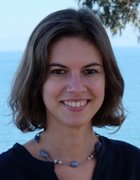
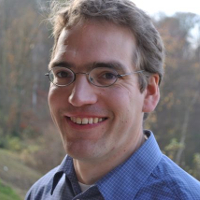
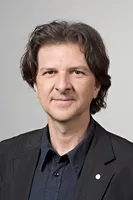
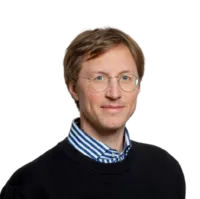
Prof. Raphaële Clément is affiliated with the Materials Research Laboratory at the University of California, Santa Barbara. Her research focuses on using NMR spectroscopy to investigate ionic conduction mechanisms in battery materials, bridging atomic-level structural insights with macroscopic electrochemical performance. Her work integrates solid-state NMR , pulsed field gradient NMR , and first-principles calculations to understand ion diffusion processes in systems like Li/Na-ion conducting rocksalt halides and polymeric ionic liquids. This multiscale approach connects local structural features to material synthesis and processing conditions. Notably, her 2022 publication on disordered battery materials highlights the interplay between crystallinity, ion dynamics, and electrolyte functionality. While specific awards or student advisement details are not mentioned in the provided text, her methodologies emphasize the synergy between experimental and computational analysis in advancing energy storage technologies.
Dr. Pablo Oteiza serves as Research Group Leader at the Max Planck Institute for Biological Intelligence in Martinsried, Germany, where he leads the Flow Sensing research group. Previously, he was Group Leader at the Max Planck Institute for Ornithology (2019-2024) and Research Associate there (2016-2019). His academic journey includes a postdoctoral fellowship at Harvard University's Department of Molecular and Cellular Biology and Center for Brain Science (2010-2016), and graduate studies at Universidad de Chile and the Max Planck Institute for Molecular and Cellular Biology (2004-2010). Dr. Oteiza's research program investigates how aquatic animals sense and respond to their hydrodynamic environment. His quantitative behavioral approach seeks to understand the fundamental principles governing flow navigation in fish and amphibians. His work spans sensory biology, neuroscience, biomechanics, and evolutionary biology, with zebrafish serving as a primary model organism. His research bridges physical hydrodynamics with biological sensory mechanisms, exploring how organisms extract meaningful information from fluid movements. Analysis of Dr. Oteiza's publications reveals a research trajectory evolving from developmental biology toward specialized sensory mechanisms. His work in high-impact journals demonstrates consistent focus on sensory systems across multiple scales - from cellular and molecular mechanisms to whole-organism behavior. His research shows particular strength in connecting physical stimuli with neural processing and behavioral outputs, especially in aquatic environments. As Research Group Leader, Dr. Oteiza oversees a laboratory investigating fundamental questions about hydrodynamic sensing. His team employs advanced techniques to study neural circuits, sensory processing, and behavioral responses to water flow, contributing significantly to our understanding of how organisms interact with their fluid environments. His collaborative work extends across international institutions, reflecting the interdisciplinary nature of his research.
Ewa Batyra is an Affiliate Researcher at the Laboratory of Fertility and Well-Being within the Max Planck Institute for Demographic Research (MPIDR). Her work focuses on global demographic patterns related to fertility, family formation, and socioeconomic disparities. Key Research Areas: Fertility dynamics, child marriage, union formation, and the impact of education on demographic transitions. Geographic Focus: Global South, particularly Sub-Saharan Africa and Latin America. Recent Trends: Batyra's publications analyze post-disaster fertility shifts, unintended pregnancy outcomes, and the role of income inequality in delaying parenthood. She employs cross-national datasets and advanced statistical methods like fixed-effects modeling. Collaborations: Works with institutions such as the University of Pennsylvania (Hans-Peter Kohler), University of Oxford (Tiziana Leone), and Brazilian research teams on fertility forecasting.
Prof. Dr. Arne Traulsen is a Scientific Member and Director of the Department of Theoretical Biology at the Max Planck Institute for Evolutionary Biology in Plön, Germany. He leads interdisciplinary research integrating biology, physics, mathematics, and computer science to study evolutionary dynamics, particularly in cancer evolution, metaorganisms, and population structure. His work often involves collaborations with clinicians, experimentalists, and bioinformaticians. Education: Diploma in Theoretical Physics (2002) Doctorate from Kiel University (summa cum laude, 2005) Research Interests: Arne’s research focuses on evolutionary game theory, finite populations, group selection, mathematical models for cancer , and population structure . His team explores how mutations accumulate, how cooperation evolves, and how eco-evolutionary dynamics shape biological systems. Recent work connects chaotic turnover in ecosystems and evolutionary responses to treatment with broader biological questions. Scientific Awards: Postgraduate Grant of Studienstiftung des Deutschen Volkes Postdoc Grant of Deutsche Akademie der Naturforscher Leopoldina Emmy-Noether Grant of Deutsche Forschungsgemeinschaft Young-Scientist Award for Socio- and Econophysics (2012) Advising and Collaborations: While specific student names are not listed, Arne has hosted numerous research groups and mentored interdisciplinary teams. His work spans collaborations with institutions like Kiel University , the CRC 1182 Metaorganisms , and global researchers in evolutionary biology and computational modeling .
Ingo Grevemeyer is a Scientist at GEOMAR Helmholtz Centre for Marine Research and an apl-Professor at Christian-Albrechts University in Kiel. He specializes in marine geodynamics , focusing on the seismotectonics of plate boundary zones, particularly transform faults, subduction zones, and mid-ocean ridges. His research involves ocean-bottom seismometer (OBS) deployments and geophysical data analysis to study seismicity, source mechanisms, crustal structure, and tectonics. He has participated in 37 marine geophysical cruises, serving as chief scientist 18 times. His research interests span seismotectonics , marine geophysics , crustal seismology , and heat flow surveys of mid-ocean ridges, hotspot provinces, and subduction zones. His recent work, funded by an Advanced Grant of the European Research Council , explores the seismotectonics of transform faults. Over the past decade, Grevemeyer has published extensively on topics such as subduction zone dynamics , transform fault earthquakes , mantle serpentinization , and crustal accretion . His peer-reviewed output includes 154 publications, with 37 as first author, reflecting a strong h-index of 41 (Web of Science) and 49 (Google Scholar). Scientific Awards: Advanced Grant of the European Research Council
Prof. Ueli K. Heiz is a Professor and Principal Investigator at the Technical University of Munich (TUM), leading the Cluster Catalysis and Advanced Spectroscopy group within the Department of Chemistry. His research focuses on the unique properties of atomic-scale clusters in the non-scalable size regime, exploring their applications in catalysis (nanocatalysis, asymmetric catalysis, photocatalysis) and energy conversion. He develops advanced experimental tools like ECSTM (Electrochemical Scanning Tunneling Microscopy) and UHV (Ultra-High Vacuum) systems for studying cluster dynamics and reactivity. Key research areas include clusters at solid-liquid interfaces, gas-phase cluster kinetics, and ambient pressure photocatalysis. His group investigates how quantum size effects and precise atomic structures influence catalytic performance. Associated with TUM’s Chair of Physical Chemistry , his work bridges fundamental chemistry with practical applications in sustainable energy technologies. The group collaborates with initiatives like the Munich Catalysis Alliance (MuniCat) and operates specialized facilities such as the Magnetron Sputtering Cluster Source and Spectroscopy labs. His research has led to advancements in understanding reaction mechanisms on size-selected clusters, including methane coupling, alcohol photocatalysis, and enantiospecific surface interactions. Funding sources include the Collaborative Research Centre (CRC) and other institutional grants. While no personal awards are explicitly listed, his contributions to catalysis and spectroscopy methodologies are highlighted through high-impact publications in Journal of the American Chemical Society and Angewandte Chemie .
Dr. Paul Trauttmansdorff is a Research Fellow at the Chair of Philosophy and History of Science and Technology at the Technical University of Munich, and a Fellow of the Ethical Data Initiative. His research focuses on digital governance, migration, and the ethical implications of data infrastructure. He holds a PhD from the University of Vienna, where his thesis explored future visions of borders and digital migration governance in Europe. He previously worked at the University of Bologna and the European New School of Digital Studies. Education: BA Philosophy, University of Vienna BSc Socioeconomics, Vienna University of Economics and Business MSc Political Sociology, London School of Economics PhD Science and Technology Studies, University of Vienna (supervised by Ulrike Felt) Research interests include datafication practices, governance of digital infrastructures, biometric technologies, and their social/political impacts. He has contributed to projects such as the ERC StG 'Processing Citizenship' and the ENS Chair of Sociology of Technology. Key awards include the 2023 Early Career Award and 2022 sowi:doc Award. He is a member of networks like STS-MIGTEC and COST Action CA22135. His recent work emphasizes ethical data practices, resilient data systems, and controversies in digital border governance. Publications span books, journal articles, and policy manifestos analyzing EU border digitalization, data interoperability challenges, and migration governance frameworks.
Gerd Althoff is a distinguished Professor of Medieval History at the University of Münster, where he has served as Director of the Institute for Early Medieval Studies since 1997. He is actively involved in the Cluster of Excellence "Religion and Politics in Pre-Modern Cultures," leading research projects on religious categories of historical interpretation and the role of the Church in political decision-making. Previously, he held professorships at the universities of Bonn (1995) and Gießen (1990), establishing himself as a leading authority in medieval studies across German academia. Althoff's academic journey began with his Abitur at Amtsgymnasium Ibbenbüren in 1963, followed by studies in History and German Studies at the universities of Münster and Heidelberg (1965-1970). He earned his PhD from the University of Münster in 1974, served as an Assistant Lecturer at the University of Freiburg/Breisgau (1974-1980), and completed his postdoctoral lecture qualification (Habilitation) at the same institution in 1981. His academic career spans over five decades, marked by significant contributions to medieval historiography. Professor Althoff's research focuses on the intricate dynamics of medieval power structures, particularly examining how rituals, symbolic communication, and conflict resolution shaped political authority in the Middle Ages. His work explores the interplay between religious and secular power, with special attention to the Ottonian and Salian periods of German history. He investigates how medieval societies conceptualized divine justice, royal authority, and the mechanisms of trust-building that maintained social cohesion. His approach combines meticulous archival research with theoretical frameworks from sociology and communication studies, offering fresh perspectives on medieval political culture. Althoff's extensive publication record reveals a consistent focus on how power was negotiated, displayed, and maintained through ritualized practices in medieval Europe. His recent works demonstrate growing interest in the religious dimensions of historical interpretation, particularly how medieval thinkers understood divine intervention in worldly affairs. The recurring themes across his scholarship include the fluid boundaries between church and state, the performative aspects of political authority, and the evolving structures of medieval governance. His comparative approach, examining both German and broader European contexts, has significantly advanced our understanding of medieval political culture. Research Prize of the University of Münster (2005) Throughout his career, Professor Althoff has supervised numerous doctoral students whose work reflects his diverse research interests, from political rituals to religious authority in medieval Europe. His leadership extends to major collaborative research initiatives, including serving as Spokesperson for the Cluster of Excellence "Religion and Politics in Pre-Modern Cultures" (2007-2011) and as co-initiator and speaker of Collaborative Research Centre 496 "Symbolic Communication and Social Value Systems from the Middle Ages to the French Revolution" (1997-2003). His international recognition is evidenced by invitations as Visiting Professor at prestigious institutions including the École des Hautes Études en Sciences Sociales in Paris (1998) and the University of California, Berkeley (1995). As Director of the Institute for Early Medieval Studies at the University of Münster, Althoff has fostered a vibrant research environment focused on interdisciplinary approaches to medieval studies. His institute has been instrumental in advancing the field through graduate programs including "Written Culture and Society in the Middle Ages" and "Social Symbolism in the Middle Ages." The collaborative research culture he has cultivated continues to produce significant scholarship on medieval political, religious, and social structures.
Prof. Dr. Hildegard Westphal is Professor for Geology of the Tropics at University of Bremen and Programme Area Lead (PA 4) and Working Group Leader for Geoecology and Carbonate Sedimentology at Leibniz-Zentrum für Marine Tropenforschung (ZMT) in Bremen, Germany. She previously served as Director of the Leibniz-Centre for Tropical Marine Research (2010-2020) and Scientific Vice President of the Leibniz Association (2011-2017). Currently, she also holds a Visiting Faculty position at King Abdullah University of Science and Technology in Saudi Arabia since 2021. Her academic career includes undergraduate studies at Tübingen University (1988-1994), doctoral research at GEOMAR Forschungszentrum (1995-1997), postdoctoral work at University of Miami (1998-1999), and Assistant Professor position at Hannover University (1999-2003). She received her Habilitation in 2004 and held a Heisenberg grant from University of Bremen (2005-2010) before becoming Chair for Sedimentology at Heidelberg University in 2010. Prof. Westphal's research focuses on carbonate sediments as environmental and climate archives, examining how carbonate systems, particularly coral reefs, respond to sea-level fluctuations. Her work investigates coral island dynamics and carbonate coastlines while studying ocean acidification effects on skeletal structures. Through fieldwork in tropical regions worldwide, she has established herself as a leading expert in tropical carbonate systems and their responses to environmental changes. Her recent publications reveal a strong emphasis on climate change impacts on marine carbonate systems, with particular attention to coral reefs, foraminifera, and carbonate sedimentation processes. The research spans marine geology, paleoclimatology, and marine biology, often employing proteomics and metabolomics to understand physiological responses to environmental stressors. A notable trend is the increasing focus on anthropogenic impacts like microplastics alongside traditional climate change factors. Albert Maucher Award of the German Science Foundation DFG (2004) Walter-Schall Award of the Gesellschaft für Naturkunde in Württemberg e.V. (2003) Hans Cloos Award of the Geologische Vereinigung (2003) Prof. Westphal has led numerous international research projects examining carbonate systems across tropical environments worldwide. Her work involves collaborations across multiple continents, investigating coral reef systems from Indonesia to the Galápagos Islands. She has supervised numerous students and researchers, contributing significantly to capacity building in marine tropical research while influencing global research directions through her leadership roles in major scientific organizations. She leads the Working Group Geoecology and Carbonate Sedimentology at ZMT, which conducts research in various tropical regions worldwide. The group examines how these sensitive ecosystems respond to environmental changes through field studies, laboratory analyses, and innovative methodologies. They maintain strong international collaborations and contribute significantly to understanding tropical marine environments under changing climate conditions.
Esfandiar Mohammadi is an Associate Professor at the Institute for IT Security, University of Lübeck, leading the Privacy & Security (PrivSec) group and directing the AnoMed competence cluster. He has held tenured faculty positions since 2019 after postdoctoral research at ETH Zürich (2016-2019) and a PhD at Saarland University (2015). University of Lübeck (2015-present) ETH Zürich (2016-2019) Saarland University (2015) His research focuses on privacy-preserving technologies in machine learning, anonymous communication protocols, and formal verification of security properties. Recent work includes advancements in Mixnet scalability and federated learning with differential privacy guarantees. Key publication trends reveal a strong emphasis on privacy-preserving algorithms for machine learning (2024), cryptographic protocols for anonymous communication (2025), and security analysis of decentralized systems (2023-2025). Collaborations span institutions like ETH Zürich, Saarland University, and industry partners EnergieDock/NAECO Blue for the VeDS project. His group includes 11 researchers (5 PhD students) and software engineers working on topics like Differential Privacy Secure Multi-Party Computation Trusted Execution Environments
Thomas Wachtler-Kulla is a Professor in the Department of Biology II at Ludwig-Maximilians-University Munich, where he leads the Computational Neuroscience research group. He is a GSN full member and serves as the GSN Ombudsperson, offering neutral and confidential counseling for students. He is also the Group Leader and Scientific Director at the German Neuroinformatics Node (G-Node), contributing significantly to neuroscience data infrastructure. His research focuses on how the brain processes sensory signals, particularly in the visual system, aiming to understand neural coding, perceptual stability, and color vision under natural conditions. He employs neurophysiology, psychophysics, and computational modeling to investigate sensory processing, eye movement compensation, and efficient coding mechanisms. At G-Node, he develops software and hardware tools for organizing, storing, analyzing, and sharing neurophysiological data, promoting reproducible research. His recent work spans Bayesian models of hue perception, data management frameworks like DataLad and odML, and studies on honeybee neuroethology. He actively supervises graduate students and contributes to major initiatives such as NFDI-Neuro and the International Neuroinformatics Coordinating Facility, advancing standards for open and FAIR neuroscience. Scientific Contributions and Leadership: Scientific Director, German Neuroinformatics Node (G-Node) GSN Ombudsperson for student conflict resolution Key contributor to NFDI-Neuro and INCF Developer of tools for metadata management and data sharing He advises several current and former graduate students and is deeply involved in shaping data policies and infrastructure for the neuroscience community, ensuring scientific rigor and accessibility.
Prof. Heike Holbig is a dual-affiliation academic serving as an Associate at the GIGA Institute of Asian Studies (since 2024) and a professor at Goethe University Frankfurt. She holds a part-time chair (50%) for East Asian politics focusing on China within the Department of Social Sciences. Her career includes senior roles at GIGA and editorial leadership for journals like Journal of Current Chinese Affairs . Education: PhD in Chinese Studies (Heidelberg University, 1997), Master of European Studies (Berlin, 1999). Pre-doctoral studies in China and Germany. Research Interests: Chinese political ideology, state-society relations, authoritarian legitimacy, and comparative governance. Specializes in analyzing the Chinese Communist Party’s strategies for maintaining power through ideological frameworks and historical narrative control. Recent Work Trends: Recent publications focus on global governance legitimacy under multipolarity, China’s pandemic policies, and the implications of the 20th Party Congress. Her work bridges domestic Chinese politics with international relations. Grants & Projects: Led major projects like Legitimate Multipolarity (DFG-funded) and Ideological Change and Regime Legitimacy in China (BMBF-funded). Current projects address dissociation processes in international institutions. Labs/Teams: Active in GIGA’s policy advisory and research networks, collaborating with institutions like the EU and South Korean think tanks on Indo-Pacific strategies.
Prof. Dr. Eckart Woertz is Director of the GIGA Institute for Middle East Studies and Professor of Contemporary History and Politics of the Middle East at the University of Hamburg. He holds leadership roles at the German Institute for Global and Area Studies (GIGA), a Leibniz Institute, and serves on editorial boards of journals like the Middle East Journal and Food Security . His research focuses on Iraq’s contemporary history, Middle East political economy, energy security, and Euro-Mediterranean relations. Woertz has held senior positions at institutions such as CIDOB in Barcelona and Princeton University, and advised on Gulf economic studies. His academic work addresses pressing regional issues like economic diversification in the Gulf, post-invasion Iraq analysis, and climate change impacts. Education: Political Science, Islamic Studies, and Economics from Friedrich-Alexander University Erlangen-Nuremberg (1990–1995) with DAAD and DFG scholarships. Doctorate in 1999. Professional experience includes banking (2000–2006) and roles at the Gulf Research Center in Dubai (2006–2010). Research interests span geopolitical shifts, food security, and energy transitions. Key projects include the WONAGO initiative on global South narratives and the SAGE program on sustainable resource management. Media contributions include analyses on the Gaza conflict and Iran’s nuclear program. Teaching includes courses at Princeton and Hamburg Universities on Middle Eastern history and politics.
Wiebke Kirleis is Professor for Environmental Archaeology and Archaeobotany at the Institute for Pre- and Protohistory, Faculty of Arts and Humanities, Christian-Albrechts-Universität zu Kiel (CAU). She has held this position since May 2014 and was previously a junior professor at the same university from 2008 to 2014. She is actively involved in major interdisciplinary research projects, including the Cluster of Excellence ROOTS and the Collaborative Research Centre 1266 'Scales of Transformation', where she serves as co-speaker and technical platform speaker. PhD in Natural Sciences, University of Göttingen (2002) Diploma in Biology, University of Göttingen (1998) Studies in Botany, Anthropology, and Environmental History, University of Göttingen (1990–1998) Wiebke Kirleis' research centers on the interaction between humans and plants during the late Pleistocene and Holocene, with a focus on plant economy, domestication, agricultural development, and landscape transformation. Her work explores how wild and cultivated plants were used for nutrition, ritual, and technical purposes, and how agricultural innovations such as ploughing and manuring impacted Central European landscapes. She has a strong geographical focus on Northern and Central Germany, Southeastern Europe, the Near and Middle East, and Southeast and East Asia, particularly Indonesia. Her methodological expertise includes archaeobotany (analysis of charred and waterlogged plant remains), palynology (pollen and spore analysis from sediment cores), and anthracology (study of charcoal remains). Her recent research includes studies on broomcorn millet diffusion, early farming in Scandinavia and Russia, and plant use in Bronze Age settlements across Europe and Turkey. She leads and collaborates on numerous interdisciplinary projects, emphasizing the integration of botanical data into broader archaeological narratives. Her publications reflect a consistent trend in environmental archaeology, focusing on plant domestication, agricultural transitions, and human-induced landscape change. Keywords across her recent work include archaeobotany, palynology, Neolithic and Bronze Age subsistence, and environmental reconstruction. Her research spans subfields such as food security, cultural transmission of plant use, early monumentality, and socio-economic aspects of prehistoric agriculture. Board member, Cluster of Excellence ROOTS Co-speaker, CRC 1266 'Scales of Transformation' Speaker, ROOTS Technical Platform Board member, Johanna-Mestorf-Akademie Chair, Scientific Advisory Board, Dithmarschen Stone Age Park (since 2023) Full member, German Archaeological Institute (DAI) Elected member, Commission for Archaeology of Non-European Cultures (KAAK) Wiebke Kirleis has supervised numerous research projects funded by the DFG and other agencies, including the Graduate School 'Human Development in Landscapes'. She has advised students and collaborated internationally with institutions in Italy, Norway, Indonesia, and Australia. Her leadership roles in academic self-administration include serving on planning, budget, and equality committees at CAU Kiel. She is committed to science communication, having launched the digital exhibition 'Alles bleibt anders' and produced educational films on archaeobotany. She is also involved in mentoring female postdocs through the via:mento program. She leads the archaeobotanical component in the 'Superfood' module of the SFB 1266 digital exhibition and is actively involved in the ROOTS Cluster’s Subcluster 'Dietary ROOTS'. Her lab and research team operate within the Institute for Pre- and Protohistory, contributing to the university’s strong focus on interdisciplinary landscape archaeology.
Dr. Sinno Jialin Pan is a leading researcher in machine learning and artificial intelligence at Nanyang Technological University, Singapore. His work focuses on domain adaptation, sentiment analysis, and efficient neural network optimization. Key research areas: Machine Learning, Domain Adaptation, Reinforcement Learning, Sentiment Analysis Recent publications demonstrate expertise in time-series classification (2025) using hierarchical domain adaptation, LLM efficiency (2025) through expert pruning, and graph generation (2024) via spectral diffusion. His work spans both theoretical advancements and practical applications in neural architecture optimization and adversarial learning. Scientific contributions include: 2025: Virtual-label hierarchical domain adaptation 2024: Spectral diffusion for graph generation 2024: Multilingual jailbreak analysis in LLMs Current trends show increasing focus on large language model optimization and robust neural architectures , with applications in fault diagnosis, recommender systems, and misinformation detection.