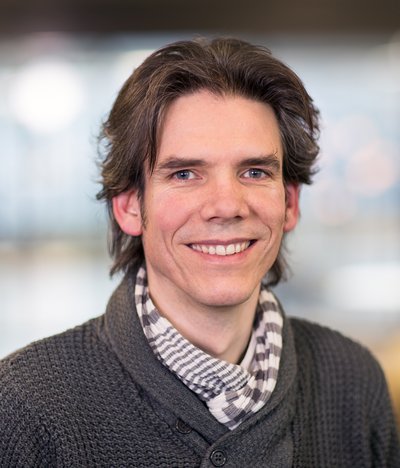
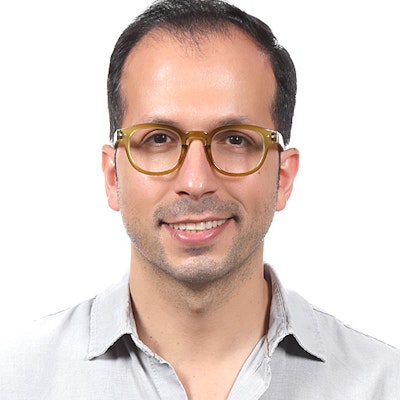
Michael Sandberg is a Tenure Track Assistant Professor at the Department of Mechanical and Production Engineering Design and Manufacturing, Aarhus University (AU Engineering). His research bridges mechanical engineering and sustainable manufacturing technologies. Primary Affiliation: Aarhus University Department: Mechanical and Production Engineering Design and Manufacturing His work focuses on: Additive Manufacturing: Optimizing fiber orientation and process-induced stresses in 3D printing. Composite Materials: Studying compaction in pultrusion processes. Digital Twins: Advancing modeling techniques for industrial applications. Sustainable Design: Developing life-cycle engineering simulations for circular economy practices. Key trends in his publications include: Integration of digital twin platforms with industrial processes. Advancements in thermoset composite manufacturing. Innovations in large-scale additive manufacturing. Contact: ms@mpe.au.dk
Dr Andrew Starkey is a Reader in the School of Engineering at the University of Aberdeen, where he also completed his PhD in 2001. He holds an Honours degree in Applied Mathematics from the University of St Andrews. He is actively involved in research and currently accepting PhD students in Engineering. His work bridges academia and industry, with a focus on AI applications in engineering, bioinformatics, and geosciences. University: University of Aberdeen School: School of Engineering Academic Rank: Reader Email: a.starkey@abdn.ac.uk Phone: +44 (0)1224 272801 Dr Starkey's research centers on Explainable AI (XAI) , Green AI , and Autonomous AI , with applications in robotics, econometrics, bioinformatics, seismic data analysis, and virtual reality. He has developed novel methods for feature selection, autonomous learning, and knowledge abstraction from agent-environment interactions. His work emphasizes low computational cost and transparency in AI systems. The most recent publications reflect a strong trend in applying AI to complex real-world problems, including digital rock technology, robotic grasping, real-time event detection, and medical data analysis. His interdisciplinary research combines machine learning with domain-specific knowledge in engineering and life sciences, often resulting in practical, industry-ready solutions. Millennium Product Award John Logie Baird Award for Innovation Enterprise Fellowship from Royal Society of Edinburgh and Scottish Enterprise Dr Starkey has supervised multiple research projects and secured funding from major bodies including EPSRC, BBSRC, and industry partners. His past work on the GRANIT project led to the development of AI-based condition monitoring for ground anchorages, resulting in commercialization through BlueFlow Ltd. He has collaborated with researchers across disciplines, including Dr Alasdair MacKenzie (bioinformatics), Dr Anne Schwab (seismic analysis), and Dr David Hazlerigg (genomics). He leads research in AI-driven engineering solutions and is the CEO of BlueFlow Ltd, a spinout company commercializing AI technologies developed at the University of Aberdeen. His lab focuses on developing autonomous, explainable, and environmentally sustainable AI systems for real-world deployment.
Carmen Brandt is a Professor of Contemporary South Asian Studies at the University of Bonn, Germany, where she has been a faculty member since 2017, first as a Junior Professor and since 2023 as a W2-Professor. She is affiliated with the Department of South Asian Studies within the Faculty of Humanities. Her academic journey began at Martin-Luther-Universität Halle-Wittenberg, where she earned her Magistra Artium in 2006 and her doctorate in 2015 with a dissertation on the 'Bedes' of Bengal. She previously served as a research associate and lecturer at Halle before joining Bonn. W2-Professor, University of Bonn (2023–present) Junior Professor, University of Bonn (2017–2023) Research Associate, Martin-Luther-Universität Halle-Wittenberg (2007–2016) Lecturer in Bengali, Halle (2006–2007) Her research focuses on language and script politics, minority discourses, nation-building, and the cultural dynamics of Bengal and Bangladesh. She investigates how writing systems serve as tools of identity formation and political contestation, particularly among marginalized communities such as the 'Bedes' and Balti people. Her interdisciplinary approach draws from sociolinguistics, cultural anthropology, and postcolonial theory. The 15 most recent publications reflect a consistent engagement with themes of script identity, ethnic marginalization, and geopolitical belonging. Her work spans monographs, journal articles, and edited volumes, often analyzing how language policies and media representations shape national and subnational identities in South Asia. She frequently collaborates with scholars across institutions and countries, contributing to transnational academic discourse. Scientific and Professional Memberships: Editorial Team, ASIEN journal Chairperson, Bengal Link e.V. Chairperson, Deutsche Gesellschaft für Asienkunde (DGA) Spokesperson Council, Working Group “Modern South Asia” (DGA) Member, Literaturforum Indien e.V. Member, Association of Asian Studies She has advised and organized numerous academic events, including the German South Asia Days and workshops on Tibetanness and language politics. She has delivered invited lectures across South Asia, Europe, and North America, demonstrating her international scholarly reach. Her work bridges academic research and public engagement, particularly through journalistic contributions on South Asian socio-political issues. Laboratories and Research Teams: While not leading a formal lab, she actively organizes and participates in collaborative research networks, including the Working Group on Modern South Asia and the German South Asia Consortium. She has co-organized multiple international conferences and workshops, fostering interdisciplinary dialogue among early-career and established scholars.
Arne Harms is a Senior Research Fellow at the Max Planck Institute for Social Anthropology, specializing in the Department of Anthropology of Politics and Governance. His work bridges environmental anthropology, ethics, and science and technology studies through fieldwork in East India, the Indian Himalayas, and Europe. Focus on environmental displacement and climate change Expertise in disaster studies and infrastructure analysis Current project examines regeneration practices in European climate activism Editorial role at Social Anthropology/Anthropologie Sociale Liaison officer for Hans-Böckler-Stiftung Research spans coastal erosion, market-based conservation, and the socio-political dimensions of environmental challenges. Publications analyze carbon forestry economies, climate anxiety mitigation strategies, and the paradoxes of green neoliberalism. Active in environmental anthropology since 2010, his work explores the intersection between ecological crises and human adaptation. Key themes include temporality, displacement ethics, and the material politics of climate responses.
Jana Gonnermann-Müller is a research assistant at the Chair of Business Information Systems, Processes and Systems at the University of Potsdam . Holding an M.Sc. in Psychology from Humboldt University of Berlin, her work focuses on human-machine interaction, particularly examining learning, decision-making, and trust in technological collaborations. Degree: Master of Science (M.Sc.) in Psychology Alumni: Humboldt University of Berlin Current Role: Scientific Associate at University of Potsdam Research explores cognitive factors in augmented reality and AI assistance systems , employing experimental designs and eye tracking methodologies. Key projects include investigating visual guidance in AR, comparing AR display types, and developing frameworks for generative AI in education. Publications (2023-2025) demonstrate expertise in digital education , cognitive load optimization , and technology-enhanced learning . Collaborations span institutions like Hong Kong Polytechnic University , University of California, Davis , and Weizenbaum Institute , with corporate consulting on learning technology implementation. Technical focus areas include: Human-System Design Optimization Eye Tracking & Usability Studies AI Recommender Systems Industry 4.0 Implementation Research applications extend to: Secondary Education Technology Assembly Line AR Integration Change Management Systems Maintenance AR Visualization
Arild Aspelund is a Professor at Nord University Business School , Norway, specializing in international entrepreneurship, sustainability innovation, and strategic management . With an extensive publication record spanning over two decades, he actively contributes to understanding how firms, particularly small and medium-sized enterprises (SMEs), navigate international markets, adopt circular economy strategies, and integrate sustainability into their core business models. Education & Academic Background: While specific degrees aren’t listed, his prolific research output and professorial role indicate advanced academic training in business, entrepreneurship, and strategic management. Research Interests: Aspelund’s research is deeply interdisciplinary, focusing on: International Entrepreneurship: Examining how firms, especially SMEs and born globals, internationalize rapidly and strategically. Circular Economy & Sustainability: Investigating how industries like offshore wind and manufacturing adopt circular practices to enhance competitiveness. Strategic Management: Analyzing leadership, governance, and innovation strategies in turbulent environments like COVID-19. Digital Transformation: Exploring barriers and enablers of digitalization in public and private sectors. Research Trends: His recent work (2020–2025) emphasizes resilience and sustainability , particularly how firms leverage circular economy strategies to remain competitive during global crises. Notable themes include the role of multi-sided platforms in maritime supply chains, board leadership in internationalization, and environmental innovation in manufacturing. Awards & Recognition: While no specific awards are listed, his extensive publication record in top-tier journals (e.g., Journal of Cleaner Production , Business Strategy and the Environment ) and frequent collaboration with doctoral students indicate significant academic recognition. Supervision & Grants: PhD Supervision: Aspelund has mentored numerous doctoral students, including Jørgen Veisdal, Fanny Hermundsdottir, and Ekaterina Shepeleva Bjørnåli, fostering research in sustainability and international business. Research Projects: His work is supported by projects on offshore wind, circular economy, and innovation policy, often collaborating with Norwegian industry and government bodies. Labs & Teams: While no specific lab is mentioned, his affiliation with Nord University Business School and collaboration with the Centre for Innovation and Entrepreneurship suggests active involvement in interdisciplinary research teams focused on sustainability transitions and global competitiveness.
Dr. Arham Muslim serves as a Professor in the Department of Computer Science at the School of Electrical Engineering and Computer Science (SEECs), National University of Sciences and Technology (NUST), Pakistan. He leads the Learning Technologies research group (Informatik 9), directing development of open-source learning analytics infrastructure with emphasis on user-centered design and academic ecosystem integration. His research program focuses on Learning Analytics and Educational Technology , specializing in open learning analytics platforms like OpenLAP. Key contributions include modular framework architectures, rule-based indicator systems, and data modeling standards that enable personalized learning experiences through academic network visualization and adaptive feedback mechanisms. His work bridges software engineering principles with pedagogical requirements in higher education contexts. Publications from 2013-2018 reveal consistent advancement in learning analytics ecosystems, with increasing emphasis on interoperability standards, open-source sustainability, and ethical implementation frameworks. The research trajectory demonstrates progression from foundational data modeling to sophisticated user-centered platform development, addressing critical gaps in educational data utilization. As head of the Learning Technologies research group at SEECs, he drives innovation in educational data systems through collaborative development of OpenLAP and related tools, positioning NUST as a significant contributor to global learning analytics research infrastructure.
PD Dr. phil. Evangelia Kordoni is a research assistant at Humboldt University of Berlin's Faculty of Linguistics and Literary Studies, specifically within the Institute for English and American Studies. Her office is located at Dorotheenstraße 28, Room 3.04, and she can be contacted via email for appointments. She is an active researcher in computational linguistics with a focus on grammar engineering and natural language processing. Kordoni's research primarily explores: Computational linguistics frameworks including HPSG grammar implementation Multiword expression processing and machine translation systems Treebank development for languages including English, German and Bulgarian Lexical acquisition methods for large-scale grammars Semantic parsing and disambiguation techniques Her work bridges theoretical linguistics with practical NLP applications. Kordoni's publication record shows consistent focus on deep linguistic processing, with recent emphasis on: Multiword expression analysis in machine translation systems Parallel treebank development for multilingual applications Verb subcategorization and compound noun disambiguation Dynamic annotation methodologies for Wall Street Journal texts Cross-linguistic studies of Germanic syntax
Daphna Harel (she/her) serves as Associate Professor of Applied Statistics and Director of the A3SR MS Program within the Department of Applied Statistics, Social Science, and Humanities at New York University's Steinhardt School of Culture, Education, and Human Development. She holds leadership roles including PI of the NYU QUEER data lab and membership on the steering committee for the DEPRESSD project. Education: PhD in Mathematics and Statistics from McGill University Harel's research focuses on measurement challenges in survey methodology, particularly for self-reported questionnaires in health and social sciences. Her work bridges theoretical statistics with practical applications in LGBTQIA+ data collection, differential item functioning, and patient-reported outcomes. She develops methodological frameworks for polytomous Item Response Theory and creates guidelines for statistical analysis of complex survey data. Her recent work emphasizes improving statistical practice for LGBTQIA+ populations and advancing queer data collection methods. Her publication portfolio demonstrates consistent focus on measurement validity across diverse health contexts, with recent work expanding into LGBTQIA+ data science. Her research shows increasing emphasis on methodological innovations for gender and sexuality measurement, with multiple publications presented at major conferences including AAPOR 2024 and LGBTQ+ Health Conference 2024. Research Leadership: PI of NYU QUEER data lab (founded Fall 2022) Steering committee member for DEPRESSD project Collaborator with Scleroderma Patient-centered Intervention Network Recipient of NIH R21 funding and NYU intramural grants Harel mentors a diverse team of graduate students through the Applied Statistics for Social Science Research program, focusing on inclusive research methods for marginalized populations. Her grant portfolio includes investigations into transgender voice training, LGBTQIA+ survey methodology, and healthcare access for gender-affirming services. Laboratory Leadership: As founder and PI of the NYU QUEER data lab, Harel leads research projects examining survey question design for gender/sexuality measurement, content moderation effects on hate speech, and accessibility of transgender voice training. The lab operates through collaboration between NYU Steinhardt and the NYU BITS lab, with research assistants drawn from the Applied Statistics MS program.
Leif Asp is a Professor in Lightweight Composite Materials and Structures at Chalmers University of Technology, working within the Division of Materials and Computational Mechanics. His research focuses on developing innovative materials that serve multiple functions, particularly structural batteries that can simultaneously store energy like a battery and carry mechanical load. Professor Asp's primary research interests include: Structural batteries and multifunctional composites Carbon fiber-based energy storage materials Synthesis, characterization, and design of multifunctional materials Mechanical and electrochemical properties of composite materials Computational modeling of structural battery systems Sustainable manufacturing and life cycle analysis of structural power composites His work bridges the gap between traditional structural materials and energy storage systems, creating what's often referred to as "massless energy" solutions. These materials could revolutionize industries like electric vehicles and aerospace by reducing overall weight while maintaining or increasing energy capacity. Analysis of Professor Asp's recent publications reveals a strong focus on practical implementation of structural battery technology. His research spans fundamental material science (characterizing carbon fibers for battery electrodes), engineering design (optimizing structural battery components), and systems integration (assessing viability for electric vehicles and aerospace applications). A notable trend is the increasing emphasis on sustainability, with several recent papers addressing recycling, life cycle analysis, and green synthesis methods for structural battery components. Professor Asp leads multiple significant research projects funded by prestigious organizations including the United States Air Force, Swedish Research Council, European Commission, and Swedish Innovation Agency. These projects focus on advancing structural battery technology from laboratory concepts toward practical applications. His research group appears to be highly collaborative, with numerous publications featuring co-authors from various institutions and disciplines, reflecting the interdisciplinary nature of structural power composites research.
Maria Loi is a Professor at the Faculty of Science and Engineering , University of Groningen, leading the Photophysics and OptoElectronics group. With over 321 research outputs and 17 datasets, her work focuses on the photophysics and optoelectronics of novel semiconductors including perovskites and quantum dots. Her research aims to understand and optimize semiconductor properties for applications in solar cells, LEDs, and photodetectors. Notable contributions include advancements in tin-based perovskites and unraveling hot carrier dynamics that challenge Shockley-Queisser limits. Scientific Awards : ERC Advanced Grant (2022) ERC Starting Grant (2013) Physica Prijs (2018) Fellowships: American Physical Society (2020), KNAW (2022), Royal Society of Chemistry (2022), EURASC (2022) Recent Trends : 2024-2025 publications emphasize defect passivation , scalable fabrication methods , hot carrier dynamics , and neuromorphic device applications in tin-lead and low-dimensional perovskites.
Johan Pieter Maria Hoefnagels is Associate Professor of Micromechanics of Materials at Eindhoven University of Technology (TU/e), Department of Mechanical Engineering, where he leads the independent Hoefnagels group and the strategic Multi-Scale Laboratory dedicated to integrated micro-mechanical testing. Education: MSc (2000) and PhD (2005) in Applied Physics, Eindhoven University of Technology – thesis on “A novel diagnostic approach for studying silicon thin film growth” . International research visits to IMEC (Belgium), SUNY Albany (USA), NIST (USA), Harvard University (USA), Colorado School of Mines (USA), and KAUST. Research Focus: His group integrates advanced micro-mechanical testing, high-resolution microscopy (SEM, EBSD, AFM, µCT, DIC) and numerical modelling to understand and control micro-scale damage and failure mechanisms in pursuit of durable, sustainable materials. Ductile damage and fracture in metals Interface delamination and adhesion in stretchable electronics Size effects in miniaturised components and thin films Crystal plasticity and martensite/ferrite interface mechanics Hybrid and multi-phase material systems Research Output & Trends: Since 2019 his work has concentrated on multi-scale experimental–numerical studies of advanced steels (martensite/ferrite interfaces, dual-phase steels), additive manufacturing (wire-arc 316L), stretchable electronics (Cu/rubber delamination), and cellulose fibre networks. Recent articles reveal a strong emphasis on high-resolution digital image correlation, automated slip-system identification, and coupled hygro-thermo-mechanical testing. Scientific Awards & Recognition: NWO VIDI (2012), VENI (2008), RUBICON (2005) personal grants – totalling ~€10 M Editor-in-Chief, Strain – An International Journal for Experimental Mechanics (IF 2.2) Dutch representative, European Structural Integrity Society (ESIS) >150 invited/keynote conference presentations; organiser of 20+ international symposia Acta Materialia & Scripta Materialia 2019 Excellence in Reviewing award; Top Reviewer 2011, Engineering Fracture Mechanics PhD Advising & Grants: Principal supervisor of 27 PhD students and 18 post-docs/EngDs; co-author of 24 granted research proposals and 8 equipment investment proposals. The Multi-Scale Laboratory hosts state-of-the-art micro-mechanical testers and microscopes, serving departments across TU/e.
Dr. Servet Altan serves as Assistant Professor in the Department of Guidance and Psychological Counseling at MEF University's Faculty of Education in Istanbul, Turkey. Appointed in July 2022, he concurrently holds administrative roles as IBEC Coordinator and Vice Dean of the Faculty since September 2023. His academic foundation includes Master's and Doctorate degrees from Bilkent University, complemented by 15 years of K-12 international program implementation experience (2007-2022). Dr. Altan's research centers on students' motivation and engagement, Habits of Mind frameworks, diversity and inclusion practices, and international education systems. His scholarship appears in premier journals including the Journal of Teacher Education and Teaching and Teacher Education, reflecting his focus on practical applications in educational settings. As an International Baccalaureate Lead Educator since 2016, he actively trains teachers across national and international schools. Analysis of his 2022-2025 publications reveals three dominant research trajectories: (1) mindfulness applications for reducing test anxiety and enhancing academic achievement, (2) Habits of Mind integration in teacher development and emergency remote teaching contexts, and (3) equity-focused investigations into IB teacher preparation and student psychological needs. His work spans diverse educational environments from Turkish continuum schools to Latina/o/x community college settings, consistently addressing motivation, inclusivity, and international frameworks. Dr. Altan maintains active scholarly engagement through regular presentations at AERA and EARLI conferences. While specific student advisement details and grant information remain unreported in available sources, his leadership roles and publication record indicate significant contributions to educational psychology and international teaching practices.
Julie Larochelle-Audet is an Associate Professor in the Department of Educational Administration and Foundations at the Faculty of Education, Université de Montréal. Her academic journey began with a Political Science undergraduate degree focusing on immigration and interethnic relations, followed by advanced studies in Educational Sciences. She earned her M.A. in Education in 2014 and completed her Ph.D. in Educational Sciences, specializing in Comparative Education and Foundations of Education, in 2019 at Université de Montréal. Her educational background includes: Ph.D. in Educational Sciences, Comparative Education and Foundations of Education (2019, Université de Montréal) M.A. in Education (2014) Larochelle-Audet's research centers on educational administration, school leadership, and social justice, with particular focus on equity, systemic racism, and teacher workforce organization. She employs critical research methodologies, including institutional ethnography and feminist frameworks, to examine how social relations shape educational institutions. Her work investigates hierarchical structures in teaching work, particularly how racial dynamics intersect with gender in creating inequitable employment conditions. She is committed to transformative research that challenges oppressive systems and promotes social justice within educational settings. Her scholarly output reveals consistent engagement with equity issues across educational contexts. The 15 most recent publications demonstrate a trajectory from theoretical frameworks on equity competencies toward increasingly applied research addressing systemic barriers faced by racialized educators. Her work spans institutional analysis of teacher employment practices, development of equity-focused leadership tools, and critical examination of systemic racism within school systems. A notable trend is the growing emphasis on collaborative research-action projects that directly engage school administrators in developing practical solutions for employment equity. Her significant contributions to the field have been recognized through multiple prestigious awards: Prix Jeanne-Grégoire for best doctoral thesis (2019-2020) Chancellor's Honor List, Université de Montréal (2019-2020) Multiple competitive fellowships including CRSH Doctoral Fellowship ($105,000, 2015-2018) FRQSC Postdoctoral Fellowship ($100,000, 2019-2020, declined due to faculty appointment) Larochelle-Audet actively supervises graduate students and leads multiple research projects funded by major Canadian research councils. Her current work includes collaborative projects on recognizing the educational role of school support staff, action research on school engagement in disadvantaged multicultural settings, and initiatives to promote equity in teacher selection and retention processes. She serves as principal investigator on several FRQSC and CRSH-funded projects addressing educational equity, systemic racism, and inclusive leadership development. Her research is organized through key institutional affiliations including the CRE (Chaire en relations ethniques) at Université de Montréal. She collaborates extensively with school boards in Montreal's metropolitan region, particularly focusing on Francophone school boards where racialized teacher underrepresentation is most pronounced. Her work bridges academic research with practical applications through tools like the 'Diriger et agir pour l'équité' toolkit for school administrators and the 'En route vers l'équité' web documentary on inclusive school leadership.
Prof. Vicente Carabias-Hütter is a full Professor at the Zurich University of Applied Sciences (ZHAW), Winterthur, where he heads the Research Group "Sustainable Energy Systems and Smart Cities" and serves as Coordinator of the cross-institute "ZHAW Platform Smart Cities & Regions". Since 2013 he also lectures in Technology Foresight within the School of Engineering. Education & Continuous Learning MSc ETH in Environmental Sciences, ETH Zurich (1996–2000) Certificate of Advanced Studies in Management Education, ZHAW (2014) Continuing-education certificates in foresight, scientific writing & team leadership, JRC-IPTS (2011–2014) Research Interests Carabias-Hütter’s work integrates sustainable energy systems , smart-city innovation , and technology foresight . He investigates socio-technical transitions at neighbourhood, city and regional scales, combining participatory scenario development, behavioural energy research, and living-lab experimentation. Key themes include: Co-creation of smart-city visions and pathways Community-centred energy interventions (apps, games, social norms) Life-cycle and social sustainability assessment of emerging energy technologies Policy-oriented foresight to support the Swiss Energy Strategy 2050 and EU grand challenges Publications & Knowledge Outputs From 1997 to 2021 he (co-)authored 28 peer-reviewed journal articles plus numerous book chapters and policy briefs. Recent outputs (2018-2021) reveal a shift from methodological foresight papers toward empirical, intervention-based studies that evaluate digital community platforms, game-based energy savings, and integrative smart-city governance frameworks. Scientific & Professional Service Principal investigator or co-lead on >20 Swiss and EU projects (PEDvolution-WIN, Swiss Smart City Outreach, Living Labs Interfaces, etc.) Advisor to MSc programmes in Environment & Natural Resources and in Engineering at ZHAW Member of Future City Alliance, Smart City Hub Switzerland, EELISA European alliance Active reviewer for SNF Ambizione and various EU framework programmes Labs, Teams & Networks He leads the Team Sustainable Energy Systems within the ZHAW Institute of Sustainable Development and co-steers the WinLab Winterthur living-lab infrastructure. He also coordinates interdisciplinary teams across the ZHAW Platform Smart Cities & Regions, linking engineering, social sciences, and digital technologies.