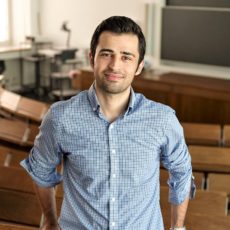
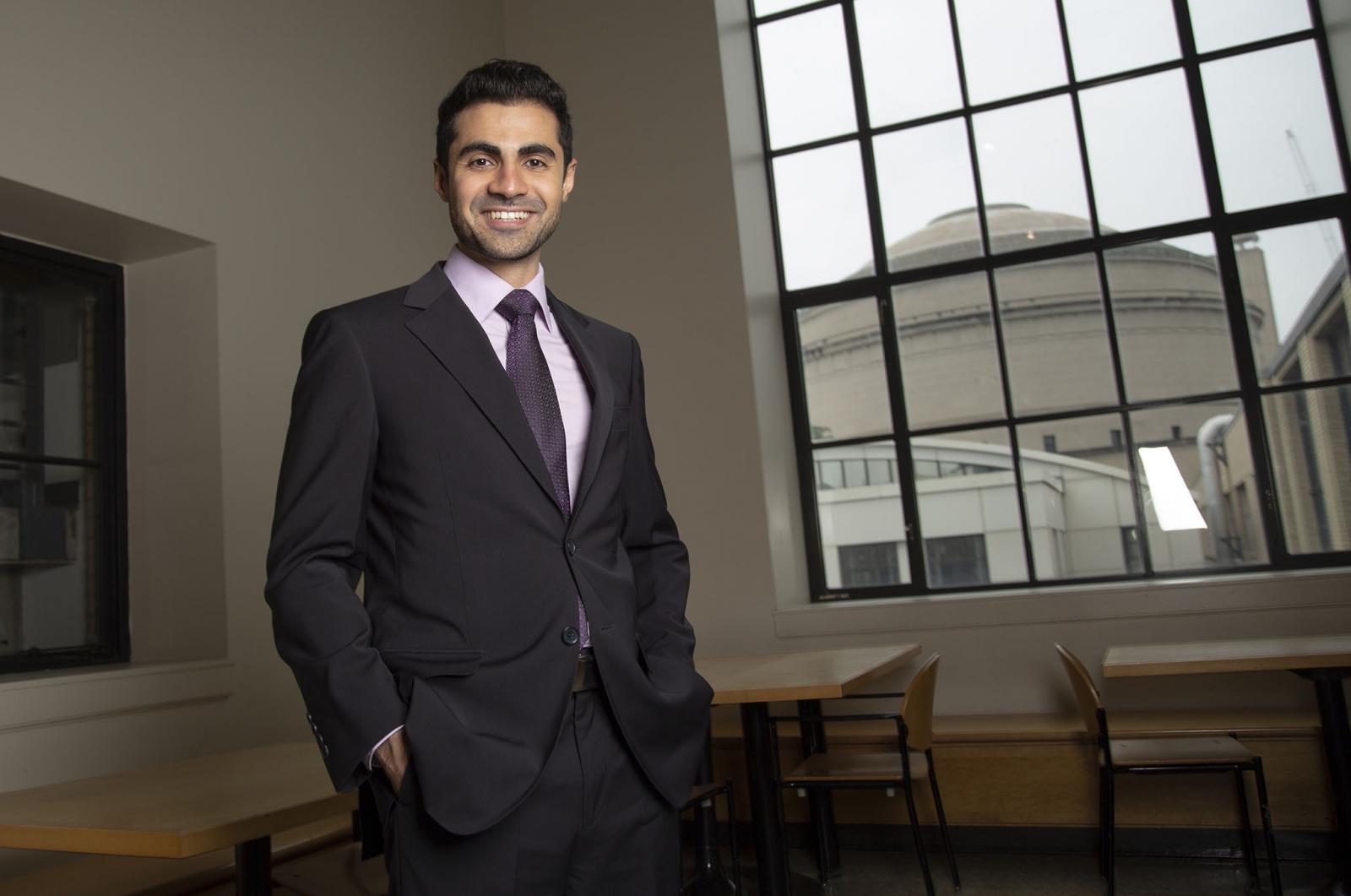
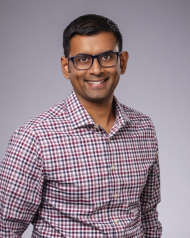
Mohsen Ghaffari is an Associate Professor at MIT's Department of Electrical Engineering and Computer Science (EECS), holding the Steven and Renee Finn Chair. His research focuses on theoretical computer science, particularly distributed and parallel algorithms, graph theory, and network optimization. Formerly, he was a tenured CS faculty member at ETH Zurich until 2022. PhD in Computer Science from MIT (2016) His research interests include distributed algorithms, parallel computing, graph decomposition, and network congestion management. His recent work addresses coreness decomposition, spanner construction, and Euclidean k-center optimization in massive parallel computation frameworks. Notable scientific awards include the ACM Doctoral Dissertation Award (Honorable Mention), ACM-EATCS Doctoral Dissertation Award, and multiple best paper awards at FOCS, PODC, and SODA. He has advised numerous PhD and Master's students, many of whom have transitioned to academic and industry roles. He has taught courses at MIT and ETH Zurich on distributed algorithms, advanced algorithms, and massively parallel computation. His professional activities include serving on program committees for SODA, FOCS, STOC, and organizing workshops like Highlights of Algorithms (HALG) and Workshop on Local Algorithms (WOLA).
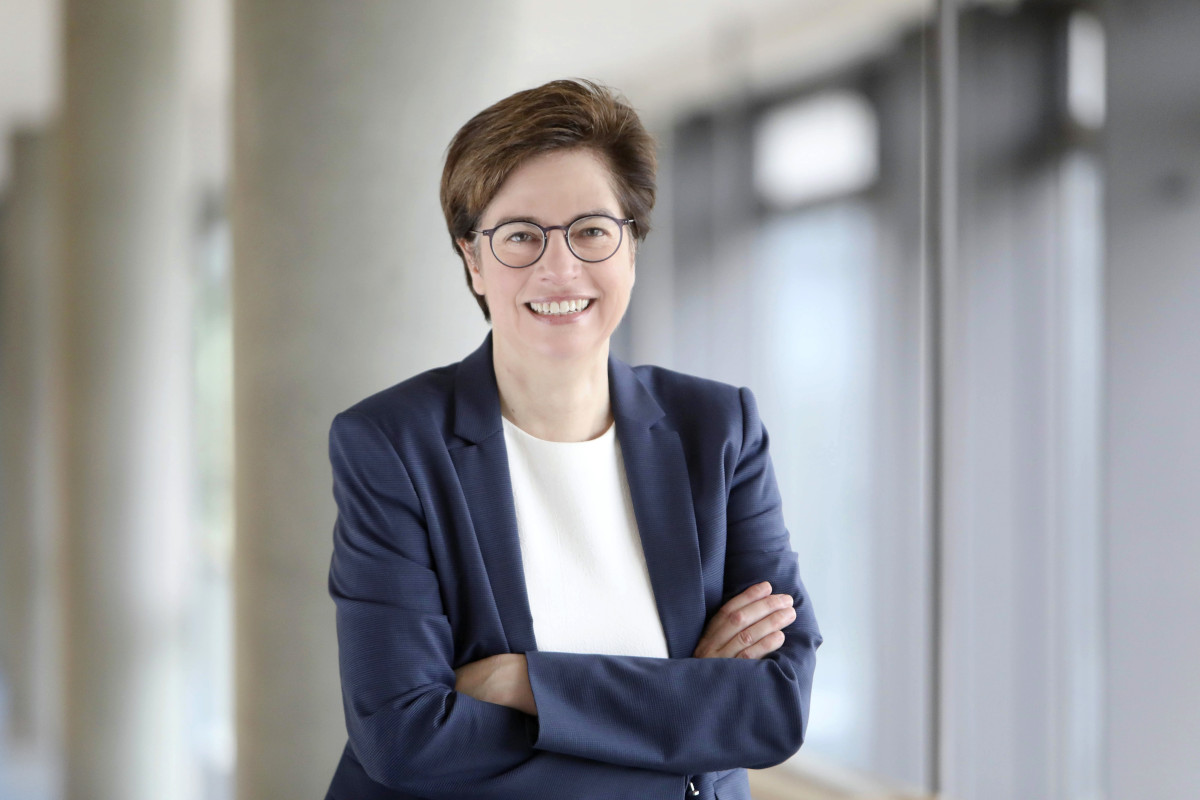
Nicole Koschate-Fischer is Professor and holds the GfK Chair for Marketing Intelligence at Friedrich-Alexander University Erlangen-Nuremberg (FAU), where she currently serves as Dean of Research at the Faculty of Business, Economics and Social Sciences. She is spokesperson for the interdisciplinary research focus "Customer Insights" and founding director of the Experimental Lab for Business Insights Nuremberg (ELAN). Previously, until September 30, 2024, she served as spokesperson for the Institute of Marketing and head of the Master's in Marketing program. Professor Koschate-Fischer earned her doctorate and habilitation from the University of Mannheim after completing a degree in business administration and psychology. Her academic journey includes membership in the interdisciplinary Collaborative Research Center "Concepts of Rationality, Decision Behavior, and Economic Modeling" at Mannheim, along with research stays as visiting scholar at University of Florida and University of Texas at Austin. She has held professorships at Technical University of Kaiserslautern and HEC Paris, and served as visiting professor at University of Vienna and Central University of Finance and Economics in Beijing. Research Interests Professor Koschate-Fischer's research spans customer insights , digital marketing , pricing and product management , and marketing analytics . Her work investigates consumer behavior in digital contexts, brand partnerships, life event impacts on purchasing decisions, and the psychological aspects of pricing. She employs experimental research methods and mediation analysis to understand causal relationships in consumer decision-making processes. Her publication record demonstrates consistent high-impact research in leading journals including Journal of Marketing, Journal of Marketing Research, and Journal of the Academy of Marketing Science. Recent work focuses on digital communication phenomena like emoji usage in electronic word-of-mouth, conversational agent interactions, and the application of behavioral pricing principles in charitable contexts. Professional Recognition Full member of the Bavarian Academy of Sciences and Humanities Member of the Board of Academic Trustees of the Center for Advanced International Marketing Knowledge (AiMark) Editorial board member of Journal of International Marketing Professor Koschate-Fischer regularly serves as reviewer for leading international academic journals and presents her research at both academic and practitioner-oriented conferences. Her work receives funding from organizations including the German Research Foundation (DFG), and she maintains active collaborations with renowned companies across various industries. She has directed the Experimental Lab for Business Insights Nuremberg (ELAN) since its founding, creating a hub for interdisciplinary customer insights research that bridges academic rigor with practical business applications.
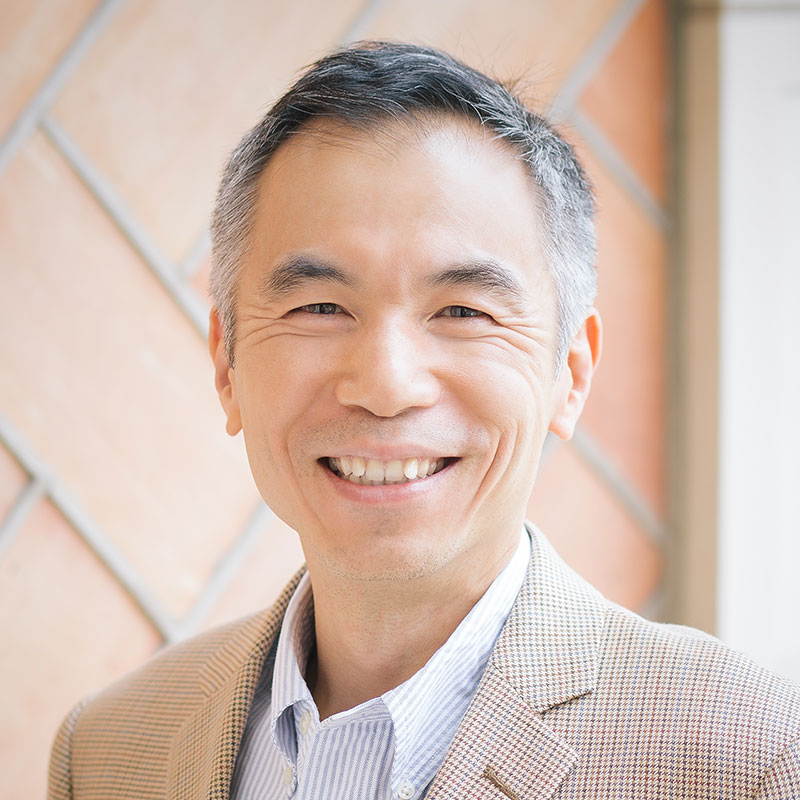
James C. Hoe is Professor of Electrical and Computer Engineering at Carnegie Mellon University (College of Engineering). He is on sabbatical at MangoBoost and directs research in computer architecture, reconfigurable computing, and high-level hardware design. Education Ph.D., Electrical Engineering and Computer Science, MIT (2000) M.S., Electrical Engineering and Computer Science, MIT (1994) B.S., Electrical Engineering and Computer Science, UC Berkeley (1992) Research Interests Professor Hoe’s work spans computer architecture , reconfigurable computing , FPGA architectures , and high-level hardware synthesis . His group created the CoRAM abstraction for virtualized FPGA computing and leads efforts in power-efficient accelerators, in-network computing, and security-oriented FPGA systems. Scientific Awards IEEE Fellow (2013) Intel Outstanding Researcher Award (2021) Research Funding & Projects Intel / VMware Crossroads 3D-FPGA Academic Research Center – co-leading exploration of FPGA roles in future datacenters. DARPA BRASS program ($2.7 M, 4 years) – ensuring long-lived software systems remain robust to resource changes. Pigasus open-source IDS – world’s fastest FPGA-accelerated intrusion-detection system (100 Gb/s on one server). Labs & Teams He heads activities within the Computer Architecture Lab at Carnegie Mellon (CALCM) , supervising graduate researchers on CoRAM++, SPIRAL autotuning, and FPGA overlays for stream processing.
Nirupam Roy is an Assistant Professor at the Department of Computer Science, University of Maryland, College Park, and Director of the iCoSMoS research lab. His work bridges wireless networking, mobile computing, and acoustic sensing with applications in IoT, localization, healthcare, security, and wearables. Research Focus: Wireless Networking & Mobile Sensing Awards: Best paper award, MobiSys 2022 Best demo award, MobiSys 2021 CSL Ph.D. Thesis Award, UIUC 2019 Students: Nakul Garg, Yang Bai, Irtaza Shahid, Harshvardhan Takawale, Aritrik Ghosh, Ayushi Mishra, Sumbul Zehra, Justin Goodman Grants: NSF CAREER award (2023), Meta Research Award (2023)
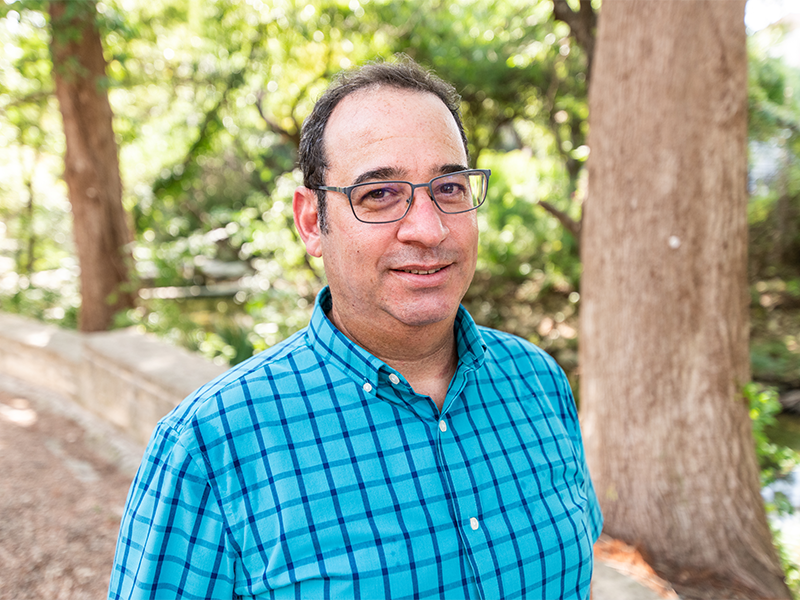
Desiderio Kovar is a Professor at the University of Texas at Austin holding the BFGoodrich Professorship in Materials Engineering and the Distinguished Teaching Professor title within the Department of Mechanical Engineering at the Cockrell School of Engineering. He is affiliated with the Texas Materials Institute, the Center for Electromechanics, and is a core member of the Center for Additive Manufacturing and Design Innovation. Dr. Kovar currently serves as the Associate Chair for Academics for the Mechanical Engineering Department. Dr. Kovar's research focuses on the interface between materials science and engineering and additive manufacturing, with particular expertise in ceramic processing. His work encompasses Advanced Design and Manufacturing, Advanced Materials Science and Engineering, and Nano and Micro-scale Engineering. He teaches undergraduate and graduate classes in the Materials Engineering area, having developed the Materials Science and Engineering minor in 2018, the first minor in Engineering at UT Austin. His recent publications (2023-2025) demonstrate a strong focus on ceramic additive manufacturing processes, particularly Selective Laser Flash Sintering and Micro-Cold Spray technologies. These works explore fundamental mechanisms of high-velocity particle impact, sintering kinetics, and process optimization for ceramic film and part production, reflecting his pioneering work in direct ceramic additive manufacturing without polymer binders. Dr. Kovar has received numerous prestigious awards for his teaching and research: Engineering Foundation Young Faculty Excellence Award (2000) Teaching Excellence Award from the Student Engineering Council (2000) Cockrell School of Engineering's Jack and Maxine Zarrow Family K-16 Teaching Innovation Award (2014) Lockheed Martin Aeronautics Company Award for Excellence in Engineering Teaching (2016) Mechanical Engineering Department's Teaching Award (2016) University of Texas' Outstanding Graduate Advisor (2012) Inducted into the University of Texas at Austin's Academy of Distinguished Teachers (2019) Dr. Kovar has supervised 47 undergraduate students, 21 MS theses, and 17 Ph.D. dissertations, and currently supervises 12 graduate students and one undergraduate student. His research has been generously funded by the National Science Foundation, Los Alamos National Laboratory, Sandia National Laboratory, the Army Research Laboratory, the Office of Naval Research, the US Department of Energy, and various corporate sponsors. In 2013, he founded the Cockrell School's Longhorn Maker Studio, which evolved into Texas Inventionworks. Dr. Kovar leads the Kovar Research Group which currently includes multiple graduate students and postdoctoral researchers working across three main research thrusts: Additive Manufacturing of Ceramics by Selective Laser Flash Sintering, Additive Manufacturing of Ceramics by Indirect Selective Laser Sintering, and Direct Writing of Patterned Films and Devices using the Micro-cold Spray Process.
Navid Azizan is the Alfred H. (1929) and Jean M. Hayes Career Development Assistant Professor at Massachusetts Institute of Technology (MIT), holding dual appointments in the Department of Mechanical Engineering (in Control, Instrumentation & Robotics) and the Schwarzman College of Computing's Institute for Data, Systems & Society (IDSS). He is also a Principal Investigator in the Laboratory for Information & Decision Systems (LIDS), and a faculty member of the MIT Statistics and Data Science Center, the Center for Computational Science and Engineering, and the Operations Research Center. Dr. Azizan received his PhD in Computing and Mathematical Sciences from the California Institute of Technology (Caltech) in 2020, his MSc in Electrical Engineering from the University of Southern California in 2015, and his BSc in Electrical Engineering with a minor in Physics from Sharif University of Technology in 2013. Prior to joining MIT, he completed a postdoc at Stanford University's Autonomous Systems Laboratory and was a research scientist intern at Google DeepMind. His research spans the intersection of machine learning, systems and control, mathematical optimization, and network science. Dr. Azizan's work focuses on developing principled learning and optimization algorithms for reliable intelligent systems, with applications to autonomy and sociotechnical systems. His research has significant implications for creating trustworthy AI systems that can operate effectively in complex, uncertain environments. Dr. Azizan's recent publications demonstrate a strong focus on uncertainty quantification, reliable AI systems, constrained optimization, and control-oriented learning. His work bridges theoretical foundations with practical applications, particularly in autonomous systems where safety and reliability are paramount. His research group has made notable contributions to areas including neural network verification, multi-agent reinforcement learning, and adaptive inference techniques for large language models, with several papers featured on MIT News and selected for oral presentations at top conferences. Alfred H. (1929) and Jean M. Hayes Career Development Professorship (2025-present) Frank E. Perkins Award for Excellence in Graduate Advising (2025) List of Outstanding Academic Leaders in Data from the CDO Magazine (2024, 2023) Amazon Science Hub Research Award (2023) Outstanding UROP Faculty Mentor (2023) Esther and Harold E. Edgerton (1927) Career Development Chair (2022-2025) Information Theory and Applications (ITA) Gold Graduation Award (2020) Dr. Azizan has been recognized for his excellence in graduate advising, receiving the Frank E. Perkins Award for Excellence in Graduate Advising in 2025. During the pandemic, he founded and co-organized the 'Control meets Learning' virtual seminar series, connecting researchers across disciplines. His work has attracted significant research funding from industry partners including Google, Amazon, and MathWorks, supporting both fundamental research and practical applications in reliable intelligent systems. The Azizan Lab at MIT brings together researchers from mechanical engineering, computer science, and applied mathematics to tackle challenges at the intersection of learning and control. The lab emphasizes both theoretical foundations and practical implementations, with a particular focus on developing algorithms that provide guarantees of performance and safety. Current research directions include uncertainty quantification in AI systems, constrained optimization for neural networks, and control-oriented learning for autonomous systems, with applications spanning robotics, transportation, and complex sociotechnical systems.
Dr. Damien Charrieras is an Associate Professor at the School of Creative Media , City University of Hong Kong, where he serves as Program Leader for the Master of Art in Creative Media and deputy program leader for the PhD in Creative Media. His work bridges cultural studies, new media theory, and the intersection of financial technologies with artistic practices through the ACIM Laboratory for Interventions in Speculative Finance . Doctoral research on digital artists' trajectories in Montreal FRQSC Postdoctoral Fellowship at McGill University Research spans game engine design , datafication of creativity , blockchain in art , and post-anthropocentric creative processes . With over HK$3.14M in grants as Principal Investigator, he explores situated digital creativity in urban contexts, critical worldbuilding pedagogy , and the mediation of technical systems in cultural production. His publications in Cities , Organized Sound , and Human Relations analyze the reconfiguration of artistic practices through software infrastructures and automation paradigms. Scientific awards include: FRQSC Postdoctoral Fellowship
Jeannette Bohg is an Assistant Professor of Computer Science at Stanford University, directing the Interactive Perception and Robot Learning Lab. Previously, she was a group leader at the Autonomous Motion Department (AMD) of the MPI for Intelligent Systems (2012-2017). She holds a PhD from KTH Royal Institute of Technology (Stockholm) and degrees from Chalmers University and TU Dresden. Her research focuses on perception, learning, and real-time multi-modal methods for autonomous robotic manipulation and grasping, aiming to bridge principles of human sensorimotor coordination with robotic implementation. Education: PhD in Robotics (KTH), MSc in Art & Technology (Chalmers), Diploma in Computer Science (TU Dresden) Research interests include developing goal-directed, real-time robotic systems capable of meaningful feedback for execution and learning. Key areas are dexterous manipulation, imitation learning, and cross-embodiment policy transfer. Notable contributions include the TidyBot platform and work on force-aware surgical robotics. Awards include the 2019 IEEE ICRA Best Paper Award, 2019 IEEE RA Early Career Award, and 2020 RSS Early Career Award. Her lab explores intersections of robotics, ML, and computer vision. Advising: Actively mentoring students/postdocs in manipulation, perception, and learning. Grants and collaborations span NSF, Stanford AI Lab, and industry partnerships. Future work emphasizes robust real-world deployment and human-robot collaboration. Labs/Teams: Leads the Interactive Perception and Robot Learning Lab, contributing to Stanford’s AI ecosystem. Previously managed the MPI AMD group, fostering interdisciplinary research in autonomous systems.
Dr. Jeewanie Jayasinghe Arachchige is a Lecturer in the Department of Computer Science at Vrije Universiteit Amsterdam, Faculty of Science. She teaches undergraduate courses including Bachelor Project Computer Science, Professional Development, and Software Engineering Processes for the academic year 2024–2025. Her research focuses on process mining , healthcare informatics , and data security . She applies process mining to analyze healthcare pathways and subpopulation treatment variations, develops explainable AI frameworks for predictive analytics, and examines data governance in emerging architectures like Data Lakehouses. Her work intersects legal informatics, particularly formalizing Sri Lankan civil court processes using ontology engineering. Recent publications highlight trends in balancing simplicity and complexity in process modeling, Industry 4.0 healthcare applications, and cybersecurity in model-driven web development. She has contributed to over 20 peer-reviewed articles since 2006, spanning topics from service-oriented architectures to value network analysis. Her teaching and research emphasize practical applications of IT in healthcare, legal systems, and enterprise environments. No ancillary activities are currently recorded.
Dr. Rajesh Bera is a Research Fellow at ICFO's Functional Optoelectronic Nanomaterials group specializing in quantum-confined nanostructures. His research examines ultrafast carrier dynamics, excitonic properties, and optoelectronic applications of nanomaterials including quantum dots, nanoplatelets, and hybrid nanostructures. Current investigations focus on intraband transitions in doped nanocrystals, orientation-dependent excitonic behavior in 2D materials, and charge transfer mechanisms in heterostructure devices. Work bridges fundamental photophysics with applications in photodetection, sensing, and energy conversion. Recent publications demonstrate expertise in time-resolved spectroscopy of quantum materials, nanomaterial synthesis via colloidal chemistry, and rational design of optoelectronic devices. Continually develops novel characterization methods to probe ultrafast processes at nanoscale interfaces.
Katherine T. Faber is the Simon Ramo Professor of Materials Science at the California Institute of Technology, part of the Division of Engineering and Applied Science. She leads the Faber Research Group, focusing on mechanical behavior of brittle materials, ceramics for extreme environments, porous solids, and cultural heritage science. Her work bridges engineering, art conservation, and space technology. Education: B.S., Alfred University, 1975; M.S., Penn State, 1978; Ph.D., UC Berkeley, 1982. Academic roles include Ramo Professor since 2014 and leadership in the American Ceramic Society. She collaborates with NASA, JPL, and institutions like the Art Institute of Chicago for cultural heritage projects. Research interests span energy materials (thermal barrier coatings, lunar regolith electrolysis), functional porous ceramics (battery separators, biomedical filters), and art conservation (nanoparticle analysis in historical artifacts). Recent projects include shape-memory ceramics and fracture mechanics studied via synchrotron X-rays. Publications highlight innovations in freeze-casting, environmental barrier coatings, and interdisciplinary studies. Awards include the W. David Kingery Award (2024) and American Academy of Arts and Sciences membership. Her group emphasizes sustainability, with a Platinum Green Lab certification. Advises numerous graduate and undergraduate students, including those in SURF and WAVE programs. Grants and collaborations span NASA, NSF, and industry partnerships. Labs focus on ceramic processing, advanced characterization, and additive manufacturing.
Dr. Zhenman Fang is an Associate Professor at the School of Engineering Science , Simon Fraser University (SFU) , where he founded and directs the HiAccel Lab . He also holds an associate membership in the School of Computing Science at SFU. His research focuses on customizable computing with software-defined hardware acceleration , addressing performance, energy-efficiency, and reliability in post-Moore’s law computing across domains like machine learning , big data analytics , quantum chemistry , and precision medicine . Education: Ph.D. in Computer Science from Fudan University (2014), with a visit to University of Minnesota during his studies. Postdoctoral Work: University of California, Los Angeles (UCLA) (2014-2017). Industry Experience: Staff Software Engineer at Xilinx (2017-2019). Dr. Fang’s research spans the entire computing stack , including application characterization , accelerator-rich architecture design , and programming/tool support . He has developed frameworks like HiSpMV , SyncNN , and SQL2FPGA , emphasizing FPGA acceleration for vision transformers , quantum chemistry , and spiking neural networks . His work has been recognized with 3 best paper awards (FPL 2024, TCAD 2019, MEMSYS 2017) and 3 best paper nominees (FCCM 2025, HPCA 2017, ISPASS 2018). Recent publications highlight trends in low-precision machine learning ( ShiftQuant , ESRU ), quantum chemistry acceleration ( SERI ), and vision transformer optimization ( Quasar-ViT ). His HiAccel Lab actively mentors PhD and MASc students , with notable graduates like Alec Lu (PhD 2024, now at Meta) and Philip Stachura (MASc, now with BC Graduate Scholarship). Scientific Awards: Inaugural SFU Research Excellence Award - Horizon Award (2025) FPL 2024 Stamatis Vassiliadis Best Paper NSERC Alliance Award (2020) CFI JELF Award (2019) Xilinx University Program Award (2019) IEEE Senior Member (2023) Grants: NSERC Discovery Grant (2019) CFI JELF Funding (2019) Huawei and Xilinx sponsorships Dr. Fang leads open-source initiatives like SyncNN , PASTA , and SQL2FPGA , and serves as General Chair for ASAP 2025 and Program Co-Chair for RAW 2025 . His lab collaborates globally with institutions such as UCLA , Northeastern University , and Xidian University .
Gary Rochelle is the Carol and Henry Groppe Professor in Chemical Engineering and a faculty member at the University of Texas at Austin . His research focuses on developing fundamental insights into kinetic and mass transfer phenomena in aqueous technologies for air pollution control and acid gas treating, particularly for carbon dioxide and mercury removal. Education: Ph.D. in Chemical Engineering from UC Berkeley (1977), M.S./B.S. from MIT (1971) His work addresses critical challenges in CO2 capture using amine scrubbing, including process design optimization, solvent degradation mitigation, and pilot plant validation. Recent studies emphasize energy efficiency, oxidation inhibition, and environmental impacts such as amine aerosol emissions. The Texas Carbon Management Program , which he contributes to, aims to improve amine scrubbing technologies for retrofitting power plants and enabling geological sequestration or enhanced oil recovery. His group has validated concentrated aqueous piperazine (PZ) with an advanced flash stripper as the most efficient open-literature system.
Hossam Hassanein is a Professor and Director of the School of Computing at Queen's University. He received his B.Sc. in Electrical Engineering from Kuwait University in 1984, M.Sc. in Computer Engineering from the University of Toronto in 1986, and Ph.D. in Computing Science from the University of Alberta in 1990. He joined Queen's University School of Computing in 1999 and has established himself as a leading researcher in telecommunications and networking. Dr. Hassanein's research interests span wireless sensor networks, mobile ad hoc networks, edge computing, Internet of Things (IoT), radio resource management, and data-centric networks. His seminal contributions include pioneering work on WSN planning, load-balanced routing protocols, and energy-efficient network designs. He has championed research in IoT, developing frameworks for smart spaces that use contextual information to enhance IoT applications in healthcare, transportation, and infrastructure. His recent publications (2023-2025) demonstrate a strong focus on cutting-edge areas including extreme edge computing, vehicular networks, and AI/ML integration in networking. Research trends show increasing emphasis on practical applications in telesurgery, digital twins, and industrial IoT, addressing challenges in resource allocation, task offloading, and real-time processing in constrained environments. Dr. Hassanein has received numerous recognitions for his work: Fellow of the IEEE Queen's University School of Graduate Studies Award for Excellence in Graduate Student Supervision (2015) Multiple best paper awards from top international conferences As founder and director of the Telecommunications Research Lab (TRL), Dr. Hassanein has supervised over 75 students who have made substantial contributions in academia and industry. The TRL is one of Queen's largest research groups with extensive international collaborations. Dr. Hassanein has successfully attracted significant research funding from government and industry sources in the competitive telecommunications field. The Telecommunications Research Lab has developed innovative platforms including SPROUTS, a rugged sensor platform used in mining, steel manufacturing, and smart-grid monitoring. TRL's work has had significant impact in WSN planning, data dissemination, and resource reuse in wireless networks, with contributions featured in IEEE Wireless Communications Magazine.
Arvind Narayanan is a Professor of Computer Science at Princeton University and Director of the Center for Information Technology Policy (CITP). His research focuses on the societal impact of digital technologies, particularly artificial intelligence, with emphasis on policy implications, fairness, and privacy. He leads interdisciplinary efforts connecting technical research with real-world policy challenges. Dr. Narayanan earned his Ph.D. from the University of Texas, Austin in 2009. His academic journey has established him as a leading voice in the critical examination of AI systems and their societal consequences. Narayanan's research spans multiple domains where technology intersects with society. His work on AI includes critical analysis of AI capabilities versus marketing claims (AI Snake Oil), fairness in machine learning systems, and the reproducibility crisis in ML-based science. In privacy research, he led the Princeton Web Transparency and Accountability Project which uncovered how companies track users online, developing the OpenWPM tool used in over 100 studies. His early work demonstrated fundamental limits of de-identification techniques and how machine learning reflects cultural stereotypes. His recent publications reveal a consistent focus on demystifying AI capabilities while identifying genuine opportunities and risks. Narayanan's work bridges technical computer science with policy relevance, emphasizing the importance of evidence-based approaches to AI governance. His research increasingly addresses the limitations of prediction systems, the challenges of evaluating AI systems, and the need for transparency in foundation models. Presidential Early Career Award for Scientists and Engineers (PECASE) Privacy Enhancing Technologies Award (twice recipient) Privacy Papers for Policy Makers Award (three-time recipient) TIME's inaugural list of 100 most influential people in AI 2025 Graduate Mentoring Award Narayanan is recognized as an exceptional mentor, receiving Princeton's Graduate Mentoring Award in 2025. His policy engagement extends to congressional testimony, advisory roles, and frequent media commentary. He has secured significant research funding supporting his work on web transparency, AI policy, and cryptocurrency analysis. His research group has produced influential tools like OpenWPM for web privacy studies and contributed to foundational textbooks on cryptocurrencies and fairness in machine learning. At Princeton, Narayanan leads the Web Transparency and Accountability Project, a major research initiative that has conducted large-scale measurements of online tracking across millions of websites. He also co-founded and directs the CITP's AI Policy Initiative, which brings together researchers from multiple disciplines to address pressing AI governance questions. His work frequently involves collaboration with social scientists, legal scholars, and policymakers to develop practical solutions to technology governance challenges.