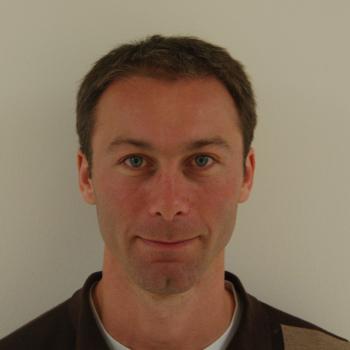
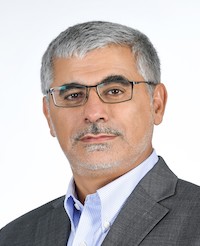
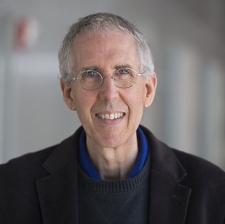
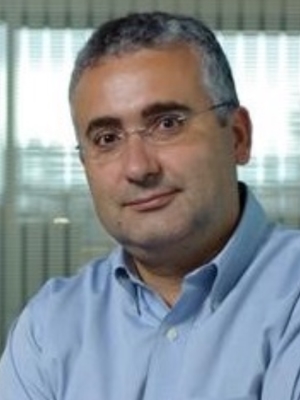
Frede Blaabjerg is a Professor at Aalborg University (AAU Energy) , affiliated with the Faculty of Engineering and Science . Since 1998, he has pioneered power electronics research in applications such as wind turbines , photovoltaic (PV) systems , reliability engineering , and Power-2-X technologies. Education : PhD in Electrical Engineering (1995, Aalborg University) Honorary Degrees : Honoris Causa at University Politehnica Timisoara (2017) and Tallinn Technical University (2018) His research focuses on power electronics control , system optimization , and reliability for renewable energy and electric mobility . Recent work includes grid-forming converters , virtual synchronous generators , and smart EV charging systems. Key publication trends span 15+ years , with over 3,733 peer-reviewed articles and 900+ journal papers in power electronics , renewables , and energy storage . Notable book series: Control of Power Electronic Converters and Systems (4 volumes, Elsevier). Scientific Awards : 46 IEEE Prize Paper Awards 2020 IEEE Edison Medal 2019 Global Energy Prize 2014 IEEE William E. Newell Power Electronics Award Leadership Roles : Editor-in-Chief, IEEE Transactions on Power Electronics (2006–2012) Chairman, Danish Council for Research and Innovation Policy (2020–) President, IEEE Power Electronics Society (2019–2020)
Jeremy Dahl is a Professor of Radiology (Pediatric Radiology) at Stanford University School of Medicine. He directs the Ultrasound Imaging & Instrumentation Lab and serves as Director of Research Academic Affairs in the Department of Radiology since 2020. He holds multiple affiliations across Stanford including Bio-X, the Cardiovascular Institute, Wu Tsai Human Performance Alliance, Maternal & Child Health Research Institute, Stanford Cancer Institute, and Wu Tsai Neurosciences Institute. Dr. Dahl received his B.S. in Electrical Engineering from the University of Cincinnati (1999) and Ph.D. in Biomedical Engineering from Duke University (2004). His research focuses on developing ultrasonic beamforming and image reconstruction methods for diagnostic imaging applications, particularly techniques that generate high-quality images in difficult-to-image patients. His laboratory specializes in B-mode and Doppler imaging techniques that utilize additional information from ultrasonic wavefields to improve image quality and develop real-time imaging systems for clinical applications including cardiac, liver, and fetal imaging. Dr. Dahl's research has led to significant advancements in ultrasound molecular imaging platforms, sound speed estimation, aberration correction, and reverberation noise suppression. His work often bridges engineering innovation with clinical applications for cancer detection and other diseases. His recent publications demonstrate strong focus on machine learning applications in ultrasound, distributed aberration correction, and molecular imaging techniques. Fellow, American Institute of Ultrasound in Medicine (2021) Senior Member, Institute of Electrical and Electronics Engineers (2020) Distinguished Investigator Award, The Academy for Radiology & Biomedical Imaging Research (2018) Outstanding Paper Award, IEEE Ultrasonics, Ferroelectrics, and Frequency Control Society (2011) Dr. Dahl serves in editorial roles for major journals including IEEE Transactions on Medical Imaging (2017-2024) and IEEE Transactions on Ultrasonics, Ferroelectrics, and Frequency Control (2013-Present). His laboratory has successfully translated numerous innovations into clinical applications, with multiple patents including recent developments in pulsed focused ultrasound therapy and speed of sound quantification.
Damek Davis serves as an Associate Professor of Statistics and Data Science and Co-Academic Director of the Dual Master's Degree in Statistics at the Wharton School, University of Pennsylvania. His academic base is the Department of Statistics and Data Science within the Wharton School, with his office located at the Academic Research Building in Philadelphia, PA. His research expertise centers on optimization theory for data science, with deep specialization in nonsmooth and stochastic optimization problems. Key focus areas include convergence analysis of first-order methods, variance reduction techniques, and theoretical guarantees for algorithms in nonconvex settings. His work bridges mathematical rigor with practical applications in machine learning and statistical inference, particularly in developing efficient computational frameworks for large-scale data analysis. Analysis of his 2022-2024 publications reveals dominant themes in optimization for modern data challenges: nonsmooth stochastic approximation, linear convergence under sharpness conditions, and global optimality in mixture models. His research consistently appears in premier venues across optimization (Mathematical Programming, SIAM Journal), statistics (The Annals of Statistics), and machine learning (IEEE Transactions), demonstrating cross-disciplinary impact in both theoretical foundations and computational methodologies.
Prof. Baker Mohammad serves as Professor and Director of the System on Chip Lab in the Department of Computer and Information Engineering at Khalifa University. With over 15 years of industrial experience at Intel and Qualcomm designing microprocessors and DSP chips, he bridges academic research with real-world engineering challenges in high-performance computing and low-power systems. His educational background includes: Ph.D. in Electrical and Computer Engineering, University of Texas at Austin (2008) M.S. in Electrical and Computer Engineering, Arizona State University B.S. in Electrical Engineering, University of New Mexico Dr. Mohammad's research spans cutting-edge domains where VLSI design converges with AI acceleration and emerging memory technologies . His work pioneers Memristor applications in environmental sensing (radiation, vacuum, glucose) and neuromorphic computing, while advancing energy harvesting systems for wearable electronics. The integration of in-memory computing with security primitives represents a paradigm shift in hardware design, moving beyond traditional CMOS limitations. His publication trajectory reveals accelerating focus on self-powered neuromorphic systems and RRAM-based architectures, with recent work (2021-2023) emphasizing hardware-software co-design for edge AI. Over 75% of his recent publications involve cross-disciplinary collaborations spanning materials science, chemistry, and biomedical engineering. Notable scientific recognition includes: IEEE TVLSI Best Paper Award 2016 IEEE MWSCAS Myrill B. Reed Best Paper Award Qualcomm Qstar Award for Performance Leadership KUSTAR IP Excellence Award Multiple SRC Techon Best Session Papers As a dedicated mentor, he has supervised over 15 graduate students while securing competitive funding from Khalifa University, ADEK, Qualcomm, Tii, and UAE space agencies. His grant portfolio demonstrates exceptional translational impact, converting fundamental research in memristive devices into drone flight computers and medical sensors. Current projects integrate academic rigor with industrial deployment timelines. The System on Chip Lab operates as a multidisciplinary hub where semiconductor physicists collaborate with AI researchers to develop RISC-V-based secure processors and piezoelectric nanogenerator systems. Recent expansions include partnerships with Tii for aerospace applications and medical device startups for glucose monitoring technology.
Prof. Dr. Sebastian Steinhorst is an Associate Professor (W3-level with tenure) at the Technical University of Munich (TUM) within the Embedded Systems and Internet of Things group at the TUM School of Computation, Information and Technology . His research focuses on advancing the security, predictability, reliability, and interoperability of smart connected and autonomous systems, particularly for applications in Internet of Things (IoT) , Industry 4.0 , and automotive systems . PhD in Computer Science (2011) from Goethe University Frankfurt Postdoctoral roles at TUMCREATE Singapore (2011-2016) and Aarhus University (2016) Joined TUM in 2016 as Rudolf Moessbauer Tenure Track Professor His research areas include decentralized embedded systems, hardware/software co-design, modeling and verification of cyber-physical systems, security protocols for automotive networks, and time-sensitive networking (TSN) for industrial applications. Recent work explores blockchain-based data sovereignty, zero-knowledge proofs for vehicle authentication, and resilient architectures for autonomous systems. Key scientific contributions include the 2019 ACM TODAES Best Paper Award and pioneering work on CyberSecDome , LeapChain , and Simutack frameworks. He serves on editorial boards and conference committees, including co-organizing the Autonomous Systems Design initiative at DATE. His teaching portfolio spans lectures on System Design for IoT , Software Architecture for Distributed Systems , and IoT Security across multiple semesters. He also leads advanced seminars on embedded systems and IoT.
Alfred O. Hero, III is the John H. Holland Distinguished University Professor of Electrical Engineering and Computer Science and the R. Jamison and Betty Williams Professor of Engineering at the University of Michigan, Ann Arbor. He is currently on leave from the University of Michigan as a Program Director in the CISE Directorate at the National Science Foundation. His primary appointment is in the Department of Electrical Engineering and Computer Science (EECS), with secondary appointments in the Department of Biomedical Engineering and the Department of Statistics. He is also affiliated with the UM Center for Computational Medicine and Bioinformatics (CCMB), the UM Graduate Program in Applied and Interdisciplinary Mathematics (AIM), the UM Applied Physics Program, and the Michigan Institute for Data Science (MIDAS), which he co-founded from 2015-2018. Hero's research focuses on data science, developing theory and algorithms for multimodality data collection, fusion, analysis and visualization that use statistical machine learning and distributed optimization. His work has applications in wearable technologies for personalized health and predictive medicine, spatio-temporal networks in biology, climate, and social discourse, anomaly detection, and data analysis for international security. His recent research interests include high dimensional spatio-temporal data analysis, multimodal data integration, statistical signal processing, and machine learning, with particular emphasis on predictive mathematical models for biological and physical sciences, social networks, network security and forensics, and personalized health and disease. His recent publications demonstrate a strong focus on high-dimensional statistical methods, contrastive learning, neural network optimization, change detection in temporal graphs, and applications in microbiome analysis and epidemic modeling. The research spans theoretical foundations in information theory and statistical learning while addressing practical applications across multiple domains. Scientific Awards: IEEE Signal Processing Society Best Paper Award (1998) Best Original Paper Award from Journal of Flow Cytometry (2008) Best Magazine Paper Award from IEEE Signal Processing Society (2010) SPIE Best Student Paper Award (2011) IEEE ICASSP Best Student Paper Award (2011) IEEE Signal Processing Society Technical Achievement Award (2014) IEEE Signal Processing Society Society Award (2015) IEEE Fourier Award (2020) University of Michigan Distinguished Faculty Achievement Award (2011) Hero has advised over 60 PhD students and 30 postdocs in areas including modeling, computation, and inference for large scale time varying data in the biosciences. He has received significant research funding from the Department of Energy, Army Research Office, Air Force Office of Scientific Research, and National Science Foundation. He has held leadership positions including President of the IEEE Signal Processing Society (2006-2007), Director of Division IX (Signals and Applications) on the IEEE Board of Directors (2009-2011), and Chair of the Committee on Applied and Theoretical Statistics of the US National Academies (2018-2020).
Emilio Frazzoli is a Full Professor at ETH Zurich’s Department of Mechanical and Process Engineering. He leads the Institute for Dynamic Systems and Control and the Center for Sustainable Future Mobility, focusing on autonomous systems, robotics, and socio-technical control frameworks. Current affiliations: ETH Zurich (Dynamic Systems and Control, Sustainable Future Mobility) Research: Autonomous mobility-on-demand, game theory for resource allocation, and safety verification in multi-agent systems His work bridges robotics, control theory, and economics, with projects like the open-source AMoDeus simulation framework for autonomous taxis and karma-based resource allocation systems. Recent publications emphasize trustworthy AI, reproducibility in autonomous vehicle control, and human-robot interaction challenges. Notable projects include nuReality (VR-based pedestrian interaction studies) and CARSI II (context-driven vehicle interfaces).
Joey W Huston is a Professor at the Department of Physics & Astronomy, Michigan State University, and a Visiting Professor at the Institute for Particle Physics Phenomenology, Durham University. He has over 600 publications with >30,000 citations, including 9 papers with >500 cites each. Positions: MSU Research Foundation Professor (1998-present), Visiting Professor at Durham (2003-present) Education: Ph.D. (1983) and B.S. (1976) from University of Rochester and Carnegie-Mellon University His research focuses on Quantum Chromodynamics (QCD) , Parton Distribution Functions , and Jet Physics . He contributes to Higgs Boson studies, Supersymmetry , and Dark Matter Searches via the ATLAS experiment at the LHC. Recent articles (2025) highlight advancements in Jet Flavour Tagging , Top-Quark Mass Measurement , and Exotic Higgs Decays , alongside computational innovations like Neural Simulation-Based Inference and Cloud Resource Optimization . Scientific Awards: APS Fellow (2025), Distinguished Visitor by Scottish Universities Physics Alliance (SUPA) Prof. Huston has co-spoken for the CTEQ collaboration and organized workshops at Les Houches, Kavli Institute, and Fermilab. He authored the Handbook on Perturbative QCD and is writing a book on QCD at the LHC for Oxford University Press.
Professor Ben Goldys is a distinguished academic at The University of Sydney's School of Mathematics and Statistics, where he conducts research at the intersection of pure mathematics and applied sciences. His work spans multiple disciplines including stochastic analysis, partial differential equations, and financial mathematics, with significant contributions to both theoretical frameworks and practical applications in science and finance. Goldys' research interests center on stochastic (ordinary and partial) differential equations and their applications. His specific focus areas include stochastic partial differential equations, stochastic geometric PDEs, stochastic boundary value problems, stochastic fluid dynamics, ergodic theory of infinite-dimensional diffusions, and applications in financial mathematics such as interest rate derivatives, credit risk, and stochastic volatility. His work bridges pure mathematical theory (Functional Analysis, PDEs, Ergodic Theory) with complex real-world problems across multiple domains. His research aligns with the University of Sydney Faculty of Science Research Strengths including Understanding the Universe, Fundamental Laws of Nature, Complex Systems, and Next Generation Materials. Professor Goldys has secured multiple significant research grants from the Australian Research Council, including recent projects such as 'Mathematics for future magnetic devices' (2024), 'Mathematics for breaking limits of speed and density in magnetic memories' (2019), and 'Novel Approaches for Problems with Uncertainties' (2015). His current research projects focus on geometric stochastic partial differential equations and applications in micromagnetism, mean field games in finance, stochastic boundary value problems, and stochastic Navier-Stokes equations on the rotating sphere. He maintains extensive international collaborations with institutions in Germany (University of Tuebingen), Italy (LUISS University), Poland (Institute of Mathematics Polish Academy of Sciences), and the United Kingdom (University of York), working on projects involving optimal control, stochastic systems with memory, and geometric stochastic PDEs. Goldys is an active member of the Applied Mathematics Research Group and The University of Sydney Nano Institute, contributing to interdisciplinary research initiatives that connect mathematical theory with cutting-edge technological applications.
Matthew B. Blaschko is a Professor in the Department of Electrical Engineering at KU Leuven, Belgium. He serves as director of the KU Leuven ELLIS unit and is a fellow in the ELLIS Health program. He is a Core PI in the Flanders AI Research Program, working as a workpackage lead for Decision Support Systems and Medical Imaging. Blaschko is also a member of the KU Leuven Institute for Artificial Intelligence and one of the leaders of the working group on Machine Learning and Data Science. Professor Blaschko received his B.S. from Columbia University, M.S. from the University of Massachusetts Amherst, and Dr. rer. nat. from Technische Universität Berlin (awarded for work at Max Planck Institutes Tübingen). He was a Newton International Fellow at the University of Oxford and received his Habilitation (HDR) from École Normale Supérieure de Cachan. Prior to joining KU Leuven, he was a Permanent Research Scientist in the INRIA Saclay Research Center and a Faculty Member at Ecole Centrale Paris. His research focuses on machine learning techniques applied to visual data, with particular emphasis on calibration in deep learning, medical image analysis, and federated learning. Blaschko's work bridges theoretical foundations with practical applications, as evidenced by technology developed in his research being incorporated into MONA, software for ophthalmic image analysis. His research group has made significant contributions to the fields of model calibration, uncertainty estimation, and medical imaging analysis, with recent publications showing strong trends toward improving reliability of AI systems in medical contexts and advancing theoretical understanding of calibration metrics. Professor Blaschko has been recognized with several awards including the Université Paris-Saclay STIC Doctoral School Best Scientific Contribution Award, Best Paper Award at CVPR 2008, Main Award at DAGM 2008, and Best Student Paper Award at ECCV 2008. Professor Blaschko has supervised numerous PhD and Master's students, with current and former students including Deniz Soysal, Claire Marchal, Dongli Xu, Sebastian Gruber, Jiameng Li, Marco Mezzina, and many others working on diverse topics from Alzheimer's disease analysis to surgical phase recognition. His research has been supported by various funding sources including the Flanders AI Research Program. He has co-organized several influential workshops including the "Another Brick in the AI Wall: Building Practical Solutions from Theoretical Foundations" at CVPR 2025, Commands 4 Autonomous Vehicles workshop at ECCV 2020, and the Learning from Limited Labeled Data workshop series at NIPS 2017 and ICLR 2019. His laboratory focuses on machine learning for medical image analysis, with applications in ophthalmology, neurology, and surgical robotics. The group maintains active collaborations with medical institutions and participates in international challenges such as the KNee OsteoArthritis Prediction (KNOAP2020) challenge.
Geert Deconinck is a full professor at KU Leuven , leading the Electrical Energy Systems and Applications (ELECTA) research group within the Department of Electrical Engineering (ESAT). He also serves as scientific leader of the EnergyVille research center's algorithms domain, focusing on smart electrical networks and thermal systems. M.Sc. and Ph.D. from KU Leuven Head of ELECTA since 2012 (10 professors, 8 postdocs, 70+ PhDs) Over 8 million EUR research budget in last 5 years 44 completed PhDs and 10 current advisees IEEE Transactions editorial board member His research spans smart grid architectures , distributed control , and cyber-physical security , with recent focus on EV-grid integration , renewable energy democratization , and multi-carrier energy systems . Current projects include: Smart Charging - E-Mobility meets Renewable Energy Early Detection and Defense Systems for Smart Grids Open-source P2P energy sharing platforms Microgrid control strategies for PV-battery systems Awarded IET Fellow and IEEE Senior Member status, his work combines machine learning with power systems engineering through both theoretical modeling and experimental validation . He has contributed over 575 publications with 9800+ Google Scholar citations.
Shiyu Chang is an Associate Professor in the Department of Computer Science at the University of California, Santa Barbara , focusing on machine learning with applications in natural language processing and computer vision . He previously worked as a research scientist at the MIT-IBM Watson AI Lab alongside Prof. Regina Barzilay and Prof. Tommi Jaakkola, and earned both his B.S. and Ph.D. in Computer Science from the University of Illinois at Urbana-Champaign , advised by Prof. Thomas S. Huang. Education : PhD, University of Illinois at Urbana-Champaign BS, University of Illinois at Urbana-Champaign His research centers on enhancing AI systems through human-AI interaction , aiming to improve interpretability , transferability , and adversarial robustness in LLMs. Recent work includes LLM watermarking defense , uncertainty decomposition , and self-denoised smoothing for model robustness. His publications span premier venues like ICML , NeurIPS , CVPR , and ACL , with recurring themes in diffusion models , LLM optimization , and ethical AI (e.g., hallucination detection, unlearning frameworks). He actively mentors students, several of whom are marked as advisees (☆) in his publications.
Jason Eisner is a Professor in the Department of Computer Science at Johns Hopkins University's Whiting School of Engineering, with a secondary joint appointment in Cognitive Science. He is affiliated with the Center for Language and Speech Processing (CLSP), the Human Language Technology Center of Excellence, and leads JHU's cross-departmental machine learning group. His research focuses on developing probabilistic modeling, inference, and learning techniques for linguistic structure. Eisner has authored over 100 papers in computational linguistics, particularly in parsing, grammar induction, machine translation, computational phonology, computational morphology, and weighted finite-state methods. He is the lead designer of Dyna, a declarative programming language for AI research that allows concise programs backed by efficiency tricks. Eisner's work centers on novel methods in NLP and machine learning, with emphasis on probabilistic modeling and inference in complex, structured settings. His research program combines computer science with statistics and linguistics to create statistical models that capture linguistic structure and develop efficient algorithms for applying these models to data with minimal supervision or through large pre-trained models. As an ACL Fellow, Eisner has made significant contributions to the field. His recent work (2023-2025) shows a strong focus on large language models, semantic parsing, controlled text generation, model interpretability, and privacy-preserving techniques, continuing his long-standing interest in the intersection of probabilistic modeling and linguistic structure. ACL Fellow He teaches courses including Natural Language Processing (601.465/665), Machine Learning: Linguistic and Sequence Modeling (601.765), Declarative Methods (601.325/425/625), and Selected Topics in Natural Language Processing (601.865). His advising focuses on research students through the Argo research group, with emphasis on fundamental research questions in NLP rather than immediate applied engineering.
Prof. Dr. Markus Zimmermann leads the Chair of Product Development and Lightweight Design at the Technical University of Munich (TUM). With a background in mechanical engineering from TU Berlin and the University of Michigan, and a doctorate from MIT on solid-state singularities, he bridges academic rigor with industrial application. His career spans 12 years at BMW focusing on vehicle development before transitioning to academia. Specializes in solution space engineering for robust design Expert in additive manufacturing and systems engineering Develops methodologies for managing design complexity and uncertainty His research focuses on multidisciplinary design optimization and lightweight structures , particularly in robotics and automotive systems . His team applies digital twin frameworks and attribute dependency graphs to enhance design processes. Recent publications emphasize topology optimization in robotic systems and thermal management for medical X-ray sources. Key trends in his 2024-2025 publications include: Topological optimization for additive manufacturing and robotics Application of solution spaces to manage design uncertainty Development of compact X-ray systems for medical therapy Integration of digital twin technologies in industrial contexts
Ron Dror is the Cheriton Family Professor of Computer Science at the Stanford Artificial Intelligence Lab , with courtesy appointments in Structural Biology and Molecular & Cellular Physiology . He also holds affiliations with Bio-X, the Institute for Human-Centered Artificial Intelligence (HAI), the Institute for Computational and Mathematical Engineering (ICME), Sarafan ChEM-H, and the Wu Tsai Neurosciences Institute. Education: PhD in Electrical Engineering and Computer Science, MIT MPhil in Biological Sciences, University of Cambridge (Churchill Scholar) BS in Mathematics and Electrical & Computer Engineering, Rice University (summa cum laude) Ron leads a multidisciplinary research group that combines molecular simulation and machine learning to study biomolecular structure, dynamics, and function. His work focuses on developing computational methods to accelerate drug discovery by predicting molecular interactions and designing more effective therapeutics. Current projects include the PENSA software library for analyzing biomolecular ensembles and FRAME framework for structure-based ligand design. His research has produced groundbreaking work on G-protein-coupled receptors (GPCRs) , RNA structure prediction , and mitochondrial transport mechanisms . Key publications highlight applications of geometric deep learning and molecular dynamics simulations in structural biology. Scientific Awards: Cheriton Family Professorship (2023) Two Gordon Bell Prizes (2014, 2009) Best Paper Awards at NeurIPS (2021), IPDPS (2013), SC11 (2011), SC09 (2009), SC06 (2006) Science Magazine Top 10 Breakthrough (2010) Fulbright Scholarship , NSF Fellowship , DoD Fellowship , Whitaker Foundation Fellowship Ron has advised numerous doctoral and master’s students including EJ Fine , Masha Karelina , and Briana Sobecks . His lab collaborates with experimentalists across academia and industry, applying computational methods to diverse biomedical problems such as RNA structure prediction , GPCR signaling , and mitochondrial metabolism .