Prithvi Ravi Kantan is a full-time Researcher at Aalborg University's Department of Architecture, Design and Media Technology within The Technical Faculty of IT and Design. His work focuses on developing sound-based and multimodal feedback systems for motor rehabilitation, integrating principles from music technology and biomedical engineering. Education: PhD in Embodied Sonification Design (2021-2023) M.Sc. in Sound and Music Computing (2018-2020) B.E. in Electronics and Telecommunications (2009-2013) Research interests include real-time auditory feedback systems for neurological rehabilitation, user-centered design of clinical technologies, and the application of generative music in data sonification. He actively contributes to projects like HearWalk (2023-2027), exploring sound-facilitated motor learning in cerebral palsy patients. Notable achievements include winning the Danish Sound Day Research Pitch Battle (2023) and receiving the Best Student Paper Award at ICAD 2024. His work aligns with UN SDG 3 (Good Health) and SDG 4 (Quality Education). Teaching responsibilities include coordinating bachelor and master-level courses in PBL-based learning, emphasizing interdisciplinary approaches. He has supervised multiple student projects and contributed to over 39 publications since 2013.
John Bagterp Jørgensen is a Professor at the Department of Applied Mathematics and Computer Science, Technical University of Denmark (DTU). His research focuses on computational methods for Model Predictive Control (MPC), numerical optimization, and dynamic optimization, with applications in industrial processes, biomedical systems, and sustainable energy. He holds leadership roles in 2-control ApS, a company developing advanced control solutions for industries such as cement production and oil recovery. Education: PhD and M.Sc. in Technical Sciences from DTU (1997–2005 and 1991–1997). Professional experience includes roles as an Assistant Professor at DTU and CTO/CEO at 2-control ApS. Research interests span MPC algorithms, numerical methods for differential equations, and system identification. His work bridges academia and industry, addressing challenges in energy efficiency, vaccine manufacturing, diabetes treatment, and cement production processes. His recent articles emphasize industrial applications of control systems, including cement rotary kiln dynamics, vaccine production optimization, and dual-hormone artificial pancreas development. He has received the Nordic Energy Research Award (1994) and contributed to UN Sustainable Development Goals related to affordable energy and industrial innovation. Advising and grants: Supervises multiple PhD projects on topics like electrification of industrial processes and sustainable SCP production. Collaborates with global institutions on energy and biomedical research. Labs/teams: Leads teams in DTU’s Scientific Computing and Center for Energy Resources Engineering, with active partnerships in industry and academia.
Jesper Rindom Jensen is an Associate Professor in the Department of Electronic Systems at Aalborg University, Denmark, under the Technical Faculty of IT and Design. He is the Head of the Audio Analysis Lab, a leading research group in audio signal processing, since 2023. His work bridges theoretical signal processing and practical applications in artificial intelligence and audio systems. Full Name: Jesper Rindom Jensen Institution: Aalborg University School: The Technical Faculty of IT and Design Department: Department of Electronic Systems Research Lab: Audio Analysis Lab Email: jrj@es.aau.dk Office: Fredrik Bajers Vej 7B, B5-206, 9220 Aalborg Øst, Denmark Education: M.Sc. in Electronic Systems, Aalborg University (cum laude, 2009) Ph.D. in Signal Processing, Aalborg University (2012) Research Interests: Jesper Rindom Jensen's research centers on audio signal processing, with a strong emphasis on artificial intelligence, speech enhancement, noise reduction, beamforming, and multichannel systems. His work applies to diverse domains including robot and drone audition, spatial audio, and active noise control. He develops novel filtering techniques, including variable span linear filters and harmonic beamformers, to improve speech quality and intelligibility in noisy and reverberant environments. Publication Trends: His recent publications (2023–2025) show a strong trend toward integrating deep learning with classical signal processing, particularly in direction-of-arrival estimation, underwater acoustics, and robust multichannel systems. There is a clear focus on real-world applications, including sound zone control, active noise control, and limited-data scenarios using knowledge distillation. His work consistently emphasizes robustness, efficiency, and practical deployment. Scientific Awards and Recognition: AAU Talent for emerging research leaders Recipient of a competitive postdoc grant from the Danish Independent Research Council Advising and Grants: Jesper has supervised multiple PhD and master’s students, including Nørholm, Karimian-Azari, Zhang, and Wang. He has led significant research projects such as 'Sound Processing for Robots and Drones' (2018–2020) and participated in others related to joint audio-visual tracking and speech enhancement. His research has been supported by national funding bodies, reflecting its innovation and impact. Labs and Teams: He is a founding and core member of the Audio Analysis Lab at Aalborg University, which focuses on cutting-edge audio signal processing and AI-driven solutions. The lab fosters interdisciplinary collaboration and has produced numerous publications, datasets, and real-world applications. Jensen’s leadership since 2023 underscores his pivotal role in shaping the lab’s research direction.
Wenjing Zhang is a Professor and Head of the Section for Water Technology and Processes at the Department of Environmental and Resource Engineering, Technical University of Denmark (DTU). She is also affiliated with the DTU Microbes Initiative, contributing to interdisciplinary research in sustainable water technologies and environmental nanomaterials. Professor, DTU Head of Section, Water Technology & Processes Member, DTU Microbes Initiative Her research spans nanofiber technology, electrospinning, membrane processes, and catalytic materials for environmental applications. She focuses on innovative solutions for water purification, plastic waste recycling, CO2 photoreduction, and green hydrogen production, aligning with UN Sustainable Development Goals. The recent publications highlight a strong trend in advanced materials for environmental sustainability, particularly electrospun nanofibers, heterojunction photocatalysts, and ceramic membranes. These works emphasize applications in microplastic degradation, solid oxide cells, and chemical recycling of plastics, reflecting a multidisciplinary approach combining materials science, electrochemistry, and environmental engineering. Researcher at DTU Energy becomes honorary professor in China Wenjing Zhang actively supervises PhD students and leads multiple research projects, including EU and nationally funded initiatives on decentralized wastewater treatment and biocatalytic membrane systems. She collaborates with leading researchers and institutions, securing funding for high-impact environmental technologies. Her lab focuses on nanostructured membrane design and advanced fabrication of porous ceramics for industrial and municipal applications.
Remus Teodorescu is a Professor at AAU Energy , Aalborg University , specializing in Power Electronics System Integration and Materials . His work bridges Lithium-Ion Batteries , Modular Multilevel Converters , and Smart Battery Systems . Education : Not explicitly mentioned in the text. Research Interests focus on Battery Management Systems , AI-Driven Energy Optimization , and Power Electronics for renewable energy integration. Key projects include Digital Twin for Lithium-Ion Batteries and BMS-DC for Data Centers . Recent Publications (2025) emphasize Finite Set MPC , Gradient Descent Optimization , and AI in Battery Parameter Estimation . His 2024 work explores Physics-Informed Neural Networks and Fault-Tolerant Converters . Scientific Awards : Villum Foundation Grant (313 million kroner, 2021) Named world's best in electrical engineering (2023) Advising includes supervising PhD projects on AI-Accelerated Battery Twins and Data-Driven SOH Estimation . Collaborations span Energy Cluster Denmark and Villum Fonden .
Jesper Lund Pedersen is an Associate Professor at the Department of Mathematical Sciences , University of Copenhagen , specializing in applied probability theory with applications in financial mathematics and insurance mathematics . His research spans stochastic processes, optimal stopping time problems, and stochastic control. Education : PhD in Mathematics (2000, Aarhus University) His work addresses: (Nonlinear) optimal stopping time problems Stochastic control and filtering Multidimensional point processes Levy processes in finance Key publications reveal expertise in Bayesian changepoint detection , random drift identification , and mean-variance portfolio optimization , with interdisciplinary applications in neuroscience (V-ATPase dynamics) and epidemiology. Scientific awards : Villum Experiment Grant (2018-2020) Steno Research Fellowship (2002-2005) His research collaborations span Denmark, the UK, Germany, and the USA, focusing on probability theory, financial mathematics, and biomedical applications.
Thorsten Schoormann is an Associate Professor at Roskilde University's Department of People and Technology, specializing in Sustainable Digitalization. He holds a PhD in Information Systems from the University of Hildesheim (2019), along with MSc (2015) and BSc (2014) degrees in the same field. His research focuses on digital sustainability, circular economy, AI applications, and data ecosystems. He also held an Assistant Professorship at the Technical University of Braunschweig (2023–2025) and was a PostDoc at the University of Hildesheim (2020–2023). Research Interests: Digital transformation, sustainable business models, design science, and AI ethics. Awards: Multiple Best Associate Editor Awards (ECIS 2023/2024), Best Reviewer Award (PACIS 2022), and Best Paper in ICIS Track (2021). Activities: Organized conferences like INFORMATIK 2025 and Hawaii International Conference on System Sciences 2026; editorial roles in journals like European Journal of Information Systems . His work spans theoretical advancements in design science and practical implementations of sustainable technologies, with a focus on unlearning systems, data spaces, and AI-driven sustainability solutions.
Yassine Ghannane is a Research Fellow at the Department of Computer Science , University of Copenhagen , specializing in Algorithms and Complexity . University: University of Copenhagen Department: Department of Computer Science Research Focus: Theoretical computer science, permutation-based evolutionary algorithms, computational complexity His recent work includes runtime analysis and theory development for permutation-based evolutionary algorithms, as well as module-based neural network mapping heuristics. Publications span 2022–2024 with interdisciplinary applications in machine learning and optimization. Contact: yagh@di.ku.dk | Office: Universitetsparken 1, 2100 København Ø, Denmark
Christian Igel is a Professor at the Department of Computer Science, University of Copenhagen, and serves as director of the SCIENCE AI Centre . He is also a co-lead of the Pioneer Centre for Artificial Intelligence in Denmark. His academic journey includes a Doctoral degree from Bielefeld University (2002) and a Habilitation degree from Ruhr-University Bochum (2010). Igel is a Juniorprofessor (2002–2010) and has held editorial roles at journals like KI - Künstliche Intelligenz and Artificial Intelligence Journal . Doctoral degree: Faculty of Technology, Bielefeld University, Germany (2002) Habilitation degree: Department of Electrical Engineering and Information Sciences, Ruhr-University Bochum, Germany (2010) His research spans Machine Learning , focusing on Support Vector Machines , Evolution Strategies , Reinforcement Learning , Deep Neural Networks , and PAC-Bayesian Analysis . He applies these methods to Environmental Monitoring , Medical Diagnostics , and Climate Research . Recent publications highlight work on adversarial machine learning , environmentally sustainable AI , and tree resource mapping using deep learning. His scientific awards include being a ELLIS Fellow . Igel’s software tools like Shark , woody , and Multi-Planar UNet are widely used in research and industry. Notable grants and collaborations involve projects with European Lab for Learning and Intelligent Systems (ELLIS) , SCIENCE AI Centre , and international teams in Denmark , Germany , and France . His lab leadership emphasizes open-source frameworks and reproducible research. Editorial Roles: German Journal on Artificial Intelligence , Evolutionary Computation Journal , Artificial Intelligence Journal Software Projects: Shark , woody , Multi-Planar UNet , U-Time Collaborations: SCIENCE AI Centre , Pioneer Centre for Artificial Intelligence , European Lab for Learning and Intelligent Systems
Qiongxiu Li is a Tenure-Track Assistant Professor in the Cyber Security group at Aalborg University's Copenhagen campus, part of the Technical Faculty of IT and Design. Her research focuses on cybersecurity, distributed optimization, privacy/security, and federated learning. She has authored/co-authored 38 papers in top-tier venues including IEEE Transactions on Information Forensics and Security, ICLR, and EUSIPCO. Education: PhD in Privacy and Security from Aalborg University (2018-2021). Notable achievements include winning the EUSIPCO 2020 3MT Contest and co-delivering a tutorial on privacy-preserving distributed optimization at EUSIPCO 2024. She actively reviews for conferences like NeurIPS, ICLR, and journals such as TPAMI and TIFS. Research Themes: Privacy-preserving distributed algorithms, federated learning security, differential privacy, and adversarial machine learning. Recent Trends: Focus on securing AI systems (e.g., LLM vulnerabilities, federated clustering privacy), quantization for privacy, and theoretical bounds in decentralized learning. Awards: 2020 EUSIPCO 3MT Winner (outstanding finalist in EURASIP's annual doctoral research competition). Grants/Projects: Co-PI of the AI:SECURITY project (2025-2029) addressing AI security threats like phishing and malicious actors. Labs/Teams: Leads the Cyber Security group at Aalborg's Copenhagen campus, focusing on theoretical and applied research in secure distributed systems.
Erwin Schoof is an Associate Professor at the Department of Biotechnology and Biomedicine , Technical University of Denmark. He leads the Cell Diversity Lab and focuses on advancing proteomics and mass spectrometry technologies. Expertise in single-cell proteomics , stem cell niches , and bioinformatics . Active in myelofibrosis and leukemia research , with applications in UN Sustainable Development Goals . Research Trends from 2025–2024 include: Machine learning-driven peptide sequencing (InstaNovo, InstaNexus). Single-cell resolution tools for mapping hematopoietic stem cells and tumor microenvironments . Biomarker discovery in chronic diseases and respiratory conditions . Supervision : Mentors multiple PhD students on single-cell proteomics , omics data analysis , and biotherapeutic production . Labs & Collaborations : Collaborates with international teams on plasma proteomics , 3D bioengineering , and advanced mass spectrometry workflows .
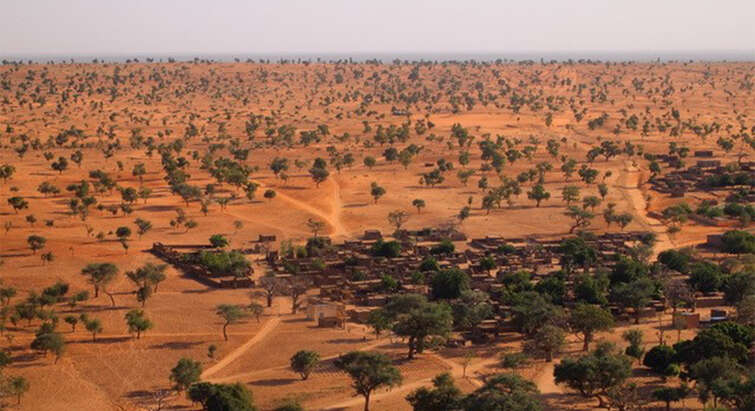
Ankit Kariryaa is a Tenure Track Assistant Professor at the Department of Computer Science and Department of Geosciences and Natural Resource Management , University of Copenhagen. His work bridges Machine Learning and Environmental Informatics , focusing on remote sensing, geospatial analysis, and ecological modeling. University of Copenhagen, Denmark Machine Learning Section, Department of Computer Science Geography, Land, Environment and Society, Department of Geosciences Kariryaa specializes in applying deep learning and computer vision to environmental challenges. His research includes: Automated tree detection and biomass estimation via satellite imagery Multi-modal geospatial representation learning Monitoring farmland tree decline and carbon sequestration potential Agroforestry system mapping using AI Developing AI tools for climate policy and sustainability Recent work trends show a focus on quantum-inspired machine learning , environmental monitoring , and cross-cultural AI applications . His 15 most recent publications span topics in remote sensing , ecological modeling , and AI ethics , with methods ranging from neural networks to tensor-based learning. He collaborates across disciplines, notably with researchers in ecology , climate science , and quantum computing . His outreach includes seminars on AI in agroforestry and ecosystem management , while his team contributes to global tree resource databases like TreeSense.
Niels Richard Hansen is a Professor at the Department of Mathematical Sciences , University of Copenhagen, leading research at the intersection of Artificial Intelligence and Statistics . He co-founded the Copenhagen Causality Lab and focuses on automating causal explanation discovery from data using Bayesian networks, stochastic processes, predictive models, and machine learning. His work emphasizes creating interpretable and robust AI systems capable of generalizing across domains. His research has produced over 56 publications spanning causal inference , graphical modeling , stochastic processes , and machine learning . Recent work includes: Predictive and causal learning (2018 keynote) High-dimensional regression solutions (2016 lecture) Interdisciplinary applications in actuarial science , environmental statistics , and neuroscience He actively contributes to scientific communication through media appearances and public explanations of statistical concepts, including analyses of: Gaussian correlation inequality proofs Daylight saving time and blood clots Mathematical approaches to lotteries Climate change vs lunar effects
Andrea Burattin is an Associate Professor at the Department of Applied Mathematics and Computer Science, Technical University of Denmark. His work bridges formal methods and practical process analysis, focusing on process mining, business process management, and hybrid modeling techniques. He actively contributes to research in healthcare process optimization, streaming data analysis, and system verification through Petri nets and CCS transformations. UN Sustainable Development Goals: Poverty eradication, environmental protection, and prosperity for all (via process optimization) Active projects: Immersive Process Mining (2024-2027), Usability and Understandability of Hybrid Process Models (2018-2021) His research explores large language model integration with process mining, proposing frameworks like Tiramisù for multi-faceted process visualization and PN2CCS for formal model translation. Recent work emphasizes real-time monitoring, conformance checking, and IoT-driven process analytics. Key trends in his publications include: 1) Streaming process mining pipelines (2022-2025); 2) LLM-plan generation frameworks (2024); 3) Formal verification techniques (Petri nets, CCS); 4) Healthcare process modeling (2019-2023); 5) Behavioral pattern analysis in process compliance. Scientific Awards Best Demo Award (2022, 2016) Best Process Mining Dissertation Award (2014) Best Workshop Paper (EDBA and PODS4H, 2023) As advisor, he supervises PhD projects on process mining and hybrid modeling. His editorial roles include Information Systems reviewer (2024-2025) and past editor for Engineering Applications of AI (2022-2023). Collaborations span Denmark, Italy, and the Netherlands.
Erik Bjørnager Dam is a Professor in the Machine Learning section at the Department of Computer Science, University of Copenhagen (UCPH). His research spans theoretical foundations of machine learning to practical applications in medical data analysis, sustainability, and materials science. His key research interests include: Small-scale and resource-efficient deep learning Medical image analysis and segmentation Sustainable and environmentally conscious AI development Graph neural networks for materials science Resource-constrained AI systems Professor Dam's recent publications demonstrate a strong focus on making AI more accessible and sustainable while maintaining high performance standards. His work on 'Performance Per Resource Unit' metrics addresses critical challenges in deploying AI in resource-limited environments, particularly in healthcare applications. His research bridges theoretical machine learning with practical implementations across multiple domains. His notable professional activities include: Co-founding Cerebriu A/S (since 2018) Co-founding Biomediq A/S (since 2008) Delivering lectures on AI's role in green transition (April 24, 2023) Media contributions on deep learning applications in plant research (September 13, 2018) With 74 documented research outputs, Professor Dam maintains an active research profile with significant contributions in 2023-2025 across medical imaging, sustainable AI, and materials science applications.