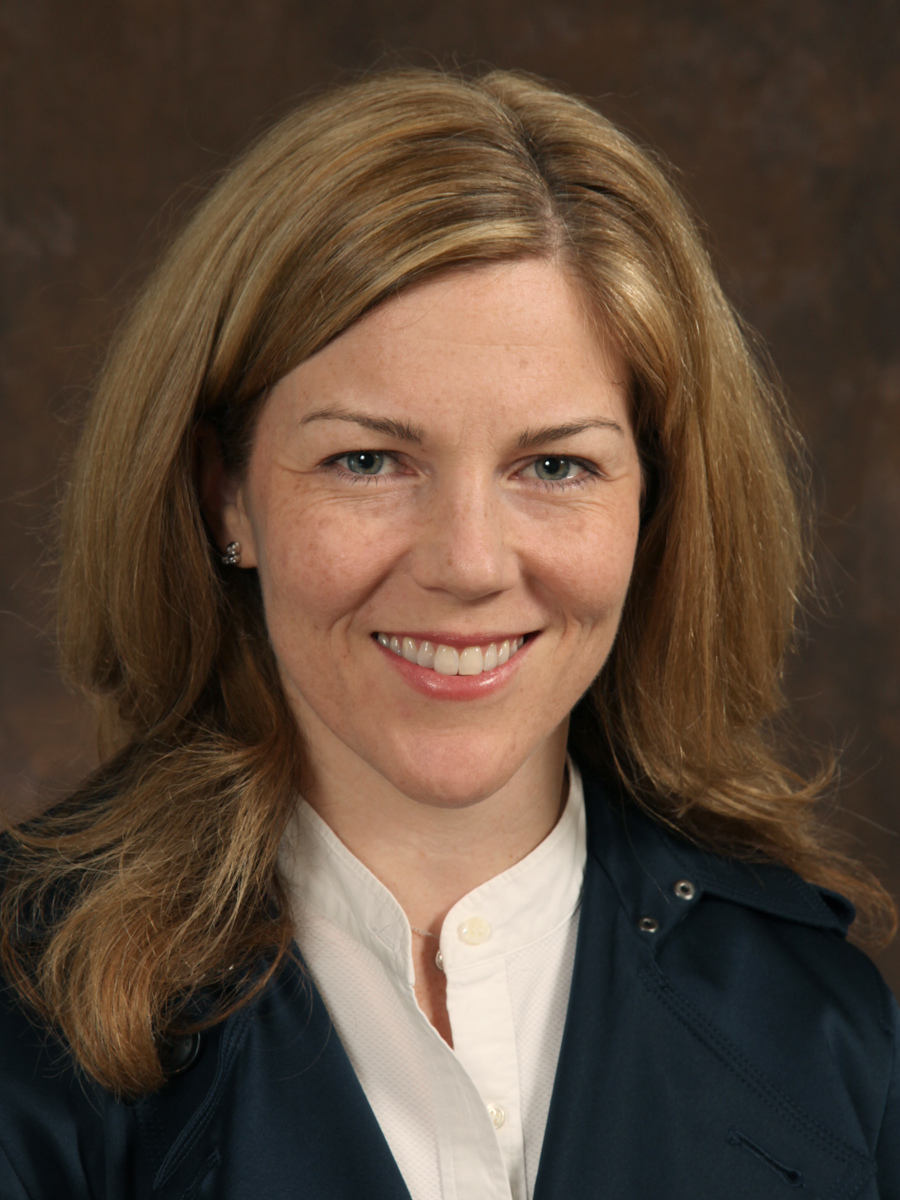
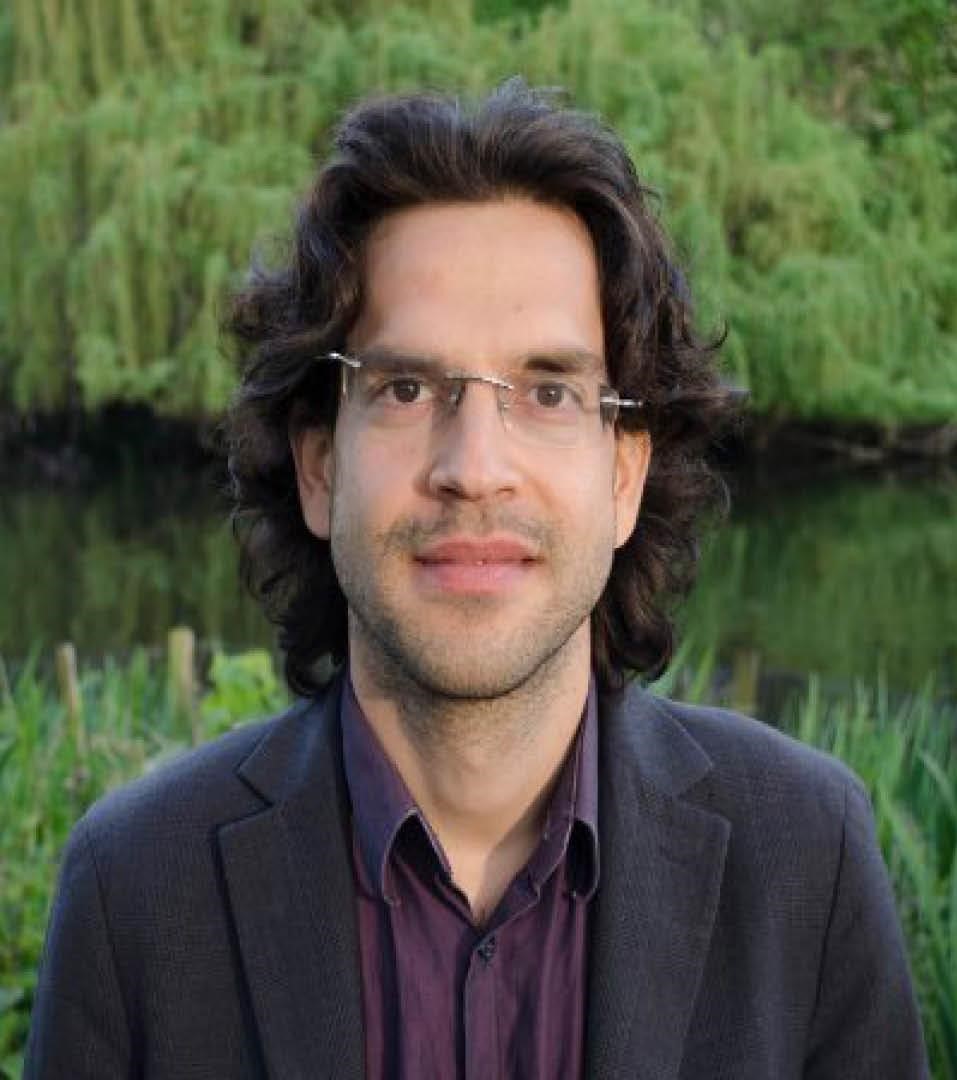
Frank Wood is an Associate Professor of Computer Science at the University of British Columbia and a Canada CIFAR AI Chair at AMII. He directs the Pacific Laboratory for Artificial Intelligence (PLAI) research group and co-founded Inverted AI, a spin-out focused on advanced simulation for autonomous vehicles. His research focuses on probabilistic programming, deep generative models, and reinforcement learning, with applications in autonomous driving, robotics, and vision. Wood teaches courses such as Machine Learning and Data Mining (CPSC 340) and Topics in Artificial Intelligence (CPSC 532W). He has been on academic leave from January to December 2025. His work integrates theoretical advancements with practical applications, including projects like PLAICraft, a large-scale embodied AI dataset. Key awards include the ICML Best Paper Honourable Mention and contributions to probabilistic programming systems like Anglican. His research group collaborates on tools such as TorchDriveEnv for autonomous driving benchmarking and explores cutting-edge methods in diffusion models and continual learning.
Lucy Gao is an Assistant Professor in the Department of Statistics at the University of British Columbia (UBC). Her research focuses on statistical inference, machine learning, and bioinformatics, with particular emphasis on clustering methods, high-dimensional data analysis, and optimal design theory. She holds a faculty position within UBC’s Faculty of Science and is affiliated with the Vancouver Campus. Her work spans theoretical developments in statistical methodologies and applications to biological data, such as single-cell RNA sequencing analysis. She has contributed to areas like selective inference for hierarchical clustering and algorithmic optimization for complex systems. Her email is lucy.gao@stat.ubc.ca, and she maintains a website at https://www.lucylgao.com/ . Recent publications highlight her expertise in data thinning techniques, latent variable modeling, and multiview network analysis. She has explored topics ranging from negative binomial count splitting in genomics to bilevel optimization algorithms. Her research bridges statistical theory and practical computational challenges in modern data science. No scientific awards or advising records are explicitly listed in the provided materials. Her academic contributions are primarily through peer-reviewed articles and methodological innovations.
Viviane Yargeau is a Professor and Dean of the Faculty of Engineering at McGill University. She holds degrees in Chemical Engineering (ing, BChE, MScA, PhD) from Université de Sherbrooke. Her research focuses on protecting water resources through advanced treatment technologies, including photocatalysis, ozonation, and toxicity assessment of contaminants. She leads the Controlling Contaminants of Concern (3Cs) research group. Her work addresses emerging contaminants such as tire wear compounds (6PPDQ), pharmaceuticals, and microplastics. She explores innovative materials like TiO₂ nanotubes for water purification and evaluates ecological impacts of agricultural chemicals via mesocosm experiments. She pioneered wastewater-based epidemiology to monitor drug use across global cities. Key contributions include developing high-throughput toxicity assays (e.g., LuminoTox) and optimizing catalytic ozonation processes. Her lab investigates the environmental fate of nanomaterials and endocrine-disrupting chemicals. Recent studies highlight contaminants in remote ecosystems and urban air pollution from tire wear. She collaborates internationally on multi-year wastewater surveillance projects and advises on policy for contaminant management. Her research bridges engineering, chemistry, and ecology to address 21st-century water challenges.
Dr. Dan Ionescu is a Professor at the University of Ottawa's School of Electrical Engineering and Computer Science, Department of Electrical and Computer Engineering. He has been affiliated with the university since 1985, contributing extensively to teaching and research. His career includes visiting professorships at École Nationale Supérieure de Télécommunications (Paris) and Universitat Politècnica de Catalunya (Barcelona). He founded the Machine Intelligence Research Laboratory (1988) and the Network Computing and Control Research Laboratory (NCCT, 1999), which he currently directs. His research spans Artificial Intelligence, Machine Vision, Distributed Computing, Network Control, and Formal Methods. Notable contributions include methodologies in Expert Systems, Image Processing, Temporal Logic, and Network Management. His work has received industrial and governmental grants from CITO, Nortel, NSERC, and others. Recent research focuses on Web-based collaborative platforms (e.g., UC-IC, Watch-Together), Autonomic Computing, and AI applications in gesture control and 3D IR camera systems. Dr. Ionescu’s technical leadership includes pioneering the first distributed network management platform with industry partners and designing the NCIT*net 2 network architecture. His current interests include AI-driven solutions for cybersecurity, medical imaging, and IoT-enabled disaster response systems. He has advised numerous projects in AI ethics, quantum computing, and real-time control systems. His research trends emphasize interdisciplinary innovation, combining AI with healthcare (e.g., MRI analysis, deepfake detection), cybersecurity (GAN-based intrusion detection), and IoT (Salv AIoT platform). Collaborations with IBM CAS and Diatem Networks highlight his industry-academia integration. His legacy includes over 40 years of impactful contributions to computing and engineering education.
Suruz Miah is an Associate Professor in the Department of Electrical and Computer Engineering at Bradley University and an Adjunct Professor at the University of Ottawa's School of Electrical Engineering and Computer Science. He holds a B.Sc. from Khulna University of Engineering & Technology (Bangladesh) and M.A.Sc./Ph.D. degrees from the University of Ottawa. His research focuses on Cyber-Physical Systems, Optimal Control, Multi-Agent Systems, and RFID Technology. He has held roles including Visiting Associate Professor at Hosei University (Japan), Visiting Research Fellow at DRDC Canada, and Part-Time Professorships at multiple institutions. Education: B.Sc., Computer Science and Engineering, Khulna University of Engineering & Technology (2004) M.A.Sc. and Ph.D., Electrical and Computer Engineering, University of Ottawa (2007, 2012) Research Interests: Dr. Miah specializes in Cyber-Physical Systems, including autonomous robotics, multi-agent coordination, optimal control, and machine learning applications. He leads projects on mobile robot navigation, energy management systems, and RFID-based localization. His work bridges theoretical control systems with practical implementations in robotics and industrial automation. Advising & Collaborations: Advised/co-authored over 20+ student research projects, focusing on reinforcement learning, multi-agent systems, and robotics. Collaborates with institutions like DRDC Canada, Bradley University's Cyber-Physical Systems Lab, and University of Ottawa's MIRaM Lab. Developed open-source frameworks like MAFOSS (Multi-Agent Framework using Open-Source Software) and BEMOSS (Building Energy Management System). Labs & Teams: Principal Investigator at Bradley's Cyber-Physical Systems Lab. Research member of the Machine Intelligence, Robotics, and Mechatronics (MIRaM) Lab at the University of Ottawa.
Thava Vasanthan is a Professor in the Department of Agricultural, Food & Nutritional Sciences at the University of Alberta. He holds a Ph.D. in Food Science from Memorial University of Newfoundland (1994), an M.Sc. in Food Technology from the University of Reading (1988), and a B.Sc. in Agriculture from the University of Peradeniya (1986). His research focuses on grain processing science, particularly value-added utilization of carbohydrates like starch and beta-glucans from oats and barley. Key interests include starch fractionation, low glycemic food formulation, and industrial collaboration for product development. Dr. Vasanthan teaches advanced courses such as Science and Technology of Cereal and Oilseed Processing and Integrative Project in Food Safety and Quality . His consulting work involves assisting food and grain industries with process optimization, by-product utilization, and grant applications. He has authored over 100 peer-reviewed articles, with recent work addressing starch nanoparticles, mycotoxin mitigation in grains, and nutritional interventions for animal health. Notable research contributions include studies on beta-glucan extraction from barley, thermal modification of starches, and the role of dietary fibers in gut microbiota modulation. His lab explores both fundamental carbohydrate chemistry and applied solutions for food industry challenges.
Barry C. Sanders is a Professor and Director of the Institute for Quantum Science and Technology at the University of Calgary. He holds additional roles as Lead Investigator of the Alberta Major Innovation Fund Project on Quantum Technologies, a Thousand Talents Chair at the University of Science and Technology China, and Vajra Visiting Faculty at the Raman Research Institute. His research focuses on quantum computing, quantum algorithms, and optical implementations of quantum information tasks. Sanders has a PhD from Imperial College London (1987) and has held faculty positions at Macquarie University and the Australian National University. Education: BSc (University of Calgary, 1984), PhD (Imperial College London, 1987) Affiliations: Institute for Quantum Science and Technology, Alberta Major Innovation Fund Project His research interests include quantum-limited measurement, nonclassical light, quantum cryptography, and quantum algorithm development. He has pioneered work on Schrödinger cat states, qudit systems, and quantum error correction. Awards include Fellowships from the Institute of Physics, Optical Society of America, and Royal Society of Canada. His work bridges theory and application, with contributions to quantum technology commercialization and interdisciplinary collaborations. Editor-in-Chief, New Journal of Physics Past leadership roles: President of the Australian Optical Society, Founding Co-Chair of the Canadian Association of Physicists Division His recent publications explore quantum speedup in machine learning, topological quantum walks, and fault-tolerant quantum computing architectures.
Jeremy W. Fox is a Professor in the Department of Biological Sciences at the University of Calgary. He holds a PhD in Ecology and Evolutionary Biology from Rutgers University (2000) and a BA from Williams College (1995). His work focuses on community assembly processes, combining experimental and theoretical approaches with microbial systems. Key interests include dispersal effects, ecosystem function, and the dynamics of competitive interactions. Research highlights include challenging the Intermediate Disturbance Hypothesis (2013), quantifying biodiversity's role in ecosystem stability (2013), and analyzing meta-analytic approaches in ecology (2022). His lab explores how environmental fluctuations and species traits influence community structure and stability. Fox has been recognized with awards including the British Ecological Society Early Career Award (2007) and Alberta Ingenuity grants (2005-2007). Teaching includes courses on quantitative biology (ECOL 425, BIOL 315). His work emphasizes experimental rigor, theoretical frameworks, and open science practices. The Fox Lab's research spans ecological restoration, food web dynamics, and evolutionary ecology, with a focus on long-term community processes and their applied implications.
Dr. Daniel Columbus is an Adjunct Professor in the Department of Animal and Poultry Science at the University of Saskatchewan and a Research Scientist in Nutrition at Prairie Swine Centre. He holds a BSc, MSc, and PhD from the University of Guelph (2004, 2008, 2012), followed by a Postdoctoral Fellowship at the USDA/ARS Children’s Nutrition Research Center at Baylor College of Medicine. His research focuses on swine nutrition, particularly nutrient utilization, protein/amino acid metabolism, and the interaction between nutrition and health. Dr. Columbus has secured over $4 million in research funding from NSERC, the Government of Saskatchewan, and industry partners like Swine Innovation Porc. He serves as Western Director for the Canadian Society of Animal Science and Associate Editor of the Canadian Journal of Animal Science. Education: PhD, University of Guelph (2012) MSc, University of Guelph (2008) BSc, University of Guelph (2004) Postdoctoral Fellowship, Baylor College of Medicine (2012–2015) Research Interests: Nutritional requirements of disease-challenged swine Early-life nutrition and long-term performance Nutrient requirements and dietary fiber interactions Awards: 2019 Canadian Society of Animal Science Young Scientist Award Teaching & Mentorship: Courses taught: Advanced Monogastric Nutrition, Swine Production and Management Mentored over 20 students/postdocs, including undergraduates, graduates, and research assistants Labs/Teams: Active at Prairie Swine Centre, collaborating on projects related to swine nutrition and health.
Cathy McLellan is an Associate Professor and Interim Division Chair of Cardiology at Queen’s University, a role she has held since December 2024. She joined the Queen’s Cardiology Division in 2003 and served as Chair from 2017 to 2022. Dr. McLellan is also an interventional cardiologist at Kingston General Hospital, where she leads clinical roles in Percutaneous Coronary Interventions and Cardiac Program Medical Direction (2017–2020). Her work focuses on expanding regional cardiac care programs, such as the Southeastern Ontario Regional MI program, and overseeing postgraduate training in cardiology. Her expertise spans clinical cardiology, healthcare leadership, and medical education. She has held key administrative roles, including directing the Cardiology residency program and contributing to institutional governance through divisional leadership positions. While no specific awards are listed, her contributions to clinical practice and education are central to her professional profile. Dr. McLellan’s current focus includes advancing cardiac care protocols and maintaining operational excellence in hospital-based cardiology services. No formal research grants or student advisement details are provided in the text, though her administrative roles suggest involvement in training future clinicians.
Augusto Gerolin is an Assistant Professor jointly appointed in the Departments of Mathematics and Statistics and Chemistry and Biomolecular Sciences at the University of Ottawa. He holds a Tier II Canada Research Chair in Artificial Intelligence at the Interface of Chemistry and Mathematics. His research focuses on Optimal Transport Theory, Mathematical Physics, Theoretical and Computational Chemistry, and Machine Learning. Gerolin’s work bridges quantum chemistry, mathematical analysis, and computational methods, with applications in Density Functional Theory and quantum information science. He obtained his PhD from the University of Pisa and was a Marie Skłodowska-Curie fellow at Vrije Universiteit Amsterdam. He is a member of the European Laboratory for Learning and Intelligent Systems (ELLIS) and leads a research group exploring AI-driven solutions in chemistry and mathematics. His current projects include developing optimal transport frameworks for quantum systems, advancing machine learning algorithms in scientific computing, and fostering collaborations across disciplines through initiatives like the OQMG Network. Gerolin’s research has led to advancements in multi-marginal optimal transport, entropy-regularized methods, and the strong-interaction limit of density functional theory. His group actively collaborates with institutions worldwide, including the Fields Institute, IPAM, and the University of Genoa. He has supervised numerous PhD, Master’s, and undergraduate students, many of whom have contributed to cutting-edge studies in computational chemistry, quantum algorithms, and mathematical analysis. Key awards include the Canada Research Chair designation, and his work has been supported by grants from NSERC, MITACS, and the University of Ottawa. Gerolin is also committed to diversity in science, endorsing principles such as the Diversity Axioms, and advocates for academic solidarity with researchers affected by global conflicts.
Xu Chu is an Assistant Professor in the School of Computer Science at the Georgia Institute of Technology. He holds a PhD from the University of Waterloo's Data Systems Lab (2017), supervised by Ihab Ilyas. His research focuses on AI applications in healthcare, particularly human-AI collaboration in pathology and medical diagnostics. Key research areas include computational pathology tools for mitosis quantification, interactive AI systems for medical workflows, and crossmodal generative creativity. He has developed systems like NaviPath and XPath to enhance pathologists' workflow efficiency through AI integration. His recent work emphasizes improving trust in AI medical tools via majority voting mechanisms and leveraging eye-gaze data for AI training. Publications span 2023–2025, reflecting strong contributions to both technical AI development and human-centered medical system design.
Balbinder S. Deo is an Associate Professor at the School of Business, University of Northern British Columbia (UNBC), where he has been serving since 2002. He holds two PhDs—one in Industrial Engineering from the University of Manitoba and another in Business Management from Punjab Agricultural University, Ludhiana, India—along with an MBA and MSc from Indian institutions. His academic and industrial experience spans over 30 years, with affiliations at the University of Saskatchewan, University of Manitoba, and Punjab Agricultural University prior to joining UNBC. PhD, Industrial Engineering – University of Manitoba, Canada PhD, Business Management – Punjab Agricultural University, Ludhiana, India MBA – HP University, Simla, India MSc – Guru Nanak Dev University (GNDU), Amritsar, India Dr. Deo's research focuses on improving operational efficiency and productivity across manufacturing and service sectors. His work includes Activity Based Costing, Operation Based Costing, productivity measurement, green operations, materials flow analysis, and biofuels. He has also explored retail shrinkage reduction, hospital costing models, and business process management in non-profit organizations. His interdisciplinary research bridges industrial engineering with business management, particularly in sustainability and cost optimization. His recent publications (2011–2019) reflect a strong trend toward sustainability, energy systems, and operational analytics. Key themes include wood-based biofuels for northern communities, carbon neutrality in heating systems, environmental accounting in biofuel trade, and innovative models to reduce retail theft. These works appear in peer-reviewed conference proceedings and journals such as Model Assisted Statistics and Applications and Low Carbon Economy, demonstrating consistent scholarly output. Dr. Deo has served on multiple academic committees at UNBC, including the Senate Committee on University Business (SCUB), the Academic Standards Committee (ASC) for the School of Business, and various program and college-level committees. He has also collaborated extensively with industrial organizations such as Inco Limited, NewHolland Canada, International Tractors Limited, and Punjab Markfed. While no formal awards or fellowships are mentioned in the provided text, Dr. Deo's applied research and industry engagement underscore a career dedicated to practical, impactful scholarship. He has taught core courses such as Operations Management, Management Science, and Total Quality Management at both undergraduate and graduate levels.
Peter Bodorik is a Professor in the Faculty of Computer Science at Dalhousie University, where he conducts cutting-edge research in blockchain technology, smart contract automation, and distributed systems. He is affiliated with the Blockchain Lab and leads research in systems, focusing on transforming business processes into secure and scalable blockchain applications. PhD in Computer Science – Carleton University (1985) MEng in Computer Systems – Carleton University (1977) BSc in Computer Science – University of Calgary (1974) His research interests lie at the intersection of blockchain, business process modeling (BPMN), and automated software generation. He specializes in creating frameworks that transform BPMN models into smart contracts using multi-modal modeling (DE-HSM and FSM), enabling privacy, scalability, and interoperability in distributed applications. His work supports long-term collaborative transactions and off-chain computation to enhance performance and reduce costs. His recent publications (2021–2025) demonstrate a consistent focus on automating smart contract development, improving transaction management, and enabling enterprise adoption of blockchain. Key themes include BPMN-to-smart-contract transformation, sidechain integration, privacy-preserving execution, and model-driven engineering for blockchain systems. System and Methods for Automated Generation of Smart Contracts from BPMN Models Using DE-HSM Multi-modal Models (USPTO Patent Application 17968047) System and method for tracking of provenance and flows of goods, services, and payments in responsible supply chains (US Patent US-11461775-B2) Apparatus, system, and methods for a blockchain identity translator (US and Canada patents) System and Methods for Tracking of Provenance and Flows of Goods in Responsible Supply Chains (Canada Patent 3,073,459) Peter Bodorik has supervised over 80 graduate students and has published more than 100 peer-reviewed papers. He has held key academic leadership roles including Associate Dean (Academic), Acting Associate Dean (Research), and Director of the Master of Electronic Commerce program. He is actively involved in research funding, student mentorship, and advancing blockchain technology through both academic and industrial collaboration. He leads the Blockchain Lab at Dalhousie University, fostering innovation in secure and scalable distributed systems.
Martin Smith is an Assistant Professor at the Université de Montréal in the Department of Biochemistry and Molecular Medicine . His research focuses on harmonizing genomic technologies and artificial intelligence for precision medicine and functional genome annotation , particularly using single-molecule sequencing and computational biology approaches. PhD in Genomics from University of Queensland (2012) Postdoctoral work at Garvan Institute of Medical Research Director of Genomic Technologies Program at Kinghorn Centre for Clinical Genomics (2017) His research initiatives include transcriptomic profiling using real-time nanopore sequencing , with projects funded by the NSERC , FRQS , Génome Québec , and the Cole Foundation . He supervises M.Sc. student Kristina Atanasova and collaborates with interdisciplinary teams in pediatric acute leukemia and COVID-19 research. Research Highlights : Clonal and transcriptional landscape of lymphocytes Real-time classification of leukemias Evolutionary RNA structure analysis AI-enhanced immunopeptidomics High-resolution RNA sequencing methods Scientific Awards : CSIRO Pre-Incubator Performance Award Palmer Foundation Innovation Award Megabase DNA Sequencing Prize Robert Cedergren Bioinformatics Poster Prize Martin Smith is recognized for developing bioinformatics tools like DotAligner and SLOW5 , and will direct the Ramaciotti Centre for Genomics at UNSW Sydney starting 2024. His work bridges biotechnology and high-performance computing to advance precision medicine applications for conditions including Leishmania and acute leukemia .