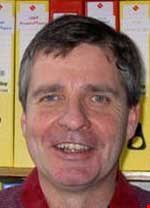
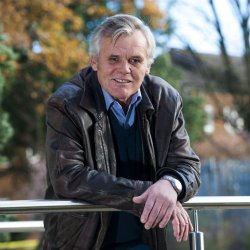
Dr. Cormac Lucas is a Senior Lecturer in the Department of Mathematics at Brunel University London, affiliated with the College of Engineering, Design and Physical Sciences. His work bridges mathematical optimization with practical applications in finance and operations management. Lucas specializes in Mathematical Optimisation Stochastic Optimisation Asset and Liability Management (ALM) Risk Analytics Portfolio Optimization Supply Chain Planning Under Uncertainty His research combines theoretical advancements with industrial projects, such as US Coast Guard Cutter Scheduling, Insight Investment's ALM, and Unilever's Natural Oil Buying Policy. Recent publications (2013–2024) highlight his focus on Portfolio Rebalancing with Transaction Costs Scenario Generation for Stochastic Programming Heuristic Algorithms for Cardinality Constraints Queuing Systems with Standby Servers Robust Supply Chain Planning Financial Derivative Modeling These works utilize methods like Variable Neighbourhood Search, Differential Evolution, and Lagrangian Relaxation. Email: cormac.lucas@brunel.ac.uk
Hanyu Gu is a Senior Lecturer in the School of Mathematical and Physical Sciences at the University of Technology Sydney (UTS), part of the Faculty of Science. He holds a PhD in Power Engineering and Automation from Shanghai Jiao Tong University (1999) and has extensive industry experience in telecommunications, airline optimization, and mining. His research focuses on combinatorial optimization, decomposition methods, stochastic programming, and machine learning applications. Notable awards include second place in the 2020 ROADEF competition. He collaborates with institutions like the UTS Transportation Research Centre and has contributed to projects such as optimisation engines for airline management and underground mining algorithms. Current research explores hybrid algorithms, Bayesian optimisation, and scheduling under uncertainty. Education: Bachelor in Industrial Automation, Shanghai Jiao Tong University (1994) Master in Control Theory and Application, Shanghai Jiao Tong University (1997) PhD in Power Engineering and Automation, Shanghai Jiao Tong University (1999) Industry Experience: ZTE (1999–2001): Senior Wireless Communication Engineer CTI, Melbourne (2007–2011): Airline Management Optimisation Researcher NICTA (2011–2013): Underground Mining Optimisation Researcher Grants: ARC Linkage Project LP0883855 (2008–2012): Developed optimisation tools for transportation crewing, valued at $840,000. Research interests span decomposition methods for large-scale problems (e.g., airline scheduling), stochastic programming for resource sharing, and hybridisation of mathematical programming with constraint programming. Recent work includes Bayesian optimisation for knapsack problems and relax-and-solve algorithms for project scheduling. His articles frequently address optimisation in logistics, healthcare, and transportation, emphasizing practical industry applications and algorithmic innovation. Awards: Second place in the ROADEF 2020 competition for maintenance planning solutions. Advising & Grants: Supervises Masters and PhD students in operations research and optimisation. Collaborates with Ausgrid, UGL, and ANC on optimisation projects (e.g., employee training timetabling, logistics). Active in the Optimisation Group of UTS Transportation Research Centre, he bridges academic research with real-world challenges in scheduling, logistics, and resource management. Ongoing efforts include advancing metaheuristics and integrating machine learning with traditional optimisation techniques.
Dr. Franjo Cecelja is a Reader in the School of Chemistry and Chemical Engineering at the University of Surrey. He holds a Dipl. Eng. from the University of Zagreb, an M.Sc. from Cranfield Institute of Technology, and a Ph.D. from Brunel University. His research focuses on systems engineering for energy and industrial applications, optimization, decision making, and semantic technologies. He has led projects such as the FP7 (Marie Curie LTN) initiative on renewable energy systems engineering (£425k, 2013–2018). His work spans ontology engineering applications in biorefining, waste valorization, and sustainable processing. Notable contributions include semantic frameworks for model and data integration in biorefineries and decision support systems for industrial symbiosis. Education: Ph.D., Brunel University (Optical Sensors for Electric Fields) M.Sc., Cranfield Institute of Technology (Control & Signal Processing) Dipl. Eng., University of Zagreb (Aerospace Technology) His research interests integrate ontology engineering with process systems engineering to address challenges in biorefining, industrial symbiosis, and sustainable resource management. Recent publications emphasize semantic technologies for waste valorization, PFAS treatment, and decision-making frameworks in biorefining. Dr. Cecelja’s FP7 project demonstrated leadership in renewable energy systems, leveraging semantic networking facilities and value chain optimization. His work bridges academic research with industrial applications, emphasizing circular economy principles and model-driven decision support. Labs/Teams: His research is conducted within the University of Surrey’s School of Chemistry and Chemical Engineering facilities, collaborating with interdisciplinary teams on biorefining and process systems engineering.
Sven Schewe is a Professor in the Department of Computer Science at the University of Liverpool, affiliated with the School of Electrical Engineering, Electronics and Computer Science. He leads the AI Section and is a founding member and former leader of the Verification Group. He also has secondary affiliations with the Algorithms, Complexity Theory and Optimisation Group and the Institute for Risk and Uncertainty. Research Interests: His research centers on automata theory and game theory, particularly their applications in the verification and synthesis of reactive and safety-critical systems. He investigates infinite-duration games, automata over infinite words and trees, and develops algorithms and tools for automated verification, synthesis, and learning of optimal control strategies. His work extends to reinforcement learning with formal guarantees, cyber-physical systems, and AI safety. Recent Research Trends: His recent publications demonstrate a strong integration of formal methods with machine learning, particularly in adversarial training, neural network robustness, and model-free reinforcement learning under omega-regular objectives. He also applies formal reasoning to interdisciplinary domains such as chemical space exploration and materials science. Scientific Awards: Finalist for the ERCIM Cor Baayen Award 2010 Dr. Eduard Martin Preis 2009 GI Dissertation Award 2008 Advising and Grants: He actively supervises numerous PhD students and postdoctoral researchers. He is Principal Investigator (PI) or Co-Investigator (CI) on multiple major grants, including EPSRC Programme Grants, Royal Society Fellowships, and Horizon Europe projects. His funded research spans topics such as game theory, verification, synthesis, reinforcement learning, and risk analysis. He has hosted visiting researchers and collaborated internationally with institutions in Germany, France, India, Taiwan, and the US. Labs and Teams: He co-founded and led the Verification Group and previously led the AI Section at the University of Liverpool. These groups focus on formal methods, automata, games, and their applications in AI and safety-critical systems.
Professor Robert Mason is a Professor of Logistics in the Logistics and Operations Management section at Cardiff Business School, Cardiff University. He has over 25 years of experience in academia and is actively involved in research, teaching, and leadership. He supervises PhD and dissertation students and is available for postgraduate supervision. University: Cardiff University School: Cardiff Business School Department: Logistics and Operations Management Academic Rank: Professor Email: MasonRJ@cardiff.ac.uk Phone: +44 29208 75511 Office: Aberconway Building, Second Floor, Room C46, Colum Road, Cathays, Cardiff, CF10 3EU Robert Mason holds a PhD (2009) from Cardiff University on 'Collaborative Logistics Triads in Supply Chain Management' and an MBA with distinction (2000) from Cardiff Business School, focusing on e-commerce in the UK grocery industry. He has been recognized with multiple awards, including the Best Dissertation Supervisor award in 2012 and multiple National Transport Awards from the Chartered Institute of Logistics and Transport (Wales) between 2008 and 2013. His research focuses on the decarbonisation of logistics, supply chain optimisation, inter-organisational relationships (vertical and horizontal), and the organisation of enterprise to deliver customer value, with a particular emphasis on retail logistics. He has published over 100 papers and co-authored three books, including The Lean Supply Chain , which won the prestigious Les Plumes des Achats - Prix des Associations in 2016. His recent publications explore topics such as lean projects in SMEs, supply chain resilience amid geopolitical risks, freight driver behaviour, and distributed manufacturing. These works reflect a strong trend toward sustainable, technology-integrated, and collaboratively managed supply chains. His scientific accolades include: Les Plumes des Achats - Prix des Associations (2016) James Cooper Cup for best PhD (2015) Best Cardiff Business School Dissertation Supervisor (2012) National Transport Award Winner (2008, 2009, 2011, 2013) Robert Mason has supervised several doctoral students, including Dong-Wook Kwak (winner of the James Cooper Cup), and currently mentors Yingkai Wang, Seungmin Lee, and Zhuowu Zhang. He has also served as an internal and external PhD examiner and has extensive experience in external examining and course validation for UK and international universities. His leadership roles include Head of the Logistics and Operations Management section (2019–2023), Chair of the Shadow Management Board (2018–2019), and Programme Director for MSc Logistics and Sustainable Supply Chain Management. He is affiliated with: British Academy of Management (BAM) Chartered Institute of Logistics and Transport (CILT)
Dr. Bogdan Roman is a Senior Researcher in the Centre for Mathematical Imaging in Healthcare at the Pure Mathematics department and a Visiting Research Fellow at the Computer Science and Technology department, both at the University of Cambridge. He chairs the Computer Science Admissions Test (CSAT) and coordinates the Cambridge Imaging Clinic. Research Areas : Compressed Sensing, Signal Processing, Sampling Theory, Inverse Problems, Computational Mathematics, Medical Imaging, Wireless Networks His work on compressed sensing has driven advancements in MRI resolution and sub-50nm Scanning Helium Microscopy (SHeM), funded by EPSRC. Collaborations include Siemens (MRI validation), Cambridge Radiology, and industrial partners. He has contributed to breaking the coherence barrier in imaging and developed scalable wireless access control systems. Scientific Awards : Rosetrees Interdisciplinary Prize 2016 nomination, 2nd Place at Microsoft Research Workshop 2007 He lectures Part IA Numerical Analysis and co-lectures Part III courses on Sampling and Compressed Sensing. His tools include a high-speed C++ MEX Hadamard transform and MacOH stress-testing software. His publications span mathematics, physics, and computer science disciplines.
Gizem S. Nemutlu is Assistant Professor of Data Analytics at Brandeis International Business School and a research affiliate at Massachusetts General Hospital’s Institute for Technology Assessment. Trained in stochastic modelling and health economics, she applies operations-research methods to cancer-surveillance policy and immunisation programmes. Education: Ph.D. in Management Sciences, University of Waterloo, Canada B.S. in Statistics, Hacettepe University, Turkey Research Interests: Her work integrates stochastic modelling, data-driven optimisation and health-economic evaluation to inform policy design in immunisation and cancer surveillance. Recent projects quantify cost-effectiveness of risk-stratified hepatocellular-carcinoma surveillance, evaluate HPV-related cancer trends, and forecast global breast-cancer control trajectories toward 2030 SDG targets. Publication Trends: Across 16 peer-reviewed works (2013-2025) she consistently employs Markov and decision-process models to compare surveillance strategies for liver, anal and colorectal cancers, assess biomarker-based screening, and measure population-level impacts of HPV vaccination. Studies appear in high-impact oncology and health-policy venues. Scientific Awards: None disclosed in supplied materials. Advising & Grants: No students or funded-grant details are provided in the source text. Labs & Teams: She collaborates with the Institute for Technology Assessment at Mass General Hospital, indicating ongoing interdisciplinary teamwork in health technology assessment and economic evaluation.
Rakesh Nandi is a Research Fellow at the Aviation Studies Institute (ASI) of Singapore University of Technology and Design (SUTD). He previously held a research fellowship under Dr. Shrutivandana Sharma at the Engineering Systems and Design (ESD) school at SUTD. His work focuses on optimizing and analyzing air traffic networks, with projects such as Network Capacity and Network Collaboration under Professor Peter Jackson. Rakesh earned his Ph.D. in Mathematics from National Institute of Technology Raipur (2020) and an M.Sc. in Applied Mathematics from Guru Ghasidas University (2013). His research interests span queueing systems , stochastic modeling , numerical optimization , and network modeling/scheduling . He collaborates on projects requiring advanced computational and analytical methods for discrete-time queueing systems. His recent publications (2018–2022) emphasize queueing theory applications, stochastic processes, and optimization in discrete-time systems. Key topics include D-BMAP/G/1 queues, GI/D-MSP queue analysis, and N-policy control strategies. While no scientific awards are listed, Rakesh demonstrates active research in operations research and applied mathematics. He has no documented advisees or grants mentioned. He contributes to interdisciplinary teams at ASI and ESD, focusing on aviation systems and network efficiency.
Associate Professor John Pye leads research in high-temperature solar-thermal systems and industrial decarbonisation at the Australian National University's School of Engineering. He holds a BE/BSc (University of Melbourne) and a PhD (University of New South Wales) focused on solar thermal modelling. His work bridges engineering innovation and sustainability, with a focus on green steel production, CSP technologies, and hydrogen applications. As a Visiting Scholar at Sandia National Laboratories, he advanced solar thermal testing methodologies. Educations: Bachelor of Engineering (Mech.) and Bachelor of Science (University of Melbourne, 1997) PhD in System Modelling of Compact Linear Fresnel Reflectors (UNSW, 2008) His research interests include solar thermal energy systems, concentrated solar power (CSP), and hydrogen-based industrial processes. Notable contributions include system-level optimisation of CSP plants, techno-economic analysis of green steel production, and solar-thermal beneficiation of iron ore. His work often integrates AI for optimisation and free/open-source engineering software. Recent publications focus on solar thermal applications in steelmaking, particle-based CSP systems, and hydrogen plasma metallurgy. Projects include the Gen3 Liquids Pathway for CSP and solar-driven thermochemical processes. Collaborations span industry and academia, addressing decarbonisation challenges in steel production and energy storage. Supervises research in solar thermal engineering and low-carbon technologies, contributing to Australia's role in zero-emissions commodity production. Active in policy submissions related to green energy and manufacturing frameworks.
Salman Nazir is Professor at the University of South-Eastern Norway (USN) , Faculty of Technology, Natural Sciences and Maritime Sciences, Department of Maritime Operations. He heads the Training and Assessment Research Group (TARG) and is Scientific Leader of the national Centre of Excellence in Maritime Simulator Training and Assessment (COAST). Since 2019 he has held the rank of Professor, after serving as Associate Professor from 2015 and earlier post-doctoral and lecturer roles in Norway, Italy, South Korea and Pakistan. Education PhD in Industrial Chemistry and Chemical Engineering ( cum laude ), Politecnico di Milano, Italy, 2011–2013 MSc in Chemical Engineering (Process System Engineering), Hanyang University, South Korea, 2007–2009 BSc in Chemical Engineering, Bahauddin Zakariya University, Pakistan, 2002–2006 Research Interests Prof. Nazir’s work sits at the intersection of Human Factors, Safety and Simulation Technology . He investigates how immersive virtual- and augmented-reality simulators, novel training syllabi and evidence-based performance indices can enhance operator competence and safety in complex maritime and process-industry systems. Concepts such as Distributed Situation Awareness , multi-criteria decision making , accident analysis and learning process optimisation are central to his multidisciplinary agenda, which actively involves cognitive scientists, computer scientists, maritime practitioners and industrial stakeholders. Research Trends & Article Overview Across more than 80 peer-reviewed outputs, a clear trajectory emerges: early focus on process-industry training simulators and KPI development evolved into maritime-centric studies on simulator fidelity, VR-based education, and human-automation interaction in autonomous shipping. Recent work (2019–2021) emphasises systematic reviews and comparative European studies, validating VR-headset efficacy, performance-assessment frameworks, and sociotechnical implications of increased automation. Honours & Awards COAST designated one of 12 national Centres of Excellence in Education (SFU) by DIKU, Norway Coordinator/Leader, EU Horizon 2020 project ENHANCE (multi-million NOK) 400 000 NOK MARKOM 2020 Workshop grant PhD cum laude , Politecnico di Milano Young-researcher grants, Politecnico di Milano (2011 & 2013) Merit scholarships, Hanyang University & Korean Government Advising & Grant Portfolio Prof. Nazir currently supervises 6 master students and 1 PhD candidate in “Automated Performance Assessment in Maritime Operations”, while co-supervising additional PhD students at Liverpool John Moores University. He has successfully graduated 3 master and 6 bachelor students . External funding includes EU Horizon 2020, Norwegian SFU scheme, MARKOM 2020, Maritime Technology and Innovation (MTDI) and multiple Italian national grants. Labs & Collaborative Networks He leads TARG at USN, acts as Scientific Leader of COAST , and collaborates with leading international scholars such as Prof. Zaili Yang (Liverpool John Moores), Prof. Annette Kluge (University of Duisburg-Essen), Prof. Davide Manca (Politecnico di Milano) and Prof. Paulo Carvalho (UFRJ, Brazil). These partnerships span computer science, cognitive psychology, maritime logistics and safety engineering, ensuring a truly interdisciplinary research ecosystem.
Prof. Dr.-Ing. Stefan Lechner has been full Professor of Energy Economics and Energy Systems at the Technical University of Central Hesse (THM) , Giessen, since March 2015. He is affiliated with the Department of Mechanical Engineering and Energy Technology and the Institute THESA – Institute of Thermodynamics, Energy Process Engineering and Systems Analysis . Additionally, he leads the Laboratory for Energy Economics and is a core member of the Competence Center for Energy Technology and Energy Management (etem.THM) . Education & Career Dr.-Ing., Brandenburg University of Technology (BTU) Cottbus, 2012 – Dissertation on steam-fluidized-bed drying of lignite. Dipl.-Ing. (FH) Mechanical Engineering, Georg Agricola University of Applied Sciences Bochum, 2002 – specialising in Future Energies. Supplementary doctoral studies & economics coursework at BTU Cottbus and FernUniversität Hagen. Professional experience at Vattenfall (plant management, power-plant planning & R&D) and Kreisel Umwelttechnik (Head of Development) before entering academia. Research Interests Prof. Lechner’s work centres on the techno-economic analysis and optimisation of energy systems in transition . Core themes include renewable energy integration , thermal energy storage (particularly Carnot batteries using ceramic high-temperature stores), sector coupling between electricity, heat and mobility, and 5th-generation cold district-heating networks (5GDHC). Methodologically, he combines experimental thermal engineering with open-source simulation frameworks , agent-based demand modelling , and electricity-market modelling . Recent activities expand into waste-heat recovery from data centres and transcritical CO₂ heat-pump systems for low-temperature district heating, always targeting cost-effective, grid-friendly and sustainable solutions . Publication Trends Between 2017 and 2024 his output highlights a clear evolution from fundamental studies on pressurized steam fluidized-bed drying and lignite heat-transfer toward system-level analyses of storage-based sector coupling . A dominant cluster addresses Carnot batteries , covering high-temperature storage materials, gas-turbine re-conversion concepts, and demonstration results. Parallel streams examine GIS-based rooftop PV potential , agent-based settlement energy-demand modelling , and regulatory frameworks for cross-sector energy markets. Scientific Awards & Honours No specific awards are mentioned in the provided material. Research Funding & Teams Prof. Lechner has secured and coordinates projects worth > €10 million (THM share ≈ €6.5 million) funded by BMBF, BMWK/BMWi, Hessian ministries (HMWK, HMWEVW), WI-Bank and ERDF : LOEWE 3 DUWä (2025-2027) – transcritical CO₂ dual-use heat pumps for cold district heating. EnEff:Stadt FlexQuartier2 (2023-2027) – hybrid storage optimisation in Giessen’s Philosophenhöhe district. KNW-Plus (2022-2023) – design & online tool for cold local heating networks. Innovative waste-heat use from data centres (2022-2023). FlexQuartier Gießen (2018-2023) – integrated hybrid storage & sector coupling in a new-build district. Kommun:E (2018-2022) – municipal energy-supply transformation under Germany’s Energiewende. High-T-Stor (2017-2019) – cross-sector high-temperature storage for renewable balancing. FES (2019-2021) – Research Center for Energy Storage and Sector Coupling. These projects involve interdisciplinary consortia including municipalities, grid operators, SMEs, and research partners across Germany. Teaching & Academic Leadership He lectures in Energy Economics and Sector Coupling, Energy Markets, Heat Transfer, Renewable Energy Technology and Energy System Analysis . He also serves as Programme Manager for the part-time continuing-education M.Sc. Energy Efficiency Management (StudiumPlus, Wetzlar) and contributes to advanced master’s courses on energy law and thermodynamics.
Emran Ali is a Graduate Researcher (Ph.D. candidate) and Part-Time Lecturer at Deakin University's School of Information Technology within the Faculty of Science, Engineering and Built Environment. He holds concurrent faculty appointments at Hajee Mohammad Danesh Science & Technology University (HSTU) in Bangladesh where he teaches computer science courses while on study leave. His academic journey includes a Master of Science (Research) in Information Technology from Deakin University (2022) and a Bachelor of Science in Computer Science and Engineering from HSTU. Doctor of Philosophy (Ph.D.) in Information Technology, Deakin University (2023–present) Doctor of Philosophy (Ph.D.) in Machine Learning, Coventry University (Cotutelle program, 2023–present) Master of Science (Research) in Information Technology, Deakin University (2020–2022) Bachelor of Science in Computer Science and Engineering, HSTU Bangladesh (2007–2012) Ali's research focuses on algorithm development and applied machine learning in health informatics, specializing in biosignal processing for neurological and sleep disorder detection. His work integrates time-series data analysis with explainable AI techniques to develop clinical decision support systems. Current projects include ML/DL modeling of sleep-stage transitions in aging populations and causal relationship analysis in sleep disorders using EEG data. Analysis of his 10 recent publications reveals strong concentration in biomedical ML applications (60%), particularly EEG-based neurological disorder detection and mental health diagnostics. Secondary focus areas include environmental monitoring systems (20%) and foundational computer science (20%). His work consistently employs ensemble methods and feature optimization techniques across diverse datasets, with increasing emphasis on real-world clinical applicability in recent publications. Deakin University Post-graduate Research Scholarship (DUPRS) through Cotutelle program with Coventry University National Fellowship from Bangladesh Ministry of Science and Technology (2020) Best Presentation Award at Deakin School of IT Conference (2021) AWS AI/ML Scholarships (2023, 2024) Next Generation Tech Booster Scholarship (2024) Ali provides research supervision at HSTU while serving as a Graduate Research Teaching Fellow at Deakin University for Machine Learning and Data Analytics units. His industry collaborations include projects with Monash University, Alfred Health, and AETMOS Australia focused on health informatics applications. Current funding includes AWS-sponsored nanodegrees and Deakin University research scholarships supporting his sleep disorder research. His technical work integrates cloud-based AI/ML platforms (AWS, Azure) with biosignal processing pipelines, utilizing collaborations across Australian healthcare institutions to validate clinical applications. Recent projects emphasize explainability in deep learning models for medical diagnostics, particularly in resource-constrained environments relevant to Bangladesh healthcare contexts.
Amir Kafshdar Goharshady is an Associate Professor of Computer Science at the University of Oxford and a Tutorial Fellow at St Catherine's College. His research focuses on theoretical computer science, including formal program verification, parametrised algorithms, compiler optimisation, and blockchain technology. He leads the ALPACAS research group, which explores algorithms, logic, program analysis, cryptocurrencies, and smart contracts. Education: PhD in Theoretical Computer Science from IST Austria (supervised by Prof. Krishnendu Chatterjee), MSc in Computer Science (Systems) from Georgia Tech, and undergraduate studies in Maths and Computing at the Universities of London and Yazd. Prior to Oxford, he was an Assistant Professor at HKUST and maintains a visiting role at IIT Bombay. Research Interests: Formal methods for program verification Algorithmic efficiency in compiler optimisation Decentralized systems and blockchain applications Game-theoretic approaches to secure protocols Advising and Grants: Supervises over 20 PhD and Master’s students, with a rigorous selection process emphasizing problem-solving skills. Leads an international research group with multiple grants and collaborations. Former roles include organizing high school Olympiads and founding the Sundar STEM School in Pakistan. Labs/Teams: ALPACAS group, known for its work on smart contract optimization, blockchain security, and parametrised algorithm design. Regularly hosts visiting researchers such as Petr Novotný and Thomas Henzinger.
Hardik Rajpal is a Researcher in the Mathematics Department at Imperial College London, affiliated with the Faculty of Natural Sciences. His work bridges applied mathematics, cognitive sciences, and complex systems. He completed his PhD at Imperial's Center for Complexity Science, focusing on modelling social, ecological, and brain dynamics using statistical mechanics and information theory. His research explores emergent phenomena in systems ranging from neuroscience to music performance. Education: Bachelor's in Physics at Indian Institute of Technology Kharagpur, India PhD in Complexity Science at Imperial College London Research Interests: His work centers on information-theoretic tools for analyzing brain complexity, social systems, and creative processes. Notable areas include: Neuroscience: Consciousness disorders and psychedelic effects Social Dynamics: Opinion formation and network nodality Music Science: Improvisation's impact on performer-audience synchrony Mathematical Modelling: High-order information in complex systems His recent publications (2020-2025) focus on: Interdisciplinary studies of music performance and biophysics Network analysis of political discourse on social media Machine learning applications in medical diagnostics Affiliations include the Center for Complexity Science and Mathematics Research Group at Imperial College.
Professor Axel Schulz is a Professor of Management Accounting at the La Trobe Business School, La Trobe University. He previously held professorial roles at Monash University, Melbourne University, and the University of New South Wales (UNSW). His research focuses on behavioral accounting, particularly the design of Management Control Systems and the impact of Performance Measurement Systems on organizational performance. Schulz has contributed to leading journals such as the Journal of Accounting Research and Accounting, Organizations and Society. He currently serves on the editorial board of The Journal of International Accounting Research. Education: Bachelor of Commerce (Honours), UNSW Master of Commerce (Honours), UNSW PhD, UNSW Chartered Accountant (CA) Research Interests: Behavioral aspects of Management Control Systems Incentive system design and performance evaluation Decoding effort measurement in accounting contexts Impact of technology on behavioral accounting experiments Recent Research Trends: Recent work emphasizes experimental methods to explore effort dynamics, collaborative team behavior under performance metrics, and causal inference in strategic performance tools. His 2025 articles highlight advancements in measuring effort intensity and leveraging new technologies for behavioral research. Grants: Quantum Enhanced Optimisation for Energy Efficient Data Centres (Critical Technologies Challenge Program) Hybrid Entrepreneurship and Job Creation in a Covid World Labs/Teams: No specific lab/team affiliations explicitly mentioned in the text.