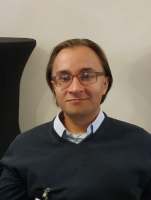
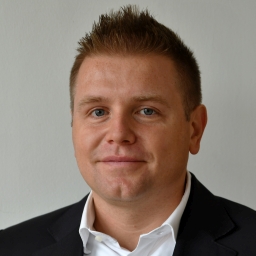
Dr hab. Jarosław Chodak is an Adjunct Professor at the Department of Sociology of Social Change, Institute of Sociology, Faculty of Philosophy and Sociology at Maria Curie-Skłodowska University. His academic career spans teaching and research activities focused on political sociology, social movements, and digital sociology. He is actively involved in the European Social Survey consortium and serves as a researcher at the Center for Artificial Intelligence and Computer Modeling at UMCS. His research interests include: Political Sociology Social Movements and Contention Sociology of Disinformation Digital Sociology ICTs in Social Mobilization His publications focus on transformative social processes, with notable works on nonviolent revolutions and digital activism. Current projects involve analyzing disinformation dynamics and leveraging computational modeling for sociological research.
Dr. Emilia Mielniczuk is an academic researcher at the Department of General Psychology , Faculty of Social Sciences , John Paul II Catholic University of Lublin (KUL). Her scholarly work focuses on affect , emotional contagion , personal resources , and their impact on entrepreneurial psychology , innovative behavior , and relationship satisfaction . Research trends from her publications highlight: 1) scale development for measuring state hope , implicit affect , and goal realization ; 2) multilevel studies linking workplace affect to employee innovation ; 3) methodological contributions on common method bias and cross-cultural validation of psychological instruments. She actively participates in international collaborations with institutions like Erasmus University Rotterdam , UNED Madrid , and Sapienza University of Rome . Her work has been supported by grants from the National Science Centre Poland and KUL, including projects on entrepreneurial success , affective well-being , and prosocial activities .
Łukasz Remisiewicz is a Lecturer at the Department of Sociological Theory and Social Research Methodology , Institute of Sociology , Faculty of Social Sciences , University of Gdańsk . He serves as the Editorial Secretary of the journal Miscellanea Anthropologica et Sociologica . His research spans multiple interdisciplinary domains , including sociology of science, philosophy of science, sociology of education, neurosociology, and sociology of examination. He explores the social contexts of academic assessment, cognitive development, and biological dimensions in sociological theory. His 15 most recent publications (2025-2017) focus on evaluative cultures, academic metrics, habilitation processes, family rituals, climate change discourse, disability marginalization, and biology-sociology interfaces. These works reflect his commitment to merging sociological theory with empirical and interdisciplinary analysis. Scientific Awards & Grants : Florian Znaniecki Award, 1st degree (2014) Honorable Mention, Polish Academy of Sciences (2016) Rector's Awards (1st, 2nd, 4th degrees, 2016/17–2024/25) Ministry of Science and Higher Education Scholarship (2017/18) Fulbright Junior Research Award (2018–2019) Mayor of Gdańsk & Gdańsk Scientific Society Award (2024) Florian Awards for 'Discovery of the Year' (2023) and 'Captain of Sociology' (2024) He is an active participant in international conferences, including ESA , Neurodidactics Symposium , and CHER Annual Conferences , presenting on topics ranging from emotional stratification to neurosociological models.
Dr hab. Jarema Batorski , prof. UJ , is an Associate Professor at the Institute of Entrepreneurship within the Faculty of Management and Social Communication at Jagiellonian University. His work focuses on organizational learning , crisis management , and their applications in tourism and sports . He has held administrative roles, including Deputy Head of the Research Ethics Committee at his faculty. Research Interests : Organizational learning as a crisis management framework Knowledge management in tourism and sports sectors Open change models in enterprise restructuring Competitive dynamics in sports organizations Article Trends show a consistent focus on crisis response strategies, organizational fragmentation, and VR integration in tourism. His work bridges theoretical models (e.g., double-loop learning) with practical case studies (football coaching changes, pandemic recovery). Publications often emphasize ethical dimensions and cross-sectoral knowledge transfer. Teaching includes courses on contemporary management concepts , crisis management in tourism and sports , and competition in the sports market .
Prof. Wojciech Sobieski is a faculty member at the Department of Mechanics and Fundamentals of Machine Design within the Faculty of Technical Sciences at the University of Warmia and Mazury in Olsztyn . His research focuses on fluid mechanics, numerical modeling, and porous media analysis, with applications in environmental engineering, hydraulic systems, and 3D printing. Academic Rank: Professor Scientific Discipline: Mechanical Engineering Key Research Areas: Tortuosity Analysis, Multiphase Flow, DEM Simulations His recent publications highlight advancements in computational methods for granular porous media, fluid flow modeling, and thermodynamic applications. Notable trends include the use of the Waterfall Algorithm for geometric analysis and sensitivity studies of numerical models like the Eulerian multiphase approach. He has contributed to understanding Forchheimer's laws and cavitation phenomena in hydraulic systems. Prof. Sobieski oversees the PathFinder Project , a research initiative focused on numerical modeling of porous media. His laboratory maintains infrastructure for multiphase flow simulations and particle-scale modeling. He has supervised 2 doctoral students to completion but currently has no active advisees.
Prof. Mariusz Deja serves as the Dean of the Faculty of Mechanical Engineering and Ship Technology at Gdańsk University of Technology. He holds a PhD (2001) and habilitation (2014) in Mechanical Engineering. His academic roles include Head of the Department of Manufacturing and Production Engineering (since 2019), and former Vice-Dean for Education (2016–2020) and Vice-Dean for Cooperation (2020–2024). Education: Master's in Mechanical Engineering (1993), Pedagogical Studies (1993), and postgraduate courses in TQM and ECO-Integrated Mechanical Engineering (1997). Professional experience includes roles as an assistant (1993–2001), assistant professor (2002–2017), associate professor (2017–2019), and full professor (since 2019). Research focuses on abrasive machining, additive manufacturing, and CAPP algorithms. Key interests include material removal processes, precision engineering, and tool fabrication using AM. Collaborations include visiting professorships at China's Dezhou University (2018), Germany's Technical University of Berlin (2021–present), and Sweden's KTH Stockholm (2023–2024). Awards include the Silver Cross of Merit (2016) and multiple Rector Awards for scientific, didactic, and organizational achievements. His work spans over 98 publications, with recent studies on 3D printing applications, container terminal logistics, and AI-driven defect analysis. Labs/Teams: Involved in research infrastructure related to additive manufacturing tools and precision machining systems. Active in projects like the NEPTUN initiative (Horizon Europe-funded) and Industry 4.0 collaborations.
Konrad Kowalczyk is an Associate Professor at AGH University of Science and Technology in Krakow, Poland, where he heads the Signal Processing Group within the Faculty of Computer Science, Electronics and Telecommunications. With extensive international experience from institutions including Queen's University Belfast, Stanford University, and Fraunhofer Institute, he has established himself as a leading researcher in audio and speech signal processing. His academic journey includes B.Eng. and M.Sc. degrees from AGH University (2005), a Ph.D. from Queen's University Belfast (2009), and a Habilitation in ICT from AGH University (2020). B.Eng. and M.Sc. in Electronics and Telecommunications, AGH University of Krakow (2005) Ph.D. in Electronics, Queen's University Belfast, UK (2009) Habilitation (D.Sc.) in Information and Communication Technology, AGH University of Krakow (2020) Kowalczyk's research spans multiple cutting-edge areas in audio processing, with particular focus on speech and audio signal processing enhanced by machine learning techniques. His work integrates deep neural networks with traditional signal processing methods to address challenges in array signal processing , speech enhancement , and speaker recognition . The research group he leads explores innovative applications in distributed signal processing for IoT , acoustic event detection , and spatial audio rendering , bridging theoretical advances with practical implementations. His recent publications demonstrate a clear trend toward integrating deep learning with traditional signal processing techniques, particularly in speaker diarization, source separation, and robust speech recognition. The research increasingly focuses on real-world applications requiring reverberation-robust processing , distributed microphone array systems , and end-to-end neural architectures that can operate in challenging acoustic environments. There's a noticeable shift toward more complex, integrated systems that combine multiple signal processing tasks. Stanislaw Staszic Medal for best graduate of AGH (2005) IEEE Best Student Paper Contest finalist (2007) AES Student Technical Paper Award winner (2008) Best Student Paper Award at IWAENC conference (2014) Best Paper Awards at IEEE SPA conferences (2016, 2019) Polish Ministry of Science Scholarship for Distinguished Young Scientists (2016-2019) Prime Minister Award for outstanding scientific achievements (2020) As Principal Investigator, Kowalczyk leads multiple significant research projects including "Acoustic Intelligence" (2024-2028) funded by National Science Center, and "Deep extraction for robust speech recognition" (2023-2028). He has successfully secured funding from prestigious programs including First TEAM from the Foundation for Polish Science, and EU FP7 projects. His research group actively supervises Ph.D., M.Sc., and B.Eng. students, with strong connections to international institutions including Aalto University and IEEE Signal Processing Society. The research output includes numerous journal publications, conference papers, patents, and software implementations that have advanced the field of audio signal processing. Kowalczyk leads the Signal Processing Group at AGH University, which focuses on developing innovative solutions for speech and audio processing challenges. The group maintains strong collaborations with international institutions including Aalto University (Finland), and participates in European research initiatives. Their work spans theoretical development through practical implementation, with applications ranging from medical voice assistants to distributed acoustic sensor networks.
Maciej Thomas is an Assistant Professor at the Department of Environmental Technologies, Faculty of Environmental Engineering and Energy, Cracow University of Technology. He holds a PhD in environmental engineering and has been actively researching since 2016. His work focuses on wastewater treatment technologies, heavy metal remediation, and environmental sustainability. Key areas include advanced oxidation processes (e.g., Fenton reagent), adsorption using metal-organic frameworks, and resource recovery from industrial byproducts. Dr. Thomas has published 74 articles, achieving a Scopus h-index of 15 and a WoS h-index of 13. His research also addresses challenges in groundwater quality assessment, particulate matter prediction via machine learning, and environmental risk management. Education: PhD in Environmental Engineering (2016). His research integrates chemical engineering principles with ecological sustainability, emphasizing practical solutions for industrial wastewater and soil contamination. He has contributed to projects involving cerium-based oxidation, poultry manure utilization in soil reclamation, and PFAS contamination in marine ecosystems. His recent work highlights optimization studies for hybrid treatment processes (e.g., ferrate/trithiocarbonate systems) and recovery of rare earth elements from mine waters. Collaborations span environmental chemistry, toxicology, and geosciences. Notably, he explores the intersection of machine learning with environmental monitoring, enhancing predictive capabilities for air and water quality. Dr. Thomas leads interdisciplinary projects addressing both technical and societal dimensions of environmental challenges, with a focus on industrial waste valorization and sustainable resource management.
Professor Anna Rakowska leads the Department of Intellectual Capital and Quality at Maria Curie-Skłodowska University's Faculty of Economics. With over 200 publications, her research spans human resource management, organizational diversity, and managerial competencies, while pioneering studies at the intersection of artificial intelligence in management and Human-Robot Interactions (HRI). She also investigates individual competencies within Circular Economy frameworks. Department Head of Intellectual Capital and Quality Deputy Editor in Human Management Systems Active in American Academy of Management and Polish Academy of Sciences (Lublin section) Focus on organizational justice, employee well-being, and diversity management Her scholarly work reveals trends in cross-cultural management studies, legal-comparative analyses of judicial systems, and evolving competencies for sustainable economies. Notably, she explores AI ethics in workplaces and migration-induced diversity challenges. Recipient of editorial board roles in international journals Research grant leadership in employee development and innovation Keynote speaker at conferences on organizational effectiveness Current projects examine robotic integration in business environments and diversity-driven innovation strategies, while maintaining active collaborations with industry leaders and policy experts.
Dr Wojciech Ryszard Lipski holds the position of Lecturer at the Department of Speech Therapy and Applied Linguistics , Maria Curie-Skłodowska University. His work focuses on speech and communication disorders across developmental and psychiatric conditions, with an ORCID identifier 0000-0003-4445-9940. Specializes in language disorders in schizophrenia Researches narrative coherence in psychiatric patients Develops therapeutic frameworks for autism Investigates connotative language breakdown Focuses on preschool/school-age speech development His recent publications emphasize neurolinguistic analysis of disordered speech patterns, particularly in schizophrenia and autism. Key methodologies include case studies , semantic field mapping , and connotation diagnostics . Research spans both clinical applications and theoretical investigations of language system disintegration. Current research explores: Neural network models of speech disorders Metaphorical language in psychosis Delusional discourse analysis Neurocognitive speech therapy approaches Language ontogenesis patterns Multi-center speech disorder studies
Summary Adam Szymkiewicz is a full Professor and Vice-Dean for Scientific Research at the Faculty of Civil and Environmental Engineering, Gdańsk University of Technology. He leads the Department of Geotechnics and Water Engineering and holds academic positions since 2021. His research focuses on groundwater flow, contaminant transport, and numerical modeling in porous media. Key roles include Head of Department (2022–present) and Vice-Dean (2024–present). Education includes a PhD from Joseph Fourier University (2004) and habilitation from Gdańsk University of Technology (2013). Research Interests: Hydraulic properties of porous media, multiphase fluid flow, climate change impacts, and integrated hydrological modeling. Notable projects include AQUIGROW (HORIZON EUROPE) and SOILPROM. Publications: Over 50 peer-reviewed articles on topics like PFAS migration, groundwater recharge, and MODFLOW coupling. Recent work emphasizes climate change effects on aquifers and coastal hydrogeology. Awards: Multiple Rector awards (2012–2022) and Polish Academy of Sciences Award (2013). Membership: AGU, EGU, InterPore, and Polish Hydrogeologists Society. Editorial roles include Associate Editor of Acta Geophysica .
Łukasz Szabłowski is a habilitated doctor (dr hab. inż.) and academic researcher at the Institute of Heat Engineering (ITC) of Warsaw University of Technology , working within the Department of Power Machinery and Equipment at the Faculty of Mechanical Engineering, Power and Aerospace Engineering. He serves as an Editor and Journal Manager for the Journal of Power Technologies and actively contributes to the academic community through research, teaching, and supervision of student projects. Dr. Szabłowski's research focuses on distributed energy systems, energy storage technologies, and the application of artificial intelligence in energy management . His work spans multiple aspects of modern energy systems including Compressed Air Energy Storage (CAES) , Liquid Air Energy Storage (LAES) , hydrogen energy systems , and mathematical modeling of energy conversion processes . He has developed expertise in exergy analysis of energy systems and the application of artificial neural networks for control strategies in distributed generation units. His research addresses critical challenges in integrating renewable energy sources, improving energy efficiency, and developing innovative storage solutions for modern power systems. His most recent publications demonstrate a strong focus on advanced energy storage technologies and intelligent control systems . The 2023 habilitation monograph represents a comprehensive analysis of mathematical modeling and energy/exergy assessment of compressed air energy storage systems. His work in 2018-2020 expanded into comparative analysis of different storage technologies, neural network applications for fuel cell control, and dynamic modeling of solar heating plants with seasonal storage. These publications consistently appear in high-impact journals such as Energy , Renewable Energy , and the International Journal of Hydrogen Energy , reflecting the significance and quality of his research contributions. Dr. Szabłowski actively supervises student projects with topics including hydrogen-powered gas turbines , combined cycle systems , CAES and LAES energy storage , steam reforming processes , and artificial neural network applications in energy systems. He utilizes advanced simulation tools including GateCycle , Aspen HYSYS , Matlab , and MS Excel with PPIE for his research and teaching activities. His work bridges theoretical analysis with practical applications in modern energy systems, contributing significantly to the development of sustainable energy technologies in Poland and internationally.
Paweł Pilarczyk is an Associate Professor at the Institute of Applied Mathematics within the Faculty of Applied Physics and Mathematics at Gdańsk University of Technology, where he has been employed since 2018. His research spans multiple mathematical disciplines with applications across various scientific fields. Dr. Pilarczyk's research interests include dynamical systems , computational topology , rigorous numerics , and applications of advanced computational techniques . His work bridges theoretical mathematics with practical applications in neuroscience, cardiology, ecology, and epidemiology. Analyzing his publication record from 2025 back to 2007 reveals a consistent focus on rigorous mathematical approaches to understanding complex systems. His recent work shows increasing interdisciplinary applications, particularly in medical diagnostics (sleep apnea detection, heart rate variability analysis) and neuroscience (neuron modeling), while maintaining strong foundations in pure dynamical systems theory. As project manager for the OPUS-funded "Topological and numerical methods in dynamical systems" (since 2022), he leads significant research initiatives at the Department of Differential Equations and Mathematical Applications. Dr. Pilarczyk maintains an active research program with collaborators across multiple institutions, evidenced by his extensive publication record and research data sets available through Gdańsk Tech's Bridge of Knowledge platform.
Manuela Reben serves as a Professor at AGH University of Science and Technology in Kraków, Poland, within the Faculty of Materials Science and Ceramics. Her primary appointment is in the Department of Glass Technology and Amorphous Coatings, with office space in building A-3, room 222. She holds the significant administrative role of Vice-Dean of the Faculty of Cooperation and participates in multiple governance bodies including the Chemical Engineering Discipline Council, Faculty College, University Senate, and Senate Committee on Science. Her research centers on advanced glass systems with specialization in optical materials , radiation shielding composites , and waste glass valorization . Key investigations include structural characterization of rare earth-doped tellurite and phosphate glasses, development of novel compositions for photonic applications, and utilization of industrial glass wastes in sustainable construction materials. Her work bridges fundamental materials science with practical engineering solutions for laser technology, nuclear shielding, and eco-friendly building products. Analysis of her recent publications (2022-2025) reveals dominant research trajectories in three interconnected domains: (1) Engineering phosphate/tellurite glass matrices doped with rare earth ions for broadband optical amplifiers and laser gain media; (2) Developing radiation-shielding glasses with optimized attenuation properties for medical and nuclear applications; (3) Transforming industrial glass wastes into functional construction materials through sintering process optimization. These efforts demonstrate consistent innovation in glass composition design and property tailoring. Scientific awards: No awards documented in available sources. Advising activities and research grants are not specified in current documentation, though her leadership roles suggest significant mentorship responsibilities. Her departmental affiliation indicates active participation in collaborative research teams focused on glass technology and amorphous materials development.
Włodzimierz Kasprzak is a Professor at the Institute of Control and Computation Engineering, Faculty of Electronics and Information Technology, Warsaw University of Technology. His research focuses on computer vision, robotics, human-computer interaction, and machine learning. He has contributed to advancements in human action classification, skeleton-based feature analysis, and multimodal interface design. Research Highlights: Development of lightweight classification models for human actions in video using skeleton-based features. Advances in multi-stream fusion techniques for image and video analysis. Design of embodied agent systems for cybersecurity event visualization and control. Awards and Recognition: 2024: Individual First Class Rector's Award for Scientific Achievements (2022-2023) 2021: Medal of the Commission of National Education 2011: Golden Cross of Merit His work integrates theoretical contributions with practical applications in robotics, surveillance systems, and human-centered technologies.