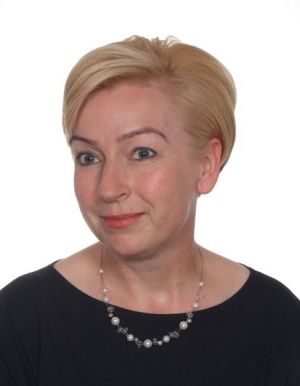
Bogusława Whyatt is a Professor at the Faculty of English, Adam Mickiewicz University, Poznań. She holds a D.Litt. in linguistics (2014), Ph.D. in English (2000), and MA in English (1992) from Poznań institutions. Her academic profile spans psycholinguistics, translation studies, and cognitive approaches to translation processes. Key research themes include: Translation process dynamics and directionality effects Eye-tracking applications in translation reception studies Development of translation competence and pedagogy Psycholinguistic analysis of language processing Metacognitive skill transfer between translation and paraphrasing Recent publications focus on cognitive effort metrics, directionality impacts, and empirical methodologies combining eye-tracking and key-logging data. She leads major projects like Read Me (2021-2025) and EDiT (2016-2019), examining translated text reception and translation directionality respectively. Scientific honors include three consecutive Adam Mickiewicz University Rector's Awards for Organizational Excellence (2018, 2023, 2024). She supervises PhD research in translation cognition and has mentored four doctoral candidates to completion. Active in professional networks like the MC2 Lab and TREC consortium, she contributes to cognitive translation studies through methodological innovations and international conference organization. Her methodological expertise includes psychometrics, EEG research, and ATLAS.ti data analysis tools.
Prof. Piotr Lorens is a distinguished academic at Gdańsk University of Technology, where he serves as Professor and Head of the Department of Urban and Regional Planning within the Faculty of Architecture. With extensive expertise in urban planning and spatial development, he leads significant research projects including ENACT 15mC focused on the 15-minute city concept and community co-creation. His academic credentials include: dr hab. inż. arch. (2007) from the Faculty of Architecture of Warsaw University of Technology dr inż. arch. (2001) from the Faculty of Architecture Prof. Lorens specializes in urban and spatial planning , with particular focus on urban regeneration and public space design . His research addresses critical issues in post-socialist urban development, waterfront regeneration, and the evolving concept of the 15-minute city. He has made significant contributions to understanding how historical contexts shape contemporary urban planning approaches in Central and Eastern Europe. His recent publications demonstrate a strong focus on urban identity, planning instruments for the 15-minute city concept, and post-war reconstruction of Polish cities. His work often bridges theoretical urban planning concepts with practical case studies from Gdańsk and other post-socialist cities, examining how political, economic, and environmental factors influence urban development trajectories. Prof. Lorens leads the ENACT 15mC project focused on shaping neighborhoods and co-creating thriving local communities in the context of the 15-minute city concept, funded by the Driving Urban Transitions Partnership. He has also contributed to the TELOS project on sustainable urban development and led initiatives to develop new educational offerings in spatial management at the Faculty of Architecture.
Professor Beata Zarzycka, affiliated with the John Paul II Catholic University of Lublin , serves as a leading academic in the Department of Social Psychology and Psychology of Religion under the Faculty of Social Sciences . Her research bridges psychology and religious studies, focusing on spiritual well-being, religious coping, meaning-making processes, and mental health in Polish Catholic contexts. Over her career, she has explored faith transitions, therapeutic relationships, and the psychological impact of pandemics and chronic illness. Her publications span topics like deconversion in adolescence , religiosity and life satisfaction in seniors, and spiritual struggles in healthcare workers . She has validated key psychological scales (e.g., Religious Comfort and Strain) for Polish populations and investigated MMPI-2 and 16PF-5 in predicting religious vocation outcomes. Her work often employs mediation and moderation models to uncover complex psychological-spiritual dynamics. Recent studies include 2024 articles on parental attachment and adolescent deconversion, and 2023 work on religious support networks. She has received national honors like the Bronze Medal for Long Service and KEN Medal , reflecting her contributions to psychology and religious studies. Her peer-review activities for journals like International Journal for the Psychology of Religion and Roczniki Psychologiczne further highlight her academic leadership.
Leszek Ludwik Gawrysiak is a Professor at the Department of Geology, Soil Science, and Geoinformatics , affiliated with the Faculty of Earth Sciences and Spatial Management at Maria Curie-Skłodowska University in Lublin, Poland. His academic career includes habilitation in Earth and Environmental Sciences (2019), a PhD in Geomorphology (2003), and a master’s in Physical Geography (1993), all from UMCS. Education: Master’s in Physical Geography (1993), UMCS PhD in Geomorphology (2003), UMCS Habilitation in Earth and Environmental Sciences (2019), UMCS His research focuses on Geomorphology , Geomorphometry , and Geoinformatics , with applications in Loess Erosion , Gully Dynamics , and Environmental Risk Assessment . He employs GIS, LiDAR, and remote sensing techniques to analyze terrain segmentation, forest cover changes, and geomorphological impacts on land use planning. Projects include studies on extreme meteorological events, geopark development, and Polish-Belarusian-Ukrainian water policy in the Bug River basin. Recent publications emphasize Loess Landscapes , Proglacial Valley Morphology , and Gully Erosion , with methodological advancements in Digital Terrain Modeling and Geomorphon Analysis . His work bridges computational methods (e.g., GPU-accelerated topographic parameter evaluation) with field-based geomorphological studies in Svalbard and Eastern Europe. Scientific Awards: Award from the Polish Geomorphological Society for best PhD thesis (2002) Team Award from the Rector of UMCS (2010) Individual Award from the Rector of UMCS (2013) He has contributed to understanding Loess Area Geomorphodiversity , Forest Cover Dynamics , and Climate Change Impacts on landscapes. His collaborations span interdisciplinary studies in gully erosion, geotourism, and Holocene soil erosion rates. Contact: leszek.gawrysiak@mail.umcs.pl | Phone: +48 81 537 68 71
Marek Ilnicki is a Lecturer at the University of Gdańsk , affiliated with the Faculty of Social Sciences and specifically the Department of Strategic and Security Studies . His academic focus lies at the intersection of political science, security studies, and maritime law. Fields of Interest : Political Science, Security Studies, Maritime Law, Counterterrorism, International Relations, and Crisis Management. Research Trends in his publications emphasize legal frameworks for state security, maritime governance, terrorism prevention, and international cooperation. His work often addresses Poland's strategic challenges in maritime environments and border security. Contact Information : Email: marca.ilnicki@ug.edu.pl Phone: +48 58 523 41 81
Professor Tomasz Kapitaniak is a distinguished academic in the field of nonlinear dynamics and theoretical mechanics. He serves as a Professor of Theoretical and Applied Mechanics and Head of the Division of Dynamics at the Faculty of Mechanical Engineering, Technical University of Lodz, Poland. His career spans over three decades at the university, where he has made significant contributions to the understanding of nonlinear systems, chaos theory, and mechanical oscillations. Professor Kapitaniak holds advanced degrees in both mechanics and applied mathematics from the Technical University of Lodz and the University of Lodz. His educational background includes: M.Sc. in mechanics, Faculty of Mechanical Engineering, Technical University of Lodz (1982) M.Sc. in applied mathematics, Faculty of Mathematics, Physics and Chemistry, University of Lodz (1985) Ph.D. in mechanics, Faculty of Mechanical Engineering, Technical University of Lodz (1985) D.Sc. in mechanics, Faculty of Mechanical Engineering, Technical University of Lodz (1988) Professor of technical science, title given by the President of Poland (1995) His research focuses on nonlinear dynamics, with particular emphasis on mechanical oscillations, stability, bifurcations and chaos, stochastic dynamics, and applications of nonlinear dynamics in mechanical engineering. Professor Kapitaniak is renowned for his work on the development of methods for controlling chaos without feedback, identification of new types of bifurcations, synchronization mechanisms in coupled mechanical oscillators, and explaining the origin of randomness in mechanical systems. His research has evolved from fundamental theoretical work to increasingly applied studies involving complex networks, biological systems, and engineering applications. Professor Kapitaniak has published over 300 scientific papers in renowned journals, cited over 8,000 times. His work exhibits a consistent focus on understanding complex nonlinear phenomena across various physical systems. The trend in his recent publications shows continued exploration of synchronization phenomena, extreme events in dynamical systems, and applications of nonlinear dynamics to biological, mechanical, and physical systems. His most recent work demonstrates a growing interest in multistability, chimera states, and the prediction of tipping phenomena in complex systems. Among his notable scientific achievements and distinctions are: Election as a member of the Polish Academy of Sciences (corresponding member in 2013, ordinary member in 2019) Election to Academia Europaea in 2021 Honorary doctorates from Saratov State University (Russia, 2001) and Lublin University of Technology (Poland, 2014) Multiple prestigious fellowships including the British Council Fellowship (1989), King Abdul Aziz Award Fellowship (1990), and Fulbright Fellowship (1997) Editorial roles including Associate editor of Chaos, Solitons and Fractals since 1990 and member of editorial boards of several other prestigious journals Throughout his career, Professor Kapitaniak has been actively involved in mentoring the next generation of researchers, having supervised numerous PhD students including Jerzy Wojewoda, Anton van Wyk, Barbara Błażejczyk-Okolewska, Andrzej Stefański, Andrzej Kozłowski, and Przemysław Szumiński. He has secured significant research funding from various national and international sources including the Ministry of Science and Higher Education (Poland), Deutscher Akademischer Austauschdienst, The Royal Society of London, and others. His research team has maintained strong international collaborations with institutions worldwide, including universities in the United States, United Kingdom, Germany, Brazil, Russia, and Ukraine. He leads the Division of Dynamics at the Technical University of Lodz, which serves as a hub for research in nonlinear dynamics, mechanical oscillations, and related fields. The division maintains strong international collaborations with institutions worldwide and continues to produce cutting-edge research in the field of nonlinear dynamics and its applications.
Filip Sondej is a Researcher at the Department of Cognitive Science within the Faculty of Philosophy at Jagiellonian University in Krakow, Poland. His work bridges cognitive science and artificial intelligence, focusing on critical safety aspects of modern language models and multi-agent systems. His primary research interests include AI safety, LLM unlearning techniques, Chain-of-Thought faithfulness, AI conflict resolution, and digital sentience. Sondej's work addresses fundamental challenges in ensuring that increasingly powerful language models behave safely and align with human values. Analysis of Sondej's publication record reveals a strong interdisciplinary focus combining cognitive neuroscience methodologies with AI safety research. His recent work demonstrates a clear trajectory from traditional cognitive neuroscience investigations toward cutting-edge AI safety mechanisms, particularly in developing methods for removing unsafe behaviors from language models while maintaining functionality. The publications show sophisticated integration of neural network analysis with human cognitive processes. Sondej collaborates extensively with researchers including Anna Grabowska and Magdalena Senderecka, appearing as co-author on multiple publications in high-impact journals such as NeuroImage, Cerebral Cortex, and Journal of Cognitive Neuroscience. His research program bridges theoretical cognitive science with practical AI safety applications.
Roman Matuszewski is a retired Associate Professor at the University of Bialystok, affiliated with the Faculty of Philology's Department of Applied Linguistics. His research focuses on automated reasoning, formalized mathematics, and the Mizar Project, which he has been involved with since its inception in 1973. He holds a PhD in Computer Science from Shinshu University (2000) and has held academic positions at multiple institutions, including part-time roles at Bogdan Janski University. Education: PhD in Computer Science (2000), Master of Science in Mechanics (1975), Engineer (1973), all from Polish institutions. His work emphasizes formal proof systems, mathematical knowledge management, and education integration of automated reasoning tools. Research interests include automated deduction, formal proof verification, and the application of these methods to mathematics education. His contributions to the Mizar Mathematical Library and its 50-year history (celebrated in 2023) are foundational for interactive theorem proving. Key awards include the Silver Cross of Merit (2004) and multiple Rector’s prizes. He has organized major conferences like MKM2004 and served on program committees for events such as IJCAR and Tableaux. Grants include leadership roles in EU-funded projects like TYPES and CALCULEMUS. His work bridges computer science and mathematics through formalized systems, impacting both research and education.
Professor Bartosz Witkowski is a faculty member at the Warsaw School of Economics (SGH), serving as Rector’s Representative for the SGH Doctoral School and Director of the Institute of Econometrics. He holds a PhD in quantitative methods and focuses on econometrics, particularly panel data and applied econometrics. His research explores financial systems, banking regulation, economic growth, and education quality's impact on development. Collaborations include work with the National Bank of Poland, World Bank, and government ministries. His research interests include applied econometrics , panel data analysis , and financial stability mechanisms , with a focus on European and emerging markets. Recent studies address banking sector dynamics, crisis impacts on financial systems, and the role of education in economic catch-up processes. He has authored/co-authored over 20 articles in high-impact journals, focusing on topics like banking regulation, economic convergence, and policy effectiveness. His teaching includes courses on quantitative methods for institutions such as the World Bank. Led the Institute of Econometrics, managing research and training programs. No specific grants or awards mentioned, though his work underscores practical applications of econometric models in policy and industry.
Rafał Riedel serves as a Professor at the Institute of Political Science and Administration, University of Opole, dedicating his career to political science and public administration with exclusive focus on European integration and EU policy frameworks. His institutional affiliation centers on analyzing Poland's evolving role within continental governance structures. His scholarly pursuits emphasize: European Union institutional dynamics and integration processes Public and economic policy formulation in EU contexts Democratic resilience in Central and Eastern European states Interest group influence on transnational policymaking EU market regulatory mechanisms and national economic strategies Professor Riedel's research output comprises 115 publications with significant bibliometric validation—evidenced by a Web of Science h-index of 5, total impact factor of 12.862, and ministerial evaluation score of 3,529. His single documented research project reflects concentrated investigation into EU-Poland relations and regional governance models within Eastern Europe.
Romana Kadzikowska-Wrzosek is a Professor of Psychology at SWPS University and serves as the Dean of the Faculty of Psychology in Sopot. She is affiliated with the Department of Basic Psychology and Institute of Psychology, focusing on personality and motivational psychology, particularly self-regulation, goal setting, and action planning. Research Interests Her research explores: Self-Regulation: Investigating mechanisms linking willpower, autonomy, and action control in adolescents and adults. Chronobiology and Sleep Research: Examining bedtime procrastination, chronotype influences on sleep patterns, and mental health outcomes. Motivational Psychology: Applying Self-Determination Theory to understand autonomous vs. controlled motivational regulations in diverse populations. Scientific Contributions She authored the book Willpower. Autonomy, Self-Regulation, and Action Control (2013) and published extensively in journals like Personality and Individual Differences and Current Psychology . Her work bridges personality theory with practical health and behavioral outcomes. Teaching and Leadership At SWPS University, she teaches personality psychology and leads the Faculty of Psychology in Sopot, emphasizing interdisciplinary collaboration and research-driven education.
Dr. Michał Kalisz is an Assistant Professor in the Department of Computer Science at the John Paul II Catholic University of Lublin, affiliated with the Faculty of Philosophy. His work bridges theoretical computer science with practical applications in artificial intelligence (AI) across education and business domains. Research Focus: AI ethics, educational technology, business informatics, and knowledge representation. Academic Contributions: Recently presented four conference papers between 2023-2024, exploring AI's role in education (opportunities/threats, knowledge limits), public AI literacy, and business applications. Professional Engagement: Acted as a reviewer for the Annals of Social Sciences , led international workshops (USA, Europe), and participated in the Lublin Science Festival.
Dr hab. Jarosław Chodak is an Adjunct Professor at the Department of Sociology of Social Change, Institute of Sociology, Faculty of Philosophy and Sociology at Maria Curie-Skłodowska University. His academic career spans teaching and research activities focused on political sociology, social movements, and digital sociology. He is actively involved in the European Social Survey consortium and serves as a researcher at the Center for Artificial Intelligence and Computer Modeling at UMCS. His research interests include: Political Sociology Social Movements and Contention Sociology of Disinformation Digital Sociology ICTs in Social Mobilization His publications focus on transformative social processes, with notable works on nonviolent revolutions and digital activism. Current projects involve analyzing disinformation dynamics and leveraging computational modeling for sociological research.
Dorota Piekarczyk is a full Professor at the University of Marie Curie-Skłodowska (UMCS) in Lublin, Poland, affiliated with the Faculty of Languages, Literatures and Cultures. She has served since 2002 and held the position of Deputy Director at the Institute of Polish Philology from 2013-2019. Her research focuses on the intersections of language and cognition, particularly through semantic analysis , pragmatic frameworks , and linguistic worldview studies. She specializes in paratextual elements of publications, examining how covers, blurbs, and series information shape reader expectations and societal knowledge reception. The 2020 monograph on book covers represents her most comprehensive work on paratextual analysis. Her recent publications (2020-2019) investigate paratextual persuasion techniques popular culture integration in science communication publisher-reader dynamics while maintaining long-term contributions to floral categorization studies and cognitive schemata in texts. Scientific achievements include 2014 Prime Minister's Award for 'Metafory metatekstowe' ORCID: 0000-0002-8859-7897 648 total ministerial points across 12 publications
Milena Stróżyna is an Assistant Professor at the Department of Economic Informatics in the University of Economics in Poznan , Poland. Her work focuses on data modeling, AI applications in disinformation detection, and maritime data analysis . Email: milena.strozyna@ue.poznan.pl Research interests span: Data Modeling & Analysis : Extracting insights from diverse data sources, ensuring quality, and implementing ERP systems Disinformation Studies : Developing AI tools for fake news detection and semantic mapping of misinformation topics Maritime Data Science : Crisis impact analysis in shipping, anomaly detection in maritime transport Scientific Contributions include: Pioneering OpenFact system for information verification Creating adversarial text detection methods Leading research on generative AI risks in information integrity Notable Awards : 2018: Most innovative article at NATCON conference Multiple first-place international competition wins with OpenFact system (2022-2024)