Raghavendra Ramachandra is a Professor at the Department of Information Security and Communication Technology (IIK) , within the Faculty of Information Technology and Electrical Engineering at the Norwegian University of Science and Technology (NTNU) in Gjøvik. His research focuses on biometric systems, particularly in face, fingerprint, and finger vein recognition, with emphasis on presentation attack detection, morphing attack detection, and deep learning applications. Current research projects include: SALT (2022-2026) : Developing privacy-preserving facial biometric authentication systems. OffPAD (2022-2025) : Creating cryptographic tools and presentation attack detection for fingerprint biometrics. SWAN (2015-2020) : Developing biometric countermeasures against presentation attacks. His recent publications demonstrate technical expertise in: Face morphing attack detection using vision transformers and point cloud networks Image fusion techniques for multispectral biometrics GAN-based synthetic data generation for security evaluation Explainable AI approaches for biometric verification Professor Ramachandra also supervises PhD and Master’s students, and has extensive experience in leading national and EU research initiatives.
Ørjan Grøttem Martinsen is a Professor of Electronics at the Department of Physics, Faculty of Mathematics and Natural Sciences, University of Oslo. He also holds a temporary research position at the Medical Technology Business Area of Oslo University Hospital. With over three decades of experience, he has established himself as a leading expert in bioimpedance research and applications. Education: High-voltage engineer degree (1983) Cand. scient. in electronics/measurement technology (1990) Dr. scient. with thesis on skin's electrical properties (1995) Professor Martinsen's research centers on bioimpedance—the passive electrical properties of biological tissues that vary with anatomy and physiology. His work spans diverse applications including medical diagnostics (skin cancer detection), food quality assessment (fresh vs. thawed fish), skin condition monitoring (moisture levels), and stress level evaluation. His research bridges physics, engineering, and medical applications, creating practical diagnostic tools from fundamental electrical principles. He has pioneered methods to characterize tissue properties through impedance measurements, with particular focus on electrodermal activity and skin impedance. His recent publications (2022-2025) demonstrate a strong interdisciplinary approach combining bioimpedance with machine learning, robotics, and advanced signal processing. The work spans from fundamental biophysics (GABA detection, tissue characterization) to practical applications (dental anxiety assessment, ADHD treatment evaluation). Key trends include integration of AI with bioimpedance measurements, development of novel sensor systems, and expansion into new application areas like optogenetics and micro-robotics. Awards and Recognition: IEEE Senior Member (2006) CLABIO Award (2012) Fellow at Institute of Physics (FInstP) (2015) Dr. Honoris Causa, Tallinn University of Technology (2018) UiO Innovation Award (2019) Member of Norwegian Academy of Technical Sciences (2021) Professor Martinsen has served as Editor-in-Chief of the Journal of Electrical Bioimpedance since 2010 and was President of the International Society for Electrical Bioimpedance (2010-2016). His research has attracted significant funding, enabling collaborations across engineering, medical, and biological disciplines. He has supervised numerous students and researchers in the Bioimpedance Group at UiO, fostering a strong research environment that bridges theoretical and applied work. His work is conducted primarily through the Oslo Bioimpedance Group and Sensorama SmartSense research teams, which focus on developing innovative measurement techniques and applications of bioimpedance technology. These groups maintain strong collaborations with medical institutions and industry partners to translate research findings into practical healthcare solutions.
Dr. Lea Svendsen is an Associate Professor at the Geophysical Institute , University of Bergen, Norway. She specializes in climate dynamics, with particular focus on internal climate variability across multiple timescales (interannual to multidecadal), inter-basin interactions, and climate prediction systems. Her work connects tropical and extratropical climate phenomena, particularly examining Pacific-Atlantic-Arctic linkages and their implications for global climate patterns. Education: PhD in Climate Dynamics (2016, University of Bergen) Key Collaborations: University of Bergen, Norwegian Research Center (NORCE), Universidad Complutense de Madrid Research Interests : Dr. Svendsen's work investigates: Mechanisms of internal climate variability across timescales Teleconnection patterns between tropical and high-latitude regions Inter-basin interactions (Pacific-Atlantic-Arctic) Norwegian Climate Prediction Model (NorCPM) development and application Climate services for renewable energy applications Publication Trends : Her 15 most recent publications (2021-2025) demonstrate consistent focus on: Pacific and Atlantic contributions to Arctic warming Monsoon variability and ocean-atmosphere coupling Model uncertainty quantification in climate science Climate prediction systems and reanalysis development ENSO-Atlantic interactions under changing climate Climate services applications for societal sectors Scientific Engagements include: Academic and popular science lectures on Arctic warming and climate change Media interviews about El Niño impacts and climate trends Conference presentations at Ocean Sciences Meeting, Japan Geophysical Union, SPARC General Assembly Contributions to CMIP6 DCPP decadal prediction framework
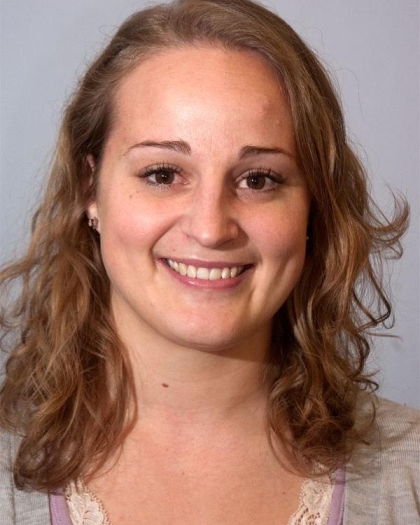
Solveig Bruvoll is an Associate Professor at the University of Oslo (15% position) and holds a 100% research position at the Norwegian Defence Research Establishment (FFI). She specializes in Autonomous Systems and Cybersecurity , focusing on security in military operations and software resilience. Her work bridges engineering, mathematics, and defense applications. Research interests include autonomous vehicle security, defense simulation, and mathematical modeling. She teaches the course TEK5510 and has published extensively in conferences like IEEE CNS and journals such as Journal of Defense Modeling and Simulation . Her FFI affiliation emphasizes practical military technology and operational analysis. Publications highlight contributions to path planning algorithms, command agent modeling, and cybersecurity frameworks for autonomous systems. She collaborates on NATO projects, as seen in her work on M&S support for operational tasks. No awards are explicitly listed, but her research impacts critical defense and civilian infrastructure security domains.
Armin Hafner is a Professor in the Department of Energy and Process Engineering at NTNU. His research focuses on clean cooling technologies, refrigeration systems, thermal energy storage, and CO₂-based heat pumps. He has contributed to advancements in natural refrigerant applications, industrial refrigeration optimization, and sustainable energy solutions for maritime, food processing, and commercial sectors. His work integrates experimental and numerical methods to improve the efficiency of CO₂ systems, absorption-compression hybrids, and thermal storage integration. Notable projects include cold thermal energy storage for supermarkets, freeze concentration of fish hydrolysates, and refrigeration systems for fish processing in India. Publications emphasize energy-efficient refrigeration cycles, novel ejector technologies, and the application of CO₂ in diverse climates. Collaborations span institutions globally, addressing challenges in high-temperature heat pumps and cryogenic cooling for CERN detectors. Academic advising includes numerous master's theses on topics like fossil-free heating systems, CO₂ plate freezers, and refrigerated transportation logistics in India. His research consistently targets decarbonization and sustainable energy solutions.
Karl Harmenberg is a Swedish economist based at the Department of Economics, University of Oslo since 2022. He holds a PhD from Stockholm University's Institute for International Economic Studies (2018) and previously worked at Copenhagen Business School (2018-2021) and BI Norwegian Business School (2021-2022). As a tenure-track associate professor , he teaches Macroeconomic Theory and develops open-source Python tooling for macroeconomic modeling. Key research themes include macroeconomic dynamics with heterogeneous agents , earnings distribution mechanisms , and integrated epi-econ modeling for pandemic preparedness His methodological innovations include the permanent-income-neutral measure for heterogeneous-agent models and directed cycle graph representations of macroeconomic frameworks Current projects include WaCoMacro (wage contracts and macroeconomics) and ongoing collaborations with Timo Boppart , Per Krusell , and Erik Öberg Recent publications span: 2025 International Economic Review work on unemployment-risk amplification mechanisms 2025 Quantitative Economics article on integrated epi-econ modeling 2024 Economics Letters paper establishing Pareto distribution in top earnings 2023 AER Insights research on wage contract rigidity 2021 Journal of Economic Dynamics & Control contribution on permanent income shocks His work has been cited in policy discussions regarding: Swedish automatic stabilizer design Norwegian pandemic response strategies Scandinavian labor market reforms Nordic macroeconomic teaching curricula
Riccardo Simionato is a Research Fellow in the Department of Musicology at the University of Oslo (UiO), affiliated with the Faculty of Humanities. He holds a MSc and BSc in Computer Science and Information Engineering from the University of Padova, Italy, and conducted research at Aalto University, Finland (2017–2018). His research focuses on nonlinear audio modeling using deep learning, particularly addressing low-latency interactive solutions for acoustic and electronic musical instruments/devices. Education: 2018: MSc in Computer Science Engineering, University of Padova 2015: BSc in Information Engineering, University of Padova Research Interests: Deep Learning , Audio Modeling , and Sound Synthesis . He explores how deep learning can approximate complex nonlinear phenomena in audio systems, balancing computational efficiency with interpretability. Recent work emphasizes hybrid neural-audio effects, time-variant systems, and physics-informed methods for piano modeling. Publications highlight advancements in optical compressor modeling, piano analysis, and tools for generating audio effect datasets. His work bridges machine learning and music technology, aiming for practical applications in real-time audio processing and electronic instrument emulation. Grants and advising: No specific grants or student advisees listed in the provided text. Collaborations include projects with Prof. Stefano Fasciani and teams at UiO’s Department of Musicology. Labs/Teams: Active within UiO’s Sound and Music Computing research group, focusing on interdisciplinary projects combining computer science and music technology.
Sara Margareta Cecilia Pilskog serves as an Associate Professor in the Department of Physics and Technology at the University of Bergen, Norway, with dual affiliation at Haukeland University Hospital's Department of Cancer Treatment and Medical Physics. Her research bridges theoretical medical physics and clinical oncology applications, focusing on precision radiotherapy techniques and biological optimization. Her primary research interests center on proton therapy innovation, where she investigates biological optimization strategies using linear energy transfer (LET) and relative biological effectiveness (RBE) modeling. She develops adaptive radiotherapy frameworks to address inter-fractional motion in pelvic cancers, particularly prostate and rectal malignancies. Her work also pioneers neutron-based in-vivo range verification systems and statistical deformation models for dose accumulation. Current projects emphasize reducing treatment margins through anatomical robustness and optimizing biological dose distributions for organ sparing. Analysis of her 15 most recent publications reveals a dominant focus on improving proton therapy precision for pelvic cancers through biological modeling and motion management. Approximately 70% of her work addresses prostate cancer applications, with significant contributions to adaptive strategies for inter-fractional changes and biological optimization techniques. Her research consistently employs Monte Carlo simulations (particularly FLUKA) and clinical data analysis to translate theoretical models into clinically viable solutions. No scientific awards were documented in the provided materials. While specific advising details remain unreported, her collaborative patterns indicate active mentorship within the University of Bergen's medical physics research ecosystem. Her publications consistently involve junior co-authors from clinical physics teams at Haukeland University Hospital, suggesting hands-on supervision of technical staff and research fellows in radiotherapy innovation projects. Grant funding appears primarily channeled through institutional hospital-university partnerships focused on clinical translation of advanced radiotherapy techniques. Dr. Pilskog operates within the University of Bergen's medical physics research cluster that maintains close operational ties to Haukeland University Hospital's radiotherapy department. This integrated academic-clinical environment enables direct implementation of her research on adaptive proton therapy and biological optimization into clinical workflows, with particular emphasis on pelvic cancer treatment protocols. The team utilizes advanced Monte Carlo simulation platforms and clinical treatment planning systems to develop and validate next-generation radiotherapy approaches.
Eirik Keilegavlen is a Researcher at the Department of Mathematics, University of Bergen. His primary research focuses on developing mathematical models, numerical methods, and simulation tools for multiphysics processes in porous media, particularly in geothermal energy, CO 2 storage, and subsurface energy systems. He leads the development of the open-source software PorePy, designed for simulating processes in fractured porous media. His work emphasizes coupled problems involving fluid flow, heat transfer, and mechanical deformation. Key research interests include: Mathematical modeling of coupled thermal-hydro-mechanical processes Numerical discretization methods for fractured media Development of open-source simulation tools Applications in geothermal energy extraction and carbon sequestration Recent publications highlight advancements in: Uncertainty quantification for CO 2 leakage Viscous fingering in fractured reservoirs Automated solver selection for multiphysics systems Collaborations involve interdisciplinary teams addressing challenges in geothermal reservoir stimulation, fault mechanics, and high-performance computing. His work bridges theoretical developments with practical applications in energy and environmental systems.
Isabelle Lecomte is a Professor in Reservoir and Near-Surface Geophysics at the University of Bergen's Department of Earth Science. Her research focuses on seismic modeling, reservoir characterization, and near-surface geophysics, with applications to paleokarst reservoirs, fault zone analysis, and archaeological geophysics. She has supervised numerous master's theses and contributed to projects funded by the Research Council of Norway. Her work integrates field observations, numerical modeling, and geophysical data interpretation to advance understanding of subsurface structures and processes. Affiliations: Department of Earth Science, University of Bergen Research Groups: Geodynamics and Basin Studies Research Interests: Development of seismic modeling techniques for reservoir characterization and near-surface imaging Application of ground-penetrating radar (GPR) in archaeology and environmental studies Seismic expression of faults, sand injectites, and carbonate systems Paleokarst reservoir dynamics and flow simulation Publications: Over 30 peer-reviewed articles focus on seismic modeling, subsurface imaging, and geohazard assessment. Recent work emphasizes 3D/4D seismic interpretation, fault zone analysis, and outcrop-subsurface analogues. Grants & Awards: Involved in projects funded by the Research Council of Norway, including studies on paleokarst reservoirs and CO2 storage feasibility. Advising: Supervised 14 master's students, with thesis topics ranging from seismic attribute analysis in archaeology to reservoir characterization of paleokarst systems.
Annette Stahl is a Professor at the Department of Engineering Cybernetics, NTNU, and an Onsager Fellow. She leads the Robot Vision Group and oversees the AILARON project, funded by the Research Council of Norway. Her expertise spans robotic vision, control theory, and autonomous systems. She holds a PhD in Applied Mathematics (Computer Vision) from Heidelberg University. Her research focuses on underwater robotics, autonomous vehicles, and aquaculture monitoring, with applications in fish health analysis and marine environmental sensing. Stahl has supervised numerous PhD and master’s students, including projects on autonomous ships (SFI AutoShip), underwater SLAM (AROS), and plankton identification. She collaborates with industry partners like Zebop AS and SINTEF Ocean. Notable projects include the robotic microplankton sniffer-dog and AI-driven fish welfare monitoring. Her work is published in top journals/conferences like IEEE Access and MIC Journal. She actively contributes to datasets like the VAROS Synthetic Underwater Data Set.
Idelfonso Nogueira is an Associate Professor at the Department of Chemical Process Technology, Norwegian University of Science and Technology (NTNU). His research focuses on integrating artificial intelligence, advanced control, and system optimization to address challenges in Industry 4.0/5.0. Key research areas include AI-driven product/process development, interpretable machine learning for process systems, multi-scale system integration, and adaptive digital twins. He collaborates extensively with global universities, institutes, and industries to advance sustainable industrial solutions. His work emphasizes digitalization, hybrid modeling, and optimization frameworks, as seen in publications on pressure swing adsorption, fragrance engineering, and CO2 capture systems. He also promotes innovative teaching methods, including augmented reality for chemical engineering education. Recent publications highlight advancements in digital twin frameworks, machine learning for crystallization processes, and optimal control strategies. His research bridges theoretical models with practical applications, ensuring robustness and reliability in industrial contexts.
Dr. Jacob Joseph Lamb is an Associate Professor at the Norwegian University of Science and Technology (NTNU), affiliated with the Department of Energy and Process Engineering within the Faculty of Engineering. He serves as the Study Program Manager for the Bachelor of Engineering in Renewable Energy (BIFOREN) and leads the Digital Energy Systems laboratory group. His roles include WP8 leadership in the FME Battery initiative and Theme Leader for Efficient Energy Use at ENERSENSE. Education: PhD in Energy and Process Engineering, NTNU (2013–2016) MSc in Chemical Engineering, University of Otago, New Zealand (2011–2012) BSc in Chemical Engineering, University of Otago, New Zealand (2008–2010) Research Interests: Dr. Lamb focuses on sustainable energy systems, particularly lithium-ion battery technologies , redox flow batteries , bioenergy , and digitization of energy systems . He explores sensor technologies for real-time monitoring and optimization of energy storage devices. His work integrates machine learning with physics-based models to enhance battery performance and reliability. Key Projects: FME Battery: Norwegian research initiative for advanced battery technologies ReZinc: Zinc-air flow battery development for stationary storage HeaLiSelf: Self-healing lithium-ion batteries using optical sensing and data analytics Computational studies on pre-lithiation processes and cold-climate battery performance Publications: His recent work emphasizes lithium-ion battery digitalization , SoC estimation , and electrode structuring . He bridges experimental and computational methods to address challenges in energy storage scalability and safety. Affiliations: ENERSENSE (Efficient Energy Use Theme) NTNU Thermal Engineering Laboratories
Juergen Pfingstner is a Post-doctoral Fellow at the University of Oslo (since 2015) within the Department of Physics. His research focuses on advanced accelerator technologies, particularly at CERN's CLIC Test Facility (ATF2). Key areas include emittance preservation, ground motion mitigation, and free-electron laser (FEL) design. He holds a PhD from the Vienna University of Technology (2013) and a Master's in Electrical Engineering from Graz University of Technology (2008), specializing in control engineering and electromagnetic field computation. His academic journey includes a postdoctoral stint at CERN (2012–2014), where he investigated ground motion effects on CLIC performance. Collaborations span institutions like KEK (ATF2 facility) and the X-band FEL collaboration. Research interests bridge particle accelerator physics, control systems, and high-frequency radiation technologies. Publications emphasize CLIC final focus systems, wakefield suppression, and plasma wakefield acceleration. His work addresses both theoretical and experimental challenges in next-generation collider design, including THz radiation facilities and feedback control methodologies.
Ole Andre Øiseth is a Professor at the Department of Structural Engineering, Norwegian University of Science and Technology (NTNU), specializing in structural dynamics with focus on bridges and marine structures. He leads the structural mechanics research group. Research Interests: Wind Engineering Bridge Aerodynamics Structural Health Monitoring Operational Modal Analysis Fluid-Structure Interaction Extreme Load Analysis Key Contributions: Developed nonlinear force models for bridge aerodynamics Advanced Kalman filter techniques for wind load identification Environmental contour methods for bridge design Automated monitoring systems for long-span bridges


%20/solveio/solveig_bruvoll.jpg)