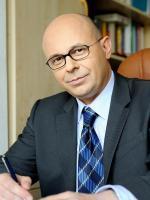
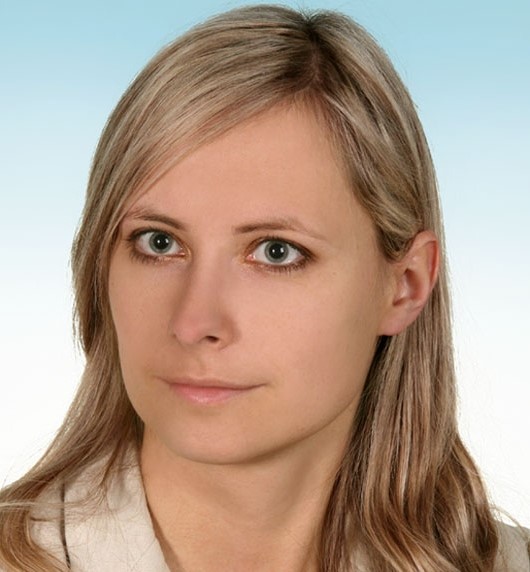
Prof. Grzegorz Musielak is a distinguished academic at the Institute of Chemical Technology and Engineering , Faculty of Chemical Technology , Poznań University of Technology. His career spans over three decades, including leadership roles as Vice-Dean for Education (2012–2020) and Head of the Department of Process Engineering since 2020. Education : M.Sc. in Applied Mechanics (1984), PhD in Materials Engineering (1990), DSc in Chemical Engineering (2005) Research Interests focus on drying processes , particularly mathematical modeling , thermomechanics of porous materials , and ultrasound/microwave-assisted drying . His work bridges chemical engineering, food technology, and material science. Recent Publications (2024–2018) highlight advancements in hybrid drying techniques for food (apples, carrots, mushrooms) and industrial materials (clay, concrete). Key themes include process optimization , energy efficiency , and product quality analysis . Collaborations extend to Poznań University of Life Sciences, West Pomeranian University of Technology, and industry partners like CELIKO and PROMIS-tech.
Dr. Dominika Fila is an Assistant Professor at the Department of Inorganic Chemistry , Faculty of Chemistry, Maria Curie-Skłodowska University. Her research focuses on sustainable materials for critical raw materials recovery, particularly rare earth elements. PhD in Chemical Sciences (UMCS, 2021) Master's in Material Chemistry (UMCS, 2016) Her work emphasizes alginate-based composites for metal adsorption, combining environmental science and chemical engineering . She leads the NCN-funded PRELUDIUM 18 project on alginate-chitosan bio-adsorbents. Recent publications analyze kinetics , thermodynamics , and reusability of composites for lanthanides recovery. Notable collaborations include Dorota Kołodyńska and Zbigniew Hubicki. NCN PRELUDIUM 18 Grant (2019/35/N/ST8/01390) Distinguished PhD Thesis on Rare Earth Recovery from NiMH Batteries Her lab investigates biochar composites , chelating resins , and environmental applications of sorption processes.
Sylwia Pasieczna-Patkowska is an Assistant Professor (adiunkt) at the Department of Chemical Technology, Institute of Chemical Sciences, Faculty of Chemistry, Maria Curie-Skłodowska University (UMCS) in Lublin, Poland. She has been affiliated with UMCS since 1998, progressing from Assistant (1998-2006) to her current role. Her academic journey includes: Master's in Chemistry (Environmental Protection specialization, UMCS, 1998) PhD in Chemical Sciences (Physical Chemistry, UMCS, 2006) Postgraduate studies in Public Relations in Scientific Research (Wyższa Szkoła Ekonomii i Innowacji, 2010) Habilitation (dr hab.) in Environmental Engineering (Water/Waste Technology, Lublin University of Technology, 2019) Her research integrates spectroscopy, materials science, and environmental engineering, with focus areas including: Advanced IR and photoacoustic spectroscopy for environmental analysis Development of functional nanomaterials (nanoparticles, biochars) for pollution remediation Innovative wastewater/soil treatment technologies Catalysis and adsorption processes for sustainable chemistry Her work demonstrates consistent application of spectroscopic methods to solve environmental challenges. Publications (51+) predominantly explore nanotechnology-enabled environmental solutions, with recent emphasis on: Nanoparticle synthesis for antimicrobial and extraction applications Waste valorization strategies using biochemical/thermochemical processes Soil/water decontamination mechanisms Spectroscopic characterization of engineered materials Major scientific honors include: Medal of National Education Commission (2017) Rector's Team Awards for research (2013, 2014, 2016) Doctoral dissertation distinction (2006) She has contributed to international projects including FP7 EU programs and Swiss-Polish collaborations, focusing on nanocatalysts for clean energy and contaminant bioavailability. Research involves collaboration with teams at Foundation for Research & Technology-Hellas (Greece) and Lublin University of Technology.
Kazmir Lyubomyr Pavlovych is a Researcher at the Department of Problems of the Real Sector of the Regional Economy, State Institution 'Institute of Regional Studies named after M. I. Dolishnyi, NAS of Ukraine'. He holds a Candidate of Economic Sciences degree, a qualification equivalent to a Ph.D., awarded in 2015 for his dissertation on the organizational and economic principles of ecologically balanced agricultural land use. His career has been dedicated to regional economic research, with a primary focus on the socio-economic development of rural areas, land management, and metropolitanization processes. His research interests are extensive and interdisciplinary, centering on the socio-economic aspects of spatial development in rural areas, the analysis of state spatial policy during Ukraine's market transition, the theoretical and methodological foundations of land management, and the organizational and economic support for environmentally balanced agricultural land use. A significant part of his recent work investigates metropolitanization processes and the formation of metropolitan subregions in Ukraine. The analysis of his 15 most recent articles reveals a strong, consistent focus on regional and spatial economics. His research trends include the modernization of rural development management systems, the strategic planning of agricultural land use under institutional change, the conceptualization of innovative development for rural areas, and the study of metropolization. His work frequently employs socio-economic approaches, institutional analysis, and methodological modeling, with a clear emphasis on policy implications for sustainable regional development in Ukraine. No scientific awards or prizes are mentioned in the provided text. Kazmir has authored or co-authored over 150 scientific and methodological works. His advising activities and grants are not detailed in the provided information. He has collaborated with other prominent researchers, such as his scientific supervisor, Professor Mykhailo Grigorovich Stupen, and other colleagues at the Institute of Regional Studies and Lviv State Agrarian University. His work is published in key Ukrainian academic journals like 'Regional Economy' and 'Socio-economic problems of the modern period of Ukraine'. The Institute of Regional Studies, where he is based, functions as a central hub for research on Ukraine's regional development, land policy, and spatial planning.
Szczepan Bednarz is a Professor at the Tadeusz Kościuszko Cracow University of Technology, Faculty of Chemical Engineering and Technology, Department of Biotechnology and Physical Chemistry (C-5). Contact: szczepan.bednarz@pk.edu.pl, tel. 12 628 30 59. Education: MSc Eng. in Chemistry and Technology of Plastics, Cracow University of Technology (2000) Dr. Eng. in Chemistry, Institute of Catalysis and Surface Chemistry, Polish Academy of Sciences (2006) Research Focus: Dr. Bednarz pioneers green polymer chemistry with emphasis on: Renewable itaconic acid polymerization Microwave-assisted reaction engineering Deep eutectic solvents for sustainable processing Cyclodextrin-starch modification for environmental applications Biodegradable hydrogels for heavy metal remediation Publication Analysis: His 2015-2020 work shows dominant themes: itaconic acid polymers (47% of recent articles), deep eutectic solvents (33%), and microwave technology (27%). Research increasingly targets environmental applications like metal sorption and waste recovery. Research Leadership: N312 007 31/0848 (2006-2008): Microwave waste-free starch oxidation NN507 0936 33 (2007-2009): Cyclodextrin textile modification for footwear industry POKL.04.01.02-00-217/11-00 (2011-2015): EU-funded Chemical Bioengineer program development International Collaboration: Research internships at Universite Paris-Sud (France), KU Leuven (Belgium), and University of Agriculture in Krakow (2004-2010).
Piotr Michorczyk serves as Professor and Dean of the Faculty of Chemical Engineering and Technology at Tadeusz Kościuszko Cracow University of Technology, where he leads the Department of Organic Chemistry and Technology. His academic career has been deeply rooted at this institution, having completed his MSc (2000), PhD (2005), and habilitation (2013) at the same university. His educational background includes a Master of Science in Light Organic Technology (2000), Doctorate in Chemical Technology (2005), and Habilitation in Chemical Technology (2013), all from Tadeusz Kościuszko Cracow University of Technology. His international research experience includes internships at the Institute of Catalysis and Petrochemistry CSIC in Spain (2011), Jerzy Haber Institute of Catalysis in Poland, and participation in a NATO Advanced Study Institute in Portugal (2003). Professor Michorczyk's research focuses on catalytic processing of hydrocarbons and alcohols, with particular emphasis on CO 2 utilization in chemical processes and conversion of low molecular weight alkanes. His work explores synthesis and properties of mesoporous silicas (MCM-41, SBA-15, SBA-3), structural nanoreplication for catalytic purposes, and pioneering applications of 3D printing in catalysis. His research bridges fundamental catalyst design with practical industrial applications, particularly in propane dehydrogenation and methane conversion processes. His extensive publication record shows consistent focus on catalytic materials development, with recent work (2020-2025) demonstrating increasing emphasis on 3D printing applications for catalyst design, optimization of methane conversion processes, and development of environmentally friendly chemical processes. His work spans fundamental catalyst characterization to practical industrial applications, with strong connections to environmental sustainability through CO 2 utilization. Among his notable recognitions are the First Degree Individual Award from the Rector of Cracow University of Technology for scientific achievements (2013), an award for the highest number of citations (2014), and the prestigious First Degree Award from the Minister of Science and Higher Education (2014). These awards reflect both the quality and impact of his research contributions to the field of catalysis. Professor Michorczyk has successfully led multiple significant research projects funded by Polish and EU grants, including several National Science Center grants and a PBS grant for developing eco-friendly cosmetics. His grant portfolio demonstrates consistent research productivity from 2003 through 2020, with projects addressing propane dehydrogenation, structural nanoreplication, and 3D printing applications in catalysis. His teaching responsibilities include courses on heterogeneous catalysis, industrial catalysis, and modern nanostructured materials. His laboratory work appears to focus on advanced catalyst development, particularly exploring the intersection of traditional catalytic materials with innovative manufacturing techniques like 3D printing. His research team likely works on catalyst synthesis, characterization, and testing, with strong connections to industrial applications in chemical processing and environmental technologies.
Łukasz Makowski is a Professor and Head of the Department of Industrial Process Intensification at the Faculty of Chemical and Process Engineering, Warsaw University of Technology. He holds consultation hours on Mondays from 8:15-10:00 and teaches Computational Fluid Mechanics, Introduction to Computational Fluid Mechanics, and Control and Regulation of Biotechnological Processes. Department: Industrial Process Intensification University: Warsaw University of Technology Research Focus: Hydroxyapatite Synthesis, 3D-Printed Reactors, Supercritical Fluids, Biomedical Materials His research spans: Process Intensification : Developing highly efficient equipment and methodologies for industrial processes, particularly in biotechnology and chemical synthesis. Nanomaterials : Specializing in hydroxyapatite nanoparticles, their functionalization, and 3D-printed composite scaffolds for bone regeneration. Supercritical Fluids : Applying high-pressure SCF technology for material processing and environmental applications. Biomedical Engineering : Creating drug delivery systems, bone implant materials, and hemocompatible medical devices. Aerosol Science : Studying particle behavior in respiratory systems and industrial filtration efficiency. Recent article trends show strong emphasis on 3D-printed reactors , hydroxyapatite morphology control , and supercritical fluid applications . Collaborations include Merz Aesthetics and NCBR-funded projects like INPOLYBOND. Research infrastructure includes: Custom 3D-printed reactor systems High-pressure SCF-LAB equipment Advanced characterization tools (FTIR-ATR, zeta potential analyzers) Computational fluid dynamics simulation platforms
Paweł Gierycz is a Professor at the Industrial Process Intensification Plant within the Faculty of Chemical and Process Engineering at Warsaw University of Technology. His teaching includes courses on Separation Processes Environmental Thermodynamics Energy Conversion & Storage Sustainable Development in Process Engineering Research interests focus on industrial process intensification, environmental thermodynamics, and sustainable development in chemical engineering. The Faculty's activities span cutting-edge topics like functional nanomaterials single-use bioreactors supercritical fluid extraction micropollutant removal from water with applications in energy, medicine, and environmental protection. His work contributes to Warsaw University of Technology's A-rated chemical engineering discipline (Polish Accreditation Committee, 2022) and collaborations with TU Berlin, University of Warsaw, and Polish industry leaders.
Radosław Krzosa, PhD, Eng., is a research and teaching assistant professor at the Faculty of Chemical and Process Engineering, Warsaw University of Technology. Based in Room 233, his work focuses on industrial process intensification, chemical reactor engineering, and particle technology, with expertise in computational fluid dynamics (CFD) and population balance modeling. Key Collaborations: BASF, Bayer, Unilever, and other industrial partners. Research Infrastructure: Advanced analytical equipment for particle size analysis, rheology, and CFD simulations. His research spans experimental and theoretical studies on mixing processes, separation processes, and chemical reactor design. He contributes to optimizing industrial installations for energy efficiency and product properties, with applications in chemical, pharmaceutical, and food industries. Krzosa's work also includes modeling hydrodynamics and mass transfer in multiphase systems. Publications and Projects: While specific articles attributed to Krzosa are not listed here, his team has produced research on topics like CFD modeling of collision reactors, particle comminution, and membrane bioreactor optimization. Collaborative projects include bioethanol production from lignocellulosic waste and aerosol filtration technologies.
Artur Małolepszy, Ph.D., is a Lecturer at the Department of Industrial Process Intensification , Faculty of Chemical and Process Engineering , Warsaw University of Technology . He works in the Graphene Laboratory , focusing on carbon nanomaterials, graphene-based composites, and their applications in catalysis, biomaterials, and energy technologies. Department: Industrial Process Intensification School: Faculty of Chemical and Process Engineering University: Warsaw University of Technology Email: Artur.Malolepszy@pw.edu.pl His research spans Nanotechnology , Chemical Engineering , and Materials Science , with recent publications addressing: Catalyst development for formic acid oxidation in fuel cells Electrochemical properties of MoS₂ and CNT hybrids 3D-printed multiscale porous scaffolds for biomedical use Toxicity studies of diamond and graphene nanoparticles Continuous-flow synthesis of doped hydroxyapatite nanoparticles Hydration modeling of graphene oxide The Graphene Laboratory under his affiliation engages in: Standardized production of graphene oxide (GO) and reduced GO (rGO) Development of biocidal and anticancer nanoplatforms Industrial applications in polymer composites and filtration systems Collaborations with national and international research groups His work intersects with teams like SU-BIOreaktor and Aerosol Filtration Laboratory , emphasizing interdisciplinary approaches to process intensification and functional material synthesis.
Wojciech Orciuch, PhD, Eng., serves as an Assistant Professor at the Department of Industrial Process Intensification, Faculty of Chemical and Process Engineering, Warsaw University of Technology. He leads the Graphene Laboratory, focusing on carbon nanomaterials and their functional applications. Teaching responsibilities: Industrial Process Design (second-cycle studies) Principles of Creating Industrial Technologies (first-cycle studies) Distributed Systems Modeling (first-cycle studies) Research emphasizes synthesis and characterization of carbon nanomaterials (GO, rGO, CNTs, CNPs) for catalytic and biomedical applications, including electrooxidation of formic acid, oxygen reduction, hydrogen production, and photcatalysis. Key research areas: Carbon nanomaterial synthesis Functional polymer composites Photocatalytic processes Electrochemical applications Biomedical material engineering Hydrogen energy technologies
Mariusz Zalewski is an academic staff member at the Faculty of Chemical and Process Engineering, Warsaw University of Technology. He serves as a Lecturer and Dean's Representative for Computerization and Computer Networks, with roles in the Industrial Process Intensification Plant and as RGD Coordinator. His teaching responsibilities include Information Technology, Design of Separation Processes, Bioprocess Engineering, and Computer Science 3, primarily in the Biotechnology specialization. Room: 231 Phone: 22 234 7501 Consultations: Tuesday 12:15-14:00 at WIChiP His research and teaching align with the Faculty's key directions: intensification of industrial processes , functional material synthesis , and environmental protection . He contributes to interdisciplinary projects involving computational methods and experimental approaches in process engineering. As a member of the Faculty Council, he participates in institutional governance and academic development initiatives. His work supports the Faculty's mission in bioprocess engineering , reactor design , and nanomaterial applications in biomedical and industrial contexts.
Artur Poświata is an Assistant Professor at the Division of Industrial Process Intensification within the Faculty of Chemical and Process Engineering at Warsaw University of Technology. His research focuses on exergy optimization, heat transfer, and fluid dynamics, particularly in industrial processes like fluidized bed drying and gas exergy systems. Ph.D. (2005) Master of Science (1996) His work intersects energy efficiency, environmental engineering, and mathematical optimization, with documented outputs including 46 publications and a cumulative ministry score of 509. Bibliometric indicators include an h-index of 4 (Scopus/WoS), SNIP of 7.267, and CiteScore of 17.3. Contact: Room 216, Phone +48 22 234 63 60.
Dr. Eng. Andżelika Krupińska is affiliated with the Institute of Chemical Technology and Engineering at the Poznań University of Technology , specializing in chemical equipment and machinery. She teaches laboratory classes in Chemical Engineering and Industrial Automation and Measurement . Education: PhD in Chemical Technology (2020), Master's in Materials Engineering (2015), Engineer in Chemical and Process Engineering (2014) Research Focus: Spraying processes, multiphase flows, chemical equipment design, and materials science Projects: Process equipment optimization, agricultural machinery integration, and industrial automation systems Collaborations: Łukasiewicz Research Network, Industrial Institute of Agricultural Machinery (Poznań), Sumy State University (Ukraine), Technical University of Kosice (Slovakia), and Polish institutions
Dr. Eng. Magdalena Matuszak is a researcher at the Department of Chemical Engineering and Equipment, Faculty of Chemical Technology, Poznań University of Technology. Her academic journey includes a Doctor of Technical Sciences in chemical technology (2016), a Master of Science in Engineering (2012), and a Bachelor’s degree in Chemical and Process Engineering (2011). Research Interests : Liquid Atomization in medical and industrial applications Solid-Liquid and Gas-Liquid Separation Technologies Gas Purification Systems and Environmental Engineering Innovative Chemical Equipment Design (3D printing, AutoCAD modeling) Multiphase Flow Analysis and Rheology Publications focus on optimizing atomizers, sedimentation tanks, and filtration systems, with recent work on CFD modeling, neural networks in wastewater treatment, and multiphase reactor design. She collaborates with institutions like Sumy State University and Warsaw University of Technology. Academic Roles : Teaches Elements of Automation and Measurement in Chemical Technology and supervises laboratory classes in chemical engineering. Conducts research under projects involving Phyto Pharm Klęka SA and Łukasiewicz Research Network. Scientific Contributions : Holds patents for two-phase swirl atomizers and vortex flow regulators. Her work bridges theoretical analysis (CFD, rheology) with practical equipment prototyping and testing.