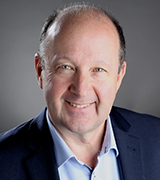
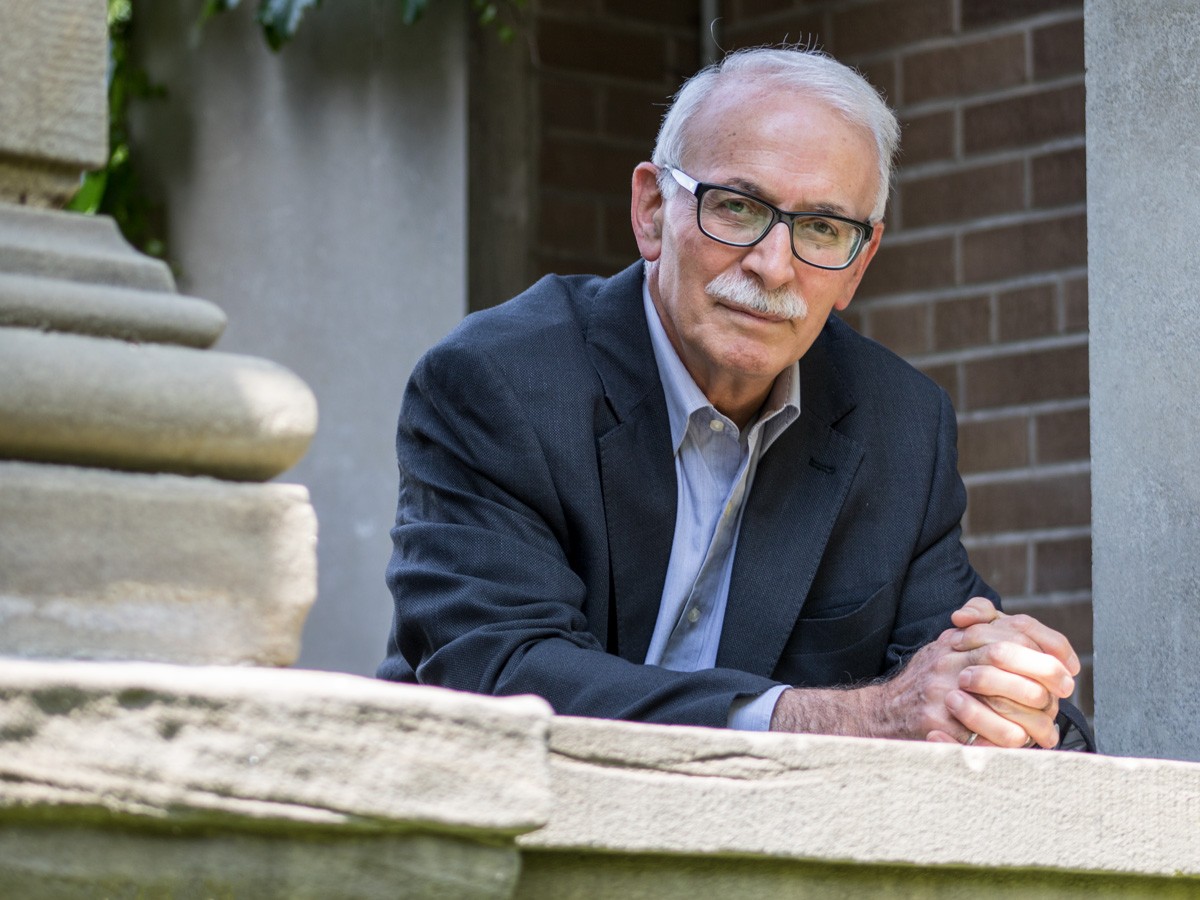
Olivier Henry is a Full Professor in the Department of Chemical Engineering at Polytechnique Montréal , with a focus on biochemical engineering and bioprocess development . His research explores the production of recombinant proteins , viral vectors , and vaccine manufacturing , particularly through animal cell culture and metabolic engineering of CHO and HEK293 cells . He has published extensively on glycosylation analysis , SPR biosensors , and bioprocess optimization . Research Interests include: Development and control of CHO cell bioprocesses Viral vector and vaccine production Glycosylation characterization of therapeutic proteins Surface plasmon resonance (SPR) for protein interaction analysis Metabolic modeling and process intensification Bioprocess monitoring and soft sensor development Recent Trends in his 75 publications emphasize: Integration of machine learning in bioprocess control Advancements in SPR-based assays for monoclonal antibody quality Optimization of fed-batch and perfusion cultures for vaccine antigens Metabolic engineering of mammalian cell lines to reduce byproduct accumulation Standardization of glycosylation analysis for therapeutic proteins Supervision : Mentored 5 professional master’s and 1 DESS students, with 11 Ph.D. and 6 master’s theses completed.
Robert Legros is a Full Professor at the Department of Chemical Engineering within Polytechnique Montréal , where he has held the Research Chair on the Recovery of Residual Materials (CRVMR) and is a member of the Interdisciplinary Research Center for the Operationalization of Sustainable Development (CIRODD) . His work focuses on developing integrated waste treatment systems and energy-efficient biomass conversion processes in the context of a circular economy. Legros earned a B.Sc.A. from Polytechnique Montréal and a Ph.D. from the University of Surrey. His research interests span waste recovery, composting, thermal treatments, drying, biorefinery, and energy efficiency. He has supervised 41 graduate students (9 Ph.D. and 31 Master’s) to completion, with current supervision of 2 students. His 15 most recent publications (2019–2025) emphasize agent-based modeling for waste separation behavior, gasification processes, drying technologies, and life-cycle assessment tools. These works integrate broad disciplines such as Environmental Science , Chemical Engineering , and Resource Management , with subfields including Circular Economy , Biomass Conversion , and Policy Implementation . Scientific Awards : Excellence in Teaching Award, Polytechnique Montréal (2016) Legros has contributed to over 100 publications, including 60 journal articles, and holds 4 patents related to fluidized bed reactors and bioreactor designs.
Dr. Gregory Scott Patience is a Full Professor at Polytechnique Montréal's Department of Chemical Engineering, holding the Tier 1 Canada Research Chair in High Temperature and High Pressure Heterogeneous Catalysis . He serves as President of Patience Group of Companies Inc. and contributes to research networks including the Center for Green Chemistry and Catalysis (CCVC-CGCC) and CREPEC polymer research center. Education: B.Sc. & M.Sc. (University of Calgary), Ph.D. (Polytechnique Montréal) His research focuses on catalysis and fluidized bed reactor design for biomass conversion, CO2 utilization, and sustainable chemical processes. Current projects include: converting fructose/glucose to specialty chemicals, developing LiFePO4 cathode materials, and creating micro-refinery solutions for methane emission reduction. Recent publications highlight: advances in fluidized bed reactor technology (2025), plastic recycling innovations (2024), and catalytic CO2 conversion (2025). His work addresses both fundamental reaction mechanisms and industrial-scale applications. Key Awards: 2022 OIQ Honoris Genius - Social Engagement 2020 Schulich Technical Achievement Alumni Award Fellow, Chemical Institute of Canada (2023) As an advisor, he has supervised 20 Ph.D.s and 18 Master's students. His lab operates pilot-scale spray dryers (10kg/h capacity) and mechanochemical reactors for catalyst development.
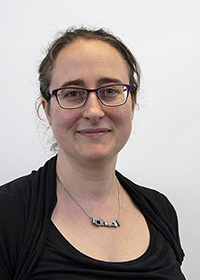
Marko Saban is an Adjunct Professor in the Department of Chemical Engineering at McMaster University . His career spans both academic research and industrial applications , with a focus on chemical process safety , polymer synthesis , and environmental toxicology .
Guerino Sacripante is a part-time Lecturer at the School of Engineering Technology, McMaster University, specializing in polymer science and sustainable materials. His work bridges chemical engineering principles with green chemistry in polymer synthesis and modification. McMaster University - School of Engineering Technology His research interests include lignocellulosic polymer development, biomass utilization strategies, and solvent-free reactive extrusion processes. He has extensively explored sustainable polyesters, polyurethanes, and toner resins. Scholarly activity reveals expertise in sustainable polymer synthesis, biorefinery applications, and material characterization techniques. Recent publications focus on lignin-derived diols, phenolic aldehydes, and compostability testing of bioderived composites. As an educator, Sacripante has taught Lean Six Sigma for Engineers (CHEMENG 720, SEP 731) and Introduction to Polymer Science (CHEMENG 3Q03) since 2018, emphasizing process optimization and industrial applications.
Flora Ng is a Professor and University Research Chair in the Department of Chemical Engineering at the University of Waterloo. Her research focuses on catalytic processes for clean fuel development, heavy oil upgrading, and green chemistry. She pioneered catalytic distillation technologies to enhance reaction efficiency and reduce environmental impact. Her work includes developing novel catalysts for biodiesel production, sulfur-free fuel synthesis, and polymer recycling. Ng’s team has advanced methods for glycerol valorization and hydrogen generation from biomass. Education: PhD in Chemistry, University of British Columbia (1970) MSc in Chemistry, University of British Columbia (1968) BSc in Chemistry & Physics, University of Hong Kong (1966) Research Interests: Catalytic distillation, solid acid catalysis, biodiesel production, clean fuels, plastics recycling, and sulfur removal from fuels. Her work integrates chemical engineering principles with environmental sustainability, emphasizing low-carbon technologies and waste-to-value processes. Key Contributions: Ng’s team invented a reactive distillation process for alkene upgrading and pioneered the use of water as a medium for hydrocarbon processing. She also demonstrated polyethylene pyrolysis for cetane additive production, advancing plastic recycling. Her group developed flow micro-calorimetry techniques for adsorption studies, improving sulfur removal from fuels. Awards: 2013 Canadian Green Chemistry and Engineering Award 2008 CIC Catalysis Award Fellow of the Royal Society of Canada Grants & Advising: Ng has secured significant funding for her research and currently supervises graduate students. Her lab focuses on catalytic innovation for energy and environmental applications.
Clémence Fauteux-Lefebvre is an Assistant Professor in the Department of Chemical and Biological Engineering at the University of Ottawa's Faculty of Engineering. She holds a PhD (2015), MASc (Sherbrooke), and BASc (Ottawa) in Chemical Engineering. Her research focuses on sustainable catalysis, versatile catalyst design, and multifunctional materials to enhance process efficiency and reduce environmental impact. Previously, she conducted postdoctoral work on process analytical technologies at Pfizer. Educations: PhD in Chemical Engineering, Université de Sherbrooke (2015) MASc in Chemical Engineering, Université de Sherbrooke BASc in Chemical Engineering, University of Ottawa Research Interests: Prof. Fauteux-Lefebvre specializes in developing adaptive catalysts for multi-stage reactions and sustainable processes. Her work integrates materials science, environmental engineering, and AI-driven optimization to address challenges in sulfur oxide capture, catalytic conversion, and process intensification. Key areas include: Multi-phase reaction systems Graphene-based nanomaterials Machine learning for process modeling Publications Trends: Her recent articles emphasize catalyst design (e.g., graphene-iron oxide composites), sulfur conversion processes, and AI applications in chemical engineering. She also explores environmental remediation through novel adsorbent materials and sustainable material synthesis. Awards: No scientific awards explicitly mentioned in the provided texts. Advising/Grants: Advising information and grants are not detailed in the current data. She may supervise students through her research projects on catalysis and materials science. Labs/Teams: Engaged with the Department's chemical engineering research groups, focusing on sustainable processes and advanced materials characterization.
Dr. Ali Lohi is a Professor in the Department of Chemical Engineering at Toronto Metropolitan University (TMU), specializing in process simulation, fluid dynamics, and sustainable energy systems. He holds a PhD from the University of Waterloo and has over 40 years of academic and research experience. His work focuses on optimizing chemical processes, membrane fouling remediation, bioenergy production, and waste valorization. Lohi teaches courses like Process & Engineering Optimization and Sustainable Energy Technology, emphasizing eco-friendly energy solutions. Education: PhD, University of Waterloo (1988) Master of Applied Science, University of Waterloo (1974) Bachelor of Applied Science, Sharif University of Technology (1970) Research interests include fluid-particle systems modeling, bio-oil synthesis from agricultural waste, and energy-efficient bioreactor design. He has pioneered coaxial mixer technologies for non-Newtonian fluids and developed ultrasound-assisted membrane cleaning methods. Lohi’s interdisciplinary approach bridges chemical engineering, biotechnology, and environmental science to address global sustainability challenges. His publications (2020–2025) emphasize machine learning for process optimization, CFD-DEM modeling, and bioenergy systems. He collaborates with industry partners to advance scalable solutions for waste utilization and low-energy processes. Lohi’s labs focus on bioreactor scale-up strategies and biomimetic membrane development for water treatment.
Dany Garant is a Professor in the Department of Biology at Université de Sherbrooke, Quebec, Canada. His research focuses on understanding the processes that generate and maintain biodiversity through evolutionary processes in ecological contexts. He teaches advanced graduate courses including Ecological Data Analysis, Evolutionary Ecology, and Population Genetics and Evolution. Dr. Garant received his Baccalauréat en Biologie from Université de Sherbrooke in 1996, followed by a Maîtrise en Biologie from Université Laval in 1999, a Doctorat en Biologie from Université Laval in 2002, and completed a Post-doctorat en Écologie Évolutive at University of Oxford in 2005. His primary research interests include evolutionary ecology, molecular ecology, and quantitative genetics, with emphasis on animal population dynamics in fluctuating environments. Dr. Garant investigates how environmental variability affects evolutionary processes in wild animal populations, examining both genetic and epigenetic components of population resilience. His work frequently focuses on model species like eastern chipmunks, tree swallows, and brook charr to understand adaptation mechanisms across different taxa. Analysis of his recent publications reveals a strong emphasis on environmental variability impacts on evolutionary processes, with particular attention to climate change effects, agricultural intensification, and human disturbance on wildlife populations. His research integrates molecular, ecological, and evolutionary approaches across diverse taxa including mammals, birds, and fish, with recurring themes of phenotypic plasticity, transgenerational effects, and population resilience. Dr. Garant has secured substantial research funding from multiple sources: Fonds de recherche du Québec - Nature et technologies (FRQNT) Conseil de Recherches en Sciences Naturelles et Génie du Canada (CRSNG) Centre de la Science de la Biodiversité du Québec Université de Sherbrooke His grants total over $3 million, supporting research on biodiversity science, environmental effects on population dynamics, and evolutionary processes in animal populations. As principal investigator on multiple projects, he mentors graduate students and postdoctoral researchers while collaborating with scientists across Canada and internationally. Dr. Garant leads the Centre de recherche en écologie de l'Université de Sherbrooke (CREUS) and has established research teams focused on evolutionary ecology and biodiversity conservation. His laboratory investigates the genetic and epigenetic bases of adaptation in natural populations, with particular emphasis on how environmental fluctuations shape evolutionary trajectories and population resilience.
Étienne Robert is a Full Professor in the Department of Mechanical Engineering at Polytechnique Montréal. He holds a B.Eng from Polytechnique Montréal and M.Sc./Ph.D. degrees from École Polytechnique Fédérale de Lausanne (EPFL). His primary affiliation is with Polytechnique Montréal, with past research experience at CERN. Professor Robert's research focuses on experimental approaches to fluid mechanics, particularly combustion dynamics and multiphase systems. Key research themes include: Fundamental studies of diffusion flames and thermo-diffusive instabilities Soot formation mechanisms and carbon nanostructure synthesis Acoustic manipulation of sub-micron particles for separation applications Hypergolic ignition systems for rocket propulsion Aerosol dynamics relevant to pathogen transmission and environmental systems His publication record shows strong emphasis on combustion science (40%), fluid dynamics (30%), aerosol physics (20%), and applied thermal engineering (10%). Recent work increasingly addresses sustainable energy applications including biomass polygeneration and hydrogen systems. Professor Robert leads an active research group with current supervision of 1 postdoctoral fellow and 4 PhD students. He has graduated 10 PhD and 11 Master's students working on projects spanning fundamental combustion, aerospace materials, and environmental fluid mechanics. Research funding includes NSERC Discovery grants and participation in EU-funded collaborations. Laboratory capabilities center on specialized combustion diagnostics, aerosol characterization systems, and acoustic manipulation setups. The group maintains unique experimental facilities including a one-dimensional diffusion flame burner enabling fundamental studies unobtainable in conventional systems.