Máté Szabó is an Assistant Professor at the University of Debrecen , affiliated with the Faculty of Informatics and the Department of Information Technology . His email contact is szabo.mate@inf.unideb.hu . He works in areas such as Machine Learning , Smart Cities , and Mobile Computing . His research spans topics like microservice architecture for ensemble models, Markov modeling of traffic flows, and distributed machine learning on mobile platforms. He has explored neural models for conversational AI and gamification in programming education through Minecraft-based challenges. His work also addresses edge computing and data parallelism in mobile environments. His publications (2016–2024) reflect trends in machine learning deployment on Android platforms smart city traffic analytics gamified educational tools cognitive modeling of numerical understanding microservice-based model integration .
Dr. HAJNAL Géza is an Associate Professor at the Budapest University of Technology and Economics (BME), Faculty of Civil Engineering, where he serves in the Department of Hydraulic and Water Resources Engineering. His office is located in Room K. ép / mf. 12/7, and he can be contacted via email at hajnal.geza@emk.bme.hu or phone at +36 1 463 2362. His teaching portfolio includes active courses such as Hydraulic Engineering, Water Management (BMEEOVVAT43) and Hydrometric Field Course (BMEEOVVAI44). Previously, he taught Hidrogeology (BMEEOGMMET3) and Hydrogeology of Subsurface Water (BMEEOGMDT81). HAJNAL's research specializes in hydrogeology , with emphases on karst aquifer dynamics, groundwater flow modeling, climate impacts on hydrology, and hydraulic engineering. His work integrates field measurements (e.g., drip-water monitoring in Buda Castle Cave) with advanced numerical modeling to address complex hydrological challenges in Hungarian watersheds. Analysis of his 15 most recent publications (2013–2025) reveals dominant themes: 73% focus on karst/fractured aquifers , 20% on hydrological modeling techniques , and 7% on socio-environmental conflicts. Recurrent technical subfields include seepage flow validation, transmissivity determination, and rainfall-runoff sensitivity. No scientific awards, grants, student advisees, or lab affiliations are documented in the provided materials.
Miklós Zeidler is a habilitated Associate Professor at Eötvös Loránd University (ELTE), Budapest, lecturing in the Department of Modern and Contemporary Hungarian History within the Institute of Historical Studies. His principal research covers Hungary’s twentieth-century diplomatic, political and cultural history, with a strong focus on the Treaty of Trianon, inter-war revisionism, the League of Nations, and the memory-culture of irredentism. Research interests: Professor Zeidler explores the consequences of the 1920 peace settlement for Hungarian state- and nation-building, the functioning of the League of Nations in East-Central Europe, and the interplay between sport, propaganda and national identity. His recent publications analyse financial stabilisation loans supervised by the League, the micro-history of border disputes, and the symbolic geography of inter-war Geneva. Publication profile: Between 2020 and 2024 he authored studies on the making and reception of the Trianon treaty, the composition and lobbying activity of the Hungarian peace delegation, and the cultural mythology of irredentism. A recurrent methodological thread is the integration of diplomatic, urban and memory-history perspectives, often relying on previously unused Hungarian and League archives. Campus presence: His office is located in the Humanities Faculty building at 1088 Budapest, Múzeum körút 6–8, room 216; he can be reached at zeidler.miklos@btk.elte.hu. Comprehensive publication lists are available on MTMT.hu and his doctoral data sheet at doktori.hu.
Dr. FARKAS Dávid is an Assistant Professor in the Department of Hydraulic and Water Resources Engineering, Faculty of Civil Engineering, Budapest University of Technology and Economics (BME). His office is located in Building K, basement level, room 12/7, and he holds weekly consultation hours on Mondays from 1–3 pm. Educational contributions include teaching core courses in hydrogeology and groundwater engineering: Groundwater (BMEEOVVMV63) Hydrogeology (BMEEOGMMG62) Infrastructural Design Project (BMEEODHAI41) Research activities concentrate on quantitative hydrogeology, with a special emphasis on karstic groundwater systems, seepage hydraulics, and the safety of flood-protection levees. He couples field investigations in iconic Hungarian cave systems (Buda Castle Cave, Molnár János Cave) with laboratory sandbox experiments and numerical modelling to advance understanding of flow and transport processes in fractured carbonates. Over the past decade his work has evolved from fundamental hydrogeological mapping toward the design and deployment of automated monitoring networks that integrate classical hydrological instruments with modern sensor technologies. This progression is evident in his most recent publications (2024-2025) that document the establishment of high-resolution cave monitoring systems capable of capturing rapid responses to precipitation events. Scientific awards currently listed: none. Advising and grants: no specific student names, grant numbers, or funded project titles are provided in the supplied text. Laboratories and teams: while no dedicated laboratory name is stated, his affiliation with the Department of Hydraulic and Water Resources Engineering implies access to the faculty’s hydraulics and hydro-environmental laboratories, including sandbox and seepage modelling facilities.
Dr. Gábor Pintér holds dual academic appointments as Assistant Professor at Károli Gáspár Reformed University's Faculty of Humanities and Social Sciences (Department of Japanology) and as Associate Professor at Kobe University's School of Languages and Communication. Born in Hungary in 1977, he earned his MA (2005) and PhD (2008) in Linguistics from Kobe University, Japan, with a dissertation on asymmetrical segment distributions in Japanese. His research focuses on three interconnected domains: phonological theory (especially Japanese phonology), experimental phonetics, and applications of automatic speech recognition in language education. Specific interests include vowel devoicing patterns, prosodic perception in L2 learners, phonotactic constraints, and diachronic sound changes in Japanese. Pintér actively contributes to international research collaborations, including the JSPS-funded project 'Stochastic & theoretical phonological research' and serves as chair of the Phonology Association in Kansai (PAIK). His 15 most recent publications demonstrate methodological diversity, combining theoretical linguistics with computational approaches and experimental studies, primarily focused on Japanese phonetics and speech technology applications. Professional memberships include board positions in The Phonological Society of Japan and memberships in the International Speech Communication Association and Association for Laboratory Phonology.
Dr. Tamás Koltai is a Professor and Dean at the Faculty of Economics and Social Sciences of Budapest University of Technology and Economics (BME). He leads the doctoral school's Specialization Group in Production Management. His roles include overseeing academic programs and research in production management, operations research, and efficiency analysis. Education: Doctor of the Hungarian Academy of Sciences (2016) Dr. habil. (2000), Budapest University of Technology and Economics Candidate of Technical Sciences (1987), Hungarian Academy of Sciences M.Sc. in Mechanical Engineering (1983), BME Faculty of Mechanical Engineering Research Interests: Dr. Koltai focuses on production management optimization, including the application of Data Envelopment Analysis (DEA), sensitivity analysis in mathematical models, and the integration of robotics in assembly lines. His work bridges theoretical models (e.g., MILP/CP optimization) with practical industrial challenges, particularly in healthcare efficiency and educational management. Notable Awards: IEOM Society Teaching Excellence Award (2021) BME GTK Faculty Memorial Medal (2016) János Susánszki Award (2013) Széchenyi Professorship Scholarship (1999–) Teaching & Leadership: He has held visiting roles at the University of Seville (1990–1992) and the University of Michigan (1988/89). His teaching excellence is recognized through awards and his contributions to business simulation education. His research often collaborates with industry partners to address real-world operational challenges. Labs/Teams: Leads the Production Management Specialization Group and contributes to interdisciplinary teams focusing on manufacturing efficiency and healthcare operations within BME.
Béla Greskovits is a University Professor at the Central European University (CEU) in Vienna, Austria, holding dual roles in the Department of International Relations and Department of Political Science, alongside Emeritus statuses in both departments. He also serves as a University Professor in the Doctoral School of Political Science, Public Policy, and International Relations. His research focuses on the political economy of East-Central Europe, comparative economic development, social movements, and democratization, with a current emphasis on civil society’s role in the rise of right-wing populism. Academic appointments include visiting roles at Harvard University (2008-09), Cornell University (1998-99), and the European University Institute (2016-21). He earned a PhD in Economics from the Hungarian Academy of Sciences (1996) and an MA from the Budapest University of Economics (1980). Fluent in Hungarian, English, and German, he has authored over 100 publications, including the influential book Capitalist Diversity on Europe's Periphery (2012, co-authored with Dorothee Bohle), which won the Stein Rokkan Prize in 2013. Key Awards: 2021 East European Politics Best Article Prize, 2021 Polányi Károly Prize, Danubius Award (2018), Bibó István Prize (2014), and CEU Outstanding Research Award (2014). His work bridges political economy and sociology, analyzing how economic systems interact with democratization processes. Recent publications explore nationalism, rule of law crises in Europe, and Hungary’s illiberal turn. He has advised numerous policy initiatives and remains a leading voice on post-socialist transformation and civil society dynamics.
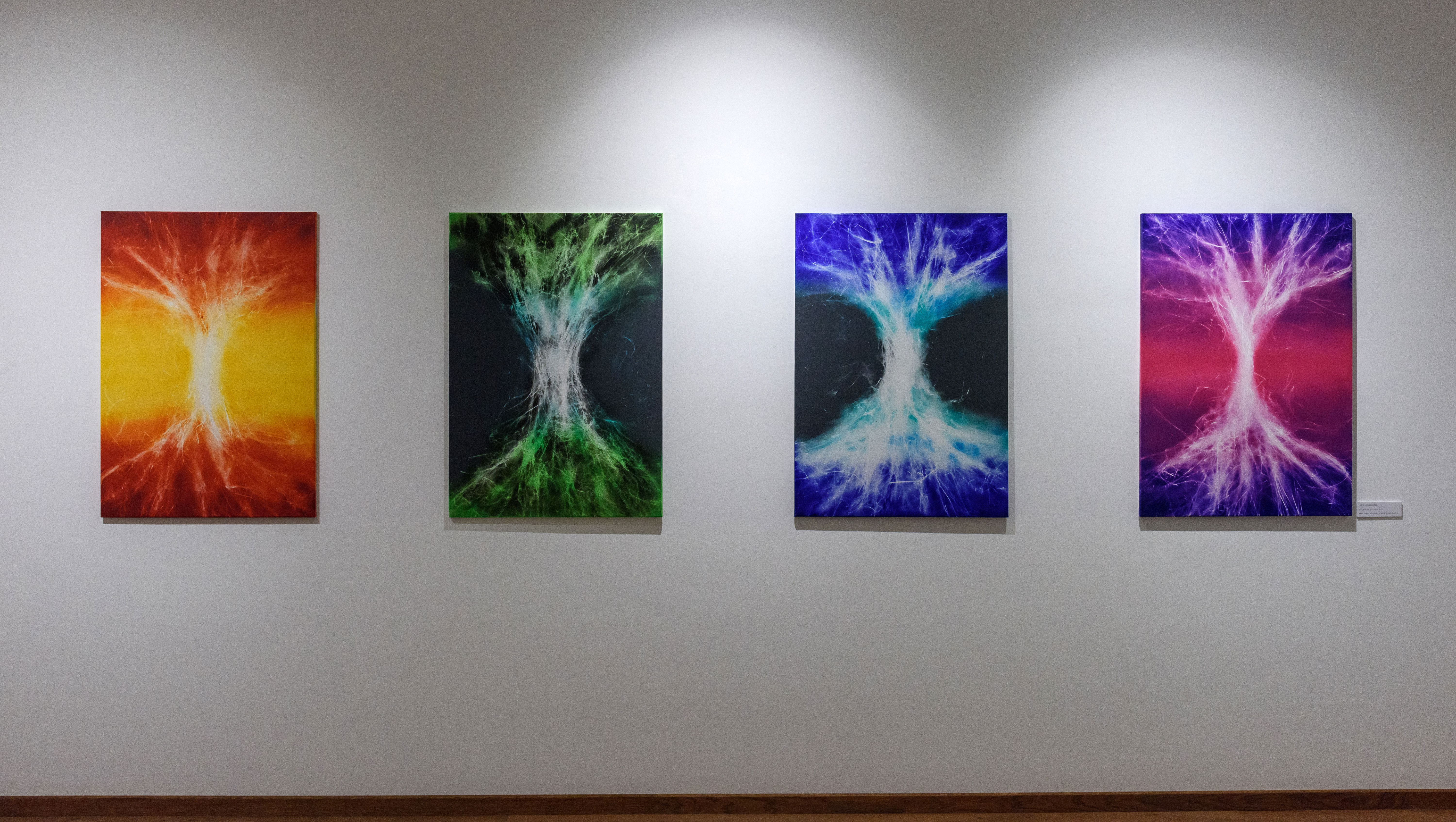
Zsigmond Lucza (born 1978 in Budapest) is a Hungarian contemporary artist and university assistant professor at the Hungarian University of Fine Arts, Department of Visual Art since 2022. He holds a DLA (Doctor of Liberal Arts) degree from the University of Pécs Faculty of Arts (2011-2014) and has extensive international experience including studies at the University of Lapland in Finland (2012-2013). Lucza's educational background includes dual Master's degrees from the Hungarian University of Fine Arts (2002-2007) in both Painting and Visual Art Teacher programs, along with foundational training at the Buda Drawing School (2000-2002). His academic career includes teaching positions at Jelky András Applied Arts Vocational High School (2014-2018), Modell Fashion School (2008-2012), and Kolumbusz Humanities High School (2005-2007). Lucza's artistic practice spans contemporary painting, transmedia art, and mixed media works, with significant focus on digital integration in traditional art forms. His research interests center on transmedia tendencies in contemporary Hungarian painting, visual communication, and the evolving relationship between digital and physical art spaces. His work often explores identity, perception, and the integration of technology in artistic expression, creating pieces that bridge traditional painting techniques with contemporary digital aesthetics. His artistic output shows a consistent evolution from figurative works toward more experimental transmedia approaches, with recent projects focusing on environmental reflection, digital portraiture, and collaborative installations. Lucza's work demonstrates a sophisticated understanding of both traditional painting techniques and contemporary digital media, creating a distinctive visual language that addresses current artistic concerns while maintaining strong technical foundations. Lucza has received multiple awards including an Erasmus scholarship for study at the University of Lapland, a scholarship from the Budapest Gallery and Kunststiftung Baden-Württemberg, and first prizes in national competitions. His professional affiliations include membership in the Hungarian Artists' Association (MAOE) since 2007, the MAMŰ Society since 2015, and non-academic membership in the Hungarian Academy of Arts (MMA) since 2022. As an educator, Lucza has conducted numerous workshops internationally including the Experimental Drawing Course at the Latvian Academy of Arts and Transmedia Workshops at the University of Pécs. His curatorial work includes the 'Medium Summoners' exhibition at MAMŰ Gallery in Budapest (2017). Lucza maintains an active exhibition schedule with solo shows across Hungary, Finland, and Slovenia, alongside participation in numerous international artist colonies and collaborative projects.
Balazs Vedres is a **Professor** at the **Central European University (CEU)**, with a joint appointment in the **Department of Network and Data Science**. His research integrates network science, data science, and social theory to explore creativity, innovation, and historical processes in collaborative networks. He holds a **PhD in Sociology from Columbia University** and an **MA in Economics from Corvinus University**. **Research Interests**: Focuses on structural dynamics in creative fields (e.g., jazz, video games, open-source software), gender inequality in collaborative platforms, historical network evolution, and the impact of social bots on human collaboration. He analyzes how network configurations like *structural folds* and *forbidden triads* drive innovation and creativity. **Awards**: Elected **Member of the European Academy of Sociology (2017)**, recognizing his contributions to sociological research. His work bridges computational methods with sociological theory, as seen in his publications in *American Journal of Sociology* and interdisciplinary journals. **Projects**: Leads initiatives like *Gendered Creative Teams: From Marginality to Success* and *Ceunet/Indra Mapping European Network Science*. His research often involves empirical studies of transnational activism, entrepreneurial networks, and digital platforms. **Labs/Teams**: Active in CEU’s **Data and Network Dynamics Studies (DNDS)** group, fostering interdisciplinary collaboration in computational social science. His work emphasizes the interplay between global economic integration and local developmental agency.
Gyula Tankó is a habilitated Associate Professor at the Department of English Applied Linguistics , School of English and American Studies, Eötvös Loránd University . His research focuses on language assessment validity , particularly for advanced-level English exams. Research interests include: Constructive justification of EFL school-leaving examinations Psychometric challenges in reading and listening comprehension assessments Alignment of national language policies with assessment practices Development of analytic rating scales for EAP (English for Academic Purposes) Cognitive processes in L2 listening behaviors Selected publications address topics like: Test fairness and generalizability Impact of punctuation errors on EFL assessment CEFR taxonomy in listening evaluation His work contributes to improving language proficiency certification and university admissions in Hungary. Contact : Email: tanko.gyula@btk.elte.hu Address: Room 430, Eötvös Loránd University, Faculty of Humanities, Rákóczi út 5, Budapest, H-1088
Katalin Farkas is a Professor of Philosophy at the Central European University (CEU), where she has been affiliated since 2000. She previously taught at Eötvös Loránd University in Budapest. Her primary research areas are philosophy of mind and epistemology, with a focus on topics like intentionality, knowledge-wh, and Cartesian philosophy. She is author of The Subject's Point of View (2008) and currently working on The Unity of Knowledge . Dr. Farkas holds a PhD and DSc from the Hungarian Academy of Sciences and an MA in Mathematics and Philosophy from Eötvös Loránd University. She has held visiting positions at institutions including the University of Sydney, the Center for Subjectivity Research in Copenhagen, and Newnham College Cambridge. From 2010–2014, she served as CEU’s Provost and Academic Pro-Rector, and later as Head of the Philosophy Department (2007–2010 and 2020–2024). Her honors include membership in the Academia Europaea (2012) and presidency of the European Society for Analytic Philosophy (2020–2023). Her work explores themes such as extended mind theories, phenomenal consciousness, and the relationship between belief and knowledge, challenging reductionist approaches to knowledge types.
Dr. Gábor Koloh is a contemporary Assistant Professor and Research Fellow at the Eötvös Loránd University (Department of Economic and Social History) and the HUN–REN RCH Institute of History . His scholarly work focuses on demographic history , social history , and rural economic structures , with particular emphasis on fertility transitions , household organization , and modernization processes in 19th-20th century Hungary. Education : Law (ELTE), Aesthetics (BA), MA and PhD in Economic and Social History (supervised by György Kövér) Research Themes : Demographic change in interwar Hungary Ethnic agricultural practices in Baranya Temporal/spatial patterns in peasant communities Social mobility of Protestant clergy Methodology : Micro-historical analysis, family reconstitution, manuscript source interpretation Current Projects : Interdisciplinary studies on pronatalist discourse, cooperative territorial development, and aristocratic demographic patterns
Andrea Kő is a researcher at the Corvinus University of Budapest's Institute of Data Analysis and Informatics, with a focus on artificial intelligence, fintech, and big data applications. She has held positions in the Department of Information Systems until 2022 before transitioning to her current role. Her work emphasizes investment recommenders, Industry 4.0 readiness, and e-government solutions. Her research spans financial technologies, manufacturing optimization, and organizational resilience in SMEs. Notable contributions include hybrid AI models for production systems and frameworks for digital transformation assessment. She actively contributes to international conferences like EGOVIS and BiDEDE, editing proceedings and presenting on topics such as robo-advisors and smart manufacturing. Key projects include the CCMS2.0e maturity model for Industry 4.0 adoption and studies on pandemic impacts on SMEs. Her work integrates machine learning (ANFIS, MMNN) with domain-specific challenges, addressing both theoretical and practical aspects of digital innovation across sectors.
Ildikó Király is a Professor at the Institute of Psychology, Eötvös Loránd University, Budapest, currently serving as Head of the Department of Cognitive Psychology and lecturer. Her research focuses on developmental psychology, particularly social cognition, imitation behavior, and theory of mind in early childhood. Key areas: Social Cognition , Developmental Neuroscience , and Cognitive Development Recent work examines preschoolers' exploration tendencies, joint action observation effects, and linguistic group membership's role in perspective taking. She leads the Social Minds Research Group , investigating how cultural knowledge transmission shapes cognitive development. Her 2021-2025 publications reveal trends in: Imitative behavior's sensitivity to social norms and group identity Memory flexibility in adapting to changing contexts Interactions between semantic processing and mentalization in social situations Comparative studies on human and non-human primate cognition
Dr. habil. Dringó-Horváth Ida is an Associate Professor at the Faculty of Humanities and Social Sciences of Károli Gáspár University of the Reformed Church in Hungary (KRE). She serves as Head of the ICT Research Center under the Rector's Office and as Head of the Educational Informatics Continuing Education Center at KRE BTK. Her leadership extends to multiple research projects focused on educational technology in higher education, particularly examining digital competencies, teacher development, and the integration of information and communication technologies in academic settings. Dr. Dringó-Horváth earned her PhD in German Studies/Linguistics from Eötvös Loránd University in 2004, with a dissertation titled "Analysis and Evaluation of the Modern Teaching and Learning Medium 'Elektronisches PC-Wörterbuch'." She completed her habilitation in Educational Science at the same institution in 2019. Her academic background includes an MA in German from Eötvös Loránd University (1998) and additional qualifications in educational informatics and social work. Her research focuses on the intersection of educational technology and higher education pedagogy, with particular emphasis on digital competence development for teachers, dictionary skills in language learning, and the digital transformation of educational practices. Dr. Dringó-Horváth leads the "Educational Informatics in Higher Education" research project, which examines effective learning/teaching opportunities in electronic learning environments and maps ICT indicators of higher education lecturers. Her work explores how reflection processes contribute to long-term teacher competency development in the digital age. Analysis of her recent publications reveals a strong focus on artificial intelligence in higher education, technostress reduction, and digital competence measurement. Her research shows how digital transformation impacts both teaching practices and student learning experiences. She has made significant contributions to understanding how educators develop digital competencies and integrate technology into their teaching practices across different disciplines. Károli Kiválóság Díj (2022) for Q1 publication Károli Kiválóság Díj (2023) for Q1 publication Károli Kiválóság Díj (2023) for Q2 publication A. S. Hornby Trust Grant for dictionary research presentation at EURALEX Conference Dr. Dringó-Horváth actively mentors doctoral students including Sebestyén Lilla Anna, Veres Violetta, and Gulmira Kusajynkyzy. She serves as institutional coordinator for multiple significant research projects including "PROFFORMANCE+" (2022-2025), "Ensuring Quality Digital Higher Education in Hungary" (2022-2023), and "Support of Digital Transformation of Hungarian Higher Education" (2021-2022). Her grant portfolio demonstrates strong institutional support for her work in educational technology and faculty development. As leader of the ICT Research and Training Centre (Educational Technology Research and Training Centre), Dr. Dringó-Horváth oversees a dynamic team conducting research on information and communication technologies in higher education. The center collaborates with international and domestic institutions to develop best practices for digital learning environments. Her team's work has significantly influenced Hungarian higher education policy regarding digital transformation and teacher development.