Beng Chin Ooi is a Lee Kong Chian Centennial Professor at the National University of Singapore (NUS), School of Computing (SoC). He holds a B.Sc. (1st Class Honors) and Ph.D. in Computer Science from Monash University. His research focuses on database systems, large-scale analytics, and distributed computing. He has held leadership roles including Dean of School of Computing (2007–2013) and Director of Smart Systems Institute (2011–2021). Key achievements include the Singapore President’s Science Award (2011), ACM Fellow (2011), IEEE Fellow (2009), and multiple best paper awards. His work emphasizes scalable data management, blockchain systems, and healthcare data analytics. Education: Monash University (B.Sc., Ph.D.) Leadership: Dean (SoC), Director (Smart Systems Institute) Awards: Over 15 major honors including ACM SIGMOD E.F. Codd Innovations Award (2020) His research spans distributed databases, big data systems, and innovative applications of blockchain technology. Recent work includes NASI (neural architecture search) and Rafiki (ML-as-a-service).
Professor Maarten Prak is a distinguished scholar of Economic and Social History at Utrecht University, where he has been a faculty member since 1992. He is affiliated with the Faculty of Humanities and the Department of History and Art History. Prak serves on the governing board of the Royal Netherlands Academy of Arts and Sciences (KNAW) and All European Academies (ALLEA), having previously chaired the Humanities Board of the Netherlands Organisation for Scientific Research (NWO) from 2014-2016. Prak's research spans social history, urban history, guild systems, citizenship, global history, and early modern European history, with particular focus on the Dutch Golden Age. His scholarly trajectory evolved from local Dutch social history to national history, then to comparative European history, and finally to global historical perspectives. His work demonstrates how urban citizenship, guild structures, and social organization shaped political development across Europe. His publication record reveals consistent engagement with long-term historical processes, particularly examining how citizenship evolved from urban contexts to national frameworks. His research connects economic structures with political institutions, showing how guilds, urban governance, and social hierarchies influenced the development of modern political systems across Europe. Member Royal Netherlands Academy of Arts and Sciences (2008) Teacher of the Year, Universiteit Utrecht (2014) Winner of the 2015 book award of the American Ceramic Circle Winner of the 2019 Prix Dix-Septième Siècle Prak has maintained an active teaching career alongside his research, earning recognition as Teacher of the Year in 2014. His academic governance responsibilities have included serving as research director for his department and faculty, chairing the Humanities Board of NWO (2014-2016), and participating in the governing boards of KNAW and ALLEA. He has organized numerous international workshops and conferences and has been a visiting scholar at prestigious institutions including the University of Cambridge, London School of Economics, and École des Hautes Études in Paris.
Dr. Athos Agapiou serves as an Assistant Professor at the Department of Civil Engineering and Geoinformatics, Cyprus University of Technology, where he holds the 'Geoinformatics and Earth Observation' chair. He also serves as Deputy Director of the UNESCO Chair on Digital Cultural Heritage and coordinates the EOCult Laboratory, a specialized research group focused on applying Earth Observation and Geoinformatics for archaeological research and cultural heritage landscapes. His research interests center on developing and applying innovative remote sensing technologies for cultural heritage preservation, addressing challenges posed by environmental and anthropogenic factors. Dr. Agapiou has led numerous high-profile research initiatives at European and national levels, including Horizon Europe and Horizon 2020 projects, as well as programs funded by the Cyprus Research and Innovation Foundation. His publication record demonstrates consistent output in remote sensing applications for archaeology, with particular focus on satellite image fusion, UAV technologies, spatial resolution optimization, and advanced data analysis techniques for archaeological prospection. His work bridges technical remote sensing methodologies with practical archaeological applications. Young Scientist Award from International Society for Digital Earth (2023) Young Researcher Award by Cyprus Research Awards (2018) Top 2% researcher worldwide in field (Stanford studies 2020-2024) Top three global researchers in Geoinformatics for cultural heritage (2024) Dr. Agapiou actively contributes to major research projects and collaborations, with his work influencing both academic research and practical applications in cultural heritage management. His laboratory (EOCult) serves as a hub for interdisciplinary research connecting geospatial technologies with archaeological practice.
Deval Desai serves as Reader in International Economic Law at the University of Edinburgh's Edinburgh Law School, a position he has held since 2020 after serving as Lecturer from 2020-2023. His academic career includes research positions at Harvard Law School and the Geneva Graduate Institute. Dr. Desai also brings extensive practical experience from a decade working with the World Bank on rule of law and governance in sub-Saharan Africa, as well as advising the United Nations on rule of law issues. Dr. Desai's educational background includes an MA in History and French Literature from Oxford University, followed by legal training at City University/BPP Law School (PGDipL and PGDipLP), and advanced law degrees (LLM and SJD) from Harvard Law School. At Harvard, he held prestigious fellowships including the Byse Fellowship, Program on Negotiation Next Generation Fellowship, and Institute for Global Law and Policy Fellowship. MA (Oxon), History and French Literature PGDipL, PGDipLP, City University/BPP Law School LLM, Harvard Law School SJD, Harvard Law School Dr. Desai's research centers on law and development, administrative law and regulation, theories of the state, and patterns of knowledge and authority across the Global North and South. His work examines institutional reform processes, particularly how expertise and knowledge operate within rule of law initiatives. His interdisciplinary approach draws from legal and social theory, development studies, international relations, and performance studies, as evidenced in his monograph Expert Ignorance (Cambridge University Press). His recent work focuses on fiscal sociology, administrative law in the Global South, and the politics of social welfare provision. Dr. Desai's publications span leading journals in law, political science, and development studies, revealing a consistent focus on the intersections between legal institutions, governance, and development. His work demonstrates increasing engagement with comparative methodologies and critical perspectives on knowledge production in global governance. Recent articles show particular attention to fiscal policy, welfare systems, and responses to global crises like the Covid-19 pandemic, with comparative studies between India and European contexts. Dame Muriel Spark Medal (2024, Royal Society of Edinburgh) Chancellor's 'Rising Star' Award (2023, University of Edinburgh) Member of the Young Academy of Scotland Fellow of the Royal Society of Arts Fellow of the Young Academy of Europe Dr. Desai has secured significant research funding from diverse international sources, including a £2.1 million Swiss National Science Foundation Sinergia grant titled 'Reversing the Gaze: Towards Post-Comparative Area Studies' where he serves as PI. He also leads projects funded by the British Academy, University of Edinburgh's Big Ideas Accelerator, Scottish Funding Council, and Foreign, Commonwealth, and Development Office. His commitment to mentoring is evident through his recognition with the Susan Manning Award for Inspiring Mentor and his leadership in establishing programs like the Global Scholars' Academy at the Geneva Graduate Institute and the Global Justice summer school at CEU. As editor-in-chief of the Cambridge University Press book series 'Elements in Legal Theory and the Global South' and serving on multiple editorial boards, Dr. Desai plays a significant role in shaping scholarly discourse. His current research projects examine 'loss' in legal institutions guiding transitional processes, constitutional implications of fiscal arrangements in fragile contexts, and social welfare provision in India and Italy.
Roger Luckhurst is Professor of Modern Literature and currently holds the prestigious Geoffrey Tillotson Chair of Nineteenth Century Studies at Birkbeck College, University of London. A leading scholar in Gothic literature, science fiction, and trauma studies, he has been affiliated with Birkbeck for over 25 years, contributing significantly to interdisciplinary literary and cultural studies. Education and Career Trajectory: 2020-present: Geoffrey Tillotson Chair of Nineteenth Century Studies, Birkbeck College 2008-2020: Professor of Modern and Contemporary Literature, Birkbeck College 2004-2008: Senior Lecturer, Birkbeck College 1994-2004: Lecturer, Birkbeck College 1992-1994: Lecturer, University of Hull Research Interests and Scholarly Contributions: Luckhurst's research spans multiple interconnected fields, establishing him as a preeminent voice in literary and cultural studies. His work on late 19th century English literature examines the intersections of Victorian culture with emerging scientific discourses. His expertise in science fiction studies encompasses both literary analysis and cultural theory, exploring how speculative fiction reflects and shapes contemporary anxieties. In Gothic studies , he investigates the persistence of Gothic aesthetics and themes across different media and historical periods. His groundbreaking work in trauma studies has contributed significantly to understanding how literature and culture process collective trauma. Publications and Scholarly Impact: His extensive publication record demonstrates a remarkable breadth of scholarly inquiry. From his early work on J.G. Ballard to his recent comprehensive study of Gothic culture, Luckhurst has consistently produced influential scholarship. His books have been translated into multiple languages including French, Japanese, Turkish, and German, indicating significant international impact. His forthcoming The Gothic: An Illustrated History (2021) promises to be a definitive work in the field. Honors and Awards: 2009: Visiting Research Fellow, University of Birmingham 2009: Visiting Research Fellow, Flemish Academic Centre for Science and the Arts (VLAC), Brussels January-June 2011: AHRC Fellowship, Birkbeck College Spring 2016: Mellon Distinguished Visiting Professor, Department of English, Columbia University, New York Public Engagement and Media Presence: Beyond academia, Luckhurst has demonstrated exceptional commitment to public scholarship. He has served as a broadcaster for BBC radio, bringing literary criticism to wider audiences. His journalism has appeared in leading British newspapers, bridging the gap between academic research and public discourse. This dual role as academic and public intellectual exemplifies Birkbeck's tradition of making scholarship accessible to broader communities. Interdisciplinary Approach and Institutional Contributions: At Birkbeck College, Luckhurst has been instrumental in fostering the institution's renowned culture of interdisciplinary studies. His work seamlessly integrates literary analysis with cultural theory, film studies, architectural history, and scientific discourse. This approach has influenced generations of students and scholars, establishing Birkbeck as a leading center for innovative literary and cultural research.
Allen J. Scott is a Distinguished Research Professor at the University of California, Los Angeles, with a joint appointment in the Department of Public Policy (School of Public Affairs) and Department of Geography. He has held prestigious positions at UCLA since 1994 and previously at the University of Toronto (1969–1994). His career spans over five decades, focusing on urban geography, regional development, and cultural economy. Education : BA (1961) from Oxford University; MA and PhD (1962, 1965) from Northwestern University. Research Interests include: Creative cities and cognitive-cultural capitalism Political economy of urbanization and globalization Industrial clusters and labor-intensive economies Human capital distribution in metropolitan areas Cultural landscapes and peripheral development Publication Trends (2005–2014) emphasize: Globalization's impact on low-technology industries Cognitive-cultural capitalism in urban contexts Human capital dynamics in metropolitan hierarchies Celebrity culture and urban glamour Creative field theories and urban policy implications Scientific Awards : 1986 Guggenheim Fellow 2003 Vautrin Lud Prize 2005 Meridian Book Prize 1999–2013: Chaires d’Excellence, Fellowships, and Doctor Honoris Causa 2008 Carol and Bruce Mallen Lifetime Achievement Award 2003 ISI Highly Cited Author
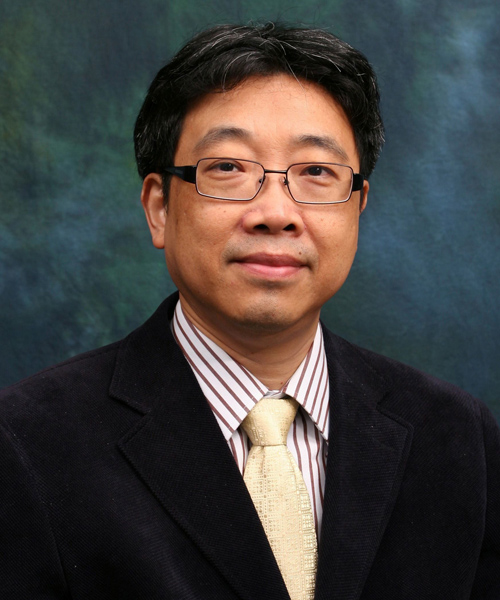
Cao Jiannong is currently a Chair Professor and Director of the University Research Facility in Big Data Analytics at Hong Kong Polytechnic University . He has held academic roles including Assistant Professor at City University of Hong Kong and University Lecturer at the University of Adelaide and James Cook University. His research spans Cloud and Edge Computing , Parallel and Distributed Systems , Big Data Analytics , and Wireless Sensing . Ph.D. in Computer Science, Washington State University (1990) MSc in Computer Science, Washington State University (1986) BSc in Computer Science, Nanjing University, China (1982) His work focuses on solving theoretical and practical challenges in distributed computing , mobile cloud systems , and wireless sensor networks . Recent projects include coupled network embedding models for heterogeneous networks and SDN architectures for vehicular communication. His research also pioneers WiFi-based non-invasive health monitoring and fault-tolerant sensor deployment for structural health applications. Dr. Cao's publications highlight advancements in network embedding , edge computing , and WSN optimization . Key papers address multi-user computation partitioning , energy-efficient SHM systems , and consensus protocols for mobile networks. These works have been cited over 15,000 times, with an h-index of 60. Ministry of Education (China) Natural Science Award (2018) Distinguished Member, ACM (2017) Fellow, IEEE (2014) Best Paper Awards at IEEE DSAA, SMARTCOMP, and WCNC Dr. Cao has advised multiple PhD students, including Linchuan Xu and Weigang Wu , whose research on WSN-based SHM and coupled network embedding has practical impact. His leadership includes directing Hong Kong Polytechnic University's Big Data Research Facility and serving on technical committees for IEEE INFOCOM and ACM/IEEE conferences.
Dr. Yunjie Yang is an Associate Professor at the University of Edinburgh's School of Engineering, with affiliations at the Edinburgh Futures Institute (EFI), the Edinburgh Generative AI Laboratory (GAIL), and the Edinburgh Centre for Robotics. He previously held the Chancellor's Fellow in Data Driven Innovation (2018-2023) and Bayes Innovation Fellow (2023-2024) positions. His research focuses on AI-powered sensing and imaging, machine learning, and soft sensors & electronics for robotics. Yang received his PhD in Engineering Electronics from the University of Edinburgh, MSc in Control Science & Engineering from Tsinghua University, and BEng in Measurement & Control Engineering from Anhui University. After his PhD, he worked as a Postdoctoral Research Associate in Chemical Species Tomography before securing his lectureship. His research interests center on developing intelligent sensing systems that replicate human perception capabilities for robotics and intelligent systems. He pioneers flexible sensing and imaging technologies across various scales through innovative multi-modal sensors, soft electronics, and their modeling using machine learning approaches. His work aims to enable autonomous physical artificial intelligence by bridging the gap between robotic systems and human-like perception. Analysis of his recent publications reveals a strong focus on soft robotics perception, particularly through electrical impedance tomography (EIT) and transformer-based architectures. His research spans medical imaging applications, digital twin modeling for industrial processes, and machine learning approaches for sensor data interpretation. The trend shows increasing integration of physics-informed deep learning with traditional tomographic techniques to achieve higher accuracy and efficiency. European Research Council (ERC) Starting Grant (2024) IEEE J. Barry Oakes Advancement Award (2024) IEEE I&M Society Graduate Fellowship Award (2015) Multiple Best Paper Awards Senior Member of IEEE Fellow of the International Society for Industrial Process Tomography Fellow of the Higher Education Academy ESI highly cited papers Dr. Yang serves as Associate Editor for IEEE Transactions on Instrumentation and Measurement and holds editorial positions with Scientific Reports and IEEE Sensors Journal. His research has been licensed to overseas research institutes and industry partners and received wide media coverage including BBC, EFE, USA Today, and STV. He has secured significant grant funding including the prestigious ERC Starting Grant. He leads the Edinburgh SMART Lab (Sensing/imaging + Machine Learning + Robotics), which aims to replicate human perception capabilities for robotics and advance flexible sensing technologies through innovative multi-modal sensors and machine learning approaches. The lab focuses on enabling autonomous physical artificial intelligence with applications spanning medical diagnostics, industrial monitoring, and advanced robotics systems.
Prof. Martin Messner is a University Professor at the University of Innsbruck, leading the Controlling Institute within the Department of Organization and Learning. His work focuses on management accounting, performance measurement, and the intersection of accounting practices with organizational behavior. He holds editorial leadership roles, including Editor-in-Chief of Accounting, Organizations and Society (2021–present) and previously served on the Management Accounting Research editorial board (2015–2019). Prior to his current position, he was an Assistant Professor at HEC Paris (2006–2011). Research Interests: His research explores performance measurement systems, ethics in management control, and the evolving roles of accounting in organizational narratives and governance. He investigates topics like algorithmic decision-making, narrative reporting, and entrepreneurial governance structures. Professional Activities: Member of the European Accounting Association’s Publications Committee Co-organizer of the MASOP Workshops (2008–2023) His publications span academic journals and edited volumes, addressing themes such as zero-based budgeting, data scientist identities, and the ethical implications of control systems. He actively bridges theoretical and practical accounting issues through interdisciplinary collaboration.
Andreas Eckert is Professor and Chair of African History at Humboldt University Berlin, where he also serves as Director of the International Research Centre "Work and Human Life Cycle in Global History" since 2009. Previously, he was Head of Department at the Institute of Asian and African Studies (2008-2009) and Dean of the Faculty of History and Philosophy at the University of Hamburg (2004-2006). His academic career includes visiting professorships at Harvard University, Maison des Sciences de l'Homme in Paris, and Indiana University. Professor Eckert's research focuses on African history in the 19th and 20th century , with particular emphasis on the history of the state, urbanization, and historiography. His scholarly work extends to comparative history of colonialism , history of work/labour history , and global history . His approach combines deep regional expertise in African contexts with transnational and comparative perspectives that challenge traditional historical narratives. Eckert's publication record demonstrates a consistent engagement with themes of state formation, labor relations, urban development, and historical methodology in African contexts. His work spans from detailed case studies of specific regions like Douala and Tanzania to broader conceptual explorations of how Africa fits into world historical narratives. A notable trend in his scholarship is the examination of entangled histories that connect local African experiences with global processes of colonialism, decolonization, and postcolonial state formation. His notable achievements include: 2012 Guest Fellowship at Freiburg Institute of Advanced Study Election as chairperson of "Forum Transregionale Studien" (2011) Major Grant from the German Ministry for Research and Education for the Institute "Work and Human Life Cycle in Global History" (2009) Election as chairperson of "Arbeitskreis für Moderne Sozialgeschichte" (2007) Managing Editor of the Journal of African History (2004-2011) Fellowship in the Royal Historical Society (2000) As Director of the International Research Centre "Work and Human Life Cycle in Global History," Eckert has secured significant funding including a major grant from the German Ministry for Research and Education (2009-2015). He has also served on the Board of the International African Institute in London and has been actively involved in scholarly organizations including the "Forum Transregionale Studien" and "Arbeitskreis für Moderne Sozialgeschichte." Under Eckert's leadership, the International Research Centre "Work and Human Life Cycle in Global History" brings together scholars from multiple disciplines and countries to examine the historical dimensions of work and human life cycles from a global perspective. The center serves as a hub for innovative research that transcends traditional geographic and disciplinary boundaries.
Dr. Rajkumar Buyya is a Redmond Barry Distinguished Professor at the University of Melbourne and Founder & CEO of Manjrasoft , a spin-off commercializing cloud innovations. He has held visiting roles at Imperial College London , University of Birmingham , and Tsinghua University . Research Interests : His work spans Cloud Computing , Edge Computing , Grid Systems , and Energy-Efficient Computing , focusing on utility-driven resource allocation, simulation tools, and scalable IoT application frameworks. He pioneered the CloudSim toolkit and Aneka Cloud technologies. Scientific Awards : IEEE Fellow (2015), Web of Science Highly Cited Researcher (2016-2021) Khwarizmi International Award (2020), Scopus Researcher of the Year (2017) Frost & Sullivan New Product Innovation Award (2010), IEEE TCSC Medal (2009) Impact : Authored over 850 publications, including the widely adopted textbook Mastering Cloud Computing . Graduated 54 PhD students now in leadership roles at institutions like Newcastle University and companies such as IBM , Google , and Amazon . His research has driven global adoption of cloud/edge technologies in 50+ countries.
Jiao Licheng is a Distinguished Professor and Doctoral Supervisor at Xidian University, leading the School of Artificial Intelligence and the Department of Computer Science and Technology. He holds prominent roles such as Director of the Key Laboratory of Intelligent Perception and Image Understanding (Ministry of Education) and the International Joint Research Center for Intelligent Perception and Computing. His research focuses on Artificial Intelligence, Deep Learning, Evolutionary Computation, and Remote Sensing, with significant contributions to image understanding and brain-inspired computing. Education: B.E. (1982) from Shanghai Jiao Tong University, M.E. (1984) and Ph.D. (1990) from Xi'an Jiaotong University. Postdoctoral research at Xidian University (1990–1992). Research Interests include AI, Machine Learning, Image Processing, and Big Data Analysis. His work bridges theoretical advancements and practical applications, such as medical imaging, SAR image analysis, and autonomous systems. Recent articles emphasize innovations in remote sensing, deep learning architectures, and evolutionary algorithms. Awards include IEEE Fellow, IET Fellow, and the Wu Wenjun Artificial Intelligence Outstanding Contribution Award. Labs/Teams: Key Lab of Intelligent Perception, International Joint Research Center, and leadership in national innovation bases. Active in academic societies, including editorial roles in IEEE Transactions on Cybernetics and Geoscience and Remote Sensing.
Prof. Yu Jihong is a full Professor at the Department of Chemistry, Jilin University, and serves as Director of the International Center of Future Science and Vice President of the Chinese Chemical Society. She leads the State Key Laboratory of Inorganic Synthesis and Preparative Chemistry. Her research focuses on designing nanoporous materials for energy and environmental applications, with over 320 publications in top journals like Science and Nature Communications. Education: BS (1989), MS (1992), PhD (1995) from Jilin University Postdoctoral: Hong Kong University of Science and Technology (1996–1997), Tohoku University (1997–1998) Research interests include inorganic synthesis, porous materials, catalytic materials, and environmental applications. Her work bridges computational methods with experimental synthesis, yielding innovations in zeolite structures and catalytic systems. Awards: IUPAC Distinguished Women in Chemistry Award (2017), TWAS Fellow (2016), Chinese Academy of Sciences Academician (2015), and multiple national science prizes. She is an Associate Editor of Chemical Science and leads editorial boards for Materials Horizons and others. Her articles emphasize novel synthetic methods, catalytic systems, and sustainable materials. Key themes include accelerating zeolite crystallization, designing nanocatalysts, and developing porous membranes for environmental applications.
Didier Sornette is Professor on the Chair of Entrepreneurial Risks at ETH Zurich since 2006, with concurrent affiliations as Professor at the Swiss Finance Institute, Special Professor at Tokyo Tech's Institute of Innovative Research, and Chair Professor (part-time) at Southern University of Science and Technology (SUSTech) in China. He founded the Financial Crisis Observatory (FCO) in 2008 to rigorously test financial market predictability during bubbles and co-developed the collaborative platform xYotta since 2012. Research Focus: Predictability and control of crises in complex systems, including financial crashes, earthquakes, social network dynamics, and medical applications (immune systems, epilepsy). Key Concept: Coined 'Dragon-kings' to describe extreme events with identifiable precursors, emphasizing their predictability. Scientific Awards AAAS Fellow (2013) Member of the Swiss Academy of Engineering Sciences (2019) E. N. Lorenz Lecture (2010), Ehrenfest Colloquium (2011) He has mentored 36 PhD students, supervised 120 master theses, and guided 38 post-docs (as of December 2019).
Mark Coeckelbergh is a Professor of Philosophy at the University of Vienna, specializing in the philosophy of technology, AI ethics, and robot ethics. He is affiliated with the Department of Philosophy and the Research Network Data Science at the University of Vienna. In addition to his academic position, Coeckelbergh has held significant roles including Former President of the Society for Philosophy and Technology (SPT) and Member of the European Commission's High-Level Expert Group on Artificial Intelligence (AI HLEG). His research focuses on the ethical, political, and philosophical implications of emerging technologies, particularly artificial intelligence and robotics. Coeckelbergh has published extensively in these areas, authoring influential books such as Robot Ethics (2022), The Political Philosophy of AI (2022), and Why AI Undermines Democracy and What To Do About It . His work explores how AI systems affect democratic processes, human agency, and social relationships. Recent publications demonstrate a strong focus on the relationship between AI, democracy, and ethical governance, examining how AI systems can both threaten and potentially enhance democratic processes through algorithmic transparency and participatory design approaches. Finalist of the World Technology Award 2017 Coeckelbergh teaches various courses including 'Introduction to Philosophy of LLMs,' 'LLMs and the Future of Writing,' 'Ethics and Robotics,' and 'Global Governance of AI.' He has supervised numerous students working on topics related to technology ethics and philosophy. He has been involved in several major research projects including H2020 PERSEO, WWTF Democracy Responsible Entrepreneurship, and FP7 DREAM (Development of Robot-Enhanced therapy for children with Autism spectrum disorders). Coeckelbergh has also announced upcoming guest professorships at the Institute of Philosophy of the Czech Academy of Sciences and Uppsala University, where he will work on environmental and technology ethics projects.