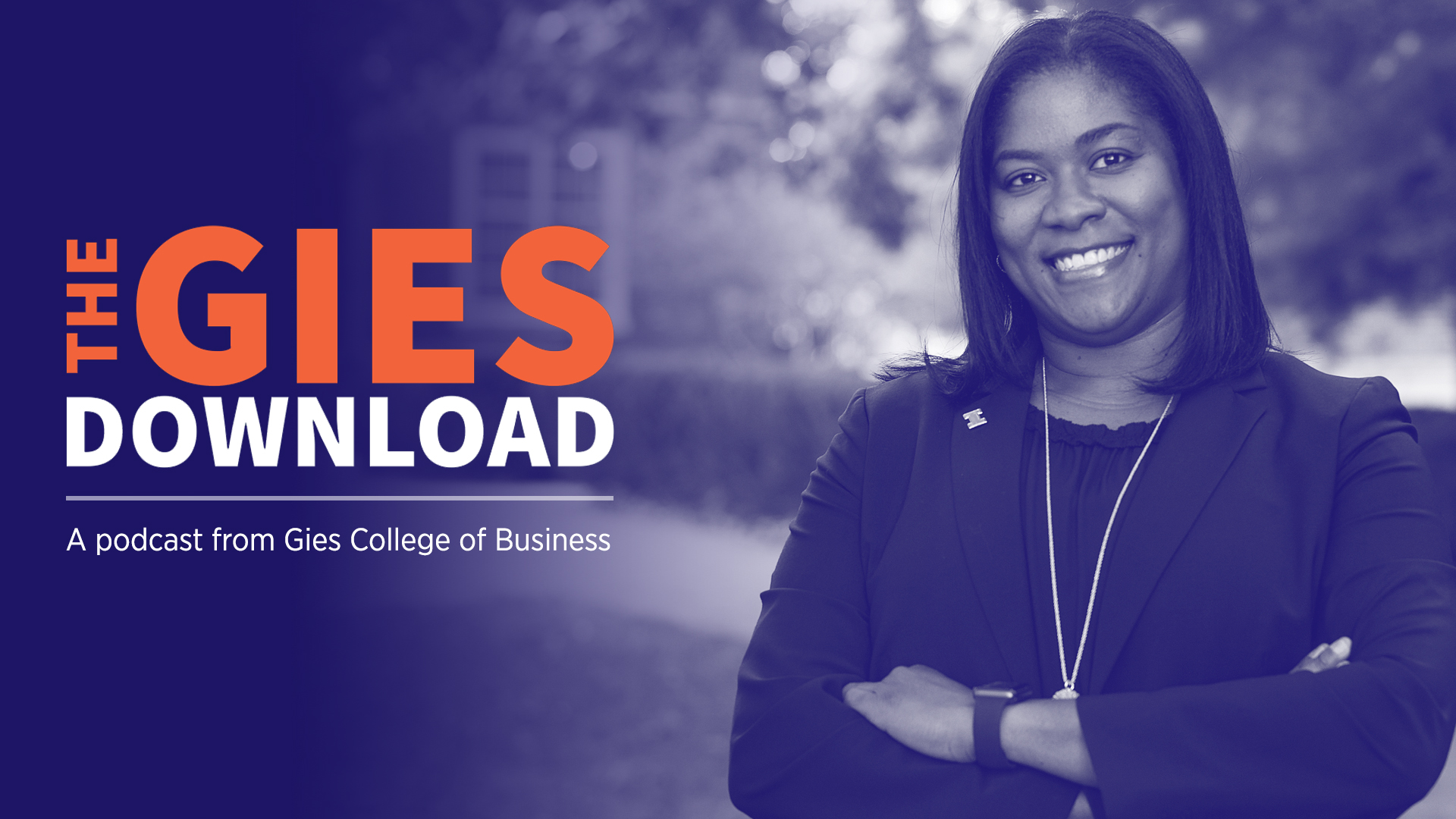
Nerissa Brown is the Associate Dean of Graduate Programs , Professor of Accountancy , and Chief Learning Innovation Officer at the Gies College of Business , University of Illinois Urbana-Champaign. She holds the Josef and Margot Lakonishok Faculty Fellow and PwC Faculty Fellow titles. Her work bridges auditing, financial reporting, and technology, with a focus on investor behavior, non-GAAP disclosures, and AI-driven financial practices. Located at 515 Gregory Dr, Champaign, she is accessible via nerissab@illinois.edu. Research interests include auditing ethics, cross-border reporting requirements, SEC enforcement impacts, and AI applications in earnings forecasting. Recent studies highlight topics like corruption detection via Google Document analysis and investor responsiveness to non-GAAP metrics. Key Awards: Lakonishok and PwC Faculty Fellowships. Labs/Teams: Leads innovation initiatives as Chief Learning Innovation Officer, integrating educational technology advancements.
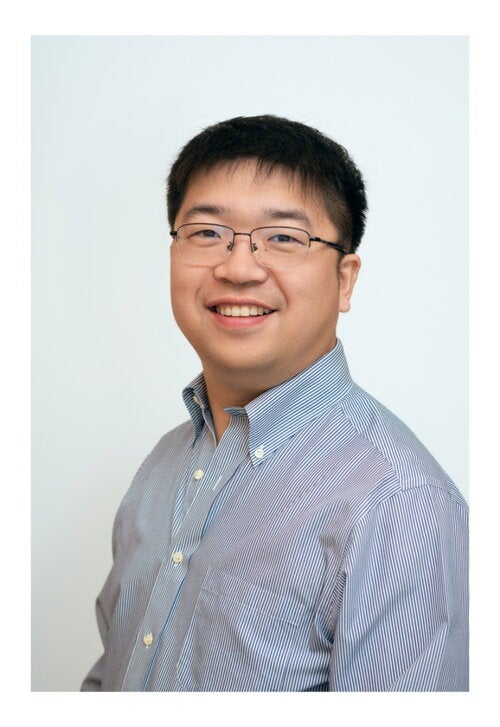
Zhiyu (Frank) Quan is an Assistant Professor at the University of Illinois at Urbana-Champaign (UIUC), holding positions in the Department of Mathematics, Department of Statistics, and National Center for Supercomputing Applications (NCSA). He is also an affiliate faculty member at Discovery Partners Institute as InsurTech Lead and serves as an ORMI Faculty Fellow in Finance. His research focuses on data science applications in actuarial science, including tree-based models, natural language processing, and deep learning for insurance risk modeling, predictive analytics, and InsurTech innovation. Education: Ph.D. in Actuarial Science (University of Connecticut, 2019), MS in Applied Statistics (Michigan State University, 2014), and BS in Mathematics and Applied Mathematics (Xiamen University, 2012). Research interests include computational statistics, insurance analytics, and leveraging machine learning for actuarial challenges such as claim prediction, rate-making, and cyber risk modeling. He leads the Illinois Risk Lab, bridging academic research with industry needs, and has pioneered hybrid tree-based models to address imbalanced data in insurance. Notable achievements include the Arnold O. Beckman Research Award and Society of Actuaries Research Institute recognition. He advises two doctoral students and teaches advanced predictive analytics courses, emphasizing practical applications in actuarial science and data ethics. Key collaborations involve InsurTech companies and NCSA, focusing on NLP-driven academic paper repositories (CyLit) and federated learning for privacy-preserving insurance data sharing. His work addresses real-world challenges in cyber insurance and automated machine learning systems.
Robert E. Cummings is a Professor of Writing and Rhetoric and Executive Director of Academic Innovation at the University of Mississippi. He directs the Interdisciplinary Minor in Digital Media Studies and leads the Academic Innovations Group (AIG) and Center for Excellence in Teaching and Learning (CETL), focusing on evidence-based teaching strategies and professional development for faculty. His academic roles emphasize bridging technology and pedagogy, particularly in digital writing instruction. Education: B.A. in English, University of Tennessee-Knoxville (1990) M.A. and Ph.D. in English, University of Mississippi (1999, 2006) Research Interests: Cummings explores the intersection of digital tools and writing pedagogy, including generative AI’s impact on writing, Wikipedia’s role in education, and post-pandemic digital instruction. He collaborates with computer science researchers to study AI-human dynamics in writing processes. His work emphasizes open educational practices, resilience in teaching, and inclusive digital platforms. Publications Trends: His articles analyze AI writing tools, pandemic-era pedagogy shifts, and long-term trends in digital writing instruction. Recent work focuses on frameworks for integrating AI into first-year writing programs while addressing ethical and practical challenges. Awards: No scientific awards explicitly mentioned in the provided materials. Advising & Grants: No student advising records or grant details are listed. Current responsibilities include curriculum development and institutional innovation initiatives. Labs/Teams: Leads the Academic Innovations Group and collaborates with CETL to advance teaching strategies across the University of Mississippi campus.
Wei Ding is a Professor in the Department of Computer Science at the University of Massachusetts Boston (UMass Boston). She earned her Ph.D. in Computer Science from the University of Houston in 2008. From 2019 to 2023, she served as a Program Director at the National Science Foundation's Division of Information and Intelligent Systems (IIS), overseeing programs in Information Integration, Smart Health, Deep Learning Foundations, and Scalable Systems. Her research integrates knowledge discovery, data mining, and machine learning with applications spanning health sciences, astronomy, geosciences, and environmental sciences. She employs advanced techniques like spatio-temporal modeling, deep neural networks, and semantic analysis to address complex real-world problems such as disease subtyping, physical activity prediction, and environmental forecasting. Her work emphasizes interdisciplinary collaboration and societal impact. Analysis of her recent publications reveals a focus on AI-driven healthcare solutions (e.g., neuroimaging biomarkers, disorder diagnosis), fundamental ML advancements (e.g., generalization, GAN stability), and cross-domain applications (e.g., climate forecasting, animal behavior analysis). Recurring themes include low-data learning, interpretability, and scalable algorithms. Awards & Honors: IEEE Fellow (2023) NSF Director's Award (2022) WISAY Distinguished Woman in Science Award, Yale University (2019) AI for Earth Award (2018) Best Paper Awards (ICTAI 2011, ICCI 2010) Advising & Grants: She mentors PhD and Master’s students in the Knowledge Discovery Lab (KDLab), with alumni at institutions like Facebook, Google, and McKinsey. Her research is funded by NSF, NIH, NASA, and DOE, including: NIH R01: Predicting youth physical activity (2016) NSF EAGER: Machine learning for cancer subtyping (2017) NIH R01: Accelerometer/gyroscope data for activity estimation (2022) Leadership: She directs the KDLab and co-founded the Women in Sciences Club (WINS). She serves as Associate Editor for ACM TKDD, TIST, and KAIS journals.
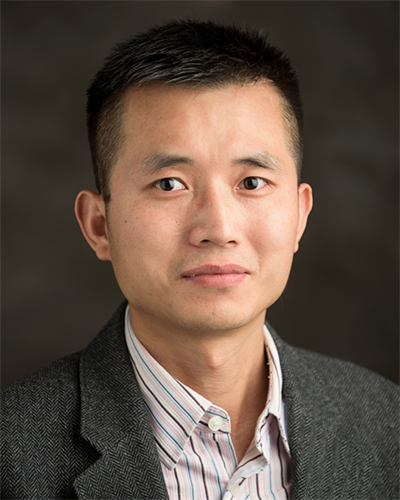
Weiwen Jiang is a tenure-track Assistant Professor in the Department of Electrical and Computer Engineering at George Mason University (GMU), affiliated with the College of Engineering and Computing (CEC). He leads the JQub lab, focusing on hardware/software co-design for computing systems, spanning classical (FPGAs, ASICs) and quantum computing applications in AI-driven fields like medical imaging and geophysics. Prior to GMU, he held a postdoctoral position at the University of Notre Dame and earned his PhD in Computer Science from Chongqing University with a joint PhD in Electrical and Computer Engineering from the University of Pittsburgh. His research emphasizes quantum computing, AI accelerators, and domain-specific computing. Notable achievements include the 2025 NSF CAREER Award, ACM Sigda Meritorious Service Award (2024), and IEEE QuantumWeek Best Paper Award (2023). His work is funded by NSF, DoE, ARO, Meta, and Leidos. He co-chaired IEEE QuantumWeek (2023–2025) and created workshops like StableQ at ESWEEK 2023. Key contributions include developing frameworks like QuPAD for quantum learning and JQub's AI-driven geophysical and medical imaging tools. His lab graduated Dr. Yi Sheng (now at University of South Florida) and Dr. Zhepeng Wang (Amazon Applied Scientist). Current research explores quantum machine learning, noise mitigation, and fairness in AI for edge devices.
Liping Liu is an Associate Professor in the Department of Computer Science at Tufts University's School of Engineering. He holds a Ph.D. from Oregon State University and has held postdoctoral positions at Columbia University and Tufts. His research focuses on machine learning, generative models, graph learning, and their applications in biochemical data analysis and fluid dynamics simulation. His work on graph generative methods earned the NSF CAREER Award. Education: Ph.D. (Oregon State University, 2016), M.Sc. (Nanjing University, 2009), B.S. (Hebei University of Technology, 2006). Research Interests: Machine Learning, Deep Learning, Generative Models, Time Series, Graph Learning. Dr. Liu's research emphasizes probabilistic modeling and neural networks, addressing challenges in graph generation, data-driven physics simulation, and biochemical analysis. His recent work includes advancements in graph-based recommendation systems, turbulence modeling, and enzymatic reaction prediction. His publications span top AI conferences like NeurIPS, ICML, and ICLR. He has secured grants totaling over $9 million, including the NSF CAREER Award and NIH funding for metabolomics and enzymatic promiscuity studies. His teaching includes courses on generative models, deep learning, and machine learning for graph analytics. Awards: NSF CAREER Award (2023), NIH grants, DARPA ACT-NOW project (2019). Service: NSF panelist, program committee member for AAAI, NeurIPS, and IJCAI.
Jianxi Gao is an Associate Professor in the Department of Computer Science at Rensselaer Polytechnic Institute (RPI). His research focuses on network science, particularly network resilience, robustness, and control, integrating network theory, control theory, statistical physics, and operations research. He also explores the intersection of network science and AI, including applications of AI to network analysis and vice versa. His work aims to understand, predict, and control the resilience of complex systems against cascading failures. Key research areas include network resilience in transportation systems, quantum networks, and biological systems, with applications to pandemic response and infrastructure optimization. Gao's contributions span theoretical frameworks and computational tools, such as the NuRsE MATLAB package for network resilience analysis. His GitHub repositories (e.g., NuRsE and NON) showcase his open-source contributions to network science and computational methods. His recent publications address topics like AI-driven network analysis, quantum network percolation, and pandemic-induced healthcare system stress. He actively collaborates on interdisciplinary projects, emphasizing real-world applications of network science principles.
Dr. Chong Liu is an Assistant Professor of Computer Science at the State University of New York at Albany (SUNY Albany) in the College of Nanotechnology, Science, and Engineering. He received his PhD in Computer Science from UC Santa Barbara in 2023 and completed a postdoctoral fellowship at the University of Chicago's Data Science Institute (2023-2024). His research focuses on Machine Learning and AI for Science, particularly Bayesian optimization, bandit algorithms, generative models, and AI applications in drug discovery. He has received the SUNY IITG/OER Impact Grant and serves as Associate Editor for IEEE-TNNLS, Area Chair for ICML/AISTATS, and editorial board reviewer for JMLR. PhD: UC Santa Barbara (2023), advised by Yu-Xiang Wang Postdoc: University of Chicago Data Science Institute (2023) Research Interests : Broad: Machine Learning, Optimization, AI for Science Specific: Bayesian optimization, Bandit algorithms, Active learning, Experimental design, Generative models, AI for drug discovery Applications: Binding affinity prediction, Drug screening, Policy optimization Recent Article Trends : His 2024-2025 publications focus on extending Bayesian optimization theory under practical constraints, quantum-accelerated bandit methods, and multi-objective optimization for drug discovery. Earlier works include private learning frameworks and human-in-the-loop systems. Scientific Awards : 2025: SUNY IITG/OER Impact Grant Professional Activities : Organized NeurIPS workshops on AI for Drug Discovery (2023, 2025), co-organizing INFORMS sessions, and serving on program committees for ICML, NeurIPS, ICLR, and AAAI. He has given invited talks at institutions including University of Chicago, UC Santa Barbara, and Genentech. Teaching : Teaching courses like Numerical Methods (CSI 401) and Machine Learning (CSI 436/536) with syllabi spanning 2024-2025 semesters.
William S. Oates is the Cummins, Inc. Professor of Engineering in the Department of Mechanical Engineering at Florida A&M / Florida State University. He holds affiliations with the Mechatronics and Energy Center and the Florida Energy Systems Consortium (FESC). His research focuses on solid mechanics of multifunctional materials, quantum-informed continuum modeling, and applications in robotics, aerospace, and energy systems. He has advised over 20 graduate students and holds awards including ASME Fellow (2018) and NSF CAREER Award (2011). Education: Ph.D. from Georgia Institute of Technology. Research spans smart materials, fractal media mechanics, and quantum computing for material modeling. Key projects include high-temperature sapphire pressure sensors, photomechanical polymers, and Bayesian uncertainty quantification in materials science. Notable awards include DARPA Young Faculty Award (2009) and FSU Guardian of the Flame Teaching Award (2010). His lab collaborates with the National High Magnetic Field Lab and Challenger Learning Center for K-12 outreach. Current research includes quantum algorithm implementation for engineering applications and fractal-based viscoelastic models.
Alexandru G. Bardas is an Associate Professor at the University of Kansas in the Department of Electrical Engineering & Computer Science (EECS) and the Institute for Information Sciences (I2S) . He received his PhD from Kansas State University under advisors Xinming (Simon) Ou and Scott A. DeLoach. His research focuses on cybersecurity from a systems perspective , including moving target defenses, security operations center (SOC) metrics, DevOps security, power grid cybersecurity, and defensive technologies for political activists. He explores UDP-based DDoS detection, DNS traffic analysis, and the intersection of AI with cybersecurity, emphasizing foundational knowledge over tool-specific training. Key research areas: Cybersecurity, Systems Security, Moving Target Defenses, SOC Metrics, DevOps Security Recent publications in ACSAC 2024 , USENIX Security 2024/2023 , and IEEE Security & Privacy 2022 Dr. Bardas has received significant recognition including: NSF CAREER Award (2022) for SOC automation Bellows Scholar (2021) at KU NSA SoS Honorable Mention (2023) He actively advises students across disciplines, with graduates now at Sandia National Laboratories , Blue Cross Blue Shield , and Pacific Northwest National Laboratory . Dr. Bardas participates in NSF grant reviews , serves on program committees for SOUPS and MILCOM , and leads outreach initiatives like the GenCyber Summer Camp .
Paul Cohen is a Professor of Computer Science at the University of Pittsburgh's School of Computing and Information (SCI), where he also directs the Modeling and Managing Complicated Systems Institute (MOMACS). Previously, he served as the founding Dean of SCI from 2017 to 2020. Before joining Pitt, he was a Program Manager at DARPA (2013–2017), leading initiatives like Big Mechanism and Communicating with Computers. Earlier roles include founding director of the University of Arizona’s School of Information: Science, Technology and Arts (SISTA), and professor at the University of Southern California’s Information Sciences Institute and the University of Massachusetts. Education: PhD in Computer Science and Psychology (Stanford University), MS in Psychology (UCLA), BS in Psychology (UC San Diego). Research Interests: Focuses on artificial intelligence, machine learning, natural language processing, and modeling complex systems like cell signaling pathways and socio-environmental interactions. His work emphasizes explainable AI, human-computer communication, and interdisciplinary problem-solving. Key Contributions: Authored Empirical Methods for Artificial Intelligence and over 200 peer-reviewed articles. His research spans robotics, education technology (e.g., the AnimalWatch tutoring system), and collaborative analysis tools like COLAB. He has won a Telly Award for his video on systemic challenges and a Best Paper award for spatial language learning frameworks. Awards & Recognition: Elected Fellow of the AAAI, recipient of the Telly Award, and winner of the Best Paper Award at the IEEE Conference on Development and Learning. Leadership & Outreach: Advocates for polymathy in education to address global challenges. His work includes developing curricula for complex systems thinking and promoting diversity in STEM through initiatives like AnimalWatch.
David R. Kauchak is a Professor of Computer Science at Pomona College, part of The Claremont Colleges. He has been affiliated with the institution since 2014. His academic background includes a Ph.D. (2006) and M.A. (2006) in Computer Science from the University of California, San Diego, and a B.S. (2005) in Computer Science from the University of Utah. His research focuses on Natural Language Processing (NLP) , particularly text simplification , aiming to reduce text complexity while preserving content. Applications include improving health literacy through simplified medical text and enhancing accessibility of technical documents. He has also contributed to machine learning methodologies and information retrieval systems. Key awards include the Distinguished Poster Award at AMIA 2016 and the Best Undergraduate Paper Award at SocalNLP 2018. His work frequently addresses interdisciplinary challenges in healthcare communication, education technology, and software tool development. Teaching highlights include courses in Artificial Intelligence , Algorithms , Natural Language Processing , and foundational computer science modules. He has advised numerous projects in computational linguistics and health informatics, though specific student names are not explicitly listed in the provided materials. His collaborations span academic and medical domains, including joint research with institutions like the University of Utah and projects funded through initiatives like the German Climate Modeling Initiative (though this appears unrelated to his primary work). He maintains an active presence in academic conferences, publishing in venues such as ACL, AMIA, and IEEE journals.
Roland N. Horne is the Thomas Davies Barrow Professor of Earth Sciences at Stanford University and Senior Fellow at the Precourt Institute for Energy. He holds positions in the Department of Energy Science & Engineering and is an Affiliate at the Stanford Woods Institute for the Environment. With degrees from the University of Auckland (BE, PhD, DSc), Horne has established himself as a leading expert in geothermal reservoir engineering and energy production optimization. His research focuses on inverse problems in reservoir modeling, including tracer analysis of fractures, computer-aided well test analysis, production schedule optimization, and automated history matching. Horne has made significant contributions to understanding geothermal reservoir engineering and multiphase flow of boiling fluids through porous materials and fractures. The analysis of his recent publications (2023-2025) reveals a strong emphasis on enhanced geothermal systems (EGS), with particular focus on flexible operations, economic modeling, and advanced characterization techniques. His work increasingly incorporates machine learning approaches for reservoir analysis and has expanded into microbial tracing methods for interwell connectivity assessment. There's also significant attention to US geothermal resource potential and integration into the broader energy transition. Honorary Member of the Society of Petroleum Engineers Member of the US National Academy of Engineering Multiple SPE Distinguished Lecturer appointments (1998, 2009, 2020) John Franklin Carl Award recipient Five Best Paper awards from Geothermal Resources Council Patricius Medal from German Geothermal Society Core Values Award from Women in Geothermal (2023) Horne has supervised 60 PhD and 135 MS students throughout his career. His current teaching includes undergraduate and graduate courses in Fundamentals of Energy Processes, Geothermal Reservoir Engineering, Mass and Energy Transport in Porous Media, and Well Test Analysis. He previously served as President of the International Geothermal Association (2010-2013) and Technical Program Chair for multiple World Geothermal Congress events. Horne maintains active research collaborations worldwide, including with the University of Tokyo (where he was a Fellow of the School of Engineering in 2016) and China University of Petroleum. His current research group focuses on advancing EGS technologies and developing more accurate reservoir characterization methods for geothermal applications.
Danielle Li is the David Sarnoff Professor of Management of Technology and a Professor at the MIT Sloan School of Management, specializing in the Technological Innovation, Entrepreneurship, and Strategic Management academic group. She is also a Faculty Research Fellow at the National Bureau of Economic Research (NBER). Her academic journey includes an AB in mathematics and the history of science from Harvard College and a PhD in economics from MIT. Prior to joining MIT, she taught at Harvard Business School and the Kellogg School of Management. AB in Mathematics and History of Science, Harvard College PhD in Economics, MIT Professor Li's research focuses on the economics of innovation and labor economics, with particular emphasis on how organizations evaluate ideas, projects, and people. She investigates the intersection of technology and workplace dynamics, especially how AI impacts worker productivity, the nature of work, and career trajectories in AI-intensive environments. Her work examines how businesses implement AI tools and the resulting effects on workforce composition and skill requirements. Her publication portfolio reveals a consistent focus on innovation economics, labor market dynamics, and the organizational implications of technology. Recent work increasingly centers on AI's workplace impact, with her 2025 Quarterly Journal of Economics paper 'Generative AI at Work' demonstrating how AI assistance increases worker productivity by 15% on average, with differential effects across experience levels. Her research combines rigorous economic analysis with practical business implications, spanning pharmaceutical innovation, hiring practices, promotion decisions, and gender gaps in the workplace. Best Paper Prize: 2017 FIRCG Conference Best Paper Prize: 2018 CEPR Management, Organizations, and Entrepreneurship Conference Best Paper Prize: 2017 Red Rock Conference Best Paper Prize: 2018 LBS Summer Finance Symposium Best Paper Prize: 2019 American Economic Journal: Applied Economics Professor Li's research has been supported by significant grants and has influenced both academic discourse and business practice. Her work on AI in the workplace has informed executive education programs at MIT Sloan, including 'Making AI Work: Machine Intelligence for Business and Society' and 'Artificial Intelligence' courses. She actively engages with media and business leaders to translate research findings into practical insights, frequently appearing in the New York Times, Wall Street Journal, and Economist. Her research on gender promotion gaps and hiring practices has particular relevance for organizational human resource policies. Professor Li is deeply embedded in MIT's AI research ecosystem, collaborating with colleagues across Sloan and CSAIL. She contributes to MIT's AI Expert Spotlight series, focusing on how businesses should implement AI responsibly and effectively. Her work bridges economic theory with practical business applications, particularly in understanding how AI transforms work processes and organizational structures.
Kathleen H. Sienko is the Arthur F. Thurnau Professor in the Department of Mechanical Engineering at the University of Michigan's College of Engineering. She directs the Sienko Research Group, a multidisciplinary lab focused on developing technological solutions at the intersection of healthcare and engineering. Her work spans medical device design, design science, and engineering education with a strong emphasis on global health contexts. Dr. Sienko earned her Ph.D. in Medical Engineering and Bioastronautics from the Harvard-MIT Division of Health Sciences and Technology (HST) program in 2007, an S.M. in Aeronautics & Astronautics from MIT in 2000, and a B.S. in Materials Engineering from the University of Kentucky in 1998. Ph.D., Medical Engineering and Bioastronautics, Harvard-MIT Division of Health Sciences and Technology, 2007 S.M., Aeronautics and Astronautics, Massachusetts Institute of Technology, 2000 B.S., Materials Engineering, University of Kentucky, 1998 Her research focuses on sensory augmentation, rehabilitation engineering, biomechanics, and medical device design with emphasis on global health contexts and task-shifting devices. She has pioneered efforts to incorporate global health technology constraints within engineering design education at undergraduate and graduate levels, establishing field sites in sub-Saharan Africa and Asia where numerous devices have been conceptualized and refined with local stakeholders. Her work in design science examines how and when designers use prototypes in development cycles and how prototypes assist during stakeholder interactions and user requirements identification. Her recent publications reveal a strong trend toward human-centered approaches in global health design, with increasing focus on stakeholder engagement, contextual factors in engineering design, and equity considerations in health technology development. Her work bridges biomechanics, rehabilitation engineering, and design methodology with applications in balance assessment, medical device development for low-resource settings, and engineering education. Dr. Sienko has received numerous prestigious awards including the NSF CAREER Award, University Undergraduate Teaching Award, Provost's Teaching Innovation Prize, and the Miller Faculty Scholar Endowed Award. Her recognition spans teaching excellence, research innovation, and outreach contributions. NSF CAREER Award, 2009 Provost's Teaching Innovation Prize, 2012 Miller Faculty Scholar Endowed Award, 2013 University Undergraduate Teaching Award, 2012 Raymond J. and Monica E. Schultz Outreach and Diversity Award, 2011 She has advised numerous graduate students including Nick Moses (who defended his dissertation in December 2023), Lucy Spicher, Marty Kilbane, and Ibrahim Mohedas. Her research has been supported by significant grants from the National Science Foundation, including the CAREER program, Research Initiation Grants in Engineering Education, and the Graduate Research Fellowship program, as well as funding from the University of Michigan's Rackham Merit Fellows program and Center for Research on Learning and Teaching. The Sienko Research Group operates as a talented multidisciplinary lab developing novel methodologies to create technological solutions addressing pressing societal needs at the healthcare-engineering intersection. Current research thrusts include Design Science, Autonomous Vehicles, Balance, Sensory Augmentation, and Wearable Devices, with particular emphasis on how design ethnography can inform medical device development and how engineering students develop ethnographic skills for global health contexts.