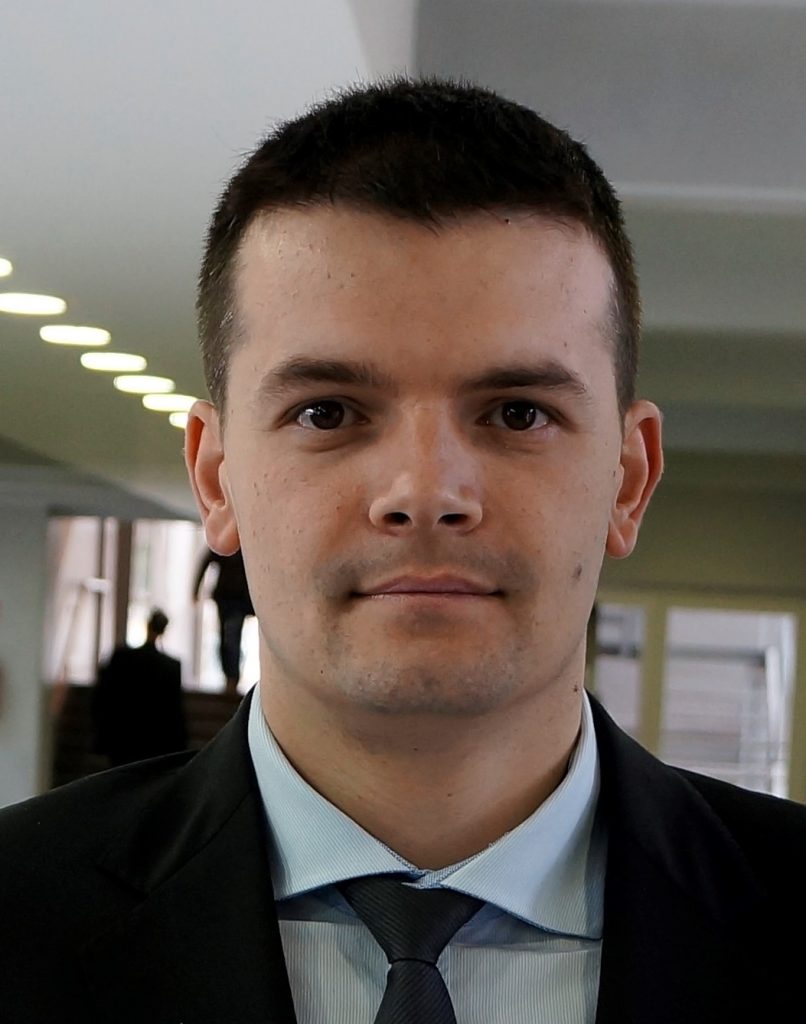
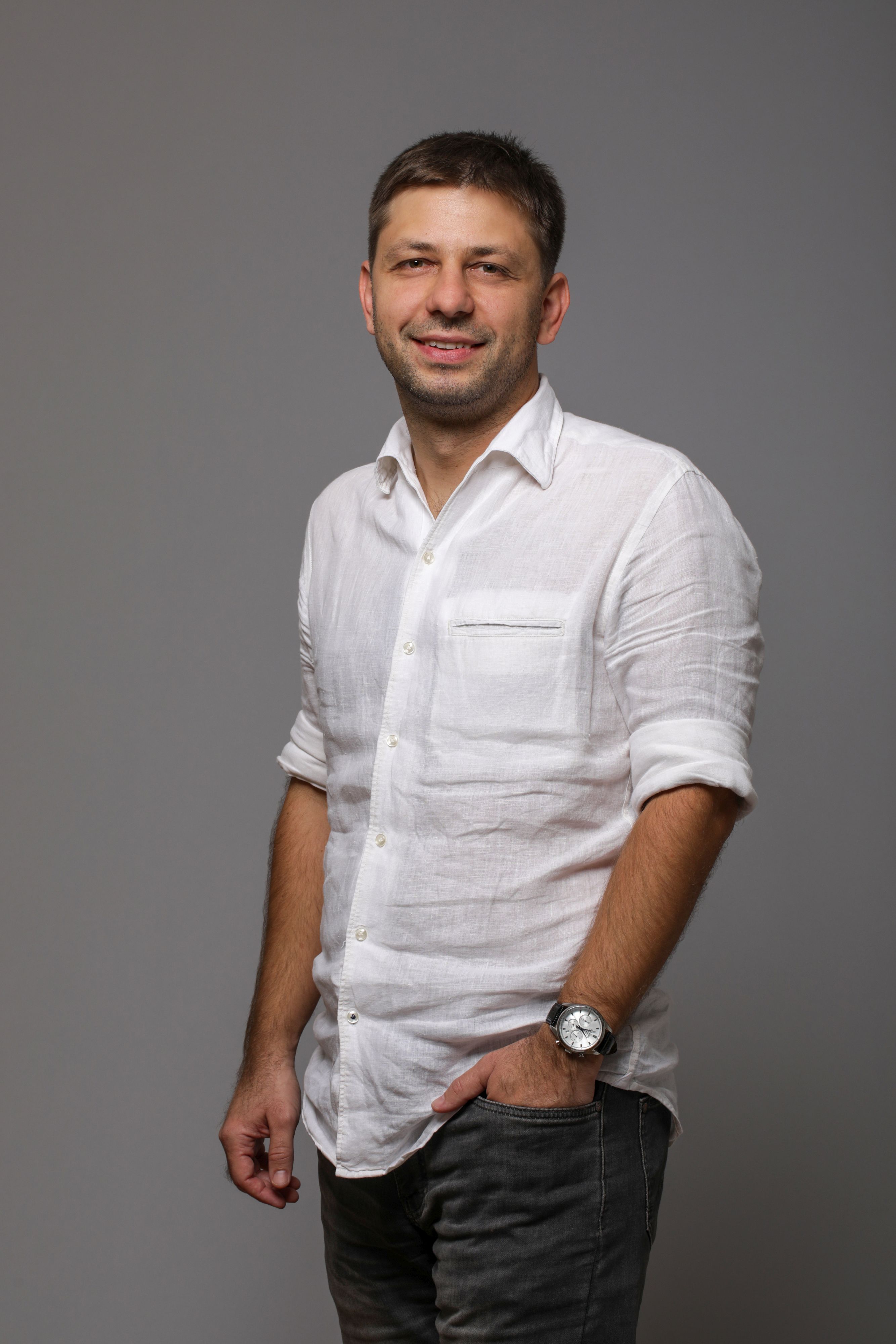
Marijo Volarević, M.Sc., is a lecturer at Algebra University with a Master's degree from the Faculty of Electrical Engineering and Computing in Zagreb. His expertise spans digital transformation, process improvement, risk management, and information security, informed by significant international experience in management and IT leadership roles. Education: Master's in Electrical Engineering and Computing (Zagreb) His career includes roles at PLIVA, Barr (USA), Comminus, INFOTEHNA Grupa, and since 2013 as Director of eKompania at Hrvatski Telekom, driving digital transformation initiatives.
Zoran Kalafatić, an Associate Professor at the Faculty of Electrical Engineering and Computing, is actively involved in the Image Processing Group. His research spans multiple domains within image analysis and computational methods. Primary affiliations: Image Processing Group Academic rank: Associate Professor Research Focus: Dr. Kalafatić's work centers on advanced image processing techniques, including: Color constancy and visual perception Crater detection in astronomical imagery Application of Hough Transform methods Medical imaging databases (OCT image database) Pattern recognition in astronomical cross-matching Development of DRiDB image dataset Contact: Located in office D-343, reachable via +385 1 6129 998 or zoran.kalafatic@fer.hr .
Tomislav Pribanić is an Associate Professor at the Faculty of Electrical Engineering and Computing (University of Zagreb) and a member of the Image Processing Group. His research focuses on specialized image analysis techniques and datasets. Research Areas: Astronomical cross-matching Color constancy Crater detection Hough Transform DRiDB image dataset OCT image database Contact: Office D135, Phone +385 1 6129 937, Email tomislav.pribanic@fer.hr
Miroslav Duspara is an Assistant Professor at the University of Slavonski Brod, Faculty of Mechanical Engineering , with a focus on Production Engineering. He holds a Doctor of Technical Sciences degree (2014) and a Master of Science in Mechanical Engineering (2008) from the same faculty. Teaching: Production Processes II, Processing Machines, Flexible Manufacturing Systems, and Rapid Prototyping Research Interests: Machining of stainless steels, abrasive waterjet cutting, laser welding, and tool wear monitoring His work spans plasma thermal cutting compliance , flange production simulation , and mould insert regeneration . Duspara has participated in the CEEPUS program for professional development across Europe and serves as Vice President of the Welding Technology Society Slavonski Brod . He is actively engaged in international projects and has authored/co-authored over 80 scientific publications.
Kristina Mastanjević serves as an Associate Professor of Biotechnology at the University of Osijek's Faculty of Food Technology, Croatia. Her academic profile centers on food safety research within Biotechnical sciences, with student consultations held Mondays 9-11 AM in office 57/18 at Franje Kuhača 18, Osijek. She maintains active research engagement through publications in high-impact journals while teaching core food science disciplines. Her research program critically examines hazardous compounds in traditional Croatian food systems, specializing in polycyclic aromatic hydrocarbons (PAHs) in smoked meats (Slavonska slanina, Buđola) and malt, alongside mycotoxin contamination in brewing by-products. She pioneers analytical methodologies including GC-MS coupling with sensory analysis and computer vision systems for beer quality assessment. Additional focus areas encompass malting technology for alternative grains, brewing waste valorization, and temperature-dependent sensory properties of craft beer under Mediterranean conditions. Analysis of her 2020-2023 publications reveals consistent investigation of regional food safety challenges, particularly PAH formation mechanisms during traditional smoking processes and mycotoxin transfer through malting/brewing. Her work bridges analytical chemistry with practical food engineering solutions, addressing regulatory compliance gaps for contaminants in artisanal production while developing objective quality assessment tools through digital imaging. No scientific awards or honors were documented in the provided materials. The available information does not specify graduate student advisement activities, research grant acquisitions, laboratory facilities, or collaborative research teams associated with Dr. Mastanjević's work.
Dr. Tomislav Jurkić is an Associate Professor at the Department of Theoretical Physics and Astrophysics, Faculty of Physics, University of Rijeka, Croatia. He has been with the university since 2007, progressing through academic ranks from assistant to his current position as docent (Associate Professor) since July 2023. His academic journey began with a Diplomirani inženjer fizike degree from the University of Zagreb in 2005, followed by a Doctorate in Natural Sciences specializing in astronomy and astrophysics in 2012. His educational background includes: 2012: Doctor of Natural Sciences, field of physics, specialization in astronomy and astrophysics, Postgraduate Doctoral Study of Physics, University of Zagreb, Faculty of Science 2005: Diplomirani inženjer fizike (Diploma Engineer of Physics), University of Zagreb, Faculty of Science Dr. Jurkić's research focuses on astrophysics, particularly on circumstellar dust in symbiotic binary systems, variable stars, and time-domain astronomy. His work has significant implications for understanding stellar evolution, binary star interactions, and dust formation processes. He has made substantial contributions to the field through his modeling of circumstellar environments and analysis of observational data from various astronomical surveys. Analysis of his publications reveals a strong focus on symbiotic stars, particularly Mira variables with circumstellar dust. His research demonstrates expertise in applying sophisticated modeling techniques to observational data, with particular emphasis on infrared astronomy and light curve analysis. He has recently transitioned to large-scale survey astronomy through his involvement with the Vera C. Rubin Observatory's Legacy Survey of Space and Time (LSST) project, where he leads efforts to utilize Croatia's supercomputer 'Bura' for processing astronomical data. Dr. Jurkić has received multiple teaching excellence awards from the University of Rijeka (2020, 2022) and a presentation award at the 8th Scientific Meeting of the Croatian Physical Society (2013). His research contributions have been recognized through his membership in prestigious international organizations including the International Astronomical Union and the LSST Corporation. He has mentored numerous students through their undergraduate and graduate theses, guiding research on topics ranging from interferometry in astronomy to exoplanets and cosmic dust. His administrative contributions include serving on the Faculty Council and chairing the University of Rijeka's Online Learning Committee. Dr. Jurkić is also actively involved in science popularization, regularly giving public lectures and participating in educational outreach programs.
Zoran Kaliman is a full-time Professor at the Department of Physics, University of Rijeka. He holds a PhD in Natural Sciences (Physics) from the University of Zagreb and has been active in theoretical physics, nuclear physics, and mathematical physics since the 1970s. Education: PhD in Physics (1998), University of Zagreb; Master in Nuclear and Particle Physics (1986), University of Zagreb; Teaching Degree in Physics and Math (1974), University of Rijeka. Research: Focuses on Compton scattering, double ionization of helium, positronium interactions, geometric theorems, and radiation physics. His work spans theoretical physics, atomic physics, and medical physics applications. Grants: Participated in EU-funded STEM education projects and Croatian national grants on photon-atom interactions and nuclear decay processes. Leadership: Served as Deputy Head (2015–2017) and Head (2002–2008) of the Department of Physics.
Renata Martinec is a Full Professor at the University of Zagreb, Faculty of Education and Rehabilitation Sciences, within the Department of Motoric Disorders, Chronic Diseases and Art Therapies. She teaches undergraduate courses including Introduction to Complementary Therapies and Psychosomatics, and graduate courses in Creative Therapy and Clinical Evaluation across multiple program levels. Her academic role focuses on integrating expressive arts into rehabilitation frameworks for diverse clinical populations. Her research spans complementary and expressive arts therapies with emphasis on dance movement therapy, bibliotherapy, and art therapy applications. She investigates trauma treatment, psychosocial rehabilitation, and quality-of-life enhancement for individuals with disabilities, chronic illnesses, and cancer. Key interests include body image disturbances, mindfulness integration, and inclusive practices like therapeutic beekeeping that promote social participation and vocational opportunities. Analysis of her 2021-2025 publications reveals a strong interdisciplinary trajectory blending art therapies with conventional rehabilitation. Recurring themes include nature-based interventions for social inclusion, violence prevention for vulnerable populations, and psychosocial support in chronic disease management. Her work consistently targets innovative, accessible therapeutic approaches that address both clinical and existential dimensions of patient care. No scientific awards were documented in the available materials. Details regarding student advising, grant funding, or formal mentorship programs were not specified in the provided documentation. As a core faculty member in the Department of Motoric Disorders, Chronic Diseases and Art Therapies, she operates within the Faculty's research ecosystem including the Laboratory for Psycholinguistic Research and Laboratory for Prevention Research, which provide infrastructure for studies in expressive therapies, motor behavior, and rehabilitation science.
Prof. Goran Kiš, PhD is a faculty member at the Faculty of Agriculture, University of Zagreb , where he serves as Professor in the Department of Animal Nutrition. He also teaches at the Malta College of Arts, Science & Technology through external engagements. PhD (2012) - University of Zagreb Faculty of Agriculture MSc (2003) - Faculty of Agriculture, University of Zagreb BSc (1997) - Faculty of Agriculture, University of Zagreb His research focuses on feed evaluation methods , precision feeding systems , and greenhouse gas emission calculations in animal production. He specializes in maize hybrid analysis for poultry nutrition, carotenoid bioavailability, and alternative feed resources. Current projects include "Biodostupnost karotenoida kukuruza kod nesilica" (Croatian Science Foundation) and "Inovativni funkcionalni proizvodi od janjećeg mesa" (Croatian Science Foundation). Past collaborations include work at Pennsylvania State University and INRA France .
Assoc. Prof. Igor Bogunović, PhD is an Associate Professor at the Department of General Agronomy, Faculty of Agriculture, University of Zagreb. With extensive experience in agroecology and soil science, his research focuses on land degradation, soil tillage, and spatial-temporal variability of soil properties. PhD in Agricultural Sciences (2015) from University of Zagreb B.Sc. in Pomology, Viticulture, and Enology (2008) from University of Zagreb His work integrates geostatistical methods (GIS, kriging) with sustainable agricultural practices, particularly in Mediterranean and Pannonian regions of Croatia. Research spans soil compaction, erosion processes, organic agriculture, and climate-resilient soil management. Key projects include coordination of Climate-Smart Soils (Croatian Science Foundation, 2023-2027) and Fire in the Earth System (COST, 2019-2023). He specializes in conservation tillage, bioremediation, and nutrient management on sloped terrains. Professional memberships include Croatian Society of Soil Science, International Soil Tillage Research Organization, and Croatian Agrometeorological Society.
Dr. Dario Omanović is a Scientific Advisor with permanent appointment at the Ruđer Bošković Institute in Croatia, leading the Laboratory for Physical Chemistry of Traces within the Division for Marine and Environmental Research. His work focuses on electrochemical methodologies for trace metal speciation in marine, estuarine, and freshwater systems. PhD in Chemistry (University of Zagreb, 2001) MSc in Oceanography (University of Zagreb, 1996) BSc in Chemical Engineering (University of Zagreb, 1993) Research interests include: Trace metal speciation and bioavailability Environmental electrochemistry Marine and estuarine pollution dynamics Development of analytical tools and software for electrochemical data Interaction of metals with dissolved organic matter Application of DGT (Diffusive Gradients in Thin films) for environmental monitoring His recent publications emphasize: Ultra-trace platinum detection in estuaries Mercury contamination patterns in coastal zones Organic matter-metal interactions in pristine systems Redox speciation of chromium in transitional waters Novel electrochemical tools for environmental analysis Long-term metal monitoring in urbanized coastal areas Awards include the University of Zagreb award for best student research (1993) . He has mentored numerous PhD and MSc students, including: Saša Marcinek (PhD, 2021) Ana-Marija Cindrić (PhD, 2015) Petra Cmuk (PhD, 2005) Yoann Louis (PhD, 2008) Major projects: INTERREG CRO-ITA pollution risk models (2020) Chinese/Croatian metal speciation collaborations (2017-2020) HRZZ projects on coastal water quality (2015-2019) MEDPAN ecological footprint studies (2018-2020) He contributes to: COST Action TD1407 (technology-critical elements) CIESM commissions (Mediterranean research) Scientific software development for electrochemical data processing Environmental impact assessments for coastal developments
Associate Professor Vinko Lešić is affiliated with the University of Zagreb's Faculty of Electrical Engineering and Computing (FER), specifically within the Department of Control and Computer Engineering. His research focuses on advanced control systems, smart grids, renewable energy integration, IoT applications in agriculture, and optimization algorithms. Notable projects include predictive climate control systems for buildings, precision pest detection using hyperspectral imaging, and energy-efficient street lighting solutions. He has contributed to over 50 peer-reviewed articles and led initiatives like the AgroSPARC project for climate-resilient agriculture. His work bridges theoretical control theory with practical applications in smart cities and sustainable energy systems. Research interests span Model Predictive Control (MPC), distributed energy management, and machine learning integration with industrial automation. He collaborates on EU-funded projects addressing climate change impacts on agriculture and urban infrastructure. Teaching responsibilities include courses on automation fundamentals and process control, emphasizing hands-on IoT and PLC implementations. Current activities include developing zone climate control living labs and resilient energy management systems for buildings and microgrids. Publications highlight innovations such as coalitional MPC for building zones, data-driven thermal modeling, and adaptive battery charging for electric vehicles. He advises projects on renewable energy integration and has pioneered sensor-based systems for crop health monitoring. Though no formal awards are listed, his extensive publication record and industry collaborations reflect his academic and applied contributions.
Hrvoje Novak is a Leading Researcher at the Department of Control and Computer Engineering, University of Zagreb Faculty of Electrical Engineering and Computing. His work focuses on interdisciplinary research spanning energy systems optimization, precision agriculture, and advanced control methodologies. He has contributed to innovative solutions in predictive control for building energy management, railway traction systems, and water treatment infrastructure. His research integrates machine learning, IoT, and remote sensing technologies to address challenges in smart grids, crop health monitoring, and insect pest management. Key research areas include: Predictive control strategies for energy-efficient systems Machine learning applications in agricultural pest detection Data-driven modeling of urban traffic and infrastructure IoT-based plant development modeling systems Optimization of railway traction and energy storage systems His publications emphasize practical implementations such as hierarchical building energy management, flight mill analysis for invasive species, and grey-box modeling of water treatment plants. Novak collaborates across academic and industrial sectors to advance sustainable technologies.
Zvonimir Šipuš is a Full Professor at the Department of Communication and Space Technologies, Faculty of Electrical Engineering and Computing (FER), University of Zagreb. His research focuses on advanced antenna design, metamaterials, electromagnetic engineering, and biomedical applications. He leads projects on wearable and implantable antennas, metamaterial-based systems, and optical fiber sensors. He has authored numerous papers and contributed to international conferences such as ICECom 2023. Current work emphasizes medical device integration, robotic sensor systems, and high-frequency communication technologies. His team develops solutions for on-body communication, implantable antennas, and smart textile applications. Education details are not explicitly stated but inferred through his academic role. Research areas include antenna modeling, dielectric material characterization, and electromagnetic simulations. Recent projects involve glide-symmetric metasurfaces, spherical human phantoms for antenna testing, and 3D-printed sensor systems. Collaborations span biomedical engineering, robotics, and optical communication networks. No specific awards are listed, but his extensive publication record reflects recognition in the field. Key Projects: Implantable antenna design, wearable waveguide systems, metamaterial-based lens antennas. Grants & Funding: Not explicitly mentioned in the text. Labs/Teams: Department of Communication and Space Technologies research groups.
Josip Knežević is a Lecturer at the College of Rijeka, specializing in railway safety, transport infrastructure, and operational analysis. He teaches courses such as Railway Transport Infrastructure, Railway Safety Systems, and Technical Equipment in Railway Transport. His research focuses on mitigating human factors in transportation safety, accident analysis, and optimizing transport networks. His work emphasizes railway safety at road crossings, cost-benefit analysis of safety measures, and intermodal freight transport efficiency. Recent projects include analyzing accident trends in Croatian railway systems and evaluating safety management strategies. Josip actively contributes to improving railway infrastructure planning and has published extensively on human error prevention, disruptive event analysis, and transport system resilience. His expertise spans both theoretical and applied aspects of transportation engineering.