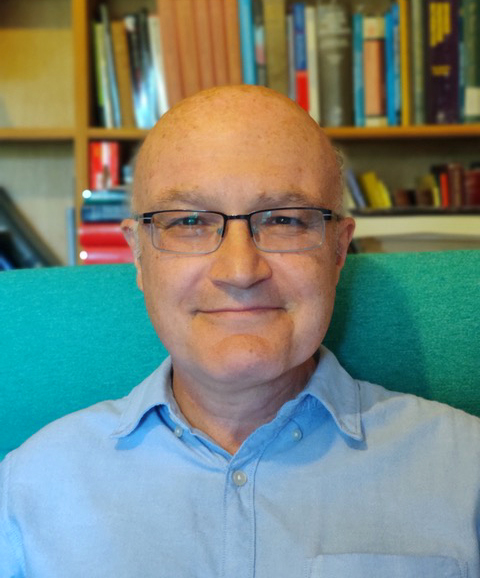
Stephen Mark Barnett is a Royal Society Research Professor and holder of the Cargill Chair of Natural Philosophy at the University of Glasgow, where he has been a Professor of Quantum Theory since 2013. Previously, he spent 17 years at the University of Strathclyde, including as Professor of Quantum Optics (1996-2013). His career spans prestigious fellowships such as the Leverhulme Trust and Royal Society of Edinburgh positions. Education: Imperial College London (BSc 1982, PhD 1985) Key Roles: Postdoctoral fellow (Imperial College), Research Fellow (Oxford), Lecturer (King's College London) Research Focus: Barnett's work sits at the intersection of quantum mechanics, optics, and information theory. His research explores optical angular momentum, quantum phase properties, and foundational aspects of quantum mechanics, with applications in optical communication and quantum information processing. Publication Trends: His recent research focuses on structured light and quantum optics, particularly orbital angular momentum manipulation. Earlier work established key principles in quantum measurement and electromagnetic field quantization, with notable papers on the Abraham-Minkowski dilemma and quantum state comparison. Scientific Honors: Fellow of the Royal Society (2006) Dirac Medal and Prize (2013) James Scott Prize Lectureship (2006) Maxwell Medal and Prize (1994) Czech Technical University Doctorate honoris causa (2021) Books Authored: Includes Methods in Theoretical Quantum Optics and Phase Space Methods for Degenerate Quantum Gases .
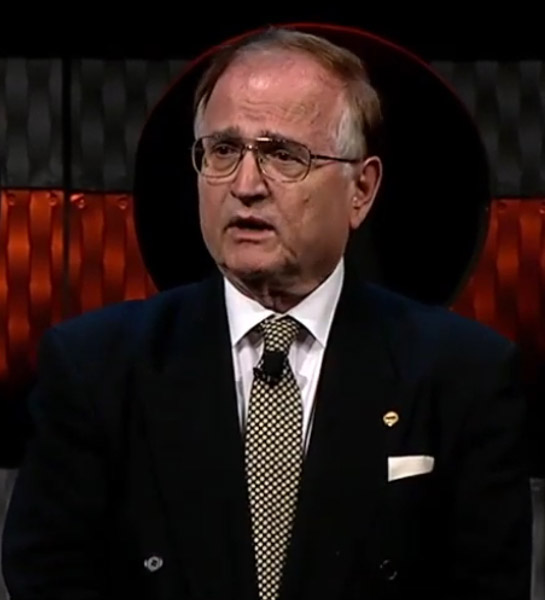
Nicholas A. Peppas is the Cockrell Family Regents Chair #6 in the Departments of Chemical Engineering and Biomedical Engineering at The University of Texas at Austin's Cockrell School of Engineering. He previously held the Fletcher Stuckey Pratt Chair at UT (2003-2014) and served as Chair of the Department of Biomedical Engineering (2009-2015). Before joining UT, he was a Showalter Distinguished Professor at Purdue University (1993-2002) where he also held positions as Professor, Associate Professor, and Assistant Professor in the School of Chemical Engineering. His educational background includes a Dipl. Eng. from the National Technical University of Athens (1971) and a Sc.D. from MIT (1973). He has received honorary doctorates from multiple institutions including the Universities of Thessaloniki, Santiago de Compostela, National Technical University of Athens, Patras, Athens, and Ghent. Peppas's research follows a multidisciplinary approach blending molecular and cellular biology with engineering principles to design next-generation drug release systems. His work spans bionanotechnology, controlled drug delivery, polymerization kinetics, biomaterials science, and mathematical modeling of diffusion in polymers. Over 42 years, he has established fundamentals for rational design of biomedical systems and developed models of drug and protein diffusion in controlled release devices and biological tissues. His publication record shows a consistent trajectory from fundamental polymer science toward increasingly sophisticated biomedical applications. Early work focused on polymer chain entanglements and polymerization kinetics, then evolved to molecular theories of polymer gels, and more recently to advanced drug delivery systems including glucose-responsive biomimetic networks, oral insulin delivery systems, and siRNA nanocarriers for inflammatory disease treatment. The research demonstrates a progression from theoretical foundations to practical medical applications targeting diabetes, autoimmune disorders, and cardiovascular diseases. 2019 Honorary Doctorate, University of Thessaloniki, Greece 2018 Adam Yarmolinsky Award of the National Academy of Medicine 2017 American Academy of Arts and Sciences (elected fellow) 2016 International Academy of Medical and Biological Engineering (elected member) 2015 Controlled Release Society Award for Life Contributions 2014 National Academy of Inventors (elected fellow) 2012 Founders Award, National Academy of Engineering 2008 National Academy of Medicine (elected member) 2006 National Academy of Engineering (elected member) Peppas has served in numerous leadership roles including President of the International Union of Societies of Biomaterials Science and Engineering, Chair of the Engineering Section of the American Association for the Advancement of Science, Chair of the Council of BME Chairs, and President of both the Society for Biomaterials and the Controlled Release Society. He is Editor of 'Regenerative Biomaterials' and Associate Editor of 'Science Advances'. As a highly decorated researcher with membership in multiple national academies worldwide, his laboratory has produced groundbreaking work in biomaterials and drug delivery that has translated into significant medical advancements. His research group, the Laboratory of Biomaterials, Drug Delivery, and Bionanotechnology at UT Austin, focuses on developing intelligent biomaterials for medical applications. The team combines expertise in polymer science, nanotechnology, molecular biology, and medical device engineering to create responsive drug delivery systems. Current work emphasizes targeted therapies for diabetes management, inflammatory bowel disease, and cardiovascular conditions through advanced nanocarrier systems and responsive hydrogels.
Assoc. Prof. Peter Schartner is an Associate Professor at the Department of Artificial Intelligence and Cybersecurity, Alpen-Adria-Universität Klagenfurt. He also serves as the Data Protection Officer, overseeing institutional compliance with data privacy regulations. His research focuses on cybersecurity, cryptography, and secure communication systems, with particular emphasis on automotive cybersecurity, quantum-resistant protocols, and secure exam environments. His work spans hardware security for embedded systems, privacy-preserving healthcare technologies, and IoT community-based security models. Notable contributions include developing the Secure Exam Environment (SEE) for online testing, cryptographic authentication methods, and quantum nonce mechanisms. He actively collaborates with the Trust Center to advance interdisciplinary security solutions. Research interests include: Cryptology, Digital Signatures, Information Security, Secure E-Business, and Cybersecurity in distributed systems. His projects often address practical challenges like functional safety in automotive control units and privacy in smart city technologies.
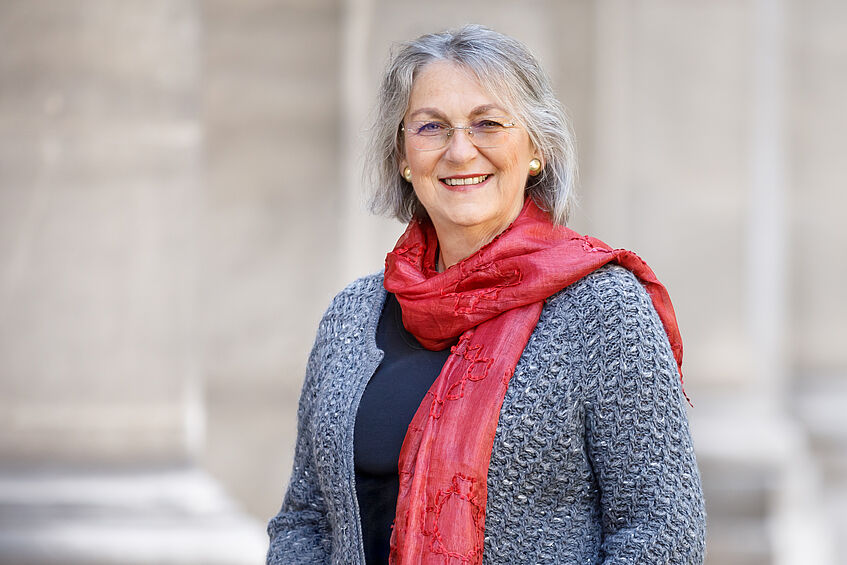
Univ.-Prof. Dr. Regina Hitzenberger is a Professor at the University of Vienna's Faculty of Physics, Department of Aerosol Physics and Environmental Physics. Her research focuses on atmospheric aerosols, including their physical properties, climate effects, and health implications. She has led projects such as the VACES system development for CCN analysis (2013–2014) and studies on ice nucleation of carbonaceous particles (2014–2018). Her research interests include cloud condensation nuclei (CCN), diesel/biomass soot, and radiative properties of aerosols. She has published extensively (over 140 papers) on topics like aerosol measurement techniques, climate impacts, and historical exposure assessments. Notable collaborations include work on brown carbon and elemental carbon (EC) in household emissions and legacy pollution. Dr. Hitzenberger has presented invited talks on aerosols and climate change, and her work bridges environmental monitoring, analytical chemistry, and climate science. Her CV and publications are available for download from her profile page.
Professor Peter Lieberzeit holds a position in the Department of Physical Chemistry at the University of Vienna. His expertise spans molecularly imprinted polymers (MIPs), nanotechnology, and biosensor development with applications in medical diagnostics and environmental sustainability. Recent projects include: "Simultaneous Multiparametric Readout for Low-Cost NP Sensors" (2018–2022) "ISIS" (2014–2016) "INSTANT" (2012–2015) His research aligns with UN Sustainable Development Goals, particularly in health and environmental protection. Key research interests focus on advanced materials like MIP-based nanobodies, graphene composites, and green polymer technologies for sensor fabrication. Collaborations involve international teams working on pathogen detection, drug monitoring, and eco-friendly waste treatment solutions. Professor Lieberzeit has received notable awards including the Bernd-Rode Award 2021 (2022), Fritz Feigl Preis 2011 , and Preis für gute Lehre 2022 . These recognize contributions to both scientific innovation and educational excellence. In advising and grants, he leads interdisciplinary research teams and has secured funding for projects addressing low-cost sensor technologies and virus detection. His activities include oral presentations on MIP nanobodies and poster contributions on polymer surface characterization, emphasizing practical sensor applications and collaborations with industry partners. While no specific labs are named, his work involves developing sensor platforms integrating QCM, electrochemical methods, and microfluidics, reflecting a strong focus on applied analytical chemistry and materials engineering.
Mag. Karina Kramer is a Researcher at the Center for Regenerative Medicine, University for Continuing Education Krems. Her work focuses on regenerative medicine, stem cell biology, and extracellular vesicle-based therapies for musculoskeletal disorders. She investigates mesenchymal stem cell differentiation, 3D bioprinting for cartilage regeneration, and the regenerative potential of blood-derived products in osteoarthritis treatment. Her research spans biomaterials, bioreactor engineering, and translational biomedical applications. Key research interests include: - Chondrogenic differentiation of MSCs in hydrogels - Extracellular vesicle production optimization in bioreactors - Blood-derived therapies for skin rejuvenation and joint repair - Lyophilized hyperacute serum formulations for cartilage repair Her publications highlight advancements in biomaterials, cellular senescence modulation, and EV-mediated signaling in inflammation models. Lectures include presentations at the OARSI World Congress and ICRS World Congress, focusing on clinical translation of regenerative therapies. Currently affiliated with the Center for Regenerative Medicine, her contributions bridge basic science and clinical applications in tissue engineering and regenerative medicine.
Norbert Kaiblinger is an Associate Professor at the Institute of Mathematics, BOKU University, Vienna, Austria. His research focuses on applied mathematics, harmonic analysis, and numerical methods, with applications in fluid mechanics, statistics, and chemical engineering. He holds a habilitation in Mathematics from the University of Vienna, granting him teaching authorization in the field. His work bridges theoretical mathematics with practical computational problems, particularly in adsorption modeling and fluid dynamics. Key research interests include multicomponent batch adsorption models, dynamics of subaqueous systems, analysis of variance (ANOVA) methodologies, and special functions. Recent publications (2023–2025) highlight advancements in equilibrium composition calculations and statistical experimental design. His earlier work (2007–2019) explores Fourier analysis, operator theory, and algebraic structures like cyclotomic rings and circulant matrices. While no formal advising relationships or grants are listed, his collaborative research involves co-authors from diverse fields such as chemical engineering and fluid mechanics. Kaiblinger’s work is disseminated through journals like Adsorption, Journal of Fluid Mechanics, and Transactions of the American Mathematical Society.
Univ.-Prof. Dr. Günther Specht is a faculty member in the Department of Computer Science at Universität Innsbruck. His research focuses on machine learning, data mining, and their applications in recommendation systems, music information retrieval, and authorship attribution. He has contributed to projects such as HPT4Rec (a hyperparameter optimization framework for recommenders) and Cloudgene (a cloud computing tool for biomedical pipelines). His work spans database systems, text analysis, and social media analytics. Notable tools include HaploGrep 2 (for mitochondrial DNA analysis) and StyleExplorer (for textual style visualization). Key research areas include: (1) Developing algorithms for music popularity prediction and playlist analysis; (2) Enhancing authorship attribution techniques using grammar profiling and syntax tree analysis; (3) Designing efficient database index structures like Height Optimized Tries; and (4) Investigating ethical aspects of recommendation systems and plagiarism detection. Publications from 2020-2024 highlight advancements in cross-domain text classification, social media behavior analysis, and automated music genre recognition. His work bridges traditional statistical methods with modern machine learning, emphasizing practical applications in both academic and industry contexts.
Dr. Michael Vierhauser is an Assistant Professor in the Department of Computer Science at the University of Innsbruck. His research focuses on Cyber-Physical Systems (CPS), runtime monitoring, autonomous systems, and software engineering methodologies. He specializes in safety-critical systems, human-machine interaction, and innovative educational technologies for programming and software development. Key research areas include: Runtime monitoring frameworks for CPS and UAVs Development of adaptive systems and self-protective IoT devices Integration of AI into software engineering education Agile methodologies for sustainability assessment His recent publications emphasize field-testing of drone missions, automated simulation testing for aerial systems, and frameworks like FORTE for scalable environmental monitoring. He leads projects like Dronology, an incubator for CPS research, and contributed to tools such as ReMinds and GRuM for runtime monitoring. Dr. Vierhauser collaborates on digital transformation initiatives in underground construction and has designed learning analytics dashboards to improve programming education outcomes. His work bridges theory and practice through real-world applications in emergency response systems and industrial 4.0 contexts.
Martin Hagmueller is a researcher at the Institute of Signal Processing and Speech Communication at Graz University of Technology. His work focuses on signal processing, audio technology, and biomedical applications such as vocal fatigue monitoring and speech data analysis. He has contributed to projects involving acoustic sensing, speech corpora management, and bionics. Key research areas include: Acoustic feature extraction for voice analysis Development of speech corpora version control systems Real-time intrusion detection via distributed acoustic sensing Hagmueller has received prestigious awards including the ATC Maastricht Innovation Award (2004) and the 2020 Final Pitch competition recognition. He actively engages in public outreach through events like the Graz Electrical Engineering Days (GEED) exhibitions. Current projects involve acoustic fiber sensing for gas pipelines, high-efficiency refrigeration systems, and clinical applications for dysphonic speakers. He collaborates internationally, evidenced by his involvement in Antarctic research expeditions and interdisciplinary teams.
Thomas Fahringer is a full Professor and Head of the Distributed and Parallel Systems Group at the University of Innsbruck's Institute of Computer Science. His research focuses on parallel computing, distributed systems, and high-performance computing (HPC), with particular emphasis on GPU acceleration, cloud/edge computing, and serverless architectures. He leads interdisciplinary projects involving scientific workflows, resource management systems, and exascale computing solutions. Key research areas include: Design of high-level APIs for accelerator clusters (e.g., Celerity-RSim) Optimization of IoT and LoRa networks using machine learning Scalable key-value stores for geo-distributed systems Workflow scheduling in edge-cloud continuum environments Recent work emphasizes automation of deployments, energy-efficient transmission policies, and fault-tolerant orchestration of serverless functions. He actively participates in community initiatives like the Workflows Community Summit, driving advancements in scientific workflows and HPC ecosystems. His lab develops frameworks such as Apollo and AllScale, targeting exascale computing and distributed runtime systems.
Lisa Posch, a Research Fellow at the Institute of Human-Centred Computing at Graz University of Technology, focuses on digital thinking pedagogy, crowdsourcing mechanics, and social media analytics. Her work bridges computational methods with sociotechnical systems. Education: Dipl.-Ing. (Master of Science), Dr.techn. (Doctorate in Technical Sciences), BSc Her research spans Human-Centered Computing , Natural Language Processing , and Digital Humanities , with publications on crowdworker motivation, social media monitoring, and metadata modeling. She has contributed to advancements in probabilistic ontology mapping and multilingual topic modeling. Her recent publications (2013-2023) demonstrate expertise in social media analytics , digital labor dynamics , and semantic data systems . She actively engages in educational initiatives through the Teaching Digital Thinking Project (TDT).
Siddiqi Shafaq is a Researcher at TU Graz's Institute of Human-Centred Computing, holding a Dr.techn. (technical doctorate), BSc, and M.Sc. Her work bridges computer science and human-centric applications, focusing on machine learning, data science, and education technology. She contributes to interdisciplinary research, including smart surveillance systems, cloud computing security, and IoT applications. Her educational background includes advanced technical degrees, though specific institutions are not detailed. Research interests span machine learning interpretability, data cleaning frameworks, outlier detection in non-IID datasets, and educational paradigms like U-Learning. Her publications highlight innovation in declarative ML systems (SystemDS), ontology-driven opinion mining, and CPU-GPU optimization. Her articles collectively explore trends in scalable data science pipelines, ethical AI practices, and real-world deployment challenges. Notable work includes analyzing internet addiction's academic impacts and designing trusted cloud platforms. No awards or grants are explicitly listed, though her active publication history suggests ongoing research engagement. Shafaq is affiliated with TU Graz's Institute of Human-Centred Computing, contributing to both research and teaching activities (via unspecified courses). No student advisees or lab affiliations are mentioned in the provided data.
Andreas Wurzinger is a researcher at the Institute of Fundamentals and Theory in Electrical Engineering at Graz University of Technology. His work spans acoustics, biomedical engineering, and computational methods. PhD Student, Graz University of Technology (current) Research focuses on sound generation , knee prosthesis acoustics , and physics-informed neural networks . He develops digital twins for noise analysis in mechanical and medical systems, including refrigerant compressors and hydraulic prostheses. Recent publications highlight applications of computational aeroacoustics , flow-induced sound modeling , and data-driven frameworks like pyCFS-data. Collaborations span automotive and medical device industries . He actively participates in conferences like NOVEM 2025, Forum Acusticum 2025, and DAS/DAGA 2025, presenting on vibro-acoustic emissions and digital twin applications .
Clemens Mangler is a Senior Scientist at the Faculty of Physics, University of Vienna, specializing in Physics of Nanostructured Materials. His research contributes to Sustainable Development Goals through advanced materials science. His fingerprint research areas include graphene, scanning transmission electron microscopy, nanocrystalline materials, transmission electron microscopy, grain size engineering, two-dimensional materials, silicon-based nanomaterials, and heterojunction physics. Mangler's investigations focus on electron-beam interactions with nanomaterials, defect engineering in 2D materials, and automated characterization techniques. His work advances understanding of material behavior under irradiation and develops innovative methods for nanoscale analysis. Recent publications demonstrate consistent focus on electron-beam manipulation and characterization of atomically thin materials. His research program pushes boundaries in nanomaterial engineering through advanced microscopy techniques and computational analysis methods.