Rafael Heinzelmann is an Associate Professor in Management Accounting and Control at the University of Agder's School of Business and Law (Department of Economics and Finance). He holds a PhD from the University of Innsbruck, Austria, and specializes in management accounting, control systems, and accounting professionalization. His research explores the intersection of accounting practices with technology, organizational governance, and international standards. Heinzelmann's research spans: Digital transformation in accounting (e.g., ERP systems, AI applications) Accounting education innovation Cross-cultural analysis of accounting professions Performance measurement in venture capital Regulatory frameworks in accounting His recent publications focus on AI's role in accounting education, Poland's accounting professionalization, and governance in entrepreneurial incubators. A consistent theme is the adaptation of accounting methodologies to technological and global challenges. He teaches undergraduate and graduate courses in cost accounting, management accounting, and control systems, and supervises master's theses. No scientific awards or grants are mentioned in available sources.
Ole Andreassen is a Professor at the Institute of Clinical Medicine, Faculty of Medicine, University of Oslo, where he leads significant research initiatives at the intersection of psychiatric genetics, neuroimmunology, and brain imaging. His work primarily focuses on severe mental disorders, particularly schizophrenia and bipolar disorder, examining their genetic architecture, inflammatory components, and brain structural correlates. His research interests span psychiatric genetics, neuroimmunology, and brain imaging, with particular emphasis on understanding how immune system dysregulation contributes to the pathophysiology of severe mental illnesses. He has pioneered approaches examining composite immune marker scores, inflammasome activation, and the relationship between inflammatory processes and cognitive impairment in mental disorders. His work frequently employs large-scale genetic analyses, longitudinal study designs, and multimodal assessment strategies. Analysis of his recent publications reveals consistent focus on the immune-genetic interface in mental illness, with growing attention to longitudinal trajectories, sex differences, and transdiagnostic approaches. His research demonstrates how inflammatory markers interact with genetic risk factors to influence clinical presentation and course of severe mental disorders. Dr. Andreassen has received significant research funding supporting his investigations into the biological mechanisms underlying severe mental illnesses, though specific awards aren't detailed in the available information. His work has established important connections between immune system function and psychiatric conditions. His laboratory utilizes advanced methodologies including genome-wide association studies, inflammatory biomarker profiling, brain imaging analysis, and longitudinal clinical assessments to investigate the complex interplay between genetic, immune, and neural factors in severe mental illness. Current research directions appear to be focusing on inflammatory subgroups, treatment response prediction, and developmental aspects of immune-brain interactions in mental disorders.
Simon Erling Nitter Dankel is a Professor at the University of Bergen, affiliated with Clinical Institute 2. He is based at the Laboratory building at Haukeland University Hospital and also associated with the Hormone Laboratory. His primary research focuses on metabolism, nutrition, adipose tissue, obesity, type 2 diabetes, and gene regulation. Institution: University of Bergen Faculty/School: Clinical Institute 2 Location: Laboratory building, Haukeland University Hospital, Bergen Email: simon.dankel@uib.no Simon Dankel's research interests center on the molecular and physiological mechanisms underlying metabolic diseases. He investigates how adipose tissue function, gene regulation, and nutritional factors contribute to obesity and type 2 diabetes. His work often involves human clinical trials, animal models, and genomic analyses to understand the interplay between diet, genetics, and metabolic health. His recent publications demonstrate a strong trend in clinical nutritional research, particularly through the CARBFUNC trial, which examines the effects of carbohydrate quality and quantity on metabolic and gastrointestinal health. Other key themes include the role of specific nutrients (PUFAs, ultra-processed foods), adipocyte biology (amino acid transport, mitochondrial function), and the genetic basis of metabolic traits. His work bridges basic science with public health implications, especially in dietary guideline development. Metabolism and Nutritional Biochemistry Adipose Tissue Biology and Adipocyte Function Obesity and Insulin Resistance Type 2 Diabetes Pathophysiology Gene-Nutrient Interactions Regulatory Genomics and Genetic Risk He has received research funding from sources such as the Research Council of Norway, the Western Norway Regional Health Authority, and the Bergen Medical Research Foundation. His work is associated with projects on regulatory genomics, drug/nutrition-gene interactions, adipocyte genes and energy metabolism, and adipose tissue function in diabetes. Simon Dankel has advised several students, including master's candidates whose theses are listed in his publication record. His research group likely includes collaborators such as Regine Åsen Jersin, Johnny Laupsa-Borge, and Cathrine Horn. They operate within a broader network focused on metabolic health at the University of Bergen and Haukeland University Hospital.
Antonius Theodorus Johannes van Helvoort is a Professor in the Department of Physics at the Norwegian University of Science and Technology (NTNU), with office location at Realfagbygget, B4-121, Gløshaugen, Høgskoleringen 5. Contact details include email a.helvoort@ntnu.no and phone numbers +4773593637 and +4790403716. His research expertise centers on advanced electron microscopy techniques, particularly transmission electron microscopy (TEM), electron diffraction, and spectroscopy (EELS and EDS), alongside focused ion beam (FIB) processing and TEM data analysis. These methods are applied to nanotechnology, nanomaterials characterization, solid state physics, and semiconductor nanowires, with specific emphasis on structural and optical property investigations. Analysis of his 15 most recent publications reveals dominant themes in semiconductor nanowire engineering (GaAs, GaN, GaAsSb), crystal phase control, and in situ TEM methodologies. Key trends include band offset studies in heterostructured nanowires, compositional gradient effects, FIB-based growth patterning, and TEM data processing innovations for nanomaterial analysis.
Per Erik Vullum is an Associate Professor at the Norwegian University of Science and Technology (NTNU), based at Realfagbygget, D4-106, Gløshaugen campus (Høgskoleringen 5). His research spans materials science with emphasis on lithium-ion battery systems, electron microscopy characterization, and welding of dissimilar metals. Contact details: per.vullum@ntnu.no, +4773593486, +4793016522. Primary research interests include: Battery materials (silicon anodes, layered oxide cathodes, solid electrolytes) Intermetallic phase formation in aluminum-copper/steel welds Advanced microscopy techniques (TEM, STEM, in situ characterization) Industrial catalysis for energy and chemical processes Additive manufacturing of high-strength alloys Analysis of his 15 most recent publications reveals dominant focus on battery technology (8 articles, 53%), particularly silicon anode degradation and cathode cracking mechanisms. Secondary themes include dissimilar metal joining (4 articles, 27%) and electron microscopy (2 articles, 13%), with one catalysis study. Collaborative work with SINTEF and industry partners is evident through co-authors on welding and subsea cable projects. Scientific awards: No awards mentioned in the source text Advising and grants: The provided text does not reference any PhD/Master's students, grants, or funding sources. His collaborative publications suggest team-based research but omit specific grant details. Labs and teams: Vullum operates within NTNU's materials research ecosystem, likely connected to electron microscopy facilities given his TEM-focused publications. His SINTEF blog contribution indicates active collaboration with Norway's applied research sector, particularly in subsea cable and battery projects.
Karl Øyri is a researcher affiliated with the University of Oslo (UIO) and the Intervention Center at Oslo University Hospital (OUS). His work focuses on real-time data analysis , cyber-physical systems , and wireless sensor networks in biomedical and critical care contexts. Research spans short-range wireless monitoring , physiological signal processing , and sensor network design . His publications (2010–2018) highlight collaborations with institutions like SINTEF and OUS. Scientific awards include the 2010 3rd Poster Prize . His work intersects biomedical engineering , computer science , and health informatics , emphasizing medical IoT and adaptive algorithms.
Eleni Kelasidi is a Professor in Field Robotics at the Department of Mechanical and Industrial Engineering, Norwegian University of Science and Technology (NTNU), and holds a part-time position as Senior Research Scientist and Head of SINTEF ACE-RoboticLab at SINTEF Ocean. She leads interdisciplinary research bridging robotics and aquaculture, with a focus on autonomous systems operating in dynamic environments. Her education includes: MSc in Electrical and Computer Engineering (University of Patras, 2009) PhD in Engineering Cybernetics (NTNU, 2015) Kelasidi's research explores nonlinear control, hydrodynamic modeling of swimming robots, robotic vision, and autonomous navigation. She pioneered robotic applications in aquaculture, establishing the first dedicated robotics lab for this domain. Her work addresses energy efficiency, obstacle avoidance, and real-time decision-making for underwater systems. Her recent publications emphasize adaptive path planning, aquaculture robotics, and robust autonomy in uncertain environments, reflecting a trend toward AI-integrated underwater operations and industry-driven solutions. Awards and recognitions: FRIPRO-Young Researcher Talent (2020) SINTEF’s Outstanding Research Award (2024) She leads multiple projects including FRIPRO-Young Researcher Talent and EU initiatives, and founded the Autonomous and Robotic Aquaculture Systems Lab (SINTEF ACE-RoboticLab). Kelasidi collaborates with MIT, ETH Zurich, and industry partners to advance robotic solutions for aquaculture, focusing on net pen inspection, biofouling prevention, and precision fish farming.
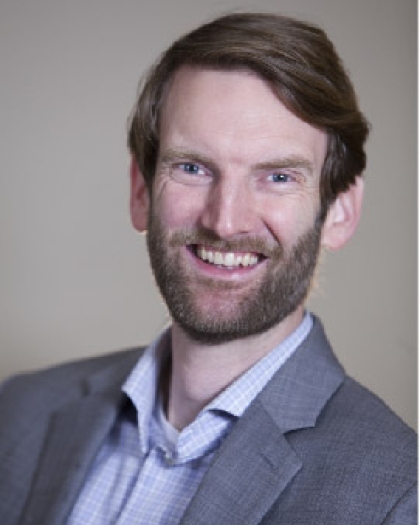
Ulysse Teller Masao Côté-Allard is an Associate Professor in the Department of Informatics at the University of Oslo, Faculty of Mathematics and Natural Sciences. He is affiliated with the Section for Autonomous Systems and Sensor Technologies and actively contributes to the INtroducing personalized TReatment Of Mental health problems using Adaptive Technology (INTROMAT) project. Institution: University of Oslo School: Faculty of Mathematics and Natural Sciences Department: Department of Informatics Section: Autonomous Systems and Sensor Technologies Email: utmcote-allard@its.uio.no, u.t.m.cote-allard@its.uio.no His primary research interests lie at the intersection of artificial intelligence and biomedical applications, with a strong emphasis on machine learning, deep learning, reinforcement learning, and human-computer interaction. His work focuses on developing intelligent systems for healthcare, particularly in myoelectric control for prosthetics, gesture recognition using wearable sensors, and digital mental health solutions for conditions like bipolar disorder. He investigates how multimodal physiological signals (EMG, PPG, IMU) can be leveraged to enhance human-robot interaction and enable early detection of mood changes. The trends in his recent publications (2020–2025) reveal a consistent focus on adaptive and intelligent systems for rehabilitation and mental health. His work spans biomedical signal processing, assistive robotics, affective computing, and AI-driven health monitoring. He frequently employs deep learning and reinforcement learning techniques to build resilient, context-aware systems that improve human-machine collaboration in clinical and assistive contexts. While no specific scientific awards are mentioned in the provided text, his extensive publication record in top-tier journals such as IEEE Transactions on Neural Systems and Rehabilitation Engineering, IEEE Access, Sensors, and Bipolar Disorders highlights significant scholarly contributions. He is actively involved in advising and research leadership, particularly within the INTROMAT project, which aims to personalize mental health treatment through adaptive technology. His collaborative work includes numerous co-authored publications with researchers across institutions, indicating strong interdisciplinary engagement and grant-funded research activities. Ulysse Teller Masao Côté-Allard is a key contributor to research teams focused on autonomous systems, sensor technologies, and digital mental health. He is involved in the INtROMAT project, which integrates AI and wearable sensing to advance personalized mental healthcare.
Gerd Engelsrud is a Professor at Oslo Metropolitan University (OsloMet), affiliated with the Centre for Senior Citizen Staff. His work is rooted in legal studies, particularly in the areas of public administration and governance. He is based at the Pilestredet 35 campus in Oslo, with office number PI535, and can be reached via mobile (+47 938 16 094) or email (gerd.engelsrud@oslomet.no). His research primarily centers on labor law in the public sector, with a strong focus on municipal law, civil service legislation, and governance frameworks. Key themes include employment rights, impartiality in hiring, legal aspects of public sector management, and the regulation of state and municipal employers. His work bridges legal theory and practical governance, contributing to both academic discourse and policy understanding. The recent publications reflect a consistent trajectory in public law, especially concerning employment and administrative structures in Norwegian municipalities and state institutions. His scholarly output spans monographs, textbooks, and chapters, often addressing legal challenges in public administration and workforce management. Gerd Engelsrud has been actively involved in dissemination, contributing to public debates on labor rights, leadership, and legal processes in local government. His publications include textbooks widely used in legal education, indicating a strong commitment to pedagogy and knowledge transfer. He has advised on legal problems in municipal employment, participated in research seminars, and contributed to policy discussions through media and professional forums. His collaborative works, particularly with Ingun Sletnes and Gunnar Jahren, highlight interdisciplinary engagement in municipal law and governance. He is associated with research groups focusing on public administration and governance, and his work is published by leading academic publishers such as Cappelen Damm Akademisk and Gyldendal Akademisk. His contributions extend beyond traditional research to include educational materials, public commentary, and professional development resources for HR and legal practitioners in the public sector.
Dr. Yunyun Zhou is an Associate Professor at the University of Oslo's Department of Culture Studies and Oriental Languages, where she teaches courses on Chinese politics, society, and feminist literature. She holds a PhD in Contemporary Chinese Studies from the University of Oxford, with prior academic experience at UC Berkeley, Peking University, and Paris 8 University, and teaching roles at Oxford, Sciences Po, and Université Paris 8. PhD in Contemporary Chinese Studies (University of Oxford) MSc in Sociology (University of Oxford) BA in Literature & BSc in Psychology (Beijing) Her research focuses on political sociology, gender studies, and cultural studies of contemporary China, particularly examining: How individuals negotiate with authoritarian states Rise of social movements Gender dynamics in political processes State feminism and gender lobbying Affective governance mechanisms Political representation in authoritarian systems Recent publications analyze institutional dilemmas in Chinese state feminism, affective governance through gendered media narratives during the pandemic, and coalition-based gender lobbying strategies. She collaborates with scholars like Xinhui Jiang and Kailing Xie on topics ranging from women's substantive representation to TV series analysis. As a visual ethnographer, she explores: Chinese independent documentaries Gender and immigration dynamics Social movements in China and Europe She co-founded Oslo-based NGO FRA ØST TIL NORD and curates Berlin's C/LENS Chinese cinema screening series, organizing webinars on feminist and LGBTQ+ movements in China.
Jonas Scherner is Professor of Modern European Economic History at the Norwegian University of Science and Technology (NTNU) in Trondheim. He received his PhD and habilitation at the University of Mannheim before joining NTNU in 2010. In the academic year 2005/2006 he was a postdoctoral visiting fellow at the Economic Growth Center, Yale University and in 2008/2009 Visiting Research Fellow in Economic and Social History at the German Historical Institute (GHI), Washington DC. His educational background includes: Habilitation in Economic and Social History, University of Mannheim, 2006 Dr. rer. pol. (Doctoral Dissertation in Economics), summa cum laude, University of Mannheim, 1998 Diplomvolkswirt (Master of Economics), University of Mannheim, 1994 Professor Scherner's research has focused on war preparation, war economies and their lasting effects, covering both state and company actors and using micro and macro data as well as qualitative sources. As one of the PIs of the Fate of Nations Research Group on the Global History and Political Economy of Natural Resources (2017-2024) he researched on natural resources and war. He is currently the corresponding PI of the ERC Synergy Grant #101166983, The Hidden Weapon. Blockade in the Era of the Two World Wars. His work particularly examines how nations prepare for and respond to economic blockades, with a focus on strategic resource management during wartime. His recent publications demonstrate a consistent focus on economic aspects of war, particularly Nazi Germany's economic strategies during WWII. His research examines topics such as blockade strategies, resource substitution, industrial policy, and the economic dimensions of military occupation. A recurring theme is how nations manage strategic resources during wartime, with particular attention to non-ferrous metals and other critical materials. His work combines quantitative economic analysis with historical methodology to provide nuanced insights into wartime economic decision-making. Professor Scherner serves as a referee for numerous prestigious journals including Business History, Business History Review, Economic History Review, and others. He has also contributed book reviews to several academic publications. His research has been covered in major media outlets including DER SPIEGEL and Focus magazine, demonstrating the broader impact and relevance of his historical economic research to contemporary understanding of war economies.
Khelifa Nida Bartura is a Research Fellow at the Department of Sport and Social Sciences, Norwegian School of Sport Sciences, focusing on cognitive and physiological mechanisms in elite sports performance under pressure. Education: European Master's in Sport and Exercise Psychology (University of Thessaly/Leipzig, 2013) Education: Master's in Sports Science (University of Punjabi, 2007) Research spans ironic processes in target shooting, cognitive strategies for performance optimization, and psychophysiological interventions in endurance sports. Current projects examine stress responses in precision shooting disciplines. Recent publications include experimental studies on attentional control in biathlon, systematic reviews on performance anxiety effects, and applied work on hydration and mental techniques in endurance contexts.
Hans Olofsen serves as a Senior Lecturer and Study Program Manager for Bachelor Computer Engineering and Computer Engineering - Further Education at the Department of Computer Science and Computational Engineering, UiT The Arctic University of Norway, located at the Narvik campus. His professional activities span both academic instruction and research leadership within computational engineering disciplines. Dr. Olofsen's research interests center on Medical Image Analysis with particular focus on Alzheimer's disease biomarkers, Computational Engineering applications in healthcare, and Artificial Intelligence solutions for medical image processing. His technical expertise includes developing algorithms for ventricular shape analysis, creating autonomous virtual robots for 3D medical image navigation, and designing wearable technology systems for fall risk assessment in elderly populations. Analysis of his publication record reveals a consistent research trajectory in computational medical imaging spanning over 15 years, with significant contributions in ventricular shape biomarkers for Alzheimer's disease, 3D medical image exploration systems, and wearable technology applications in geriatric care. His work demonstrates interdisciplinary collaboration across neuroscience, computer science, and biomedical engineering domains. As a member of the Simuleringer (Simulations) research group at UiT, Dr. Olofsen contributes to advancing computational methods in medical applications with a specialization in Artificial Intelligence techniques. His office is located in Campus Narvik D2210, where he manages both his teaching responsibilities for computer engineering programs and his research activities.
Leena Maria Heikkola is a Professor of Kven and Finnish linguistics at the Department of Language and Culture , UiT The Arctic University of Norway. Her work centers on multilingualism, linguistically responsive teaching, and the intersection of language and cognition, particularly in neurological contexts. Current research includes collaboration with PhD Antti Saloranta (visiting researcher in Kven language) to analyze the Kven phonetic system using archival and collected speech data, alongside psychophysiological measurements comparing Kven and Finnish language processing. She is a member of research groups MultiNor and C-LaBL , focusing on Nordic multilingualism and language learning. Her recent publications explore Finnish teachers’ practices in multilingual classrooms, pedagogical responses to linguistic diversity, and the role of music in L2 fluency. Articles emphasize themes like educational equity, language ideologies, and cognitive fatigue in neurological disorders. She holds ORCID 0000-0002-1795-7656 and contributes to Nordic language policy networks.
Anja Olafsen Sjåstad is a Professor in the Department of Chemistry at the University of Oslo's Faculty of Mathematics and Natural Sciences. Her research focuses on inorganic materials chemistry with particular emphasis on catalysis, nanomaterials, and energy applications. She is an active member of the Nanostructures and Functional Materials (NAFUMA) research group and contributes to initiatives like HYDROGENi - the Norwegian centre for hydrogen and ammonia research and innovation. Her work bridges fundamental materials science with industrial applications, particularly in catalytic processes involving platinum-group metals. Department of Chemistry, University of Oslo Faculty of Mathematics and Natural Sciences Nanostructures and Functional Materials (NAFUMA) research group HYDROGENi - Norwegian centre for hydrogen research 2D high-entropy materials for energy conversion (HEMEC) project Professor Sjåstad's research interests center on inorganic materials chemistry with a strong focus on catalysis, particularly platinum-rhodium systems for ammonia oxidation processes. Her work spans nanomaterials synthesis and characterization, computational materials science including DFT and ab initio studies, energy materials for hydrogen applications, and oxide chemistry. She investigates surface phenomena, interface engineering, and the electronic structure of materials to develop more efficient catalysts and energy conversion systems. Her research combines experimental techniques like XPS, TEM, and STM with computational approaches to understand materials at the atomic level. Analysis of Professor Sjåstad's recent publications reveals a consistent focus on platinum-group metal catalysts, particularly for ammonia oxidation applications. Her work shows increasing integration of machine learning with experimental validation for materials discovery, as seen in her 2025 magnetocaloric materials paper. There's a strong emphasis on understanding surface phenomena and interface behavior through advanced characterization techniques like in situ TEM and XPS. Her research portfolio spans fundamental computational studies of electronic structure to applied work on catalyst design and recovery systems, demonstrating a comprehensive approach to materials science that connects atomic-scale understanding with industrial applications. Professor Sjåstad actively leads and participates in significant research projects including HEMEC (2D high-entropy materials for energy conversion) and HYDROGENi (Norwegian centre for hydrogen and ammonia research). Her work addresses critical challenges in sustainable energy technologies, particularly in catalyst development for hydrogen production and ammonia processes. While specific grant details aren't provided in the source material, her extensive publication record in high-impact journals demonstrates successful research funding and project execution. Professor Sjåstad is affiliated with the Nanostructures and Functional Materials (NAFUMA) research group at the University of Oslo, which focuses on advanced materials synthesis, characterization, and application. Her work connects with the HYDROGENi centre's mission to advance hydrogen and ammonia technologies. The research environment she participates in combines experimental facilities for materials synthesis and characterization with computational resources for modeling and simulation, supporting a comprehensive approach to materials science research.


%20/ulusse-/ulysse-cote-allard.jpg)