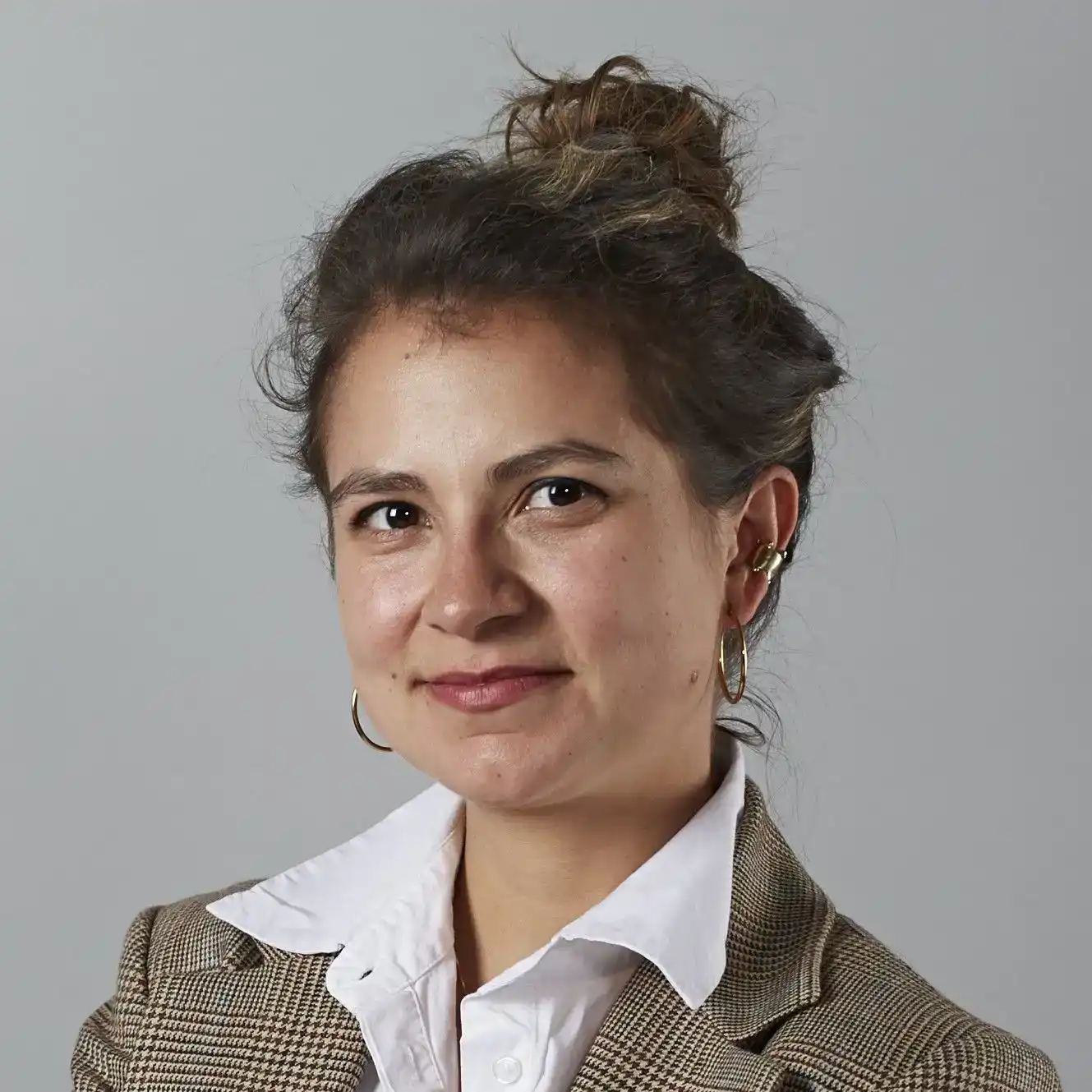
Beatriz Botero Arcila is an Assistant Professor of Law at Sciences Po Law School and a Faculty Associate at the Berkman Klein Center for Internet and Society at Harvard University. She specializes in the governance of data, artificial intelligence, and digital surveillance. LLM and Doctorate from Harvard Law School Research Focus : Law of the Digital Economy Privacy Law / Global Data Law Surveillance Law Legal Theory Scientific Awards : Future of Privacy Forum's 14th Annual Privacy Papers Award (2024) Labs & Teams : Co-founder of The Edgelands Institute, a pop-up institute incubated at the Berkman Klein Center focused on digital surveillance and cities.
Georges FOKOUA is a Lecturer-Researcher at ESTACA (École Supérieure des Techniques Aéronautiques et de Construction Automobile), Paris-Saclay Campus, Saint-Quentin-en-Yvelines, France. He serves as the Training Manager for the 5A Specialty in New Energies and Environment. His academic career spans multiple institutions, including IRSTEA Rennes as a Research Engineer (2014-2016) and the Naval School in Brest as a Teaching and Research Assistant (2009-2014). Dr. FOKOUA's research focuses on experimental and numerical fluid mechanics with particular interest in multiphase flows, turbulence, wake flows, and the characterization of spatio-temporal dynamics of particulate and gaseous pollutants. His work bridges fundamental fluid mechanics with practical applications in transportation systems, naval propulsion, and environmental engineering. He has developed expertise in advanced measurement techniques including PIV, LDV, Ombroscopy, hot wire, optical probes, PTV, and both mono- and biphasic CFD using Ansys-Fluent, Comsol Multiphysics, and Matlab. His publication record demonstrates strong expertise in particle dispersion in transportation systems, with recent work focusing on brake particle dispersion in underground train stations, vehicle wake flows, and ultrafine particle dispersion. His earlier work investigated bubble effects in Taylor-Couette flow for naval propulsion applications. His research consistently combines experimental work with numerical modeling to address complex fluid dynamics problems. Dr. FOKOUA actively supervises doctoral and master's students, with current PhD candidates working on topics related to air quality in vehicle cabins, particulate pollutant dispersion in vehicle wakes, and navigation emissions. He has also contributed significantly to major research projects including CEPARER (2022-2025), AmCoAir (2020-2023), and CAPNAV (2019-2022), all funded by ADEME with various industrial partners. As an educator, he teaches Fluid Mechanics, Thermodynamics, Thermal Engineering, and Energy Conversion and Transfer courses across all undergraduate and graduate levels at ESTACA. He has also led the Euroglider project (2016-2019), developing a two-seat electric propulsion glider for pilot training.
Samuel Herrmann is a Professor of Applied Mathematics at the University of Burgundy, France. He is a member of the Statistics, Probability, Optimization and Control team and an external member of the TOSCA project team at INRIA. His research focuses on stochastic processes, particularly asymptotic analysis of non-linear stochastic processes, large deviations, and stochastic resonance phenomena, with applications in climatology, biology, and financial modeling. Education: PhD in Mathematics (2001) - University of Burgundy Habilitation (2009) - Asymptotic analysis related to stochastic processes Research Interests: Stochastic differential equations and their numerical simulation Large deviation phenomena in stochastic processes Self-stabilizing diffusions and stochastic resonance First-passage and exit time problems for diffusions Applications in climatology, biology, and finance Scientific Contributions: Professor Herrmann has published extensively on stochastic processes, with over 50 peer-reviewed articles and a monograph on stochastic resonance. His work includes exact simulation methods for diffusion processes, studies on self-stabilizing systems, and theoretical contributions to large deviations theory. He has collaborated with leading researchers such as Peter Imkeller and David Peithmann. Awards and Recognition: Contributed to the encyclopedia of mathematical physics Co-authored the book "Stochastic Resonance: A Mathematical Approach in the Small Noise Limit" (2014) Teaching and Supervision: He teaches courses on stochastic processes and their simulation at both undergraduate and master's levels, including the Master in Turin program. He has supervised numerous PhD and master's students in stochastic processes and related fields.
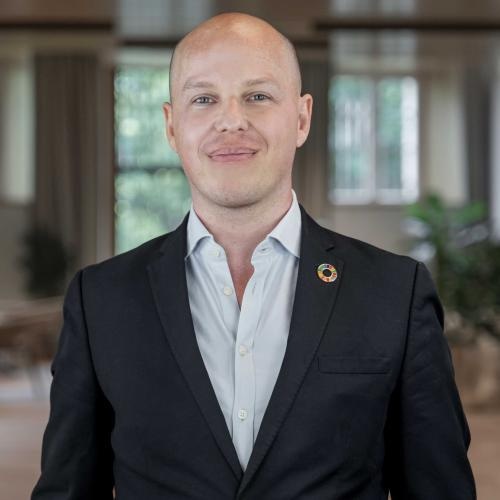
Oliver Laasch is a Professor of Responsible Management at ESCP Business School in Berlin and holds an adjunct professorship in Social Entrepreneurship at the University of Manchester. He has held academic roles at institutions including the University of Nottingham Ningbo (China), Tecnológico de Monterrey (Mexico), and Seoul National University (South Korea), along with visiting positions at the University of Tübingen’s Global Ethic Institute and Copenhagen Business School. His research focuses on responsible management, alternative business models, disruptive activism, and qualitative methods. He has published in top-tier journals such as the Academy of Management Learning and Education , British Journal of Management , and Journal of Business Ethics . Laasch co-authored the Research Handbook of Responsible Management and Sage Handbook of Responsible Management Learning and Education , and has contributed to practitioner outlets like Harvard Business Review and Forbes . He designs and teaches courses at all academic levels, including the Coursera MOOC Managing Responsibly with 40,000+ enrollees. His work on the United Nations Principles for Responsible Management Education (PRME) initiative has been pivotal. He has served as an editorial board member for journals like Academy of Management Learning and Education and Long Range Planning , editing over 40 special issues and books. Laasch advises companies and universities on staff development and has pioneered frameworks for integrating sustainability into business education. His research emphasizes systemic change, ethical leadership, and the intersection of activism with corporate responsibility.
Nadjib Brahimi is an Associate Professor at Rennes School of Business, specializing in Supply Chain Management and Operations Research. He holds a PhD in Production and Logistics Systems from Université de Nantes and has extensive academic experience, including roles as Academic Head of the Supply Chain Management & Information Systems department (2019–2020) and Programme Manager of the MSc in Data and Business Analytics. His expertise spans Production Planning, Supply Chain Optimization, and Reconfigurable Manufacturing Systems. Education: PhD in Production and Logistics Systems, Université de Nantes, 2004 M.Sc. in Automatic Control and Applied Computing, Ecole Centrale de Nantes, 2001 Engineering Degree in Electronics and Electrical Engineering, National Institute of Electronics and Electrical Engineering, Boumerdes, Algeria, 1999 Research Focus: His work emphasizes optimization of production systems, reconfigurable manufacturing, and sustainable supply chains. Key areas include task reassignment in assembly lines, biomass supply chain design, and disruption resilience strategies. Key Contributions: Over 40 peer-reviewed articles in journals like International Journal of Production Economics and European Journal of Operational Research . Developed robust optimization models for supplier selection and production routing. Advocated for circular economy principles in hybrid manufacturing systems. Labs/Teams: He collaborates with research groups on reconfigurable manufacturing systems and bioenergy supply chain design, contributing to projects in France, UAE, and Algeria.
Margherita Pagani is a Full Professor and Director of the SKEMA Centre for Artificial Intelligence at SKEMA Business School in Paris. She holds a Ph.D. in Management and an HDR (Habilitation à Diriger des Recherches). Her roles include Research Affiliate at UC Berkeley’s APEC Study Center and Advisor to the European Economic Social Committee (EESC) on virtual worlds and the Metaverse. Previously, she founded and led the MSc in Digital Marketing & Data Science and the AIM Research Center at emlyon business school. She has held visiting roles at MIT, UCLA, Georgetown, NUS, and Redlands University. Education: Ph.D. (2015, Lyon), HDR (2016, Évry), MSc (1995, Bocconi), MIT Certifications (2005-2006). Research: Focuses on AI in consumer engagement, digital ecosystems, robotics in services, and metaverse applications. Over 130 publications in journals like MIS Quarterly, MIT Sloan Management Review, and Harvard Business Review. Awards: 2023 International Marketing Trends Award, 2022/2023 Top 2% Cited Scientist (Elsevier), 2009 Mobile Marketing Academic of the Year. Her work bridges AI and marketing creativity, emphasizing human-centric systems. She leads initiatives like the SKEMA AI School and organizes conferences on ethics, AI in education, and service recovery. Active in editorial roles for journals like Micro & Macro Marketing and Industrial Marketing Management . Key affiliations include the Association Française de Marketing and involvement in policy initiatives. Supervised over a dozen PhD students, focusing on AI applications in marketing and entrepreneurship.
Frederic Meunier is a CNRS researcher based at IRCELYON (Institute of Chemistry of Lyon), part of the University of Lyon. He holds a European PhD in Physical Chemistry from the Universities of Strasbourg (France) and Limerick (Ireland), and a Habilitation to Direct Research from the University of Caen (France). His research focuses on heterogeneous catalysis, with expertise in operando FT-IR spectroscopy and reaction mechanisms, particularly in syngas chemistry and CO₂ conversion. He leads the ATARI team (Integrated thermodynamic, analytical, and reactional approaches) and has published over 100 papers (H-factor 35) and holds two worldwide patents. Key research interests include catalytic materials for environmental applications, such as CO₂ capture/methanation, water treatment, and sustainable chemistry. He has supervised 16 PhD theses and is an editorial board member of Catalysis Today and Applied Catalysis B: Environmental . In 2009, he received the Catalytic Division Award from the French Chemical Society. His work also explores microwave-assisted catalysis, nanomaterial synthesis, and advanced oxidation processes for pollutant remediation. Collaborative projects include studies on biochar-based materials, microwave-enhanced reactions, and catalyst stability under industrial conditions.
Philippe Moireau is a Full Professor in the Department of Applied Mathematics at École Polytechnique, where he is also affiliated with the Center for Applied Mathematics (CMAP). He serves as the head of the Inria Project-Team MΞDISIM (Mathematical and Mechanical Modeling with Data Interaction for Simulation in Medicine) and holds the distinguished position of Ingénieur Général of The Corps des Mines. His primary research focuses on inverse problems and data assimilation for partial differential equation models, with particular emphasis on: Observer-based methods from optimal control perspectives Stabilization approaches for evolution equations Numerical analysis of time-dependent control problems Digital twin applications in cardiovascular medicine Professor Moireau's publication portfolio demonstrates consistent focus on mathematical methods for physical systems, with recurring themes in: Data assimilation techniques for PDE-based models Numerical stabilization and discretization methods Cardiovascular biomechanics and hemodynamics Stochastic modeling of biological systems Epidemiological forecasting and control He leads the ANANKΞ project-team at Inria focused on Analysis And Numerics of physical-Knowledge-based Estimation. His educational contributions include lectures on data assimilation theory at CEMRACS and courses on mathematical modeling in cardiac biomechanics at Institut Polytechnique de Paris.
Yelva Roustan is a Lecturer at CEREA (joint laboratory between École Nationale des Ponts et Chaussées and EDF R&D) since 2005, specializing in air quality modeling . Her research focuses on multiscale modeling approaches, source-concentration relationships, and pollutant deposition processes. She teaches at the National School of Bridges and Roads, sharing knowledge from her research in atmospheric transport and environmental science. Her work addresses urban pollution challenges, including the impact of low-emission vehicles on air quality, urban tree effects, and pollutant dynamics in street networks. She has developed the MUNICH street-network model and contributed to projects like EURODELTA for multi-pollutant analysis across Europe. Her methods integrate data assimilation, inverse modeling, and Bayesian techniques to improve emission source reconstruction and model accuracy. Key contributions include studies on radioactive release scenarios (e.g., Fukushima, 106Ru event) and urban infrastructure impacts on pollution. Her research bridges atmospheric science with engineering solutions for sustainable urban environments. She holds a PhD in Environmental Engineering from École Nationale des Ponts et Chaussées (2005) and an HDR in Numerical Modeling of Atmospheric Pollutants (2020).
Eric TOTEL is a Professor at Telecom SudParis, specializing in cybersecurity and network security. His research focuses on intrusion detection systems, graph-based anomaly detection, machine learning applications in security, and data confidentiality in distributed systems. He has contributed to projects such as DAMS (DDoS mitigation using deep reinforcement learning), Sec2Graph (novelty detection on graph-structured data), and DAEMON (dynamic autoencoder-based anomaly detection). His work emphasizes scalable solutions for multi-step attack detection and privacy-preserving infrastructure for encrypted DNS logs. Key contributions include developing correlation engines for distributed systems, formalizing invariant-based attack detection in web applications, and exploring static analysis for information flow control. He has authored over 50 peer-reviewed publications and served on program committees for conferences like RAID, CRiSIS, and EuroS&P. His HDR (2012) formalized error-detection techniques applied to intrusion detection. Advising and grants: He collaborates on projects funded by French national research agencies and has mentored students in cybersecurity, AI for defense (CAID conferences), and cloud infrastructure security. His research often bridges theoretical models and practical implementations, with tools like STARLORD for 3D graph visualization of security data.
Prof. Joaquin GARCIA ALFARO is a Professor at Telecom SudParis, affiliated with the SCN department. His research focuses on cybersecurity, network security, quantum computing applications, and resilience engineering in cyber-physical systems. He has contributed to advancements in intrusion detection systems, blockchain integration in cellular networks, and privacy-preserving frameworks for IoT and healthcare. University: Telecom SudParis Key Research Areas: Cybersecurity, Quantum Computing, IoT Security, Resilience Engineering Labs: SAMOVAR laboratory His work emphasizes practical solutions for real-world challenges, including secure data provenance, digital twin implementations, and energy-efficient edge computing. Recent research explores quantum-resistant protocols and collaborative drone systems.
Claire Gaiani is a full Professor at the University of Lorraine, leading the Laboratoire d'Ingénierie des Biomolécules (LIBio). With an ORCID iD: 0000-0003-0434-8453 , she focuses on sustainable food ingredient development from agroresources and food-waste, specializing in the formulation of bioactive compounds (probiotics, glycans, PUFA, flavonoids) into functional powders through industrial-academic collaborations. Habilitation to supervise research (2012, University of Lorraine) PhD in Food Science (2006, University of Lorraine) Engineer (M.Sc.) from ENSAIA (2002, University of Lorraine) Her research combines atomic force microscopy (AFM), XPS analysis, and industrial partnerships (Nestle, Arla Foods) to optimize dairy and plant-based powder properties. Recent work explores cryogel monoliths for probiotic delivery, plant seed gums as structuring agents, and maltodextrin surface characterization. Key scientific contributions include: Over 140 peer-reviewed papers (90% Q1 Food Science/Chemistry/Biophysics) 2 book editions ( Engineering Plant-Based Food Systems , 2023; Atomic Force Microscopy for Food Research , 2023) 10 book chapters 2 patents (FR2807932A1, FR2112358A) 65 international lectures (17 invited) Honors include: 2023 Grand Prix en Sciences Lorraine-Luxembourg 2015 IUF junior member (5-year term) 2011 Marcel Loncin Prize 2014 NIZO Dairy Conference keynote She supervises 9 postdocs and 15 PhD students, and serves on the European Bioencapsulation Research Group board. Her work drives innovations in powder rehydration, probiotic encapsulation, and sustainable food systems through the Agria Grand Est association.
Marie-Florence THOMAS is a Professor at the School of Public Health, affiliated with the LERES Laboratory for Study and Research in Environment and Health, UMR 1085 IRSET, and the Observatory of the Environment and Sustainable Development. She holds a Doctorate in Process Engineering, a Master’s in Air and Water, and a DEA in Hydrology. Education Doctorate in Process Engineering Masters in Air and Water DEA in Hydrology Her research focuses on water and climate change , water quality measurement , urban water systems , and water risk management . She employs a multidisciplinary approach integrating environmental sciences, public health, and policy analysis. Recent projects include PHARE (HAloacetic acid production under climate change), URB-Bain (urban swimming and climate change), Aladins (climate vulnerability modeling in Brittany), and Expo-Eau (exposure to disinfection by-products). Her scientific expertise spans water quality monitoring, microbial contamination, and health determinants in urban environments. She serves on the Creseb Scientific Committee, the ANR’s Environmental Technologies Evaluation Committee, and the EHESP Board of Directors. Her work emphasizes interdisciplinary collaboration and decision-support tools for climate resilience. She teaches in academic, professional, and continuing education programs, including modules for Health Studies Engineers, the Master’s in Water Sciences, and the Master’s in Public Health. Her pedagogical approach integrates water quality, risk control, and sustainable urban practices.
Dr. Yves Boubenec is an Associate Professor at École Normale Supérieure (ENS)-PSL University, Paris, France. He serves as Head of the LSP Neuro Platform and Director of Studies at the Department of Cognitive Studies. Academic Rank: Associate Professor Institution: ENS-PSL Departments: Cognitive Studies (ENS), LSP Neuro Platform Email: yves.boubenec@ens.psl.eu Research Focus: Boubenec investigates neural mechanisms of auditory perception and cognition using integrated methodologies spanning single-neuron electrophysiology to large-scale neuroimaging. His work reveals how context, learning, and multisensory interactions shape sound encoding in mammalian neocortex. Primary Research Themes Context-dependent auditory encoding Perceptual attention mechanisms Task-driven neural plasticity Self-supervised learning models Population-level cortical dynamics Human/ferret auditory comparisons Publication Trends: Recent work (2024-2025) examines speech production networks, premotor auditory categorization, and algebraic structures in sound learning. Earlier studies (2018-2022) focus on population gating, hierarchical auditory coding, and self-voice mechanisms. 2025 Self-voice frequency analysis Hierarchical ferret auditory cortex mapping Temporal window constraints 2024 Premotor category hemodynamics Self-supervised sound structures Human speech cortical encoding Methodological Expertise: Combines awake ferret functional UltraSound, Neuropixels recordings, and computational modeling to analyze neural representations across spatial scales. Specializes in translating animal model findings to human auditory processes.
Maria Mushtaq is an Associate Professor at Telecom Paris , affiliated with the Information Processing and Communication Laboratory (LTCI) and the Secure and Safe Hardware (SSH) Lab . She received her PhD in Information Security from the University of South Brittany, France (2019) and completed 2 years of postdoctoral research at LIRMM, University of Montpellier under the CNRS excellence post-doc grant. Research Focus: Microarchitectural vulnerability assessment, runtime mitigation against side/covert-channel attacks, cryptanalysis, OS-based security primitives, and hardware-software interface security Technical Expertise: Cache timing attacks, transient execution attacks (Spectre/Meltdown), Hardware Performance Counter analysis, gem5 simulation Her recent work involves RISC-V security analysis using gem5 simulations and machine learning for attack detection. She serves as Guest Editor for the Journal of Applied Sciences special issue on Side Channel Attacks in Embedded Systems and has been on the Program Committee for the European Test Symposium (2020-2021). 2021 HiPEAC Collaboration Grant recipient Organized IP Paris Winter School on Microarchitectural Security (2022) Active in international conferences as panelist and keynote speaker