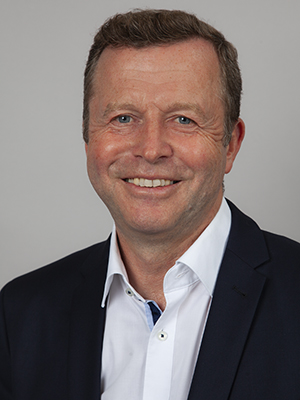
Thomas Dreibholz is a Chief Research Engineer at Simula Metropolitan's Center for Resilient Networks and Applications. He specializes in cyber sovereignty, network security, and internet testbeds, with extensive work on distributed systems, cloud computing, and 5G networks. Affiliation: Simula Metropolitan, Oslo, Norway Research Focus: Multi-path transport protocols, network resilience, and privacy-preserving frameworks His research explores the intersection of network security, cloud/fog computing, and next-generation communication protocols. Recent work includes HiPerConTracer for network analysis, privacy-aware fog platforms , and multi-layered federated learning security . He contributes to testbed development, including the NorNet infrastructure for real-world multi-path transport research. Publications reflect expertise in multi-path TCP , 5G network optimization , and cloud/fog security . He has delivered invited talks at institutions like Hainan University and Princeton University, emphasizing open-source testbed deployment and educational outreach.
Professor Maths Halstensen is a distinguished faculty member in the Department of Electrical Engineering, Information Technology and Cybernetics at the University of South-Eastern Norway (USN), Faculty of Technology, Natural Sciences and Maritime Sciences, Campus Porsgrunn. With a career spanning over two decades since his 2002 PhD, he has established himself as a leading expert in chemometrics and process analytical technology, maintaining continuous research output through 2019 with significant contributions to industrial monitoring systems. His academic journey includes: PhD in Acoustic Chemometrics from NTNU (2002) MSc in Process Automation from Telemark University College (1997) BSc in Industrial Electronics from Gjøvik University College (1995) Professor Halstensen's research program centers on developing multivariate data analysis techniques for industrial process monitoring, with particular emphasis on: Acoustic chemometrics for multiphase flow characterization CO2 capture process optimization using spectroscopic methods Real-time monitoring of scale deposition in pipelines Multivariate regression modeling for energy and process prediction Raman and NIR spectroscopy applications in industrial settings His work bridges theoretical chemometrics with practical industrial implementations, focusing on solutions for metallurgy, chemical processing, and carbon capture sectors. Analysis of his 15 most recent publications reveals a dominant focus on carbon capture technologies (60% of recent work), particularly equilibrium measurements in ammonia-CO2 systems and real-time monitoring of absorption processes. His research demonstrates consistent application of multivariate modeling to solve industrial challenges, with strong emphasis on sensor development and practical implementation. Key methodological contributions include acoustic chemometric approaches for velocity measurement and novel calibration techniques for complex industrial mixtures. As leader of the ACRG Laboratory, Professor Halstensen directs research in: Acoustic sensor development for industrial environments Spectroscopic monitoring system integration Multivariate data analysis for process optimization Real-time control system implementation His teaching encompasses BSc, MSc, and PhD levels with focus on practical engineering skills. The research group benefits from institutional support through USN's strategic focus on 'Energy, climate and the environment,' with likely connections to Research Council of Norway funding and EU research programs. Professor Halstensen maintains active industry collaborations through his applied research on process monitoring solutions for energy-intensive industries.
Nora Cecilie Ivarsdatter Furuvik serves as an Associate Professor within the Department of Process, Energy and Environmental Technology at the Faculty of Technology, Natural Sciences and Maritime Sciences, University of South-Eastern Norway. Based at Campus Porsgrunn, she contributes to academic programs focused on sustainable technological solutions and environmental management systems. Her research expertise spans Process Engineering , Energy Technology , and Environmental Technology , with particular emphasis on industrial sustainability and maritime environmental systems. These fields address critical challenges in resource optimization, pollution control, and energy transition within industrial and maritime contexts. Contact her directly via email at nora.c.i.furuvik@usn.no or telephone at +47 35 57 52 20 for academic inquiries related to process technology and environmental engineering programs.
Bjørn Sætrevik is a Professor at the Department of Social Psychology, University of Bergen. His work bridges cognitive and social psychology with applied human factors, emphasizing real-world problem-solving in high-stakes environments. Research Focus: He investigates cognitive processes (attention, decision biases, mental models) and social dynamics (team communication, situational awareness). Key themes include pandemic behavior (e.g., compliance drivers), maritime safety, and technology-enhanced collaboration. His studies often employ field experiments and large-scale surveys to capture nuanced human behavior. Publication Trends: Recent articles (2022–2025) show a strong emphasis on crisis response—particularly COVID-19 risk perception and containment—alongside innovations in augmented reality for teamwork. Replication studies and cross-cultural validations are recurring motifs, reflecting his commitment to robust psychological science. Projects and Impact: He leads projects on police decision-making simulations, clinical bias reduction, and maritime human factors. His dissemination efforts include accessible science writing on cognitive myths and AI ethics, extending academic insights to public discourse.
Hesam Mousavi is an Associate Professor in Soil Biology and Crop Productivity at the University of Inland Norway , affiliated with the Faculty of Applied Ecology, Agricultural Sciences and Biotechnology and the Department of Agricultural Sciences . His research focuses on sustainable plant production and soil management, particularly under environmental stress conditions like drought, salinity, and pathogenic factors. Key research areas include: Soil-plant interactions Nutrient turnover and uptake Crop stress tolerance mechanisms Climate change adaptation strategies Organic fertilizer dynamics Recent publications demonstrate a strong trend in: Applying machine learning for wheat yield prediction Evaluating plasma-treated agricultural inputs Developing climate-resilient crop systems Investigating soil fauna responses to novel fertilizers Advancing salt-tolerant wheat breeding Scientific contributions include Norway's representation in COST Action CA22144 - Sustainable use of salt-affected lands (SUSTAIN) , and participation in multidisciplinary agricultural research projects like MUSA - Mushrooms for Sustainable Agriculture .
Karim Tamssaouet is an Associate Professor at BI Norwegian Business School's Department of Accounting, Auditing and Business Economics. His academic trajectory includes positions as Assistant Professor at BI (2020-2024), Postdoctoral Researcher at École des Mines de Saint-Étienne (2019-2020), and R&D Engineer at STMicroelectronics (2016-2019). He holds a PhD from École des Mines de Saint-Étienne, with additional graduate degrees from Université Paris Dauphine and Ecole Nationale Polytechnique. His research specializes in optimization methodologies for industrial challenges, with core interests in: Scheduling algorithms for job-shop and flexible manufacturing systems Integrated inventory-transportation modeling Metaheuristic design (scatter search, neighborhood structures) Dynamic lot-sizing with logistics constraints Bayesian network learning for decision optimization Publication analysis reveals consistent focus on operational efficiency in manufacturing and supply chains, with recent expansions into machine learning applications for optimization. Methodological contributions include novel neighborhood frameworks for scheduling problems and multi-objective approaches for semiconductor production. He currently teaches Business Optimization and Supply Chain Analytics, bridging theoretical operations research with business applications. No research lab affiliations, scientific awards, or supervised students are documented.
David Gregory Weissbrodt serves as Head of the Department of Biology and Full Professor in the Department of Biotechnology and Food Science at the Norwegian University of Science and Technology (NTNU), Faculty of Natural Sciences. Previously, he was a Tenure Track Assistant Professor at Delft University of Technology (2016-2022) and held postdoctoral positions at ETH Zürich and TU Delft. His academic journey spans environmental chemistry, microbiology, and biotechnology with a focus on water-resource nexus solutions. His educational background includes: Ph.D. in Environment, École Polytechnique Fédérale de Lausanne (2013) M.Sc. in Environmental Sciences & Engineering, École Polytechnique Fédérale de Lausanne (2006) Dipl.-Ing. in Chemistry for Life Technologies, HES-SO Valais/Wallis (2003) Professor Weissbrodt's research pioneers nature-based solutions for water security and circular economies. He integrates microbial ecology with engineering to address antibiotic resistance, nutrient recovery, and space agriculture. His work on recirculating aquaculture systems, purple bacteria biotechnology, and lunar hydroponics demonstrates cross-disciplinary innovation. Current projects like LunarPlant and PhageLand translate fundamental science into practical applications for ecological balance and resource recovery. His recent publications (2023-2025) reveal strong trends in antibiotic resistance dynamics (40%), microbial community engineering (30%), and space agriculture applications (15%), with increasing use of molecular techniques like Hi-C sequencing and metagenomics. These studies consistently bridge fundamental ecology with engineered systems for water treatment and resource recovery. His scientific recognition includes: IWA MEWE Early Career Researcher Award (2019) Springer Theses Series recognition (2015) EPFL's Luce Grivat Award (2013) Four consecutive 'Best Teacher' awards at TU Delft (2017-2022) Professor Weissbrodt actively mentors 7 graduate students (3 PhD, 4 MSc) while leading 8 major research projects funded by ESA, Research Council of Norway, and EU programs. His VertiGrow collaboration with SINTEF advances indoor farming, while PhageLand addresses global antibiotic resistance through wetland technology. He emphasizes responsible innovation through policy engagement and citizen science initiatives. Though no formal lab name is used, his research group operates through the Department of Biotechnology and Food Science, utilizing NTNU's water technology facilities and collaborating with CIRiS for space-related research. The team combines wet-lab experimentation, computational modeling, and field studies to develop scalable environmental solutions.
Professor Axel Müller serves as Research Group Leader for the Norwegian Center for Mineralogy (NORMIN) at the Natural History Museum, University of Oslo. His academic career spans industry, government geological surveys, and academia, with current focus on mineralogy and petrology of granites and pegmatites. Müller maintains dual affiliations as External Researcher at the Natural History Museum of London since 2012. Professor of Mineralogy, University of Oslo (2015-present) Research Group Leader, NORMIN External Researcher, Natural History Museum London (2012-present) Associate Editor, Journal of Geochemical Exploration Scientific Associate, Natural History Museum London Professor Müller's research centers on genetic mineralogy, particularly quartz chemistry in pegmatite systems, with applications for solar cells and microchip production. His work bridges fundamental mineral science and industrial applications, focusing on rare-metal (Li, Sn, W, Nb, Ta, REE) and industrial mineral deposits. Current projects emphasize exploration for critical raw materials essential to the energy transition. His publication record demonstrates consistent output in top geoscience journals, with recent work (2023-2025) focusing on pegmatite exploration techniques, quartz chemistry, and machine learning applications in mineral deposit identification. Müller leads the significant EU-funded GREENPEG project developing tools for locating buried pegmatite deposits containing lithium and high-purity quartz. Society of Economic Geologists (SEG) Society for Geology Applied to Mineral Deposits (SGA) Mineralogical Society of UK and Ireland Leibniz-Sozietät der Wissenschaften zu Berlin Professor Müller actively supervises graduate students through the University of Oslo, with research opportunities connected to NORMIN's analytical facilities and international collaborations. His GREENPEG project provides substantial funding for PhD and postdoctoral positions focused on critical raw materials exploration. The research group maintains strong industry partnerships with mineral exploration companies and geological surveys across Europe. NORMIN serves as Norway's national hub for mineralogical research, housing advanced analytical equipment and the Mars Sample Return Analogue Sample Library (MSR ASL). Müller's group conducts fieldwork across Norwegian pegmatite provinces and European lithium deposits, with recent work in Austria's Wolfsberg deposit and Norway's Tysfjord region.
Elisabeth Norman is a Professor in the Department of Social Psychology at the University of Bergen, Norway. She is affiliated with multiple research groups including the Digital Learning Communities, the Research Group on Decision Making, Intuition, Consciousness and Emotions (DICE Group), and the Bergen Laboratory for the Study of Decision, Intuition, Consciousness, and Emotion. Her primary research interests focus on metacognition, intuition, implicit vs. explicit learning, awareness, and the interaction between affective states and cognitive processes. Norman investigates how people learn without awareness, how intuitive feelings relate to unconscious knowledge, and the extent to which strategic control is associated with awareness in cognitive tasks. Her work bridges theoretical cognitive psychology with practical applications in education, clinical settings, and organizational contexts. Norman's recent publications reveal a consistent focus on how metacognitive experiences guide learning and decision making, with increasing attention to digital environments and their impact on cognitive processes. Her research employs diverse methodologies including laboratory experiments, systematic reviews, and web-based studies, often examining how unconscious processes influence conscious judgments and behaviors. She has received attention in Norwegian media for her expertise on intuition and unconscious cognitive processes, appearing on programs like Nyhetsmorgen and contributing to public understanding of psychological phenomena. Norman teaches PSYK208 Affect and Cognition and supervises bachelor's theses in general psychology, demonstrating her commitment to education alongside her research activities. Her collaborations span multiple institutions and disciplines, reflecting the interdisciplinary nature of her work on consciousness and cognition.
Associate Professor at Oslo Metropolitan University's Faculty of Social Sciences, Department of Social Work, Child Welfare and Social Policy. Holds a doctorate in sociology with specialization in social policy. Permanent invited lecturer at ELTE University (Budapest) and Institute of Social Work (Dar es Salaam). Actively engaged in international collaboration between Global North and South institutions. Research focuses on social inclusion of marginalized groups , particularly through supported employment (SE) and individual placement and support (IPS) frameworks. Additional expertise in gender policy, women's leadership, organizational culture, and digital transformation of welfare services. Current leadership in WORKINC project examining work inclusion across urban contexts. Recent publications reveal strong emphasis on digitalization challenges in social work practice, analyzing impacts on professional decision-making, service accessibility, and organizational culture. Research combines critical analysis of welfare state sustainability with practical implementation studies across European and African contexts. Key projects include SOLIDEM (examining trust in welfare states) and UKRINT (labor market integration of Ukrainian refugees). International engagement spans East and South African academic institutions with focus on comparative welfare models. Research methodology integrates mixed-methods approaches including discourse analysis, qualitative fieldwork, and cross-national comparisons to address contemporary welfare challenges.
Rebecka Dalbye serves as an Associate Professor at Oslo Metropolitan University's Faculty of Health Sciences within the Department of Nursing and Health Promotion. She holds dual appointments as program coordinator for the Masters Program in Midwifery and as a researcher at Østfold Hospital's Womens Clinic. Her institutional roles include Head of Studies for Area of Responsibility 1 and principal investigator for major clinical trials. Dr. Dalbye earned her PhD from OsloMet in 2019, followed by a Master's degree in Reproductive and Perinatal Health from the University of Gothenburg (2010). Her academic journey reflects a specialized focus on evidence-based obstetric care and midwifery science. Her research primarily investigates labor progression dynamics and the de-medicalization of childbirth, with particular emphasis on reducing unnecessary interventions during normal birth processes. Current projects include the Norwegian WHO Labour Care Guide trial (NORWELCG) as principal investigator, the LISTEN project on fetal monitoring in low-risk pregnancies, and research on long-term postpartum anal incontinence following obstetric anal sphincter injuries. Her work consistently addresses the tension between evidence-based practice and routine over-medicalization in obstetric care. Analysis of her recent publications reveals strong thematic continuity in optimizing labor management through evidence-based guidelines. Her research demonstrates methodological rigor through large-scale randomized controlled trials (including the Lancet-published LAPS study involving over 7000 women) and focuses on measurable outcomes including cesarean section rates, perineal trauma, and women's childbirth experiences. The Norwegian WHO Labour Care Guide trial represents her current flagship project evaluating WHO recommendations within Norway's healthcare context. As an educator, Dalbye mentors midwifery students and leads the Masters Program in Midwifery at OsloMet. Her clinical research directly informs educational practices, bridging the gap between academic theory and clinical application in maternal healthcare. Her research activities are organized through OsloMet's Midwifery Sciences research group, collaborating with major Norwegian hospitals including Østfold Hospital Trust. These interdisciplinary teams integrate clinical practice, academic research, and educational development to advance evidence-based maternity care across the Norwegian healthcare system.