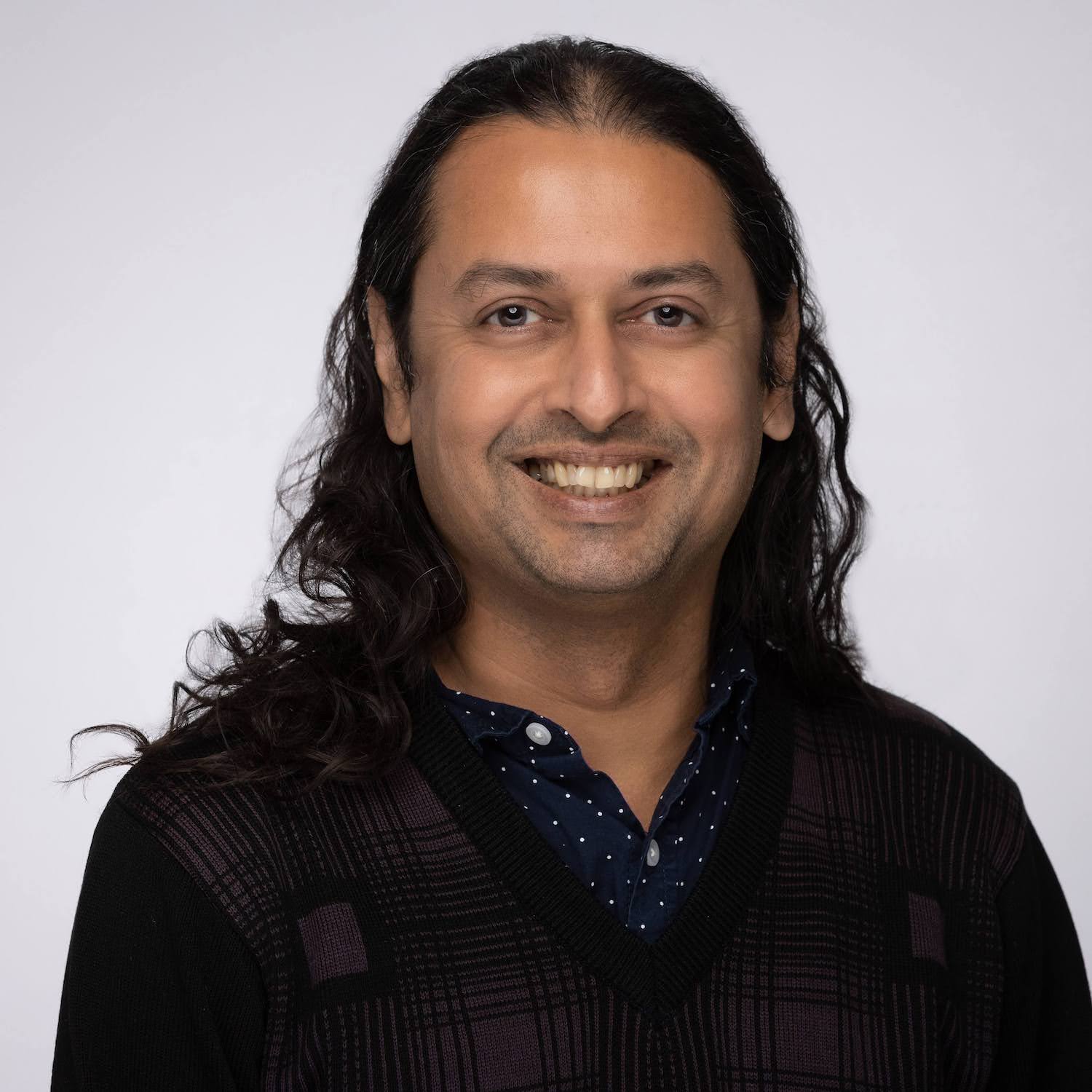
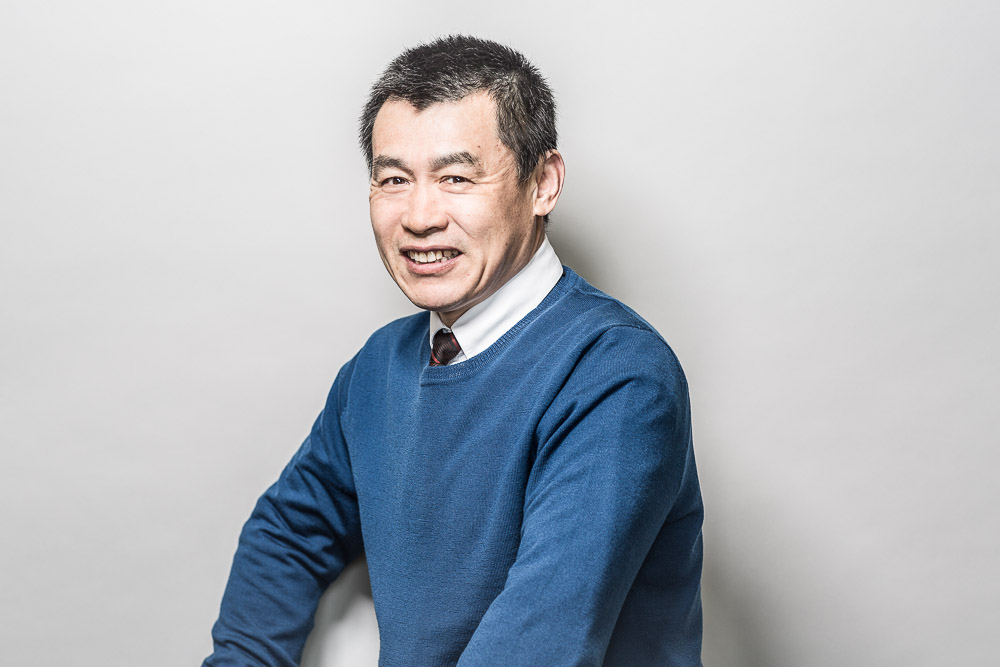
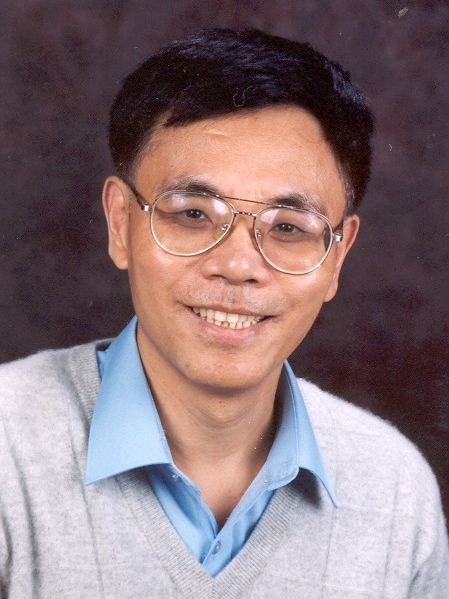
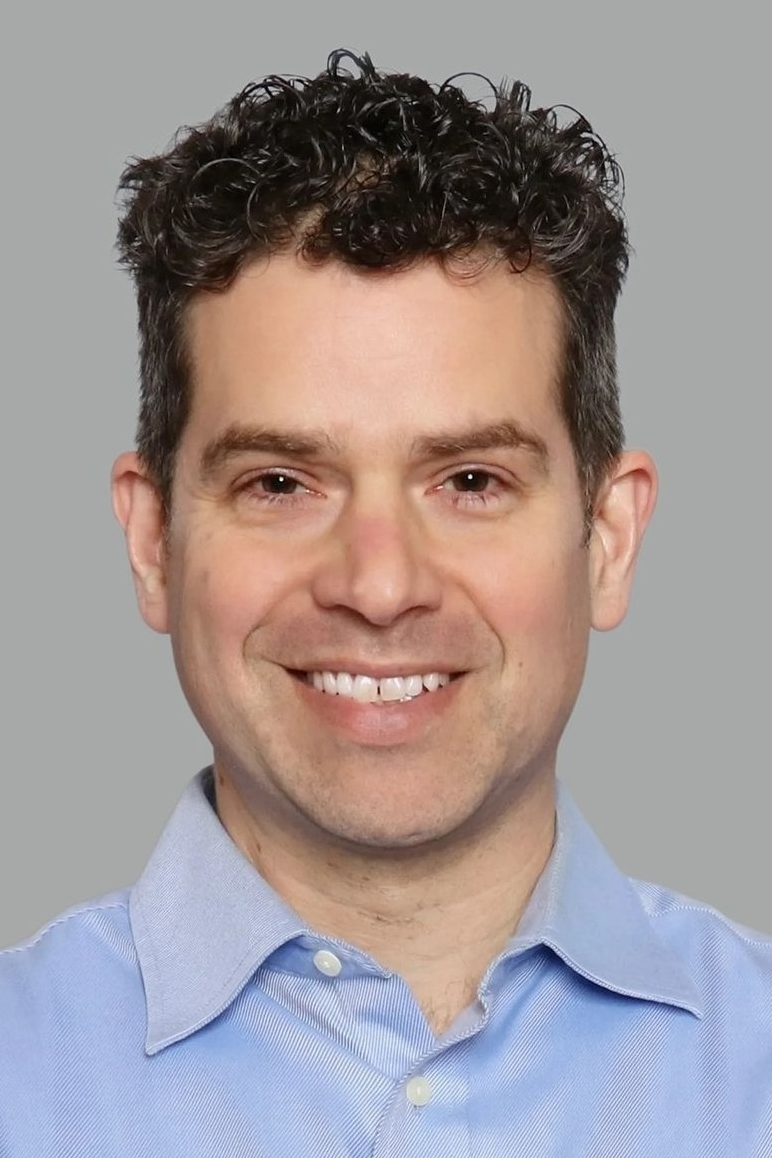
Tim Huh is a Professor and Chair of the Operations and Logistics Division at the University of British Columbia's Faculty of Commerce and Business Administration. He specializes in inventory control, supply chain management, and operations research, with a focus on dynamic decision-making under uncertainty. B.A., B.Math, M.Math from University of Waterloo M.A. from Regent College M.S., Ph.D. from Cornell University His research spans theoretical and applied topics including renewable energy systems, healthcare operations, and digital learning analytics. Recent work explores wind power storage optimization, asynchronous video usage in education, and multi-echelon inventory solutions. Scientific recognition includes the Canada Research Chair in Operations Excellence and Business Analytics He teaches core business analytics and operations management courses at both undergraduate and graduate levels, emphasizing quantitative decision-making and process fundamentals.
Dr. Crystal Senko is an Assistant Professor and Canada Research Chair in Trapped Ion Quantum Computing at the Institute for Quantum Computing (IQC) , University of Waterloo. Her research focuses on quantum simulations, quantum computing with trapped ions, and qudit-based systems. She holds a Ph.D. in Physics from the University of Maryland (2014) and a B.Sc. in Physics from Duke University (2009). Her research interests span Quantum Computing , Quantum Simulation , Trapped Ion Manipulation , and Photonics . Key projects include optimizing qudit-based quantum computing protocols and developing photonic crystal waveguides for atom-photon interactions. Recent work emphasizes trapped ion efficiency, laser noise mitigation, and programmable quantum simulators. Dr. Senko has authored influential papers on trapped ion systems, including studies on multi-level qudit control, nanophotonic cavity coupling, and non-thermalization in spin chains. Her work bridges theoretical quantum models and experimental advancements in scalable quantum hardware. Awards: Canada Research Chair (Trapped Ion Quantum Computing) Teaching: Courses include Quantum Physics 2 (PHYS 334), Quantum Mechanics 1 (PHYS 701), and Special Topics in Quantum Information Processing (PHYS 768/QIC 890). Labs/Teams: Affiliated with IQC and previously contributed to Harvard’s Center for Ultracold Atoms.
Suresh Krishna is an Associate Professor in the Department of Physiology at McGill University's Faculty of Medicine. His research focuses on the neurophysiological and computational basis of sensory processing, attention, and eye movements, with applications to brain-machine interfaces and human health. He works with human subjects, non-human primates, and open datasets using in-vivo electrophysiology, eye-tracking, and computational modeling. Research interests include visual attention mechanisms, saccadic eye movement control, neural coding of motion perception, and the interplay between attention and decision-making. His work bridges basic neuroscience with translational applications such as improving neural prosthetics and understanding perceptual disorders. Recent work highlights how neural remapping processes during saccades underlie spatial perception, and how attention modulates neural activity patterns in visual cortex. The lab's publications reveal critical insights into the temporal dynamics of attentional shifts and their neural substrates, particularly in areas MT and MST. Dr. Krishna's team also investigates auditory temporal processing in the inferior colliculus, exploring correlations between neuronal responses to sound modulation. Their findings contribute to understanding how sensory systems encode temporal information across modalities. Research is conducted in the M2B3 Lab (http://m2b3.lab.mcgill.ca), which integrates experimental and computational approaches to study brain mechanisms underlying perception and action. No specific awards are listed, but ongoing work involves major contributions to primate neurophysiology and translational neuroscience.
Richard Simon is an Associate Professor in the Department of Civil, Geological and Mining Engineering at Polytechnique Montréal. He holds leadership roles as Publications Director of his department and Administrative Director of the Institute for Research in Mining and Environment (IRME) UQAT-Polytechnique. His educational background includes a B.Eng. and M.Sc.A. from Polytechnique Montréal and a Ph.D. from McGill University. Dr. Simon teaches courses including Introduction to Mine Operations, Underground Mining, and Rock Mechanics I. His research focuses on rock mechanics, numerical modeling, mining engineering, and geotechnical applications in mining environments. His extensive publication record demonstrates consistent focus on numerical modeling of rock behavior, mine stability analysis, and backfill mechanics. Recent work emphasizes computational geomechanics applications in mining operations, including stress analysis in backfilled stopes, slope stability in open pits, and optimization of mining layouts. Environmental aspects of mining, particularly contaminant transport in fractured rock, also feature prominently. Dr. Simon has supervised 6 doctoral and 8 master's students working on topics ranging from numerical seismic assessment in mines to rock fracture mechanics. He secured significant research funding including $900,000 (2017) for a metals circular economy project and led three new IRME research initiatives (2015). He directs research activities at IRME UQAT-Polytechnique and collaborates extensively within the mining geomechanics research community. His expertise is regularly featured in media outlets including La Presse+ and Les Affaires.
Dr. Jianguo Wang is a Professor in the Department of Earth and Space Science Engineering at York University's Lassonde School of Engineering. He has been a faculty member since 2006 and is a founding member of the Lassonde School. With over 35 years of academic and industrial experience, he specializes in multisensor integration, GNSS technology, and precision engineering surveying. He holds a Dr.-Ing. in Geomatics Engineering from Universität der Bundeswehr München, Germany, alongside Bachelor’s and Master’s degrees from Wuhan Technical University of Surveying and Mapping (WTUSM). His research focuses on advanced data processing methodologies, including Kalman filtering, error analysis, and LiDAR systems. He has authored/co-authored over 60 publications, including textbooks like Error Theory and Foundation of Surveying Adjustment and Foundation of Geodesy . He is a Fellow of Engineers Canada and licensed as a Professional Engineer in Ontario. Education: Dr.-Ing., Geomatics Engineering, Universität der Bundeswehr München (Germany) M.Sc., Surveying Engineering, Wuhan Technical University of Surveying and Mapping B.Sc., Surveying Engineering, Wuhan Technical University of Surveying and Mapping Dr. Wang teaches courses such as Advanced Optimization and Applications , GNSS , and Global Geophysics and Geodesy . He leads the Earth Observation Laboratory (PSE 432), focusing on multisensor integration for navigation and positioning. His work explores innovative solutions for sensor calibration, data fusion, and geospatial applications. Grants & Labs: Active in lab-based research with collaborators like Baoxin Hu, his laboratory integrates GNSS, IMUs, LiDAR, and cameras for precision navigation. His recent work addresses challenges in sensor error calibration, LiDAR point cloud accuracy, and Kalman filter enhancements.
Masoud Asgharian is a Professor in the Department of Mathematics and Statistics at McGill University. His research focuses on survival analysis, changepoint problems, nonparametric Bayesian methods, and data envelopment analysis. He has contributed to influential studies on dementia survival rates, censored data methodologies, and statistical efficiency measures. His work bridges biostatistics and operations research, with applications in public health and medical sciences. Key contributions include methodologies for prevalent cohort survival analysis, input relaxation efficiency measures in stochastic DEA, and causal inference techniques. Asgharian has collaborated extensively with researchers in epidemiology and biomedical engineering, as evidenced by his co-authored publications on topics ranging from tooth enamel properties to low-precision neural network quantization. His research has been published in high-impact journals such as New England Journal of Medicine , Journal of the American Statistical Association , and Biometrics . Current affiliations include leadership roles in statistical research at McGill, with ongoing projects in computational statistics and healthcare analytics.
Gordon Geoffrey J. is a Professor at Carnegie Mellon University, specializing in Machine Learning , Artificial Intelligence , and Computer Science . His research spans Reinforcement Learning , Domain Adaptation , Graph-based Planning , and Relational Learning , with significant contributions to Adversarial Learning , Deep Learning Dynamics , and Mobile Sensor Networks . He has pioneered algorithms like ARA* and Anytime Dynamic A* for efficient planning under constraints. Key research areas: Transfer Learning , Bayesian Knowledge Tracing , Multi-agent Systems , Database Optimization His work has been cited thousands of times across foundational topics in AI and robotics, demonstrating sustained impact in algorithm design and applications to complex systems.
Kwang Moo Yi is an Assistant Professor in the Department of Computer Science at the University of British Columbia (UBC), where he conducts research in computer vision and machine learning. He is affiliated with the Computer Vision Lab, CAIDA (Centre for Artificial Intelligence Decision-making and Action), and ICICS (Institute for Computing, Information and Cognitive Systems) at UBC. Education: B.Sc. from Seoul National University Ph.D. from Seoul National University under Prof. Jin Young Choi Post-doctoral researcher at École Polytechnique Fédérale de Lausanne (EPFL) with Prof. Pascal Fua and Prof. Vincent Lepetit Dr. Yi's research focuses on Visual Geometry with the goal of understanding local environments, adapting to them, and acting within them. His work spans applications in autonomous vehicles, drones, robots, and Augmented/Mixed Reality systems. He employs machine learning, particularly deep learning, as the primary tool for advancing computer vision capabilities. His recent publications demonstrate a strong focus on neural rendering techniques, especially 3D Gaussian Splatting and Neural Radiance Fields (NeRF). The research trends show increasing sophistication in handling occlusions, improving rendering quality, and developing more efficient training methods for neural fields. There's also significant work connecting computer vision with practical applications in industrial settings and energy systems. Dr. Yi serves as an area chair for top computer vision and machine learning conferences including CVPR, ICCV, ECCV, NeurIPS, ICML, and AAAI. He was part of the organizing committee for CVPR 2023. He supervises graduate students including Eric (who recently completed his PhD), Gopal (now at Samsung Research), and Jeong-Gi (joining as a postdoctoral fellow). His teaching includes CPSC 425: Computer Vision and CPSC 533Y: 3D Computer Vision with Deep Learning. Dr. Yi is actively involved with the Computer Vision Lab at UBC, collaborating with researchers across CAIDA and ICICS. His work bridges theoretical computer vision with practical applications in various domains including astronomy, industrial automation, and energy systems.
C. Perry Chou is a full professor in the Chemical Engineering Department at the University of Waterloo, with a cross-appointment in Biology. He holds a BSc and MSc from National Taiwan University and a PhD from Rice University, all in Chemical Engineering. His research focuses on integrating biochemical, genetic, and metabolic engineering strategies to enhance biomanufacturing using microbial cell factories. Key areas include recombinant protein production, microbial biotechnology, and biofuel development. Education: PhD in Chemical Engineering, Rice University (1995) MSc in Chemical Engineering, National Taiwan University (1987) BSc in Chemical Engineering, National Taiwan University (1984) Research Interests: Dr. Chou’s work spans biochemical engineering, bioprocessing, and metabolic engineering. He develops strategies for microbial strain construction, fermentation optimization, and bioproduct purification. His research bridges fundamental biological sciences with applied engineering to advance biomanufacturing. Publications: His 90+ peer-reviewed articles highlight contributions to strain engineering, CRISPR-Cas9 tools, and microbial production of chemicals like 5-aminolevulinic acid and propionate. Recent trends emphasize nanomaterial applications (e.g., graphene oxide) and sustainable biofuel pathways. Awards: Canada Research Chair (Canada) 1000-talent Award (China) Advising & Grants: Dr. Chou actively mentors graduate students and contributes to editorial roles at journals like Biotechnology Advances and Scientific Reports . He teaches courses such as CHE 161 (Engineering Biology) and CHE 562 (Advanced Bioprocess Engineering). Labs/Teams: Collaborates with interdisciplinary teams to advance bioprocess development, though specific lab names are not explicitly mentioned in the text.
Ke Wang is a Professor in the School of Computing Science at Simon Fraser University . His research focuses on Data Mining , Database Systems , Data Privacy , and Graph and Network Data . He holds a Ph.D. and M.Sc. from the Georgia Institute of Technology (1986 and 1984, respectively). Teaching includes courses like Database Systems II , Introduction to Data Mining , and Special Topics in Databases . He has advised numerous students and alumni, many of whom now work in tech, academia, and industry. Notable awards include the 2013 Faculty of Applied Sciences Research Excellence Award and the ECIR 2019 Best System Paper . His work emphasizes privacy-preserving techniques and has led to contributions like the Introduction to Privacy-Preserving Data Publishing textbook. He has served as a conference chair for major data mining events like SDM 2015/2016 and holds editorial roles in journals like ACM TKDD. His lab, the Database and Data Mining Laboratory , focuses on actionable solutions for real-world data challenges.
Bilal Farooq is an Associate Professor and Program Director for the Master of Engineering in Interdisciplinary Engineering (MEIE) at Toronto Metropolitan University, holding the Canada Research Chair in Disruptive Transportation Technologies and Services within the Department of Civil Engineering. His educational background includes a PhD from the University of Toronto (2011), MASc from Lahore University of Management Sciences (2004), and BSc from the University of Engineering and Technology (2001). Dr. Farooq's research pioneers disruptive transportation solutions through cyber-physical systems, AI/machine learning applications, behavioral modeling, and optimization techniques. His work specifically targets on-demand multimodal systems, sustainable urban transportation, urban air mobility, automated vehicles, and extended reality applications, addressing critical urban mobility challenges with human-centered approaches. Analysis of his recent publications reveals a strong trend toward quantum-enhanced computational methods, privacy-preserving federated learning frameworks, and sustainability-focused decarbonization strategies across transportation domains, with increasing emphasis on human factors and real-world implementation. Notable scientific awards include: Ontario Early Researcher Award (2018) Canada Research Chair (2017) MassMotion Academic Pedestrian Modelling Project of the Year (2016) Québec Early Researcher Award (2014) Dr. Farooq actively supervises graduate students and secures significant research funding through his Canada Research Chair position and Early Researcher Awards. He directs the Laboratory of Innovations in Transportation (LiTrans), which develops interdisciplinary solutions integrating mathematics, engineering, computer science, and economics to address emerging transportation challenges. LiTrans focuses on disruptive transportation technologies, complete streets design, cyber-physical systems, pedestrian dynamics, resilience, and climate change impacts, collaborating with industry and government partners to translate research into practical urban mobility innovations for smart cities worldwide.
Dr. Yujie Tang is an Assistant Professor in the Faculty of Computer Science at Dalhousie University, Canada, where she has been serving since September 2022. Prior to this, she was an Assistant Professor at Algoma University (2019–2022) and a Post-Doctoral Fellow at the University of Waterloo (2017–2019). Her academic journey includes a PhD from the University of Waterloo and earlier degrees from Harbin Institute of Technology and Lanzhou Jiaotong University. PhD – University of Waterloo (2017) M.E. – Harbin Institute of Technology, Shenzhen, China B.E. – Lanzhou Jiaotong University, Lanzhou, China Her research focuses on intelligent networking and computing technologies for future IoT and 5G/6G systems. Key areas include Internet of Vehicles (IoV), AI-empowered edge computing, resource management in heterogeneous networks, software-defined networking, and UAV-assisted communications. She employs machine learning and optimization techniques to design energy-efficient and high-performance network protocols. The most recent publications reflect a strong trend in applying AI and machine learning to solve complex problems in vehicular networks, edge caching, and spectrum management. Her work spans top-tier IEEE journals such as IEEE Transactions on Vehicular Technology , IEEE Internet of Things Journal , and IEEE JSAC , with a clear emphasis on real-world deployable solutions for next-generation wireless systems. Faculty Research Startup Fund, Dalhousie University, 2022 NSERC Discovery Grant, 2021–2026 Algoma University Research Fund, 2021 Faculty Research Startup Fund, Algoma University, 2019 Best Speaker Award, University of Waterloo, 2017 Faculty of Engineering Award (4 times), University of Waterloo, 2013–2017 University of Waterloo Graduate Scholarship, 2013–2015 International Doctoral Student Award, 2012–2016 Graduate Research Studentship (twice), 2011–2012 Provost Doctoral Entrance Award for Women, 2011 Dr. Tang actively supervises graduate and undergraduate students and has secured competitive research grants, including the NSERC Discovery Grant. She serves on the technical program committees of major IEEE conferences such as INFOCOM, GLOBECOM, and ICC, and regularly reviews for top journals like IEEE JSAC , IEEE TWC , and IEEE TVT . She currently leads a research group focusing on B5G/6G networks, IoV, and edge computing, and she is actively recruiting new students and visiting scholars. Her research group operates within the Faculty of Computer Science at Dalhousie University, where she leads projects in intelligent resource management, AI-driven networking, and integration of space-air-ground networks. She is a member of IEEE, IEEE Communications Society, and IEEE Vehicular Technology Society.
Dr. Steven H. H. Ding is an Assistant Professor at McGill University's School of Information Studies, specializing in cybersecurity, machine learning, and data mining. His research focuses on AI-driven solutions for malware detection, software vulnerability analysis, and reverse engineering. He holds a PhD from McGill University and has been supported by BlackBerry Cylance and DRDC. His work bridges theoretical advancements with practical applications in military systems and avionics cybersecurity. Dr. Ding earned his PhD in 2019 with notable awards including the FRQNT Doctoral Research Scholarship and McGill's Dean’s Graduate Award. His educational background includes degrees from McGill, Concordia University, and the University of Shanghai for Science and Technology. His research interests span cybersecurity domains such as zero-day malware identification, code obfuscation countermeasures, authorship verification for digital forensics, and AI applications in avionics anomaly detection. He actively contributes to open-source tools like the Kam1n0 MapReduce-based assembly clone search system. Recent work emphasizes adversarial machine learning for evasive malware generation, transformer-based anomaly detection in avionics, and automated SBOM generation for firmware analysis. His publications reflect a focus on real-world cybersecurity challenges in both civilian and defense sectors. Dr. Ding leads the L1NNA Lab and collaborates with industry partners on cutting-edge projects. His contributions include novel techniques for phishing detection leveraging large language models and innovative approaches to reverse engineering software composition in JavaScript applications.
Septimiu E. Salcudean is a Professor at the University of British Columbia's Department of Electrical and Computer Engineering, holding the C.A. Laszlo Chair in Biomedical Engineering and a Canada Research Chair. His research focuses on medical robotics, image guidance systems, and ultrasound elastography. He has contributed to advancements in haptic interfaces, teleoperation, and needle insertion modeling. Education: B.Eng and M.Eng from McGill University (1979-1981), Ph.D. from UC Berkeley (1986). He has held positions at IBM T.J. Watson Research Center and was a Killam Research Fellow at ONERA in France. His work spans robotics, biomedical engineering, and surgical systems. Research interests include medical robotics, real-time imaging, and surgical navigation. Notable projects involve ultrasound-guided surgery, vibro-elastography for tissue characterization, and haptic feedback systems. His lab, the Robotics and Control Laboratory (RCL), develops technologies like the da Vinci surgical system integration with ultrasound imaging. Awards include the NSERC Synergy Award, IEEE Fellowship, and UBC Killam Research Prize. He has advised over 30 graduate students and published extensively in robotics and biomedical journals.
David Sivak is a Professor and Canada Research Chair Tier 2 in the Department of Physics at Simon Fraser University (SFU). His research focuses on theoretical and computational biophysics, exploring the physical limits of energy and information transduction in molecular machines. He investigates how biological systems operate efficiently under fluctuating conditions, with emphasis on molecular motors, free-energy transduction, and nonequilibrium thermodynamics. Education: Ph.D. in Biophysics, University of California, Berkeley B.A. in Philosophy, Politics & Economics, University of Oxford A.B. with Honors in Applied Mathematics, Harvard University Research Interests: Sivak's work integrates statistical mechanics, information theory, and molecular biophysics to understand how microscopic systems achieve functional efficiency. Key areas include: Optimal control strategies for nonequilibrium systems Energy-information trade-offs in molecular machines Stochastic thermodynamics of biochemical processes Design principles of ATP synthase and similar rotary motors Publications & Awards: Sivak has authored over 60 peer-reviewed articles, including foundational work on nonequilibrium fluctuation theorems and optimal control in stochastic systems. His awards include the Canada Research Chair and the Young Investigator Award from the Biophysical Society of Canada. Grants & Collaborations: He leads projects funded by the Simons Foundation and collaborates with experimental groups globally. His lab actively mentors graduate students and postdocs, emphasizing interdisciplinary approaches to biophysical problems. Labs & Teams: The Sivak Group at SFU develops theoretical models and numerical simulations to analyze molecular-scale processes. Current projects explore information engines, microbiome dynamics, and the thermodynamics of cellular processes.