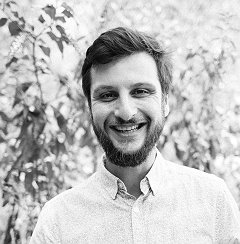
Francesco Gavazzo is an Assistant Professor at the Department of Mathematics, University of Padua. His research focuses on theoretical computer science, particularly in programming language semantics, computational effects, relational reasoning, and inductive/coinductive methods. PhD in Computer Science and Engineering, with Honor Mention MSc in Logic and Computer Science BA in Philosophy His work bridges formal methods with practical applications in program equivalence, quantitative semantics, and effect systems. Recent contributions include frameworks for effectful program distancing and relational theories of effects. Scientific awards include recognition by the Accademia delle Scienze dell'Istituto di Bologna (Top 10 in Science) and the Best Italian PhD Thesis in Theoretical Computer Science (EATCS Italian Chapter). He serves on program committees for POPL and ICFP.
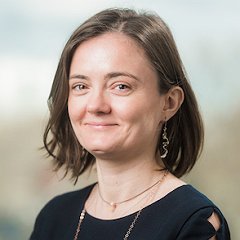
Guilhem Jaber is an Associate Professor at University of Nantes , affiliated with the Gallinette team in the LS2N research laboratory . His work focuses on operational game semantics, contextual equivalence, and formal verification of higher-order programs with computational effects. Research Grants RECIPROG (2021-2025): ANR PRC Project, local coordinator CAVOC (2021-2025): Inria-Nomadic Labs agreement, project investigator CANofGAS (2022-2025): Inria Exploratory Action, co-investigator Scientific Awards Distinguished Paper Award at ICFP'21 Supervision Axel Kerinec: Postdoc on CANofGAS project Hamza Jaafar: PhD on CAVOC project Peio Borthelle: PhD co-advised with Beniamino Accattoli His research bridges game semantics with operational techniques, particularly for algebraic effects, parametric polymorphism, and separation logic. He actively participates in program committees for POPL, GALOP, and HOPE workshops.
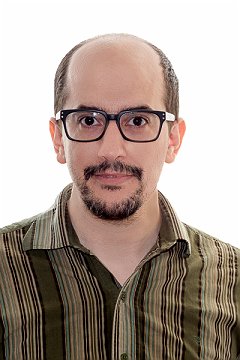
Daniele Nantes-Sobrinho is a tenured Adjunct Professor at the Department of Mathematics, University of Brasília, currently on sabbatical leave. She concurrently serves as a Research Fellow at Imperial College London. She obtained her Ph.D. in Mathematics from the University of Brasília in 2013, with research focused on equational unification in security protocol analysis. Education: Ph.D. in Mathematics, University of Brasília, 2013 Research Interests: Her work develops mathematical structures and logical foundations for modeling, specifying, and verifying critical systems. Core areas include: Formal Methods, Separation Logic, Verification, Logical Methods for Computer Science, Rewriting, Unification, Nominal Techniques, Security Verification, and Behavioral Types. Publications: Her 15 most recent articles (2018-2023) cluster around Formal Methods, with emphases on Nominal Techniques, Concurrency, Unification/Algorithms, and Verification. Trends show increasing focus on non-determinism in concurrent systems and certified unification algorithms. Student Advising: Current MSc Students: Daniella Santaguida Magalhães, Gabriela de Souza Ferreira, Leonardo Melo Batista, Ali Khãn Ribeiro Former Students: Bruno Falcão (Undergraduate), Vinícius Sugimoto (Undergraduate), Andrés Gonzalez (MSc), Deivid Vale (MSc), Bruno Delboni (MSc) Affiliations: Member of the Theoretical Computer Science Group (GTC-UnB) and external collaborator for the VIDI project Unifying Correctness for Communicating Systems .
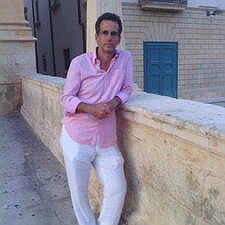
Alexandra Silva is a Professor of Computer Science in the Department of Computer Science at Cornell University's College of Engineering. She joined Cornell as faculty in 2021 after previously serving as a Royal Society Wolfson Fellow and Professor of Algebra, Semantics, and Computation at University College London. Her research spans programming languages, formal verification, and theoretical computer science, with particular focus on Kleene Algebra with Tests (KAT), probabilistic programming, and automata theory. She has held numerous leadership roles in major programming languages conferences including POPL, PLDI, and ICFP. Dr. Silva completed her PhD at Centrum Wiskunde & Informatica (CWI) in Amsterdam under the supervision of Jan Rutten and Marcello Bonsangue, with her thesis entitled "Kleene coalgebra" defended in December 2010. Prior to her PhD, she was an undergraduate student at University of Minho in Portugal, where she completed a 5-year Mathematics and Computer Science degree in May 2006. Her research focuses on the modular development of specification languages and algorithms for models of computations, often from the unifying perspective offered by coalgebra. She has made significant contributions to Kleene Algebra with Tests, probabilistic programming semantics, network verification, and automata learning. Her work bridges theoretical foundations with practical verification tools, particularly in the domain of Software-Defined Networking where her NetKAT framework has gained significant attention. Analysis of her recent publications reveals a strong trend toward unifying frameworks for program verification, particularly through her development of Outcome Logic which provides foundations for both correctness and incorrectness reasoning. Her work increasingly integrates probabilistic and concurrent aspects of programming languages, with applications to network verification and security. The NetKAT ecosystem remains a central theme, with extensions to infinite state verification, symbolic execution, and learning-based approaches. Distinguished paper award for Guarded Kleene algebra with tests: verification of uninterpreted programs in nearly linear time (POPL 2020) Dr. Silva advises a large research group with numerous PhD students, postdocs, and undergraduate researchers. Her group has produced significant work in programming languages theory, verification, and applications to networking. She has secured substantial research funding through various grants that support her work on formal methods for network verification and probabilistic programming. Her mentoring approach emphasizes both theoretical depth and practical impact, with many of her students moving to prestigious academic and industry positions. Her research group, spanning both Cornell University and University College London, focuses on developing theoretical foundations for programming languages with practical applications in network verification, probabilistic systems, and program analysis. The group maintains active collaborations with researchers at CWI, University of Oxford, and other leading institutions in programming languages and formal methods.
Francisco Ferreira is a Lecturer (tenure track, equivalent to Assistant Professor) in the Department of Computer Science at Royal Holloway, University of London. Previously, he was a postdoctoral Research Associate in the Department of Computing at Imperial College London, working with Professor Nobuko Yoshida. Dr. Ferreira's primary research interests include type systems and formal logic, formal meta-theory, concurrency and process calculi, session types, temporal logic and other modal logics, and principled approaches to programming. His work bridges theoretical foundations with practical applications, particularly in the realm of communication protocols and programming language design. His publication record demonstrates a strong focus on session types and their applications, with a trajectory moving from foundational theoretical work to practical implementations. Over the past decade, his research has increasingly emphasized the verification and implementation of communication protocols, resulting in tools and frameworks that ensure communication safety in distributed systems. Scientific Awards: ICFP'12 Student Research Competition First Place Dr. Ferreira has teaching experience in programming languages and paradigms, having served as both a lecturer and teaching assistant for COMP 302. His industrial experience includes Haskell consulting for Erudite Software, game programming for Bluberi, and developing mission-critical software for Motorola Argentina in the telecom industry.
Alberto Momigliano is an Associate Professor at the Department of Computer Science , University of Milan, Italy. His research focuses on formal methods, proof theory, and logical frameworks in programming languages. He has contributed extensively to property-based testing, coinductive proofs, and mechanized metatheory. Research Interests : Formal verification of programming languages Higher-order abstract syntax Logical frameworks (Hybrid, Beluga) Proof theory and type systems Property-based testing Coinductive methods Recent Articles explore substructural contexts, proof outlines for testing, and coinductive formalizations. His scientific awards include the Distinguished Paper Award at CPP 2025. Academic Activities : Program Committee Member at CPP 2024 and CPP 2025 Organized Logic Colloquium 2023 in Milan Steering Committee member of PPDP Involved in mechanizing metatheory with Coq automation
Kymora B. Scotland, MD, PhD is an Assistant Professor of Urology at the University of California, Los Angeles (UCLA) David Geffen School of Medicine. She serves as the Director of Endourology Research and Associate Director of the Endourology Fellowship Program at UCLA Health. Dr. Scotland specializes in endourology with clinical expertise in kidney stone treatment and benign prostatic hyperplasia management at Westwood Urology in Los Angeles. Education: MD from Weill Cornell Medical College (2011) Internship in Urology at Thomas Jefferson University Hospital (2013) Residency in Urology at Thomas Jefferson University Hospital (2017) Fellowship in Endourology at University of British Columbia (Vancouver) (2019) Board Certified in Urology by the American Board of Urology (2022) Dr. Scotland's research program focuses on performing truly translational research to identify therapeutic targets that will improve current stone management and enhance quality of life for patients with stone disease. Her primary research interests include understanding kidney stone pathogenesis and the role of bacteria in this process, as well as elucidating the mechanisms underlying ureteral peristalsis and addressing the management of dysfunctional peristalsis and infection in nephrolithiasis patients with obstructing ureteral calculi. Her work bridges clinical practice with laboratory research to develop more effective treatments for urolithiasis through multidisciplinary collaboration. Dr. Scotland's publication record demonstrates a strong translational focus across multiple aspects of endourology. Her research spans from basic science investigations of stone pathogenesis to clinical studies evaluating treatment outcomes, with particular emphasis on kidney stone disease management. Recent work includes examining metabolic syndrome's impact on stone-related quality of life, developing biomarkers for stent-related inflammation, exploring bacterial interactions with ureteral stents, and applying artificial intelligence to kidney segmentation in CT imaging. Her collaborative approach is evident through numerous multi-institutional studies addressing various aspects of stone disease management and endoscopic procedures across international settings. Scientific Awards: AUA Western Section's Young Urologist of the Year for 2022 As Director of Endourology Research, Dr. Scotland leads a comprehensive research program focused on translational approaches to improve stone disease management. Her research initiatives include investigations into stone pathogenesis mechanisms, ureteral physiology, and technological innovations in endourological procedures. While specific grant information isn't detailed in the text, her active research program and multi-institutional collaborations across multiple publications indicate successful funding to support her translational research initiatives. Her work with international collaborators suggests participation in global research networks addressing urological conditions. Dr. Scotland leads the Endourology Research program and serves as Associate Director of the Endourology Fellowship Program at UCLA. Her research team employs multidisciplinary approaches, collaborating with experts in microbiology, engineering, and imaging to develop innovative solutions for stone disease management. The program focuses on bridging basic science discoveries with clinical applications through laboratory investigations and clinical trials to improve patient outcomes in endourology. Her work with international collaborators extends the impact of her research beyond the UCLA Health system to address global urological challenges.