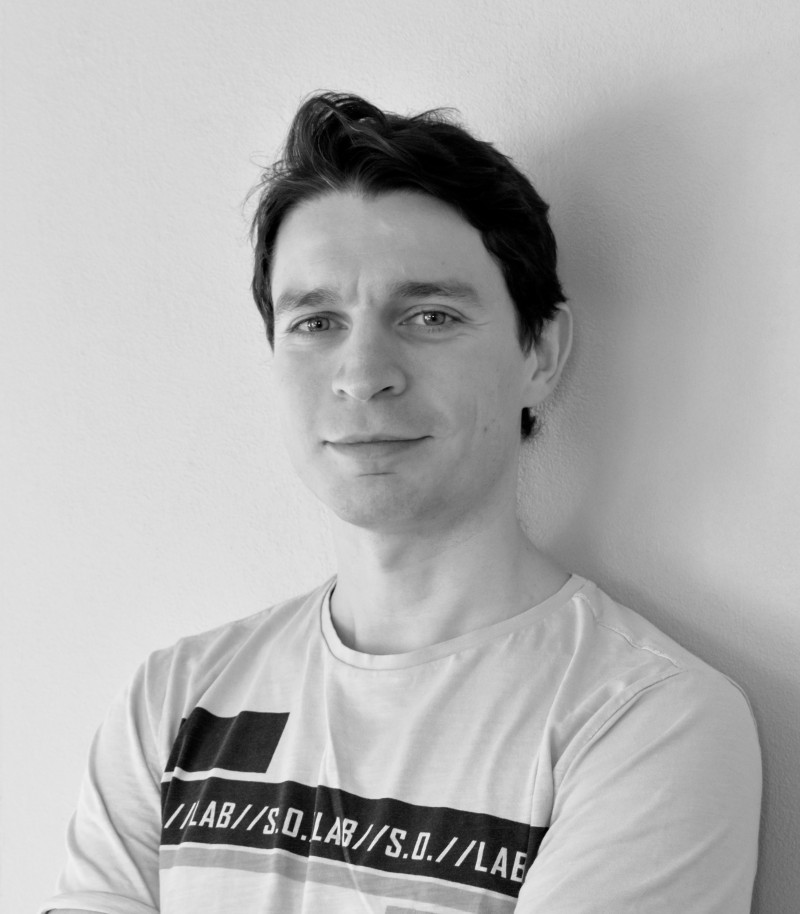
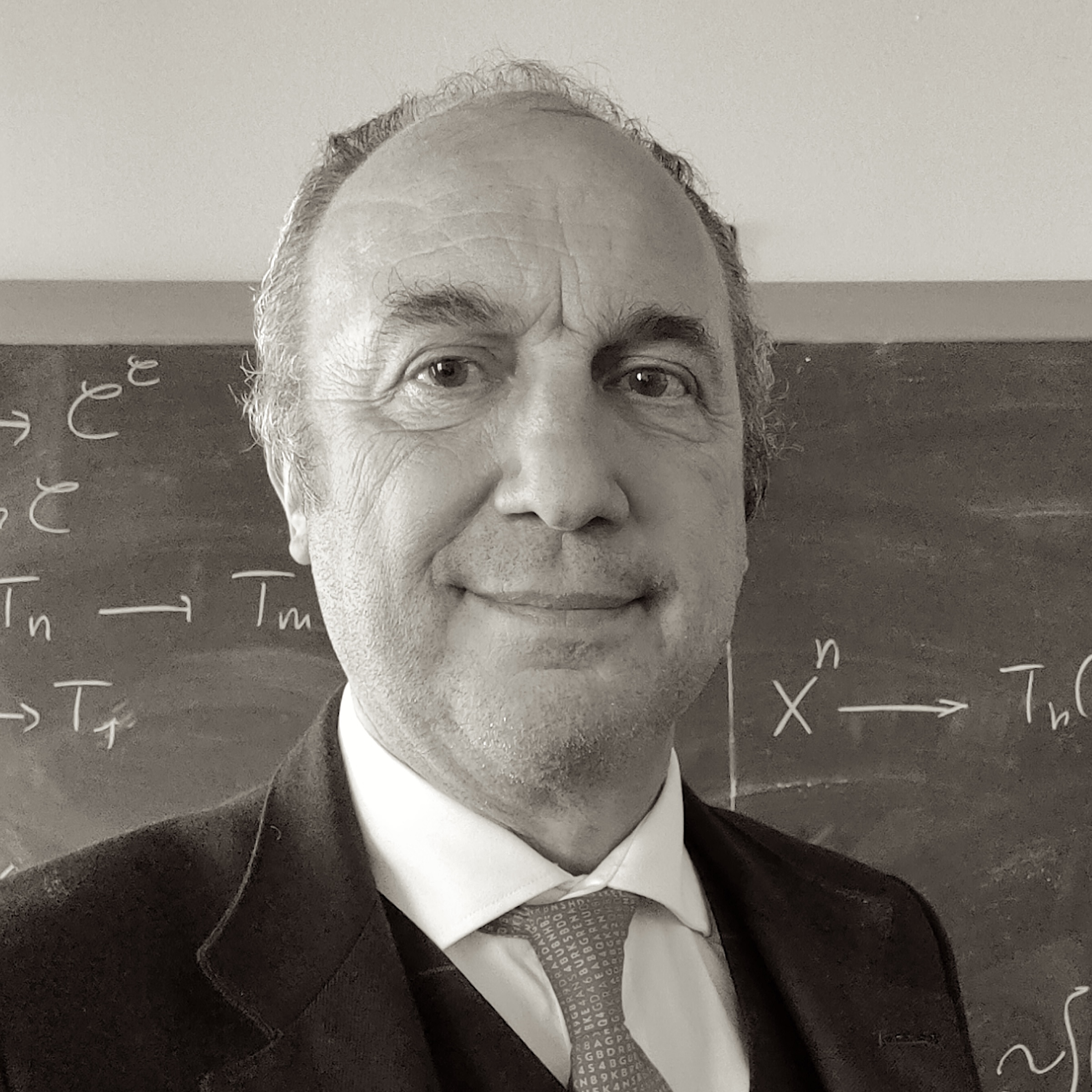
Matteo Acclavio is an Assistant Professor in Computer Science at the School of Engineering and Informatics, University of Sussex, affiliated with the Foundations of Software Systems (FoSS) research group. A logician specializing in proof theory and its applications to computer science, his work bridges mathematical logic with concurrency theory and process calculi. Education: PhD in Mathematics, Aix-Marseille University, France Master in Discrete Mathematics and Foundations of Theoretical Computer Science, Aix-Marseille University Master in Mathematics, Roma Tre University, Italy Bachelor in Mathematics, Roma Tre University His research focuses on graphical proof systems, linear logic, modal logic, and concurrency theory. Publications highlight contributions to deep inference, sequent calculus, and the intersection of logic with distributed systems. Recent work explores logical frameworks for concurrency, such as choreographic programming, and graphical models for proof systems. He teaches courses like Operating Systems and maintains active collaborations in theoretical computer science.
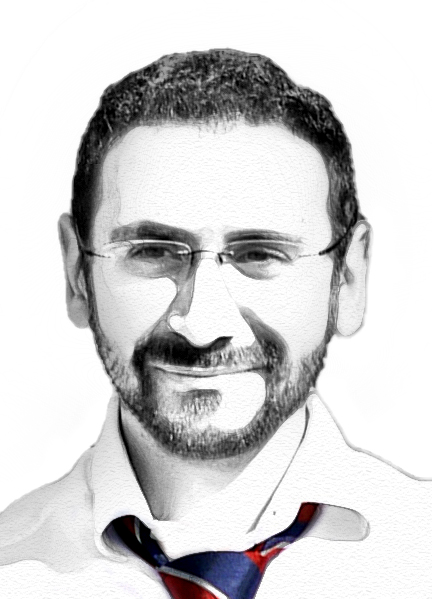
Carsten Schürmann is a Professor of Theoretical Computer Science at IT University of Copenhagen, where he serves as Center Manager for the Center for Information Security and Trust. His research spans information security, cryptographic voting protocols, identity management, and digital democracy, with significant contributions to security ceremonies and formal verification of protocols. Professor, Department of Computer Science Center Manager, Center for Information Security and Trust Principal Investigator for multiple DIREC projects through 2025 Active researcher with 64 publications and 20 projects listed His research focuses on the intersection of theoretical computer science and practical security challenges, particularly in voting systems and security ceremonies. Schürmann has developed formal methods for analyzing security protocols, with emphasis on human factors in security implementations and cryptographic voting systems. His work bridges logical frameworks with real-world security applications, addressing both technical and socio-technical aspects of security. Analysis of his recent publications reveals a strong emphasis on voting security, with multiple papers on risk-limiting audits, receipt-free voting, and election integrity. His work increasingly incorporates formal logical frameworks to verify security properties, while also addressing human factors in security ceremonies. The research spans theoretical foundations in linear logic to practical applications in election systems. As Principal Investigator, Schürmann leads several major projects funded by the Innovation Fund Denmark, including DIREC initiatives focused on Capacity Building, PhD School, Voting, and Entrepreneurship (2020-2025). He has also established working groups in Adversarial AI and Machine Learning. Organized workshops on Code Scanning (2014) and Verifying Security Protocols in Tamarin (2016) Active media commentator on security issues with 311 media appearances through 2025 Principal Investigator for 7 ongoing and 13 completed research projects Schürmann directs the Center for Information Security and Trust, which serves as a hub for interdisciplinary security research connecting theoretical computer science with practical security applications. His center focuses particularly on voting systems security and security ceremonies, bringing together researchers from multiple disciplines to address complex security challenges.
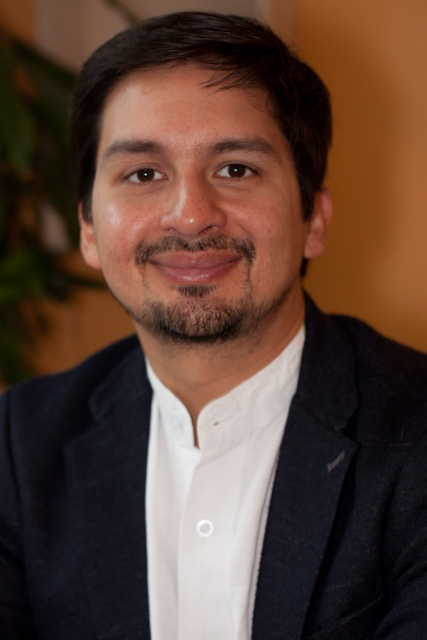
Roles and Affiliations: Jørgen Villadsen is an Associate Professor at the Technical University of Denmark (DTU), affiliated with the Department of Applied Mathematics and Computer Science and the Algorithms, Logic and Graphs Section. He serves as Head of Study and focuses on formal logic, multi-agent systems, and computer science education. Education: MSc in Computer Science and Engineering (1989, DTU) and PhD in Computer Science (1995, DTU). Research Interests: Villadsen’s work centers on logic and its applications in computer science and artificial intelligence, including formal methods, multi-agent systems, type theory, and non-classical logics. He emphasizes the development of proof assistants like Isabelle and tools for teaching logic and formal reasoning. Recent Research Trends: His publications from 2020–2017 highlight contributions to logic education, automated reasoning, and multi-agent system design. Key areas include Isabelle-based proof systems, hybrid logic formalization, and competitive agent development in programming contests. Scientific Contributions: He has led teams in the Multi-Agent Programming Contest, published extensively in journals like Annals of Mathematics and Artificial Intelligence , and contributed to open-source tools like NaDeA and SPA. Grants and Projects: Involved in projects such as CONTROL (constraint-based language processing) and HyLoMOL (hybrid logic integration). Supervised numerous MSc and PhD students in multi-agent systems and formal methods. Labs/Teams: Active in the Multi-Agent Systems Lab, leading development of agents for competitions and educational tools. Collaborates internationally on logic, AI, and formal verification.
Hans Hüttel is a Part-time Lecturer and Guest Researcher in the Department of Computer Science at the University of Copenhagen's Faculty of Science, specializing in Programming Languages and Theory of Computation within the Programming Languages and Theory of Computation research group. His research focuses on: Type systems for programming languages Process calculi and concurrency theory Formal semantics of programming languages Static analysis techniques Theoretical foundations of programming languages Data flow and alias analysis Hüttel's scholarly work demonstrates sustained contributions to programming language theory with publications spanning from 2022 to 2025. His research trajectory shows both theoretical depth in process calculi and practical applications in modern programming languages. The 2025 publication on program synthesis indicates adaptation of his expertise to emerging AI-assisted programming paradigms while maintaining rigorous theoretical foundations. His publications appear in reputable venues including Communications of the ACM, Information and Computation, and Electronic Proceedings in Theoretical Computer Science, reflecting both theoretical significance and practical relevance in programming language design and implementation. Hüttel maintains active collaborations with researchers across multiple institutions as evidenced by his co-authored publications with colleagues including Lybech, Bendixen, Bojesen, Lund, Jensen, Paulsen, Teule, and Saioc. His work receives attention across academic platforms with readership on Mendeley and mentions on social media platforms including X and Bluesky.
Fabrizio Montesi is Professor of Computer Science at the University of Southern Denmark, Department of Mathematics and Computer Science. He leads the Section of Artificial Intelligence, Cybersecurity, and Programming Languages and holds leadership roles in the Microservices Community, SDU Digital Democracy Centre, and SDU eScience Center. His work focuses on programming languages and systems, cloud/edge computing, microservices, choreographic programming, and cybersecurity.
Jens Christian Godskesen is a Lecturer in Theoretical Computer Science at the IT University of Copenhagen. He has maintained an active research career with 19 publications and involvement in 20 research projects spanning from 1999 to the present. His academic work focuses on formal methods and theoretical computer science with particular emphasis on bisimulation techniques and probabilistic systems. Godskesen's research interests center around bisimulation theory, probabilistic automata, mobile networks, and stochastic calculus. His work explores behavioral equivalence in computational systems, logical characterizations of probabilistic models, and formal verification techniques. He has made significant contributions to understanding probabilistic bisimulation for realistic schedulers and developing abstraction refinement techniques for complex systems. His research bridges theoretical computer science with practical applications in security and networking. Analysis of his publication trends shows a consistent focus on bisimulation theory and probabilistic systems from 2012-2015, with recent expansion into blockchain technology and urban data analytics. His work demonstrates strong theoretical foundations while addressing practical challenges in mobile security and network modeling. The interdisciplinary nature of his research connects computer science theory with applications in security, networking, and fintech. Godskesen has served as Principal Investigator for numerous research projects including the ongoing Urban Insights Data Lab (2023-present), the Velux Visiting Professor Program (2011-2012, 2015-2016), CMS: Calculi for Mobile Security (2006-2010), and the 6th International Blockchain School (2023). He has also contributed to academic governance as chair of the hiring committee for a full professor in Digital Play (2022-2023). With 92 media contributions documented through 2024, Godskesen actively engages with public discourse on IT education, blockchain technology, and digital leadership. His recent media appearances include commentary on the IT University's new vice-chancellor at the University of Copenhagen (November 2024), DigitalLead's new board of directors (August 2024), and concerns about declining enrollment in Danish IT programs (July 2022).
Saverio Giallorenzo is an Assistant Professor (tenure-track) at the Department of Computer Science and Engineering, University of Bologna. He is also a member of the Microservices Community communication group, OLAS team at INRIA (France), and the Italian National Laboratory for Cybersecurity (Bologna node). Previously, he was associated with the Focus team at INRIA (France), Concurrency and Logic group, DISI Jolie Lab, and SPACES groups. Dr. Giallorenzo's research spans multiple areas in computer science with a focus on distributed systems and programming languages. His primary research interests include: Programming Languages Process Calculi Choreographic Programming Microservices Session Types Dynamic Adaptability Security His work bridges theoretical foundations with practical applications, particularly in the areas of serverless computing, microservice architectures, and secure distributed systems. Analysis of Dr. Giallorenzo's recent publications (2024-2026) reveals a strong focus on serverless computing, microservices, and choreographic programming. His research demonstrates a consistent trajectory toward optimizing distributed systems through formal methods. Key themes include topology-aware function scheduling in serverless environments, energy-aware cloud-edge deployments, ransomware investigation frameworks, and formal models for choreographic programming. His work often combines theoretical rigor with practical implementations, as evidenced by tools like the tAPP OpenWhisk extension and SAFARI framework. Dr. Giallorenzo actively contributes to the academic community through teaching and research supervision. He teaches courses including Network Analysis, Programming Languages, and Social Network Analysis at both undergraduate and graduate levels. His teaching spans the First Cycle Degree in Computer Science and Second Cycle Degrees in Artificial Intelligence, Computer Science, and Digital Humanities and Digital Knowledge. His research activities are supported by collaborations with several institutions including INRIA in France and participation in the Italian National Laboratory for Cybersecurity. He has been involved in developing the Jolie programming language and related tools for microservice development and verification.
Hugo A. López is Associate Professor in Computer Science at the Technical University of Denmark, specializing in formal methods and process-oriented technologies. Research bridges theoretical formalization and software tool development. Focus areas include adaptive process models, compliance verification, and cross-sector applications. Recent work explores modularization and synchronization mechanisms for complex systems.
Alceste Scalas is an Associate Professor at the Department of Applied Mathematics and Computer Science, Technical University of Denmark (DTU). His research focuses on formal methods in concurrency, multiparty session types, distributed systems, and programming language theory. Scalas leads the Software Systems Engineering group and actively supervises PhD students in areas such as secure distributed systems and formal verification of communication protocols. His work integrates theoretical contributions (e.g., process algebra formalisms, Petri net encodings) with practical applications like verified network APIs and automated test synthesis for RESTful systems. Recent projects include COTS (OpenAPI test synthesis) and P4R-Type (verified P4 control plane tools). Scalas' research has been applied to secure cloud-edge systems (TaRDIS project), hybrid verification methodologies, and SDN protocol validation. He co-develops tools like Effpi for verified message-passing programs and PSTMonitor for session-type monitoring. He supervises PhD candidates working on secure distributed applications, formal methods in blockchain (Algorand smart contracts), and concurrency patterns in actor systems. His work bridges theoretical computer science with real-world system verification challenges.
Luís Cruz-Filipe is an Associate Professor at the Department of Mathematics and Computer Science (IMADA) within the Faculty of Engineering at the University of Southern Denmark. His research spans theoretical computer science with a focus on formal methods, programming languages, and distributed systems. He maintains an active research profile with numerous publications in top venues. His research interests primarily center around choreographic programming, formal verification, sorting networks, and logic programming. Cruz-Filipe has made significant contributions to the theoretical foundations of choreographic programming, developing formal frameworks for specifying and verifying distributed communication protocols. His work on sorting networks has advanced the understanding of optimal network structures, while his research in approximation fixpoint theory has provided formal foundations for logic programming semantics. Analysis of his recent publications reveals a strong trend toward formal methods applied to distributed systems, particularly in choreographic programming where he has developed theoretical frameworks, verification techniques, and compilation approaches. His work bridges theoretical computer science with practical implementation concerns, often using proof assistants like Coq to ensure correctness. More recently, he has expanded into sustainability topics with work on green software development. As an academic, Cruz-Filipe has contributed significantly to the theoretical foundations of choreographic programming, producing a cohesive body of work that has helped establish this field. His publications demonstrate a consistent focus on formal methods to address challenges in distributed systems, with increasing attention to practical implementation and verification.
Fabrizio Montesi is a Professor and Head of Section in the Department of Mathematics and Computer Science at the University of Southern Denmark. He holds a leadership role as President of the Microservices Community since 2019. His research focuses on Choreographic Programming, Programming Languages, Cybersecurity, and Distributed Systems, with notable contributions to frameworks like Jolie and Choral. Montesi has secured significant grants, including EU Horizon Europe funding and Villum Foundation awards. He has supervised PhD students in microservices development and contributed to over 90 research outputs. His work emphasizes formal methods, concurrency, and secure distributed systems design. Research Interests His primary research areas include choreographic programming models, formal verification of distributed systems, and cybersecurity in microservices architectures. He explores theoretical foundations such as session types, process calculi, and linear logic, while developing practical tools like the Choco project for choreography-based IT systems. His work bridges theory and practice through frameworks like Jolie, enabling secure and scalable service-oriented computing. Grants & Projects - CHORDS (EU Horizon Europe) : Choreographies for Distributed Systems (2024–2029)\n- X-IDF : Explainable Internet Data Flows (2022–2026)\n- Choco : Choreographies for connected IT systems (2020–2025). Projects emphasize cybersecurity for SMEs and formal methods for distributed systems. Awards - Best Artefact Award (2023)\n- Villum Synergy Grant (2022)\n- Distinguished Paper Award (2021)\n- Villum Young Investigator (2019)\n- Innovation Prize (2017). Media & Outreach Montesi has engaged with media on topics like AI tools for media houses, cybersecurity for SMEs, and Denmark’s success in EU research grants. His work is cited in Wikipedia and discussed in academic networks.
Hans Hüttel is an Associate Professor in the Department of Computer Science at Aalborg University's Technical Faculty of IT and Design. His research focuses on theoretical foundations of computer science with emphasis on programming languages and formal methods. His research interests span process calculi, type systems, concurrency theory, program synthesis, and security protocols. The fingerprint analysis of his work shows strong emphasis on Type Systems (100%), Process Algebra (27%), Cryptographic Protocols (22%), and Branching Time (18%). His recent work demonstrates a growing interest in the intersection of formal methods with emerging technologies like large language models. Hüttel's publication trend shows consistent output with 97 research outputs including 56 articles in proceedings, 17 journal articles, and 9 conference articles in journals. His most recent work (2024-2025) focuses on type systems for programming languages, program synthesis with LLMs, and functional array programming. Scientific Awards: CONCUR Test-of-Time Award (Sept 2020) Hüttel has participated in multiple research projects including TREsPASS (Technology-supported Risk Estimation by Predictive Assessment of Socio-technical Security), BETTY (Behavioural Types for Reliable Large-Scale Software Systems), and educational initiatives like PBL Exchange. He has 35 media appearances where he discusses topics ranging from AI ethics to university education reform. He leads research within the Distributed, Embedded and Intelligent Systems group and has been active in educational development through problem-based learning (PBL) initiatives at Aalborg University.
Josva Kleist is an Associate Professor at the Department of Computer Science, Aalborg University, affiliated with The Technical Faculty of IT and Design. He specializes in distributed systems, grid computing, and optical networking, with a focus on energy efficiency, middleware development, and process calculus theories. His research spans distributed computing architectures, including grid middleware (e.g., ARC), optical network optimization, and high-performance computing infrastructure for projects like the LHC. He contributed to the Danish Center for Grid Computing and the Network of Excellence on Embedded Systems Design (2004–2008), focusing on system management and resource allocation. Key research interests include: - Energy-efficient optical networks and survivable routing strategies - Grid middleware interoperability and modular design - Large-scale distributed storage and computational frameworks for scientific experiments - Formal methods for process calculi applied to mobile objects and distributed systems Recent work emphasizes cloud provider connectivity for research networks and traffic-aware elastic optical networks. Media coverage highlights his contributions to supercomputing energy efficiency and climate modeling infrastructure. Notable projects include building distributed Tier-1 computing centers for LHC data storage and analyzing network requirements for high-throughput scientific workflows. His work bridges theoretical foundations with practical implementations in distributed systems.
Marino Miculan is a Professor of Computer Science at the Department of Mathematics, Computer Science and Physics of the University of Udine, with a secondary affiliation at the Department of Environmental Sciences, Informatics and Statistics of Ca’ Foscari University of Venice. His work spans research, teaching, and academic service.
Mathias Ruggaard Pedersen is a Part-time Lecturer at the Department of Computer Science , The Technical Faculty of IT and Design , Aalborg University. His research focuses on formal methods, process algebra, and probabilistic systems. Key areas include axiomatization of priority operators, semi-Markov decision processes, and formal verification techniques. He collaborates with researchers like Luca Aceto and Anna Ingólfsdóttir on foundational computer science problems. Education: Not explicitly listed in the provided text. His work addresses topics such as biosimilarity, sequential composition in process algebra, and hemimetric extensions for formal models. Recent contributions include probabilistic monitorability frameworks and faster-than relations in cyber-physical systems. He maintains an online profile and is affiliated with the Distributed, Embedded and Intelligent Systems group. Publications span theoretical computer science journals and conferences, emphasizing rigorous mathematical foundations for computational systems. Grants and advising activities are not detailed here, but his research group explores cutting-edge topics in formal methods and stochastic modeling.