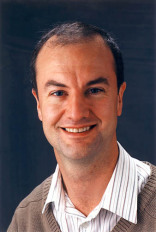
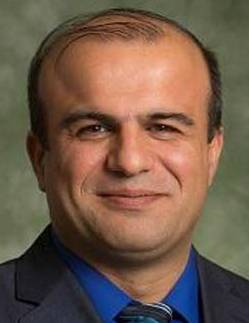
Nick Virgilio is a Full Professor in the Department of Chemical Engineering at Polytechnique Montréal . His research focuses on soft matter interfaces, polymer blends, and advanced hydrogel systems for biomedical and catalytic applications. Director, Research Laboratory on Surfaces, Interfaces and Soft Matter Member, Research Center for High-Performance Polymer and Composite Systems (CREPEC) Research interests include interfacial phenomena in multiphase systems, self-assembly of soft materials, nanoparticle-hydrogel composites, Pickering emulsions, and polymer microstructure engineering. Scientific awards include the 2010 Canadian Macromolecular Science Thesis Prize and the 2004 Polytechnique Montréal Master's Thesis Award. Recent publications highlight his work in macroporous hydrogels for cancer cell capture, nanoparticle synthesis in soft matrices, and interfacial control of polymer blends. His studies frequently appear in high-impact journals like ACS Applied Materials & Interfaces , Green Chemistry , and Macromolecules . Students under his supervision have explored topics from biofilm mechanics to lunar environment polymer systems across 4 PhD and 6 Master’s theses completed or ongoing.
Associate Professor Melissa Day is affiliated with the School of Psychology at The University of Queensland (UQ) under the Faculty of Health, Medicine and Behavioural Sciences, where she serves as Director of Higher Degree Research. She is also an Affiliate Associate Professor at the University of Washington. Her program focuses on optimizing non-pharmacological treatments for chronic pain through randomized controlled trials and mechanisms of cognitive-behavioral and mindfulness-based interventions. Bachelor of Science, The University of Alabama Masters (Coursework), The University of Alabama Doctor of Philosophy, The University of Alabama Research interests span chronic pain management, mindfulness-based cognitive therapy (MBCT), cognitive-behavioral therapy (CBT), neurosciences, and adapting therapeutic approaches for low-socioeconomic groups. Her 15 most recent works emphasize telehealth delivery, athlete pain dynamics, and psychosocial treatment variability. She leads the Centre for Innovation in Pain and Health Research (CIPHeR) and chairs the Australian SHAPE Futures EMCR Network, promoting early-career researchers in SHAPE disciplines.
Dr. Frank B. Hu is Chair of the Department of Nutrition, Fredrick J. Stare Professor of Nutrition and Epidemiology at Harvard T.H. Chan School of Public Health, and Professor of Medicine at Harvard Medical School and Brigham and Women’s Hospital. His research focuses on diet/lifestyle, metabolic, and genetic determinants of obesity, type 2 diabetes, and cardiovascular disease (CVD). Education: MD in Preventive Medicine, Tongji Medical College, China (1988) MPH in Epidemiology, University of Illinois at Chicago (1993) PhD in Epidemiology, University of Illinois at Chicago (1996) Postdoctoral Fellowship in Nutritional Epidemiology, Harvard T.H. Chan School of Public Health (1999) Research Interests: Dr. Hu’s work spans epidemiology and prevention of cardiometabolic diseases through diet and lifestyle, gene-environment interactions, nutritional omics, precision nutrition, and nutrition transitions in low- and middle-income countries. His group has conducted detailed analyses of dietary and lifestyle factors (e.g., sugar-sweetened beverages, coffee, red meat, fatty acids, dietary patterns) in relation to diabetes and CVD risk, using large cohort studies like the Nurses’ Health Study and Health Professionals Follow-up Study. They integrate omics technologies to identify novel biomarkers and gene-environment interactions, advancing precision nutrition. Collaborations include the PREDIMED investigators examining Mediterranean diet interventions. Scientific Awards: Elected member, National Academy of Medicine (2015) Kelly West Award in Diabetes Epidemiology (2010) American Diabetes Association Established Investigator Award, American Heart Association (2002) AHA Top Ten Research Advances (2001, 1997) Ancel Keys Memorial Lecturer (2018) Boyd Orr Trust Fund Lecturer (2020) Scientific Award Keynote Speaker (2022) Charles A. King Trust Research Fellowship (1998) Elizabeth Barrett-Connor Award Finalist (1998) Grants and Funding: Dr. Hu serves as Principal Investigator for NIH grants including Dietary Biomarkers Development Center at Harvard University (U2CDK129670) and Lifestyle Interventions, metabolites, microbiome, and diabetes risk (R01DK127601). He is a Co-Investigator in studies on sugar-sweetened beverages and obesity (R01DK125803) and infant epigenetics (R01AI148338).
Dr. Demosthenes Koutsogeorgis is an Associate Professor of Photonic Technologies in the Department of Physics & Mathematics at Nottingham Trent University's School of Science & Technology. He serves as a Module Leader, Placement Tutor, Project Supervisor, Director of Studies for PhD programmes, IMEC Research Centre PGR coordinator, and NTU Laser Safety Adviser. He leads the iSMaRT Research Group (Innovations in Surfaces Materials And Related Technologies) based at MTIF Clifton, and was one of the founding members of industry-facing initiatives "Thin Film Services" and "Scientific Services To Industry" at NTU. Dr. Koutsogeorgis received his education at: BSc in Physics from the University of Ioannina, Greece (1997) PhD in "Investigation of laser annealing of phosphor thin films for potential luminescent devices" from Nottingham Trent University (2003) His research focuses on Material Science, with specific expertise in thin film technology, laser processing, luminescent devices, plasmonics, electronic devices, and smart coatings. His work spans numerous applications in nanotechnology across industries including photovoltaics, data storage, security and authentication, optoelectronics, flexible electronics, displays, optical coatings, and biomedical technologies. He has developed unique technologies for subsurface modification of nanoparticles and laser processing of phosphor thin films for enhanced light output and longevity. His recent publications demonstrate strong focus on laser processing techniques for transparent conductive oxides, plasmonic nanostructures, and thin film materials. The research spans from fundamental materials characterization to practical applications in electronics, photonics, and biomedical devices. Key trends include reactive laser annealing, plasmonic nanoparticle engineering, thin film transistor development, and applications of these technologies in both industrial and medical contexts. Dr. Koutsogeorgis has collaborated with numerous institutions including: University of Ioannina (Greece) Aristotle University of Thessaloniki (Greece) OpSec Group (UK) University of Southampton (UK) The University of Nottingham (UK) Sheffield Hallam University (UK) University of Milano (Italy) KAUST (Saudi Arabia) He has supervised multiple PhD students including WEST, J.M. (2023) on "Laser induced nitrogen doping of zinc oxide" and KOUTSIAKI, C. (2023) on "Photonic conversion of sol-gel organometallic precursors into inorganic thin films." His research has been supported by various sponsors including Innovate UK, EU FP7 programme, Engineering and Physical Sciences Research Council EPSRC, and numerous industrial partners. Dr. Koutsogeorgis leads the iSMaRT Research Group, which benefits from long-standing expertise in thin film technology and laser processing. The group works extensively with the MTIF (Manufacturing Technology Innovation Facility) at NTU and maintains strong industry connections through the SS2i initiative. The research environment includes advanced capabilities in deposition, processing, and characterization of thin film materials for various applications.
Professor Kerstin Dautenhahn serves as Visiting Professor in Artificial Intelligence at the Centre for AI and Robotics Research, University of Hertfordshire. A pioneering researcher in socially assistive robotics, she directs therapeutic applications for children with autism and elderly care through human-robot collaboration frameworks. Her research spans Human-Robot Interaction, Social Robotics, and Robot-assisted therapy with expertise in autobiographic memory systems and narrative-driven social learning. Current work focuses on developing adaptive companion robots that evolve through longitudinal human engagement, particularly investigating trust dynamics during error recovery and continual learning mechanisms in therapeutic contexts. Recent publications (2022-2025) reveal concentrated exploration of robot curiosity frameworks, human perception of autonomous decision-making, and error consequence modeling. These studies establish foundational principles for socially intelligent robots that maintain user trust through transparent learning processes and context-aware adaptation. Professor Dautenhahn holds editorial leadership as founding Editor-in-Chief of Interaction Studies and Associate Editor for IEEE Transactions on Affective Computing , International Journal of Social Robotics , and Adaptive Behavior . She maintains Senior Membership in IEEE and active roles in ACM and SSAISB. She has supervised three graduate students and secured 23 research projects including Horizon 2020 initiatives BabyRobot (2016-2018) and SECURE (2015-2019), plus the KASPAR autism therapy project (2013-2018). Her funding portfolio demonstrates sustained focus on translating social robotics research into clinical and domestic applications through multi-institutional collaborations. As principal investigator for the Centre for AI and Robotics Research, she leads the KASPAR humanoid robot development team and coordinates the Robot House 2.0 facility. Her interdisciplinary teams integrate computer scientists, developmental psychologists, and clinical therapists to create evidence-based robotic interventions validated through longitudinal field studies.
Sinead O'Keeffe is a Research Fellow at the University of Limerick in the Faculty of Science and Engineering , specifically within the Department of Electronic and Computer Engineering . Her research bridges the technical domain of optical fiber sensor development with critical applications in radiation therapy and sports medicine. Primary Research Themes Medical radiation dosimetry using optical fiber sensors Brachytherapy dose monitoring systems Sports injury prevention in Gaelic football and running Mental health literacy in rural farming communities Key Technical Contributions Development of scintillation-based dosimeters Characterization of perfluorinated polymer fibers 3D printed sensor systems for clinical and rehabilitation applications Interdisciplinary Applications Prostate cancer radiotherapy dose measurement Mental health intervention programs for athletes Work-family conflict analysis in Irish farming Email: sinead.okeeffe@ul.ie
Sune Darkner is a Professor at the Department of Computer Science (DIKU) at the University of Copenhagen, specializing in the Image Analysis, Computational Modelling, and Geometry research section. His work focuses on medical image processing with particular emphasis on neuro-imaging data including MRI and PET scans. His primary research interests include Image Registration, Segmentation and Classification of Medical Image Data , with a specific focus on estimation of image similarity as his main research interest. Darkner strongly believes that the implementation of image processing algorithms should be thoroughly tested and reflect the theoretical properties as accurately as possible. His work primarily centers on neuro-imaging data such as MRI and PET. His recent publications (2024-2025) reveal a strong focus on medical image analysis, with particular emphasis on tumor volume delineation, deformable image registration with physics constraints, and applications of deep learning in medical imaging. His work spans both theoretical foundations of image processing and practical clinical applications. Darkner previously held a Post Doc position at the Technical University of Denmark from February 2009 to January 2010, demonstrating his longstanding engagement with image analysis research in the Danish academic community.
Ryan McNeil is an Associate Professor of Medicine (General Medicine) at Yale University School of Medicine and serves as Director of Harm Reduction Research in the Program in Addiction Medicine. He holds secondary appointments in Social and Behavioral Sciences and is actively engaged in research examining how social, structural, and environmental factors shape risk and harm among people who use drugs. Dr. McNeil's research focuses on substance use, addiction, and harm reduction, with particular emphasis on: Social, structural, and environmental influences on harm reduction interventions Implementation of supervised consumption services Housing-based interventions and overdose risks Management approaches for stimulant use disorders Community engagement in research with people who use drugs His work demonstrates a strong commitment to health equity and addressing structural vulnerabilities that contribute to drug-related harms. Dr. McNeil has been instrumental in informing the scale-up of harm reduction approaches including supervised consumption services and safe supply programs. Dr. McNeil's recent publications reveal a consistent focus on understanding the complex interplay between housing, social determinants, and drug-related harms. His research employs primarily qualitative methodologies to examine patient experiences with opioid agonist treatments, barriers to care, and the impact of policy interventions on vulnerable populations. Dr. McNeil has received numerous prestigious awards recognizing his contributions to the field: Highly Cited Researcher (Crossfield) from Clarivate (2024) Canadian Hillman Prize from Sidney Hillman Foundation (2020) Radio Impact Award from Third Coast International Audio Festival (2019) Scholar Award from Michael Smith Foundation for Health Research (2016) New Investigator Award from Canadian Institutes of Health Research (2016) Dr. McNeil actively collaborates with community-based organizations, including peer-driven drug user, sex worker, and tenant rights organizations, to align his research with community priorities. His work emphasizes meaningful involvement of people with lived experience in all stages of the research process, providing opportunities for co-leadership and engagement. He regularly provides expert advice to health care organizations and governments on the development and implementation of harm reduction interventions. His research program includes community-engaged work focused on harm reduction, with particular attention to how risk environments shape drug-related harms. Dr. McNeil's work bridges academic research with practical interventions aimed at reducing overdose deaths and improving health outcomes for people who use drugs.
Rafael Sebastian is a Full Professor at Universitat de Valencia and General Director for Science and Research of the Generalitat Valenciana. He leads the Computational Multiscale Simulation Lab (CoMMLab) and collaborates with institutions like Oxford University and Yale University. Department of Computer Science, Universitat de Valencia CoMMLab Founder Spanish Network of Excellence in Cardiac Modeling His research focuses on multi-scale computational models and artificial intelligence for patient-specific cardiac simulations , aiming to improve arrhythmia risk stratification and therapy planning . Key topics include cardiac conduction system modeling , scar-related ventricular tachycardia , and machine learning pipelines for clinical applications. Recent publications emphasize automata-based simulations for atrial arrhythmias, machine learning in arrhythmia localization, and 3D geometric characterization of aortic diseases. Trends show integration of computational modeling with clinical data and medical imaging . Scientific Awards: Best Poster Award, Functional Imaging and Modeling of the Heart (2021) Cum Laude Award, SPIE Medical Imaging (2009) Student Presentation Award (2011) He has supervised 7 PhD/Master students and led grants exceeding €1 million, including projects like iSARC-GENETICS and iCardioTwins , focusing on digital twin technology and cardiac disease stratification .
Prof. Benedetta Bottari is an Associate Professor at the Department of Food and Drug Science, University of Parma. She specializes in food microbiology, focusing on lactic acid bacteria, fermented foods, and microbial dynamics in dairy products like Parmigiano Reggiano cheese. Her research employs molecular techniques like PCR analysis and fluorescence microscopy to study microbial viability and biodiversity. Educational Background: PhD in Food Science and Technology (2006–2009), University of Parma MSc in Food Science and Technology (2004), University of Parma BSc in Agricultural Studies, Diploma from G. Marconi High School (1994–1999) Research Interests: Prof. Bottari’s work centers on microbial ecology in food systems, probiotic development, food safety, and the application of advanced molecular methods to study cheese microbiota. She has contributed to projects on prebiotic effects, UV treatment for microbial abatement, and the role of microbial communities in food quality. Grants & Projects: Co-led projects on Parmigiano Reggiano microbiota and probiotic strain selection Scientific coordination of EU-funded dairy science education initiatives Collaborations with industries like Tetra Pak and CIPACK for food safety solutions Teaching: She teaches courses in Food Microbiology, Probiotics, and Functional Foods across undergraduate and graduate programs in Food Engineering, Gastronomy, and Nutrition. Labs & Teams: Her research group focuses on food microbiology, collaborating with institutions like SIMTREA and the Parmigiano Reggiano Consortium to advance food technology and safety.
Yi-Ju Tseng is a Professor at the Department of Computer Science, National Yang Ming Chiao Tung University (NYCU), and an affiliated faculty member at the Computational Health Informatics Program (CHIP) at Boston Children’s Hospital. She holds a PhD from National Taiwan University and has extensive experience in claims data analysis, electronic medical record analysis, and data mining techniques applied to healthcare. Her research focuses on improving disease surveillance, clinical decision support systems, and applying AI/machine learning to medical data. Notable projects include developing systems for antibiotic susceptibility prediction using MALDI-TOF data and smart thermometer-based participatory surveillance for viral transmission. She also contributed to healthcare-associated infection surveillance systems at NTUH and CGMH. Dr. Tseng teaches data analysis and programming courses and has developed R packages like dxpr , pharm , and lab to streamline clinical data analysis. She has received awards such as the MOST Young Scholar Fellowship (2018–2022) and the NYCU Remarkable New Faculty Award (2021). Her work bridges informatics and clinical practice, with publications in journals like JAMA , npj Digital Medicine , and International Journal of Medical Informatics . She serves on editorial boards for Frontiers in Public Health and BMC Medical Informatics and Decision Making , and reviews for top conferences like AMIA and HEALTHINF.
Niyousha Hosseinichimeh is an Associate Professor in the Grado Department of Industrial and Systems Engineering at Virginia Tech's College of Engineering. Her research focuses on improving health and healthcare systems through system dynamics modeling and simulation. She holds a Ph.D. in Public Policy from SUNY Albany (2012) and a B.S. in Mechanical Engineering from Sharif University of Technology (2001). Her work addresses complex issues like adolescent drinking/driving behaviors, major depressive disorder, and infant mortality. Methodologically, she advances calibration techniques for dynamic models and group model-building approaches. Her research has been funded by NIH, NSF, and the Ohio Department of Health. Notable contributions include modeling the hypothalamus-pituitary-adrenal axis and developing tools for rapid parameter estimation in system dynamics. She advises students such as Alba Rojas-Cordova (winner of multiple awards) and Arash Baghaei Lakeh. Her grants include projects on depression dynamics and emergency department utilization. Her work intersects systems engineering, public health, and computational methods, emphasizing practical policy and clinical applications.
Michael Ferris is a Professor at the University of Wisconsin-Madison, holding the John P. Morgridge Chair in Computer Sciences and a courtesy appointment in Mathematics. His primary affiliation is with the Department of Industrial and Systems Engineering, and he serves as Director of Hub Central at the Wisconsin Institutes for Discovery. He earned his PhD from the University of Cambridge in 1989. His research focuses on algorithms, environments, and applications of optimization, with contributions to complementarity solvers, large-scale variational inequalities, and mathematical programming. Key areas include energy systems, economics, and engineering applications such as radiation therapy and transportation. Ferris has developed influential software tools like the PATH solver for complementarity problems and interfaces for optimization frameworks like AMPL and GAMS. Notable awards include SIAM Fellow, INFORMS Fellow, and the Beale-Orchard-Hays Prize. He has advised numerous PhD students and contributed to significant projects, including optimizing Great Lakes fishery barrier removal and modeling the energy transition. His work bridges theoretical optimization with practical applications, impacting policy, technology, and environmental conservation.
Mohammad T. Khasawneh is a SUNY Distinguished Professor and Director of the School of Systems Science and Industrial Engineering at Binghamton University. He leads the Watson Institute for Systems Excellence (WISE) and the Healthcare Systems Engineering Center. His roles include Director of the Manhattan Graduate Program in Health Systems. Education: BS and MS in Mechanical Engineering from Jordan University of Science and Technology (1998, 2000), PhD in Industrial Engineering from Clemson University (2003). Research focuses on healthcare systems engineering, operations management, and data science. His work optimizes healthcare systems for improved patient outcomes and cost efficiency. Key areas include predictive analytics, hospital resource utilization, and clinical performance improvement. He has generated over $15M in external funding and led projects with U.S. hospital systems. Notable achievements include developing the Executive Master of Science in Health Systems and an MS in Healthcare Systems Engineering. His research has produced 60+ journal articles and 120+ conference papers. Awards include SUNY Chancellor’s Awards for Teaching (2011) and Scholarship (2021), University Awards for Graduate Director (2015) and International Education (2016). He is an IISE Fellow and holds honorary visiting professorships at Hebei University of Technology (China) and Vellore Institute of Technology (India). Grants and funding: $2.5-3M annually via WISE, $39M in software/equipment grants. Lab/Initiatives: Healthcare Systems Engineering Center, WISE, and multiple hospital partnerships.
Dr. Jenny Gu is an Associate Tutor in the School of Psychology at the University of Sussex, with a secondary role as a Support Worker in Student Advice and Guidance. She holds a PhD from the University of Sussex (2018) focusing on mindfulness and compassion interventions. Her research interests span mindfulness-based cognitive therapy (MBCT), compassion measurement, healthcare worker well-being, psychometric scale development, and clinical trial methodologies. She has contributed to studies on youth mental health interventions, healthcare staff stress reduction, and the neuroscientific basis of brain structure variation. Notable projects include the EYE-2 trial on engagement strategies for psychosis patients and evaluations of mindfulness-based programs for stress management. Education: PhD in Psychology (2018): University of Sussex, Thesis: 'Mindfulness and compassion: measurement and mechanisms of interventions' Research Highlights: Her work emphasizes translating mindfulness and compassion research into practical healthcare applications. Key areas include validating compassion scales (e.g., Sussex-Oxford Compassion Scales), analyzing mindfulness questionnaire efficacy, and designing clinical trials for youth mental health. She also explores interventional strategies to improve engagement in first-episode psychosis care and reduce workplace stress among healthcare professionals. Grants & Collaboration: Her collaborative projects involve institutions like King's College London and the University of Oxford, focusing on randomized controlled trials and systematic reviews. Funding sources include mental health research grants and university partnerships. Labs/Teams: Active within the University of Sussex's clinical psychology research group, contributing to interdisciplinary mental health initiatives.